
Raw materials, global sourcing & trade – The supply chains of the future and strategic procurement in a fragmented world
Xpert Pre-Release

Available in 27 languages 📢
Prefer Xpert.Digital on GoogleⓘPublished on: April 17, 2026 / Updated on: April 20, 2026 – Author: Konrad Wolfenstein
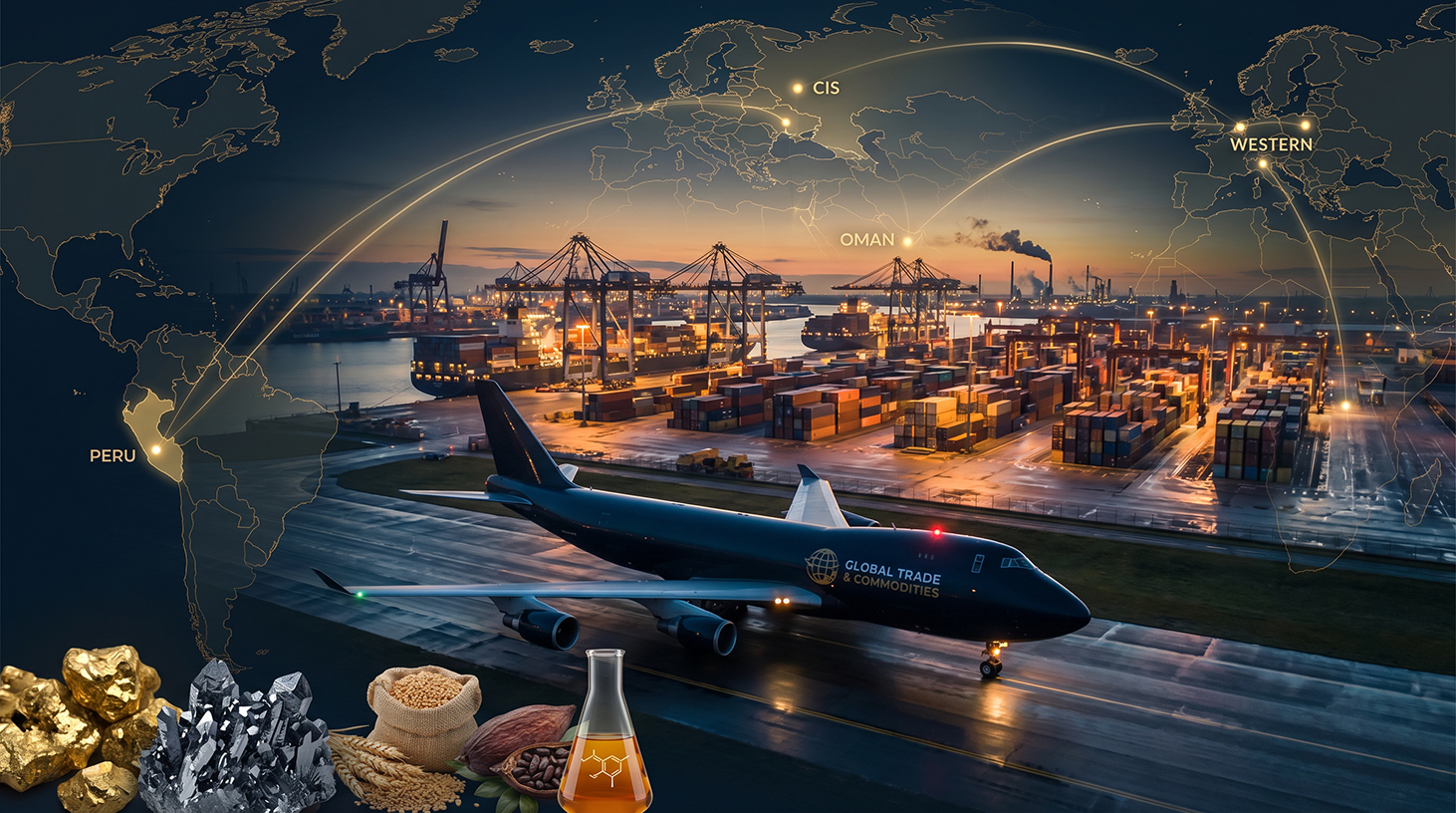
Raw materials, global sourcing & trade – The supply chains of the future and strategic procurement in a fragmented world – Image: Xpert.Digital
Xpert Global Sourcing: Global supply chains on the verge of collapse? How corporations are protecting themselves from 2026 onwards
### The New Raw Materials World Order: Why Antimony Is Now More Valuable Than Gold ### More Than Coffee: Why South America Is Becoming the World's Most Important Raw Material Mine ### Fertilizer Crisis & Sanctions: The Risky Raw Material Hunt in the CIS Triangle ###
The multi-billion dollar air freight market: How the world's most valuable goods fly
The global economy is experiencing an unprecedented paradigm shift. What began with the shocks of the global pandemic and was massively accelerated by geopolitical conflicts such as the war in Ukraine has long since evolved from a temporary crisis into a permanent reorganization of world trade. In this new reality, old certainties are crumbling: traditional supply corridors are blocked, sanctions are forcing drastic rerouting of trade flows, and the strategic struggle for critical raw materials is more decisive than ever for the success of national economies and major corporations. The overriding principle is no longer pure cost optimization, but absolute security of supply. Whoever controls the supply chains of tomorrow holds the decisive competitive advantage.
In precisely this highly complex environment, Xpert Global Sourcing positions itself as an indispensable bridge builder. As a specialized procurement, logistics, and trading service provider, the company answers the most pressing questions of global buyers. With a unique three-pillar business model—comprising regionally focused commodity sourcing (South America and CIS countries), highly specialized logistics engineering with a focus on premium air freight, and the strategic trading of critical metals such as antimony and gold—Xpert Global Sourcing closes the gaps where traditional providers fail. The following article analyzes the geopolitical drivers of this development and demonstrates why this integrated procurement strategy will become a crucial success factor for industry, energy suppliers, and investors from 2026 onward.
Whoever controls the supply chains of the future controls the economy – and the competition has already begun.
The geopolitical upheavals of 2022 to 2026 have fundamentally and permanently altered global commodity and supply chain markets. What many business leaders long considered a temporary disruption—pandemic shocks, Russia's war of aggression against Ukraine, escalating US-China tensions—is now proving to be a structural reorganization of world trade. Trading blocs are repositioning themselves, sanctions packages are shifting trade flows into previously unused corridors, and strategic competition for critical minerals and raw materials has reached an intensity that seemed unimaginable just a few years ago.
In this environment, companies, governments, and institutional investors are actively seeking alternative sources of supply, new trade corridors, and reliable intermediaries capable of professionally handling complex procurement tasks. Xpert Global Sourcing's concept fills precisely this gap: a specialized procurement and trading service provider that sources raw materials from South America and the CIS countries, organizes global logistics with a particular focus on air freight, and systematically develops strategic metals as a growth area.
The business model rests on three mutually reinforcing pillars: Commodity Sourcing, Logistics Engineering, and Strategic Metals. These three areas address different customer segments – from agricultural and industrial companies to energy suppliers, institutional investors, and sovereign wealth funds – and, through their combination, generate synergies that remain inaccessible to individual providers.
Drivers and fault lines: The geopolitical foundation of a new procurement strategy
The fragmentation of global supply chains is not a temporary phenomenon that will simply vanish with the end of a conflict or crisis. Deloitte's Supply Chain Pulse Check 2026 confirms that companies worldwide are fundamentally diversifying their procurement structures and establishing parallel supply relationships to ensure security of supply. Four specific developments lend particular relevance and strategic significance to the Xpert Global Sourcing concept.
The entry into force of the Mercosur-EU free trade agreement at the beginning of 2026 marks a historic turning point. After more than two decades of arduous negotiations, the path has been cleared for facilitated trade between the European Union and the South American Mercosur countries. New tariff reductions for agricultural products, timber, and industrial raw materials open trade corridors that were previously blocked by prohibitive tariffs. For a specialized procurement service provider with established networks in South America, this translates into a structural competitive advantage over competitors who still need to build these relationships.
Russia's fertilizer policy is developing into one of the most pressing supply risks for European agriculture. WirtschaftsWoche reported in early 2026 that Russia's targeted export policy for nitrogen fertilizers is putting considerable pressure on the European agricultural market. The European Commission has already initiated countermeasures by gradually increasing tariffs on Russian and Belarusian agricultural products – including urea. This creates an immediate need for alternative sources of supply: Poland as an EU-compliant supplier, Oman as a politically stable Gulf state, and, looking ahead, further diversification options.
The revaluation of strategic metals has been particularly dramatic. Antimony – long a niche topic among commodity specialists – has experienced a price development over the past three years that significantly surpasses that of classic precious metals like gold and silver. Finally, the ongoing commodity market volatility and supply uncertainties are forcing buyers in industry and energy to establish multiple parallel supply relationships – a structural feature that systematically favors reliable intermediaries with a broad product portfolio.
South America as a sourcing continent: More than bananas and coffee beans
Latin America has long played a minor role in the strategic raw materials planning of European companies. This perception is outdated. The continent is positioning itself as an indispensable supplier of both traditional agricultural and forestry products as well as critical industrial raw materials and strategic metals.
Peru plays a key role in this. The country is among the world's top five gold producers, and gold production has recently increased significantly. At the same time, Peru is one of the most important antimony producers outside of China – a fact whose strategic importance in light of Chinese export restrictions can hardly be overstated. In October 2025, the country reported significant increases in precious metal production, while new mining projects are being launched and investments in mining infrastructure are increasing.
South America's agricultural and food portfolio strategically complements the metals segment. Fresh fish and seafood, tropical fruits, beef, cocoa, and coffee are experiencing growing import demand in the EU. Cocoa futures saw exceptional price dynamics in 2025/26, driven by crop failures in West Africa and increasing processing capacities in Europe. Coffee imports from Latin America benefit from the Mercosur agreement and robust consumer demand, even in economically challenging times. The forestry products segment – timber and construction timber – addresses a structural bottleneck in the European construction sector, which suffers from a long-term shortage of materials despite economic fluctuations.
Specialty products such as essential oils and food additives complete the portfolio with high-margin niche products that are tariff-sensitive and benefit disproportionately from the new trade preferences of the Mercosur agreement.
The CIS Triangle: Risk and Return in the Sanctioned Area
The CIS countries represent legally and politically complex territory for European companies – yet they remain of virtually irreplaceable importance for certain raw material categories. This tension is not an argument against sourcing from this region, but rather the central argument for specialized intermediaries who professionally manage the compliance framework.
Fertilizers – especially urea and sulfuric acid – are the core business in the CIS portfolio. Russia and Belarus remain global market leaders in nitrogen fertilizers. Despite increasing political pressure and gradual EU tariffs, trade flows have not shifted abruptly but are instead seeking new routes via third countries and specialized traders. For Xpert Global Sourcing, the opportunity lies in trading non-sanctioned goods from CIS countries – such as Kazakhstan, Uzbekistan, or Azerbaijan – with full regulatory compliance and passing on the price advantages of these regions to customers.
Petroleum products and polymers from the CIS region complement the energy portfolio and appeal to industrial customers seeking alternatives to Western sources. Grain and timber round out the offering seasonally and enable volume consolidation on logistics routes already used for other product categories.
Poland, as an EU member, plays a special bridging role in this concept. As a urea producer with EU-compliant quality standards and as a supplier of AdBlue – the urea-water mixture for diesel vehicles required by EU emissions regulations – Poland offers regulatory clarity combined with geographical proximity. Given the ongoing discussions about sanctions against Russian AdBlue imports, this supply route is gaining considerable strategic importance.
Oman, finally, embodies the geopolitical diversification principle in its purest form. As a politically stable Gulf state with a historically neutral foreign policy and excellent infrastructure, Oman offers direct access to Jet Fuel A1, European-standard diesel EN590, and urea as a supplementary fertilizer source. For airlines, charter operators, and energy suppliers seeking security of supply beyond individual supplier countries, the Oman corridor is a valuable component.
🎯🎯🎯 Global Sourcing & Commodity Trading with integrated logistics

Raw materials, global procurement & trade - Image: Xpert.Digital
State-of-the-art cargo planes, optimized transport routes, and multimodal logistics chains are interchangeable—they can be bought, leased, or outsourced. What money can't buy are direct contacts with producers in Peruvian mines, reliable supply relationships in the CIS countries, and years of built-up trust in markets that are unfamiliar to outsiders. The decisive competitive advantage in global commodity trading lies not in transporting the good from A to B, but in knowing where the good comes from, who produces it, and how to gain access before others even know the market exists. Whoever owns the network sets the price. Everyone else pays it.
More information here:
This is how Europe secures strategic raw materials
Air freight as a strategic premium channel: The unique selling point
Only 3 to 5 percent of the world's goods are transported by air freight – yet this tiny share represents 30 to 35 percent of the total value of all goods transported worldwide, corresponding to an annual trade volume of around 6 trillion US dollars. Air freight is therefore not a mass market, but rather the premium channel for the most valuable, time-critical, and complex goods – and that is precisely where the margin lies that makes Xpert Global Sourcing's business model attractive.
The global air freight market is growing dynamically. Growth drivers include e-commerce, pharmaceutical supply chains, fresh food, and the increasing time-criticality of modern just-in-time production systems. Xpert Global Sourcing's air freight specialization focuses on four particularly high-value niche areas characterized by high barriers to entry and above-average margins.
Perishable goods form the core of the air freight business from South America. Fresh fish, seafood, and fruits and vegetables must be transported from producer to European retailer in an unbroken cold chain. The IATA-compliant cold chain is regulatory-intensive and requires specialized expertise as well as established partners at both the origin and destination – high barriers to entry that protect existing networks.
Live animals represent the niche segment with the highest requirements and simultaneously the fewest competitors. The IATA Live Animals Regulations (LAR) define a complex set of rules that require special containers, veterinary documentation, temperature control, and coordinated handling. Those who master this segment achieve disproportionately high profit margins.
Dangerous goods – as defined by IATA DGR certification – include chemicals, industrial batteries, and industrial materials. Mandatory training and certification requirements act as an effective barrier to market entry: only certified suppliers can conduct this business, significantly limiting the number of qualified competitors.
Charter flights with fully loaded cargo charter aircraft – Boeing 747F, Boeing 777F or Airbus A330F – complete the air freight portfolio. They enable high-volume transport on direct routes between South America and Europe, as well as between the CIS countries and Europe. Time-critical goods, special transports and exceptional shipment sizes make chartering the premium product of a premium portfolio.
The multimodal logistics component multiplies the flexibility of the service. Combined air-sea solutions – such as rapid pre-carriage by air freight for time-critical initial deliveries, followed by bulk shipping by sea freight – allow customers to balance speed and cost control as needed. Bulk, break bulk, and containerized sea freight (FCL/LCL) for bulk goods from South America and the CIS countries, complemented by last-mile delivery in Europe with cross-docking and warehousing, create a seamless end-to-end service.
Antimony, gold and silver: The third pillar of growth
Among the three business pillars, the strategic metals segment has the highest potential for disproportionate value creation – and at the same time the greatest differentiation potential compared to traditional commodity traders.
Over the past three years, antimony has become the most discussed strategic metal in Europe. Its price performance has far surpassed that of classic precious metals like gold and silver. The drivers of this development are structural in nature and cannot be remedied in the short term. Antimony is an indispensable raw material for the defense industry – it is needed for ammunition, explosives, and military alloys, and Western arms expansion following the war in Ukraine, as well as increased NATO defense spending, is driving demand massively. At the same time, its use is growing in semiconductor manufacturing and in new antimony-based battery technologies, which are being researched as alternatives to lithium-ion systems.
The decisive supply risk: China dominates global antimony production and has introduced export restrictions that put Western buyers under considerable supply pressure. Peru offers a stable mining infrastructure, growing investment, and direct access for European buyers as an alternative. Those who establish offtake agreements with Peruvian mining companies now will secure a strategically valuable market position before competition for these sources becomes fully institutionalized.
Gold from Peru is the more conservative element of the precious metals portfolio. Peru is among the world's five leading gold producers. Physical trading of certified bars according to LBMA standards, brokerage between mines and institutional buyers, and high-security air freight transport of precious metals combine the strengths of all three business pillars into a unique, integrated offering. Silver remains more volatile but benefits from growing industrial demand in photovoltaics and electronics manufacturing.
Competitive positioning: Why the combination counts
Xpert Global Sourcing's strength lies not in a single unique selling point, but in the combination of several areas of expertise that no single competitor combines in this way.
Dual-region expertise – simultaneous deep market access in South America and the CIS countries – is the first and most important structural differentiator. Traditional commodity traders are regionally specialized; logistics providers lack commodity expertise; financial intermediaries possess neither production nor transport networks. The integrated approach overcomes this fragmentation.
The air freight specialization across all four niche areas – perishables, live animals, dangerous goods, and charter – bundled within a single provider is exceptional in the market. Each of these categories is complex in its own right and requires specialized personnel, certifications, and established partner networks. Together, they create a service offering that is particularly attractive for large customers with diverse transport needs.
The geopolitical neutrality of the procurement approach – sourcing from politically diverse regions such as South America, the CIS, Poland, and Oman – ensures security of supply regardless of individual sanctions regimes or geopolitical escalations. For customers who procure according to the principle of supply resilience, this multi-source approach offers compelling value.
The network, as the main asset – direct producer contacts in Peru, the CIS countries, and Poland – eliminates costly intermediaries and enables pricing conditions that purely transactional competitors cannot achieve. Market intelligence from sources such as Argus Media, S&P Global Energy, ICIS, CRU Group, and the World Bank Commodity Markets ensures professional pricing and strategic positioning.
Risks and the art of professional risk management
No business model in this segment is without significant risks – the quality of a provider is shown less in risk avoidance than in professional risk management.
Sanction risks in CIS country business are the most sensitive issue and require a clear compliance structure with ongoing legal advice from specialized law firms, as well as a consistent focus on non-sanctioned goods. Currency volatility – structurally elevated in markets from Peru to Kazakhstan – is managed through hedging instruments and USD-based contracts. Quality assurance for agricultural products requires certified inspectors on site, ideally from recognized testing companies such as SGS or Bureau Veritas.
Dangerous goods compliance in air freight is non-negotiable under regulations. IATA DGR certifications for in-house personnel and specialized forwarding partners are mandatory, not a differentiating factor. Antimony market volatility—structurally high in a market dominated by a Chinese supplier and subject to political export restrictions—is managed through long-term contracts with buyers prior to purchase to avoid open position risks. Country risks in Peru and the CIS countries necessitate continuous political monitoring and consistent diversification of sourcing.
Implementation roadmap: From strategy to market presence
The path from strategic conception to operational market presence follows a clear prioritization that combines short-term opportunities with medium-term competence development.
In the first six months, antimony positioning is the top priority. The market window for offtake agreements with Peruvian mines is now open – before institutional investors and Western government agencies completely absorb the market. In parallel, an initial pilot air freight route – for example, Lima to Frankfurt for perishables – should be structured with an established charter partner. Legal due diligence for CIS sourcing with EU sanctions law experts and initial test volumes of Omani energy products complete the short-term agenda.
Over a period of six to eighteen months, the focus is on establishing the UREA triangle: parallel sourcing from CIS countries, Poland, and Oman for maximum supply security and negotiating power. Certifications – IATA Dangerous Goods and ISCC sustainability certification for agricultural products – create formal market access requirements. A reference customer program with two to three anchor customers per product group and exclusive terms generates reference business and market access for subsequent acquisitions.
The long-term perspective from the second year onward focuses on establishing dedicated sourcing offices: A presence in Lima for the Peruvian business and in Almaty (Kazakhstan) for the CIS region would institutionalize network development and ensure permanent access to producers. Financing products – trade finance, letters of credit, and commodity futures contracts – enable the company to support customers beyond pure trading and logistics services and to deepen customer relationships through financial services. ESG certifications for wood (FSC), cocoa (Rainforest Alliance), and fish (MSC) differentiate the offering for major European buyers who are increasingly defining ESG compliance in the supply chain as a procurement requirement.
Geopolitical fragmentation as a business model
The geopolitical fragmentation of global trade poses a risk for conventional companies. For a specialized procurement and trading service provider with the profile of Xpert Global Sourcing, it is the very driving force of its business model. Companies that build procurement networks in South America and the CIS countries, develop alternative supply corridors, cultivate expertise in complex air freight operations, and include strategic metals like antimony in their portfolios early on are positioning themselves as systemically important intermediaries in a world that values security of supply more highly than mere cost optimization.
The combination of regional market access, specialized logistics expertise, and early entry into strategic metals is no coincidence, but rather the result of a coherent, up-to-date, and highly relevant market analysis. The crucial question is not whether this market is growing—it already is. The question is who has built the networks and expertise to profit from it as competition for security of supply intensifies.
Your contact for raw materials ⛏️ Global sourcing 🚢🌐 & trading 📦

Konrad Wolfenstein
I would be happy to serve as your personal advisor.
• Contact: [email protected]
• Tel: +49 7348 4088 961
Our EU and German expertise in business development, sales and marketing

Our EU and German expertise in business development, sales and marketing - Image: Xpert.Digital
Industry focus areas: B2B, digitalization (from AI to XR), mechanical engineering, logistics, renewable energies and industry
More information here:
A thematic hub offering insights and expertise:
- Knowledge platform covering global and regional economies, innovation and industry-specific trends
- A collection of analyses, insights, and background information from our key areas of focus
- A place for expertise and information on current developments in business and technology
- A hub for companies seeking information on markets, digitalization, and industry innovations





