
Germany's gas bet: How security of supply can become a protective shield for established energy companies
Xpert Pre-Release

Available in 27 languages 📢
Prefer Xpert.Digital on GoogleⓘPublished on: November 22, 2026 / Updated on: November 22, 2026 – Author: Konrad Wolfenstein
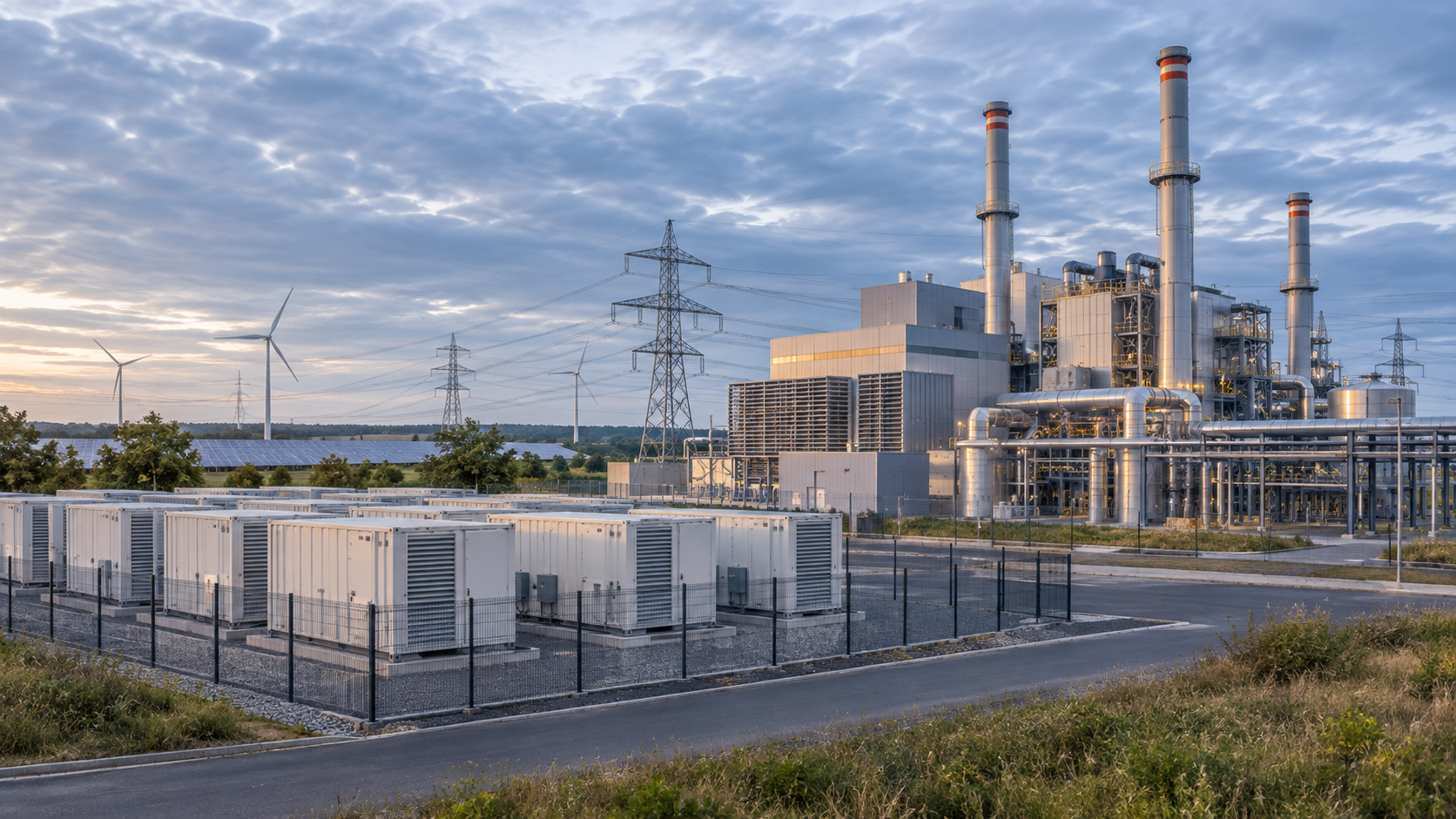
Germany's gas bet: How security of supply can become a protective shield for established energy companies – Creative image on the topic, with AI: Xpert.Digital
Security of supply as an argument: Are battery storage systems being held back?
Gas-fired power plants or battery storage? The debate over Germany's electricity supply
Germany's electricity strategy: Why the rules could favor gas-fired power plants
Germany needs a reliable electricity supply – even when wind and solar power generation are temporarily low. However, this does not automatically mean that new gas-fired power plants, regardless of size or subsidy conditions, are the most economically viable solution. The crucial factor is which combination of power plants, battery storage, flexible demand, grids, and European electricity connections ensures the most reliable supply at the lowest overall cost.
This is precisely the point of contention. Critics argue that the requirements for subsidized output favor gas-fired power plants and measure battery storage systems against operating conditions for which many conventional systems are not designed. At the same time, the projects announced so far are heavily concentrated among established energy companies: ten out of eleven projects involve RWE and LEAG, or a LEAG subsidiary. This demonstrates a strong concentration, but not that only a single corporation benefits or that political decisions are demonstrably the result of undue influence.
For a reliable assessment, several questions must therefore be considered separately: What type of bottleneck needs to be secured – a short peak load or a multi-day period with little wind and solar power? What capacity can storage facilities, power plants, and flexible consumers actually provide? And are the long-term subsidy costs justified if there are potentially more cost-effective combinations? Ultimately, the debate is not about a simple "gas or battery," but about whether Germany organizes its security of supply in a technology-neutral way – or commits itself early to an expensive and potentially difficult-to-change solution.
New gas-fired power plants, old market structures: How expensive will Germany's security reserve be?
Germany needs a reliable electricity supply, even when wind and solar power generation are low at times. However, this does not automatically mean that new gas-fired power plants, regardless of size, location, or subsidy conditions, represent the most economically viable solution. The crucial question is not whether Germany needs guaranteed power. The crucial question is which combination of power plants, storage facilities, flexible demand, grids, and European electricity connections can provide this security at the lowest overall cost.
This is precisely the crux of the current energy policy controversy. If technical requirements are defined in such a way that primarily fuel-based large-scale plants can meet them, a structural advantage arises for their operators. Battery storage systems then do not need to be explicitly excluded. It suffices to largely disregard their strengths and simultaneously place particular emphasis on those characteristics in which gas-fired power plants are superior.
Criticism of such an approach is economically justified. However, it does not justify either the blanket assertion that gas-fired power plants are superfluous, nor the unsubstantiated accusation that individual political decisions are demonstrably the result of undue influence. A sound analysis must distinguish between technical necessities, economic distributional effects, and questions of personal responsibility.
The notion that practically only one company benefits from the current developments is also too simplistic. The concentration that has come to light so far primarily affects RWE and LEAG, and to a significantly lesser extent, the Karlsruhe municipal utilities. Ten of the eleven funded projects are attributable to these two large corporate groups, including a LEAG subsidiary. This suggests a strong concentration in favor of established players, not a proven exclusive advantage for a single corporation.
Security of supply begins with the correct problem definition
The energy transition is not just changing the source of electricity. It is changing the economic architecture of the entire electricity system. Wind and solar power plants incur comparatively low additional costs per kilowatt-hour generated after their construction. However, their production depends on the weather and not on the current electricity demand.
This creates various challenges, often summarized under the vague term "security of supply." Fluctuations must be balanced within seconds. Generation and consumption must match over several hours. Weather conditions can persist for days, resulting in little wind and solar power. Additionally, the available energy must be transmitted through the grid to the correct points of consumption.
These tasks are related, but not identical. A battery storage system can react very quickly and compensate for short-term imbalances. A gas-fired power plant can generate electricity over long periods with a secure fuel supply. A flexible industrial plant can temporarily reduce its consumption. A high-capacity power line can balance regional surpluses and deficits.
It becomes economically problematic when a single standard requirement is derived from this diversity. Then, the actual benefit of a technology to the overall system no longer determines its importance. Instead, the decisive factor becomes how well it fits into the politically defined requirements profile.
A sensible energy policy must therefore first clarify which specific risk needs to be hedged. Is it a two-hour evening peak, a ten-hour bottleneck, or a multi-day period of low renewable energy generation? Without this distinction, Germany risks overpaying for certain security measures while neglecting others.
Why power and energy quantity must not be confused
A key misconception in the public debate is equating electrical power with stored or generated energy. Power describes how much electricity a system can provide at a given moment. Energy describes how long it can maintain that power output.
A battery storage system with a capacity of 100 megawatts and 200 megawatt-hours of usable energy can theoretically deliver its full output for two hours. A gas-fired power plant with the same capacity of 100 megawatts can operate for significantly longer, provided fuel supply and technical availability are guaranteed.
However, this difference does not necessarily mean that the power plant is inherently more valuable. If the critical bottleneck only lasts two hours, the storage facility can fully provide the required power. Its ability to react particularly quickly can be an additional asset. If the bottleneck lasts several days, however, the same storage facility alone will not suffice.
The current long-term requirement stipulates that 80 percent of the installed capacity must be available for ten consecutive hours. For storage systems, this capability must be available again no later than three hours later. While the requirements have been relaxed compared to earlier proposals, they remain demanding for standard short-cycle battery systems.
A simple calculation illustrates the scale of the problem. With 100 megawatts of installed capacity, 80 megawatts would need to be delivered daily for ten hours. This would require 800 megawatt-hours of usable energy. To then fully recharge this amount of energy within three hours, an average charging power of approximately 267 megawatts would be required, even without accounting for charging losses.
In practice, systems can be dimensioned differently or supplemented with additional components. However, this example shows why a formally technology-neutral rule can economically create a significant preselection. The storage system is not measured by its most efficient system function, but by an operating mode that demands large amounts of energy and particularly fast recharging.
Why the elimination of storage devices does not yet prove a cost comparison
If battery storage systems are not economically viable under such conditions, it cannot be automatically concluded that they are generally more expensive than gas-fired power plants. Initially, it can only be stated that they were unable to offer the required output at competitive costs under the given conditions.
This difference is crucial. A delivery van isn't uneconomical compared to a truck just because it can't transport 30 tons. It's optimized for a different task. Only knowing the actual transport requirements allows for a meaningful comparison.
The situation is similar in the electricity system. A storage facility that balances daily price fluctuations and covers short-term bottlenecks fulfills a different function than a power plant that is intended to operate infrequently but for longer periods. Both can contribute to security of supply, but with different operating profiles.
The economically relevant alternative to additional gas-fired power plants is therefore not necessarily to replace the same output entirely with batteries. It can consist of a combination of storage, load management, and a smaller remaining power plant reserve.
The key criterion would then be whether this portfolio is more cost-effective while maintaining the same level of supply security. A cross-technology comparison would have to consider investments, operating costs, grid loads, fuel risks, and the probability of shared outages. Simply comparing individual technologies under a uniform continuous operating profile answers a narrower question.
This makes the criticism of the storage disadvantage more precise: not every long-term requirement is unreasonable. It becomes problematic when its importance is not evident from a transparent needs analysis or when short-term flexibility is systematically undervalued in the overall model.
The real benefits of gas-fired power plants and their limitations
Gas-fired power plants possess characteristics that can be valuable for a power system heavily reliant on renewables. They can generate electricity regardless of the weather, control their output in principle, and, with sufficient fuel supply, bridge even extended periods of low wind and solar power generation.
These advantages should not be downplayed for political reasons. Germany would be taking a considerable risk if it were to reduce its dispatchable generation capacity without ensuring a viable replacement in a timely manner. Even relatively short supply interruptions can cause significant damage to businesses.
The economic viability of gas-fired power plants, however, depends on the extent of actual demand. An additional plant can be worthwhile if it closes a supply gap. It can become uneconomical if the same gap is already largely closed by more favorable flexibility.
Furthermore, different types of gas-fired power plants fulfill different tasks. A highly efficient combined cycle gas turbine (CCGT) power plant is designed for different operating conditions than a comparatively simple gas turbine, which is only rarely used to cover peak loads. High efficiency, low investment costs, and particularly fast operational readiness cannot all be maximized simultaneously.
Therefore, simply demanding increased gas capacity is insufficient. Crucial factors include start-up behavior, minimum load, efficiency at partial load, location, fuel availability, and actual frequency of use.
If long-term availability is primarily rewarded, while rapid response and low minimum load are given little weight, a fleet can emerge that, on paper, has sufficient capacity but is not ideally suited to a highly fluctuating generation system. Security of supply must therefore also encompass the quality of flexibility.
How pension provision can become a concentrated market
The project structure revealed so far shows a clear concentration. In total, it involves approximately 5,160 megawatts of eligible capacity. Ten of the eleven projects are belonging to RWE and LEAG, including LEAG's subsidiary, the Leipheim gas-fired power plant. The remaining project is being undertaken by the Karlsruhe municipal utility. The plants are scheduled to contribute to securing the electricity supply from November 2031.
This distribution is not automatically evidence of political favoritism. Large energy companies possess significant material advantages. They have suitable locations, technical personnel, financing options, and experience with complex power plant projects.
However, these advantages can be further enhanced by government regulations. Those who already possess land, grid connections, and permitting experience can often develop projects faster and with less risk than new market entrants.
This is attractive in the short term because it increases the likelihood of implementation. In the long term, however, it can weaken competition. If new business models struggle to establish themselves, a large portion of the flexibility supply will remain concentrated in the hands of a few companies.
The roles must be clearly distinguished. Power plant operators are not the same as turbine manufacturers, project developers, or fuel suppliers. An advantage at one market level does not guarantee an exclusive advantage at another. Therefore, the assertion that only one gas-fired power plant provider benefits would be conceptually too imprecise without further clarification.
The economically relevant question is rather whether existing market positions become permanently entrenched through publicly supported investments. Such a development can occur even if all parties involved act in accordance with formal regulations.
Why declining electricity revenues make government-backed security attractive
The expansion of renewable energies is changing the revenue base of conventional power plants. During periods of high wind and solar production, wholesale prices can drop sharply. Conventional plants are then needed less frequently or must reduce their output.
At the same time, they can be exceptionally valuable during a few hours of scarcity. This creates a financing problem: A plant has to bear high investment and standby costs, even though it may only sell electricity for a relatively small number of hours per year.
Theoretically, very high prices during rare periods of scarcity could cover these costs. In practice, this is uncertain for investors. No one knows exactly how many such periods will occur, what political interventions will take place, and how quickly competing technologies will mitigate the price spikes.
Compensation for reliably available power can mitigate this problem. Payment would then cover not only the amount of electricity generated, but also the willingness to supply it when needed.
The political challenge lies in finding the right balance. Appropriate safeguards can enable investments that are socially beneficial. Overly generous safeguards can shift risks onto the general public, while additional market revenues largely remain with the operators.
Therefore, all revenue sources must be considered together. This includes electricity sales, system services, and any other potential compensation. The decisive factor is not whether a company makes a profit. The decisive factor is whether public guarantees are necessary and appropriate for the additional security benefits.
What the billions actually mean
The plants in question are slated to receive compensation over a period of 15 years. The total publicly stated funding amounts to approximately twelve billion euros. This figure demonstrates that this is not a minor detail, but rather a long-term financial commitment with distributional effects for electricity customers and the energy industry.
However, twelve billion euros over 15 years is not equivalent to an immediate expenditure of the same amount. A sound economic assessment must consider payment dates, financing costs, price developments, and any other potential contractual terms.
Equally important is the distinction between compensation for available capacity and the price of a generated megawatt-hour. A plant can be paid for its standby status and also sell electricity on the market. Mixing these two figures easily leads to overestimating or underestimating the actual costs.
The Ministry of Economic Affairs cites an average price of around €155,000 compared to a permissible maximum of €244,000. This suggests that the actual compensation charged is significantly below the administratively set upper limit. However, this alone does not conclude that the entire pension scheme is economically optimal.
A price ceiling is not an independent market comparison. If it is high, a price below it appears particularly favorable. For a comprehensive evaluation, a comparison with other technically equivalent hedging methods is also necessary.
The relevant question, therefore, is not simply whether costs were saved within a particular model. It is whether a differently configured system could achieve the same reliability at a lower overall cost.
New: Patent from the USA – install solar parks up to 30% cheaper and 40% faster and easier – with explanatory videos!

New: Patent from the USA – Install solar parks up to 30% cheaper and 40% faster and easier – with explanatory videos! - Image: Xpert.Digital
The core of this technological advancement is the deliberate departure from conventional clamp mounting, which has been the standard for decades. The new, more time- and cost-effective mounting system addresses this with a fundamentally different, more intelligent concept. Instead of clamping the modules at specific points, they are inserted into a continuous, specially shaped support rail and held securely in place. This design ensures that all forces – whether static loads from snow or dynamic loads from wind – are distributed evenly across the entire length of the module frame.
More information here:
Why battery storage systems can do more than just move electricity
Why battery storage does more than just move electricity
Battery storage systems derive their economic importance not only from making solar power generated at midday available in the evening. They can also compensate for short-term fluctuations, quickly adjust output, and provide various services to the electricity grid.
Their strength lies particularly in situations where high power is needed for a limited time. A storage system can buffer peak loads and thereby reduce the use of more expensive generation. In suitable locations, it can also help to use grid connections more efficiently.
However, this does not automatically mean that every battery project will benefit the grid. A storage system initially reacts to the economic signals to which its operator is exposed. If these signals do not adequately reflect local grid bottlenecks, economically viable operation can place an additional burden on the grid.
Even economic viability is not guaranteed. If many storage facilities exploit the same price differences, they smooth out these differences. This is desirable for the electricity system, but can reduce the revenues of individual operators.
A proper analysis must therefore treat batteries neither as a universal solution nor as a mere side issue. Their value depends on location, size, operating strategy, and other flexibility options.
This is precisely why a differentiated evaluation is necessary. If storage systems are judged solely on their ability to supply electricity continuously for extended periods, important aspects of their benefits remain overlooked. Conversely, if their revenue potential is consistently overestimated, misinvestments are likely to occur.
Why guaranteed performance is not an unchanging characteristic
The reliability of a power plant's supply cannot be determined solely from its nameplate. A power plant with a rated output of 100 megawatts is not guaranteed to be fully available during every critical hour. Technical failures, maintenance work, or fuel supply problems must be taken into account.
For storage systems, the state of charge also plays a role. A battery can only supply power if sufficient energy has been stored beforehand. Therefore, how much it actually contributes to security of supply also depends on the performance of the preceding hours and days.
Simultaneity is equally important. If many systems fail under the same weather conditions or require the same scarce resource, their combined contribution to safety is less than a simple addition would suggest.
For gas-fired power plants, this concerns, for example, their dependence on fuel infrastructure. For storage facilities, it concerns the ability to recharge in time during widespread power shortages. For electricity imports, it concerns the question of whether neighboring countries are also suffering from shortages at the same time.
A proper assessment would therefore need to consider a wide range of weather, demand, and failure scenarios. The additional contribution of a technology within the existing system should be measured.
This leads to an important consequence: the value of additional storage facilities can decrease with increasing expansion if short-term bottlenecks are already largely covered. Similarly, the value of additional gas-fired power plants can decrease if sufficient long-term reserves are available. Security of supply therefore does not justify the unlimited expansion of a single technology.
Southern Germany needs not just more power, but the right power in the right place
A nationwide view of installed capacity can mask regional problems. Electricity must not only be generated but also transported. If sufficient grid capacity is lacking, an additional power plant in an unsuitable location will only help to a limited extent.
This question is particularly relevant for southern Germany. High industrial electricity demand there coincides with the need to reliably connect regional supply and supra-regional electricity flows.
Therefore, a power plant in the south can have a higher system value than an otherwise comparable plant at a different location. Conversely, a very strong regional preference can reduce the number of potential suppliers and increase investment costs.
The energy policy regulations explicitly pursue a regional steering strategy. The planned distribution is based on one-third of the capacity being located in the northern part of the grid and two-thirds in the southern part. One of the goals is to support system-friendly expansion and to limit grid-related interventions.
Such steering is economically viable when its benefits are transparently quantified. These include avoided grid bottlenecks, reduced need for interventions in power plant operation, and a more robust regional supply.
It would be counterproductive to justify regional demands solely on the industrial policy expectations of individual federal states. The location's benefits must stem from the electricity system itself. Similarly, the lowest plant price nationwide is insufficient if it results in permanently higher grid costs elsewhere.
How existing power plant sites can pool their competitive advantages
Former or still-used power plant sites often possess considerable economic value. Existing power lines, land, transport routes, and technical infrastructure can facilitate new construction.
These advantages are real and should not be artificially ignored. It would be economically unsound to leave functioning infrastructure unused simply to formally equalize new providers.
However, problems arise when a tangible locational advantage transforms into a virtually insurmountable barrier to market entry. A company with existing sites and infrastructure can already manage a large portion of the development risks, while competitors first have to finance lengthy preliminary work.
This can lead to path dependency. The existing infrastructure favors certain projects. These projects gain long-term revenue security. The resulting financial strength, in turn, improves the starting position for later investments.
A competitive system would therefore need to examine how new market entrants can gain access to suitable locations and connections. Transparent land availability, comprehensible connection rules, and better shared use of existing infrastructure could contribute to this.
The criticism from the Federal Cartel Office demonstrates that competitive design is not merely a theoretical issue. The authority criticized the fact that proposed capacity restrictions were not taken into account in the draft legislation at the time, thus missing an opportunity for a more competitive market design.
Between expertise and close ties to the industry: The case of Katherina Reiche
Katherina Reiche's professional background justifies a particularly careful examination of her energy policy decisions. From 2015 to 2019, she was Managing Director of the Association of Municipal Enterprises, and from 2020 to 2025, she was Chairwoman of the Board of Westenergie. Since May 6, 2025, she has been Federal Minister for Economic Affairs and Energy.
This career path means, first and foremost, that she possesses extensive knowledge of the energy industry and its institutional structures. Such knowledge can be helpful when making complex decisions.
At the same time, understandable questions arise regarding distance and balance. Those who have worked within an industry for a long time are particularly familiar with its problems, arguments, and networks. This can lead to certain solutions seeming more familiar than competing models.
However, this does not constitute proof of undue influence. Neither a previous association office nor a previous corporate position proves that a specific decision was made in favor of a particular company.
Therefore, labeling a sitting minister as a mere lobbyist oversimplifies the analysis. It is more accurate to consider her transition from leading positions in the energy sector to a political office as a reason for increased transparency requirements.
The crucial questions concern decision-making processes, communication channels, data sources, and how to handle conflicting expert opinions. Effective oversight focuses on verifiable processes, not on presumed personal motives.
Lobbying influence is often evident in definitions rather than in explicit special rules
Advocacy doesn't work solely through direct demands for financial support. Often, it starts earlier: with defining the problem, selecting appropriate key performance indicators, and prioritizing technical requirements.
If security of supply is primarily described as long, uninterrupted electricity production, then fuel-based power plants are the focus. If it is understood more as a combination of various flexibility services, then storage, load management, and decentralized systems gain in importance.
Both considerations can be objectively justified. That is precisely why their weighting has such far-reaching political and economic consequences.
Furthermore, a large industry can more easily provide detailed technical proposals, comprehensive data, and legally sound positions than small, fragmented market participants. This gives it influence without necessarily requiring a violation of the rules.
The term "regulatory takeover" describes a situation in which state institutions excessively adopt the perspective of a supervised or subsidized industry. Whether such a development actually exists must be examined based on specific decisions and procedures.
For the current debate, this means: Conspicuous preferential effects warrant investigation. They do not, however, constitute conclusive proof of their cause. Recognizing this distinction does not weaken the criticism, but rather strengthens it.
Gas dependency won't disappear just because of new power plants
A new gas-fired power plant can increase electricity availability. However, it does not eliminate dependence on fuel. Security of supply is partially shifted from the electricity system to the gas supply.
Therefore, the construction cost of the plant is not the only factor considered in the economic evaluation. Additional factors include risks such as international gas prices, transport costs, infrastructure bottlenecks, and potential simultaneous peaks in demand in the electricity and heating sectors.
The timing of deployment is particularly relevant. If gas-fired power plants are primarily needed during cold, windless periods, the demand for gas for heating and industrial processes can be high at the same time. At such times, the fuel can be expensive or subject to significant strain on infrastructure.
This does not make gas-fired power plants fundamentally unsuitable. However, it means that their safety performance must be assessed in conjunction with the security of their fuel supply.
Emissions costs also remain an economic factor. The more frequently a plant operates and the higher the costs for its CO₂ emissions, the greater its impact on electricity generation costs.
A robust strategy would therefore not attempt to hedge every electricity risk through the same fuel chain. It would combine different technologies and sources of supply in such a way as to limit shared dependencies.
Hydrogen capability is an option, but not yet a guaranteed future
New gas-fired power plants should be hydrogen-capable and operated in a completely climate-neutral manner by 2045 at the latest. This is intended to prevent the long-term development of exclusively fossil fuel infrastructure.
Technical preparation for hydrogen is generally sensible if it facilitates later conversions. However, it should not be confused with a guaranteed supply at competitive prices.
Several prerequisites exist between a technically convertible plant and an economically viable hydrogen operation. Sufficient quantities of hydrogen, suitable transport infrastructure, reliable supply contracts, and sustainable operating costs are required.
Technical retrofits may also be necessary. The complexity of these retrofits depends on the specific plant design and the intended hydrogen content.
From an economic perspective, hydrogen capability should therefore be considered a future option. This option can be valuable, but it eliminates neither the fuel price risk nor the danger of later additional investments.
A problematic scenario would be that the construction is secured first, and further support for the climate-neutral fuel becomes necessary later. This would result in several funding levels overlapping.
A sound valuation should reveal such potential follow-up costs today. Otherwise, an investment may initially appear attractive, even though a significant portion of its long-term financing remains unclear.
Resilience must not become a one-sided trade barrier
The origin of key components has now also become part of the energy policy debate. Behind this lies an understandable goal: critical infrastructure should not be too dependent on individual supplier countries.
The relevant requirements now also include gas-fired power plants. Furthermore, the circle of possible countries of origin has been expanded beyond the European Economic Area to include certain additional trading partners. However, the conditions remain more difficult to meet for battery storage systems due to their existing supply chains.
This reveals a fundamental conflict of objectives. Security of supply in the technical sense and industrial independence are not the same thing. A technology can be inexpensive and efficient in the short term, but exhibit a high concentration of key components.
Conversely, stricter origin requirements can increase procurement costs or reduce the number of available systems. Therefore, their usefulness depends on the actual security gain.
A fair comparison would have to uniformly account for various dependencies. For batteries, this includes cells and intermediate products. For gas-fired power plants, fuel supply, critical components, and maintenance dependencies must all be considered.
It would be inconsistent to scrutinize industrial supply chains very strictly for one technology, while only marginally considering the ongoing import dependencies of another technology.
The overlooked reserve also lies on the consumption side
Security of supply is not solely achieved through additional generation. It can also be improved by shifting electricity consumption over time or reducing it for a limited period.
Many processes are not equally urgent at every minute. Refrigeration systems can pre-cool within technical limits. Charging processes can sometimes be postponed. Certain industrial plants can adjust their production at short notice, provided this does not result in disproportionate subsequent costs.
However, the available potential is neither unlimited nor free. Production downtime, quality risks, personnel planning, and contractual obligations impose limitations.
That's precisely why flexible demand should be assessed based on its actual contribution. Companies need clear rules, reliable compensation, and practical documentation. Small, individual opportunities must be able to be pooled where necessary.
From an economic perspective, it is interesting that temporarily avoiding consumption can alleviate the same short-term bottleneck as additional generation. A power plant that is only rarely needed on a permanent basis can be more expensive than a limited, targeted adjustment of consumption.
If the focus is solely on new plant capacity, this alternative remains under-examined. A comprehensive security strategy must therefore not only ask who can generate electricity, but also what level of consumption is truly unavoidable during critical hours.
Why companies primarily need predictable total costs
For industry and small and medium-sized enterprises (SMEs), the energy policy controversy is not an abstract technology debate. Companies bear the consequences through electricity prices, grid fees, levies, and investment uncertainty.
Additional hedging can be economically advantageous if it prevents costly shortages. However, it can also increase ongoing expenses. Whether the overall effect is positive depends on the balance between the increased security and the financing costs.
Frequent short-term changes in the regulatory environment are particularly problematic. They increase development risks and make financing more difficult. Investors then tend to demand higher returns to compensate for the additional uncertainty.
This doesn't just affect power plant operators. Storage developers, industrial companies with flexible processes, and providers of digital control technology also need to know which services will be in demand economically in the future.
A permanently narrow gas strategy could also shift incentives for innovation. Capital and skilled workers flow to where reliable long-term returns are expected. If other flexibility options are structurally treated as secondary, their development may proceed more slowly.
The consequence would not necessarily be an immediate supply shortage. Rather, a more likely outcome would be a more expensive and less adaptable electricity system in the long term.
A viable alternative model relies on verifiable security measures
A better strategy would not begin with a fixed ranking of technologies, but with measurable requirements for the overall system.
This would require considering bottleneck duration, response speed, regional availability, and repeatability separately. A technology should be evaluated based on the performance it can demonstrably deliver.
The remaining need for long-term generation would then have to be determined by taking storage, grids, and flexible demand into account. This would not fundamentally displace gas-fired power plants. It would more precisely define their role.
Regular review would also be important. If electricity demand, storage capacity, or grid expansion develop differently than expected, the planning must be able to react accordingly.
Long-term investment security and political adaptability are in tension. Businesses need reliability. However, the public should not be bound for decades to assumptions that prove outdated after only a few years.
Transparent scenarios, comprehensible sensitivity analyses, and a clear separation between minimum security and additional political objectives would therefore be helpful. Only in this way can it be determined which costs actually serve security of supply and which serve other interests.
The crucial question is not gas or battery, but competition or predetermined outcomes
Current developments warrant a critical economic assessment. Conditions for long and rapidly repeatable power supply favor fuel-based power plants over typical battery storage systems. At the same time, the projects known to date are heavily concentrated among established corporate groups.
However, this does not mean that every new gas plant is unnecessary, nor does it prove personal influence by Katherina Reiche. Anyone who conflates the two replaces economic analysis with political certainty.
The reliable findings are more nuanced: Germany needs additional safeguards for an increasingly weather-dependent electricity system. Whether the chosen composition of this safeguard is economically optimal cannot be determined from the number of new gas-fired power plants or a price below a government-imposed cap.
The crucial factor is comparing complete alternatives. These include smaller power plant reserves with more storage capacity, as well as greater demand flexibility, more cost-effective grid usage, and a realistic assessment of European support.
The greatest danger lies not in Germany building gas-fired power plants at all. It lies in confusing a necessary safety reserve with a permanent pre-decision in favor of certain technologies and corporate structures.
A convincing energy policy must therefore achieve two things simultaneously: it must enable sufficiently reliable performance and prevent security of supply from becoming a blanket justification for costly path dependencies. Only when both requirements are met will technical precautions also result in an economically viable strategy.
Your partner for business development in the fields of photovoltaics and construction
From industrial rooftop PV to solar parks and larger solar parking lots
☑️ Our business language is English or German
☑️ NEW: Correspondence in your native language!

Konrad Wolfenstein
I and my team are happy to be available to you as your personal advisor.
You can contact me by filling out the contact form here [email protected]:or simply call me at +49 7348 4088 965. My email address is
I'm looking forward to our joint project.