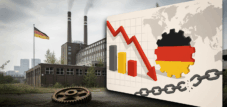
Katherina Reiche: Savior of industry or mouthpiece of corporate lobbying? The dark spots of the Minister of Economic Affairs – Image: Xpert.Digital
Katherina Reiche: From energy company to ministry – power calculation at the expense of the energy transition
Favorable expert opinions and the gas lobby: The explosive secrets of Katherina Reiche
Greenpeace reveals: How the Ministry of Economic Affairs allegedly doctored explosive energy reports
When Katherina Reiche took over the Federal Ministry for Economic Affairs and Energy from Robert Habeck in May 2025, she promised a pragmatic fresh start. But instead of a more efficient energy transition, a dramatic relapse into fossil fuel dependency is increasingly becoming apparent. At the heart of the growing criticism: lucrative consulting contracts for institutes linked to the gas industry, explosive revelations about allegedly manipulated expert opinions, and an unprecedented personnel reshuffle that is plunging the ministry into an atmosphere of mistrust. While Reiche is channeling billions into long-term gas contracts and massively slowing the expansion of decentralized renewable energies, consumers are seeing little of the promised relief in the midst of the acute energy crisis. Is the former board member of an E.ON subsidiary the pragmatic crisis manager that an industrialized nation like Germany needs today – or is her leadership leading to the sell-out of democratic energy policy to corporate lobbyists? A profound analysis of the Reiche era.
Minister of the fossil fuel industry or pragmatic crisis manager? A critical assessment
From energy company to ministry: The path of a controversial minister
Rarely has a move to the Federal Ministry for Economic Affairs and Energy been as controversial as that of Katherina Reiche. The CDU politician, born on July 16, 1973, in Luckenwalde, entered the Bundestag for her party in 1998 and held various positions there for many years, most recently as Parliamentary State Secretary. However, her political career would be incomplete without the crucial period between 2015 and 2025, which significantly shaped her current thinking and actions as a minister. After leaving the Bundestag, she initially became Managing Director of the Association of Municipal Enterprises (VKU), the influential lobby group for municipal energy and water utilities. Observers at the time openly spoke of a classic revolving door phenomenon, the seamless transition from politics to private sector lobbying, which raises questions about conflicts of interest.
From January 2020, Reiche assumed the role of CEO of Westenergie AG, the largest subsidiary of the E.ON Group, which employs around 10,000 people and operates in the gas, electricity, and distribution network sectors. Through its subsidiary Westnetz GmbH, Westenergie operates extensive gas networks and is therefore directly dependent on the regulatory framework of the network business. Concurrently, from June 2020 until her appointment to the ministry in May 2025, Reiche also chaired the German government's National Hydrogen Council, a body that advises on Germany's strategic hydrogen policy. On May 6, 2025, she finally took over as head of the Federal Ministry for Economic Affairs and Energy (BMWE), succeeding Robert Habeck. Even at this early stage, the organization LobbyControl described Reiche as a "mouthpiece of corporate lobbying" and warned of structural conflicts of interest.
Expertise or network power? What truly qualifies the wealthy?
At first glance, Katherina Birgitt Reiche's résumé reads impressively: a diploma in chemistry from the University of Potsdam, research stays at Clarkson University in New York and the University of Turku in Finland, 17 years in the German Bundestag, four of them as Parliamentary State Secretary, first in the Federal Ministry for the Environment and then in the Federal Ministry of Transport. In addition, she spent five years as CEO of Westenergie AG, Germany's largest regional energy supplier with around 10,000 employees, 180,000 kilometers of power lines, 24,000 kilometers of gas network, and a supply for over 7.5 million people. Economic advisor Veronika Grimm described her appointment as a "stroke of luck," and industry representatives praised her "unique combination of management and political experience.".
However, on closer inspection, the image of her as a subject-matter expert fades. While her scientific training as a chemist provides an analytical foundation, it has no direct connection to economics, industrial policy, or macroeconomics. Her parliamentary years were heavily influenced by networking and advancement within her party; as State Secretary, she was spared the thematic breadth of a Minister of Economic Affairs. The decisive career move after politics was, ironically, the CEO position at the Association of Municipal Enterprises (VKU), one of the most important lobbying groups in the German energy sector, with 1,500 member companies nationwide and a total turnover of around €119 billion. There, it wasn't her expertise in policy matters, but rather her ability to mediate between corporations, municipalities, and political decision-makers that established Reiche as a "strongly organized intermediary of interests." At Westenergie, on the other hand, she didn't lead a technology company in a new direction, but managed and expanded an existing network and infrastructure business within the E.ON Group. In 2021, she was honored with the "Mestemacher Award Manager of the Year"—primarily for her commitment to equality and the advancement of women within the company, not for innovative achievements in energy policy. What Reiche brings to the position, therefore, is less the competence of a business strategist than that of an industry-connected networker with political experience: a profile that allows her to translate corporate interests into institutional terms—but also one that is structurally susceptible to precisely those conflicts of interest that critics have accused her of from the outset.
Merz, networks, power: How industry figures shape politics
The pattern is no coincidence, but rather systematic: Chancellor Friedrich Merz himself embodies precisely the same career principle. After leaving the Bundestag in 2002, Merz seamlessly transitioned into the world of finance and corporations – as chairman of the supervisory board of the German subsidiary of the world's largest asset manager, BlackRock, as an advisor to major corporations, and as a lobbyist for his own interests. His reputation as an "economic expert" is based less on academic or entrepreneurial achievements than on the intensive cultivation of connections between capital, corporate executives, and political networks. What connects Merz as Chancellor and Reiche as Minister of Economic Affairs is a structurally identical qualification profile: the industry-oriented networker who opens doors and mediates interests, but rarely produces, researches, or builds anything himself. In a cabinet that sees itself as the answer to the economic crisis, this is a remarkable constellation – and one that requires explanation for citizens who expect concrete relief in the energy crisis.
This situation leads to an almost inevitable institutional consequence. Anyone who takes over a ministry whose core mandate—industrial strategy, energy market regulation, competition policy, securing raw materials—extends far beyond their own expertise needs compensation. The most obvious solution is not to build up their own competence, but to purchase external expertise. What is sold politically as pragmatic efficiency is, structurally speaking, the institutionalized outsourcing of core government functions to third parties whose neutrality, democratic accountability, and interests remain unclear. External consultants fill precisely the vacuum that arises when a minister with a network profile rather than a professional profile is appointed to head one of the federal government's most complex departments. This is not a malicious interpretation, but an institutional logic: the less independent judgment, the greater the dependence on those who supposedly know what to do—and the more freely those corporate interests from whose milieu the minister herself comes can infiltrate policy. The advisory structure is therefore not a supplement to the ministry, but rather its actual control center.
Related to this:


Outsourcing as the norm: Why ministries rely on external consultants
The alternative certainly exists. The Federal Ministry for Economic Affairs and Energy employs several hundred highly qualified civil servants, economists, lawyers, engineers, and industry experts who are specifically trained and paid for the analyses, policy recommendations, and strategic assessments that are now being outsourced. The systematic circumvention of these resources has several layers of explanation that should not be separated. First, ministry officials are bound by instructions, but not obliging: they deliver analyses to the best of their knowledge and conscience, even if the results are politically inconvenient. External consultants, on the other hand, know who commissions and pays them—and what conclusions are desired. The 28 documented interventions in the EWI report are the clearest symptom of this dynamic. Second, the awarding of consulting contracts often follows established network pathways: a minister who comes from a particular corporate milieu knows the consulting firms, institutes, and think tanks close to that milieu, knows their contacts personally, and reflexively trusts their assessments more than the anonymous ministry apparatus. This isn't corruption in the legal sense, but it is cronyism in its most classic form: the preference given to trusted networks over institutional structures, not because the networks are better, but because they are more familiar. Thirdly, outsourcing to external consultants protects political leadership from direct parliamentary scrutiny: ministerial officials can be questioned before committees, external service providers cannot. Decisions made within the ministry remain transparent; recommendations made by an external consultant over the phone do not.
Related to this:


An advisory network outside of democratic control
One of the most remarkable and, at the same time, most controversial aspects of Reiche's tenure is her practice of entrusting core ministry tasks to external consultants. Shortly after taking office, the Federal Ministry for Economic Affairs and Energy (BMWE) relied on external expertise, the institutional integration and democratic accountability of which have since been the subject of intense criticism.
EWI and BET Consulting: Contractors with a history
The most prominent example of external consulting is the energy transition monitoring report "Energy Transition. Efficient.Making." – a nearly 260-page report that Reiche presented in September 2025 as the basis for her change of course in energy policy. The client was the Federal Ministry for Economic Affairs and Energy (BMWi), which submitted a scope of work to BET Consulting GmbH on June 12, 2025. BET Consulting acted as the consortium leader. BET Consulting brought in the Energy Economics Institute at the University of Cologne (EWI) as a key subcontractor.
The choice of these institutes is politically sensitive for several reasons. The EWI is not a neutral institution in the sense that a purely state-funded research center would be. Among the institute's founding financiers are none other than E.ON and RWE, the very corporations that dominated Germany's fossil fuel and nuclear energy supply for decades and whose interests they represent in the energy debate. This constellation takes on particular significance when one considers that Reiche herself was CEO of E.ON subsidiary Westenergie until shortly before her appointment. She is now commissioning an institute from the same corporate environment from which she comes to produce an expert opinion intended to underpin the guidelines of her own policies.
BET Consulting GmbH is a privately owned consulting firm specializing in energy markets, regulation, and grid issues. It has previously worked for the Federal Ministry for Economic Affairs and Energy, including on a project for the Digitalization Barometer for the Energy Transition. For the Energy Transition Monitoring 2025 report, BET coordinated between the client and the EWI team, thus contributing to the content-related coordination of the report.
Related to this:

Greenpeace and the 28 interventions
What initially appeared to be a scientifically sound basis for decisions regarding investments worth billions of euros turned out to be far more problematic after research by the environmental organization Greenpeace. Greenpeace had requested access under the Environmental Information Act to the original version of the EWI report from August 2025, as well as to the email correspondence between the experts and the ministry. After threatening legal action for failure to act, the organization received the relevant documents and presented a systematic comparison.
The result is sensational: At least 28 substantive changes were made between the independently prepared original version and the final version published in September 2025, going far beyond mere editorial revisions. Critical statements regarding the risks of new gas-fired power plants were toned down. References to investment risks and social costs were downgraded in their urgency. Recommendations for action that the institute deemed necessary appear in the ministerial version as merely optional. Particularly serious: According to Greenpeace, statements regarding the costs of the energy transition were allegedly inflated to rhetorically bolster Reiche's ten-point plan.
The ministry rejected the accusations, stating that all changes were due to the experts' own initiative, triggered by a report from the Federal Network Agency that was only published after the original version had been completed. However, this explanation was contradicted by further research: the Federal Network Agency report in question had already been sent to the EWI in advance, even before the original version was finished – which casts doubt on the ministry's official explanation, to say the least. Karsten Smid, energy expert at Greenpeace, put it bluntly: "The monitoring report, in its central findings, is a biased report coordinated with the Ministry of Economic Affairs."
The published version of the EWI report itself states that "a comprehensive expansion of renewable energy plants remains necessary." However, Reiche primarily interpreted this as emphasizing the need to make the expansion more efficient and cost-effective – and used this as justification for slowing down the pace of expansion.
The multi-million euro tender for strategic consulting
While the debate surrounding the EWI report was still ongoing, another measure caused a public outcry. On March 31, 2026, the ministry published a tender for a "framework agreement for strategic top management consulting for the ministry leadership." The tender sought an external company to support the ministry leadership for 9,000 working hours per year, at a cost of at least two million euros. According to the tender, the services included, among other things, analyses of "priority topics" such as resource security, future technologies, and sovereignty, as well as short-term ad-hoc consulting via email and telephone, and the preparation of recommendations for action and presentation materials.
A ministry spokesperson told Der Spiegel that these services were ones "that cannot be provided by employees of the Federal Ministry for Economic Affairs and Energy (BMWi)." This statement sparked disagreement within the ministry itself: according to the report, employees of the ministry explicitly disagreed. The Green Party parliamentary group in the Bundestag immediately submitted a parliamentary inquiry, demanding to know how many direct contracts the ministry had awarded since Reiche's tenure began, which communications and political consulting agencies the ministry worked with, and whether Reiche's speeches were written by external service providers.
LobbyControl described the approach as a "sell-out of democratic politics to corporations" and a "refusal to do her job" by the minister. The core criticism is fundamental to democratic theory: external consultants are not bound by instructions like ministerial officials, are not accountable to parliament, and often work for economic interests that can directly conflict with a ministry's public mandate.
Our EU and German expertise in business development, sales and marketing


Our EU and German expertise in business development, sales and marketing - Image: Xpert.Digital
Industry focus areas: B2B, digitalization (from AI to XR), mechanical engineering, logistics, renewable energies and industry
More information here:
A thematic hub offering insights and expertise:
- Knowledge platform covering global and regional economies, innovation and industry-specific trends
- A collection of analyses, insights, and background information from our key areas of focus
- A place for expertise and information on current developments in business and technology
- A hub for companies seeking information on markets, digitalization, and industry innovations
Gas as a tool of power! Personnel shake-up at the ministry and the consequences for Germany's energy transition
Gas as a strategic weapon: Procurement policy in focus
Hardly any issue reveals Reiche's fundamental political convictions as clearly as her strategy for gas procurement, which has taken on an immediate and existential dimension in the energy crisis of 2026.
The Iran conflict as a stress test
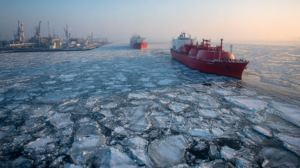
The conflict in Iran and the closure of the Strait of Hormuz from the beginning of 2026 have plunged energy markets in Europe into a new crisis. The Strait of Hormuz, through which a significant portion of the world's oil and liquefied natural gas flows, has been blocked by the conflict. The consequences for Germany are immediately noticeable: according to reports from the portal Verivox, gas prices for new customers have risen by up to 44 percent, and heating oil prices have skyrocketed from 85 to 115 euros per 100 liters. Observers believe that the price increases in Germany were more pronounced than in many neighboring countries.
Reiche responded to the crisis with a mixture of symbolic crisis management and structural reforms. Since mid-March 2026, she has regularly appeared before the press, commenting on the situation with the statement: "The situation is very serious." To provide immediate relief to consumers at gas stations, she announced that operators would only be allowed to raise their prices once a day, that the Federal Cartel Office would intervene more strongly, and that the burden of proof in price-fixing cases would be shifted to the corporations. Furthermore, parts of Germany's oil reserves are to be released to alleviate pressure on the market.
Long-term gas contracts as a political commitment
At a structural level, Reiche has been advocating for months for long-term gas supply contracts with as many countries as possible. The state-owned energy company SEFE is to announce a tender for medium-term gas deliveries between 2027 and 2036; the liquefied natural gas (LNG) is to be delivered primarily to LNG terminals in Northwest Europe, particularly to Germany, the Netherlands, Belgium, and France. The Leipzig-based energy company VNG is to expand its supply relationships with Algeria, and additional gas volumes are to be sourced from Azerbaijan via pipelines.
This strategy is seen by proponents as a rational diversification policy following the traumatic experience of Russian gas dependency. However, it also has a systemic downside, as critics point out: Long-term gas supply contracts for the period up to 2036 tie Germany to fossil-based infrastructure and costs that are incompatible with an accelerated expansion of renewable energies. Hans-Josef Fell of the Energy Watch Group calculated that a delayed expansion of renewables until 2045 would mean additional costs of €320 billion for citizens and businesses, compared to a scenario accelerated to 2035. Furthermore, the Iran conflict has revived questions about Germany's structural dependence on natural gas imports: According to the Green Party, the only difference compared to the Russian dependence before 2022 is that Germany is now dependent on US fracking gas and thus on Donald Trump instead of Vladimir Putin.
Related to this:
A minister caught between the energy camps: For or against renewables?
The public debate about whether Reiche should be classified as a supporter or an opponent of renewable energies misses the actual complexity of her position, but leads to a more nuanced assessment of her energy policy.
The rhetorical break with Habeck
Even at the handover ceremony on May 6, 2025, Reiche praised her predecessor for his "almost superhuman achievement"—a protocol-driven gesture. Around 50 days later, it was clear that this praise lacked any substantive commitment. While Habeck proudly pointed to the increasing share of renewable energies in the electricity mix, Reiche emphasized the costs of the energy transition. She commented on the well-known saying "The sun doesn't send a bill" at the Day of Industry, calling it "as crazy as it is simple," and added that "only someone who knows nothing about energy could come up with it." Instead of speaking of a race toward a climate-neutral economy, Reiche referred to a "turning point" in the energy transition: things couldn't continue as before; security of supply and affordability had to take precedence.
She indirectly questioned the climate goal of climate neutrality by 2045 by suggesting that "harmonization with international goals would be beneficial" – which in a political context can be interpreted as an opening for a lowering of ambitions.
What was specifically planned and implemented
The actual legislation paints a clearer picture. The now-public draft for a reform of the Renewable Energy Sources Act (EEG) proposes completely abolishing the fixed feed-in tariff for all photovoltaic systems under 25 kilowatts of capacity from 2027 onwards. Instead, operators would be required to market new solar power directly on the electricity exchange – an instrument that is practically unfeasible for small rooftop systems and fundamentally calls into question the profitability of private solar investments. The German Solar Association (BSW-Solar) warned of a "devastating blow to solar expansion," while the German Renewable Energy Federation (BEE) spoke of a "further attack on renewables." Researchers have already coined the term "rich man's ravine" to describe the impending collapse in new installations.
At the same time, the priority rules for large wind and solar power plants were called into question in numerous regions; the Building Energy Act, known as the "Heating Act," is to be abolished, which would again permit gas and oil heating systems without restrictions. The practical effect: After record years of wind and solar expansion under the traffic light coalition, hardly any companies in the energy sector are now bidding on tenders for new wind farms.
At the same time, Reiche formally adheres to the 80 percent renewables target by 2030 and emphasized it again in the energy transition monitoring report. The EWI report itself, in its published version, states that "even assuming a slower rate of increase in gross electricity consumption, a rapid expansion of renewable energies will remain necessary in the coming years." This contradiction between stated goals and concrete measures is one of the central political puzzles of the Reiche era.
The clearly favored energy sectors
Despite all the nuances, a clear set of priorities can be discerned in Reiche's actions. She is focusing on new gas-fired power plants with a capacity of at least 20 gigawatts, as stipulated in the coalition agreement. These power plants are intended to be converted to hydrogen in the long term, but analysts point out that hydrogen will hardly be available in sufficient quantities at competitive prices for the foreseeable future. Reiche's power plant strategy is structurally more similar to Habeck's approach than the CDU politician publicly admits: While Habeck had envisioned around 5 gigawatts of conventional gas-fired power plants, Reiche is planning for 8 gigawatts, only slightly more – despite a significantly greater political distancing from the previous strategy. The sectors that will benefit are clearly the gas industry, the gas network infrastructure, and, secondarily, the fossil fuel-based conventional energy sector, represented by companies like E.ON, RWE, and their subsidiaries – the very corporations with which Reiche has been closely associated for years.
Budget and leadership crisis: What's happening in the ministry
In addition to setting the course for energy policy, Reiche's management has profoundly changed the ministry itself, and not for the better, according to internal sources.
The radical personnel restructuring
Immediately upon taking office, Reiche carried out an unprecedented purge of the BMWE's leadership. All three civil servant state secretaries from the Habeck era—Anja Hajduk, Philipp Nimmermann, and Udo Philipp, all members of the Green Party and close confidants of his predecessor—were dismissed. At the department head level, Philipp Steinberg (Economic Stabilization), Sabine Hepperle (SME Policy), Kirsten Scholl (European Policy), and Monika Pfaffmann (Central Department) were removed from their posts. Internally, the move was described as a "clean sweep"; several executives were reportedly informed of their departure only at short notice.
In February 2026, the next bombshell dropped: Department head Yvonne Schreiber, who had already led the ministerial office under CDU Economics Minister Peter Altmaier and had also supported Reiche during the transition, had to vacate her post after only nine months. According to reports in the Handelsblatt newspaper, her dismissal caused open astonishment within the ministry, as Schreiber was considered part of Reiche's inner circle.
Mole search and disciplinary measures
In March 2026, the internal crisis escalated further. After a confidential list of participants in a ministry delegation trip to Saudi Arabia was leaked to the press, the ministry ordered the search of civil servants' email accounts. Employees were forced to sign official declarations. According to reports in Handelsblatt and other media outlets, a climate of mistrust prevails among the staff; internally, there is talk of "arbitrary personnel decisions." Several departments are reportedly currently without a leader because existing employees are reluctant to take on the vacant management positions.
Meanwhile, the budget for the BMWE reflects the chosen course of cuts: For 2026, budget item 09 provides for expenditures of 7.97 billion euros, one billion euros less than in 2025, although total funds including the climate and transformation fund are expected to be around 65 billion euros.
What is being done specifically for the population – and what is not
The crucial political question is: What does Reich's course mean for the people in Germany, especially in times of rising energy prices?
The current relief measures under the wealthy
Reiche points to a package of structural relief measures that the government has put together for 2026. The gas storage surcharge was abolished on January 1, 2026, resulting in savings of €3.4 billion. In addition, there is a federal subsidy of €6.5 billion for transmission network charges, which will lower electricity bills for all consumers. Together with the EEG surcharge, which was already abolished under the previous coalition government and represents annual savings of €17.2 billion, the federal government anticipates total savings of around €10 billion for 2026 – for average households with standard electricity and gas consumption, this amounts to approximately €160 per year. Reiche also announced an industrial electricity price for particularly energy-intensive industrial companies starting in 2026, but this requires EU state aid approval and is considered by industry to have a rather negligible impact on savings.
In the acute Iran crisis, short-term measures were taken at petrol stations, but gas customers with new contracts should still expect price increases in the double-digit percentage range.
The comparison with Habeck: Dimension and methodology
A direct comparison between the relief measures of the Habeck era and those under Reiche clearly illustrates the differences in the historical contexts and political philosophies of the two ministries. The energy crisis following the start of Russia's war of aggression against Ukraine in 2022 was of a different historical dimension than the current Iran crisis. Habeck resorted to direct price intervention: €200 billion was made available in the Economic Stabilization Fund to finance caps on electricity and gas prices. By the end of 2023, approximately €31 billion had actually been disbursed: €11.1 billion for the gas price cap, €11.6 billion for the electricity price cap, €4.8 billion for immediate natural gas assistance, and €3.7 billion as a grid fee subsidy. The price caps set electricity prices for private households at 40 cents per kilowatt-hour and gas prices at 12 cents per kilowatt-hour. In large-scale industry, the electricity price was capped at 13 cents and the gas price at 7 cents.
Habeck's approach was more interventionist, direct, and had a more immediate impact on the population – and it relied on debt-financed special funds, which made it legally vulnerable and ultimately limited in substance by the Federal Constitutional Court's ruling on the supplementary budget. Reiche, on the other hand, is focusing on structural price reductions through tax cuts and market regulation, subsidies for network charges, and medium-term security of supply through gas contracts. This approach is fiscally more conservative and secured by the coalition agreement, but offers less immediate relief to citizens in the current crisis.
Another key difference concerns social targeting. Habeck's energy price caps were assessed by the Öko-Institut and the Hans Böckler Foundation as tending towards regression, since absolute relief amounts increased with consumption, and higher incomes also led to higher energy consumption. On the other hand, direct transfers such as the flat-rate energy price allowance or the increase in housing benefits specifically benefited low-income groups. Reiche's measures, such as the reduction in network charges, also provide structural relief to all consumers equally, without being specifically targeted at low-income households. A targeted social protection program for vulnerable groups in the context of the Iran energy crisis is not yet apparent.
The structural question: What is at stake?
Beyond the day-to-day political debates about expert opinions, consulting contracts and personnel decisions, a deeper economic policy question arises: Which course is more economically sensible for Germany in the long term?
Those in favor of Reiche's approach rightly emphasize that energy costs for industry and households in Germany are extremely high by international standards. According to calculations by the Research Association for Energy Economics, large industrial companies pay around 13 cents per kilowatt-hour, while medium-sized companies often pay significantly more; in China, the comparable price is 8 cents, and similarly favorable rates apply in the USA. Security of supply is not an abstract concept, but a real requirement for an export-oriented industrialized nation like Germany, which depends on an uninterrupted energy supply. The power outage on the Iberian Peninsula in May 2025, which Reiche cited as a warning sign, demonstrates that systemic risks in the energy transition must be taken seriously.
The opposing side of the argument, however, is no less compelling. Even including storage costs, renewable energies are currently the most cost-effective form of electricity generation. As domestic energy sources, they offer the geopolitical security of supply that gas imports structurally cannot provide, as the experiences with Russia in 2022 and Iran in 2026 clearly demonstrate. According to calculations by the Energy Watch Group, a delayed expansion of renewables, which would keep Germany dependent on fossil fuels until 2045, would cost €320 billion more than a scenario accelerated to 2035. The decline in wind power tenders, the significant gap in solar expansion, and the abolition of feed-in tariffs not only jeopardize climate targets but also an emerging domestic industry with considerable employment potential.
In this context, an analysis is revealing, showing that Reiche's own gas-fired power plant strategy is more similar in its basic structure to Habeck's power plant strategy than the political discourse suggests. The differences in performance and costs are smaller than portrayed, according to the specialist portal Table.Media. What remains is the impression of a primarily rhetorical and symbolic departure from the Habeck era, which in concrete implementation involves less of a change of course than the debate suggests – with one significant exception: the targeted weakening of decentralized renewable energy structures, particularly in the area of small-scale solar installations and the regulatory framework for wind power.
Between crisis management and structural policy decisions
Katherina Reiche embodies a type of economic policy that prioritizes security of supply and industrial competitiveness, viewing the fossil fuel sector as a more reliable pillar than volatile renewable energies. This perspective is not irrational as long as it is considered within the context of the short-term crisis demands of an energy-intensive industrialized nation. It becomes problematic, however, when long-term structural decisions are based on expert opinions suspected of politically motivated influence, when external consultants from the fossil fuel industry influence the strategic direction of a ministry, and when, at the same time, the decentralized structures of a citizen-led energy transition are systematically weakened.
Furthermore, the Iran crisis reveals a fundamental weakness in Reiche's own concept: Long-term gas supply contracts, on which she relies as a solution, are themselves a form of strategic dependency. While they secure short-term supplies, they slow down the transition and once again expose Germany to the risk of geopolitical blackmail. The relief measures for the population are real, but their immediate impact is limited, they are structurally oriented rather than precisely targeted, and, compared to the crisis-tested interventionism of the Habeck era, they are less noticeable for vulnerable households.
The question of whether Reiche's tenure as minister ultimately does more harm than good cannot be answered with a simple decision. What can be said with certainty, however, is that democratic control over energy policy—through transparent expert reports, accountable ministerial officials, and open parliamentary processes—has suffered under her leadership. And this loss of institutional trust can hardly be offset by annual savings of €160 per household.