
MSC opens the Saudi land corridor: Europe's new sea route from the Persian Gulf? Bypassing the Hormuz blockade with a desert route
Xpert Pre-Release

Available in 27 languages 📢
Prefer Xpert.Digital on GoogleⓘPublished on: May 10, 2026 / Updated on: May 10, 2026 – Author: Konrad Wolfenstein
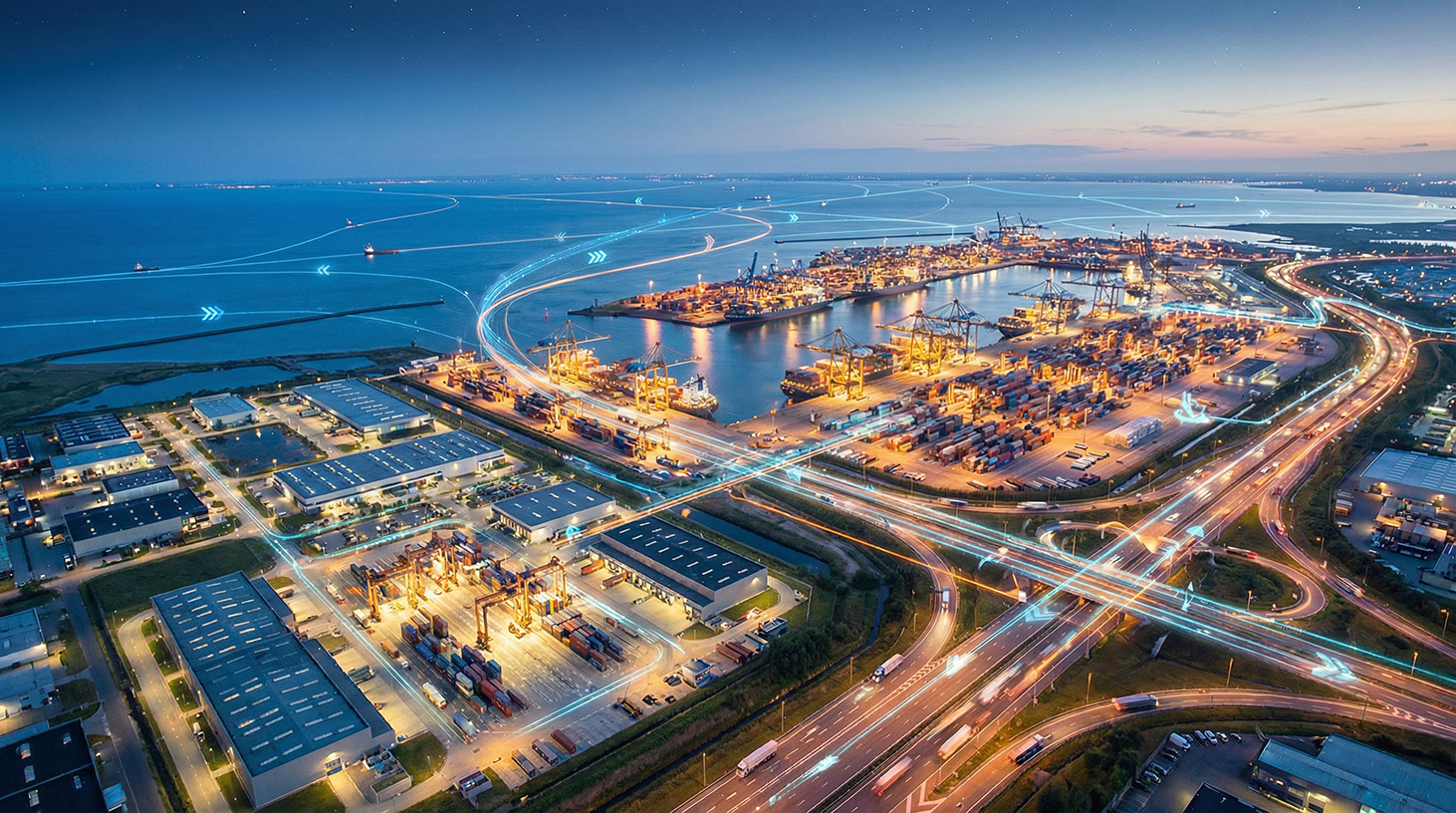
MSC opens the Saudi land corridor: Europe's new sea route to the Persian Gulf – bypassing the Hormuz blockade with a desert route – Image: Xpert.Digital
Profiteer of the mega-crisis: How Saudi Arabia plans to replace the Hormuz bottleneck
The biggest trade crisis in history: How are Europe's imports from the ports on the Persian Gulf now reaching our markets?
Hormuz is closed: How the new MSC corridor through the desert is saving our supply chains
The global economy is facing a historic stress test: Since the outbreak of the US-Israeli conflict in the spring of 2026, the Strait of Hormuz – the most important bottleneck for the world's energy and goods supply – has been largely blocked. Thousands of ships are stranded, and the prices of oil and liquefied natural gas have skyrocketed. Into this geopolitical vacuum, the world's largest container shipping company, MSC, is stepping in with an unprecedented emergency solution: a new multimodal liner service connecting European ports to the Persian Gulf via the Red Sea and a 1,300-kilometer land bridge across the Saudi Arabian desert. But while this temporary feat of engineering maintains crucial supply chains and makes Riyadh a strategic beneficiary, it is encountering severe physical limitations when it comes to global energy flows. This is a detailed analysis of how a single route is redrawing the global logistics map, which players truly benefit, and why decades of infrastructure neglect are dictating today's crisis.
Temporary engineering feat or structural change? Why a single shipping company is redrawing the global logistics network – and why the problem is bigger than any route
The strategic context: When the world's busiest bottleneck dries up
The Strait of Hormuz is no ordinary sea inlet. It is the heart of the global energy supply, a 54-kilometer-wide corridor between Iran and Oman through which, before the outbreak of the US-Israeli conflict on February 28, 2026, around 20 percent of the world's traded crude oil and significant quantities of liquefied natural gas were transported daily. Up to 129 ships passed through the narrow strait every day. Since the start of the conflict, that number has plummeted to a fraction of that – at times to just four or five ships per day. According to the UN's International Maritime Organization (IMO), around 1,500 ships with approximately 20,000 crew members are currently trapped in the Persian Gulf.
This collapse is unprecedented in history. Never before in the history of the modern global economy has such a crucial trade route been so abruptly and completely disrupted. The International Energy Agency described the consequences as the largest oil supply disruption in the history of the global oil market. Brent crude oil surpassed the $120 mark per barrel, and petroleum products and liquefied natural gas (LNG) became dramatically more expensive worldwide. LNG prices rose by 74 percent between February 27 and March 9, 2026, and crude oil prices by 27 percent.
Into this geopolitical vacuum, the world's largest container shipping company, MSC Mediterranean Shipping Co., is now stepping in with a pragmatic, albeit imperfect, solution.
The new route: Anatomy of a multimodal emergency solution
The “Europe – Red Sea – Middle East Express” announced by MSC on May 2, 2026, is not a typical liner service, but a multimodal concept combining sea, land, and feeder shipping. The first sailing is scheduled for May 10, 2026, from Antwerp, with the eastern rotation plan including the following ports: Gdansk, Klaipeda, Bremerhaven, Antwerp, Valencia, Barcelona, Gioia Tauro, Abu Kir, King Abdullah Port, Jeddah, and Aqaba.
The unique technical feature lies in the land bridge across Saudi Arabia. Container ships with a capacity of 14,000 to 16,000 TEU unload their cargo in the Saudi Arabian ports on the Red Sea: King Abdullah Port in Rabigh and the Islamic Port of Jeddah. From there, the goods are transferred to trucks and transported via a roughly 1,300-kilometer route, passing through Riyadh, to the eastern port of Dammam. From Dammam, feeder ships handle the onward distribution to the Persian Gulf – to ports in the United Arab Emirates such as Jebel Ali and Abu Dhabi, as well as to Bahrain, Kuwait, and Iraq.
Even before the launch of the new liner service, MSC had issued so-called "End of Voyage" declarations, whereby cargo destined for the Gulf was unloaded at the nearest safe ports and onward transport was organized separately. The new service institutionalizes this emergency measure as a permanent part of the network, transforming a reactive measure into a predictable logistics structure.
Beneficiaries of the route: Who benefits the most?
The question of who wins from this new relationship can only be answered in a nuanced way. Not all trading partners benefit equally – and some don't benefit at all.
Northern European countries with strong export economies, such as Germany, the Netherlands, Belgium, and Poland, are among the direct users of the new route. The ports of Antwerp, Bremerhaven, and Gdansk are integrated into the rotation schedule. For German exporters supplying mechanical engineering products, automobiles, or chemicals to the Middle East, the service provides a reliable and predictable connection for the first time since February 2026. Commerzbank economists had previously warned that German supply chains were under considerable pressure due to the Hormuz crisis, particularly because Germany imports aluminum, noble gases, and petrochemical products from the Gulf States.
Southern European ports such as Valencia, Barcelona, and Gioia Tauro are also integrated into the route and act as hubs for cargo from the western Mediterranean. This is significant for Spain, Italy, and their trading partners in North Africa. The Egyptian port of Abu Kir is another point of contact, providing a link to North African markets.
Saudi Arabia itself is the real geopolitical winner in this situation. The Kingdom is positioning itself as an indispensable transit nation. Utilizing the existing road infrastructure between Jeddah and Dammam, as well as increasing port capacity at King Abdullah Port and the Islamic Port of Jeddah, aligns with the National Transport and Logistics Strategy to establish Saudi Arabia as a global logistics hub spanning three continents. The full utilization of the East-West pipeline, with a capacity of seven million barrels per day, further underscores this key role.
Despite the Hormuz blockade, the United Arab Emirates has a vested interest in maintaining the flow of goods. Jebel Ali, by far the region's most important container port with an annual throughput of approximately 15.5 million TEU, lies entirely behind the Hormuz bottleneck. Imports destined for the UAE can once again arrive via the MSC land bridge, even though the detour via Jeddah and Dammam entails additional costs and delays. UAE port authorities have already activated emergency customs clearance procedures that allow direct road transport to Jebel Ali and the Abu Dhabi Free Zones.
Jordan benefits from the inclusion of the port of Aqaba in the rotation schedule. For a landlocked country like Jordan, which relies on the sea connection via Aqaba on the Red Sea, the new MSC route provides a direct link to major European ports.
India occupies a unique position. Before the Hormuz crisis, approximately 84 percent of the crude oil and 83 percent of the LNG passing through the Strait of Hormuz was transported towards Asia – primarily to China, Japan, South Korea, and India. While the MSC route primarily addresses the connection between Europe and the Gulf, India indirectly benefits from the stabilization of Gulf logistics, as many Indian seafarers and trade relationships are rooted in the region.
Structural limitations: What this route cannot do
As pragmatic as the MSC service is, it doesn't solve the core problem of the Hormuz standstill. It only solves a tiny part of it. The entire existing maritime trade capacity through the Strait of Hormuz cannot be even remotely replaced by a single liner service with 14,000 to 16,000 TEU vessels.
The structural problem is that Kuwait, Qatar, and Bahrain have no coastline outside the Persian Gulf. For them, there is simply no maritime alternative to the Strait of Hormuz. Kuwait's crude oil exports of around two million barrels per day passed entirely through Hormuz, which is why the Kuwait Petroleum Corporation declared force majeure in March 2026 and extended this state of affairs in April. Qatar's LNG facility in Ras Laffan, with a capacity of 77 million tons annually—around 19 percent of global LNG trade—has no alternative to Hormuz for shipping exports. Even MSC's Saudi land bridge is of no use here: liquefied natural gas cannot be loaded onto trucks and transported 1,300 kilometers across the desert.
The container shipping sector is also reaching its physical limits. Before the war, the Persian Gulf handled around 33 million TEU annually. The new MSC route can only absorb a small fraction of that. Even if other shipping companies establish similar services – and they will – the overall capacity will remain far below pre-war levels.
The 1,300-kilometer truck route between Jeddah and Dammam is also a significant logistical intervention. It considerably increases transit times, causes substantial additional costs, and creates new bottlenecks when transport capacities and road infrastructure reach their limits. This corridor was never designed for the volumes generated by global container trade with the Persian Gulf.
The extent of the economic damage: shocking figures
The economic consequences of the Hormuz closure extend far beyond regional energy trade. UNCTAD data shows that immediately before the conflict, 38 percent of global maritime trade in crude oil, 29 percent of LPG trade, 19 percent of LNG trade, 13 percent of chemical trade, and 2 percent of dry bulk trade flowed through the strait.
The diversion of these goods flows through the Panama Canal has driven auction prices for short-term transit slots to astronomical heights. While regular bookings cost between $300,000 and $400,000, auctions have seen individual payments of up to $4 million per slot – thirteen times the usual price. The Panama Canal Authority confirmed that the average auction price has risen from $135,000 before the crisis to around $385,000. The Panama Canal also recorded an increase in shipping traffic of almost four percent in the first half of its fiscal year.
For Europe, and Germany in particular, the effects are multifaceted. While less than one percent of German imports and around 1.8 percent of EU imports directly pass through the Strait of Hormuz, the indirect dependencies are far greater: Approximately 6.2 percent of the crude oil imported by the EU from non-EU countries and 8.7 percent of LNG imports transit the Strait of Hormuz. Furthermore, Germany and other European industrialized nations are heavily reliant on petrochemical products, fertilizers, noble gases, and aluminum sourced from the Gulf States. Since a large proportion of important chemical compounds are derived from petroleum, and natural gas forms the basis of synthetic fertilizers, the relevant production facilities are predominantly located in the countries surrounding the Persian Gulf.
For developing countries in Africa and Asia, the situation is even more dramatic. Sudan, Sri Lanka, Tanzania, Somalia, Pakistan, and Kenya obtain 27 to 54 percent of their fertilizer imports by ship from the Persian Gulf. A persistent shortage of fertilizers directly jeopardizes the food security of these countries – and this in a global situation already under pressure from rising food prices.
Your container high-bay warehouse and container terminal experts

Container high-bay warehouses and container terminals: The logistical interplay – expert advice and solutions - Creative image: Xpert.Digital
This innovative technology promises to fundamentally change container logistics. Instead of stacking containers horizontally as before, they will be stored vertically in multi-story steel racking structures. This not only allows for a drastic increase in storage capacity within the same area, but also revolutionizes all processes at the container terminal.
More information here:
How Saudi Arabia is becoming the land bridge between Europe and Asia: The new logic of supply chains
The infrastructure deficit: What has been waiting to be implemented for decades
The current crisis painfully exposes what planning optimism and geopolitical rivalries have prevented for decades. The GCC rail network, intended to connect all six member states of the Gulf Cooperation Council over 2,177 kilometers, was agreed upon in 2009. Since then, completion dates have been repeatedly postponed – first to 2018, then 2021, then 2025, and now officially to 2030. With project costs estimated at US$250 billion and an ambitious timeline, its realization is plausible, but far from certain. Even if the network were to become operational as planned, it would be four years too late in light of the current crisis.
The Saudi Arabia-Qatar high-speed rail project, approved by the Saudi cabinet, envisions a 785-kilometer route with speeds exceeding 300 km/h and is projected to be completed in the early 2030s. While this is politically relevant, it does not resolve the current crisis.
The India-Middle East-Europe Economic Corridor, or IMEC, was initiated at the 2023 G20 summit in New Delhi as a geopolitical response to China's Belt and Road Initiative and remains largely in the conceptual stage. The corridor would create a rail and port link between Mumbai, the United Arab Emirates, Saudi Arabia, and European ports. Its fundamental problem: it presupposes a normalization of relations between Saudi Arabia and Israel—a condition that, given the ongoing conflict, seems highly unlikely. Experts describe the project in its current form as fragile, if not hypothetical. While the conclusion of a long-awaited EU-India trade agreement in January 2026 gives the project new momentum, it does nothing to change the structural geopolitical obstacles.
Related to this:

Inspiration and conceptual proximity to IMEC
At first glance, the question arises whether the new MSC-Saudi land corridor is an operational anticipation of what was envisioned at the political level with the India-Middle East-Europe Economic Corridor (IMEC). Both concepts share a central underlying idea: to reduce the vulnerability of maritime bottlenecks such as the Strait of Hormuz through multimodal, land-based corridors and to enhance Saudi Arabia as a logistical bridgehead between Europe and the wider Middle East. While IMEC was designed as a long-term, state-supported infrastructure and geopolitical project, the MSC land corridor, on the other hand, is a short-term, corporate-driven response to an acute crisis. The conceptual similarity is undeniable, but it is based more on a shared problem horizon than on a direct copy.
IMEC is focusing on a large-scale integration of sea, rail, and road transport between India, the Gulf States, Saudi Arabia, Jordan/Israel, and European Mediterranean ports. The corridor is designed as a strategic diversification option compared to traditional routes through the Red Sea and the narrow passages around the Gulf, and includes energy, data, and digital infrastructure in addition to transport. In contrast, the MSC service pursues a significantly narrower, operational objective: it secures the physical flow of goods between Europe and the Gulf markets by linking existing Red Sea ports with a road-based land bridge through Saudi Arabia and subsequent feeder services into the Persian Gulf. In effect, it utilizes the same geographical logic, but without the political overarching framework and without the ambition of a comprehensive macro-corridor.
From a chronological perspective, there is much to suggest that the MSC corridor did not emerge as a direct copy of IMEC, but rather arose in parallel from the same structural vulnerability. IMEC has existed as a political framework since 2023, but the specific MSC solution was only implemented under the immediate pressure of the Hormuz blockade. For the shipping company, the focus was not on creating a symbolic, long-term corridor, but rather on the rapid restoration of operational supply chains. The fact that this solution nevertheless appears to be a pragmatic, scaled-down version of the IMEC logic is less an expression of imitation than of path convergence: anyone currently seeking ways out of Hormuz dependence inevitably arrives at Saudi Arabia as a land hub and at multimodal connections between Europe, the Red Sea, and the Gulf.
Saudi Arabia's dual economic character: profiteer and crisis manager
No other actor in the region embodies the contradiction of this crisis more than Saudi Arabia. On the one hand, the kingdom is directly affected by the Hormuz blockade – its crude oil exports from the eastern provinces can no longer be carried out directly by sea. On the other hand, it is the only Gulf state with a significant maritime alternative route: the East-West pipeline, which has served as a strategic reserve since the Iran-Iraq wars of the 1980s.
This pipeline, also known as the Petroline, connects the eastern oil fields in Ash-Sharqiyah province with the Red Sea port of Yanbu and has been operating at full capacity of seven million barrels per day since the start of the conflict. Crude oil exports via Yanbu have reached five million barrels daily, in addition to 700,000 to 900,000 barrels of refined petroleum. However, this is not enough to replace the total regional export volume.
At the same time, Saudi Arabia is actively positioning its logistics infrastructure as an alternative corridor for the entire Gulf. The use of the Jeddah-Dammam truck route within the framework of the MSC service aligns perfectly with the national strategy of establishing the Kingdom as a connecting point between Asia, Europe, and Africa. From this perspective, the crisis also presents Saudi Arabia with an opportunity to position itself as an indispensable transit state.
Shipping companies and their crisis architecture
MSC is not alone in its adaptive route solutions. Maersk, its largest competitor worldwide, has established an extensive land-bridge program for export and import flows from the Upper Gulf, encompassing connections from Dammam, Jubail, Bahrain, Kuwait, Qatar, and the UAE via Jeddah, as well as from Aqaba to Iraq. This creates a multimodal network of road and short-sea connections, which, to a limited extent, replaces traditional direct transport through the Strait of Hormuz.
Bypassing Africa via the Cape of Good Hope is an option for routes between Europe and Asia, but it adds several weeks to transit times and significantly increases fuel costs. For the specific trade route between Europe and the Persian Gulf, this route offers little added value, as the Cape would entail an even more extensive detour.
The increased insurance premiums are further exacerbating the cost situation. War risk insurance for transport in the Strait of Hormuz has risen from approximately 0.5 percent of the ship's value to almost five percent – a tenfold increase. This makes even partial transit attempts through the Strait of Hormuz economically unattractive for most commercial operators.
Geopolitical stabilization attempts and their limits
The international community is making efforts to reopen the strait. The ambassadors of Bahrain, the US, the UAE, Qatar, Saudi Arabia, and Kuwait have jointly submitted a UN Security Council draft resolution calling on Iran to cease attacks on merchant ships, end illegal toll collection, and clear sea mines. The Pentagon announced a naval initiative involving destroyers, more than 100 aircraft, and 15,000 troops to escort stranded vessels—however, the move was withdrawn shortly after the announcement, as Iran considered it a violation of the ceasefire.
Even with a political agreement and a formal reopening of the strait, the challenges will not disappear immediately. The Pentagon estimated that clearing the Iranian-planted sea mines could take up to six months. War risk insurance is not expected to return to pre-crisis levels until a stable and lasting security situation is established. Capital market analysts and logistics experts anticipate that even after a nominal reopening, shipping will remain restricted for months.
BIMCO's Chief Security Officer, Jakob Larsen, explained that for most shipping companies, a stable ceasefire and explicit security guarantees from both sides in the conflict were the minimum requirements for a return to regular operations. Even then, ships could only use routes close to the Iranian and Omani coasts, which would significantly reduce capacity compared to pre-war levels.
Effectiveness assessment: A sober overview
So how effective is the new MSC route really? An honest answer is: considerably more effective than no solution at all, but structurally insufficient for a lasting overcoming of the crisis.
It is a positive development that MSC is institutionalizing a trade route that previously existed only sporadically. The integration of nine European ports, from the Baltic Sea to the western Mediterranean, creates broad geographical coverage. Predictable departure times enable supply chain planning in an environment characterized by uncertainty. Saudi Arabia is enhanced as a transit nation, which promotes the long-term development of logistics capacities. A supply route is established for the Gulf states of the UAE, Bahrain, Kuwait, and Iraq, even if it involves additional costs and delays.
Among the structural limitations is the fact that the route cannot replace oil, gas, and LNG exports from Qatar, Kuwait, and Bahrain. The time lost due to the 1,300-kilometer overland route is considerable and economically burdensome. Capacity is limited—a service with vessels of 14,000 to 16,000 TEU falls far short of pre-war volumes. Feeder dependencies in the Gulf create new bottlenecks, and truck transport across the Arabian Peninsula is prone to capacity constraints, extreme heat, and security risks.
The true significance of this initiative lies less in its immediate logistical impact than in its strategic signaling effect: MSC demonstrates that multimodal alternatives to Hormuz are possible – albeit expensive, slow, and limited. This fundamentally alters the calculations for investments in infrastructure projects such as the GCC rail network, the IMEC corridor, and the expansion of Saudi Arabian and Jordanian ports.
What the crisis will permanently change
Regardless of the outcome of the geopolitical crisis surrounding the Strait of Hormuz, global shipping will look different after this experience. Supply chains, optimized for decades for the efficiency of the Hormuz passage, will be diversified. Shipping companies will integrate multimodal capacities into their standard networks. Saudi Arabia and Jordan will expand their logistics infrastructure because the demand for it is now permanently evident. The GCC rail network will receive more political support than it has in the past fifteen years.
The crisis also exposes a failure of preventative infrastructure policy. The vulnerability of the global economy to a single geographical bottleneck was well known. Qatar's dependence, which exports 19 percent of the world's LNG exclusively via the Hormuz strait, had been discussed for years. The gaps in the GCC rail network, the missing pipelines for Kuwait and Bahrain, the structural instability of the IMEC project: all of this was no secret. Yet too little action was taken.
With its "Europe – Red Sea – Middle East Express," MSC has demonstrated what is possible in the short term when companies innovate under pressure. However, the political and infrastructural response to this crisis must be significantly more ambitious than a truck route across the Saudi desert – even if this route will literally move goods in May 2026 that would otherwise go nowhere.
Consulting - Planning - Implementation

Konrad Wolfenstein
I would be happy to serve as your personal advisor.
me at wolfenstein∂xpert.digital contact
Just call me on +49 7348 4088 965 .
Our global industry and economic expertise in business development, sales and marketing

Our global industry and economic expertise in business development, sales and marketing - Image: Xpert.Digital
Industry focus areas: B2B, digitalization (from AI to XR), mechanical engineering, logistics, renewable energies and industry
More information here:
A thematic hub offering insights and expertise:
- Knowledge platform covering global and regional economies, innovation and industry-specific trends
- A collection of analyses, insights, and background information from our key areas of focus
- A place for expertise and information on current developments in business and technology
- A hub for companies seeking information on markets, digitalization, and industry innovations
Your container high-bay warehouse and container terminal experts

Container terminal systems for road, rail and sea transport in the dual-use logistics concept of heavy-lift logistics - Creative image: Xpert.Digital
In a world marked by geopolitical upheavals, fragile supply chains, and a new awareness of the vulnerability of critical infrastructure, the concept of national security is undergoing a fundamental reassessment. A state's ability to guarantee its economic prosperity, the provision of essential goods and services to its population, and its military capability increasingly depends on the resilience of its logistical networks. In this context, the concept of "dual-use" is evolving from a niche category of export control to a broader strategic doctrine. This shift is not merely a technical adjustment but a necessary response to the "paradigm shift" that demands a profound integration of civilian and military capabilities.
Related to this:










