
33 kilometers of crisis that has the world holding its breath: What the Hormuz crisis reveals about the fragility of the global trading system
Xpert Pre-Release

Available in 27 languages 📢
Prefer Xpert.Digital on GoogleⓘPublished on: April 19, 2026 / Updated on: April 19, 2026 – Author: Konrad Wolfenstein
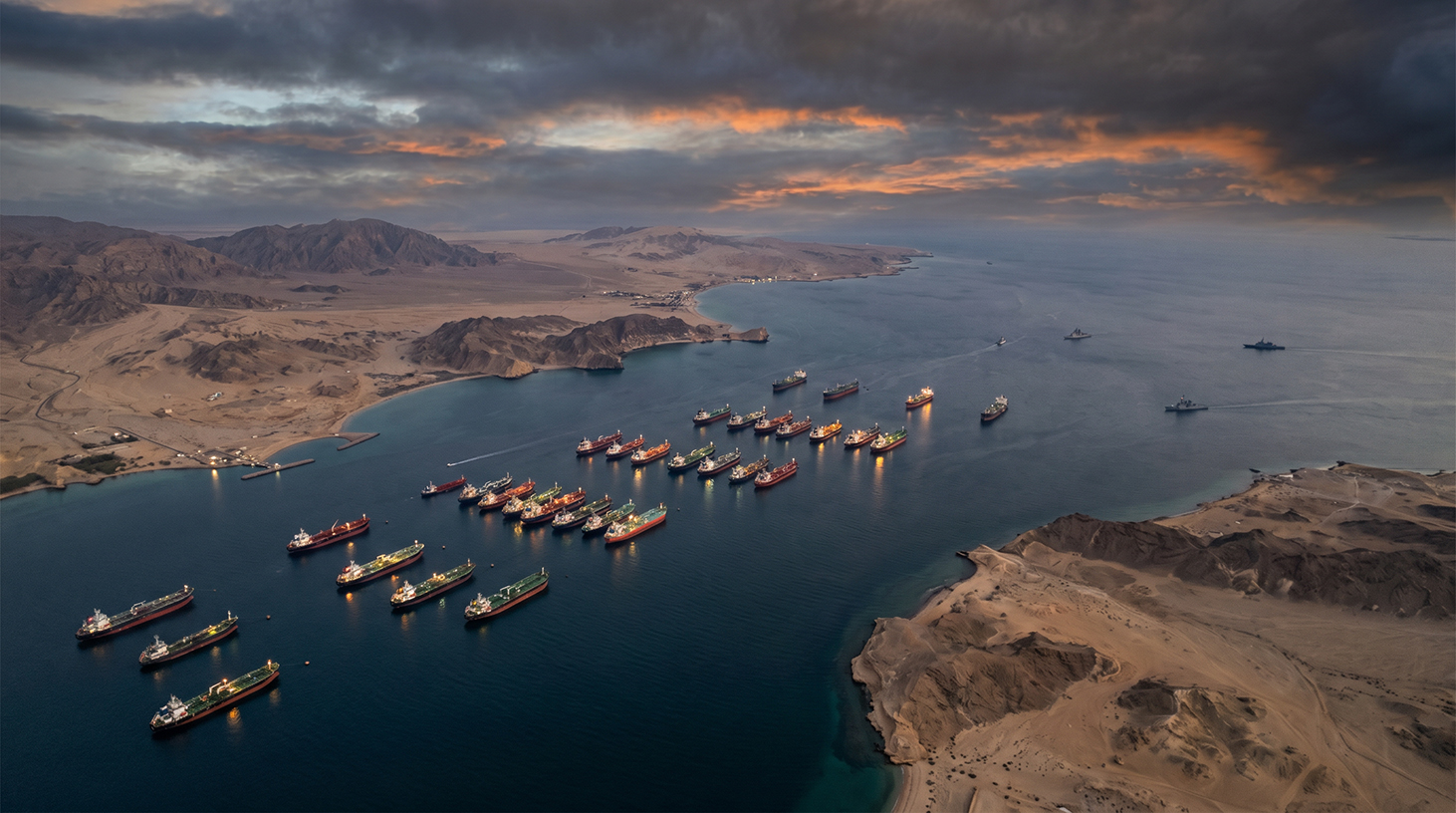
33 kilometers of crisis that has the world holding its breath: What the Hormuz crisis reveals about the fragility of the global trading system – Creative image: Xpert.Digital
The end of "just-in-time": Why a single sea inlet threatens the German economy
Warning sign for global trade: What the blockade in the Persian Gulf means for our prices
Oil price shock and global shortages: 3 scenarios now facing the economy
A narrow 33-kilometer strait is shaking the global economy. What was long considered a theoretical risk scenario has become a bitter reality with the Hormuz crisis: A regional conflict in the Persian Gulf is not only driving up global energy prices but also revealing the frightening fragility of our supply chains, which are geared towards maximum efficiency. From exploding oil prices and disrupted trade routes to a lack of intermediate goods for German industry – the dramatic consequences show that the decades-old mantra of "just-in-time" logistics becomes a dangerous Achilles' heel in times of crisis. This article examines why our dependence extends far beyond fossil fuels, which global bottlenecks further threaten world trade, and why companies and policymakers alike must now urgently invest in resilience to weather future shocks.
A bottleneck as a reflection of our dependencies
There are places on Earth whose geographical location is so strategically important that their existence can hold the entire global economy hostage. The Strait of Hormuz is one such place. Only about 50 kilometers wide at its widest point, narrowing to 33 kilometers at its narrowest, with shipping lanes a mere three kilometers wide in each direction – and yet: through this narrow corridor between Iran in the north and Oman and the United Arab Emirates in the south flows one-fifth of the world's total oil trade. Around 20 million barrels of oil and oil products pass through the strait daily, which, according to calculations by the US Energy Information Administration (EIA), corresponds to an annual energy trading volume of nearly $600 billion. In addition, about 20 percent of the world's liquefied natural gas (LNG) is transported through this route, primarily from Qatar.
What had long been considered a hypothetical risk became an economic reality in 2026. Amidst the military tensions between the US, Israel, and Iran, shipping traffic through the Strait of Hormuz virtually ground to a halt. Shipping companies Hapag-Lloyd and Maersk suspended their voyages through the strait. Several major marine insurers canceled their war risk coverage for ships in the Persian Gulf. Over 150 oil and gas vessels were anchored in the region's waters, including major tankers from Saudi Arabia, Iraq, Kuwait, and Qatar. According to EU estimates, gas prices subsequently rose by 70 percent and oil prices by 50 percent. The increased cost of importing fossil fuels alone resulted in additional expenses of €13 billion for Europe.
The domino effect: How a regional disruption escalates globally
What the Hormuz crisis reveals in its full scope is not the disturbance itself – it is the speed and reach of its consequences. A regional conflict, geographically confined to a 33-kilometer-wide arm of the sea, triggered a global chain reaction within days. The price of oil rose above $100 per barrel. The DAX index fell by over two percent. Asian governments and refineries began assessing their oil reserves. Containers began piling up at ports and transshipment points in Europe and Asia, as Jeremy Nixon, CEO of the container shipping company Ocean Network Express, warned.
The most immediate consequence was a sharp rise in energy prices, triggered by a sudden supply shortage and uncertainty about the duration of the disruptions. Iranian attacks damaged an estimated 30 to 40 percent of refinery capacity in the Gulf, cutting off approximately 11 million barrels of oil per day from global supplies. On a single Monday, the price of oil jumped by 13 percent. Economists issued stark warnings about the macroeconomic consequences: Persistently high oil prices act like a tax increase on the entire economy and could reignite inflation in Germany. Jörg Krämer, chief economist at Commerzbank, offered a precise distinction: If the conflict lasts only a few weeks, the German economy would be virtually unaffected. However, should the escalation drag on, both the economy and inflation could be significantly impacted.
Not just oil: The hidden supply chain interconnections
The popular misconception about the Hormuz crisis is that it is primarily an energy problem – and that since Germany sources only a small portion of its oil from the Middle East, the impact is limited. This assessment underestimates the structural complexity of global supply chains. An analysis by Commerzbank shows that the actual risks for Germany and Europe extend far beyond direct energy imports.
Germany and other European countries import various goods from the states bordering the Persian Gulf, including chemicals, noble gases, and aluminum. Petrochemicals derived from petroleum and synthetic fertilizers, which require natural gas for production, originate to a considerable extent from the Gulf region. Furthermore, there is an indirect dependence through Asian economies—particularly China, Japan, South Korea, and India—which are themselves heavily reliant on energy from the Middle East and simultaneously represent important suppliers for German and European industry. An energy crisis in Asia will inevitably lead to a supply chain crisis in Europe.
A joint study by the Supply Chain Intelligence Institute Austria (ASCII), the Complexity Science Hub, and TU Delft shows that a prolonged closure of the Strait of Hormuz could have significant repercussions for global supply chains and energy markets, extending far beyond the directly affected countries. This systemic vulnerability has long been known but has been regularly ignored – with the typical optimism of untroubled prosperity.
The efficiency paradox: How just-in-time logistics became the Achilles' heel
To understand the structural causes of this fragility, one must look back at the business administration theories of the past three decades. The mantra of the globalized economy was: maximum efficiency, minimum inventory, maximum interconnectedness. Just-in-time production, global division of labor, central hubs, and mega-ports—all of this reduced costs and increased productivity to a spectacular degree. International trade now accounts for almost two-thirds of global gross domestic product, as World Bank data shows. The flip side of this interconnectedness is the dramatic increase in vulnerability.
When the coronavirus pandemic shook the world in 2020, this downside became visibly apparent for the first time. Production lines ground to a halt because a single component from the Far East was missing. Chips became scarce for the entire automotive industry. Pharmaceutical ingredients, whose production had shifted almost entirely to India and China over decades, suddenly became scarce. The message was clear: Global supply chains are more vulnerable than many companies would like to admit, as René Petri, an expert at the procurement consultancy Proxima and author of the Global Sourcing Risk Index, clearly states. The pandemic has unequivocally demonstrated that the system in which we operate is extremely fragile in terms of its supply chains.
But instead of drawing systematic conclusions from this insight, many companies reverted to old patterns after the acute crisis ended. Inventories were reduced, the supplier base was further consolidated, and geographical risks were accepted in favor of price advantages. The economic term for this is the "resilience investment dilemma": In calm times, redundancies and buffers appear as a pure cost factor – their value only becomes apparent in a crisis, when it is too late to build them up.
Our global industry and economic expertise in business development, sales and marketing

Our global industry and economic expertise in business development, sales and marketing - Image: Xpert.Digital
Industry focus areas: B2B, digitalization (from AI to XR), mechanical engineering, logistics, renewable energies and industry
More information here:
A thematic hub offering insights and expertise:
- Knowledge platform covering global and regional economies, innovation and industry-specific trends
- A collection of analyses, insights, and background information from our key areas of focus
- A place for expertise and information on current developments in business and technology
- A hub for companies seeking information on markets, digitalization, and industry innovations
The invisible bottlenecks of global trade – and how companies can close them
The geography of global vulnerability: More bottlenecks than expected
The Strait of Hormuz is merely the most spectacular example of a far larger structural weakness. The global trading system is based on a surprisingly small number of critical bottlenecks, the disruption of which would have systemic consequences. The Suez Canal, through which approximately twelve percent of all global trade flows, has already been under pressure since 2023 due to Houthi attacks in the Red Sea. Since then, most major shipping companies have been circumventing the Cape of Good Hope, which significantly increases transport times and costs. The blockade of the Strait of Malacca would affect all maritime trade between Europe, the Middle East, and the Asia-Pacific region.
In addition to these maritime bottlenecks, there are equally significant concentration points for individual raw materials and intermediate products. The Congo supplies approximately two-thirds of global cobalt production – essential for battery technologies. China controls about 85 percent of global rare earth processing – indispensable for electric motors, wind turbines, and military systems. Taiwan produces over 60 percent of all advanced semiconductors used worldwide. The Bundesbank has conducted this systematic analysis in detail: Rising geopolitical risks in trading partner countries increase the cost and dampen imports and disrupt supply chains, with risks related to China being particularly significant.
The KfW Research Chartbook succinctly summarizes the structural challenge: The crises since 2020 have increased the pressure for change in international supply chains. Critical dependencies on mineral and energy resources, semiconductors, and green and digital technologies are the focus. Structural change also creates new dependencies.
Three scenarios for the oil market: What economists and strategists expect
In light of the Hormuz crisis, global financial institutions are working on concrete scenarios for further developments. Morgan Stanley outlined three scenarios for the oil market: In the de-escalation scenario, in which normal shipping resumes within a month, Brent crude would trade in a range of $80 to $90 per barrel before falling to $75. In the persistence scenario, a longer shutdown without full escalation, oil prices would remain permanently above $100, with significant inflationary consequences for the entire global economy. In the escalation scenario, a level similar to the energy shock of the 1970s would be likely, with oil prices well above $120.
The G7 leaders – including Germany, France, the UK, Japan, Canada, Italy, and the US – pledged on March 30, 2026, to take whatever measures are necessary to ensure energy stability and global supply. The signal was important, but it addresses the symptom, not the cause. Strategic oil reserves can cushion short-term shocks, but no instrument can replace the structural vulnerability of a trading system optimized for maximum efficiency and minimum redundancy.
What companies need to do now: Resilience as a strategic investment
This analysis reveals a clear need for action for companies, one that goes far beyond simply increasing inventory. Building resilient supply chains requires in-depth strategic measures and a better understanding of global interdependencies. This begins with what is known in the industry as "supply chain mapping": a complete mapping of all supplier levels, raw material sources, and logistics routes – including indirect dependencies that are often underestimated.
The Global Sourcing Risk Index by the consultancy Proxima assesses 30 economies based on eight risk dimensions – from geopolitics and climate to human rights. The result is counterintuitive in many respects: The very countries that have benefited from current trade movements – those that have gained importance through reshoring and diversification from China, such as Mexico, India, and Turkey – pose the greatest risks. The supposed solution creates new vulnerabilities. Climate risks permeate all the regions studied. The question is not whether, but when extreme weather events will disrupt supply chains – with particular risks in Southeast Asian regions that are indispensable suppliers for German industry.
The role of politics: Between openness and resilience
The economic policy response to this fragility is complex and polarized. Protectionism and complete deglobalization would not be a solution – the costs of decoupling would be prohibitive. Germany and Europe are too small and resource-poor to be economically self-sufficient. The alternative lies in a differentiated approach, which the EU Commission calls "strategic openness": economic integration where it does not create critical dependencies, but active resilience building for systemically critical raw materials, technologies, and infrastructure.
Specifically, this means: diversifying the supplier base for critical intermediate products, strategically stockpiling key materials, building up domestic European production capacities in strategically important sectors – semiconductors, pharmaceuticals, rare earths – and pursuing an active foreign trade policy that protects and secures trade routes. All of this costs money and reduces efficiency in the short term. But the alternative is more expensive: a single month of Hormus shutdown can cause damage that overshadows any efficiency gains of recent years.
The Hormuz crisis, in this sense, is not an accident of globalization. It is a structural warning signal: the global trading system in its current form is not designed for crisis resilience, but for efficiency under normal conditions. In a world where normal conditions are becoming increasingly rare, this is no longer sufficient.
Your global marketing and business development partner
☑️ Our business language is English or German
☑️ NEW: Correspondence in your native language!

Konrad Wolfenstein
I and my team are happy to be available to you as your personal advisor.
You can contact me by filling out the contact form here or simply call me at +49 7348 4088 965. My email address is : [email protected]
I'm looking forward to our joint project.
☑️ SME support in strategy, consulting, planning and implementation
☑️ Creation or realignment of the digital strategy and digitization
☑️ Expansion and optimization of international sales processes
☑️ Global & Digital B2B trading platforms
☑️ Pioneer Business Development / Marketing / PR / Trade Fairs
🎯🎯🎯 Data-driven B2B industry hub as a quasi-in-house solution

The quasi-in-house solution: How Xpert.Digital closes operational gaps in B2B marketing and sales – Smart Content-Driven Business - Image: Xpert.Digital
Xpert.Digital is a data-driven B2B industry hub led by Konrad Wolfenstein . The company acts as an external, quasi-in-house solution for industrial partners, closing operational gaps in marketing, content, and sales – without requiring additional resources on the client side.
More information here:










