

Europe's fertilizer supply: Whoever controls the supply chain controls the harvest – traditional procurement methods are obsolete
Xpert Pre-Release

Available in 27 languages 📢
Prefer Xpert.Digital on GoogleⓘPublished on: July 1, 2026 / Updated on: July 1, 2026 – Author: Konrad Wolfenstein
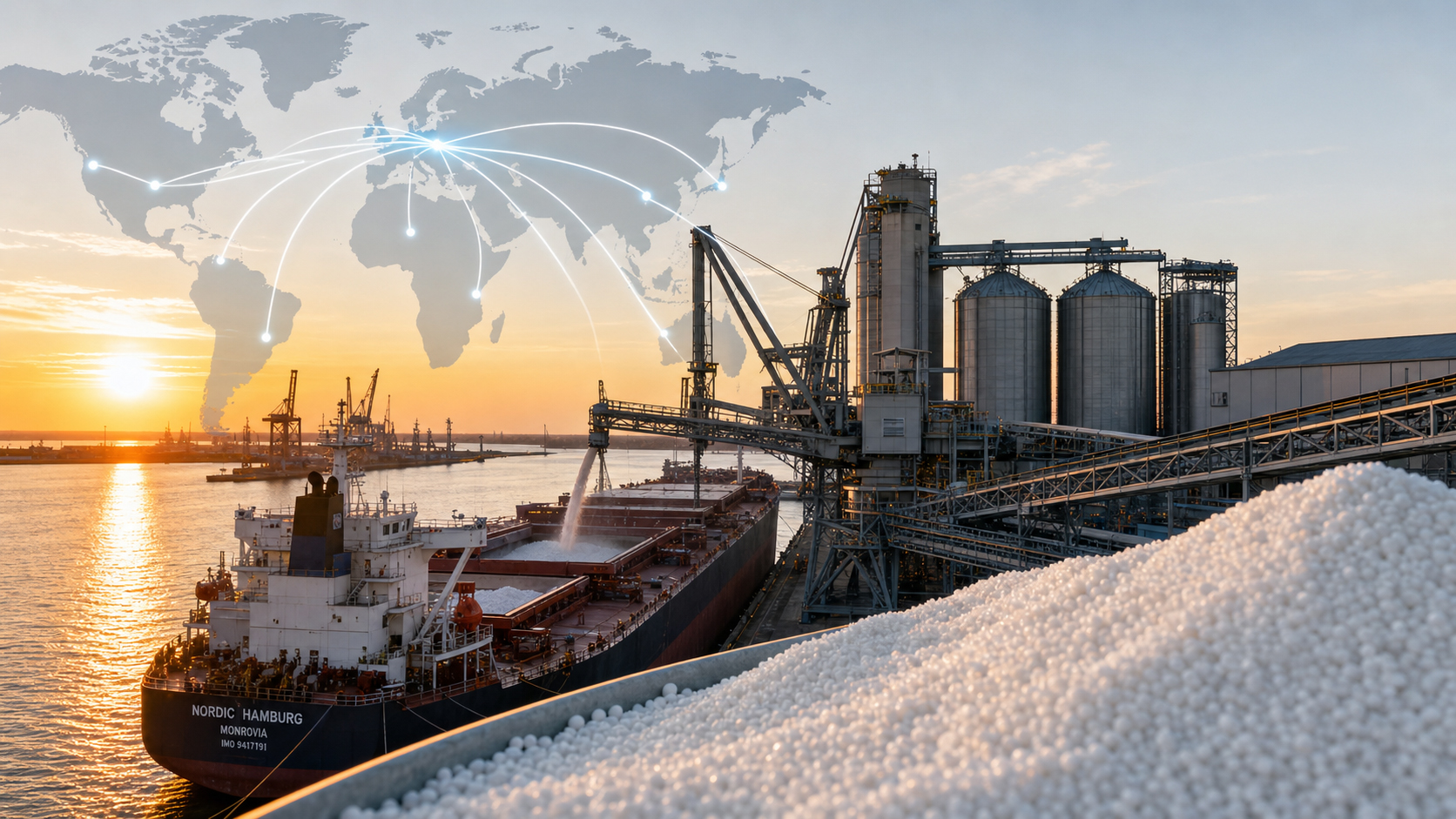
Europe's fertilizer supply: Whoever controls the supply chain controls the harvest – traditional procurement methods are obsolete – Image: Xpert.Digital
Why farmers and traders now need to change their fertilizer strategy
The secret battle for phosphate: Who will control Europe's harvests in the future?
PULAN® & CANWIL®: How European manufacturers are closing the dangerous fertilizer gap
For decades, European agriculture relied on seemingly unshakable certainties: cheap natural gas, smooth imports from the East, and global supply chains that functioned on demand and just in time. But that era is irrevocably over. In 2026, the sector faces an unprecedented mix of circumstances: the escalation of geopolitical tensions has transformed Russia from a reliable supplier into a strategic risk, prompting the EU to implement drastic tariff demarcation. At the same time, the new Carbon Border Adjustment Mechanism (CBAM) is forcing the market to brutally reassess imported goods, while Moroccan phosphate is increasingly becoming a geopolitical currency of power.
For farmers, traders, and procurement managers, this means a state of high alert – because anyone who doesn't know the origin of their fertilizer today risks jeopardizing future harvests. However, every crisis also presents a fundamental opportunity for realignment. The solution lies in a renewed focus on European production strength combined with intelligent, shortened supply chains. The concept of "Integrated Sourcing & Trading" is gaining significant traction: it connects state-of-the-art EU producers like ANWIL and Grupa Azoty, which manufacture customized products such as PULAN® and CANWIL®, directly with their customers. This article examines the profound structural shifts in the global fertilizer market and demonstrates why direct market access and physical stockpiles within the EU will determine Europe's future competitiveness – and food security.
A market under pressure: Why a global fertilizer strategy is vital for survival today
The global fertilizer market in 2026 is navigating a complex landscape of geopolitical upheavals, structural supply bottlenecks, and an unprecedented regulatory restructuring process. While market researchers estimate the global fertilizer market volume at between US$185 and US$225 billion for 2025 – the wide range of estimates reflecting the high methodological variance within the industry – and forecast annual growth rates of 2.6 to 4.3 percent, the operational reality of European agriculture paints a far more volatile picture. Although nitrogen fertilizer sales in Germany grew by a solid 3.8 percent to 1.137 million tons in the 2024/25 fertilizer year, this growth masks dramatic structural disruptions: soaring gas prices, the unwinding of Russian supply chains, and a carbon border adjustment mechanism that is fundamentally altering the rules of international trade.
For companies that not only want to survive in this environment but also create added value, this results in a clear strategic message: Those who directly connect producers and customers, have deep market access in underserved regions and store physical goods at strategic hubs within the EU internal market, fill precisely the gap that has emerged since the old certainties of fertilizer supply broke down.
The end of the Russian supply illusion: Europe's most expensive dependency
As recently as 2025, 22 percent of EU fertilizer imports came from Russia, a country that has transformed itself in just a few years from a supplier to a geopolitical power broker. Russia is now the world's largest supplier of nitrogen fertilizers and, despite all sanctions, even increased its global exports by 7 percent to 45 million tons in 2025 – a paradox that reveals the structural nature of this dependency. The EU responded with Regulation (EU) 2025/1227, which, from July 1, 2025, introduces an ad valorem duty of 6.5 percent plus a fixed duty of initially €40 per tonne on nitrogen fertilizers (CN code 3102). However, this level is only the beginning of an aggressive escalation: from July 1, 2028, the additional duty will rise to €315 per tonne for nitrogen fertilizers and €430 per tonne for combined fertilizers.
In parallel, the Carbon Border Adjustment Mechanism (CBAM) came fully into effect on January 1, 2026, forcing fertilizer importers to purchase CO₂ certificates for emissions released abroad – a measure that further increases the price of imported goods and structurally favors European producers. Market analysts expect CBAM to lead to price increases of 10 to 20 percent for ammonia and 10 to 15 percent for urea. Since European fertilizer prices already rose by 16.5 percent in 2025, according to the European Commission, and have increased by a total of 60 percent since 2020, while consumption in European agriculture has fallen by over 20 percent since 2017, a structural dilemma is revealed: higher prices with decreasing availability, while demand is rising in the long term due to population growth and pressure on yields.
In February 2026, the European Commission attempted to counteract this trend by proposing to suspend most-favored-nation tariffs on imports of several key nitrogen fertilizers for one year – explicitly excluding Russia and Belarus. This move demonstrates Europe's desperate search for alternative sources of supply. This is precisely where the strategic opportunity lies for EU-based producers and trading companies that have established their supply chain infrastructure west of the old borders of dependency.
The underestimated geopolitics of phosphate: When one country holds the key to world food security
The concentration of global phosphate reserves is a structural problem that fundamentally shapes food security in the 21st century. Morocco's dominance over an estimated three-quarters of global phosphate reserves—some of which lie in the internationally disputed occupied Western Sahara, raising ethical and trade policy issues—is unparalleled in the world of raw materials. China, the second-largest reserve holder, has also recently restricted its phosphate exports through export controls to prioritize its own fertilizer security. India, one of the world's largest consumers of phosphate, has secured long-term supply quotas from Morocco for 2025/26—another indicator of the strategic importance that governments attach to phosphate supplies.
For trading companies that procure and market phosphorite, strategic differentiation lies precisely in the ability to supplement or circumvent this de facto monopoly through alternative procurement channels. Phosphorite already stored within the EU single market—physically present at a European seaport, available duty-free, and deliverable within a few days—is far more than mere stockpiling in this context: It is a certified supply buffer in a world where supply chain disruptions caused by geopolitical crises (Middle East conflict, blockades in the Red Sea, closure of the Strait of Hormuz) can trigger global shortages within weeks. Physical possession of the raw material in the customer region is the antithesis of just-in-time ordering—and, in a market under constant stress, the superior model.
The state-owned company OCP (Office Chérifien des Phosphates) strategically leverages its market position. OCP Nutricrops plans to expand its phosphate fertilizer production capacity by 9 million tons by 2028, specifically targeting markets in Latin America, Asia, and Africa. OCP, in turn, is entirely dependent on imports for ammonia, illustrating the complex interrelationships of global supply chains: even the world's largest phosphate producer is vulnerable when geopolitical disruptions affect ammonia supplies.
European production strength: The manufacturers behind the brands
While public debates about European industrial development often focus on Western Europe, significant nitrogen-chemical capacities have been built up within the EU single market in recent decades, forming the backbone of Central Europe's fertilizer supply. Two companies particularly shape this picture: ANWIL SA, part of the ORLEN Group, and Grupa Azoty – both with production facilities within the European Union and both with direct access to the most important European agricultural markets.
ANWIL SA, a subsidiary of the state-owned energy company ORLEN, has been active in nitrogen fertilizer production for more than half a century and is one of the leading European producers of ammonium nitrate-based fertilizers. The company produces a clearly defined portfolio: ammonium nitrate under the brand name Anvistar, as well as the calcium ammonium nitrate variants CANWIL® S (with sulfur) and CANWIL Mg (with magnesium). This positioning is no accident, but rather a response to the dominant agrochemical challenges facing European agricultural systems.
Grupa Azoty, according to its own statements, is the second-largest European producer of compound fertilizers and manufactures, among other things, the ammonium nitrate PULAN® with a nitrogen content of 34.4 percent. Its modern granulation plants have a capacity of up to 820,000 tons per year, with the ammonium nitrate line alone producing 1,200 tons daily. Following the production shutdowns in 2022, when increased gas price shocks forced reductions, Grupa Azoty gradually ramped up production of PULAN® and related products and has fully normalized production since May 2023.
PULAN® N 34.4: The workhorse of professional agriculture
Ammonium nitrate, with a nitrogen content of 34.4 percent, is a staple product in modern agriculture for good reason. Its mechanism of action follows a dual principle that appears simple at first glance, but is highly sophisticated in plant physiology practice: The nitrate nitrogen fraction (17.2 percent NO₃⁻) and the ammonium nitrogen fraction (17.2 percent NH₄⁺), each present in equal proportions, support plant growth at different times.
Nitrate nitrogen is available to the plant immediately after application because it is directly soluble in the soil solution and rapidly absorbed through the roots. This is crucial for the rapid establishment of crops, such as when winter cereals are sown in spring or when applying starter fertilizer to maize. The ammonium fraction, on the other hand, is initially bound by soil particles, then gradually nitrified by soil organisms, and thus made available to plants over a longer period – a natural delay mechanism that reduces leaching losses and increases nitrogen efficiency. This 1:1 ratio makes PULAN® N 34.4 particularly suitable for crops with staggered nitrogen requirements: cereals, maize, rapeseed, sugar beets, potatoes, and vegetables all benefit equally from its two-phase effect.
From a trade policy perspective, PULAN® N 34.4 falls under HS code 3102.30 for ammonium nitrate. The significance of this code is enormous given EU customs regulations: Ammonium nitrate produced within the EU is exempt from punitive tariffs against Russian products and can simultaneously benefit from the temporary suspension of most-favored-nation (MFN) tariffs proposed by the European Commission in February 2026 for alternative third-country sources. For procurement managers and trading houses, this means that EU-produced goods are in a significantly more attractive customs zone than comparable Russian or Belarusian products.
CANWIL® S: The answer to Europe's worsening sulfur gap
Anyone who has followed the development of the European fertilizer market over the past three decades understands why sulfur-containing nitrogen fertilizers like CANWIL® S are experiencing a strategic renaissance. The reason lies in a paradoxical side effect of environmental progress: With the installation of desulfurization plants in industrial facilities and power stations, the introduction of catalytic converters in the automotive sector, and the general reduction of sulfur dioxide emissions since the 1980s, a crucial natural source of sulfur for arable soils has disappeared – acid rain.
This initially sounds like a success story for environmental policy, which it is in every respect. However, for plant nutrition, this decline meant that the decades-long, involuntary sulfur deposition via the atmosphere ceased, and the soils in many arable farming regions of Europe have since been structurally deficient. Cereals require 50–70 kg SO₃/ha of sulfur, while rapeseed requires even more, at 75–100 kg SO₃/ha – amounts that the soil generally no longer adequately supplies from its own reserves. Particularly serious is the fact that one kilogram of sulfur deficiency per hectare blocks the uptake of 10 to 15 kilograms of nitrogen, thus not only causing yield losses but also systematically reducing the effectiveness of applied nitrogen fertilizers – a double economic loss.
CANWIL® S addresses this reality through an integrated formulation. With 27.0 percent total nitrogen (±0.8%), again distributed in the classic 1:1 ratio between nitrate and ammonium nitrogen, the product simultaneously provides 4.8 percent sulfur (equivalent to 12 percent SO₃) as calcium sulfate/anhydrite and approximately 7.5 percent calcium (as CaO). This combination is agriculturally sound: The sulfur improves nitrogen utilization efficiency and increases protein quality in the harvested crop, while the calcium simultaneously improves soil structure and stabilizes the pH value – particularly valuable on acidic and structurally poor soils, which are widespread in Central and Eastern Europe. CANWIL® S typically falls under HS code 3102.40 for mixtures of ammonium nitrate with calcium carbonate or other inorganic, non-fertilizing substances.
The granule size of 1.0–6.3 mm (96 percent of the product falls within this range) and the mechanical granulation guarantee good spreading properties and low clumping tendency. This is by no means trivial in practice: A fertilizer that clumps during spreading preparation or bakes together under damp conditions creates application errors that disrupt agricultural calculations.
CANWIL Mg: The overlooked nutrient deficiency and its economic consequences
Magnesium deficiency is one of those agricultural problems that is widely underestimated in the public perception, yet its impact on yield and nitrogen efficiency is significant. As the central atom of the chlorophyll molecule, magnesium is essential for photosynthesis; 15 percent of a plant's total magnesium requirement is bound in chlorophyll alone, another 50 percent is dissolved in the cell sap, and the remaining 35 percent is in biochemical compounds. This means that without sufficient magnesium, the plant cannot efficiently convert incoming sunlight into biomass. Magnesium deficiency manifests as intercostal yellowing of the leaves, although the leaf veins initially remain green – a phenomenon that first appears on older leaves.
The causes of widespread magnesium deficiency in European agricultural systems are well documented. Light, sandy soils offer few adsorption sites for the magnesium ion (Mg²⁺) on clay-humus complexes and are therefore highly susceptible to leaching. An excess of potassium ions in the soil exacerbates this problem through ion antagonism: potassium and magnesium compete for the same root uptake channels, further inhibiting magnesium mobilization. High ammonium applications from conventional nitrogen fertilization can intensify this antagonism.
CANWIL Mg addresses this situation with a formulation that combines 27 percent total nitrogen (in the usual nitrate-ammonium balance) with 4 percent magnesium oxide (MgO). Applying nitrogen and magnesium simultaneously is not only logistically convenient but also agronomically sound: both are applied in a single pass, eliminating the risk associated with separate application due to time lag. On sites diagnosed with magnesium deficiency—especially the sandy soils under maize and cereals prone to leaching, as well as the intensively managed grasslands of Central Europe—CANWIL Mg enables targeted corrective fertilization that restores chlorophyll production and thus stabilizes the overall photosynthetic performance of the plants. The relevant market format for this product is sold as CAN 27 + 4 MgO.
🎯🎯🎯 Global Sourcing & Commodity Trading with integrated logistics

Raw materials, global procurement & trade - Image: Xpert.Digital
State-of-the-art cargo planes, optimized transport routes, and multimodal logistics chains are interchangeable—they can be bought, leased, or outsourced. What money can't buy are direct contacts with producers in Peruvian mines, reliable supply relationships in the CIS countries, and years of built-up trust in markets that are unfamiliar to outsiders. The decisive competitive advantage in global commodity trading lies not in transporting the good from A to B, but in knowing where the good comes from, who produces it, and how to gain access before others even know the market exists. Whoever owns the network sets the price. Everyone else pays it.
More information here:
From weeks to days: Logistics advantages through Integrated Trading Houses
The logic of integrated sourcing: Why direct market connections generate structural premiums
For decades, the traditional fertilizer import chain followed a pattern with many intermediate stages: producer, national importer, regional trader, agricultural trader, farmer. Each of these stages takes a margin, bears storage risk, and has its own pricing expectations – a functioning system in stable times, but in volatile market phases, a transmission belt that amplifies price fluctuations and delays the resolution of shortages. The global fertilizer market has been anything but stable since 2021: The price of calcium ammonium nitrate (FOB European ports) reached an all-time high of €963 per ton in March 2022, only to fall back to €315 per ton in November 2024 and then rise again to €390 by the end of January 2025 – the highest level in two years.
This volatility is structurally determined. Since 60 to 80 percent of the production costs for nitrogen fertilizers are attributable to natural gas, the fertilizer price correlates closely with the European gas price (TTF). When this price rose to over €50 per MWh at the beginning of 2025 and even reached €58 per MWh at one point, European fertilizer producers such as the Austrian company LAT Nitrogen reacted by halting or reducing production, while Russian suppliers maintained their production unabated. The result: supply shortages in Europe, increased import requirements, and a geopolitically problematic dependency. According to surveys by the EU Commission, by the end of 2025, European farmers had only about 60 percent of their required fertilizer reserves.
An integrated sourcing and trading house, working directly with EU producers like ANWIL and Grupa Azoty, eliminates these gaps in the supply chain. Direct contracts secure volumes and prices in advance of volatile market phases, while warehousing at strategic locations within the EU single market reduces response times to customer demand from weeks to days. Within the European single market, customs formalities are completely eliminated; deliveries can be arranged at short notice by rail, truck, or coastal shipping – a logistical advantage that is invaluable during volatile market periods.
European production as a strategic asset: The price regulation paradox
One of the most surprising developments in the current fertilizer market is the paradox of regulatory relief coupled with increased costs for European producers. EU tariffs on Russian products are intended to protect European industry – yet at the same time, high European energy prices, significantly higher than in the US or Asia, are driving production costs in Germany and other Western European countries to a level that is not internationally competitive. The result is a structural advantage for those EU production sites with a more favorable energy mix and direct infrastructure connections to Western European agricultural markets – they occupy a geopolitically and economically advantageous intermediate position.
These EU production sites combine lower energy costs with an ideal geographical location to serve Western Europe, the Baltic States, Scandinavia, and the growing markets of Central Europe. Thanks to the well-developed maritime connections of the Baltic Sea and the European Single Market with its free flow of goods, virtually the entire northern and central European economic area can be reached efficiently. For the Integrated Trading House model, which connects producers and consumers across national borders, this geographical constellation represents a structural advantage that no non-European competitor can replicate without substantial investment.
Regulatory remeasurement: CBAM, tariff grading and the new trade geography of Europe
The introduction of the carbon border adjustment mechanism (CBAM) on January 1, 2026, is not a peripheral technical innovation for the fertilizer trade, but a fundamental reassessment of international competitiveness. Companies importing fertilizers into the EU must now be registered as approved CBAM declarants and purchase CO₂ allowances for the greenhouse gas emissions in the country of production – an obligation monitored in Germany by the German Emissions Trading Authority (DEHSt) at the Federal Environment Agency.
The cost implications are varied but significant. For Russian and Belarusian ammonium nitrate, three burdens will accumulate from 2026 onwards: the punitive tariff under Regulation (EU) 2025/1227 (6.5 percent ad valorem duty plus €40 per tonne, rising to €315 from 2028), the CBAM levy on CO₂ emissions from the Russian gasification process, and regulatory testing obligations that generate compliance costs. For goods produced within the EU, however, the CBAM levy is completely waived, as these goods are produced within the EU ETS system. This makes products like PULAN® N 34.4, CANWIL® S, and CANWIL Mg not only politically preferable but also increasingly more attractive from a business perspective – especially once the Russian tariff scale takes full effect from 2028.
At the same time, the European Commission is examining options for temporarily suspending most-favored-nation tariffs on imports from other third countries – such as the US, Algeria, or Egypt – in order to intensify competition among alternative sources and mitigate price spikes. This opens a window of opportunity for trading houses with global networks of producers outside the EU, during which alternative imports are legally favored.
The strategic value of direct connections: Why market depth matters
In a market characterized by consolidation, increased regulation, and geopolitical uncertainty, competitive strength is no longer defined solely by price or product quality. Crucial is access – to producers who deliver reliably; to transport corridors that are logistically competitive; to markets that remain closed to others because they lack the necessary network.
The Integrated Sourcing & Trading House's approach – connecting producers directly with buyers worldwide – addresses precisely this dimension. In a world where 22 percent of EU fertilizer imports were still expected to originate from Russia in 2025, the phosphate market is dominated by a single North African player, and CBAM and punitive tariffs are redirecting traditional trade flows, the ability to provide the right quality product from a credible source, in the right place, and at the right time is the real added value. The EU production base of manufacturers ANWIL and Grupa Azoty, direct access to efficient European sea and land transport corridors, and the physical presence of phosphate within the EU single market together form an infrastructure that is difficult to replicate in the current market environment.
It is worthwhile to consider the dynamics of the overall market: Global population growth, the demand for protein-rich diets in emerging economies, and the pressure on yield efficiency caused by climate change make a structurally increasing demand for plant nutrients likely. At the same time, the supply, particularly of phosphate and nitrogen, remains closely tied to geologically limited resources and energy-intensive processes. Those who directly connect producers and consumers in this complex environment fulfill a vital economic function: They ensure that capacity and demand are indeed matched – reliably, directly, and with deep market access in regions where others cannot reach.
Product portfolio overview: Three fertilizers, three market gaps
The three products considered here – PULAN® N 34.4, CANWIL® S and CANWIL Mg – address different but complementary market gaps in modern plant nutrition.
| product | Manufacturer | nitrogen content | Special nutrient | Primary application | HS code |
|---|---|---|---|---|---|
| PULAN® N 34.4 | Grupa Azoty | 34.4% (total N) | None (pure high concentrate) | Grain, corn, rapeseed, beets | 3102.30 |
| CANWIL® S | ANWIL (ORLEN) | 27,0 % (±0,8 %) | 4.8% S (= 12% SO₃) + ~7.5% CaO | Rapeseed, cereals, acidic soils | 3102.40 |
| CANWIL Mg | ANWIL (ORLEN) | 27,0 % | 4.0% MgO | Maize, rapeseed, grassland, sandy soils | n/a. |
PULAN® N 34.4 represents maximum nitrogen concentration in the ammonium nitrate class and is aimed at farms seeking high application rates with minimal transport volume. CANWIL® S provides an integrated solution to the sulfur gap created by the decline in atmospheric sulfur deposition across Europe, which permanently restricts nitrogen efficiency as long as it remains uncorrected. Finally, CANWIL Mg addresses the often overlooked but economically significant magnesium problem on light soils, grassland, and in intensive crop rotations, where potassium antagonism and leaching systematically limit magnesium availability.
Outlook: What will determine the next three years
The time horizon up to 2028 is not a normal planning horizon for the European fertilizer market, but rather a structural turning point. The tariff scale for Russian and Belarusian fertilizers reaches its full level this year, up to €430 per ton for combined fertilizers – a level that effectively excludes Russian imports. At the same time, the CBAM mechanism will become increasingly relevant in practice, making CO₂-intensive production methods more expensive globally. Market analysts expect global fertilizer prices to still be 43 to 57 percent higher at the beginning of 2026 compared to January 2021; a return to normal is not in sight.
This context creates three strategic opportunities for Integrated Sourcing & Trading Houses: firstly, securing long-term production volumes with established EU manufacturers as long as prices have not yet fully risen due to supply pressure; secondly, positioning themselves as reliable intermediaries for agricultural businesses and trading houses in growth markets that need to be decoupled from the old Russian-dominated supply chains; and thirdly, monetizing the storage advantage – because physical goods within the EU single market are stored in the current regulatory environment at an implicit premium compared to FOB-traded goods from uncertain sources.
The European fertilizer market has never been static. It has always reflected geopolitical constellations, technological developments, and agricultural realities. Today, it reflects a reorganization that is designed to last for years – and in which the winner will be the one who creates a more reliable, direct, and deeper market connection between production and demand than anyone else.
Your contact for raw materials ⛏️ Global sourcing 🚢🌐 & trading 📦

Dmitry Kovalenko
I would be happy to serve as your personal advisor.
Dmitry Kovalenko
Tel: +49 7348 4088 961
Your contact for raw materials ⛏️ Global sourcing 🚢🌐 & trading 📦

Konrad Wolfenstein
I would be happy to serve as your personal advisor.
Konrad Wolfenstein
Email: [email protected]
Our global industry and economic expertise in business development, sales and marketing

Our global industry and economic expertise in business development, sales and marketing - Image: Xpert.Digital
Industry focus areas: B2B, digitalization (from AI to XR), mechanical engineering, logistics, renewable energies and industry
More information here:
A thematic hub offering insights and expertise:
- Knowledge platform covering global and regional economies, innovation and industry-specific trends
- A collection of analyses, insights, and background information from our key areas of focus
- A place for expertise and information on current developments in business and technology
- A hub for companies seeking information on markets, digitalization, and industry innovations





