
Europe's quiet champion: Why the Czech Republic's economy is surprising everyone – Economic boom in Europe's industrial wonderland
Xpert Pre-Release

Available in 27 languages 📢
Prefer Xpert.Digital on GoogleⓘPublished on: October 4, 2025 / Updated on: October 4, 2025 – Author: Konrad Wolfenstein
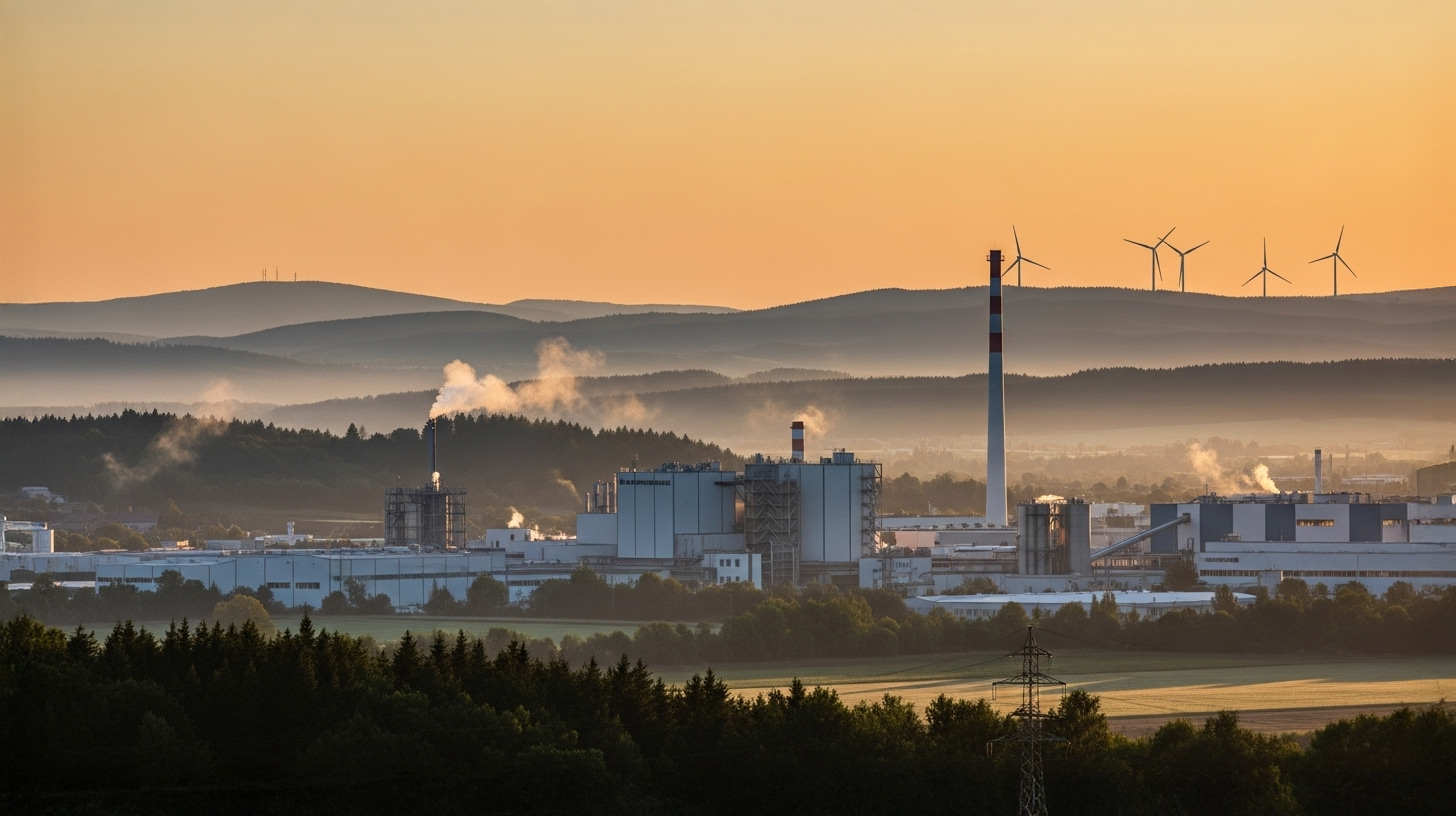
Europe's quiet champion: Why the Czech Republic's economy is surprising everyone – Economic boom in Europe's industrial wonderland – Creative image: Xpert.Digital
Record-breaking cars, full employment – Skoda, Hyundai & Co.
The secret behind the Czech Republic's rise to automotive superpower
In the heart of Europe beats a powerful industrial engine, currently running louder and more reliably than many others on the continent: the Czech Republic. While major European economies stagnate, the country is experiencing a remarkable boom, most evident in its flagship sector, automobile manufacturing. With record-breaking production, economic growth twice the EU average, and an enviably low unemployment rate, the Czech Republic has established itself as a true industrial powerhouse. Backed by sound fiscal management and a centuries-old industrial tradition, the country appears well-prepared for the future.
But behind this glittering facade lie profound structural challenges. The enormous dependence on the weakening German economy is increasingly proving to be an Achilles' heel, while domestically, declining investment and a growing shortage of skilled workers threaten long-term competitiveness. The country thus stands at a crucial turning point: Will it succeed in diversifying its economic structure, making the leap to higher value creation, and adapting its education system to the demands of the future? This text illuminates the impressive success story of the Czech Republic, analyzes the fundamental strengths of players like Skoda and Hyundai, and takes a critical look at the risks and strategic decisions that will determine the future of this Central European economic engine.
What is making the Czech economy so successful right now?
The Czech economy is currently experiencing a remarkable period of growth, particularly evident in automotive production. In 2024, the Czech Republic was the only country in Europe to record an increase in automobile manufacturing, while other regions experienced a significant decline. Production reached a record high of 1,452,881 passenger cars in 2024, representing a 3.9 percent increase compared to 2023.
The success of the Czech economy is based on several structural factors. The economy is currently growing at around two percent, which is twice the EU average. At the same time, the country enjoys virtually full employment, with an unemployment rate of 2.5 to 3.5 percent, among the lowest in the entire European Union.
It is particularly noteworthy that the Czech Republic also holds a solid position in terms of public finances. National debt stands at approximately 43 percent of gross domestic product, significantly below the EU average of 83 percent. This fiscal stability provides the government with a degree of flexibility that many other European countries lack.
What are the historical foundations of the Czech Republic's industrial strength?
The industrial tradition of the Czech Republic stretches far back, to the time of the Habsburg Monarchy. The country can look back on almost 120 years of experience in automotive manufacturing, particularly through its own brand, Škoda, which was originally founded as a mechanical engineering company in 1859. This long tradition has laid the foundation for the highly skilled engineers who today form the backbone of Czech industry.
Christian Rühmkorf of the German-Czech Chamber of Industry and Commerce emphasizes this historical dimension: “The Czech Republic is a very traditional industrial country. This actually dates back to the Habsburg era. But the automotive industry is enormously important. The Czech Republic has truly outstanding engineers.”.
Today's automotive industry accounts for approximately 10 percent of the gross domestic product and is responsible for around 20 percent of all exports. The sector employs over 200,000 people, representing about 3.7 percent of total employment. These figures underscore the central importance of the automotive industry to the entire Czech economy.
Who are the key players in the Czech automotive industry?
The Czech automotive landscape is dominated by three major international manufacturers. Skoda Auto is the largest domestic car manufacturer, accounting for 61.7 percent of total passenger car production in the Czech Republic. In 2024, Skoda produced a total of 896,933 vehicles in its Czech plants, representing an increase of 3.7 percent.
Hyundai Motor Manufacturing Czech in Nošovice is the second-largest producer, manufacturing a total of 330,890 vehicles in 2024. Although this represents a decrease of 2.8 percent compared to 2023, Hyundai accounts for 22.8 percent of total passenger car production in the Czech Republic. The South Korean company is particularly active in electric vehicles, which make up 16.5 percent of the brand's total production.
Toyota Motor Manufacturing in Kolín completes the trio of major car manufacturers. In 2024, 225,058 vehicles were assembled there, an increase of 32,631 vehicles or 17 percent compared to 2023. Toyota accounts for 15.5 percent of total passenger car production in the Czech Republic, with half of that production consisting of the Yaris HEV hybrid model.
In addition to these three main players, all major automotive suppliers are also present in the Czech Republic, often with multiple plants. This dense supplier landscape contributes significantly to the country's value creation and makes the Czech Republic an integral part of European automotive production.
How strong is the Czech Republic's dependence on Germany?
The Czech economy faces one of its biggest structural challenges due to its dependence on Germany. Around a third of all Czech exports go to its western neighbor. Germany has been by far the Czech Republic's most important trading partner for many years – in 2023, goods worth €77.8 billion were exported to Germany, representing about a third of the total export volume.
This close economic integration brings both opportunities and risks. Gerit Schulze of Germany Trade and Invest sums it up perfectly: “The Czech economy always says: When Germany has a cold, the Czech economy gets the flu.” The weak German economy therefore also slows down the Czech Republic, even though the country itself is in a better economic position.
Exports of food, vehicles and parts, and electrical engineering products to Germany were particularly affected. Electrical engineering exports rose by 17.5 percent to €10.7 billion in 2023, while exports of automotive parts increased by 17.6 percent to €7.6 billion. These figures illustrate how closely the Czech automotive supplier industry is linked to the German automotive industry.
The high dependence on Germany is also evident in the fact that goods worth almost 98 billion euros were traded between Germany and the Czech Republic in 2019, representing around 29 percent of the total Czech foreign trade volume. Due to its strong supplier industry, the Czech Republic is even one of the few countries with a negative trade balance with Germany, meaning that more goods are imported into Germany than exported to the Czech Republic.
What strategies is the Czech Republic pursuing to diversify its export markets?
To reduce its heavy reliance on Germany, the Czech Republic has been trying to tap into new markets for some time, particularly in Asia. This diversification strategy is already showing initial success in various regions. Exports to France, Hungary, Romania, and the United Kingdom saw significant growth of between 7 and 9 percent in 2023. Deliveries to Turkey, with an increase of 31 percent, and to Ukraine, with a growth of 28 percent, developed even more dynamically.
The expansion into Asia is particularly interesting, with Skoda playing a pioneering role. The company has successfully developed markets in Vietnam and India. Skoda launched its Vietnamese market in 2023 and plans to expand its dealer network to 30 partners, with an annual sales potential of over 40,000 units after 2030. The first models will be imported from Europe, but local CKD (Completely Knocked Down) production, leveraging synergies with the Indian plant, is scheduled to begin as early as 2024.
India has become a key component of Skoda's internationalization strategy. Approximately 50 percent of Skoda vehicles manufactured outside the Czech Republic come from India. In 2023, the company sold over 101,000 cars built in India, of which 44,000 were exported. India serves not only as a sales market but also as an export base for other countries in the region.
China remains Skoda's largest single market outside Europe. For nine years now, China has been the Czech automaker's largest single market worldwide, with one in four Skodas currently delivered there. In 2018, sales figures rose by 4.9 percent to 341,000 vehicles, a third of which were SUVs.
How does the wage situation in the Czech Republic compare to other EU countries?
The wage situation in the Czech Republic presents a mixed picture, showing clear progress but still significant differences compared to Western European levels. The average wage in the first quarter of 2025 was 47,000 Czech crowns, equivalent to approximately €1,870. However, this figure is not very meaningful due to a large wage gap, making the median wage of 38,400 crowns, or €1,530, a more realistic indicator.
In 2023, the average income was over 43,000 crowns, or about 1,700 euros gross. This means that people in the Czech Republic still earn significantly less than their Western European neighbors compared to other EU countries. The Czech wage level is currently about 60 percent of the German level.
The regional differences within the Czech Republic are particularly pronounced. In Prague, the average monthly gross income is €1,395, while in Central Bohemia it is €1,220 and in South Bohemia only €1,085. These regional disparities reflect the varying economic strength of the different regions.
The government, however, expects significant real wage increases in the coming years: 4.1 percent for 2025 and 3.1 percent for 2026. By 2026 at the latest, the average wage is expected to exceed 50,000 Czech crowns, or 2,000 euros. Prime Minister Petr Fiala has even set the ambitious goal of achieving wage levels comparable to those in Germany in the medium term.
Our EU and Germany expertise in business development, sales and marketing

Our EU and Germany expertise in business development, sales and marketing - Image: Xpert.Digital
Industry focus: B2B, digitalization (from AI to XR), mechanical engineering, logistics, renewable energies and industry
More about it here:
A topic hub with insights and expertise:
- Knowledge platform on the global and regional economy, innovation and industry-specific trends
- Collection of analyses, impulses and background information from our focus areas
- A place for expertise and information on current developments in business and technology
- Topic hub for companies that want to learn about markets, digitalization and industry innovations
Election earthquake 2025: What economic policy consequences threaten the Czech Republic?
What structural problems weaken the Czech Republic's competitiveness?
Despite positive economic development, the Czech Republic is struggling with significant structural problems that threaten its long-term competitiveness. The most serious problem is declining investment. Christian Rühmkorf sees a worrying trend here: “Investments have been falling for years. A full 43 percent of industrial companies plan to invest less in 2025. And that, of course, jeopardizes long-term competitiveness.”.
Another critical problem is the shortage of skilled workers, which is worsening not only quantitatively but also qualitatively. Until 2021, employee qualifications were among the positive location factors in the Czech Republic, ranking 6th out of 25, but they have since slipped to 19th place. The problem is not that training has deteriorated, but rather that the demands of companies have increased enormously due to digitalization and artificial intelligence, and neither people nor the training system can keep up.
Bernard Bauer, Managing Director of the German-Czech Chamber of Commerce and Industry (DTIHK), warns: “The Czech vocational training system has not yet found an answer to this, yet the qualifications of our employees determine the innovative strength of our region.” 61 percent of the companies surveyed see the shortage of skilled workers as the biggest obstacle to innovation.
In a regional comparison of Central and Eastern European investment locations, Poland has now overtaken the Czech Republic. Investors have ranked Poland first, followed by the Czech Republic in second place, then Slovakia, Romania, Hungary, and Bulgaria. Key factors in this assessment were primarily lower production costs, better infrastructure, and improved access to skilled workers in Poland.
How do the public finances of the Czech Republic compare to those of other European countries?
The Czech Republic occupies a remarkably sound position regarding public finances, which stands out significantly from the European average. At the beginning of 2025, Prime Minister Petr Fiala was able to announce that his government had succeeded in reducing the Czech budget deficit from over five percent of gross domestic product to below three percent. For 2025, the deficit is expected to be only 2.3 percent.
The national debt stands at around 43 percent of gross domestic product, significantly below the EU average. Before the outbreak of the coronavirus pandemic, it was even as low as 30 percent. Although the special expenditures to rescue domestic companies and the additional costs for energy subsidies resulting from the war in Ukraine have strained public finances, the Czech Republic still fares very well in comparison to other European countries.
According to the European Commission's autumn forecast, the average public debt of EU countries will reach 83 percent in 2024. The Czech Republic is thus about 40 percentage points below this average. This sound financial position gives the government room to maneuver that many other European countries lack.
It is particularly noteworthy that despite budget consolidation, the Czech Republic has simultaneously significantly increased its defense spending and fulfilled its NATO obligations. This puts the country at the top of the four Visegrad countries and even significantly ahead of neighboring Austria.
What political changes are on the horizon?
The political landscape of the Czech Republic is facing significant changes. The parliamentary elections in October 2025 indicated a clear change of government. The right-wing populist ANO party of former Prime Minister and businessman Andrej Babiš was clearly in the lead in the polls with approximately 38 percent of the vote.
According to projections, the center-right Spolu (Together) alliance of incumbent Prime Minister Petr Fiala only achieved around 20 percent of the vote, while the Mayors and Citizens party STAN, which had previously been part of the governing coalition, garnered just under 11 percent. The current governing coalition would thus lose its majority in the Chamber of Deputies.
During his election campaign, Babis announced an end to arms deliveries to Ukraine and promised lower taxes and more favorable energy prices. The governing coalition, however, warned of the threats posed by Russia and announced a gradual increase in defense spending.
Despite the emerging political changes, experts do not expect any fundamental economic policy upheavals. Christian Rühmkorf of the German-Czech Chamber of Industry and Commerce emphasizes: “Basically, there is a broad consensus in the Czech Republic in favor of open markets, EU integration, and a welcoming environment for investment, and this is unlikely to change much.”.
How is electromobility developing in the Czech Republic?
Electric mobility is gaining increasing importance in the Czech Republic, even though it still accounts for a relatively small share of total production. In 2024, a total of 151,162 electric vehicles were produced, representing 10.4 percent of total production. From January to December, electric vehicles thus already made up a considerable portion of Czech automobile production.
Skoda Auto produced a total of 96,534 electric vehicles in 2024, representing 10.8 percent of the company's total production. This included 79,932 pure electric vehicles and 16,602 plug-in hybrids. Hyundai in Nošovice even achieved an electric vehicle share of 16.5 percent of its total brand production, with 33,300 pure electric cars and 21,328 plug-in hybrids.
Toyota is planning a significant expansion of its electric vehicle production in Europe. The plant in Kolin will, for the first time, produce battery-electric vehicles for the European market. Toyota is investing approximately €680 million in expanding its Czech presence, creating around 173,000 square meters of new production space, including new body, paint, and assembly lines, as well as its own battery manufacturing facility.
Skoda plans to launch further all-electric models in the future, including the city-friendly crossover Epiq and a large battery-electric family SUV based on the Škoda Vision 7S concept car. This development demonstrates that the Czech Republic is ready to help shape the transition to electromobility while maintaining its position as a key automotive manufacturing location.
What role does tourism play in the Czech economy?
Tourism is an important economic sector for the Czech Republic, even if it doesn't reach the dominant role of the automotive industry. Most visitors come from Germany, followed by Slovakia, Poland, China, and the United States. A total of 21 million tourists visited the Czech Republic in 2018. This number decreased due to the COVID-19 pandemic but was almost reached again in 2022 with 19.5 million visitors, of whom 7.3 million were foreign guests.
Germany is also the most important partner in tourism, with around 1.2 million visitors to the Czech Republic in 2019. The geographical proximity to Germany and Austria makes the Czech Republic an attractive destination for day trips and weekend getaways.
The tourism sector is part of the service sector, which accounts for 60 percent of the Czech economy. Besides tourism, this sector also includes finance, trade, hospitality, and telecommunications. This diversification of the economic structure demonstrates that the Czech Republic is not solely dependent on industry, even though it remains the dominant sector.
How is the Czech Republic positioning itself in global supply chains?
The Czech Republic has become an important hub in global supply chains, particularly in the automotive industry. Czech manufacturers are deeply integrated into global value chains, especially closely intertwined with German value chains. This applies primarily to automotive parts, machine components, electronics, and metal products.
Many Czech intermediate products are used in German end products, which are then exported to the US or other markets. This close integration means that additional US tariffs could have significant indirect effects on the Czech economy. The Czech Republic's dependence on German supply chains makes it particularly vulnerable to disruptions in its most important trading partner.
At the same time, the Czech Republic is diversifying its international economic relations. The US market already plays a disproportionately large role for certain product groups. These include opium alkaloids and their derivatives, with a 90 percent US share of exports; parts for turbojet or propeller engines, with a 57 percent US share; and revolvers and pistols, with a 45 percent US share.
Local value creation is considerable: Toyota sources approximately two-thirds of its components domestically. This high rate of local sourcing strengthens the Czech economy and creates jobs along the entire supply chain.
What long-term challenges lie ahead?
The Czech Republic faces several structural challenges that will affect its long-term competitiveness. The most important task is the transition to higher value creation. Industry Minister Lukáš Vlček pointed out that the Czech economic model has reached its limits. More value creation requires increased investment in human capital and infrastructure.
The government has set itself the ambitious goal of being among the top ten EU countries in terms of GDP per capita by 2040. With the implementation of the new strategy, the government aims to achieve long-term, sustainable growth, increase competitiveness, and generate greater prosperity.
A key problem remains the modernization of the education system. The rapid development of digitalization and artificial intelligence places entirely new demands on the qualifications of the workforce. The Czech vocational education system urgently needs to find answers to these challenges in order to maintain the country's innovative strength.
Diversifying the economic structure remains another important task. Although the automotive industry is currently successful, the strong concentration on one sector carries risks. The development of other industries, such as the defense industry, which is already experiencing considerable growth, could contribute to diversification.
Ultimately, the Czech Republic must find a balance between its close ties with Germany and the necessary diversification of its export markets. The successful development of Asian markets shows that the country is on the right track, but this process must be pursued consistently to reduce its dependence on a single major partner.
The Czech Republic's position as an industrial wonderland
Over the past two decades, the Czech Republic has transformed into an impressive industrial powerhouse in the heart of Europe. The figures speak for themselves: record automotive production, low economic growth twice the EU average, full employment, and sound public finances. This success story is built on centuries of industrial tradition, a highly skilled workforce, and a strategically advantageous location in the heart of Europe.
Nevertheless, the country faces significant challenges. Its extreme dependence on Germany makes the Czech economy vulnerable to external shocks. Declining investment and a worsening skills shortage threaten its long-term competitiveness. The need to shift towards higher value creation and diversify the economic structure will be crucial in the coming years.
The successful development of Asian markets by companies like Skoda demonstrates that the Czech Republic is indeed capable of forging new paths. The growth of electromobility and investments in new technologies give hope that the country will also master the transition to Industry 4.0.
Political changes are on the horizon, but the broad consensus in favor of open markets, EU integration, and a welcoming environment for investment is likely to remain. The Czech Republic will thus remain an industrial powerhouse in the heart of Europe – with great opportunities, but also with challenges that will need to be addressed in the coming years. Success will depend on whether it can overcome these structural challenges while simultaneously building on the country's existing strengths.
Your global marketing and business development partner
☑️ Our business language is English or German
☑️ NEW: Correspondence in your national language!

Konrad Wolfenstein
I would be happy to serve you and my team as a personal advisor.
You can contact me by filling out the contact form or simply call me on +49 7348 4088 965 (Munich) . My email address is: wolfenstein ∂ xpert.digital
I'm looking forward to our joint project.
☑️ SME support in strategy, consulting, planning and implementation
☑️ Creation or realignment of the digital strategy and digitalization
☑️ Expansion and optimization of international sales processes
☑️ Global & Digital B2B trading platforms
☑️ Pioneer Business Development / Marketing / PR / Trade Fairs
🎯🎯🎯 Benefit from Xpert.Digital's extensive, five-fold expertise in a comprehensive service package | BD, R&D, XR, PR & Digital Visibility Optimization

Benefit from Xpert.Digital's extensive, fivefold expertise in a comprehensive service package | R&D, XR, PR & Digital Visibility Optimization - Image: Xpert.Digital
Xpert.Digital has in-depth knowledge of various industries. This allows us to develop tailor-made strategies that are tailored precisely to the requirements and challenges of your specific market segment. By continually analyzing market trends and following industry developments, we can act with foresight and offer innovative solutions. Through the combination of experience and knowledge, we generate added value and give our customers a decisive competitive advantage.
More about it here:










