
The chip shock: When a component paralyzes Europe's industry – Europe's semiconductor industry at a crossroads
Xpert pre-release

Available in 27 languages 📢
Prefer Xpert.Digital on GoogleⓘPublished on: October 21, 2025 / Updated on: October 21, 2025 – Author: Konrad Wolfenstein
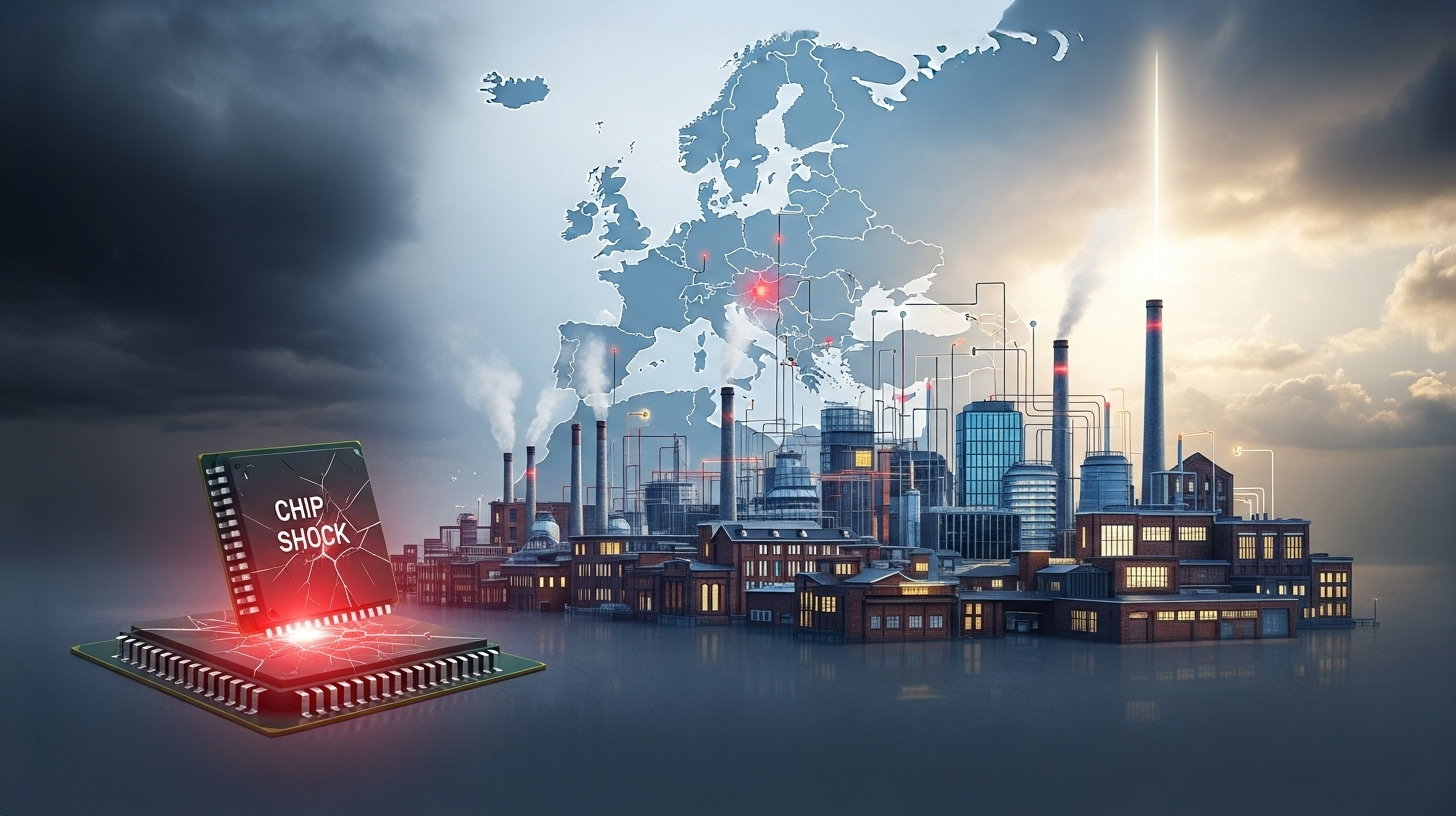
The chip shock: When a component paralyzes Europe's industry – Europe's semiconductor industry at a crossroads – Image: Xpert.Digital
The Volkswagen crisis as a warning sign of European dependence: The last chance to catch up or the final decline?
When semiconductors become weapons: The swan song of a forgotten world power or the last act before rebirth?
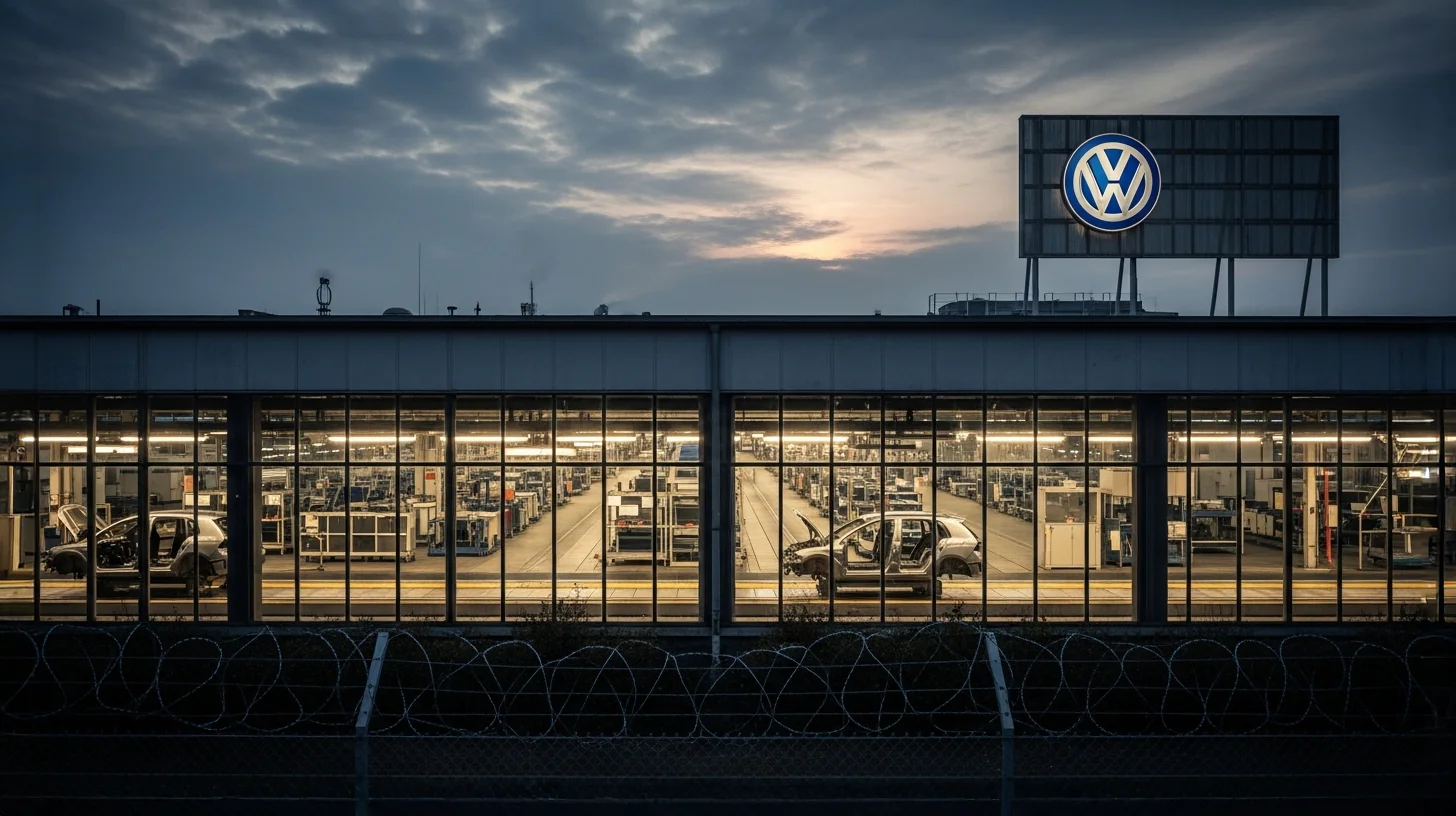
On October 21, 2025, the European automotive industry suffered a shock that reverberated far beyond the company headquarters in Wolfsburg. Volkswagen, Europe's largest automaker, is preparing to halt production of its flagship Golf and Tiguan models. The reason is an acute shortage of inconspicuous but essential semiconductor components from the Dutch-Chinese manufacturer Nexperia. What at first glance appears to be just another supply chain issue reveals, upon closer inspection, the fundamental vulnerability of European industry in a world where microchips have become a geopolitical weapon.
The genesis of this crisis is symptomatic of Europe's structural failures in the semiconductor industry. At the end of September 2025, under massive pressure from the United States, the Dutch government took control of Nexperia, a subsidiary of the Chinese technology group Wingtech. China's reaction was not long in coming: Beijing immediately imposed an export ban on around 80 percent of Nexperia's products. The result is an unprecedented disruption of critical supply chains, putting not only Volkswagen but the entire European automotive industry, from BMW and Mercedes to countless suppliers, on high alert.
The Volkswagen crisis is not an isolated event, but the latest chapter in an escalating global struggle for technological supremacy. The semiconductor industry, once one business area among many, has become the strategic focal point of the 21st century. Chips are considered the new oil, the material foundation of the digital and green transformation. But while other economic regions are expanding their position with immense investments and strategic foresight, Europe is in danger of falling behind.
The bare figures paint a sobering picture: Of the approximately 1,500 large and small semiconductor factories worldwide, only 60 are located in Europe, while Asia has over 900 and America over 350 production sites. The outlook for the future is even more dramatic: Of the 105 factories currently being planned or built worldwide, only 10 are in Europe, 15 in America, and 80 in Asia. Europe's market share of global semiconductor production is a meager 9 to 10 percent, a dramatic decline from 30 percent in 1990. The European Union's ambitious goal of doubling this share to 20 percent by 2030 appears increasingly unrealistic.
The European Chips Act, which came into force with great fanfare in September 2023, was supposed to bring about a turnaround. With €43 billion in planned public and private investments, Europe was supposed to catch up. But just two years later, doubts are growing. The European Court of Auditors described the 20 percent target as unrealistic. A study by the ZVEI (German Association of Electrical and Electronic Manufacturers) predicts that without drastic additional measures, the European market share could even fall to 5.9 percent by 2045. Member states themselves are now calling for a comprehensive revision of the strategy, which they criticize as being too broad and lacking a clear strategic direction.
This analysis examines the multifaceted dimensions of the European semiconductor crisis. It illuminates the historical milestones that led to this precarious situation, analyzes current market mechanisms and geopolitical turmoil, compares different national strategies, and ventures a look ahead to possible future scenarios. The central question is: Is Europe's semiconductor industry doomed, or does the current crisis offer an opportunity for a strategic new beginning?
Suitable for:
From pioneer to follower: Europe's decline in the chip industry
The history of the European semiconductor industry is a tale of missed opportunities and strategic missteps. In the 1960s and 1970s, Europe was still considered a serious player in the emerging semiconductor industry. Dresden, now home to the largest European semiconductor cluster, Silicon Saxony, began researching molecular electronics as early as 1961. Companies such as Philips in the Netherlands, Siemens in Germany, and SGS-Thomson in France and Italy were among the pioneers in the industry.
But while European companies still held a global market share of around 30 percent in the 1970s and 1980s, a gradual decline began. The causes were manifold: a lack of scaling of production, insufficient investment in research and development, fragmented national markets, and an industrial policy naiveté that underestimated the strategic value of the semiconductor industry. While Japan rose to global prominence in the 1980s with massive government support programs and the coordination of corporate consortia, Europe largely relied on market forces.
The fall of the Berlin Wall in 1989 presented Germany with a historic opportunity. The Saxon state government recognized the potential of the expertise available in the GDR and focused on attracting high-tech pioneers. Siemens, later Infineon, and AMD, now GlobalFoundries, built their first modern factories in Dresden. This far-sighted policy laid the foundation for today's Silicon Saxony, which, with over 650 members and 20,000 employees, represents Europe's largest microelectronics cluster. One in three chips manufactured in Europe today comes from Dresden.
But this regional success could not halt the continental decline. While Asia, led by Taiwan, South Korea, and later China, invested heavily in expanding production capacity, Europe continually lost market share. The strategic decision of many European companies to focus on profitable niche markets and leave cost-intensive mass production to Asia proved to be a miscalculation in the long run. What seemed economically rational in the short term led to a dangerous dependency.
The chip crisis during the COVID-19 pandemic from 2020 to 2022 brought the consequences of this dependence into sharp relief for Europe. Automakers had to curb production due to the unavailability of simple semiconductor components. Supply bottlenecks for electronic products became commonplace. The crisis bluntly revealed that Europe was dependent on a few Asian suppliers in critical areas of its digital infrastructure.
The historical genesis of the European semiconductor crisis reveals a recurring pattern: a lack of strategic foresight, inadequate coordination between member states, and an underestimation of the geopolitical dimension of key technologies. While other regions of the world viewed semiconductors as a strategic asset and pursued corresponding industrial policies, Europe relied on the free market and global supply chains. This misjudgment is now taking its toll in painful ways.
The global chip architecture: Europe's role in the web of dependencies
The current structure of the global semiconductor industry is characterized by extreme concentration and specialization, which has maneuvered Europe into a position of structural dependence. To understand the mechanisms of this dependence, one must analyze the complex architecture of the semiconductor value chain.
It all starts with chip design, a field dominated by American electronic design automation (EDA) tools. Companies like Synopsys, Cadence, and Mentor Graphics virtually control the market for the highly complex software essential for designing modern semiconductors. Europe plays almost no role in this segment, a fundamental weakness in the value chain.
Taiwan dominates chip production, with a global market share of around 60 percent for advanced semiconductors. Taiwan Semiconductor Manufacturing Company (TSMC), the world's largest contract manufacturer, controls approximately 90 percent of the production of high-performance chips with feature sizes below 7 nanometers. This extreme concentration in a geopolitically volatile region poses a systemic risk, further exacerbated by the simmering Taiwan conflict with China.
China, although hampered by American and Dutch export controls on advanced chips, dominates the production of standard and legacy chips with feature sizes above 28 nanometers. These obscure components, however, are indispensable for the automotive industry, industrial automation, and consumer electronics. The Nexperia crisis impressively demonstrates that even seemingly simple semiconductors can become geopolitical leverage.
While Europe has significant strengths in niche segments, these are insufficient to ensure strategic autonomy. The Dutch company ASML holds a de facto monopoly in lithography systems using extreme ultraviolet (EUV) technology, which is essential for the production of cutting-edge chips. With a market value of over €300 billion, ASML is Europe's most valuable technology company. Infineon is one of the world's leading manufacturers of power semiconductors, which are central to the energy transition. STMicroelectronics and NXP are important players in automotive and industrial chips.
But these strengths should not obscure the fact that Europe is marginalized in actual chip production. None of the world's ten largest semiconductor manufacturers are from Europe. When it comes to advanced chips, Europe is completely dependent on Asian and American suppliers. Even for legacy chips, where Europe still has significant capacity, its market share is continuously shrinking.
The market mechanisms of the semiconductor industry are structurally working against Europe. The immense capital costs for modern chip factories, which are in the tens of billions of euros, require large production volumes to pay for themselves. The generally smaller market sizes in Europe make such investments difficult. Added to this are energy costs, which are two to three times higher in Europe than in the US or Asia, as well as lengthy approval processes that delay projects by years.
The players in the global semiconductor industry are aware of their position of power and are using it strategically. TSMC may be building a factory in Dresden, but control and the most advanced technologies remain in Taiwan. Intel has halted its planned €30 billion investment in Magdeburg, revealing the fragility of European industrial development policy. The geopolitical superpowers, the US and China, are increasingly instrumentalizing semiconductors as a weapon in the systemic competition, with Europe caught in the crossfire.
The ruthless assessment: Europe's lag in numbers
The current situation of the European semiconductor industry in October 2025 can be characterized as a crisis looming. The quantitative indicators paint a clear picture: With a market share of 9 to 10 percent of global semiconductor production, Europe lags far behind Asia (over 60 percent) and even behind the USA (14 percent). Of the 1,500 semiconductor factories worldwide, only 60 are located in Europe. Of the 105 new factories currently being planned or built worldwide, only 10 are located in Europe.
The European semiconductor market declined by 8.2 percent year-on-year in September 2024, while the US grew by 46.3 percent and China by 22.9 percent. Europe is thus the only global region with declining sales in the semiconductor industry. European manufacturers' sales totaled just $4.43 billion per month in September 2024, compared to $17.2 billion in the US and $16 billion in China.
Europe's total dependence on advanced semiconductors is particularly problematic. The EU is unable to manufacture chips with a feature size of less than 22 nanometers. However, these advanced semiconductors are essential for future technologies such as artificial intelligence, autonomous driving, and 5G communications. Europe imports virtually all of its advanced chips from Asia and the USA, which poses a strategic security risk.
The investment gap compared to other regions of the world is glaring. While the US is mobilizing $52.7 billion in direct funding plus $200 billion in private investment through its CHIPS Act, and China has pumped over €70 billion into its semiconductor industry since 2014, Europe has only €43 billion available. But even this sum is largely a reallocation of existing funds and not genuine additional financing.
The shortage of skilled workers is further exacerbating the situation. On average, Germany is short of around 62,000 qualified specialists in semiconductor-related professions each year. One in two vacant positions cannot be filled. By 2030, the semiconductor industry will need one million qualified workers worldwide, and in Europe alone, there is a shortage of over 100,000 engineers. Demographic change, with an entire generation of skilled workers retiring, is exacerbating the problem.
The issue of energy costs poses another fundamental challenge. Semiconductor factories are extremely energy-intensive, and Europe's energy prices are significantly higher than those of its competitors. Even very short power outages can result in millions of dollars in damage. Security of supply is not guaranteed everywhere in Europe, which deters potential investors.
The regulatory complexity and lengthy approval processes in Europe pose an additional obstacle. While chip factories in Asia and the USA are approved and built within two to three years, comparable processes in Germany often take five years or more. The bureaucratic hurdles, from environmental impact assessments and building regulations to funding processing, significantly delay projects.
The failure of the Intel project in Magdeburg in July 2025 reveals the fragility of the European strategy. Intel, which just two years ago was considered a beacon of hope for Europe's semiconductor ambitions, withdrew its plans for a €30 billion investment. The promised €10 billion in government funding was insufficient to bridge Intel's economic crisis. For Magdeburg and the region, this means the loss of 3,000 planned jobs and enormous economic prospects.
The most pressing challenges can be summarized as follows: First, the structural dependence on Asian and American suppliers for critical semiconductors. Second, the insufficient competitiveness of European locations due to high costs and regulatory complexity. Third, the dramatic shortage of skilled workers, which jeopardizes even ambitious expansion plans. Fourth, the lack of coordination between EU member states, which leads to duplication and inefficiencies. Fifth, the lack of focus on realistic goals instead of unrealistic full-spectrum ambitions.
Our EU and Germany expertise in business development, sales and marketing

Our EU and Germany expertise in business development, sales and marketing - Image: Xpert.Digital
Industry focus: B2B, digitalization (from AI to XR), mechanical engineering, logistics, renewable energies and industry
More about it here:
A topic hub with insights and expertise:
- Knowledge platform on the global and regional economy, innovation and industry-specific trends
- Collection of analyses, impulses and background information from our focus areas
- A place for expertise and information on current developments in business and technology
- Topic hub for companies that want to learn about markets, digitalization and industry innovations
National solo efforts instead of a common strategy: Europe's acid test
How Germany, France and the Netherlands are reshaping Europe's chip strategy
A comparative look at different European approaches to semiconductor policy reveals interesting strategic divergences and illustrates the dilemma between national industrial policy and pan-European coordination.
Germany has become the leading European location for semiconductor investments, driven by the economic importance of the automotive industry and a relatively active industrial policy. Dresden, with its Silicon Saxony cluster, forms the center. The region uniquely combines major companies such as Infineon, GlobalFoundries, X-FAB, and Bosch with over 40 research institutes and a dense network of suppliers. With the planned TSMC factory, for which groundbreaking took place in August 2024, and Infineon's €5 billion investment, Germany has the most ambitious expansion plans in Europe.
But the German strategy has significant weaknesses. The failure of the Intel project in Magdeburg revealed the limitations of a policy of attracting companies focused on individual large-scale projects. The promised €10 billion in funding was ultimately insufficient to retain Intel. Critics also complain that Germany relies too heavily on foreign investors instead of strengthening its domestic industry. Germany remains weak in chip design and software, the most value-added segments.
The German Microelectronics Strategy, adopted by the Cabinet in October 2025, aims to strengthen the entire ecosystem. It focuses on the areas in which Germany is traditionally strong: power semiconductors, sensors, microcontrollers, and automotive chips. Whether this more pragmatic approach, which emphasizes specialization rather than a full spectrum, will be successful remains to be seen. High energy costs and bureaucratic hurdles remain fundamental competitive disadvantages.
France is pursuing a strategy more focused on European champions. With STMicroelectronics, a Franco-Italian joint venture, the country boasts one of the few European top-20 semiconductor manufacturers worldwide. The joint project between STMicroelectronics and GlobalFoundries for a €7.5 billion factory in southeastern France underscores this ambition. France traditionally relies more heavily on state guidance and industrial policy coordination, which presents both strengths and weaknesses.
The French government is also driving forward research initiatives in the field of advanced semiconductor technologies. A research, development, and design center that Intel originally planned to establish in France is a prime example of this strategy. However, France is also struggling with implementation issues. Many announced projects are being delayed or shrinking in scope. Coordination between the national and European levels remains challenging.
The Netherlands occupies a unique position because, with ASML, it boasts the most valuable European technology company. ASML's monopoly on EUV lithography systems gives the Netherlands immense strategic importance. No advanced chip factory in the world can operate without ASML technology. This position has made the Netherlands a center of the geopolitical struggle between the US and China.
The Nexperia case illustrates the ambivalence of this position. In September 2025, the Dutch government was forced to take control of the Chinese-controlled company under American pressure. This decision, which was primarily motivated by geopolitics, had immediate economic consequences for the entire European automotive industry. The Netherlands thus finds itself caught between securing ASML as a strategic asset and maintaining economic relations with China, one of its most important trading partners.
A comparison of the three countries reveals different priorities: Germany focuses on attracting new companies and developing production capacities, France on European champions and state-sponsored leadership, and the Netherlands on defending its monopoly position in critical technologies. All three approaches have strengths, but no single strategy is sufficient. The lack of coordination between member states leads to inefficiencies, duplication of structures, and suboptimal resource allocation.
The contrast with Asian strategies is revealing. Taiwan concentrates its entire industrial policy power on TSMC, thus creating a global champion. South Korea supports Samsung with all its resources, accepting oligopolistic structures at home. China is pursuing a comprehensive, state-capitalist strategy with investments of over 70 billion euros since 2014. Japan, which is revitalizing its semiconductor industry after decades of neglect, is relying on its strategic partnership with TSMC and the Rapidus project for advanced 2-nanometer chips.
Europe, on the other hand, is struggling with fragmented national approaches, unclear priorities, and the tension between competition policy and industrial strategy. The European Chips Act was intended to solve these coordination problems, but its implementation is falling short of expectations. EU member states are now themselves calling for a revision, as the 20 percent target is considered unrealistic and the strategy is too broad.
Suitable for:

The other side of the coin: risks and conflicting objectives of the European chip offensive
The ambitious plans to expand the European semiconductor industry are associated with considerable risks and unresolved conflicts of interest, which often remain under-exposed in the public debate. A critical assessment must shed light on these dark sides.
The first fundamental question is: Is the 20 percent target even achievable and sensible? The European Court of Auditors, the EU member states, and independent analysts now share the view: no. To double its market share from the current 10 percent to 20 percent by 2030, Europe would have to roughly quadruple its production capacity. This seems illusory given the limited time, the massive investments by competitors, and Europe's structural disadvantages. Worse still, the unrealistic target ties up political energy and financial resources that would be better directed toward focused niche strategies.
The second critical issue concerns the ecological dimension. Semiconductor production is extremely resource-intensive. A modern chip factory consumes millions of liters of water and enormous amounts of energy every day. The production of a single wafer requires thousands of liters of ultrapure water and dozens of different, sometimes highly toxic, chemicals. While Europe is promoting environmental standards, the semiconductor boom threatens to undermine these ambitions. The trade-off between climate policy commitments and the expansion of energy-intensive industries has so far been inadequately addressed.
The third controversy revolves around the issue of government subsidies. The billions in aid planned, and in some cases already pledged, for chip factories raise fundamental questions about competition policy. Critics argue that Europe is fueling a ruinous subsidy race that it ultimately cannot win. The US and China have significantly greater financial resources and political will. The Intel disaster in Magdeburg also shows that even billions in pledges offer no guarantee of actual investment.
Added to this is the problem of opportunity costs: every euro spent on semiconductor subsidies is missing elsewhere. The reallocation of funds from the Horizon Europe and Digital Europe research programs to finance the Chips Act weakens the European research landscape. The long-term consequences of this prioritization are difficult to estimate, but could impair Europe's innovative strength in other future technologies.
The fourth fundamental fault line concerns the geopolitical instrumentalization of semiconductors. The Nexperia crisis demonstrates how Europe is caught between the fronts of the US-China system competition. The US is exerting massive pressure on European governments to prevent Chinese investments and technology transfers. China is responding with its own export controls and economic pressure. Europe is in danger of becoming a pawn, lacking the strategic mass to assert its own interests.
This constellation carries the risk of forced bloc formation. If Europe were forced to choose between an American-dominated and a Chinese-dominated technology ecosystem, this would end any ambition for strategic autonomy. Dependence would merely be shifted, not reduced. The question of how Europe can maintain its ability to act in this bipolar constellation remains largely unanswered.
The fifth controversy concerns the social dimension of the semiconductor transformation. While the highly automated chip factories create highly skilled jobs, their numbers are limited. The promised 2,000 to 3,000 jobs per factory are modest compared to the immense investment sums. Furthermore, there is a risk of regional concentration: Dresden benefits while other regions are left behind. The distributional effects within Europe have so far been inadequately addressed.
The sixth fundamental question is: Can Europe still catch up? Some experts argue that the train has already left the station for Europe. The technological gap in advanced semiconductors is so large that it cannot be closed within a decade. TSMC's lead in 3-nanometer manufacturing is several years. Even if Europe invests massively, Asian competitors will not stand still. The race is like trying to catch up with a runaway train while it continues to accelerate.
The seventh barrier concerns the question of resilience versus efficiency. Global supply chains and specialization have led to enormous efficiency gains over decades. Attempting to bring critical value chain stages back to Europe (reshoring) means sacrificing this efficiency. The consequence is higher costs, which are reflected in product prices. Society must be willing to pay this resilience premium – a discussion that has not yet been openly conducted.
An eighth controversy revolves around the question of military versus civilian use. The growing importance of semiconductors for defense systems is leading to the sector being increasingly viewed from a security policy perspective. EU member states are now calling for the semiconductor industry to be prioritized as a strategic industry, like aerospace and defense. This militarization of semiconductor policy carries its own risks and shifts priorities away from civilian innovations.
The ninth fundamental question concerns governance: Who ultimately makes the strategic decisions? The tension between the EU Commission, national governments, and industrial interests leads to suboptimal compromises. The lack of democratic legitimacy of many industrial policy decisions, which are negotiated behind closed doors between governments and corporations, is problematic from a democratic perspective.
The tenth, and perhaps most fundamental, controversy is: Should Europe even attempt to be present in all areas of the semiconductor value chain? Critics argue for a radical focus on areas where Europe is already strong—equipment (ASML), power semiconductors (Infineon), sensors, and specialty chemicals. Attempting to compete in advanced logic chips could consume resources without ever becoming competitive. This fundamental strategic question has so far been inadequately addressed in the debate surrounding the Chips Act.
🎯🎯🎯 Benefit from Xpert.Digital's extensive, five-fold expertise in a comprehensive service package | BD, R&D, XR, PR & Digital Visibility Optimization

Benefit from Xpert.Digital's extensive, fivefold expertise in a comprehensive service package | R&D, XR, PR & Digital Visibility Optimization - Image: Xpert.Digital
Xpert.Digital has in-depth knowledge of various industries. This allows us to develop tailor-made strategies that are tailored precisely to the requirements and challenges of your specific market segment. By continually analyzing market trends and following industry developments, we can act with foresight and offer innovative solutions. Through the combination of experience and knowledge, we generate added value and give our customers a decisive competitive advantage.
More about it here:
Decline, Renaissance, or Reboot? Semiconductor Scenarios Under Review
Looking to the future: Five scenarios for Europe's chip industry
The future of the European semiconductor industry cannot be predicted with certainty, but based on the trends and structures analyzed, various scenarios can be outlined that depict different development paths.
The pessimistic scenario, which can be described as "continued decline," assumes that current efforts are too little, too late. In this scenario, further major projects will fail following the Intel disaster. The TSMC factory in Dresden remains an exception, producing only older generations of automotive chips. Europe's market share will continue to decline to below 8 percent by 2030 and reach the forecasted 5.9 percent by 2045. Strategic dependence on Asian suppliers will become more entrenched.
In this scenario, Europe becomes a pure sales market and loses any ability to set its own standards. Geopolitical crises lead to recurring supply bottlenecks, weakening European industries. The automotive industry, already under pressure from electrification, continues to lose competitiveness. Highly qualified specialists migrate to the USA or Asia, exacerbating the problem. Europe becomes a technological appendix of the global semiconductor industry.
The middle scenario, "Specialized Resilience," assumes a pragmatic realignment. Europe abandons the unrealistic 20 percent target and focuses on niche markets where it is competitive. Prioritize power semiconductors for the energy transition, sensors for industrial applications, automotive chips, and specialty semiconductors for defense and critical infrastructure. Investments are concentrated in a few flagship locations like Dresden, which are developed into true clusters of excellence.
In this scenario, Europe accepts its dependence on advanced logic chips but protects itself by diversifying its supply sources and entering into strategic partnerships with trusted countries such as Japan and Taiwan. ASML's position as an indispensable supplier is strengthened and politically protected. Europe develops into an important, but not dominant, player in specific segments of the semiconductor value chain. Its market share stabilizes at 10 to 12 percent.
The optimistic scenario, "European Renaissance," is based on the assumption that Europe will learn from its current mistakes and achieve a fundamental reorientation. The second phase of the Chips Act, which member states are calling for, will bring a clear strategic focus, significantly increased investment, and accelerated approval procedures. Germany, France, and the Netherlands are effectively coordinating their industrial policies and avoiding duplication.
In this scenario, the establishment of a complete European value chain in selected areas will be successful. The EU chip design platform will be a success, providing European startups and SMEs with access to EDA tools and IP libraries. European universities will produce sufficient skilled workers through massively expanded training programs. Energy costs will be made competitive through targeted industrial electricity prices.
Technological breakthroughs in areas such as energy-efficient chips, quantum computing semiconductors, and neuromorphic processors are opening up new markets where Europe doesn't have to compete with established market leaders. Europe is positioning itself as a pioneer in sustainable semiconductor production and turning this into a competitive advantage. Its market share is expected to rise to 15 percent by 2035.
The disruptive scenario, "Technological Paradigm Shift," is based on fundamental technological upheavals. New semiconductor materials beyond silicon, such as gallium nitride or graphene, or radically new computer architectures such as quantum computing, will render the existing lead of Asian manufacturers obsolete. In this scenario, Europe would have the opportunity to be part of a technological reboot from the very beginning and set its own standards.
Europe's strong research landscape, with over 40 institutes in Dresden alone, could become a decisive asset in such a paradigm shift. The integration of semiconductors with new technologies such as photonics or the development of neuromorphic computing could be areas in which Europe can become a leader. This scenario is speculative, but it illustrates that technological developments are not deterministic.
The geopolitical crisis scenario, "fragmentation of the global economy," assumes increasing bloc formation. The technology conflict between the US and China continues to escalate, and Taiwan becomes the scene of direct confrontation. In this scenario, the US forces Europe to completely decouple from Chinese semiconductor supply chains. At the same time, the US uses its market power to put pressure on Europe.
In this scenario, Europe would have no alternative to forcing its own capacity to build up, regardless of the costs. Security of supply would become the overriding goal. The semiconductor industry would effectively be declared critical infrastructure, with all the consequences for forced investment and subsidies. Europe would have to pay a high economic price for enforced self-sufficiency, but would have no alternative.
Which scenario is most likely depends on numerous factors, some of which are beyond European control. The decisive factors will be: first, the ability for political coordination between EU institutions and member states; second, the scale of further investments worth billions; third, the solution to the skilled labor problem; fourth, the development of the geopolitical climate; and fifth, technological breakthroughs or setbacks.
A mix of the medium and the geopolitical scenarios appears most likely: Europe will have to pragmatically focus on niche markets, but at the same time, rising geopolitical tensions will force it to invest more heavily in resilience. The result is likely to be a European market share of 12 to 15 percent by 2035—more than today, but significantly less than the originally envisioned 20 percent target.
The crucial question for Europe is not whether it can catch up with the world's leaders—that opportunity has realistically been missed. Rather, the question is whether Europe can build sufficient capacities to avoid being completely blackmailed in a crisis and to remain competitive in specific niche markets. This more modest ambition is achievable, but it requires political will, financial resources, and, above all, strategic clarity.
Suitable for:

Europe's way out of the chip crisis – a realistic assessment
The analysis of the European semiconductor industry paints a picture of a region caught between excessive ambitions and sobering reality. The answer to the question posed at the beginning of the article, whether Europe's semiconductor industry is doomed or on the verge of a renaissance, is neither. Europe is in a state that could be characterized as "controlled decline with residual opportunities."
The key findings of this study can be summarized as follows: Europe has made strategic errors for decades by underestimating the geopolitical dimension of semiconductors and relying on a global division of labor, while other regions systematically built their own capacities. The European Chips Act came late and is inadequate in its current form. The 20 percent target is unrealistic and ties up resources that would be better directed toward focused strategies.
Europe's structural disadvantages – high energy costs, lengthy approval procedures, a shortage of skilled workers, and fragmented national approaches – are real and cannot be remedied in the short term. The investment gap with the US and China is massive. The geopolitical constellation is increasingly forcing Europe into a role between the blocs, without the strategic mass to assert its own interests.
Nevertheless, Europe possesses significant assets: ASML's monopoly in EUV lithography, strengths in power semiconductors and sensors, an excellent research landscape, and, with Dresden, a functioning semiconductor cluster. These strengths are not enough to return to the top of the world, but they form the basis for a specialized, resilient position in the global semiconductor industry.
The strategic implications for European decision-makers are clear: First, the unrealistic 20 percent target must be replaced with a focused niche strategy. Europe should concentrate on power semiconductors, automotive chips, sensors, and specialty applications instead of trying to compete in all areas. Second, the structural competitive disadvantages – industrial electricity prices, accelerated approval procedures, and a massive expansion of skilled labor training – must be addressed.
Third, significantly better coordination between EU member states is required. The current fragmentation leads to inefficiencies and suboptimal resource allocation. Fourth, Europe needs a clear concept for strategic partnerships with trusted countries such as Japan, South Korea, and potentially Taiwan to diversify dependencies. Fifth, financing for semiconductor expansion must be placed on a more solid footing, rather than primarily relying on reallocations from research budgets.
For business leaders in affected industries, this analysis suggests that hopes of imminent European self-sufficiency in critical semiconductors are deceptive. Resilience strategies must focus on diversifying global supply sources, maintaining strategic stockpiles, and developing chips with European legacy technologies. The automotive industry must accept that its dependence on Asian suppliers will persist in the medium term and develop appropriate risk management strategies.
Specialized European semiconductor companies in niche markets certainly offer potential for investors. ASML remains a strategic investment due to its monopoly position. Infineon, STMicroelectronics, and other European manufacturers could benefit from the energy transition, which is creating massive demand for power semiconductors. However, expectations of quick returns from semiconductor startups should be tempered – the industry requires long-term prospects and immense capital investments.
The long-term importance of this topic for Europe cannot be overestimated. Semiconductors are the foundation of virtually all future technologies, from artificial intelligence to autonomous driving to the energy transition. A region that is marginalized in this area will also fall behind in downstream technologies. Europe's strategic autonomy, an oft-touted goal, cannot be achieved without minimum capacities in semiconductor production.
The Nexperia crisis of October 2025, which motivated this analysis, is a warning sign. It shows that even inconspicuous legacy chips can become weapons in geopolitical conflict. Europe's vulnerability is real and is likely to increase rather than decrease in the future. The question is not whether Europe will experience further such crises, but when and how severe they will be.
Is the situation hopeless? No. Europe certainly has the resources, technology, and human capital to remain competitive in specific areas of the semiconductor industry. But time is running out. Every lost year exacerbates dependency and widens the gap. The next two to three years will show whether Europe has the political will to implement the necessary reforms and invest sufficiently.
The swan song for the European semiconductor industry is far from over. But the public is growing impatient, and competition on the global stage is fierce. Europe faces a choice: a radical strategic realignment with painful compromises or a slow descent into technological insignificance. The coming years will show which path the continent will take. The future is still being written—but time to change the script is running out.
Your global marketing and business development partner
☑️ Our business language is English or German
☑️ NEW: Correspondence in your national language!

Konrad Wolfenstein
I would be happy to serve you and my team as a personal advisor.
You can contact me by filling out the contact form or simply call me on +49 7348 4088 965 (Munich) . My email address is: wolfenstein ∂ xpert.digital
I'm looking forward to our joint project.
☑️ SME support in strategy, consulting, planning and implementation
☑️ Creation or realignment of the digital strategy and digitalization
☑️ Expansion and optimization of international sales processes
☑️ Global & Digital B2B trading platforms
☑️ Pioneer Business Development / Marketing / PR / Trade Fairs
🎯🎯🎯 Benefit from Xpert.Digital's extensive, five-fold expertise in a comprehensive service package | BD, R&D, XR, PR & Digital Visibility Optimization
Benefit from Xpert.Digital's extensive, fivefold expertise in a comprehensive service package | R&D, XR, PR & Digital Visibility Optimization - Image: Xpert.Digital
Xpert.Digital has in-depth knowledge of various industries. This allows us to develop tailor-made strategies that are tailored precisely to the requirements and challenges of your specific market segment. By continually analyzing market trends and following industry developments, we can act with foresight and offer innovative solutions. Through the combination of experience and knowledge, we generate added value and give our customers a decisive competitive advantage.
More about it here:










