
Europe's steel industry | The new EU protection regulation 2026: Not a fair market – but a fight for survival
Xpert Pre-Release

Available in 27 languages 📢
Prefer Xpert.Digital on GoogleⓘPublished on: April 23, 2026 / Updated on: April 23, 2026 – Author: Konrad Wolfenstein
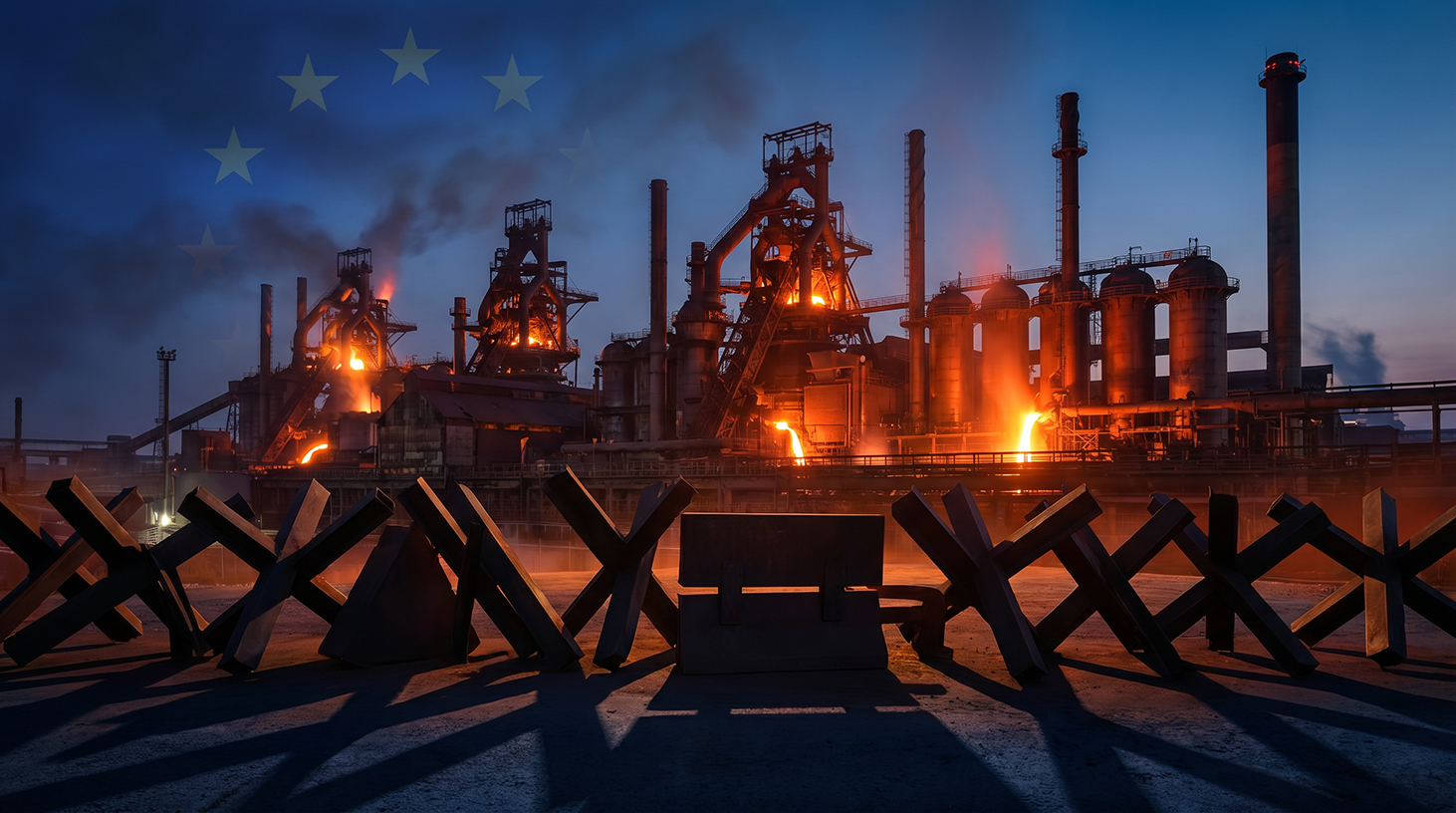
Europe's steel industry | The new EU protection regulation 2026: Not a fair market – but a fight for survival – Image: Xpert.Digital
The end of loopholes: How a new rule is intended to protect Europe's steel industry
50 percent tariffs and strict quotas: Europe's radical plan against cheap steel
Radical course correction in Brussels: What the new EU steel regulation means for the economy
Heavily subsidized cheap imports from Asia, aggressive US trade policies, and a persistent structural crisis have driven domestic production to historic lows. Nearly one in three tonnes of steel used in the EU now comes from third countries, while European blast furnaces stand idle. To avert the looming collapse and secure the gigantic investments in the "green steel" of the future, Europe is radically changing its trade policy. With a drastic new EU protection regulation, scheduled to come into force in July 2026, the European Union is taking a hard line: halved import quotas, 50 percent punitive tariffs, and the innovative "smelt and cast" clause are intended to finally put an end to existing circumvention practices. But will this unprecedented intervention be enough to save the market, or will it drive costs for manufacturing industries to dangerous levels? This comprehensive analysis sheds light on the background, the harsh mechanisms and the geopolitical consequences of the new regulatory framework, which is far more than just a customs law – it is a matter of survival for European industry.
The European steel industry is on the brink of collapse – and Brussels is pulling the emergency brake
On April 13, 2026, months of tough negotiations in Brussels ended with a result that fundamentally changes European trade policy: The European Commission, the Parliament, and the Council reached an agreement in the trilogue procedure on a new safeguard instrument for the European steel market. The agreed text will now be submitted to the European Parliament and the Council for formal adoption and is scheduled to enter into force on July 1, 2026 – precisely when the existing safeguard measures expire after eight years under the World Trade Organization (WTO). What at first glance appears to be a technical regulatory measure is, in reality, the toughest trade policy course correction that Europe has ever granted its steel industry.
The agreement is not an abstract administrative decision in Brussels. It is the answer to a structural crisis that has been worsening for years: global overproduction, massively subsidized cheap imports from Asia, a historic decline in domestic production, and a transatlantic trade dispute that is putting additional pressure on the already fragile European market. This report analyzes the background, mechanisms, and strategic implications of the new EU steel protection regulation – and explains why Europe is setting the course for industrial policy in the coming decade with this measure.
The depth of the crisis: When record lows become the norm
The European, and especially the German, steel industry is mired in a persistent structural crisis, the extent of which has so far received little attention in public debate. German crude steel production plummeted to a mere 34.1 million tons in 2025 – the lowest figure since the 2009 financial crisis, when 32.7 million tons were produced. Even more concerning than the absolute figure is the consistency: it marked the fourth consecutive year that production remained significantly below the 40 million ton mark – the threshold the industry defines as the lower limit for economically viable capacity utilization. Since 2018, this threshold has been breached a total of six times. The steel industry thus remains structurally at a recessionary level.
Particularly alarming is the drop in capacity utilization below the critical threshold of 70 percent. In economics, a utilization rate below this mark is considered a critical area: fixed costs are no longer adequately covered, investment cycles collapse, and a downward spiral of declining margins, job cuts, and production relocation begins. Total EU crude steel production fell to around 125.8 million tons in 2025, also reaching a historic low. At the same time, steel imports into the EU, including semi-finished products, rose by 14 percent, while finished product imports increased by 9 percent. In the third quarter of 2025, the import share of EU steel consumption reached a record high of 29 percent – now, almost one in three tons of steel used in the EU comes from a non-EU country.
This development is not a random market outcome, but rather the result of structural distortions on a global scale. China's steel exports exceeded 100 million tons by the end of November 2025 – an increase of 6.7 percent compared to the previous year. China dominates global crude steel production with almost 55 percent, while Germany contributes only around 2 percent. The OECD estimates global overcapacity in the steel market at 620 million tons and forecasts a further increase to 721 million tons by 2027 – equivalent to four times the total EU steel capacity. The global steel surplus is therefore not a temporary cyclical phenomenon, but a structural problem with long-term ramifications for the European industrial base.
External geopolitical pressure: America, Asia, and the diversion problem
In addition to the EU economy's internal demand weaknesses, there is a dangerous external pressure factor: the aggressive trade policy of the United States under President Donald Trump. Since March 11, 2025, the US has imposed a 25 percent tariff on all steel and aluminum imports – a protectionist step that directly affects the EU and prompted Brussels to announce proportional countermeasures. Trump subsequently even announced a further doubling to 50 percent, which the German Steel Federation described as a new escalation in the transatlantic trade conflict.
The real damage for Europe, however, lies less in the direct export losses than in the so-called trade diversion effect. Traditional steel suppliers such as India, Turkey, Vietnam, and South Korea, which previously exported significant quantities to the US, are losing access to the US market due to the American tariffs and are forced to sell these quantities elsewhere. The European market is becoming the preferred outlet for these diverted steel volumes. The EU's trade deficit in the steel sector has consequently widened to around 2 million tons per month, of which 1.2 million tons are finished products. The resulting price pressure on European producers is considerable and is further exacerbated by the already weak domestic economy.
Furthermore, China's domestic real estate market – traditionally the main driver of steel demand – remains in a prolonged period of stagnation. Chinese crude steel production fell below 1 billion tons in 2025 for the first time in years. This structural decline in domestic demand is forcing Chinese steel producers to utilize their capacity through even more aggressive export strategies. In December 2025, China responded by announcing a licensing system for the export of around 300 specific steel products starting in January 2026 – a measure diplomatically disguised as export control, intended to counter growing international pressure, but in practice hardly addressing the structural overproduction. According to the World Steel Association, global steel demand is projected to grow only marginally by 0.3 percent to 1.724 billion tons in 2026, before a stronger increase of 2.2 percent is expected in 2027 – figures that do not signal any significant easing of the global oversupply in the foreseeable future.
The centerpiece of the agreement: quota reduction and doubling of tariffs
The new EU safeguard instrument, agreed upon by the Commission, Parliament, and Council in the trilogue negotiations, is based on a revised system of tariff rate quotas (TRQs). The key parameter: the duty-free import volume is limited to 18.3 million tons per year – a reduction of approximately 47 percent compared to the quotas applicable in 2024. Anything imported above this threshold will be subject to a tariff of 50 percent – double the previous rate of 25 percent.
This dual effect – drastically reduced duty-free allowances combined with a massively increased external tariff – is economically sound. The lower duty-free allowance directly impacts supply: only a clearly defined quantity can be imported duty-free, which structurally dampens price pressure from cheap mass imports. At the same time, the 50 percent tariff outside the quota acts as a strong deterrent, largely negating the economic viability of excess imports. By comparison, the US has also levied a 25 percent tariff on steel imports since 2025, which is set to increase further. Europe's new 50 percent rate is thus at an internationally standard level of protection for strategically important industries.
The agreement also stipulates that the quota distribution will be calculated based on the import share of each product category between 2022 and 2024. This makes the distribution more market-oriented and reflects the most recent actual demand structure, rather than enshrining historical entitlements. The coverage applies to all countries of origin except the EEA (European Economic Area) states, thus clearly focusing on imports from third countries. Within six months of the regulation's entry into force, the Commission will examine whether the scope should be extended to include further steel products – including pipes, piping products, certain types of wire, and forged bars. This review is important because circumvention strategies tend to exploit products not covered by the regulation.
The melting and casting clause: Determining origin as the key to effectiveness
One of the most innovative and, at the same time, most discussed changes to the regulation is the so-called melt-and-pour clause. It defines the country of origin of a steel product as the country where the steel was first produced in liquid form in a furnace and then poured into its first solid form. This definition sounds like a technical truism – but it isn't. Traditionally, the origin of goods was determined according to rules of non-preferential origin, which considered a so-called sufficient processing or treatment as the originating step. This deliberately created loopholes for circumvention.
The classic pattern of circumvention works as follows: Chinese hot-rolled wide strip, produced under state subsidies and exported at dumping prices, is further processed into cold-rolled or coated steel in third countries such as Turkey or Vietnam. Since the crucial processing stage – rolling or coating – takes place in a country outside the high EU tariffs, the product could previously be declared as being of Turkish or Vietnamese origin, thus avoiding the Chinese tariffs. The new melt-and-cast rule breaks this mechanism: The origin will henceforth lie where the steel was originally melted – regardless of any subsequent processing. Turkish or Vietnamese processors who use Chinese rolled steel as raw material will therefore lose their trade advantage.
The practical implementation of origin verification is to be carried out via manufacturing plant test certificates – documents already used to document the chemical and mechanical properties of materials and therefore not a bureaucratic novelty. Nevertheless, steel importers and processors, such as those in the EURANIMI association, warn of market distortions and significant compliance challenges. The clause particularly affects supply chains based on inexpensive Chinese raw materials and forces these companies to strategically realign themselves. For lawyers and customs experts, the standard represents a new category: it functions as a traceability mechanism limited solely to this regulation, without altering the general non-preferential rules of origin of the Union Customs Code. The precise demarcation between the two sets of rules will likely require considerable interpretation in practice.
🎯🎯🎯 Global Sourcing & Commodity Trading with integrated logistics

Raw materials, global procurement & trade - Image: Xpert.Digital
State-of-the-art cargo planes, optimized transport routes, and multimodal logistics chains are interchangeable—they can be bought, leased, or outsourced. What money can't buy are direct contacts with producers in Peruvian mines, reliable supply relationships in the CIS countries, and years of built-up trust in markets that are unfamiliar to outsiders. The decisive competitive advantage in global commodity trading lies not in transporting the good from A to B, but in knowing where the good comes from, who produces it, and how to gain access before others even know the market exists. Whoever owns the network sets the price. Everyone else pays it.
More information here:
Between fair competition and WTO risks: Europe's new course in steel policy
Flexible transfer mechanisms: Balancing protection and supply chain stability
One aspect of the new regulation that has received little attention in the public debate so far is the differentiated rule for carrying over unused import quotas from quarter to quarter. In the first year of application, unused quota volumes for all product categories can be carried over to the following quarter. These unused volumes remain available for 20 working days into the following quarter. This flexibility provision is not a trivial technical parameter – it is crucial in determining whether the protective instrument remains practically manageable for industrial consumers.
From the second year of application, the European Commission will decide, based on defined criteria, whether such quarterly carry-overs are still permissible for specific product categories. This differentiated approach makes economic sense: not all steel products are subject to the same seasonal fluctuations, storage parameters, or supply chain dynamics. A rigid quarterly regulation without a carry-over option could lead to artificial shortages of seasonal products, severely impacting downstream industries—from automotive to construction. Conversely, an overly generous carry-over rule could lead to quotas being accumulated and used for quantity speculation, thus undermining the protective effect.
The regulation thus includes a learning mechanism: the Commission reserves the right to make adjustments based on actual market developments without having to go through the full legislative process each time. This is technically sound regulation – but also a gateway for political pressure from downstream industries that would benefit from more favorable import quotas. The balance between protecting the steel industry and the interests of steel-processing sectors – mechanical engineering, automotive, construction, and packaging – therefore remains a politically contested arena.
CBAM and steel protection: Why one mechanism alone is not enough
Parallel to the new steel protection regulation, the Carbon Border Adjustment Mechanism (CBAM) has been in its regular phase since January 1, 2026. CBAM obliges importers of certain carbon-intensive goods – including steel, aluminum, cement, fertilizers, and electricity – to declare and purchase corresponding CBAM certificates that reflect the CO2 costs in the country of production. This is intended to prevent energy-intensive production from relocating to countries with lower climate standards – the so-called carbon leakage.
CBAM's economic logic is compelling: European steel has a significantly smaller carbon footprint than steel from Asia. In Germany, producing one ton of steel generates approximately 1.5 tons of CO2, while in China it's 1.8 tons. Furthermore, the German steel industry has reduced its CO2 emissions by around 20 percent over the past 20 years. Stainless steel from European production performs particularly well in life cycle analyses: its CO2 emissions during the production phase are 31 percent lower than those of aluminum because it is largely made from recycled secondary materials. When this advantage is extrapolated to the global climate balance, protecting European steel production capacity is not at odds with climate protection – but rather represents consistent action within climate policy.
Nevertheless, practical experience shows that CBAM alone is insufficient. Since the beginning of 2026, steel prices have risen only marginally, contrary to some expectations. One reason is that European steel producers in a tight market are unable to fully pass on the additional costs resulting from CBAM to importers. Another reason is that the mechanism's full effect is only unfolding gradually. At the end of 2025, the German Steel Federation explicitly criticized the Commission's revised CBAM package for failing to consistently close existing gaps and thus falling far short of what is urgently needed. The new steel protection regulation should therefore be understood not as a parallel measure, but as a necessary complement to CBAM: Both instruments address different dimensions of the competition distortion problem – CBAM the climate dimension, the protection regulation the quantitative flooding of the EU market.
Decarbonization under pressure: The steel transformation needs stability
In addition to its trade and competition policy dimensions, the new regulation has a third, often underestimated dimension: it is a vital industrial policy prerequisite for the transformation to green steel. Europe has set itself ambitious climate targets – Germany aims to be climate-neutral by 2045, which requires the complete decarbonization of steel production. Steel is currently produced predominantly using coal; the switch to hydrogen-based or electrified processes requires massive investments in plant technology, infrastructure, and security of supply.
In March 2025, the European Commission launched a comprehensive action plan for the steel and metals industry, which includes an Industrial Decarbonization Bank with a target funding of €100 billion, financed by innovation funds and additional ETS revenues. Despite all the challenges, ThyssenKrupp Steel, Europe's largest steel company, remains committed to its goal of green steel. Between 2026 and 2027, the Commission is providing €150 million from the innovation fund for a pilot auction to decarbonize industrial processes.
However, these transformation investments require a robust economic foundation. A steel producer operating at less than 70 percent capacity and struggling against a flood of subsidized cheap imports despite historically low production volumes cannot invest billions in green direct reduction or electric arc furnaces. The OECD explicitly warned in 2025 that 40 percent of planned new global steel capacity between 2025 and 2027 would be based on emissions-intensive blast furnace oxygen processes, thus undermining investments in low-carbon technologies. The development of global low-cost steel capacity and the European goal of a steel transition are therefore in direct conflict. Without sufficient market prices and stable sales conditions, the decarbonization of the sector remains a political promise that the real economy cannot fulfill.
Conflicts of interest and critical counterarguments
The new protective regulation is not without controversy. Industries that use steel as an input factor – automotive, mechanical engineering, construction, and packaging – are directly threatened by rising raw material costs. Higher steel prices due to reduced import quotas and the 50 percent external tariff can have significant repercussions along the value chain. In their communication regarding the trilogue agreement, the Chambers of Industry and Commerce (IHK) explicitly emphasized that the measure must remain sufficiently flexible for downstream industries. Where European end products – cars, machinery, and household appliances – compete globally, higher steel prices could negatively impact export competitiveness.
This objection should not be underestimated, but its absoluteness should be questioned. First, the duty-free allowance of 18.3 million tons per year remains a substantial import volume that largely covers legitimate trade needs. It is not an import ban, but a quantitative limit with a clear price signal effect beyond the quota. Second, the alternative—a completely unprotected market after the expiration of the existing safeguards—would not have led to lower steel prices in the medium term, but rather to an accelerated reduction of capacity in Europe. A deindustrialized EU dependent on imports would be more expensive and less secure in the long run. Third, the carry-over arrangement and the Commission's ability to adjust quotas for specific product categories provide sufficient flexibility to avoid acute supply shortages.
Questions have also been raised regarding the WTO compatibility of the measure. Previous safeguard measures were explicitly based on the WTO Safeguards Agreement and were limited to eight years. The new regulation uses a different legal framework – it does not react to a sudden surge in imports, but rather to structural overcapacities – and is designed to be more permanent. The legal interpretation of whether this is WTO-compliant or could provoke challenges before the Appellate Body remains controversial among experts. The EU is thus clearly opting for a systemic shift from reactive WTO measures to a permanent structural safeguard framework, guided more by foreign trade policy considerations than by WTO-specific ones.
Strategic context: Europe chooses the path of fair trade
The trilogue agreement of April 13, 2026, is more than a sectoral policy compromise – it marks a paradigmatic shift in Europe's stance on free trade. Europe has never abandoned free trade, but it is changing the conditions under which it accepts it. Free trade – as is now the visible guiding principle of Brussels' trade policy – presupposes that all market participants compete on a level playing field. Where state subsidies, dumping, and circumvention practices undermine this fundamental condition, trade policy countermeasures are not protectionism, but the restoration of fair competition.
This position gains considerable plausibility in the geopolitical environment of 2026. With a US president who instrumentalizes steel and aluminum tariffs, a China that maintains its overproduction through systematic subsidy policies, and increasing fragmentation of the global regulatory framework under the WTO, a naive belief in free trade is no longer a strategic option. The EU must protect its industrial base – not least because steel is not just an economic commodity, but a raw material of strategic importance: for the defense industry, infrastructure, the energy transition, and Europe's defense capabilities. A European steel action plan that aims to mobilize €100 billion for decarbonization needs a vibrant industry as its foundation.
The German Steel Federation expressly welcomed the trilogue agreement, calling it a major step towards securing Germany's position as a steel and industrial hub. At the same time, it emphasized that the regulation is only the beginning: the review after six months, the potential expansion to further product categories, the further development of the CBAM (Certified Chemical Analysis and Mapping), and the clarification of the melting and casting verification standards are all outstanding issues that will determine the practical effectiveness of the new framework. Companies have been under immense pressure for years due to the effects of global overcapacity – a single regulation cannot solve this structural crisis, but it can break the cycle.
Structural crisis or new beginning?
Global steel demand is projected to grow only marginally by 0.3 percent to 1.724 billion tons in 2026, according to forecasts by the World Steel Association, and will not increase significantly until 2027, with a rise of 2.2 percent. Structural overcapacity will therefore remain the dominant problem for years to come. While China's efforts to limit crude steel production are evident – total production fell below 1 billion tons in 2025 for the first time since 2019 – the structural incentives for overproduction are deeply entrenched in the Chinese economic system. As long as China's real estate market does not recover sustainably and the state-supported steel industry does not seriously reduce its capacity, the export pressure on Europe will remain structural.
For Europe, this means: The new protection regulation creates a necessary, but not sufficient, safeguard. It is necessary because, without quotas and tariffs, uncontrolled import pressure would further destabilize the already struggling EU steel industry. It is insufficient because the real competitive factors—energy prices, financing for the transformation, the availability of skilled workers, and approval speeds for investments in green technologies—cannot be addressed by trade policy alone. Europe's steel industry needs a coherent policy mix: Trade protection, climate policy, industrial promotion, and energy policy must work together if the transformation to green steel "Made in Europe" is to succeed.
The year 2026 thus marks a crossroads in industrial policy. If the regulation can be implemented quickly and effectively, the CBAM loopholes closed, and the necessary financing for the transformation secured, the trilogue agreement could mark the beginning of a genuine industrial renaissance for the European steel industry. If this fails, it will remain a symbolic gesture – costly for importers, insufficient for producers, and ineffective against the structural pressures of the global steel market.
Your contact for raw materials ⛏️ Global sourcing 🚢🌐 & trading 📦

Konrad Wolfenstein
I would be happy to serve as your personal advisor.
• Contact: [email protected]
• Tel: +49 7348 4088 961
Our global industry and economic expertise in business development, sales and marketing

Our global industry and economic expertise in business development, sales and marketing - Image: Xpert.Digital
Industry focus areas: B2B, digitalization (from AI to XR), mechanical engineering, logistics, renewable energies and industry
More information here:
A thematic hub offering insights and expertise:
- Knowledge platform covering global and regional economies, innovation and industry-specific trends
- A collection of analyses, insights, and background information from our key areas of focus
- A place for expertise and information on current developments in business and technology
- A hub for companies seeking information on markets, digitalization, and industry innovations





