
From building up reserves to emergency sales: How the Iran war is bringing the Turkish economy to its knees
Xpert Pre-Release

Available in 27 languages 📢
Prefer Xpert.Digital on GoogleⓘPublished on: May 23, 2026 / Updated on: May 23, 2026 – Author: Konrad Wolfenstein
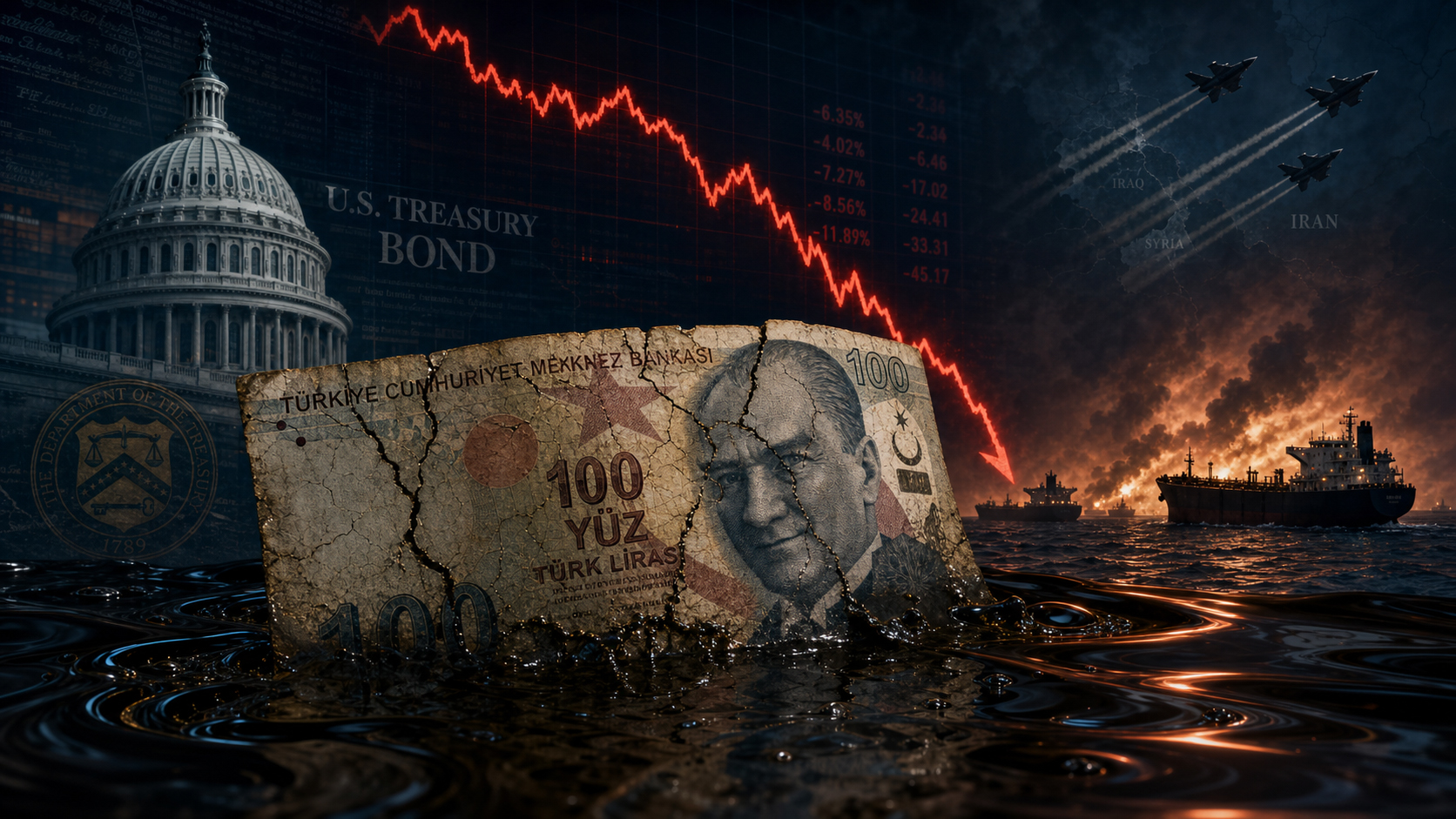
From building up reserves to forced sales: How the Iran war is bringing the Turkish economy to its knees – Image: Xpert.Digital
Gold and bonds sold off cheaply: How the Iran war is dragging the Turkish economy into the abyss
Double shock for Erdoğan: Why Turkey is sacrificing its entire state reserves
Ankara's empty vaults: What the historic depletion of reserves means for Turkey
In the spring of 2026, Turkey experienced an economic shock of historic proportions. Triggered by the outbreak of the US-Iran War and the resulting explosion in global energy prices, Ankara was forced to dump its painstakingly accumulated foreign exchange and gold reserves in an unprecedented fire sale. Within just one month, billions of dollars in US Treasury bonds evaporated to cushion the lira's relentless collapse and exploding imported inflation. Coupled with widespread political upheaval at home, this drastic step reveals the country's extreme structural vulnerability. An in-depth analysis of this unprecedented crisis reveals the extent to which the geopolitical energy crisis is squeezing the Turkish economy, why the central bank had to sacrifice virtually all of its liquid assets, and what grim scenarios now threaten the country.
When $14 billion disappears in a single month – and nobody knows what comes next
The extent of the sell-off: A historic reduction in reserves
In March 2026, Turkey carried out one of the most spectacular reductions in state financial reserves in the recent history of an emerging market. Within a single month, Turkish investors' holdings of US Treasury securities plummeted from approximately $15.7 to $16 billion to just $1.8 billion. This represents a decline of nearly 89 percent in thirty days. The estimates, compiled by Bloomberg based on official data from the US Treasury Department, include not only positions held by the Turkish central bank but also holdings by companies and other institutional actors.
The full extent of this event only becomes clear in its historical context. As recently as January 2026, Turkey held up to $16.9 billion in US Treasury bonds, having worked diligently in the preceding months to rebuild its international reserves. In 2025, after a long period of weak reserves, Turkey had successfully increased its holdings from around $14 billion to over $21 billion—a quiet but strategically significant success for Ankara's orthodox economic policies under Finance Minister Mehmet Şimşek. This painstakingly accumulated buffer vanished completely within a few weeks.
In parallel, between the end of February and the end of March 2026, the Turkish central bank sold or lent approximately 52 to 60 tons of gold worth more than US$8 billion. This was in addition to gold swap transactions involving around 79 tons, in which gold bars were used as collateral to indirectly obtain dollar liquidity. Economic commentator Uğur Gürses, a former employee of the Turkish central bank's gold reserves management department, succinctly summarized the situation: The central bank held 60 to 70 percent of its reserves in gold, which is why it was forced to liquidate a portion of it to obtain the necessary dollar liquidity. Adding together sales of US Treasury bonds, direct gold sales, and gold swap arrangements, reserves totaling nearly US$30 billion flowed out of Turkish state assets in March alone, and in the immediate weeks before and after.
The trigger: A war that changed everything
The immediate trigger for this dramatic depletion of reserves was the outbreak of the US-Iran War at the end of February 2026. On February 28, the US and Israel launched a joint military operation against Iranian nuclear facilities, military bases, and government buildings. Iran responded with counterattacks, shelling oil facilities in several Gulf states as well as oil tankers and effectively blocking the Strait of Hormuz. This geographically relatively narrow strait off the southeast coast of Iran is one of the most critical bottlenecks in global energy trade: Approximately 20 percent of the world's maritime trade in oil and liquefied natural gas passes through this waterway daily.
The impact on global energy markets was immediate and brutal. The price of Brent crude oil, which had traded at around $73 to $75 per barrel before the war, skyrocketed to over $106, a price increase of more than 40 percent within just a few weeks. IEA chief Fatih Birol warned as early as April 2026 that April would be even more difficult than March, since shipments that had been loaded long before the war had still arrived in March, while in April, virtually nothing was being loaded. The International Energy Agency scrapped its entire annual forecast: instead of a growth in global oil demand of 640,000 barrels per day, the IEA now expected a decline of 80,000 barrels per day; global oil supply was projected to shrink by 1.5 million barrels per day, instead of growing by the previously anticipated 1.1 million barrels per day.
Only at the beginning of April 2026 did a US-Iranian ceasefire bring brief relief: the price of oil fell by around 13 percent to $95 per barrel of Brent crude, and European natural gas futures declined by up to 20 percent. However, despite this respite, energy prices remained far above pre-war levels, and the energy crisis triggered by the conflict was, in the assessment of the EU Commission, far from over.
Turkey's structural vulnerability: Energy as its Achilles' heel
To understand the severity of Turkey's reaction, one must be aware of the structural vulnerability of its economy. Turkey covers over 70 percent of its total energy needs through imports. For oil, import dependency is 93 percent, and for natural gas, it is nearly 99 percent. Annual energy imports amount to between 50 and 60 billion US dollars, thus representing one of the main drivers of the structural current account deficit.
The supply structure is both politically sensitive and economically risky. Russia supplies around 45 percent of Turkey's natural gas and, according to data from the Turkish Energy Market Regulatory Authority (EPDK), up to 66 percent of Turkey's oil imports and products. Before the war, Iran was also a significant supplier, accounting for 16 percent of Turkish natural gas imports. With the outbreak of war and the effective blockade of the Strait of Hormuz, not only did direct gas deliveries from Iran cease, but the entire energy supply via the Persian Gulf was severely disrupted. Around 8.5 percent of the EU's LNG, seven percent of its crude oil, and 40 percent of its aviation and diesel fuel were transported through the Strait of Hormuz, illustrating the widespread impact of the blockade.
For a country almost entirely dependent on energy imports, which must be paid for in dollars, a 40 percent jump in oil prices means an immediate and dramatic deterioration of the current account balance. Analysts estimate that an increase in the oil price of $10 per barrel translates into an additional burden on Turkey's trade balance of several billion dollars annually. With the actual increase of around $30 to $35 per barrel, this amounts to a structural additional burden of $15 to $20 billion per year, a devastating blow to an economy with a gross domestic product of roughly $1.1 to $1.2 trillion.
The macroeconomic data vividly confirm this shock. Turkey's current account deficit had already widened to $6.8 billion in January 2026, compared to $4.03 billion in the same month of the previous year. In March 2026, the deficit then exploded to $9.7 billion, the largest current account deficit since January 2023, with the merchandise trade deficit alone reaching almost $9.5 billion. For the entire first quarter of 2026, the current account deficit totaled $23.7 billion, compared to $14.1 billion in the same period of the previous year.
The monetary policy dilemma: intervention or capitulation
Against this backdrop of fundamental pressure, Turkish monetary policymakers faced a classic dilemma. The lira was under massive depreciation pressure. The USD/TRY exchange rate, which had been trading at around 43.90 lira per dollar at the end of February, rose to 45.61 and above, representing a steady, albeit moderate by international standards, depreciation. By May 2026, the rate was around 45.70 lira per dollar, meaning the lira had lost approximately 17.48 percent of its value in the past year.
At the same time, annual inflation in April 2026 reached 32.37 percent, a six-month high directly attributable to rising energy costs. The IMF revised its inflation forecast for Turkey in 2026 upward to 28.6 percent; by comparison, as recently as October 2025, the Fund had projected an inflation rate of only 24.7 percent for 2026. The central bank's target of reducing inflation to 9 percent by the end of 2027 thus became a distant prospect.
State-owned banks intervened massively in the foreign exchange market to limit the lira's depreciation. On a single day, May 21, 2026, state-owned banks sold approximately six billion dollars, according to traders, to prop up the lira. Such operations require enormous foreign currency reserves. Because the central bank's direct foreign exchange holdings were limited, the very US Treasury bonds and gold reserves that had been painstakingly accumulated over years were mobilized. US Treasury bonds have the crucial advantage of being highly liquid and able to be sold on the world market at near-market prices at any time, making them the ideal crisis instrument for foreign exchange interventions.
This policy of intervention, however, comes at a price. Investors see the continued foreign exchange market manipulation as a clear signal that fundamental imbalances are being addressed not through structural reforms, but by burning through reserves. This discourages foreign capital inflows and accelerates the withdrawal of existing investments. Foreign investors sold Turkish government bonds faster than ever before in the week ending March 13, 2026—a historic sell-off that further intensified the pressure on the currency.
The political escalation: A double shock for the markets
As if the economic situation alone weren't enough, political events in May 2026 hit the Turkish financial markets with considerable force. A court in Ankara ordered the removal of CHP chairman Özgür Özel and the entire party leadership. The court justified its decision by declaring the party congress of October 2023, at which Özel had been elected chairman, retroactively invalidated due to alleged vote-buying and procedural flaws, thus rendering all subsequent resolutions also ineffective. The 78-year-old former party leader Kemal Kılıçdaroğlu was to take over as interim party leader, a decision widely considered politically motivated and one that effectively strengthens Erdoğan's position vis-à-vis the opposition.
Turkish markets reacted immediately. The benchmark Borsa Istanbul 100 index closed down 6.1 percent, and despite a slight recovery of almost two percent the following day, it continued to fluctuate sharply. The sell-off reflects a well-known market logic: political uncertainty in a country with an already strained economy increases risk premiums. Portfolio managers across all asset classes reduced their exposure to Turkey.
The CHP's removal from office is part of a pattern of systematic weakening of organized opposition. Since March 2025, Mayor Ekrem İmamoğlu, Erdoğan's most dangerous political rival, has been in pretrial detention, charged with corruption. Hundreds of CHP members and numerous mayors have been arrested. The link between economic weakness and political repression is no coincidence: In authoritarian economies, governments tend to turn inward during times of crisis when external shocks limit their ability to act. For international investors, this combination is a toxic mix.
Our global industry and economic expertise in business development, sales and marketing

Our global industry and economic expertise in business development, sales and marketing - Image: Xpert.Digital
Industry focus areas: B2B, digitalization (from AI to XR), mechanical engineering, logistics, renewable energies and industry
More information here:
A thematic hub offering insights and expertise:
- Knowledge platform covering global and regional economies, innovation and industry-specific trends
- A collection of analyses, insights, and background information from our key areas of focus
- A place for expertise and information on current developments in business and technology
- A hub for companies seeking information on markets, digitalization, and industry innovations
Energy war, reserves crisis, rating risk: Turkey's new vulnerability
Short-term consequences: What the reduction of reserves really means
The loss of almost all US Treasury bond reserves in a single month has several direct economic consequences. First, the central bank's firepower for future lira defense operations is severely limited. With a remaining US Treasury holding of only $1.8 billion and significantly reduced gold reserves, the Turkish central bank has considerably less liquid assets available should another devaluation surge occur. The lira's structural weakness has therefore not been resolved, but only temporarily halted at a high cost.
Secondly, the historically low level of reserves signals increased vulnerability to crises. Rating agencies and international investors assess a country's reserve adequacy using standardized metrics. A drastic reduction in net foreign reserves increases the likelihood of a credit downgrade, which further drives up financing costs for the Turkish state and Turkish companies on international capital markets. Turkish bond yields have already reached record highs in this environment.
Thirdly, the sell-off sends an important signal to foreign direct investors. A country that depletes its hard currency reserves at this rate during a crisis signals structural fragility. This is particularly relevant for companies that produce in Turkey and want to repatriate profits in hard currency, as increased exchange rate risk and political instability significantly reduce real return expectations.
Fourth, it should be noted that the published figures only reflect the situation up to the end of March, i.e., the first month of the war. The data for April will not be available until the time of publication of this article, and given the continued foreign exchange interventions amounting to billions of dollars daily, it is to be expected that the April figures will also show a further reduction in reserves.
Medium-term consequences: Inflation, growth and structural risks
From a macroeconomic perspective, Turkey in 2026 represents a textbook example of the interplay between exogenous shocks and structural vulnerability. The IMF lowered its growth forecast for Turkey in 2026 from 4.2 to 3.4 percent, citing weaker activity in the previous year and the burden of increased oil and gas prices as the main reasons. The current account deficit projected for 2026 was revised upward from the initial 1.3 percent of GDP to 2.8 percent.
The inflationary spiral is the most worrying element. In an economy where transportation, production, and heating costs are directly correlated with oil prices because almost all energy is imported, an external price surge has a broad and rapid impact on consumer prices. The monthly price increase of 4.18 percent in April 2026 drove annual inflation to 32.37 percent. This transmission is not limited to energy: rising production costs increase the prices of food, manufactured goods, and services alike, especially in a country heavily reliant on imported intermediate goods.
At the same time, the monetary authorities face an irresolvable conflict of objectives. An aggressive interest rate hike would combat inflation but stifle growth and increase the debt burden of Turkish companies, which are often indebted in dollars or euros. A loose monetary policy, on the other hand, would support growth but further weaken the lira and fuel imported inflation. Thus, in 2026, the Turkish central bank will be operating in the crossfire of contradictory economic demands, without sufficient reserve buffers to buy time.
Geopolitical context: Turkey caught between two stools
Turkey's geopolitical situation is characterized by a structural ambiguity that is particularly evident in the current crisis. As a NATO member, Turkey is formally allied with the US and Israel, which initiated the war against Iran. At the same time, Turkey is heavily dependent on Russia for its energy supply, and Russia is also a key player in this geopolitical game. Before the war, Iran was not only an energy supplier but also an important transit corridor and trading partner.
Historically, Ankara attempted to manage this geopolitical tension through a balancing act, maintaining relations with all major powers and profiting from strategic demand. However, the Iran-Iraq War has shattered the scope for such maneuvers: the blockade of the Strait of Hormuz affects the Turkish economy regardless of which side Ankara takes in the conflict. The economic damage is real, immediate, and structural; it cannot be mitigated by diplomatic flexibility alone.
In the medium term, the war could force Turkish economic diplomacy to rely even more heavily on Russian energy, deepening its geopolitical dependence on Moscow. At the same time, Turkey's weakened financial position could limit its scope for independent foreign policy decisions, as countries in currency distress tend to be more susceptible to pressure from foreign lenders and powers. Ankara is well aware that the US could use its most important leverage against Turkey—access to global dollar markets—at any time.
Comparative classification: Türkiye among the affected emerging economies
Turkey is not the only emerging market to have reduced its holdings of US Treasury securities in response to the energy crisis. In March 2026, several major economies collectively reduced their US Treasury holdings to mobilize dollar liquidity for their domestic markets and protect local currencies from volatility. The attractiveness of government bonds generally declined as expectations of tighter monetary policy and inflation fears fueled by rising energy prices pushed yield expectations upward.
What distinguishes Turkey from other emerging markets is the combination of speed, scale, and structural condition: No other country has sold such a large proportion of its US Treasury bond reserves in a comparable period. The pace of the sell-off—almost 90 percent in a single month—is unprecedented and reflects the acuteness of Turkey's financing crisis. While other countries mobilized reserves selectively and gradually, Ankara had to mobilize virtually everything that could be liquidated. This is not a sign of economic strength, but rather a clear indication of emergency.
By comparison, China, the world's largest holder of US Treasury bonds, did not use the correction in the gold price caused by Turkey's gold sales to sell off its holdings, but rather to increase its gold reserves: In March, the Chinese central bank acquired 160,000 troy ounces of gold, the most in over a year. This illustrates the contrasting strategic positions: While resource-rich or export-oriented economies used the crisis as a buying opportunity, resource-poor and energy-import-dependent countries like Turkey were forced to liquidate their holdings.
Scenarios: Three possible trajectories for Turkey
Based on the available data and structural conditions, three plausible development paths for the Turkish economy can be derived.
The first scenario is a gradual stabilization. This would require a sustained de-escalation in the Middle East, which would reduce energy prices back to or below pre-war levels, combined with a continuation of the orthodox fiscal policy under Finance Minister Şimşek and a rebuilding of reserves through capital inflows and tourism revenues. Turkey is a major tourism destination and generates annual surpluses of over $60 billion from service exports. If energy prices normalize, the current account balance could improve relatively quickly. In this scenario, the March shock would be a painful but surmountable setback.
The second scenario is a prolonged crisis. Should energy prices remain persistently high, political uncertainty continue, and foreign capital outflows persist, Turkey risks a situation in which it lacks sufficient reserves to absorb waves of devaluation. An exchange rate of 50 lira or more per dollar would drive imported inflation to new heights, further weaken consumer purchasing power, and risk a recession. Given the already high inflation, weak growth, and political instability, this scenario is by no means improbable.
The third scenario is a structural realignment. The crisis could generate the necessary pressure for reform to finally achieve substantial progress in diversifying energy sources. Turkey has considerable potential in renewable energies, particularly solar and wind power, and had embarked on an ambitious expansion program in previous years. If the crisis leads to accelerated investment in domestic energy production, it could reduce structural vulnerability in the long term, even if the adjustment process is initially painful.
Conclusion: A reflection of structural dependencies
Turkey's sale of nearly all US Treasury securities in March 2026 is not an isolated event, but rather a symptom of deep-seated structural problems. Its radical dependence on energy imports transforms any external energy price shock into an immediate attack on its trade and balance of payments. The failure to build a sustainable foreign exchange buffer leaves the country permanently vulnerable to speculative attacks on the lira. And the political erosion of democratic institutions increases geopolitical risk premiums on Turkish assets, chronically deterring foreign capital.
What happened in March 2026, in its raw form, is a state emergency operation: A country panics and sells off its financial reserves to prevent the collapse of its currency, triggered by a war in which it is not involved but whose consequences it is fully feeling. This combination is the worst possible scenario for an emerging market with a structural current account deficit, chronic inflation, and weakened institutional credibility.
What distinguishes the current situation from previous Turkish crises is the simultaneous occurrence of multiple shocks. Earlier crises, such as the lira crisis of 2018 or the turmoil following İmamoğlu's arrest in March 2025, were based on either external or internal factors. In 2026, a massive external energy shock, a political crisis, and structurally depleted reserves converged. This simultaneity makes the current situation perhaps the most challenging that Turkish economic policymakers have faced in decades.
Your global marketing and business development partner
☑️ Our business language is English or German
☑️ NEW: Correspondence in your native language!

Konrad Wolfenstein
I and my team are happy to be available to you as your personal advisor.
You can contact me by filling out the contact form here simply call me at +49 7348 4088 965. My email address is [email protected]:or
I'm looking forward to our joint project.
☑️ SME support in strategy, consulting, planning and implementation
☑️ Creation or realignment of the digital strategy and digitization
☑️ Expansion and optimization of international sales processes
☑️ Global & Digital B2B trading platforms
☑️ Pioneer Business Development / Marketing / PR / Trade Fairs
🎯🎯🎯 Data-driven B2B industry hub as a quasi-in-house solution

The quasi-in-house solution: How Xpert.Digital closes operational gaps in B2B marketing and sales – Smart Content-Driven Business - Image: Xpert.Digital
Xpert.Digital is a data-driven B2B industry hub led by Konrad Wolfenstein . The company acts as an external, quasi-in-house solution for industrial partners, closing operational gaps in marketing, content, and sales – without requiring additional resources on the client side.
More information here:










