

Putin's digital dead end: Tech collapse due to war – Russia's AI ambitions between sanctions pressure and financial collapse
Xpert Pre-Release

Available in 27 languages 📢
Prefer Xpert.Digital on GoogleⓘPublished on: June 29, 2026 / Updated on: June 29, 2026 – Author: Konrad Wolfenstein
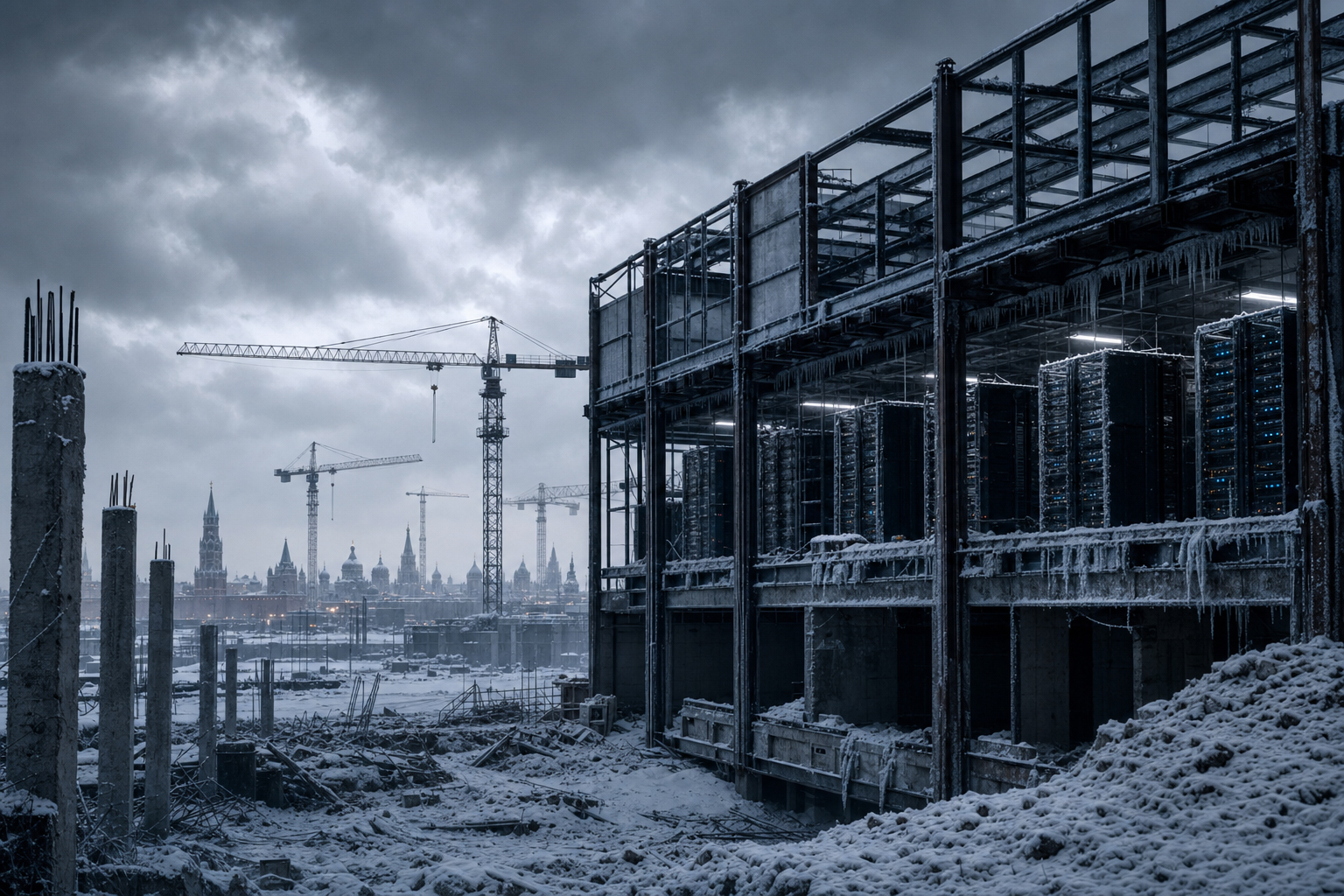
Putin's digital dead end: Tech collapse due to war – Russia's AI ambitions between sanctions pressure and financial collapse – Image: Xpert.Digital
Due to power shortages and interest rate shock: Putin's most important tech projects halted
No chips, no electricity, no money: Russia's AI ambitions are at a dead end
Gigantic billion-dollar boondoggle: What's really behind Russia's halted data centers
Russia dreams of a digital future and the development of its own artificial intelligence – but reality paints a drastically different picture. While the Kremlin pumps hundreds of billions into its war economy, critical infrastructure for the 21st century is quietly collapsing elsewhere. The construction of dozens of data centers has been abruptly halted, and nearly two billion euros in investments are frozen. The reasons for this are profound and reveal the structural cracks in the Putin system: skyrocketing interest rates make private investment impossible, despite vast raw material reserves, there is a paradoxical lack of electricity capacity, and a draconian Western technology embargo cuts the country off from vital hardware. The attempt to build technological sovereignty is fundamentally failing due to the realities of its own war economy. This is an analysis of a country sacrificing its technological future for its military present – and why Moscow's AI strategy is likely to remain a mere illusion for the time being.
When war devours the future – how Moscow is sabotaging its own technology strategy
A bottomless pit of money on the construction site: What's behind the halted projects?
Within three years, Russia has halted construction on 38 data center projects, representing a total investment of 168.6 billion rubles – roughly 1.97 billion euros. This is not merely a number; it is a symptom. A symptom of a country simultaneously waging the most expensive war in its recent history and attempting to build an independent digital infrastructure for the future – two goals that are fundamentally contradictory under the current circumstances. A study by the consulting firm Tekhexpo and the research group PKR has substantiated this contradiction with stark figures: The number of projects actively under construction fell by 41.6 percent between May 2023 and May 2026, while investments in these projects shrank by 26.3 percent. Currently, 128 data centers are believed to exist in Russia – in various stages of development. 42 projects are considered actively under construction, and total planned investments in the sector are projected to reach approximately one trillion rubles by June 2026. But this aspiration and reality are diverging more and more.
Credit market out of control: How Putin's war financing is poisoning the banking system
The first and most structurally profound problem is interest rate policy. In October 2024, the Russian key interest rate reached 21 percent, its highest level since the early 2000s. This extreme value was no accident, nor was it a normal monetary policy instrument for combating inflation—it was the direct result of a perverted credit market created by the Kremlin itself. After the outbreak of war, the Russian government pumped massive amounts of subsidized credit into the economy, primarily into the defense industry and strategically important sectors, at conditions that a free market could never have provided. The Atlantic Council think tank notes that these preferential credit programs forced the central bank to raise key interest rates far more than would have been necessary under normal circumstances. In other words, the state made money cheaper on the one hand and more expensive on the other, and the civilian economy became the loser in this arrangement.
For commercial data centers that rely on private investment and bank financing, these interest rates were simply fatal. Analyst Stanislaw Mirin of the consulting firm iKS-Consulting put it succinctly: at such interest rates, the business model often simply doesn't work. And that's no exaggeration. Anyone taking out a loan at an interest rate of 18, 19, or even 21 percent to finance capital-intensive infrastructure that only generates cash flow after years isn't operating a viable business model, but rather destroying capital. The Russian central bank has since begun to gradually lower interest rates – from 21 percent in October 2024 in several steps to 15.5 percent in February 2026 and further to 15 percent in March 2026. But even this figure is still at a level that makes long-term infrastructure investments structurally unattractive. Experts say that interest rates of around 12 to 14 percent are needed to restart economic growth, and even this figure is far above what would be sustainable for capital-intensive projects such as AI data centers.
Russia's energy paradox: Rich in resources, poor in capacity
The second structural obstacle is paradoxical: A country that exports vast quantities of oil, gas, and coal is simultaneously grappling with a power shortage crisis for its own infrastructure. Connecting facilities to the grid has apparently become a bigger problem than anyone anticipated. Waiting times for grid connections often exceed a year. In the greater Moscow area, it is reportedly virtually impossible for investors to obtain a license to connect to the grid. Russian cities have hardly any spare electrical capacity left—and certainly not the capacity needed to operate AI data centers, which consume between 50 and 300 kilowatts per unit, depending on rack density.
Behind this paradox lies a combination of outdated infrastructure, decades of neglected network investments, and the massively increased energy demands of the Russian war economy itself. Added to this is the newly legalized cryptocurrency mining sector, which Moscow introduced in November 2024 as a tool for circumventing sanctions and generating revenue. Every mining data center competes with AI data centers for the same scarce electrical capacity. As a result, the Russian Ministry of Energy had to admit that the electricity demand for data centers alone would grow from one gigawatt to at least 2.5 gigawatts by 2030, without the infrastructure being able to handle this growth today. The problem is most acute in Moscow; in regions like Yakutia or Siberia, attempts are being made to find alternative solutions using hydropower and regional gas combustion – but this merely shifts the problem geographically, it does not solve it structurally.
The foundation is crumbling: Russia's budget is spiraling out of control
To understand why this investment freeze is not a temporary phenomenon, one must consider Russia's overall budgetary situation. And it is alarming. As early as the first quarter of 2026, the Russian budget deficit exceeded 4.6 trillion rubles – the equivalent of roughly 50 billion euros. This is more than what the government had originally budgeted for the entire year. Oil and gas revenues, the Kremlin's traditional lifeline, plummeted by 50 percent in January 2026 compared to the same month of the previous year, reaching 393 billion rubles, the lowest level since July 2020. For the entire year of 2025, energy revenues fell by 24 percent to 8.48 trillion rubles – the lowest level since the beginning of the decade.
The causes are both structural and political: Western sanctions against Russia's shadow fleet, the energy companies Lukoil and Rosneft, and the expanded US secondary sanctions have systematically eroded revenues. India—along with China, the remaining major customer for Russian oil—has significantly reduced its imports under US pressure. Russia's Ural crude oil is being sold at massive discounts: In December 2025, the price was around $51.90 per barrel, and at times even as low as $34.50. Russia's Ministry of Economic Development itself projects continuous budget deficits in its 20-year forecast until 2042. The German Federal Intelligence Service (BND), in an analysis published in March 2026, determined that the actual budget deficit for 2025 was approximately 41.8 percent higher than officially reported, amounting to around 3.7 percent of GDP.
War as a household destroyer: When armaments devour everything
What is particularly striking about these figures is that the lion's share of the Russian state budget flows directly into the war machine. According to a BND analysis, actual Russian military spending in 2025 amounted to around 250 billion euros – roughly half of all government spending and approximately ten percent of the gross domestic product. By comparison, before the invasion in February 2022, military spending was around four percent of GDP. At the start of the war, it rose to six percent, to 8.5 percent in 2024, and, according to BND estimates, reached ten percent in 2025. Defense Minister Andrei Belousov officially admitted for the first time that 5.1 percent of GDP is being used for the war – meaning there is a significant discrepancy between the actual figure and the officially communicated one.
This militarization of the budget has direct repercussions for all other areas of expenditure. The BND notes that virtually all sectors of the Russian economy are experiencing a decline. The war economy is diverting both labor and capital from the civilian economy. The increased tax revenues since mid-2025 – partly due to a corporate tax increase – have not nearly compensated for the revenue losses in the energy sector. At the same time, more and more non-military expenditures are being cut: in addition to data centers, subsidies for the coal industry, investments in the construction sector, the aviation industry, and the automotive industry are also being reduced.
Our global industry and economic expertise in business development, sales and marketing

Our global industry and economic expertise in business development, sales and marketing - Image: Xpert.Digital
Industry focus areas: B2B, digitalization (from AI to XR), mechanical engineering, logistics, renewable energies and industry
More information here:
A thematic hub offering insights and expertise:
- Knowledge platform covering global and regional economies, innovation and industry-specific trends
- A collection of analyses, insights, and background information from our key areas of focus
- A place for expertise and information on current developments in business and technology
- A hub for companies seeking information on markets, digitalization, and industry innovations
No future without chips: Russia's technological trap – Why Russia's AI dream is failing due to the technology embargo
Technology embargo: Russia's digital lag is becoming chronic
Even if the financing problems and energy shortages were resolved, Russia would face a third, structurally even more deeply rooted problem: the technological embargo. Since March 2022, all major Western semiconductor manufacturers—Intel, AMD, Nvidia, TSMC, as well as Samsung, Micron, and SK Hynix—have ceased sales to Russia. The European Union, as part of its now 20 sanctions packages, has imposed export bans on quantum computing equipment, advanced semiconductors, precision instruments, and components. The total value of the EU's export restrictions on goods and technologies is estimated at around €48 billion, representing 54 percent of pre-invasion EU exports.
Russia is attempting to close this gap via third countries – primarily China. However, this route is also becoming increasingly blocked: Chip shipments from mainland China to Russia fell by 19 percent between January and May 2024, and shipments via Hong Kong by as much as 28 percent. The reason is US secondary sanctions, which also threaten third countries and their companies that help circumvent Western sanctions. Russian-developed chips, such as those under the Elbrus and Baikal brands, offer no real alternative: According to the Russian government, they lag behind their international competitors by at least ten years. The critical assessment by the German Council on Foreign Relations sums it up: Russia's industry cannot function sustainably without Western technology. This applies to the defense industry, the automotive industry – and especially to an AI infrastructure that relies on state-of-the-art Nvidia GPUs or equivalent chips.
AI without a foundation: Moscow's digital dreams collide with harsh reality
Despite everything, Russia has formulated ambitious AI goals. Companies like Yandex and Sberbank have developed their own AI projects and are promoting language models like YandexGPT. The Russian government has declared the development of an independent AI a national priority and is currently working on a corresponding legal framework. However, Filipp Vratskikh, CEO of Tekhexpo, clearly identifies the contradiction: It remains completely unclear how the task of developing an independent AI is to be accomplished, especially since the infrastructure requirements are not met. A national AI program without sufficient computing power is a program on paper, not a technological reality.
By comparison, the US and the EU are investing hundreds of billions of euros in expanding AI infrastructure. China alone plans to invest tens of trillions of RMB in the coming years. Russia, on the other hand, is being forced to abandon data centers because it cannot finance the construction costs and because it lacks the necessary power supply. The electricity demand for Russian data centers is projected to rise from one gigawatt today to 2.5 gigawatts by 2030 – but this demand is meeting a power grid that is already reaching its capacity limits in metropolitan areas. Russia is thus turning a strategically crucial wheel while simultaneously dismantling the engine that powers it.
Growth illusions and their limits: How real was Russia's economic strength?
Many Western observers were surprised that Russia's economy grew by over four percent in both 2023 and 2024 following the invasion of Ukraine. However, this growth was structurally hollow. It was initially a recovery from the shock of 2022 and then a war-induced demand boost driven by massively increased government spending. In 2024, federal spending increased by about a quarter to approximately €402 billion. This surge was not sustainable; it merely masked the structural weaknesses of the economy. The International Monetary Fund estimated GDP growth for 2025 at just 0.6 percent, while Russian authorities themselves expected around one percent for both 2025 and 2026.
The BND (German Federal Intelligence Service) summarizes the situation unequivocally in its analysis from March 2026: In the fifth year of the war, the Western sanctions regime is having a far-reaching impact; virtually all sectors of the Russian economy are experiencing a decline, and if comprehensive countermeasures are not taken, the structural problems of the Russian economy, which is heavily dependent on the energy sector, threaten to become chronic. Particularly noteworthy is the statement that the future viability of the Russian economy is eroding further. This is a harsh diagnosis for a country that officially presents itself as an invincible economic fortress.
Sanctions, the shadow fleet, and Moscow's dwindling room for maneuver
From the outset, Russia has boasted about circumventing Western sanctions – and this is partly true. A so-called shadow fleet of tankers without clear ownership structures has transported Russian oil to India, China, and other markets. But this approach also comes at a price: the transaction costs for evading sanctions are considerable. The German Federal Intelligence Service (BND) notes that while revenues are dwindling, the costs of maintaining the status quo are rising. Furthermore, additional sanctions have been imposed on Russia's supporters in third countries and on the shadow fleet itself. The US has significantly intensified its pressure on third countries that facilitate Russian exports – with direct repercussions for India, which has already drastically reduced its crude oil imports from Russia under US pressure. The once lucrative Nord Stream pipeline, through which Russia could transport billions of cubic meters of gas directly and cost-effectively to Germany, has been destroyed. Alternatives for monetizing energy resources now cost far more than they previously yielded.
Strategic blind spots: What Putin risks in his digital retreat
The halted data centers are more than just a business problem. They mark a strategic turning point with long-term consequences. In the global competition for technological dominance, AI infrastructure is the crucial foundation. Data centers are not just server rooms – they are the basis for training and operating AI systems, for digital sovereignty, for economic competitiveness, and, in the Russian context, also for state control and surveillance capabilities. Those who fail to build data centers today will fall behind in AI tomorrow, in autonomous weapons development the day after, and in the entire digital economy in ten years' time.
In this respect, Russia has fallen into a self-inflicted trap. The war finances armaments, but it is destroying the foundations of modernization. Subsidized loans for the war economy have poisoned the credit market to such an extent that civilian investments have become unprofitable. The energy infrastructure, which was supposed to be expanded, cannot meet the new demands. And Western technological sanctions deny Russia access to precisely the hardware without which modern AI data centers simply cannot function. The result is a technological vacuum that deepens with each passing month of war.
Lack of prospects or course correction? What the figures mean for the future
It would be analytically incomplete to write off Russia's economic future as hopeless. The country possesses substantial raw material reserves, highly skilled engineers, and a long-established defense industry. Regions like Siberia and the Far East do indeed offer potential for hydropower capacity suitable for data centers. The Russian central bank, under Governor Elvira Nabiullina, has demonstrated its ability to combat inflation through monetary policy—albeit at a significant economic cost. The gradual interest rate cuts since June 2025 indicate a slow easing of tensions, which, according to forecasts, could continue until 2027–2028, reaching an interest rate level of 7.5 to 8 percent.
But these prospects are contingent on a condition the Kremlin apparently does not want to fulfill: an end to the war and, consequently, a normalization of the economic environment. As long as military spending remains at ten percent of GDP, the budget deficit continues to grow structurally, technological restrictions remain in place, and the credit market continues to be distorted by war subsidies, the development of a robust AI infrastructure will remain a declaration of intent without a material basis. Russia's oil and gas revenues are declining, its budget deficit has accumulated to 17.4 trillion rubles since the invasion, and its own Ministry of Economic Development is forecasting continued deficits until 2042. The 168.6 billion rubles in frozen data center projects are therefore not just one chapter in an economic crisis—they are a mirror reflecting the overall situation of a country that is pawning its future in the present.
Your global marketing and business development partner
☑️ Our business language is English or German
☑️ NEW: Correspondence in your native language!

Konrad Wolfenstein
I and my team are happy to be available to you as your personal advisor.
You can contact me by filling out the contact form here [email protected]:or simply call me at +49 7348 4088 965. My email address is
I'm looking forward to our joint project.
☑️ SME support in strategy, consulting, planning and implementation
☑️ Creation or realignment of the digital strategy and digitization
☑️ Expansion and optimization of international sales processes
☑️ Global & Digital B2B trading platforms
☑️ Pioneer Business Development / Marketing / PR / Trade Fairs
🎯🎯🎯 Data-driven B2B industry hub as a quasi-in-house solution

The quasi-in-house solution: How Xpert.Digital closes operational gaps in B2B marketing and sales – Smart Content-Driven Business - Image: Xpert.Digital
Xpert.Digital is a data-driven B2B industry hub led by Konrad Wolfenstein . The company acts as an external, quasi-in-house solution for industrial partners, closing operational gaps in marketing, content, and sales – without requiring additional resources on the client side.
More information here:










