
Too fast for its own grid: Why China's green miracle is suddenly stalling – power grid at its limit
Xpert Pre-Release

Available in 27 languages 📢
Prefer Xpert.Digital on GoogleⓘPublished on: July 28, 2026 / Updated on: July 28, 2026 – Author: Konrad Wolfenstein
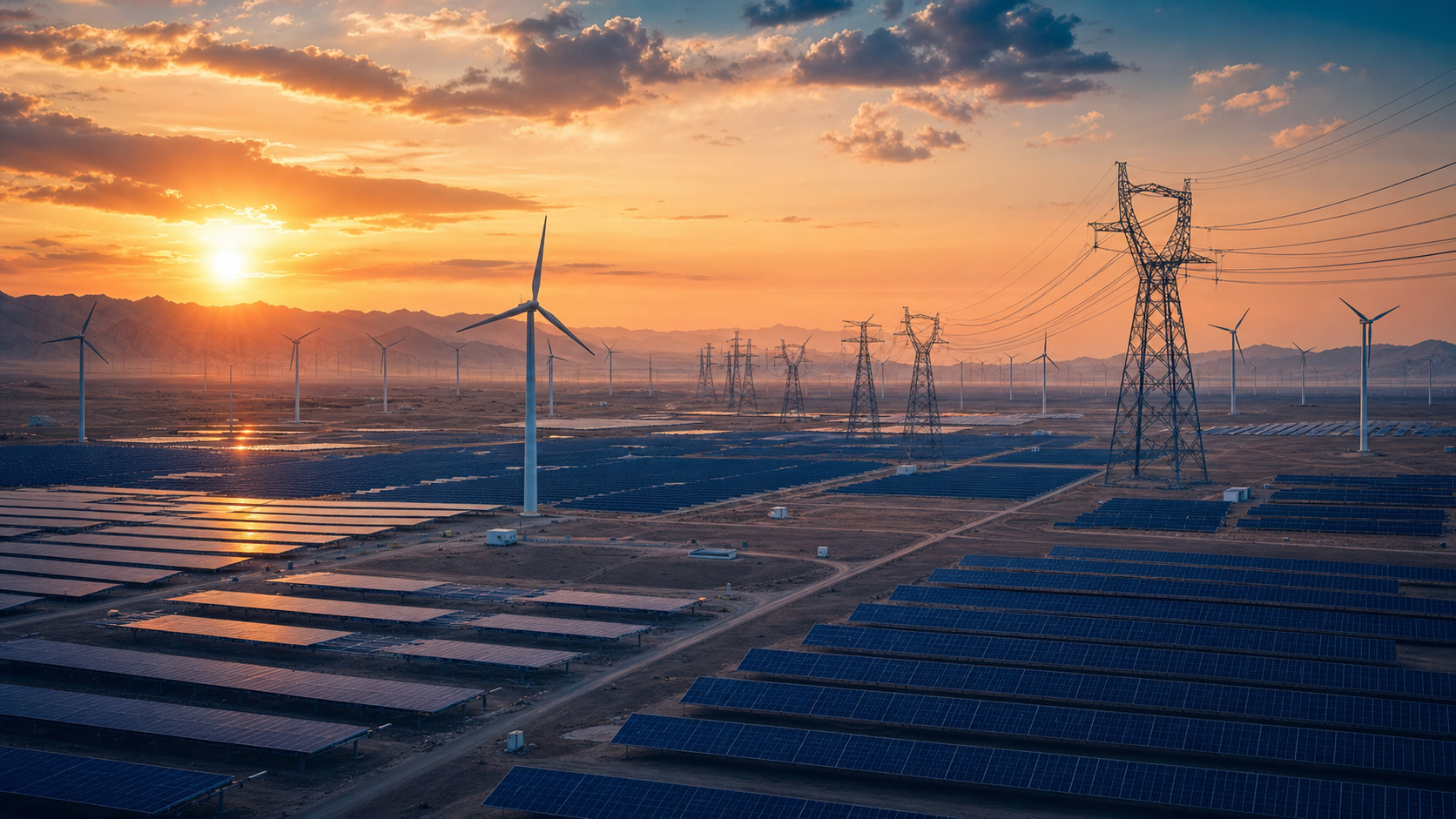
Too fast for its own grid: Why China's green miracle is suddenly stalling – power grid at its limit – Creative image: Xpert.Digital
When expansion becomes a hindrance: The bitter truth about China's green electricity
Gigantic waste of electricity: Why China cannot use its desert power
Solar world champions at their limit: Why China's mega-plants are simply being shut down
China is breaking all global records in the expansion of renewable energies: More solar and wind power plants are currently being built in the People's Republic than in the rest of the world combined. Gigantic energy parks are springing up, especially in the vast, sun-drenched desert regions of the northwest. But this unprecedented pace has a fatal downside that is increasingly slowing down this flagship project. Because the green electricity is produced thousands of kilometers away from the industrial metropolises on the coast, there is a lack of high-performance transmission networks. The result: Enormous amounts of valuable green electricity fail to reach consumers, go to waste, and have to be curtailed. With a massive 500-billion-euro investment program, the Chinese government is now attempting to avert the looming grid collapse. The situation serves as a lesson for global climate policy – and reveals structural bottlenecks that we in Europe have long been grappling with on a smaller scale.
China's billion-kilowatt bet – When the world's fastest expansion becomes a hindrance
500 billion euros to prevent collapse: China's radical plan for the energy transition
In just a few years, China has become the undisputed world champion in the expansion of renewable energies, eclipsing even the most ambitious European programs. By 2025, the People's Republic had a combined solar and wind power capacity of around 500 gigawatts under construction, more than double the total installed wind and solar capacity of Germany. This means that a single country is building more green generation capacity than the rest of the world combined. The current five-year plan aims for half of China's electricity to come from renewable sources by 2030 – a goal that remains ambitious given the country's gigantic and ever-increasing electricity demand. However, this success in expanding renewable energy is now bringing with it problems that European energy experts have been familiar with for years, but which take on a particularly sharp dimension in China due to the country's sheer scale and geographical characteristics. The analysis institute Global Energy Monitor has examined in detail the Chinese transformation process from coal-fired power generation to renewable energies, revealing how structural grid bottlenecks are increasingly jeopardizing the success of the energy transition.
The desert as a power plant – Why China's green electricity is generated far from the consumer
The vast majority of China's solar and wind power development is taking place in the sparsely populated regions of the north and northwest of the country, such as Inner Mongolia, Xinjiang, Qinghai, and Gansu. These extensive arid regions offer enormous open areas that are hardly suitable for agriculture and are therefore ideal for large-scale solar parks and wind farms. The economic logic behind this location choice is compelling at first glance: land is inexpensive, solar radiation is high in the desert regions, and the wind conditions in the steppes are promising. The real problem, however, arises from the fact that China's economic and demographic center lies on the east coast, in metropolises like Shanghai, Beijing, Guangzhou, and Shenzhen, where industry and population generate the lion's share of the nation's electricity demand. Thus, electricity tends to be produced where it is hardly needed and must be transported over vast distances of several thousand kilometers to the consumption centers. This spatial separation of generation and consumption represents the Achilles heel of the Chinese energy transition model and explains why the sheer speed of expansion alone is no guarantee for a functioning energy transition.
Wasted potential – How much green electricity remains unused in China
The consequences of this misallocation are evident in the so-called curtailment rates, meaning the proportion of theoretically producible electricity from wind and solar power plants that cannot be fed into the grid and is therefore lost. Current data from the Chinese New Energy Consumption Monitoring Center document a significant increase in these losses. While around three percent of solar power and four percent of wind power were curtailed in the first half of 2024, these figures had already risen to 5.7 percent for solar and 6.6 percent for wind in the same period of 2025 – almost double the increase within a single year. In the first two months of 2026, the situation worsened further to 9.2 percent for solar and 8.5 percent for wind. The situation is particularly dire in the regions with the highest concentration of wind turbines. In Tibet, curtailment of wind power rose from 2.3 percent in 2024 to over 30 percent in 2025, while solar curtailment there jumped from around five percent to almost 34 percent. In Qinghai, solar curtailment also climbed from 8.8 percent to over 15 percent. In response to this development, the Chinese government has already raised the national tolerance limit for curtailment from five to ten percent to address the structural backlog in grid expansion. By comparison, the German Federal Network Agency reports an overall curtailment rate of around 3.5 percent of total renewable electricity generation for renewable energies in 2025, with more than 96 percent of the green electricity produced actually being used. Although Germany also has noticeable problems, especially with photovoltaic curtailment, which increased by 94 percent in 2025 compared to the previous year, the Federal Republic's renewable energy generation rate is already significantly above the 50 percent mark that China is only aiming for by 2030.
The undersized wire – China's power grid can't keep up
The real bottleneck of China's energy transition lies not in a lack of generation capacity, but in the absence of a transmission grid. To transport electricity efficiently over thousands of kilometers with minimal losses, high-voltage direct current (HVDC) transmission is necessary – a technology already used in Europe to link national power grids. However, there it primarily serves to connect neighboring countries, not to bridge continental distances. According to calculations by Global Energy Monitor, the capacity allocated in the current five-year plan for expanding these high-voltage transmission lines falls significantly short of actual demand. Instead of the nearly 30 new power lines deemed necessary by analysts, the current plan includes only eleven new connections. At least the Chinese leadership has now recognized the urgency of the problem: The state-owned energy company State Grid Corporation announced that, as part of its 15th Five-Year Plan (2026-2030), it will invest around four trillion yuan, equivalent to approximately 500 billion euros, in expanding transmission and distribution networks – an increase of 40 percent compared to the previous five-year period. In addition, 15 more ultra-high-voltage power lines are slated to become operational by 2030, increasing interprovincial transmission capacity by another 35 percent. As early as June 2026, a new connection between the provinces of Shaanxi and Anhui was commissioned, capable of transmitting more than 36 billion kilowatt-hours of electricity annually, more than half of which is expected to come from renewable sources. These investments demonstrate that Beijing is tackling the problem. However, given the growth dynamics of solar and wind power, it remains questionable whether the grid expansion can actually keep pace with the increase in generation capacity, especially since a single kilometer of high-voltage direct current line incurs costs of well over one million euros.
New: Patent from the USA – install solar parks up to 30% cheaper and 40% faster and easier – with explanatory videos!

New: Patent from the USA – Install solar parks up to 30% cheaper and 40% faster and easier – with explanatory videos! - Image: Xpert.Digital
The core of this technological advancement is the deliberate departure from conventional clamp mounting, which has been the standard for decades. The new, more time- and cost-effective mounting system addresses this with a fundamentally different, more intelligent concept. Instead of clamping the modules at specific points, they are inserted into a continuous, specially shaped support rail and held securely in place. This design ensures that all forces – whether static loads from snow or dynamic loads from wind – are distributed evenly across the entire length of the module frame.
More information here:
Energy transition at a dead end: Why China is making the same mistakes as Europe
Déjà vu from Europe – familiar mistakes repeat themselves on a different scale
Anyone who has closely followed the European energy transition over the past decade and a half will recognize a familiar pattern in China's difficulties. In Germany, too, it became clear early on that expanding generation capacity in isolation, without simultaneous and adequately sized grid upgrades, inevitably leads to bottlenecks and curtailment. Particularly in the south of Germany, there is still a lack of sufficient wind power capacity to reliably supply electricity even during the sun-deprived winter months, while photovoltaic systems are underrepresented in the windier north. This regional imbalance is economically understandable, as the amount of electricity that can be generated annually is naturally lower in the less favorable region, which is why investors are less likely to invest there. However, this very example demonstrates that a more even geographical distribution of generation capacity could significantly reduce the need for expensive transmission lines, because supply and demand would be better matched regionally. The latest figures from the German Federal Network Agency also confirm a shift in the problem from the transmission grid to the distribution grid, as now around a third of all redispatch measures for renewable energies are triggered by bottlenecks in the distribution grid, compared to a quarter in the previous year. Despite a stable overall volume, the total costs of German grid congestion management have also risen to around €3.1 billion, with particularly significant increases in the standby costs for reserve power plants. China is therefore essentially repeating a well-known mistake, but with an even greater geographical imbalance than in Europe, since the distances between generation regions and consumption centers in China are many times greater than those within Germany.
Between growing pains and systemic risk – what's at stake
The economic implications of this structural imbalance are significant and affect not only the operational efficiency of China's electricity system but also investment incentives for future projects. The consulting firm Wood Mackenzie warns that average curtailment rates for solar power are likely to exceed five percent in more than 21 Chinese provinces over the next ten years, compared to the current ten affected provinces. This could increasingly strain investment calculations for new projects in particularly vulnerable regions. If investors have to anticipate lower returns due to high curtailment rates, the attractiveness of further capacity expansion in the affected provinces will decrease, paradoxically impacting precisely those regions best suited for further expansion. At the same time, experience from Great Britain, as analyzed by the University of Cambridge, shows that massive investments in grid expansion can indeed reduce curtailment rates, although marginal curtailment—that is, the additional loss caused by the latest power plant project in an already overloaded region—can sometimes reach three to four times the average curtailment. For China, this means that while targeted improvements to grid expansion are helpful, the fundamental geographical imbalance between generation and consumption can only be resolved through a combination of accelerated transmission line construction, increased expansion of storage capacities, and more deliberate regional diversification of new projects. In addition to grid expansion, the Chinese leadership has also enacted a new regulatory framework to promote the consumption of renewable energies, which focuses, among other things, on closer coupling of generation and local consumption, as well as the accelerated expansion of storage technologies and pumped-storage power plants.
A race against one's own success story
Ultimately, China faces a paradoxical problem stemming directly from its own success. No other country in the world is expanding solar and wind power at a comparable pace, yet this very speed has overwhelmed the electricity grid infrastructure, revealing weaknesses that are structurally far more serious than those faced by European grid operators. The announced investments of approximately €500 billion and the planned new ultra-high-voltage transmission lines demonstrate that Beijing has recognized the urgency and is taking decisive countermeasures. However, given the sheer scale of the ongoing expansion, it remains questionable whether the grid expansion can actually proceed quickly enough to sustainably reduce losses. From an economic perspective, the Chinese case exemplifies that an energy transition cannot be measured solely by installed generation capacity, but must always be considered as a complete system encompassing generation, transmission, storage, and consumption. Those who neglect this balance risk a considerable portion of the ecologically and economically valuable investments literally going to waste because the electricity produced fails to reach the consumer. This development is of considerable importance for global climate policy, because with its gigantic expansion, China is the decisive player in determining whether the global energy transition succeeds overall or fails due to precisely those structural bottlenecks that have already become apparent on a smaller scale in Europe.
Your partner for business development in the fields of photovoltaics and construction
From industrial rooftop PV to solar parks and larger solar parking lots
☑️ Our business language is English or German
☑️ NEW: Correspondence in your native language!

Konrad Wolfenstein
I and my team are happy to be available to you as your personal advisor.
You can contact me by filling out the contact form here [email protected]:or simply call me at +49 7348 4088 965. My email address is
I'm looking forward to our joint project.







