

Is Putin's war chest about to collapse? 90 ships hit in one week: The devastating blow against Putin's oil empire
Xpert Pre-Release

Available in 27 languages 📢
Prefer Xpert.Digital on GoogleⓘPublished on: July 13, 2026 / Updated on: July 13, 2026 – Author: Konrad Wolfenstein
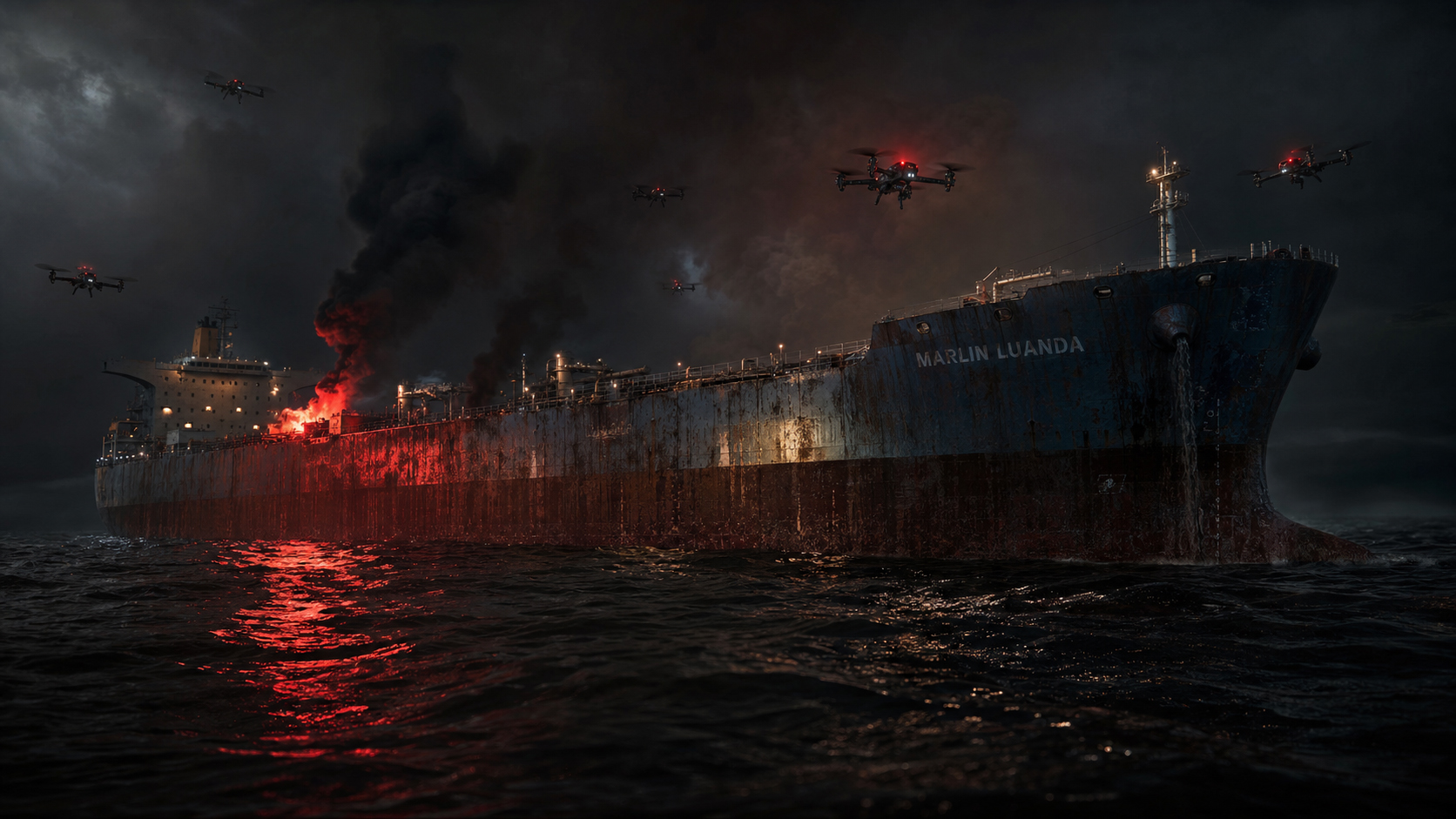
Putin's war chest on the verge of collapse? 90 ships hit in one week: The devastating blow against Putin's oil empire – Image: Xpert.Digital
“Logistics Lockdown” in the Sea of Azov: The new Ukrainian weapon that changes everything
Fuel shortages and burning tankers: Why Russia is now revealing its most vulnerable spot
Billions in losses for Moscow: The drone war is bringing Russia's economy to the brink of collapse
In an unprecedented offensive, Ukraine has carried the war deep into waters that Vladimir Putin previously considered Russia's safe haven: the Sea of Azov. With a new generation of medium-range drones, Kyiv is systematically destroying Putin's lucrative "shadow fleet" and cutting off occupied Crimea from vital fuel supplies. The consequences are devastating—not only for supplying Russian troops on the southern front, but for the Kremlin's entire war economy. As tankers burn, Moscow's state coffers are rapidly emptying, and the world's largest oil exporter is suddenly forced to ration gasoline for its own population. This is an analysis of the military and economic turning point that ruthlessly exposes Russia's Achilles' heel.
Putin's oil lifeline under attack – How drones are shaking Russia's war economy
When tankers burn, the war chest collapses: The maritime turning point in the Ukraine conflict – The new dimension of naval warfare in the Sea of Azov
On the night of July 6-7, 2026, the Ukrainian unit "Kairos" of the 414th Separate Brigade carried out one of the most consequential naval operations since the beginning of the war. Under the command of Major Robert "Madjar" Brovdi, the special forces unit intercepted a Russian tanker convoy in the Sea of Azov, the shallow, sheltered waters north of the Black Sea, which Russia had effectively treated as an internal inland sea since the annexation of Crimea in 2014. The ships were transporting fuel from the Russian oil terminal in Taganrog to the occupied Crimean Peninsula. Within 48 hours, ten tankers of the so-called Russian shadow fleet, as well as a dry cargo ship and a transport ferry, were severely damaged or sunk.
What followed was not a one-off operation, but the start of a systematic campaign of destruction. In the days that followed, Ukrainian figures rose to a total of 90 ships hit within a week. The General Staff in Kyiv reported hits on ten oil tankers and four ferries in a single night alone. Video footage from the thermal imaging cameras of the attacking drones showed in real time how the tankers' onboard power supplies were hit, bridge superstructures exploded, and ships drifted helplessly in flames. Satellite images confirmed the reports.
This wave of attacks marks a qualitative leap in Ukrainian war strategy: For the first time, it has been possible to systematically transform the Sea of Azov – which Russia had treated as its safe backyard for years – into a zone of active threat.
The weapon that changed everything: medium-range drones as a strategic factor
For operations in the Sea of Azov, Ukraine is primarily relying on a new generation of medium-range attack drones. While previous maritime attacks in the Black Sea mainly used explosive speedboats of the "Sea Baby" type, the shallower and more heavily monitored Sea of Azov required a different solution. The answer was found in the Fire Point FP-2, a drone developed in Ukraine by the manufacturer Fire Point. The FP-2 is equipped with a fragmentation warhead weighing between 105 and 120 kilograms and has a range of 200 kilometers. This gives it the ability to reach targets throughout the Sea of Azov without the drones having to operate directly from the front line.
The tactical logic behind it is strikingly precise. The warhead is large enough to destroy a tanker's bridge, rendering the vessel unmanageable, but not so powerful as to cause the ship to sink immediately—meaning it wouldn't become a safety hazard for the port and tie up resources for salvage operations. Simultaneously, Ukrainian drones deliberately targeted the Russian tugboats that were supposed to be towing the damaged tankers into port—another element in a multi-stage strategy to maximize damage.
Ukrainian Defense Minister Mykhailo Fedorov described the overall strategy as a "logistics lockdown." According to him, in the first four months of 2026, Ukraine procured approximately 300 percent more medium-range drones than in the entire year of 2025. This massive capacity build-up is the material and technological foundation for the effects now becoming visible.
The foundation of the war economy: What the shadow fleet means for Moscow
To grasp the strategic significance of these drone attacks, one must understand how fundamental the shadow fleet is to Russian war financing. Following the full-scale invasion in February 2022, Western states imposed a price ceiling on Russian oil in December 2022, accompanied by sanctions against transportation, financial, and insurance services. The idea was to weaken Russia in a targeted manner without destabilizing the global oil market.
Moscow's response was the systematic use of the so-called shadow fleet – a collective term for tankers that do not comply with international safety and environmental standards, sail under false flags, and whose ownership and registration are deliberately obscured. The size of this fleet is impressive: the British maritime intelligence service Lloyd's List Intelligence estimated it at up to 460 tankers, representing approximately 10 to 15 percent of global tanker capacity. The Kyiv School of Economics estimates that Russia has invested up to 10 billion dollars in building this fleet.
The economic return was initially substantial. In June 2024, the shadow fleet transported 4.1 million barrels of oil daily – around 70 percent of Russia's total maritime oil exports. Ninety-three percent of Russian crude oil exports went through China, India, and Turkey. These three countries enabled Russia to continue generating massive energy revenues despite Western sanctions. The EU sanctions package, expected in mid-July 2026, aims to maintain the price ceiling for a barrel of Russian crude oil at around €38.14 – by comparison, a barrel of Brent crude costs almost twice as much on the world market.
The fiscal downward spiral: Russia's budget on the brink of collapse
Even without the recent drone attacks, Russia's financial situation had developed a worrying dynamic in recent months. Revenues from fossil fuel exports fell to around €193 billion in the twelve months ending February 24, 2026 – a decline of 19 percent compared to the same period last year and 27 percent compared to the pre-war period. Revenues from crude oil sales alone fell by 18 percent to around €85.5 billion.
These figures are particularly alarming because Russia has simultaneously driven its military spending to historic highs. Moscow has earmarked nearly $238 billion for defense and security in 2026 – almost 40 percent of its total annual budget. But even these funds are apparently insufficient: according to a Financial Times report, war costs are expected to exceed the 2026 budget by $28 billion. In the first four months alone, a budget shortfall of approximately $83 billion emerged.
Particularly alarming is the speed at which the deficit is growing. In the first quarter of 2026, the budget deficit, at 4.6 trillion rubles, already exceeded the originally projected 3.8 trillion rubles for the entire year. Oil and gas revenues plummeted by 45 percent during the same period – to 1.4 trillion rubles. In February, Finance Minister Anton Siluanov sent a letter to the government demanding that planned expenditures of more than $40 billion be cut. The National Wealth Fund, Russia's strategic financial reserve, which once held approximately €98 billion, has dwindled to a remaining balance of around €43.5 billion – according to analysts, barely enough to cover a single year's national debt.
The chronic fuel shortage: When the largest oil exporter has to ration its gasoline
One of the most dramatic consequences of the Ukrainian campaign is not being revealed on the battlefield, but at Russian gas stations. The fuel crisis in Russia has now become widespread and is growing into a factor undermining the country's social stability. According to research by the analysis firm Energy Intelligence, Russian oil refining in June 2026 fell by a quarter compared to the same period the previous year – the lowest figure in more than 20 years.
The consequences are directly noticeable in everyday life. Approximately a quarter of Russia's roughly 29,000 gas stations have introduced sales restrictions on gasoline and diesel. Major oil companies like Rosneft, Bashkirneft, and Lukoil have completely banned sales in jerrycans. In the Omsk region, gasoline sales have been limited to 40 liters per vehicle, and diesel to between 80 and 200 liters, depending on the location. Gasoline prices rose by almost seven percent in the last three weeks of June 2026 alone, and diesel by more than eight percent. Surveys by the independent Levada Center show that the price increases are considered the country's most pressing problem by more than half of those surveyed.
The crisis is hitting occupied Crimea the hardest. There, the free sale of fuel to private individuals was completely halted on June 21, 2026; since then, gasoline has only been available via ration cards or QR codes for state-approved outlets, bakeries, and security forces. On June 26, the governors appointed by Russia declared a regional state of emergency in Crimea. Russia has even begun importing gasoline by sea – an unprecedented step for the world's largest oil exporter.
The strategic isolation of Crimea: Russia's Achilles heel
The full significance of the tanker attacks only becomes clear within the context of a months-long, systematic Ukrainian strategy to logistically isolate the peninsula. Crimea is of inestimable strategic value to Russia: it houses important naval bases and airfields and serves as a central supply depot for Russian troops throughout southern Ukraine. If this hub is disrupted, Russian forces on the southern front will face a serious logistical crisis.
Ukrainian armed forces have systematically attacked every alternative transport route in recent months. The railway ferry "Conro Trader," which could transport up to 30 fully loaded fuel wagons between the Russian port of Kavkaz and Kerch, was sunk by a Neptune missile in August 2024. The ferry "Avangard" ran aground after sustaining severe damage. The "Slavyanin," the last remaining large ferry on this route, was finally rendered unusable in April 2026 after repeated drone attacks.
The situation is no better on land routes. At the end of June 2026, Ukrainian special forces destroyed the strategic railway bridge over the North Crimean Canal near Rozdolne. Since then, freight trains have had to stop at the Kerch-Yuzhnaya station to the east – the onward transport of heavy goods by rail to the north, west, and south of Crimea is completely interrupted. Truck traffic on the occupied land routes plummeted by over 70 percent in June 2026 due to systematic drone attacks.
The economic and social collateral damage in Crimea is dramatic. Near Belohirsk (Belogorsk), one of the peninsula's largest quarries had to cease operations due to a lack of diesel fuel. In the middle of the harvest season, grain lay unharvested in the fields. Hotel bookings for July and August plummeted by 43 percent in Sevastopol and by more than 30 percent across Crimea compared to the previous year. Some holiday regions reported cancellation rates of up to 79 percent.
The structural dilemma of the Russian Navy: A well-known but unsolvable problem
Russia faces a fundamental, structural dilemma: it simply cannot effectively protect its shadow fleet. The German Institute for International and Security Affairs (SWP) in Berlin analyzes this military weakness with analytical precision in its latest study. The root problem lies in the historical architecture of Russia's naval power. Since Soviet times, its strategic doctrine has focused on the concept of "sea dominance" in a so-called "near zone" of 600 to 1,000 kilometers off its mainland. From the "far zone" up to 2,000 kilometers, and especially in the global ocean zone, Russia lacks the necessary large surface combatants: cruisers, destroyers, frigates, and supply ships were decommissioned after the collapse of the Soviet Union for cost reasons and were not replaced.
Even the Commander-in-Chief of the Russian Navy, Fleet Admiral Alexander Moiseyev, admitted in a December 2025 article that the navy could, at best, guarantee the Northeast Passage and the connection to the Pacific. Kremlin-loyal Russian military bloggers criticized this finding as a de facto self-imposed limitation. In the Sea of Azov, which until 2022 was considered a secure Russian supply zone due to its isolation, this weakness is now revealing its full strategic implications.
Added to this is the maritime pincer movement of Western states along oceanic shipping lanes. In recent months, France, the US, and Belgium have repeatedly seized tankers belonging to Russia's shadow fleet in international waters – in the Atlantic, the Mediterranean, and the North Sea. Russia has been unable to prevent this because it lacks sufficient capacity to project maritime power into the distant zone. Putin's advisor, Nikolai Patrushev, acknowledged this capability gap in February 2026 but pointed to a modernization program extending to 2050 – a perspective that has little relevance to immediate military needs.
Hub for Security and Defense - Advice and Information

Hub for Security and Defense - Image: Xpert.Digital
The Security and Defence Hub offers expert advice and up-to-date information to effectively support companies and organizations in strengthening their role in European security and defence policy. Working closely with the SME Connect Defence Working Group, it particularly promotes small and medium-sized enterprises (SMEs) that wish to further develop their innovative capacity and competitiveness in the defence sector. As a central point of contact, the Hub thus creates a crucial bridge between SMEs and European defence strategy.
Related to this:
How drones are tearing apart Russia's shadow fleet in the Sea of Azov
Oil, geopolitics and the limits of sanctions
The Ukrainian drone attacks fit into a larger picture of a gradually more effective sanctions policy – but also into a picture that clearly illustrates the structural limitations of this policy. The CREA report reveals a telling asymmetry: While revenues from the sale of Russian crude oil fell by around 18 percent, export volumes remained six percent above pre-war levels. Sanctions against tankers thus led more to steeper price reductions than to a significant decrease in export volumes. Russia is selling its oil more cheaply – but it is still selling it.
The EU sanctions list now includes around 630 ships, and the upcoming 21st sanctions package is expected to add another 30. At the same time, the number of ships operating under false flags rose from 12 to 109 between January and October 2025 – the shadow fleet grew faster than the sanctions lists. In 2025, ships operating under false flags transported Russian oil and oil products worth an estimated €8.4 billion. Loopholes within the EU remained particularly problematic: Imports of Russian crude oil to Hungary and Slovakia even increased by 11 percent in the first ten months of 2025.
Ukraine's tanker attacks in the Sea of Azov are not a replacement for sanctions policy in this context, but rather a military complement to it. What sanctions lists failed to fully achieve on paper—the actual physical disruption of Russia's oil supply chain—Ukrainian drone pilots are now accomplishing in practice. This represents a qualitatively new dimension, both politically and militarily.
The impact on Russia's warfare: Between pressure to adapt and strategic erosion
The crucial question is: How much do these attacks actually change Russian warfare? The answer is nuanced and must take various dimensions into account.
In the short term, the supply of Russian troops on the southern front has run into serious difficulties. The systematic drone campaign against fuel tankers on the so-called "Road of Death"—the land route through occupied southern Ukraine—caused a drop in freight volume on this route of over 70 percent in June 2026. If Crimea increasingly ceases to function as a logistical hub, Russian troops on the southern front will have to resort to longer, more complex supply routes. This ties up resources, increases costs, and slows down the pace of operations.
In the medium term, the signaling effect can hardly be overstated. Military expert Torsten Heinrich analyzes it precisely: With the ships disabled, Russia loses another alternative for supplying Crimea, further increasing its isolation. Every alternative route that fails increases the logistical pressure on the remaining transport routes – an effect that develops not linearly, but exponentially once critical thresholds are reached.
In the long term, financial erosion is perhaps the most serious risk. The tankers in the Sea of Azov are relatively small inland vessels with a carrying capacity of around 7,000 tons each—not global supertankers. But they represent the last functioning link in a chain transporting fuel from Russia to Crimea and the front lines. At the same time, Ukrainian long-range drones continue to systematically destroy refineries in the Russian hinterland. Russian oil refining reached its lowest level in more than 20 years in June 2026. This affects not only supplies to the front lines but also export capacity—and thus directly impacts state revenues.
The symbolic politics of war: Who rules the Sea of Azov?
Beyond the purely economic and military dimensions, the attacks have a political significance that is often underestimated in strategic analyses. Since 2014 – and fully since 2022 after the annexation of the Crimean corridor – the Sea of Azov had effectively been a Russian inland sea. It was not only geographically, but also psychologically, the epitome of Russia's wartime victory: secured, controlled, Russian.
By systematically destroying ships in these waters, Ukraine is fundamentally challenging this cognitive reality. The message Major Brovdi sent on Telegram – “The Russian shadow fleet has left the chat” – is not just propaganda, but strategic communication. It is directed at everyone: its own population, international partners, Russian troops, and the population of the occupied territories.
At the same time, the offensive sends an unambiguous legal and political message about the status of Crimea and the Sea of Azov: Kyiv considers these waters international territory, not Russian sovereign territory. The fact that Ukraine is militarily capable of enforcing this lends the message a credibility that diplomatic declarations alone could never achieve.
Negotiating table or spiral of escalation? The geopolitical forecast
Despite these significant military and economic blows, the central question remains: Will they bring Putin to the negotiating table? Assessments from Kyiv are sober and skeptical. One Ukrainian government official put it succinctly: Putin has not changed his war aims. The Kremlin's strategic goals—the subjugation of Ukraine, control of its strategically important regions, and the shifting of the European security architecture in Russia's favor—remain unaffected by the Crimean fuel crisis.
Moreover, in the Russian domestic political logic, external pressure traditionally serves not as a catalyst for compromise, but as a source of legitimacy for further mobilization. As long as Putin can maintain the narrative of Western aggression against Russia, every Ukrainian drone strike is redefined as an argument for perseverance and a willingness to sacrifice. This also explains why the missile terror against the Ukrainian civilian population continues despite growing logistical problems: it is not a means of military decision-making, but an instrument of political communication.
Realistically, one must differentiate between various scenarios. The first and most likely scenario is Russian adaptation: Moscow will attempt to develop alternative supply routes, reorganize supply chains, and neutralize Ukraine's advantage through increased drone production. Russia has repeatedly demonstrated this adaptability over the past four years of war. The second scenario is strategic exhaustion, in which the cumulative pressure from the budget crisis, fuel shortages, military losses, and societal frustration forces Russia to negotiate—not out of insight, but out of sheer necessity. This scenario, however, assumes that external pressure will be maintained and that internal feedback loops such as inflation, rationing, and recruitment problems will have a politically destabilizing effect. The third and most dangerous scenario is escalation: Russia could respond to the pressure with a more aggressive offensive or by deploying previously withheld resources to regain the initiative.
Asymmetric warfare and economic warfare: What these attacks reveal about the logic of war
The use of drones against tankers in the Sea of Azov is not only tactically relevant, it is also instructive for understanding modern asymmetric warfare. A single FP-2 drone costs a fraction of a sanctioned tanker of the shadow fleet, which, according to the Kyiv School of Economics, is worth several million dollars on average and can transport fuel for up to 20 percent of Crimea's monthly gasoline consumption. The cost-benefit ratio is exceptionally favorable for Ukraine.
The Ukrainian strategy is effective on several levels simultaneously. It disrupts the immediate fuel supply to the frontline units. It physically damages Russian logistics infrastructure. It increases the insurance and operating costs of the shadow fleet, which in turn makes evading sanctions more expensive. It sends geopolitical signals to Western partners and neutral third countries that have previously accepted Russian oil on sanctioned ships. And it generates domestic political pressure in Russia because the fuel shortage is not an abstract figure, but is felt daily at gas stations from Siberia to Crimea.
Limits and blind spots: What the attacks cannot achieve
A balanced analysis must also identify the limitations of this strategy. First, the Russian inland waterway fleet is large. Estimates suggest that the entire fleet of Russian inland vessels usable for transport purposes comprises between 250 and 350 units. This means that even if 90 ships are hit in a week and a significant portion of them are seriously damaged or destroyed, a reserve capacity remains.
Secondly, repair and renewal are possible. Damage to inland tankers can be repaired more quickly than the loss of geopolitical influence or state revenue. Thirdly, Russia has demonstrated its capacity for significant logistical adjustments under sanctions. Despite everything, total crude oil exports remained above pre-war levels – showing that political will and economic incentives can drive strong substitution processes.
Finally, the information is incomplete. Ukrainian reports of hits and losses are only partially verifiable by independent sources. Reuters, upon critical review, determined that of the seven initially reported hits, only two of the ships in question were actually on international sanctions lists. This does not mean that the remaining ships are not relevant to the war effort, but it serves as a cautionary tale against uncritically accepting Ukrainian success reports.
The Sea of Azov as a mirror of the turning point in history
Putin's shadow fleet was meant to secure the economic foundation of his war – evading sanctions, generating foreign currency, and supplying Crimea. Since the beginning of July 2026, this strategy has been under attack at its most vulnerable point: not in the finance ministries of the West, not in Geneva or Brussels, but in the shallow waters of a small inland sea that Russia considered safe territory.
The conclusion is clear: Russia's war financing is under unprecedented cumulative pressure from declining oil revenues, an exploding budget deficit, a shrinking National Wealth Fund, and now, deliberately destroyed logistics infrastructure. At the same time, Russia's navy and its overseas presence are structurally too weak to effectively protect the shadow fleet – neither in the Sea of Azov nor in the world's oceans.
Whether this will force Putin to the negotiating table, however, is a political question that economic analyses alone cannot answer. What these analyses do show is this: pressure is mounting, resources are dwindling, and the timeframe on which Russia's current war model can be sustained is shrinking. How any scarcity ultimately translates into political action—whether aggression, adaptation, or capitulation—depends on the internal logic of an authoritarian system that has thus far consistently responded to external crisis signals with repression, narrative control, and a willingness to sacrifice.
Consulting - Planning - Implementation

Markus Becker
I would be happy to serve as your personal advisor.
Head of Business Development
Chairman SME Connect Defense Working Group
Consulting - Planning - Implementation
Konrad Wolfenstein
I would be happy to serve as your personal advisor.
You can contact me at wolfenstein∂xpert.digital or
Just call me on +49 7348 4088 965 .





