
Nearshoring: Why German companies are now heavily investing in Bulgaria – America's tariffs are forcing Europe to rethink its strategies
Xpert Pre-Release

Available in 27 languages 📢
Prefer Xpert.Digital on GoogleⓘPublished on: August 5, 2026 / Updated on: August 5, 2026 – Author: Konrad Wolfenstein
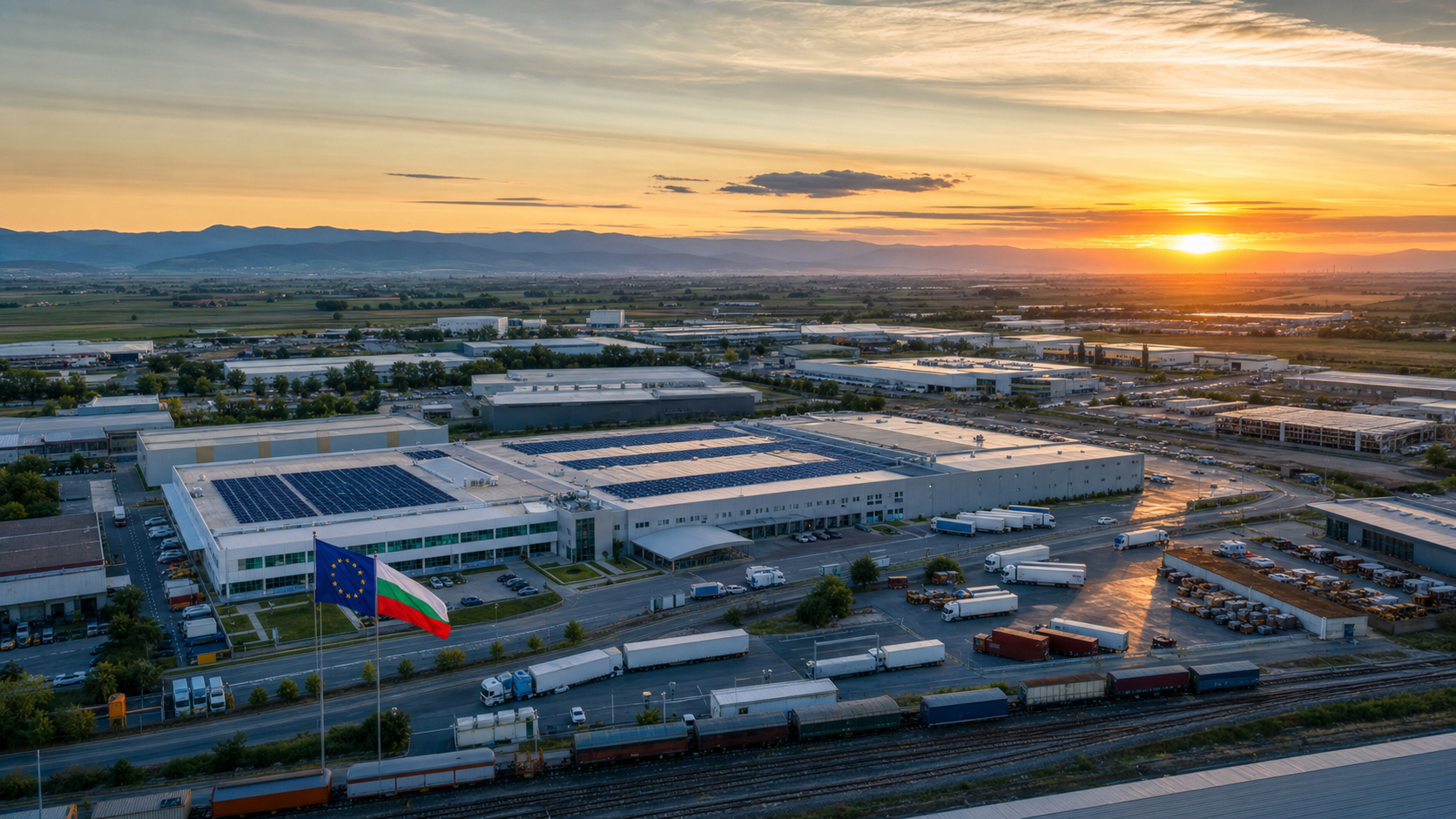
Nearshoring: Why German corporations are now heavily investing in Bulgaria – America's tariffs are forcing Europe to rethink its strategies – Creative image on the topic, created with AI: Xpert.Digital
Nearshoring Boom 2026: Why this underestimated EU country is suddenly attracting everyone – 10 percent taxes, full EU security
Escaping the cost trap: How German companies are saving their supply chains in Bulgaria
The era of carefree global expansion is over for German industry, at least for now. Since Donald Trump's re-election as US President in 2025 and the introduction of drastic tariffs, the traditional export model has been under immense pressure. At the same time, high energy prices, an acute shortage of skilled workers, and rigid domestic regulations are relentlessly driving up production costs. In the search for solutions, a quiet but strategically significant shift is currently underway: nearshoring is no longer just a theoretical buzzword, but a lived business practice.
At the heart of this realignment is a country that many had long overlooked: Bulgaria. With its accession to the Eurozone at the beginning of 2026, full membership in the Schengen Area, and unbeatable low labor and tax costs, the Balkan state is positioning itself as perhaps the most attractive production location in Europe. But for whom is this move truly worthwhile – and what risks lurk behind this much-lauded investment paradise? An in-depth analysis.
Industrial parks and geopolitical realignment: Bulgaria as a strategic production location for German companies
The world that German industrial companies knew just three years ago no longer exists. Since US President Donald Trump took office in early 2025, American trade policy has undergone a dramatic shift, the consequences of which are putting the entire export sector of the German economy under pressure. Tariffs of 50 percent on steel and aluminum, an import tariff of 25 percent on vehicles and vehicle parts, and a general basic tariff of initially up to 20 percent on EU exports – these measures have raised trade policy uncertainty to a level that fundamentally complicates investment decisions.
Although the EU and the US reached an agreement in August 2025, known as the Turnberry Deal, on a uniform tariff rate of 15 percent for the vast majority of EU exports, even this compromise—which applies to automotive, semiconductor, and pharmaceutical products—represents a lasting structural blow for companies whose business models depended on competitive US exports. The German Association of the Automotive Industry (VDA) described it as a fundamental shift in trade policy, and the German Engineering Federation (VDMA) predicted a two percent decline in production for 2025. According to a survey by the ifo Institute, more than 60 percent of the German industrial companies surveyed reported being negatively impacted by the Trump tariffs.
German exports to the US declined noticeably over the course of 2025, with motor vehicles and motor vehicle parts, chemical products, machinery, and electronic goods being particularly affected. For the German export sector, which considers the US one of its most important markets, these losses are painful and structurally significant. Simulations by the German Institute for Economic Research (DIW) have shown that a comprehensive transatlantic tariff dispute could halve EU exports to the US in the long term and shrink Germany's real GDP by approximately 0.33 percent. The German Development Bank (KfW) estimated potential value-added losses from a permanent 20 percent tariff at up to one percent of German GDP.
Between shock and strategic realignment: What German companies are really doing
The initial reaction of many companies to the new tariff reality was to wait and see. A KPMG survey of German companies with US operations painted a clear picture: 80 percent are not planning to relocate their production to the US. Only ten percent are even considering such a move, and almost as many – 19 percent – are instead contemplating a complete withdrawal from the American market. The stated goal of US trade policy, to induce foreign companies to relocate production to the US through tariffs, is thus failing to achieve its primary objective.
The real strategic response is more subtle, but more consequential: 51 percent of the German companies surveyed are evaluating new markets, including in Africa, South America, and Eastern Europe. Around 30 percent have postponed or reassessed their US investments. What is emerging here is not a panicked exodus from existing structures, but rather an increasingly rationally motivated diversification of supply chains and production sites. And in this context, a country that has often been dismissed as a peripheral part of Europe is moving into the center of strategic considerations: Bulgaria.
The overarching logic is clear: If the US market loses its appeal, if supply chains need to become more robust and politically resilient, and if, at the same time, production costs in Germany itself rise under the pressure of high energy prices, rigid labor market regulations, and demographic change, then companies will look for production locations that combine EU legal certainty with significantly lower operating costs. This combination has been difficult to find until now.
The Industrial Park Act of 2021: A legal foundation that delivers results
On February 25, 2021, the 44th Bulgarian National Assembly adopted the Law on Industrial Parks, which entered into force on March 16, 2021. This law is more than just a bureaucratic set of rules: it establishes the institutional framework within which Bulgaria asserts its claim as an investment location for European industry. The law defines the status of industrial parks, regulates their establishment, development, operation, and expansion – and links this to a system of government incentives.
Under the law, industrial parks can be established by various entities: state-owned parks, municipal parks, mixed parks involving both the state and municipalities, and private parks operated by companies or their associations. This plurality of ownership forms is a deliberate choice, allowing for the flexible consideration of diverse investment interests and regional structural needs. Those who register their park in the national register benefit from a simplified system for administrative services during the construction and development phases – a significant advantage in a country still grappling with bureaucracy.
The law provides for specific government incentive measures that go beyond the investment promotion law. These include favorable conditions for acquiring state-owned property, financial subsidies for the development of technical infrastructure, support for the professional training of newly hired employees, and partial reimbursement of mandatory social security, pension, and health insurance contributions paid by employers for newly created jobs. Municipalities can also grant reduced fees for administrative services or exempt park operators and investors entirely. This three-tiered incentive structure—national, regional, and municipal—makes the system considerably more flexible than comparable instruments in many other EU countries.
In 2023, the Ministry of Innovation and Growth launched a funding program under the Recovery and Resilience Plan with a total budget of 212.5 million leva for the development of industrial zones and parks. This program covers up to 80 percent of the costs for technical and environmental infrastructure and up to 50 percent for research infrastructure. By May 8, 2026, a total of €3.27 billion – approximately 53 percent of Bulgaria's total allocation from the EU Recovery Plan – had been disbursed, investing in infrastructure, digitalization, energy networks, and decarbonization.
The investment promotion system classifies projects into Class A, Class B, and priority projects, each with different eligibility requirements and funding levels. For investments in industrial parks, priority large-scale investment projects begin with an investment volume of €7.5 million and 50 newly created jobs. For manufacturing investments in structurally weak regions, government subsidies are available starting at an investment volume of €100,000 and ten new jobs.
The cost advantage: figures that brook no relativization
What makes Bulgaria attractive for manufacturing companies can be precisely described in a few key figures. Average labor costs per hour in Bulgaria in 2024 were €10.60 – compared to €33.50 on average in the EU and €37.30 in the Eurozone. This means that Bulgarian labor costs are less than a third of the European average. The statutory minimum wage was €3.32 per hour in 2025.
Bulgaria's tax system is radically simple: a corporate tax rate of ten percent and an income tax rate of ten percent – both unchanged for more than 15 years. With a tax burden of 29.9 percent of GDP, Bulgaria is the sixth lowest-taxed country in the EU; the EU average is 40.6 percent. Investments in regions with particularly high unemployment are even eligible for a complete tax exemption. For foreign investment projects that obtain the appropriate certification status, subsidies are capped at 25 percent of the total investment for projects valued between 50 and 100 million euros, and at 17 percent for projects exceeding 100 million euros.
There are now 14 functioning industrial parks in Bulgaria, with infrastructure ready for development in 21 more, and 27 areas under development. Commercial property prices are significantly lower than in Western Europe. For labor- and energy-intensive manufacturing processes, the cost differences compared to Western European locations amount to 30 to 50 percent, and in certain situations even up to 60 percent – meaning that Bulgaria performs more favorably in some areas than Poland, which is also a highly sought-after nearshoring location.
Nearly two-thirds of Bulgarian exports go to Eurozone countries. With the introduction of the euro on January 1, 2026, currency conversion costs for these trade flows will be completely eliminated. It is estimated that Bulgarian companies will thus save hundreds of millions of euros annually in foreign exchange fees – for small and medium-sized enterprises alone, the savings are estimated at around 500 million euros.
The euro as a catalyst: A historic step towards integration with immediate impact for investors
Since January 1, 2026, Bulgaria has been the 21st member of the Eurozone. This marks the completion of a development whose significance for foreign investors can hardly be overstated. While the Bulgarian lev had been pegged to the euro for decades through a currency board, effectively guaranteeing a stable exchange rate, formal membership in the Eurozone not only eliminates remaining transaction costs and hedging risks but also improves Bulgaria's creditworthiness – as rating agencies had previously considered non-euro membership a negative factor in their assessments.
ECB President Christine Lagarde emphasized during her visit to Sofia that the introduction of the euro strengthens Bulgaria's economic foundations, increases its resilience to global crises, and gives the country's voice more weight in the eurozone. Macroeconomic data support this assessment: Bulgaria's GDP grew by almost three percent in 2024, growth was similar in 2025, and the European Commission forecasts real growth of around 2.1 percent for 2026 – roughly twice the EU average. With public debt at around 24 percent of GDP and a budget deficit of approximately three percent of GDP, it is significantly below, or exactly at, EU targets. Inflation was already at 2.1 percent in February 2026 – following a decline of 3.5 percent in December 2025.
For Western European companies considering or already operating production facilities in Bulgaria, joining the Eurozone has immediate operational consequences: no more exchange rate fluctuations, no hedging costs, simplified financial reporting, and seamless integration into Europe-wide capital allocation structures. Sonja Miekley, CEO of the German-Bulgarian Chamber of Commerce (AHK), aptly summarized it: Eurozone membership strengthens investment security, reduces transaction costs, and increases the competitiveness of Bulgarian companies.
Naturally, some Bulgarians are concerned about rising prices due to the currency change. However, the actual data shows that the inflationary effect of the euro's introduction was between 0.3 and 0.4 percent – an ECB assessment that aligns with the experiences of other countries when adopting the euro. Prices in Bulgaria were already rising before the introduction, and experts see no causal link between this and the currency change itself.
Schengen and trans-European corridors: The logistical dimension of nearshoring
For the manufacturing industry, geographical proximity alone is not enough – physical and logistical accessibility is crucial. Bulgaria has achieved several structural improvements in this area in a short period of time, making it a significantly more attractive location for just-in-time production and tightly integrated supply chains. Since January 1, 2025, Bulgaria has been a full member of the Schengen Area, eliminating border controls at its land borders. This was a long overdue step after a 13-year wait.
The impact on logistics is immediately noticeable. Before Bulgaria joined the Schengen Area, trucks typically waited two to four hours at the Bulgarian-Romanian border, and up to eight to twelve hours during peak periods. These waiting times have been completely eliminated; transit time now corresponds to pure driving time. For export-oriented manufacturing companies in Bulgaria, this means not only direct cost savings, but above all, significantly greater planning reliability in the supply chain – a prerequisite for being integrated into just-in-time production partnerships with Western European customers.
The Munich Chamber of Industry and Commerce (IHK München) noted that both production locations – Romania and Bulgaria – have, in a figurative sense, moved closer to Germany due to the elimination of internal border controls. The Romanian transport sector alone anticipated cost savings of two billion euros by 2025. For Bulgaria, the country's integration into five trans-European transport corridors is a further advantage, including Corridor IV, which is particularly relevant for German trade. Four international airports and the important Black Sea seaports of Varna and Burgas complement the network. In the summer of 2025, Bavaria officially presented Bulgaria in Nuremberg as a strategic nearshoring destination in Southeast Europe.
Find a partner in Bulgaria 🇧🇬 🔍🤝 and become a partner ➕

Bulgaria - Find and become a partner - Image: Xpert.Digital
Bulgaria is transforming from an underestimated EU market into a strategic nearshoring hub for European industrial SMEs. With low location costs, EU legal certainty, access to the Eurozone, and strong logistics networks on the Black Sea, the country offers robust alternatives to Asian supply chains.
At the same time, Bulgarian companies also benefit from this growing economic network, which serves as a strong springboard for their own expansion into Germany, Europe and global markets.
More information here:
A thematic hub offering insights and expertise:
- Knowledge platform covering global and regional economies, innovation and industry-specific trends
- A collection of analyses, insights, and background information from our key areas of focus
- A place for expertise and information on current developments in business and technology
- A hub for companies seeking information on markets, digitalization, and industry innovations
Bulgaria as a business location: Is nearshoring really worthwhile for German companies? An honest analysis for German manufacturing companies
Sectors under scrutiny: Who specifically benefits from Bulgaria as a business location?
Bulgaria's nearshoring potential is not a generic promise, but rather can be linked to specific sectors and their particular requirements. The first and most significant area is the automotive industry and its supply chain. German-Bulgarian trade ties in this sector are already substantial: In the first ten months of 2025, German exports of motor vehicles and automotive parts to Bulgaria amounted to almost €920 million, while machinery exports totaled around €692 million. Bulgaria, in turn, supplies electrical equipment and metal products, indicating a classic vertical integration of the value chain.
The electrical and electronics industry is the second key sector. Bulgaria has a well-established base of technical manufacturing and engineering capacity, supported primarily by state-run technical universities and the dual vocational training system – which is strongly modeled on the German system. For labor-intensive manufacturing steps in electronics assembly, the country offers a clear cost advantage, which is equally beneficial given rising labor costs in Western Europe and Asia. Furthermore, Bulgaria has developed a strong pool of skilled workers in certain IT-related manufacturing segments and software development, extending beyond purely low-wage manufacturing.
The third sector with significant nearshoring potential is mechanical engineering. Here, the proximity to German industry is not merely geographical: Due to close economic ties over decades, established technical standards and a shared understanding of norms exist, facilitating the integration of Bulgarian suppliers into German value chains. The emerging division of labor reflects the classic pattern of European industrial integration: Germany strengthens research, development, and high technology, while Bulgaria expands its manufacturing capacities for complementary intermediate products and components.
The downsides of this investment paradise: corruption, bureaucracy, and a shortage of skilled workers
A complete and honest location analysis must clearly identify the structural risks of Bulgaria as a business location, without downplaying them. The most obvious and persistent problem is corruption. In Transparency International's Corruption Perceptions Index, Bulgaria ranks 76th out of 180 countries – one of the lowest results within the EU and a decline of nine places compared to the previous year. While the OECD Anti-Corruption and Integrity Outlook 2026 certifies that Bulgaria fully complies with conflict-of-interest regulations at the normative level, it only achieves 67 percent implementation in practice.
This discrepancy between ideal and reality permeates all administrative actions: Of the 102 corruption complaints registered in 2023, only eleven resulted in sanctions. Public procurement is particularly vulnerable; the EU Council, in its July 2025 country recommendation, cited persistent problems with corruption, money laundering, and governance. Foreign investors consistently cite inadequate law enforcement, difficulties in obtaining permits, frequent regulatory changes, and an inefficient judicial system as key investment barriers.
The second structural risk is the skills shortage. With unemployment at 3.8 to 4.2 percent, it is effectively at full employment. This means that anyone building new production capacity in Bulgaria is competing with existing employers for a limited pool of workers. Eighty-nine percent of Bulgarian companies cite the skills shortage as a major obstacle to long-term investment. The ongoing brain drain – the emigration of highly skilled professionals to Western Europe – further exacerbates this situation. The mismatch between the education system and the demands of the labor market is another critical issue regularly lamented by both foreign and domestic investors.
Infrastructure represents the third major obstacle. Around 50 percent of Bulgaria's road network does not meet EU standards. Critical sections of important highways – such as the Sofia-Greece connection and the Hemus highway between Sofia and Varna – are still unfinished. Rail infrastructure requires massive investment, and 62 percent of businesses – compared to 39 percent on average across the EU – cite inadequate infrastructure as a significant business problem. However, the EU recovery program is channeling significant funds into this sector.
The fourth risk is political instability. Bulgaria faced its eighth parliamentary election in five years until mid-2026. This persistent government uncertainty creates precisely what investors fear most: a lack of predictability in economic policy. Far-right forces are using social media to sow distrust, including towards the euro and the EU integration process – a risk that, while not considered a short-term structural threat, should not be ignored when considering an investment horizon.
The state's response: a one-stop shop, investment coordination, and FDI screening
The Bulgarian government recognized the warning signs of declining foreign direct investment. By the end of August 2024, net foreign direct investment had plummeted to just €697.8 million – compared to €3.103 billion in the same period of the previous year, representing a decline of approximately 77 percent. While inflows recovered to €848 million in the first half of 2025, they remained significantly below the previous year's level.
In response, the government established an Investment Coordination Council and a one-stop-shop concept for investors, designed to streamline bureaucratic procedures and shorten deadlines. The revised Investment Promotion Act of 2024 includes larger cash grants, reduced equity requirements, and targeted measures to digitize government processes. The InvestBulgaria Agency has been strengthened in its marketing efforts and outreach to international investors.
At the same time, Bulgaria introduced a comprehensive screening system for foreign direct investment (FDI) from third countries in 2024 and 2025. This regime applies to investments from non-EU countries where at least ten percent of a Bulgarian company is acquired or the investment value exceeds two million euros. This is, first and foremost, a geopolitically understandable measure that reflects the EU-wide trend toward FDI security screening. For European, and especially German, investors, this regulation has no direct negative impact – on the contrary, it signals a sharpening of the geopolitical orientation toward the West.
Geopolitics as a location decision: What the new world order means for Bulgaria
The question of why Bulgaria is gaining strategic appeal right now cannot be answered solely by considering tax rates and labor costs. It is embedded in a fundamental restructuring of the world order, forcing companies to evaluate production locations not only based on efficiency but also on geopolitical resilience. The term "nearshoring" is merely the business translation of a deeper trend: the regionalization of value chains within reliable political spaces.
The realization, accelerated by the COVID-19 pandemic and the war in Ukraine, and further intensified by US tariff policy, is this: global supply chains optimized for maximum cost efficiency often prove too fragile. Production under guaranteed EU legal certainty, with Schengen logistics, within the Eurozone, and under democratic, rule-of-law structures—that has a value that far exceeds short-term cost comparisons. And that is the core of the argument for Bulgaria: it is no longer just the cheapest country in the EU, but increasingly the cheapest country within a fully integrated European economic area.
In its July 2026 monthly report, the Bundesbank aptly analyzed that neither the prospect of tariff avoidance nor various trade agreements have yet prompted foreign companies to significantly relocate production to the USA. The actual response of companies is a greater localization and regionalization of supply chains within free trade areas: production in the EU for the EU, in Asia for Asia, and in the USA for the USA. Within this framework, Bulgaria is positioning itself as a cost-effective, EU-internal manufacturing location for the European sales market – and this is precisely where the strategic opportunity lies.
For whom is this step worthwhile – and who should rather avoid it?
Not every company is suited to a Bulgaria strategy, and an honest analysis must clarify this. The companies in question are medium-sized enterprises from labor-intensive manufacturing sectors – electronics, automotive supply, mechanical engineering components, textiles, and leather – that are looking for ways to organize parts of their value chain more cost-effectively without sacrificing EU legal certainty and supply chain proximity. For these companies, Bulgaria offers a combination of low operating costs, a stable EU framework, Eurozone stability, Schengen logistics, and government investment incentives that is unique in this form within the EU.
Bulgaria is less suitable for companies that rely on highly specialized, highly qualified professionals, as this market is tight and further strained by emigration. Similarly, Bulgaria is not an ideal location for companies that require intensive interaction with public administration and expect reliability, speed, and complete transparency: the bureaucratic apparatus remains a real obstacle, even though important reforms are underway. And companies that want to invest in research and development (R&D) in the long term will not yet find the density and quality of established R&D hubs like Germany, the Netherlands, or Sweden in the current higher education landscape.
The most strategically sound approach is therefore not a complete relocation, but a targeted expansion: R&D and strategic decision-making functions remain in Germany, while labor-intensive manufacturing steps and selected back-office functions are located in Bulgaria. This model of European division of labor truly creates a win-win situation: Germany strengthens its position as a high-tech and innovation hub, while Bulgaria builds valuable manufacturing capacity and economic breadth.
Bulgaria between catch-up logic and strategic maturation
Bulgaria is no longer a hidden gem – but it's not yet a fully mature investment destination either. It's in a constant state of transformation, though the direction is clear: full EU integration, the Eurozone, Schengen, government incentives for industrial investment, and geopolitical alignment with the West. The structural weaknesses – corruption, political instability, infrastructure gaps, and a shortage of skilled workers – are real and well-documented, but they are not static. They are the subject of active reforms and increasing political pressure, both from Brussels and from the investment interests of the private sector itself.
The geopolitical realignment triggered by US trade policy has fundamentally changed how European companies choose to locate their operations. The question is no longer simply: Where can I produce most cheaply? The question is: Where can I produce as cost-effectively as possible, while simultaneously ensuring maximum geopolitical reliability, legal planning certainty, and seamless logistical integration into European value chains? Bulgaria – with its industrial parks, investment incentives, Eurozone membership, and full Schengen membership – offers an answer to this question that no other EU region can currently replicate in precisely this cost scenario.
German companies investing in Bulgaria today are not doing so against their future, but for it: They are securing access to a cost-efficient production location in the heart of the European legal system before competition for land, skilled workers, and subsidies intensifies even further. The window of opportunity for a strategically advantageous positioning is open – but not forever.
🎯🎯🎯 Data-driven B2B industry hub as a quasi-in-house solution

The quasi-in-house solution: How Xpert.Digital closes operational gaps in B2B marketing and sales – Smart Content-Driven Business - Image: Xpert.Digital
Xpert.Digital is a data-driven B2B industry hub led by Konrad Wolfenstein . The company acts as an external, quasi-in-house solution for industrial partners, closing operational gaps in marketing, content, and sales – without requiring additional resources on the client side.
More information here:
Your global marketing and business development partner
☑️ Our business language is English or German
☑️ NEW: Correspondence in your native language!

Konrad Wolfenstein
I and my team are happy to be available to you as your personal advisor.
You can contact me by filling out the contact form here [email protected]:or simply call me at +49 7348 4088 965. My email address is
I'm looking forward to our joint project.





