
America's fatal mistake: Why Thailand's patience with Washington has run out and the $31 billion land bridge concept
Xpert Pre-Release

Available in 27 languages 📢
Prefer Xpert.Digital on GoogleⓘPublished on: April 30, 2026 / Updated on: April 30, 2026 – Author: Konrad Wolfenstein
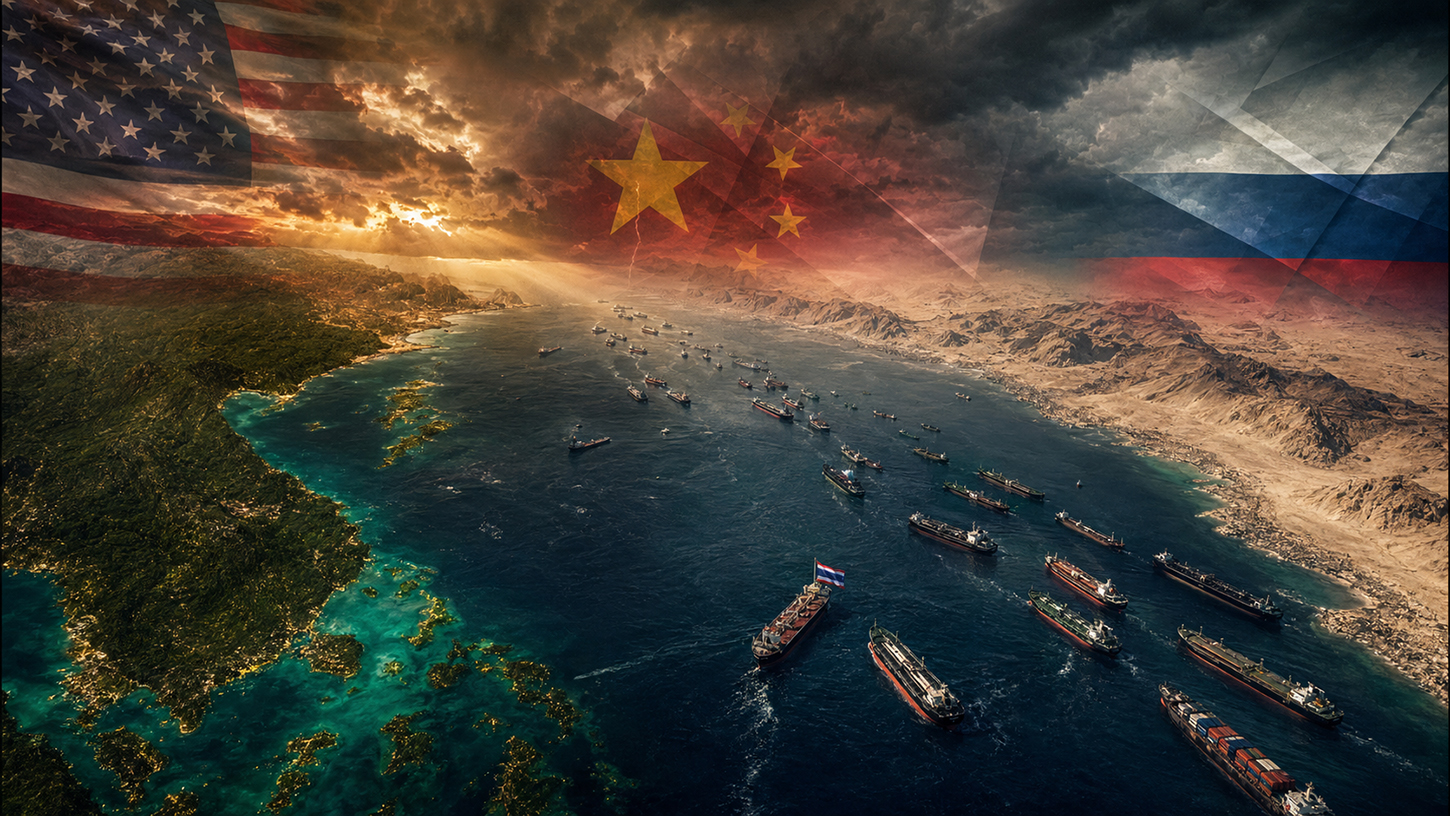
America's fatal mistake: Why Thailand's patience with Washington has run out and the $31 billion land bridge concept – Image: Xpert.Digital
The $31 billion project: How Thailand wants to change global maritime trade forever
Exploding fertilizer prices: The silent crisis that threatens millions of livelihoods in Asia
While the American-Israeli war against Iran blocks the Strait of Hormuz and disrupts global supply chains, Bangkok waits in vain for support from Washington. Instead, soaring energy and fertilizer prices, dwindling economic growth, and tragic losses of sailors are forcing the country to take drastic measures. From the hasty revival of a $31 billion infrastructure project to risky sanctions deals with Moscow and an open rapprochement with Beijing, Thailand's geopolitical realignment reveals deep cracks in the American alliance system and vividly illustrates the dramatic shifts in power dynamics in the Asia-Pacific region. For the US, its transactional silence toward one of its oldest allies could prove to be a historic mistake.
When allies are silent: Thailand's economic turmoil in the shadow of the Hormuz crisis
A war that no one ordered – everyone else has to pay for it
There are moments in geopolitics when silence speaks louder than any explanation. Thailand is experiencing such a moment. Since the outbreak of the American-Israeli war against Iran at the end of February 2026, Bangkok has been waiting for a signal from Washington, for a gesture of solidarity, for a concrete offer of aid from the country with which Thailand has been bound by a treaty of friendship since 1833. This signal has yet to come.
Foreign Minister Sihasak Phuangketkeow expressed his country's disappointment in words whose diplomatic restraint made them all the more poignant: The Trump administration was aware that the war had consequences. But it had not reached out to Thailand, had not sought direct dialogue, and had not made any concrete offer of assistance. The only American response to the economic plight of its allies had been President Donald Trump's offer to buy American oil and gas—an offer that, given the conditions of global scarcity and skyrocketing freight costs, seemed like a cynical shrug.
This silence is no oversight. It is symptomatic of a profound transformation in American foreign policy, which no longer sees itself as the anchor of a multilateral order, but rather as a transactional actor that evaluates alliances according to the criterion of immediate benefit. Thailand obtains roughly 50 percent of its crude oil from the Middle East and relies on shipments transported through the Strait of Hormuz for about 30 percent of its liquefied natural gas supply; the country imports energy amounting to seven to eight percent of its economic output. For a country that hosts American logistics hubs and fuel depots for US forces, thus providing tangible strategic services, this experience is a fundamental disillusionment.
Crisis as a catalyst: The 31 billion euro infrastructure project is experiencing its second chance
Sometimes an idea needs a catastrophe to finally gain traction. For decades, the concept of a land bridge across Thailand's narrow southern tip was considered an interesting thought experiment, one that foundered on political resistance, unresolved environmental issues, and a lack of investor interest. The closure of the Strait of Hormuz has given this project a new urgency.
The basic idea is topographically elegant: A roughly 90-kilometer-long combination of road, rail link, and energy infrastructure is intended to connect two deep-sea ports – one in Ranong on the Andaman Sea and one in Chumphon on the Gulf of Thailand. The result would be a direct logistics link between the Indian and Pacific Oceans, allowing ships to bypass the Strait of Malacca. This 900-kilometer-long canal, bordered by Indonesia, Thailand, Malaysia, and Singapore, is the busiest shipping lane between East Asia and the Middle East; last year, more than 100,000 predominantly commercial vessels passed through it.
The project is estimated to require an investment of one trillion baht – approximately 31 billion US dollars – and is expected to be submitted to the Cabinet for approval in June or July 2026. Transport Minister Phiphat Ratchakitprakarn has indicated that the actual investor process could begin as early as the third quarter. Prime Minister Anutin Charnvirakul personally lobbied Singapore's Defense Minister Chan Chun Singh for the project – and the city-state, which stands to lose more logistical dominance than any other nation due to an alternative route, nevertheless expressed interest. Government studies see the project as having the potential to boost Thailand's annual economic growth by up to 1.5 percentage points and transform the chronically underdeveloped southern region into a logistics hub.
Diplomatic stalemate: Why the strait won't open
Hopes for a swift resolution have been dashed. After the US and Iran agreed to a temporary ceasefire in mid-April 2026, shipping traffic through the strait briefly picked up – before new threats, an American seizure of an Iranian cargo ship, and the collapse of a planned round of negotiations for Pakistan froze the situation once again. This dynamic of mutual escalation and broken ceasefires is characteristic of a conflict whose endpoint remains more uncertain than its beginning.
The UNCTAD report from March 2026 states that the Strait of Hormuz carries around a quarter of the world's maritime trade in crude oil and significant quantities of liquefied natural gas and fertilizers. Brent crude oil surpassed $90 per barrel; major container lines such as Maersk, CMA CGM, and Hapag-Lloyd suspended their transit routes and diverted to longer alternative routes—extending transit times by weeks and driving up freight costs. For every month the blockade lasts, the share of global economic output eroded by higher energy prices, rerouted freight routes, and soaring insurance premiums increases.
Krabi instead of Washington: The quiet realignment of Thai-American alliance policy
The location of the meeting was symbolically charged: Sihasak received Chinese Foreign Minister Wang Yi in the southern Thai province of Krabi, while no comparable offer of talks had been made by Washington at the same time. What appears in day-to-day politics to be a matter of scheduling coordination is of paramount strategic importance.
Even before the current conflict, the center of gravity of Thailand's foreign economic relations had shifted toward Beijing. China is Thailand's most important trading partner. Between 2016 and 2022, China supplied Thailand with military equipment worth approximately US$400 million—twice as much as the US during the same period. An annual survey conducted by the ISEAS-Yusof Ishak Institute in Singapore in 2026 found that, in the event of a forced geopolitical choice, 55 percent of the Thai population would prefer China, compared to 45 percent for the US. This survey was conducted before the American attack on Iran.
Sihasak summed it up perfectly: The issue isn't about taking sides in the geopolitical competition between the superpowers. It's about what the US is doing – and that's forcing Thailand to rethink certain relationships. While China also behaves like a superpower when it comes to its core interests, these core interests are known and predictable – whereas American policy creates an unpredictability that is structurally threatening to small, open economies. This is a judgment with far-reaching consequences for the American alliance system in Asia as a whole.
Food security under pressure: The silent crisis of Thai agriculture
While the geopolitical debate focuses on oil, tankers, and diplomacy, a crisis is unfolding in the interior of Thailand that is existential for more than ten million farmers. The price of urea fertilizer—the main source of nitrogen for rice paddies, sugarcane plantations, and rubber tree crops—has nearly doubled since the start of the war. On the world market, the FOB price for granular urea in Southeast Asia climbed from around US$490–498 per ton to US$750 between the end of February and mid-March 2026—an increase of more than 50 percent in less than three weeks.
Domestically, wholesale prices rose to around 17,000 baht per ton by the beginning of April, equivalent to approximately US$535, while retail prices ranged from 900 to 1,000 baht per 50-kilogram bag. Additionally, diesel prices reached an all-time high in April 2026, placing a double burden on agricultural operations: higher input costs due to more expensive fertilizer and higher transportation costs due to more expensive fuel. The timing of these events dramatically exacerbates the situation, as the planting season in Thailand begins in May and requires weeks of advance planning.
The government notes that Thailand still had 1.52 million tons of fertilizer in stock at the end of January 2026 – roughly two months' supply. A shipment of 100,000 tons of urea from Saudi Arabia will replenish this stock to the equivalent of 8.5 million bags, sufficient until August 2026. However, these figures cannot disguise the fact that price distortions are already causing damage long before physical shortages arise. For Thailand, as an export-oriented agricultural nation, persistently high fertilizer prices damage its competitiveness and could indirectly dampen investment in the agricultural sector in the long term.
Moscow as a supplier of hardship: Sanction risks and the limits of pragmatism
In normal times, a high-level trip by the Thai Minister of Agriculture to Moscow, two months after an American-led war, would be a diplomatic affront. In the current climate, it is a necessary measure. Agriculture Minister Suriya Jungrungreangkit flew to Russia on April 13, 2026, and held talks with Deputy Prime Minister Dmitry Patrushev and Deputy Minister of Agriculture Maxim Markovich. The result was an agreement on the potential import of up to two million tons of urea fertilizer annually from Russia—from producers such as PhosAgro and UralChem—at preferential prices, with potentially initial deliveries starting in May 2026.
The risk of sanctions is real and restricts Thailand's room for maneuver. Sihasak confirmed that while Thailand is trying to procure Russian crude oil, Thai banks are hesitant to process such transactions for fear of violating US sanctions. The legal situation is more favorable in the fertilizer sector, as agricultural goods are explicitly exempt in many sanctions regimes – however, Bangkok is operating in a regulatory gray area that carries both diplomatic and financial risks.
What is particularly noteworthy in this situation is that Thailand is forced to weigh the risks of sanctions resulting from decisions in which it had no part. The US is waging a war, imposing sanctions, and defining corridors of action – and third-country allies like Thailand must operate within these corridors without their interests being considered in their definition. This is structural extraterritoriality: the projection of American legal authority onto sovereign third-party states managing their own national emergencies.
Our Asia expertise in business development, sales and marketing

Our Asia expertise in business development, sales and marketing - Image: Xpert.Digital
Industry focus areas: B2B, digitalization (from AI to XR), mechanical engineering, logistics, renewable energies and industry
More information here:
A thematic hub offering insights and expertise:
- Knowledge platform covering global and regional economies, innovation and industry-specific trends
- A collection of analyses, insights, and background information from our key areas of focus
- A place for expertise and information on current developments in business and technology
- A hub for companies seeking information on markets, digitalization, and industry innovations
Oil, insurance, supply chains: The economic collateral damage of war
Beijing's vulnerable omnipresence: Even a superpower gets stuck
In a meeting with Wang Yi in Krabi, Sihasak asked Beijing to secure the safe passage of eight Thai ships through the Strait of Hormuz. Wang's response was revealing: China itself had 70 ships stuck in the strait and proving difficult to free. When asked, Liu Pengyu, spokesman for the Chinese embassy in Washington, stated that he had no specific figures on the number of Chinese ships in the strait.
Before the war, China was by far the largest importer of crude oil through the Strait of Hormuz and, as the main buyer of Iranian oil, has found itself in a structurally difficult position: on the one hand, due to close economic and security ties with Tehran, and on the other, due to its own massive dependence on an open waterway. Analysts at the maritime research firm Kpler found that, despite its privileged relationship with Iran, China was not significantly more successful in freeing its ships from the blockades—and even lagged behind some other countries, including India. China's exposure to the Middle East remains exceptionally high.
The image of China as a reliable protector of its trading partners is beginning to crack. As Thailand and other ASEAN states increasingly turn to China, they encounter a power that, while considered a more reliable neighbor, exhibits its own structural limitations when it comes to concrete crisis management. This is precisely the dilemma for small states in multipolar system transitions: the old hegemonic power is losing credibility, and the new one has not yet fully established it.
Late, but loud: Xi Jinping's first public comment on the Hormuz crisis
It took weeks for Chinese President Xi Jinping to publicly address the consequences of the war. Only in a telephone conversation with Saudi Crown Prince Mohammed bin Salman on April 20, 2026, did Xi explicitly state for the first time that the Strait of Hormuz must remain open for normal shipping traffic – this, he said, served the common interests of the countries of the region and the international community. The state news agency Xinhua reported the statement, and numerous analysts interpreted it as an expression of growing frustration in Beijing.
Xi Jinping's move stemmed from a conflict of interests: Beijing wanted to appear neither as a party to the conflict nor to publicly strain its relations with Iran – but the economic pressure from blocked ships, rising energy costs, and the threat of reputational damage as a neutral mediator had become too great. The timing is strategically significant: Xi turned not to Washington or Tehran, but to Riyadh – the state that can act as a bridge between conflicting parties and as a guardian of stability in the Gulf. China is thus positioning itself as a guardian of the trade order without openly taking sides – a diplomatic maneuver consistent with its long-term strategy as a responsible global power.
Mines, misunderstandings, mistrust: The fragile physics of the strait
The Strait of Hormuz is physically one of the world's narrowest strategic waterways: approximately 33 kilometers at its narrowest point, with a shipping corridor less than six nautical miles wide in each direction. Before the war, an estimated 17 to 21 million barrels of crude oil passed through it daily – roughly a quarter of global maritime oil transport. Under wartime conditions, this logistical bottleneck becomes a danger zone.
Even if ships receive passage permits on paper—Iran at times demanded fees of up to two million US dollars per vessel for safe passage—significant risks remain: Mines placed in and around the transit area are difficult for cargo ships to reliably detect. Communication errors, unclear chains of command between the Iranian military and Revolutionary Guard, and the clash between the US naval blockade and Iranian control claims create an environment in which even authorized ships are not safe. The consequences for the insurance industry are massive: Shipping companies must factor in dramatically increased premiums, and many cargo insurance policies currently offer little to no coverage for war damage risks in the Persian Gulf.
The human cost of war: Three dead sailors and a verdict on the world order
On March 11, 2026, the Thai-flagged bulk carrier Mayuree Naree was attacked in the Strait of Hormuz. The ship, a 30,000-ton bulk carrier owned by Precious Shipping, had departed Khalifa Port in the United Arab Emirates and was en route to India when two projectiles struck the hull above the waterline, triggering a devastating fire in the engine room. The entire crew of 23 was Thai nationals. Omani naval forces rescued 20 of them from lifeboats and brought them to Khasab; three crew members remained missing, presumed trapped in the engine room.
The damaged vessel drifted uncontrollably and later ran aground on the Iranian coast of Qeshm Island. Human remains were only discovered when an Omani-Iranian rescue team reached the Mayuree Naree. On April 8, 2026, Foreign Minister Sihasak officially confirmed that the three missing sailors were dead, killed in an Iranian attack. The Iranian Revolutionary Guard Corps justified the attack by claiming the ship had ignored warnings and attempted to illegally cross the strait.
These three dead men are more than a tragic statistic. They embody the human foundation of abstract supply chain analyses and freight price indices: global trade is based on people who work in cramped machine rooms and sometimes die in conflicts decided thousands of kilometers from home. The question of who bears political responsibility for these deaths leaves Bangkok, Tehran, and Washington equally uncomfortably silent.
Legal vacuum in the Persian Gulf: Who is allowed to pass through – and who decides?
The case of the Mayuree Naree raises a question that extends far beyond the specific incident. Precious Shipping explicitly contradicted the Iranian account, stating that it had received clearance and at no point received any message prohibiting it from leaving the Persian Gulf via the Strait of Hormuz. Managing Director Khalid Hashim emphasized that the ship was in no way hindered from transiting the strait before the attacks occurred. An investigation into the incident is ongoing.
The Strait of Hormuz is an international waterway under international maritime law, for which the right of transit applies – enshrined in the 1982 UN Convention on the Law of the Sea. Iran has not acceded to this convention and does not recognize the right of transit in this form. It is enforcing control claims that are legally disputed. The US, in turn, is imposing a naval blockade on Iranian ships, which, under classical international law, is also legally problematic in a period of undeclared war. The result is a situation where neither international maritime law nor bilateral agreements offer reliable guidance.
For shipping companies, this is a Kafkaesque situation: they negotiate with some, receive written approvals, are then attacked by others, and are left without legal recourse. This failure of the international legal framework is not a marginal phenomenon: the modern global economy is based on the reliable enforcement of contracts and promises of protection. When this reliability collapses, the transaction costs of all global trade rise – not just in the Strait of Hormuz.
From regime change to nuclear renunciation: Washington's aimless strategy and its global costs
Among the most troubling aspects of the conflict is Washington's strategic objective, which, according to Sihasak, has fundamentally shifted since the war began. What initially sounded like regime change in Tehran now appears to be aimed at the permanent destruction of the Iranian nuclear program. Whether this shift represents a calculated realignment or simply the lack of a coherent strategy is difficult to assess from the outside – and that is part of the problem.
The economic consequences are directly measurable. The Bank of Thailand warned that economic growth could fall from a baseline of 2.1 percent to just 0.5 percent in 2026. The Joint Standing Committee on Commerce, Industry and Banking lowered its growth forecast to between 1.3 and 1.6 percent. The rating agency TRIS modeled that a three-month conflict could see a decline to 1.8 percent, and a six-month conflict to 1.0 percent; scenarios of full escalation by November 2026 project growth to shrink to 0.2 percent and inflation to rise to 5.8 percent.
The Thai baht has lost around six percent against the US dollar since the start of the war and is currently trading at around 32.79 baht; the Kasikorn Research Centre expects a further decline to 35 baht should the conflict continue. Liquefied natural gas (LNG) – the fuel for 50 to 66 percent of Thailand's electricity generation – has more than doubled in price from around ten US dollars to 25 US dollars per MMBtu, with the potential for further increases; this represents a rise in procurement costs of up to 125 percent.
Trump's comprehensive tariff campaign has further exacerbated the situation, and the abrupt dismantling of American foreign aid programs has caused a loss of confidence in Southeast Asia that can hardly be remedied in the short term through financial compensation. China, on the other hand, has presented itself to Asian countries as a more reliable partner, said Sihasak – not because it is a benevolent actor, but because its interests and boundaries are at least known.
Between two superpowers: Thailand's repositioning and the lesson for Asia
The events of the past few months have accelerated Thailand's learning curve regarding the costs of geopolitical dependence. Bangkok's structural response is multi-layered: in the short term, securing energy and fertilizer supplies through new partners without definitively switching sides; in the medium term, building its own logistics infrastructure via the land bridge, which reduces dependencies and opens up new revenue streams; and in the long term, a broader diversification of strategic partnerships.
The irony of the current situation lies in the fact that the US, through its own military actions, is accelerating precisely those shifts that are damaging its strategic position in Asia. A war intended to contain Iran is driving allies like Thailand into the arms of China and Russia. An economic war waged through tariffs and sanctions is undermining the trust of those countries whose loyalty the US would depend on in future conflicts. Thailand is not a small country that can be ignored: it is Southeast Asia's second-largest economy, a strategic logistics hub, a member of the US defense alliance, and a reflection of broader regional sentiments.
When Bangkok's foreign minister receives the Chinese foreign minister in a provincial city on the Andaman Sea and declares that this war should never have happened in the first place, this is not the statement of an isolated outsider. It is the judgment of a long-standing, reliable partner who has lost patience – and for precisely that reason, it should be read with particular attention.
Your global marketing and business development partner
☑️ Our business language is English or German
☑️ NEW: Correspondence in your native language!

Konrad Wolfenstein
I and my team are happy to be available to you as your personal advisor.
You can contact me by filling out the contact form here simply call me at +49 7348 4088 965. My email address is [email protected]:or
I'm looking forward to our joint project.
☑️ SME support in strategy, consulting, planning and implementation
☑️ Creation or realignment of the digital strategy and digitization
☑️ Expansion and optimization of international sales processes
☑️ Global & Digital B2B trading platforms
☑️ Pioneer Business Development / Marketing / PR / Trade Fairs
🎯🎯🎯 Data-driven B2B industry hub as a quasi-in-house solution

The quasi-in-house solution: How Xpert.Digital closes operational gaps in B2B marketing and sales – Smart Content-Driven Business - Image: Xpert.Digital
Xpert.Digital is a data-driven B2B industry hub led by Konrad Wolfenstein . The company acts as an external, quasi-in-house solution for industrial partners, closing operational gaps in marketing, content, and sales – without requiring additional resources on the client side.
More information here:










