
Zalando's AI assistant: When the AI advises you to go to the competition – The risky shopping strategy
Xpert Pre-Release

Available in 27 languages 📢
Prefer Xpert.Digital on GoogleⓘPublished on: August 10, 2026 / Updated on: August 10, 2026 – Author: Konrad Wolfenstein
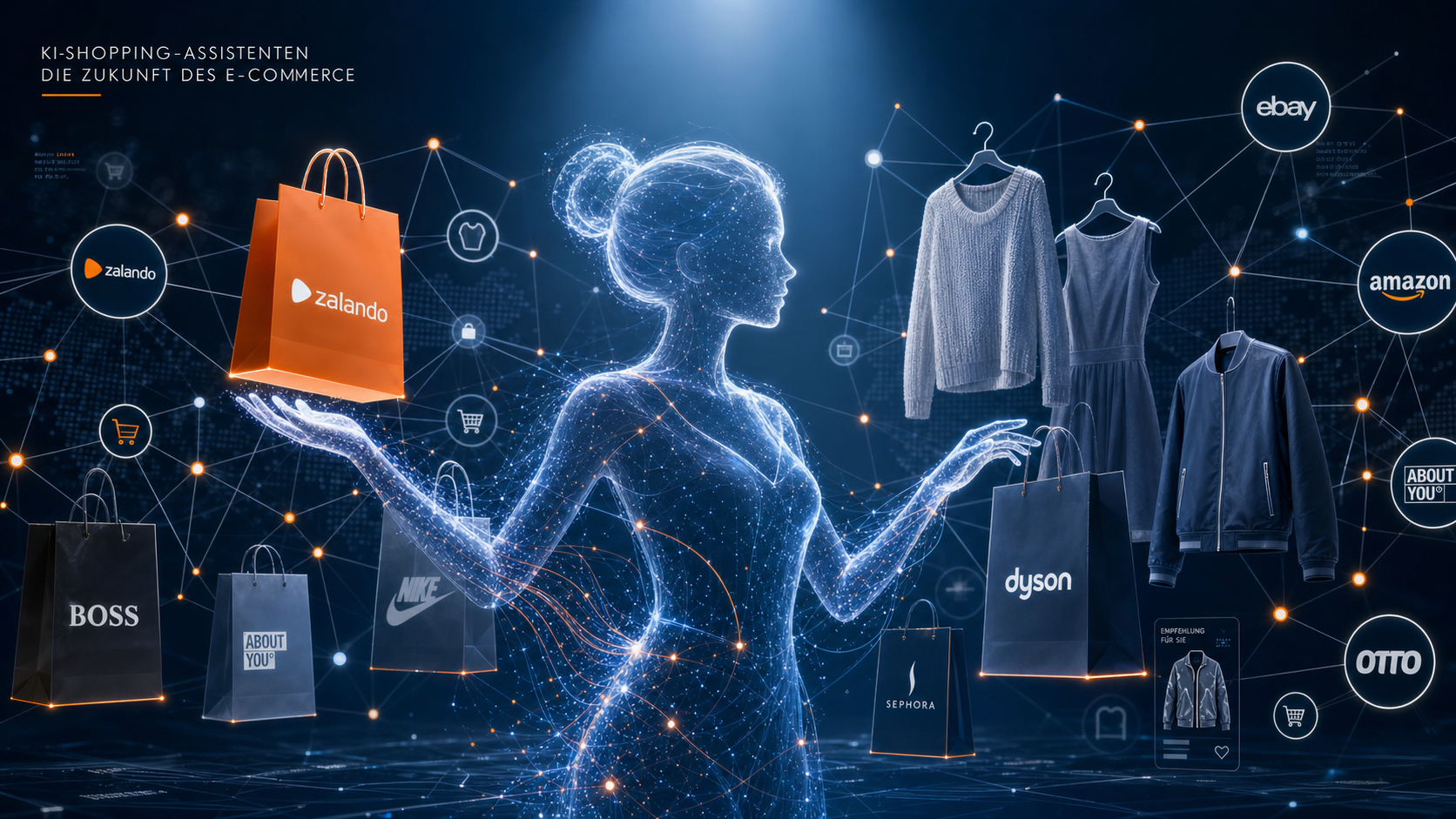
Zalando's AI assistant: When the AI advises you to go to the competition – The risky shopping strategy – Image: Xpert.Digital
Dangerous AI experiment: Will Zalando soon recommend competitor products?
From chatbot to lifestyle coach: How Zalando's new AI is revolutionizing online retail
The AI dilemma: Is Zalando's new assistant destroying its own core business?
Zalando's AI assistant has rapidly evolved from a simple chatbot into a versatile lifestyle companion. But now Europe's largest fashion retailer faces a massive strategic dilemma: To compete with the cross-platform super-AIs of Google, OpenAI, and others, its hitherto strictly closed ecosystem must increasingly open itself to external data. This harbors explosive potential – because what happens when the company's own sales engine suddenly recommends more suitable or cheaper products from competitors to customers? This paradigm shift not only marks a turning point for Zalando but also exemplifies how so-called "agentic commerce" is fundamentally reshaping global online retail. A deep dive into a risky tightrope walk between genuine customer interest, potential advertising millions, and hard-nosed corporate logic.
Zalando's AI assistant: caught between customer interests and corporate logic
When your own sales machine suddenly starts advertising for competitors
Zalando, one of Europe's largest fashion platforms, has for years positioned its AI-powered assistant as a central element of its digital strategy. With its 2026 half-year results, a note emerged that goes far beyond a typical product announcement: the assistant will no longer rely solely on internal data, but will increasingly incorporate external search results, such as those related to events or fashion trends. What initially appears to be a technical enhancement actually marks a potential turning point in the company's business logic, because an assistant that looks beyond its own inventory could, in the long run, also consider products and offers from other retailers.
This development coincides with a period of restructuring across the entire online retail sector. So-called agentic AI systems are increasingly taking over tasks previously performed by humans: searching for products, comparing prices, preparing purchasing decisions, and in some cases, even completing the purchase itself. Zalando thus finds itself at the intersection of two structurally contradictory roles: the role of seller of its own product range and the role of neutral advisor, which would also have to recommend third-party offers if they actually represent a better choice for the customer.
The evolution from chatbot to digital lifestyle coach
Zalando's AI assistant began in 2023 as a relatively simple, OpenAI-based feature that helped customers find suitable products from a range of approximately 1.8 million items at the time. By autumn 2024, the assistant had been rolled out to all 25 Zalando markets in their respective national languages, accompanied by the data-driven trend tool Trend Spotter, which compiles current fashion trends from various European cities. Since then, usage patterns have changed dramatically: While around six million customers consulted the assistant for recommendations throughout 2025, this figure had already reached almost ten million by the first quarter of 2026 alone, representing a fourfold increase compared to the same period last year.
The range of functions grew in parallel. The assistant now not only answers questions about clothing, but also integrates beauty recommendations into the same conversation, so that fashion and cosmetic advice flow together in a unified dialogue for the first time. It can directly add items to the shopping cart, proceed to checkout, summarize the contents of the customer's bag, and suggest suitable combinations for already selected products. Zalando itself describes this development as a transition from a pure shopping tool to a true lifestyle companion, designed to support customers across all areas of their daily lives, not just fashion purchases.
This strategy is complemented by a partnership with the European AI lab Qutwo, with whom Zalando aims to develop the next generation of lifestyle agents, and by its role as one of only two European launch partners for Google's Universal Commerce Protocol. This protocol is designed to allow customers to discover and purchase fashion and lifestyle products directly via AI chatbots like Gemini. Zalando emphasizes that it is already the fashion platform most frequently recommended by conversational AI systems, thereby gaining access to entirely new customer groups.
Why a closed assistant loses its appeal
The fundamental problem Zalando faces is by no means new, but it has gained a new urgency due to the technological maturity of AI systems. A shopping assistant that only knows its own product range can never, structurally speaking, provide the objectively best advice, because the vast majority of people don't want to limit themselves to a single retailer when shopping. Someone looking for the perfect outfit for a wedding isn't interested in whether the ideal garment is available at Zalando, a competitor, or directly from the brand manufacturer; they simply want to find the best solution for their needs.
This is precisely where a structural conflict of objectives arises. An assistant that continues to suggest only Zalando's own products appears increasingly limited and less trustworthy from a user's perspective as soon as cross-platform AI systems like ChatGPT or Gemini are capable of actually searching and comparing across retailers. If Zalando remains with a closed system, the platform risks losing relevance to independent agents, who can offer an objectively wider selection and potentially better prices. Conversely, if Zalando consistently opens up, the company must, in case of doubt, also recommend offers from competitors, even if this reduces its own revenue.
This dilemma can be illustrated with a simple thought experiment. If a customer uses the Zalando assistant to search for a specific dress that is either unavailable or only available at a higher price from Zalando, but could be delivered more quickly and at a lower price from a competitor, a truly customer-oriented assistant would have to point out this alternative. An assistant that fails to do so is essentially behaving no differently than a traditional sales consultant in a brick-and-mortar store, who naturally only offers merchandise available in their own shop. The crucial difference is that customers expect a higher degree of objectivity from an AI acting as an intelligent, neutral advisor than from a salesperson behind the counter.
The marketplace dilemma as a historical blueprint
Zalando's current situation is strongly reminiscent of a decision that major online marketplaces faced years ago, the legal repercussions of which are still being felt today. Amazon, for example, has repeatedly had to address the question before European courts of whether the parallel presentation of its own brands and offers from independent third-party sellers on the same platform leads to confusion and distortions of competition. In the Louboutin v. Amazon case in December 2022, the European Court of Justice ruled that a uniform presentation of own-brand and third-party offers under the same brand logo and without clear labeling can trigger trademark liability if average users are led to believe that the platform itself is selling the goods.
Beyond the legal dimension, the Amazon case reveals a fundamental structural pattern: Internal company documents showed that Amazon systematically analyzed sales data from marketplace sellers to identify successful products and then copy them with its own, more favorably positioned private-label brands, which were then given preferential placement in product search results. The European Commission classified this behavior as an abuse of a dominant market position because non-public seller data was systematically used to benefit its own business.
Applied to Zalando's current situation, the core question can be formulated more precisely: Can a company simultaneously act as a gatekeeper to a market and as an active participant in that market without one role systematically distorting the other? With traditional marketplaces, the focus was on the visibility of product offerings in search results and rankings. With AI assistants, the same problem shifts to a higher level, because now it's not a search algorithm with visible ranking factors that decides, but rather a language model with weightings that are barely comprehensible to outsiders, which products are presented in what order and with which recommendation. This lack of transparency makes potential conflicts of interest harder to detect, but by no means less real.
How the major AI platforms are reshaping commerce
While Zalando experiments within its own ecosystem, cross-industry AI providers have already significantly advanced the topic of agentic commerce. In the fall of 2025, OpenAI introduced Instant Checkout, a feature that allowed ChatGPT users in the United States to make purchases directly from Etsy sellers within the chat. This was achieved through the development of an open standard called the Agentic Commerce Protocol in collaboration with the payment provider Stripe. A notable aspect of this model was the explicit assurance that inclusion in Instant Checkout would not affect search engine rankings and that sellers would only pay a fee on completed purchases, without any impact on the final price for customers.
In the spring of 2026, however, OpenAI underwent a remarkable strategic course correction. Instead of consolidating purchase transactions directly within the chat interface, the company increasingly shifted the actual checkout process to standalone, merchant-controlled environments, either via a redirect to the merchant's website or through specialized apps within ChatGPT. The rationale was that they wanted to focus more on high-quality product search and discovery, while the actual payment process remained with the merchant. This shift demonstrates that even the most influential AI providers are still searching for the right balance between user convenience, merchant interests, and their own control over the customer interface.
Google's Universal Commerce Protocol takes a similar but technically broader approach, aiming to cover the entire shopping journey from product discovery to purchase. Zalando is one of two initial European partners in this initiative. Three competing technical standards have emerged: Google and Shopify's Universal Commerce Protocol for the entire shopping journey, OpenAI and Stripe's Agentic Commerce Protocol focusing on the checkout process, and Anthropic's Model Context Protocol for real-time access to structured data. This parallel development of standards demonstrates that the agentic commerce market is still in an early, consolidation-intensive phase, where platforms must consciously position themselves by defining which standards they adhere to and how much control they relinquish to external systems.
🎯🎯🎯 Data-driven B2B industry hub as a quasi-in-house solution

The quasi-in-house solution: How Xpert.Digital closes operational gaps in B2B marketing and sales – Smart Content-Driven Business - Image: Xpert.Digital
Xpert.Digital is a data-driven B2B industry hub led by Konrad Wolfenstein . The company acts as an external, quasi-in-house solution for industrial partners, closing operational gaps in marketing, content, and sales – without requiring additional resources on the client side.
More information here:
Zalando's AI strategy: balancing its own product range and open consultation
The two paths and their respective consequences
From an economic perspective, Zalando essentially has two fundamentally different strategic paths available to it, which differ considerably in their long-term consequences. The first path involves consistently maximizing its own product range and revenue, primarily using the assistant as a sales tool for Zalando's own goods, with external information serving only as supporting, but not action-oriented, supplementary information. The second path involves maximizing the customer interface itself, thus solidifying its role as the first point of contact in every shopping journey, even if this means referring customers to external offers in certain cases.
| Strategic orientation | Advantages for Zalando | Risks for Zalando |
|---|---|---|
| Closed Assistant (Maximize your own product range) | Full control over the flow of goods and margins, clear monetization through own sales, no cannibalization of the core business | Declining relevance compared to independent AI agents, loss of position as the first search point, emigration of demanding users |
| Open Assistant (Maximize customer interface) | Increased user loyalty through more objective advice, expansion of the role as the starting point of the shopping journey, access to advertising and referral revenues from third-party providers | Direct recommendation of competitor offers, potential cannibalization of one's own sales business, more complex governance and transparency requirements |
The obvious answer lies in a hybrid strategy, as already hinted at in Zalando's current communications. The company itself has repeatedly emphasized that it views agentic commerce initially only as an additional channel alongside its existing core business, not as its complete replacement. This cautious positioning allows for the selective integration of external information, such as supplementary, non-sales-related content like trend research or event announcements, while the actual product catalog remains clearly focused on its own product range.
Why advertising revenue further exacerbates the conflict of interest
One aspect that has received too little attention in the public debate surrounding Zalando's AI strategy is the growing importance of advertising within the platform. Zalando has recently significantly increased its advertising revenue to over €316 million, representing growth of approximately 42 percent. This advertising revenue comes primarily from brands and retailers who pay for preferential visibility of their products on the platform.
As soon as an AI assistant becomes the central discovery interface, the logic of advertising inevitably shifts. Advertisers could soon pay not only for placements in traditional search results, but also for preferential mentions within the assistant's natural language responses. This development would put additional pressure on the objectivity of AI recommendations, because an assistant that functions simultaneously as a neutral advisor and a monetized advertising platform must fulfill two structurally contradictory expectations. Users trust an assistant to the extent that they assume its neutrality, while companies have a financial incentive to undermine precisely this neutrality through paid placements.
What competition from abroad teaches us
The comparison with the Chinese fast-fashion retailer Shein provides additional context for Zalando's strategic considerations. Shein is expanding aggressively into European markets and possesses substantial financial reserves, which, according to observers, could theoretically be sufficient for a takeover of Zalando. While customers currently still order more frequently from Zalando than from Shein, the gap is steadily narrowing, increasing the pressure on Zalando to assert itself through differentiation rather than pure price competition.
In this competitive environment, the quality of AI-supported advice is gaining additional importance as a differentiating factor. A provider like Shein, which primarily competes on low prices and an enormous product range, is unlikely to develop the same interest in a truly neutral, customer-oriented advice logic as Zalando, which focuses more on brand quality, curation, and service quality. Zalando could therefore gain a competitive advantage over price-aggressive but less advice-oriented competitors precisely through a consistently open and trustworthy assistant, provided the company is willing to accept short-term revenue losses in its own product range in exchange for long-term gains in trust.
Regulatory grey areas as an additional uncertainty factor
Beyond purely economic considerations, a regulatory dimension is emerging that could significantly influence the future design of AI shopping assistants. European case law on online marketplaces already demonstrates how sensitive courts are to the mixing of a seller's own offerings with those of third parties, particularly when average users can no longer clearly distinguish who the actual seller of a product is. Should an AI assistant integrate third-party products into its responses without clearly indicating whether a recommendation is based on a paid partnership, an objective assessment, or simply availability in its own warehouse, a legal gray area similar to that which existed with traditional marketplaces would arise.
Added to this is the question of data usage. Should Zalando actually integrate product data from third-party providers into its own assistant in the future, it would have to be clarified under what conditions this data may be collected, processed, and displayed, especially if competitors fear that their own sales data is being used indirectly to improve Zalando's own offerings. This very allegation significantly contributed to the European Commission's antitrust investigation in the Amazon case. Therefore, carefully separating its role as a recommendation platform from its role as a data-analyzing competitor will be a key challenge for Zalando, not only economically but also legally.
A reasoned assessment of the most likely development
The available facts suggest that Zalando will initially pursue a cautious middle ground, gradually shifting towards greater openness without jeopardizing its core business in the short term. The current opening to external web search results deliberately only concerns supplementary, non-sales-related content such as trend information and event listings, which should be seen as a cautious first test before actually integrating third-party product offerings.
The decisive driver for further opening up will likely not stem from internal strategic considerations, but rather from external competitive pressure from independent AI systems like ChatGPT, Gemini, or future specialized shopping agents. Once customers are accustomed to using such platform-independent assistants to find the best deals across multiple retailers, a closed system like the current Zalando assistant will lose its appeal, even if it is technically sophisticated within its own product range. Zalando will therefore likely be forced to accelerate its opening strategy as soon as it becomes clear that competitors or cross-platform AI providers are gaining significant market share at the initial touchpoint of the purchase decision.
In the long term, a scenario in which Zalando combines two parallel revenue models seems most likely: on the one hand, continuing with traditional sales revenue from its own product range, and on the other hand, increasingly generating revenue from referrals and advertising as a starting point for purchasing decisions that may end up outside of its own inventory. This model would structurally bring Zalando closer to the logic of search engines or general AI assistants, where monetization is not primarily based on direct sales, but rather on controlling attention and facilitating referrals. Whether this transition succeeds without substantially cannibalizing its existing retail business will be the crucial test for Zalando's AI strategy in the coming years.
📈🚀 From visibility to trust 👀🤝 Your scalable path with Xpert.Digital

From visibility to trust: Your scalable path with Xpert.Digital - Image: Xpert.Digital
In industrial B2B, sustainable business relationships rarely emerge overnight. They develop step by step – through visibility, professional relevance, recurring touchpoints, and growing trust. Xpert.Digital's 4-stage model addresses precisely this: It offers a structured path that begins with a manageable entry point and can evolve into deeper collaboration in business development if needed.
Instead of relying on loud marketing promises, this model puts the relationship at the forefront. Companies start with clearly defined, easily calculable measures and then decide, based on their own experience, how far they want to expand the collaboration. A key factor for this undisturbed trust-building process: The platform completely avoids annoying advertising ads, so the editorial focus remains solely on the companies' expertise.
More information here:
Your global marketing and business development partner
☑️ Our business language is English or German
☑️ NEW: Correspondence in your native language!

Konrad Wolfenstein
I and my team are happy to be available to you as your personal advisor.
You can contact me by filling out the contact form here [email protected]:or simply call me at +49 7348 4088 965. My email address is
I'm looking forward to our joint project.









