
Development aid in the Houthi rebel crisis zone: GIZ fraud in Yemen? When taxpayers' money disappears without a trace – and the SPD remains silent
Xpert Pre-Release

Available in 27 languages 📢
Prefer Xpert.Digital on GoogleⓘPublished on: June 24, 2026 / Updated on: June 24, 2026 – Author: Konrad Wolfenstein
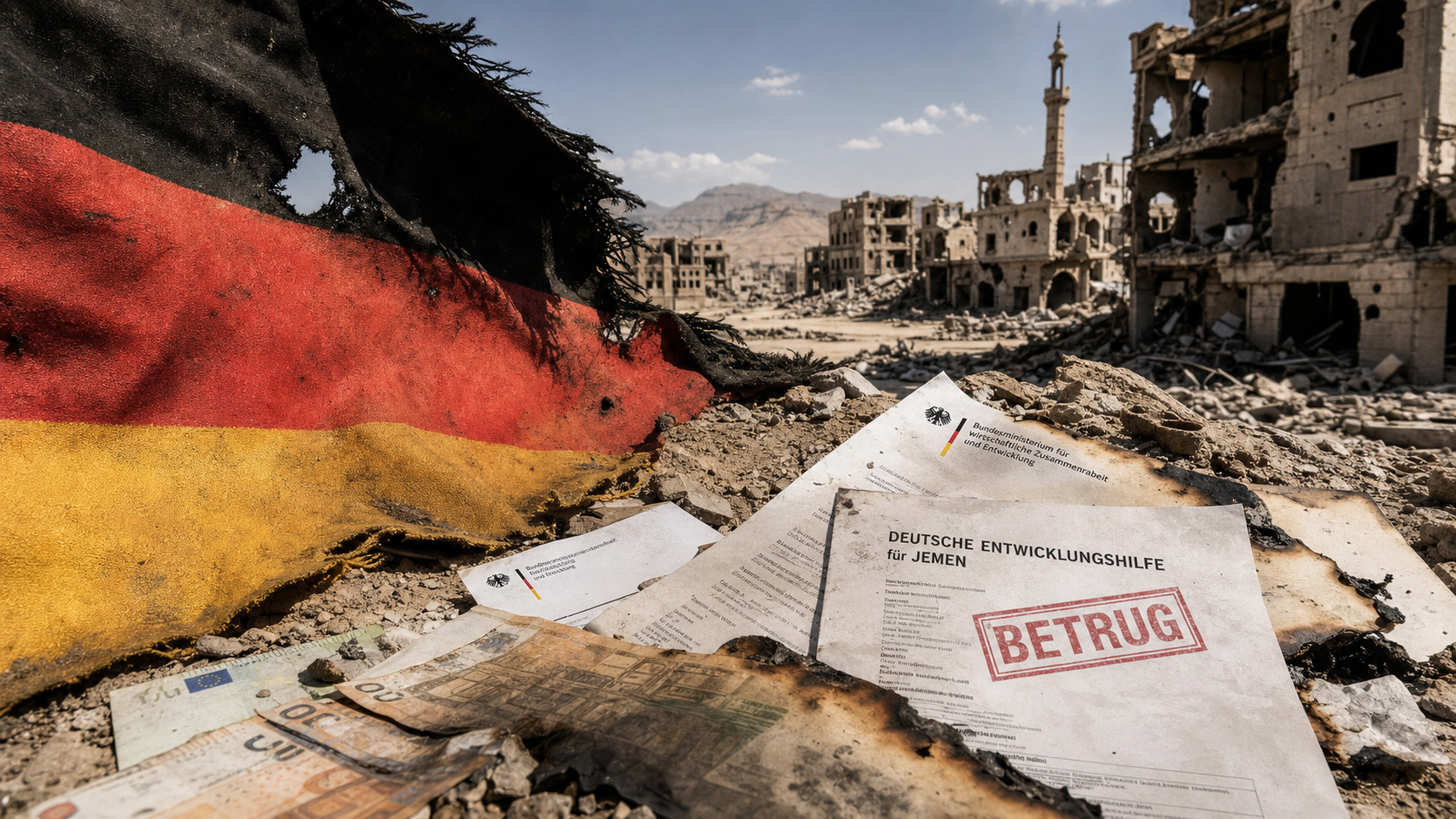
Development aid in a crisis region: GIZ fraud in Yemen? When taxpayers' money disappears without a trace – and the SPD remains silent – Image: Xpert.Digital
Development aid for extremists? The unbelievable GIZ scandal that was meant to be covered up
Files destroyed, millions gone: The secret fraud scandal of German development aid
100 million euros for fictitious projects: The massive state failure in Yemen
It's a scandal that shakes the very foundations of German development policy: In Yemen, at least €100 million in taxpayer money is alleged to have vanished through the German Society for International Cooperation (GIZ) into the black market. Fictitious seminars, destroyed project files, and internal accusations of "organized fraud" paint a picture of an unprecedented loss of control. What's particularly explosive is not only the enormous financial damage in an area controlled by extremists, but also the systematic attempt at a cover-up: While the GIZ board of directors was well aware of the tens of millions of euros in losses, the supervisory board remained in the dark for months. The Yemen scandal reveals a blatant institutional failure – and raises the pressing question of just how secure the billions of euros in German development aid budgets in global crisis zones really are.
Development aid in crisis areas – or: Who controls the controller?
What began as a bureaucratic footnote has escalated into one of the most serious fraud scandals in the history of German development cooperation. Since 2015, the German Society for International Cooperation (GIZ) has spent at least €100 million on projects in Yemen. A significant portion of this is alleged to have vanished into the shadows – through fictitious seminars, manipulated travel expense reports, currency manipulation, and questionable tendering procedures. Internal reports speak openly of "organized fraud." The damage is estimated at tens of millions of euros. And yet, the public only learned of it years later – even though the board had long been aware of the findings.
From harmless euphemism to state failure
The scandal has a telling linguistic history. In the spring of 2023, GIZ internally referred to "commercial irregularities" in Yemen – a term that cleverly obscured the true extent of the matter. Public communication was kept vague, while internally the language became more explicit: initially, the term "fraud" was used, and eventually, "systematic, organized fraud." The contrast between official communication and internal knowledge is symptomatic of an organizational culture in which transparency takes a backseat to damage control.
According to current information, the first indications of irregularities emerged as early as 2022. In the fall of 2022, GIZ commissioned an external auditing firm to conduct an investigation. Following initial findings that confirmed irregularities, the Federal Ministry for Economic Cooperation and Development (BMZ) and the Supervisory Board were informed in 2023 – but, according to research by Welt am Sonntag, apparently not completely. The responsible department head at GIZ had already prepared a damage estimate in the tens of millions of euros by mid-2023. However, this forecast was withheld from the Supervisory Board until shortly before the public reporting – an action that, under applicable company law, must be considered a blatant breach of the duty to inform the supervisory body.
The mechanisms of fraud: fictitious, manipulated, destroyed
The specific fraud methods described in the internal reports are shockingly direct. Seminars that never took place were billed; fuel costs for trips that were never undertaken were reimbursed. In addition, there were manipulations of currency transactions and irregularities in tendering procedures and the disbursement of grants. Twenty-four local employees were suspended, and disciplinary action was taken. Both the German Federal Ministry for Economic Cooperation and Development (BMZ) and the German Society for International Cooperation (GIZ) initially declined to comment on whether criminal investigations had been initiated.
The handling of the evidence itself is particularly explosive. When GIZ decided to leave Houthi-controlled North Yemen in 2025, parts of the project files are alleged to have been destroyed. According to media reports, the German Federal Ministry for Economic Cooperation and Development (BMZ) approved this action. The question inevitably arises: What information was targeted for destruction, and who bore the political responsibility for this decision? In a state governed by the rule of law, where hundreds of millions of euros in taxpayer money are being used, the destruction of documentation in an ongoing fraud case is more than just an administrative error – it is a failure of institutional accountability.
The supervisory board in the dark: Governance failure at the highest level
German law has clear rules for state-controlled companies: The management board is obligated to provide the supervisory board with all information necessary for effective oversight of the management. This very obligation is alleged to have been violated in the case of GIZ for months, possibly years. While board spokesman Thorsten Schäfer-Gümbel and his leadership team were internally informed about damage estimates in the tens of millions, the supervisory board was kept without the crucial figures.
This information gap is not merely a governance problem in the narrow sense. It reveals a deeper structural deficit: In an organization that receives several billion euros annually from the federal budget and whose main client is the Federal Ministry for Economic Cooperation and Development (BMZ), the supervisory function must be guaranteed in practice. However, when the Federal Court of Auditors already determined in 2022 that the BMZ was managing GIZ with an "unsuitable performance indicator" and that this indicator was not a meaningful measure of the organization's success, it becomes clear: The failure of oversight in the Yemen case is not an isolated incident, but rather the consequence of a systemically weak management architecture.
Operation in Houthi territory: Strategic blindness or deliberate risk?
The GIZ was not operating in a stable developing country in Yemen – it was operating in the heartland of a terrorist organization. Since autumn 2014, the Houthi militia has controlled the capital Sana'a and large parts of northern Yemen. Any foreign organization wanting to operate in this region had to come to terms with the extremists – this is the sobering conclusion reached by research conducted by the newspaper Die Welt. Nevertheless, the GIZ remained active in northern Yemen until 2025, more than ten years after the Houthis seized power.
Even more explosive: According to media reports, GIZ used, among others, the Yemen Kuwait Bank as a local financial partner. This is the very same bank that the US Treasury Department sanctioned in January 2025 for proven financial support of the Houthis. US authorities accused the bank of helping the Houthis exploit the Yemeni banking system for money laundering and the transfer of funds to allies, including the Lebanese Hezbollah. If German development aid flowed through such an institution, then the question of who ultimately benefited from the money takes on a whole new dimension. It cannot be ruled out that some of the German taxpayers' money indirectly contributed to the financing of a militia classified by the West as a terrorist organization.
The structural problem: control in uncontrollable spaces
Yemen is not an isolated case in the history of problematic development aid, but rather a particularly drastic example of a fundamental structural problem. Development cooperation typically takes place in countries where state structures are weak or have collapsed, corruption is rampant, and external auditing mechanisms are largely ineffective. As early as 2018, an internal quality control report at GIZ identified "a lack of systems or processes for verifying the use of funds." According to the report, certain expenditures were rarely audited despite considerable costs; partner countries often failed to provide their agreed-upon matching funds in the promised amounts, without GIZ insisting on it.
This finding from 2018 is shockingly relevant today. It shows that the Yemen fraud didn't arise out of thin air, but rather fell into a control vacuum that had been known for years. The fact that GIZ operated 14 projects in Yemen with a funding volume of over €124 million – a country for which the German Foreign Office has issued an unconditional travel warning – raises fundamental questions about risk management and the strategic framework of German development policy. Furthermore, internal Bundestag documents show that the German government is withholding information about several Yemen projects for security reasons – which further complicates parliamentary oversight.
The financial volume in context: What's at stake
To properly assess the extent of the GIZ Yemen scandal, a comprehensive financial overview is necessary. According to preliminary OECD figures for 2025, Germany is the world's largest donor of official development assistance, contributing around €26 billion – just ahead of the USA. Approximately 39 percent of this sum comes from the budget of the Federal Ministry for Economic Cooperation and Development (BMZ). The BMZ's budget for 2025 amounts to €10.3 billion – still below the UN target of 0.7 percent of gross national income. GIZ itself has an annual revenue of several billion euros; the BMZ alone transfers around €3.2 billion per year.
In this context, 100 million euros for Yemen projects initially seems like a small fraction of the total budget. But the damage cannot be measured solely in financial terms. Every project in which taxpayer money is misappropriated damages the legitimacy of Germany's entire development policy. This creates a loss of public trust, which in the long term undermines political acceptance of necessary international aid measures. At the same time, the scandal fuels a debate that has been simmering for some time: While Germany discusses daily cost-cutting measures for schools, roads, bridges, hospitals, and municipalities, taxpayer money is disappearing abroad to an extent that has not yet been fully disclosed.
Development aid as a systemic misinvestment? The uncomfortable debate
The GIZ scandal provides ammunition for a fundamental debate that has been simmering for decades about the effectiveness of development aid as a whole. Critics point out that foreign aid payments can finance corrupt governments, which consequently no longer feel dependent on the approval of their populations. The German government itself, in its 15th Development Policy Report, classified 90 percent of the partner countries of German development policy as highly corrupt. Anyone operating with public funds in such an environment needs not only good intentions, but also robust control mechanisms.
The fact that the German government is allocating almost one billion euros less to the Ministry for Economic Cooperation and Development (BMZ) for 2025 than in 2024 – the budget is falling from 11.2 to 10.3 billion euros – creates an additional dilemma: Less money without better control systems does not mean less risk of corruption, but merely a redistribution of the problem. What is needed instead is a reform of governance structures, auditing mechanisms, and the strategic criteria for selecting project countries. It seems particularly absurd that the BMZ, on the one hand, finances anti-corruption programs – such as the evaluation to promote anti-corruption and integrity through German development cooperation – and, on the other hand, demonstrably fails to detect and prevent fraud in its own projects in a timely manner.
Governance and transparency: What the case teaches us systemically
The GIZ Yemen case is a textbook example of institutional failure on several levels simultaneously. First, at the operational level: Local staff were able to submit fraudulent expense reports for years because control mechanisms were either lacking or ineffective. Second, at the management level: The executive board had internal damage assessments but did not fully inform the supervisory board, which constitutes a serious breach of corporate law. Third, at the political level: As the owner ministry and chairman of the supervisory board, the Federal Ministry for Economic Cooperation and Development (BMZ) ultimately bore the responsibility for the effective management of GIZ – and, as the Federal Court of Auditors had already determined, allowed unsuitable control instruments to be used.
The destruction of project files during the withdrawal from North Yemen – with the approval of the German Federal Ministry for Economic Cooperation and Development (BMZ) – is particularly symbolic in this context. It not only prevents a full investigation into the damage but also sends a fatal signal: that the normal rule of law is suspended in crisis regions. When GIZ works in more stable countries with robust partners, it demonstrates its capacity for effective project work. However, the Yemen case proves that the risk framework for projects in conflict and high-risk zones must be fundamentally redefined.
Revenue or expenditure problem? The fiscal dimension
It is an argument that is gaining increasing traction in public debate: Germany does not have a revenue problem, but a spending problem. The GIZ scandal provides a concrete illustration of this thesis. With a total federal budget of over 500 billion euros for 2025 and a structural deficit that leads the Federal Court of Auditors to speak of debt "on an unprecedented scale," the question of efficient use of funds is not an ideological one, but an economically imperative one.
The Yemen fraud is not an isolated case. It is part of a broader practice of inadequate oversight of public funds abroad, facilitated by weak governance systems, a lack of incentives to reduce costs, and an institutional culture of self-promotion. The German Federal Court of Auditors has already criticized the fact that GIZ's key performance indicator, which is also used to calculate executive bonuses, provides no information about the organization's economic success. In other words, the incentive system is misaligned. It rewards volume growth instead of demonstrable impact, project numbers instead of project results.
What needs to be done: A reform catalog without excuses
Anyone who takes the GIZ Yemen case seriously must draw the right conclusions. This includes, first and foremost, a full criminal and parliamentary investigation: The question of whether criminal investigations will be initiated in addition to labor law proceedings remains unanswered. Complete transparency towards the Bundestag and the public is needed regarding the actual extent of the damage, the chain of responsibility, and the consequences for those involved.
Furthermore, a fundamental reform of the control architecture is needed. Specifically, this means independent external audits in all high-risk countries, real-time digital financial monitoring of funds flows in fragile states, clear criteria for discontinuing or not undertaking projects in areas under extremist control, and a revision of GIZ's management and remuneration systems that rewards genuine impact measurement rather than maximizing volume. Ultimately, GIZ is an important instrument of German foreign policy – but one that will only remain credible if it operates according to the same standards it seeks to demand in its partner countries.
The real dimension: The trust of the taxpayers
Ultimately, it boils down to a simple democratic demand: Citizens, who finance public budgets with their work, have a right to know what happens to their money. Every euro embezzled in Yemen was taken from a taxpayer – often someone who cannot afford tax avoidance and who is directly dependent on functioning schools, roads, and hospitals. The GIZ scandal is therefore not an abstract, institutional problem. It is a violation of the social contract between the state and its citizens.
The crucial question this scandal raises extends beyond Yemen: How many similar cases exist – in other project countries, with other organizations, in other crisis zones – that the public never learns about? The German government and GIZ don't owe society PR answers. They owe transparency, consistency, and a genuine effort to create a system that learns from this failure. Because the real asset of German development policy isn't money – it's credibility.
Our EU and German expertise in business development, sales and marketing

Our EU and German expertise in business development, sales and marketing - Image: Xpert.Digital
Industry focus areas: B2B, digitalization (from AI to XR), mechanical engineering, logistics, renewable energies and industry
More information here:
A thematic hub offering insights and expertise:
- Knowledge platform covering global and regional economies, innovation and industry-specific trends
- A collection of analyses, insights, and background information from our key areas of focus
- A place for expertise and information on current developments in business and technology
- A hub for companies seeking information on markets, digitalization, and industry innovations
From patronage post to crisis: Why GIZ leadership is under fire
The main political figures responsible
GIZ board level: SPD
Thorsten Schäfer-Gümbel (SPD) has been the CEO of GIZ since 2022. He is the face of institutional failure: Internal estimates of damages in the tens of millions were already available to his management team before the supervisory board was fully informed. Schäfer-Gümbel was previously the SPD's lead candidate in Hesse four times and a failed state party chairman—a typical career path for a party manager into a GIZ cushy job, as the Süddeutsche Zeitung critically commented upon his appointment in 2019.
Supervisory Board Chairman: SPD/BMZ
Niels Annen (SPD), State Secretary at the Federal Ministry for Economic Cooperation and Development (BMZ), is, according to the GIZ website, Chairman of the Supervisory Board. This is precisely the body that, according to the Welt report, was not fully informed, and is thus under SPD leadership. The Supervisory Board also includes representatives from the Federal Ministry of Finance, the Federal Foreign Office, and the Federal Ministry for Economic Affairs and Energy.
Responsible Federal Minister: SPD
Reem Alabali-Radovan (SPD) has headed the BMZ since May 2025 and is thus politically responsible as the main client of GIZ. So far, she has not publicly commented on the fraud scandal. According to the report, the BMZ allegedly approved the destruction of project files during the withdrawal from North Yemen.
GIZ as a party pension fund: A historical pattern
The pattern of GIZ leadership being staffed by political parties is not a specialty of the SPD, but rather long-standing practice:
| Period | GIZ chief | party | background |
|---|---|---|---|
| 2012–2022 | Tanja Gönner | CDU | Former Environment Minister of Baden-Württemberg |
| from 2019/2022 | Thorsten Schäfer-Gümbel | SPD | Former SPD Hesse leader, repeatedly failed top candidate |
| board member once | Tom Pätz | FDP | Appointed by FDP minister Dirk Niebel, he resigned due to an expenses scandal |
FDP Development Minister Dirk Niebel once appointed his party colleague Tom Pätz to the GIZ board — Pätz later had to resign due to questionable expense claims. History is repeating itself structurally.
Reactions from the parties
- SPD: Silence. Neither Minister Alabali-Radovan nor the party have yet commented publicly on the scandal.
- CDU/Union and Greens: Demand transparency, according to a Welt report.
- AfD: Uses the scandal as an argument for abolishing the BMZ and a fundamental reform of development aid; AfD member of parliament Alexander Wolf explicitly criticizes the “red-green ideology” in GIZ projects.
The politically relevant triangle is currently clearly dominated by the SPD: the GIZ board spokesperson (Schäfer-Gümbel), the supervisory board chairman (Annen), and the responsible minister (Alabali-Radovan) all belong to the SPD. This does not mean that previous governments under CDU leadership bear no responsibility—the Yemen projects began in 2015 under CDU-led cabinets, and the structural deficiencies in oversight are decades old. But the current political responsibility for suppressing information and the problem of document destruction clearly lies with the SPD.
What the SPD (doesn't) say
Official silence from the party
Neither the SPD as a party nor Development Minister Reem Alabali-Radovan (SPD) has yet issued a public statement specifically regarding the GIZ Yemen fraud. The entire BMZ website contains not a single entry directly addressing the scandal. In recent weeks, the minister has spoken publicly about Gaza, the US withdrawal from international organizations, and her own anniversary in office—but nothing about the GIZ fraud.
What the BMZ communicates technically
The ministry limited itself to a brief, formulaic statement: It is pursuing the investigation "closely," legal steps have been taken, and the security situation is complicating the investigations. The BMZ deliberately left open the question of whether criminal investigations have been initiated.
What GIZ chief Schäfer-Gümbel (SPD) says
He is the only person from the SPD circle who has commented at all — but in a clearly defensive manner. His key statements to the DPA:
- “A group of national staff members abused the system to their own advantage” — thus shifting the blame to the local level
- The damage is estimated to be in the “low double-digit millions” range
- GIZ has tightened its control mechanisms since 2023
- No other country has been followed “for ten years under these extremely difficult conditions” — a tone that sounds more like self-praise than self-criticism
The political logic of silence
The pattern is classic: when the GIZ board spokesperson, supervisory board chairman, and responsible minister all belong to the same party, there is no internal pressure for public debate. Critical inquiries instead come from outside—from the CDU/CSU and the Greens (who demand transparency) and from the AfD (who want to abolish the BMZ entirely). In this case, the SPD sits on both sides of the control relationship—as both controller and controller—which structurally hinders a truly independent investigation.





