
How stable is Germany's supply chain? Why only dual-use logistics can protect Germany from crises and war
Xpert Pre-Release

Available in 27 languages 📢
Prefer Xpert.Digital on GoogleⓘPublished on: February 9, 2026 / Updated on: February 9, 2026 – Author: Konrad Wolfenstein
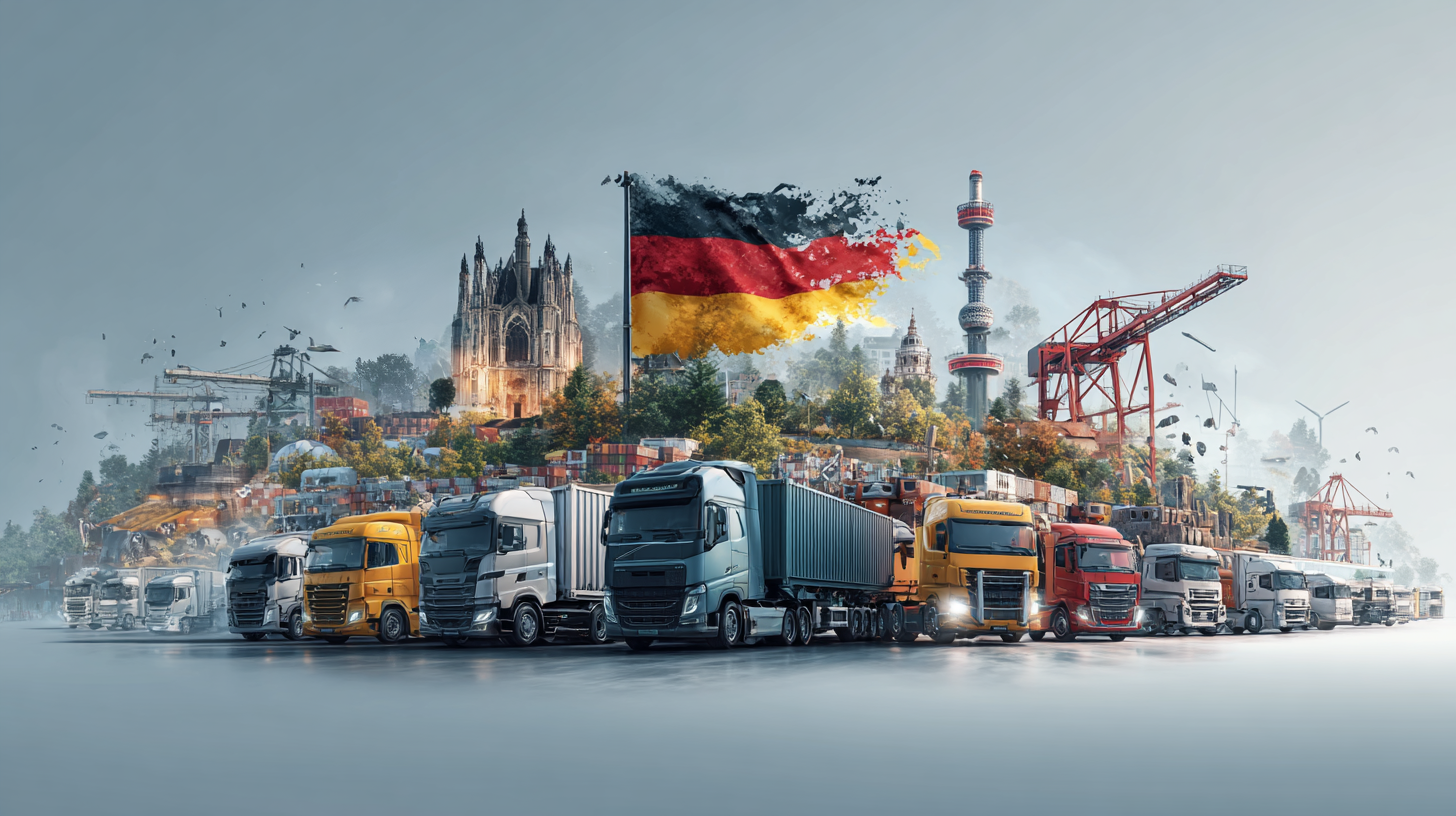
How stable is Germany's supply chain? Why only dual-use logistics can protect Germany from crises and war – Image: Xpert.Digital
How resilient is Germany's healthcare infrastructure really? Germany doesn't just live off globalization – it has become vulnerable because of it
Where Germany is truly dependent: structures and weaknesses
Germany is one of the world's most globalized industrial locations. The relocation of production activities abroad, the specialization of individual regions, and the shift to just-in-time supply chains have given the country competitive advantages in recent decades – but have also systematically increased its vulnerability to global shocks. Analyses of economic vulnerability show that Germany, due to its high degree of trade openness, its export concentration on specific sectors, and its dependence on strategic imports – such as raw materials, intermediate goods, and critical components – is particularly sensitive to disruptions in global supply chains.
In 2019, German industry already accounted for over €600 billion in imported intermediate goods, representing around 55 percent of total goods imports. More than two-thirds originated from English-speaking Europe, with further shares coming from the USA and China. In terms of value added, a significant portion of an exported product worth €1,000 contains foreign value added, particularly from China, the USA, and other EU member states. Sectors such as textiles, electronics, and parts of the automotive and machinery industries are especially dependent on imported intermediate goods. This structure makes the German economy efficient, but also vulnerable to disruptions in global supply chains, whether caused by pandemics, geopolitical conflicts, sanctions, or infrastructure crises.
Resilience as a skill, not as a given
In this context, resilience is not simply "robustness" in a technical sense, but rather the ability of a system to maintain, adapt, and, if necessary, transform its core functions—in this case, supplying the economy and the population with goods and services—under stress. This makes it clear that resilience is not just a matter of inventory levels, but a functional combination of resistance, adaptability, and transformative capacity. Studies of socio-ecological systems identify three key strategies for these capabilities, which also apply to supply systems: the provision of backup structures, the diversification of resources and supply chains, and a certain form of regionalization or decentralization of value creation.
In Germany, however, the discussion of these strategies remains unbalanced. While backup structures – such as strategic warehouses or reserves – have long been a focus in sectors like energy, healthcare, and food, a systematic evaluation of diversification and modularity across value chains is lacking. At the same time, the question of the extent to which regionalization or shortening of supply chains makes sense is often treated cautiously due to cost and competition concerns. The political debate is thus still far from considering Germany's supply systems from a consistently resource- and security-strategic perspective.
Supply chain resilience: How to avoid simply "wiping away" crises
The supply chains of German industry are highly interconnected in many respects and heavily reliant on a few key players. Within a network of approximately 3.1 million companies, the vast majority of which are small and medium-sized enterprises (SMEs), so-called single points of failure emerge: companies whose structural function within the network means that a failure or disruption can have repercussions far beyond their own size. Such central players can be found in specific components, particular technologies, or specific transport and logistics services.
To reduce this vulnerability, four key levers can be identified at both the corporate and political levels: robustness, agility, visibility, and learning capability. Robustness means that supply chains are not only optimized for efficiency but also have sufficient buffers and redundant capacities to absorb shocks in the short term. Agility encompasses the ability to react quickly to changes, for example, through multi-sourcing, flexible production facilities, or alternative transport routes. Visibility means that companies have transparency across their supply chains, down to their upstream suppliers and, in critical segments, all the way to the end of the chain, in order to identify risks in a timely manner. Learning capability refers to systematically learning from disruptions and crises, improving processes, and reducing strategic dependencies.
These levers are not just managerial rhetoric, but crucial for how companies navigate the current phase of heightened geopolitical instability, extreme weather, and technological surprises. Companies that are able to segment their supply chains, develop alternative partners, and simultaneously manage strategic inventories are not automatically more efficient, but they are significantly more resilient in an environment where a punching bag of crises and shocks is approaching.
The role of infrastructure: More than just roads, railways and ports
The question of the resilience of Germany's supply chains cannot be answered without a thorough examination of the infrastructure. Roads, railways, ports, airports, and communication networks are not merely technical carriers, but crucial locations where disruptions occur, as well as where they can be avoided or mitigated. In Germany, infrastructure has been geared towards efficiency and cost-effectiveness for decades, leading to physical bottlenecks and a high proportion of marginal capacity. At the same time, investments in upgrading, multi-use infrastructure, and resilience strategies have long been neglected.
This tension is particularly evident in the energy sector. Studies on the electricity grid predict that, without additional market-driven power plants or the securing of reserve capacities, market-based security of supply can no longer be reliably guaranteed from 2031 onwards. The relocation of power plants to northern regions and the simultaneous expansion of renewable energies leads to a high grid load, which must be mitigated by additional redispatch measures and associated costs. Without targeted investments in transmission networks, storage facilities, and reserve capacities, the risk of supply gaps increases significantly. In a functioning market, this would be a matter of economic efficiency; in a crisis environment, it becomes a risk to the entire energy supply architecture of the country.
The hidden dependency of "dual-use" systems
Many of the infrastructure elements that are crucial for civilian supply are also systemically important for military mobility and defense. Roads and bridges must be designed not only for trucks but also for armored vehicles, railway lines for heavy freight trains and troop movements, and ports and airports to handle large volumes of transport and – in a crisis – also for military purposes. This overlap gives rise to the idea of a "dual-use" approach: an infrastructure that can be used for everyday civilian life as well as for civil-military emergency and defense operations.
This approach is not new, but it was long suppressed in Germany. After decades of focusing on peace and prosperity, decoupling military structures, and strictly separating civilian and military logistics routes, the idea of a civil-military cooperation framework seems somewhat unfamiliar and even uncomfortable. In practice, however, the boundary has already been crossed: the army and NATO regularly use existing civilian transport routes, and the Bundeswehr (German Armed Forces) must rely on the available infrastructure. Therefore, policymakers are not concerned with inventing dual-use infrastructure, but rather with clarifying, formalizing, and systematically implementing it.
Dual-use logistics as a strategic lever
Dual-use logistics means more than simply utilizing existing infrastructure. It involves a coordinated system of infrastructure, processes, data, and legal frameworks that strengthens both civilian supply capabilities and military mobility. In logistics, a distinction is made between goods, technologies, and services that meet both civilian and military requirements – from vehicles and software to complex IT systems for routing, tracking, and planning. In this sense, dual-use can be understood as a strategic interface where efficiency and security converge.
A key advantage is cost efficiency: Instead of building parallel infrastructure systems, civilian and military actors use shared networks, which reduces overall costs and improves capacity utilization. At the same time, resilience is increased because existing, well-functioning structures can be relied upon in a crisis. If part of the civilian infrastructure fails, the military can access alternative routes or additional available capacity, and vice versa. In practice, this means systematically planning bridges, railways, freight trains, and interfaces designed for both regular freight traffic and military transport.
Strategic expansion of infrastructure: Hybrid, multimodal logistics
The future of German supply chains is not "either civilian or military," but increasingly hybrid and multimodal. Combined transport, i.e., the linking of road and rail, is a key lever for increasing both capacity and resilience. This offers the opportunity to specifically upgrade selected combined transport terminals and rail corridors to meet dual-use requirements, i.e., to expand them so that they meet military standards such as load-bearing capacity, safety distances, and loading capacities. The TEN-T Regulation and EU funding programs for military mobility have already recognized that around 94 percent of the requirements for military transport capacities align with the objectives of the civilian European transport network.
Such hybrid systems offer several advantages: Firstly, they strengthen military mobility, enabling the country to deploy troops and equipment quickly and reliably. Secondly, civilian logistics benefits, as the invested infrastructure further increases the capacity and efficiency of freight transport. At the same time, sustainability is promoted because rail transport produces significantly fewer emissions per ton-kilometer compared to road transport. The integration of dual-use standards into the planning of combined transport corridors is therefore not a purely security-focused measure, but rather an economically and ecologically sound multiplier.
Legal and organizational framework for dual use
The implementation of dual-use models is not only a technical issue, but also a legal and organizational one. The use of civilian infrastructure for military purposes must be embedded in a clear legal framework that guarantees both the safety of military missions and the rights of civilian users. Key issues include prioritization in crisis situations, the regulation of usage limits, safety standards, and responsibility for operation and maintenance. In Germany, transport law, traffic law, security law, and contract law all come into play here.
A key lever is the creation of a clear operational framework that defines how civilian and military transport can be coordinated when using the same corridor. This can be achieved, for example, through coordination centers, joint planning processes, and standardized data. In practice, models have already been developed in which infrastructure projects are explicitly linked to dual-use capabilities, such as within the framework of EU funding programs or in the context of national security strategies. It is crucial that dual uses are not improvised only in times of crisis, but are considered during the planning phase and integrated into the permitting and development processes.
Data and transparency: The new foundation for resilience
A key finding of recent research is that supply chain resilience depends not only on physical capacity, but above all on data and transparency. Companies that are able to track their supply chains, including downstream suppliers, and that have real-time data on capacity, routes, and risks are significantly better equipped to anticipate and manage crises. In Germany, however, the data landscape remains incomplete and heterogeneous. Many companies only partially capture their supply chains, and the public sector has little systematic information on the strategic importance of individual actors and infrastructures.
This presents a close connection to dual-use logistics. Utilizing the same infrastructure and data standards relevant to both civilian logistics and military mobility can strengthen the resilience of the entire supply architecture. In this sense, the digitalization of logistics processes is viewed not only as a competitive factor but also as a security policy instrument. The development of end-to-end tracking and monitoring systems capable of reacting to disruptions in real time is a key component in increasing the resilience of German supply chains.
Hub for Security and Defense - Advice and Information

Hub for Security and Defense - Image: Xpert.Digital
The Security and Defence Hub offers expert advice and up-to-date information to effectively support companies and organizations in strengthening their role in European security and defence policy. Working closely with the SME Connect Defence Working Group, it particularly promotes small and medium-sized enterprises (SMEs) that wish to further develop their innovative capacity and competitiveness in the defence sector. As a central point of contact, the Hub thus creates a crucial bridge between SMEs and European defence strategy.
Related to this:
The invisible Achilles' heel: How vulnerable are Germany's supply chains really?
Strategic reserves and backup structures: Not just for emergencies
In addition to dual-use systems and hybrid logistics concepts, the question of strategic reserves and backup structures plays a crucial role. Since the financial crisis and the COVID-19 pandemic, Germany has increasingly debated whether and to what extent strategic stockpiles of critical goods should be established. In sectors such as energy, pharmaceuticals, and certain foodstuffs, a system of reserves and safety mechanisms has already been developed. However, this system is by no means comprehensive and is insufficient in many industries.
A strategically conceived approach distinguishes between different types of goods: those that can be stored well (e.g., energy, certain raw materials, or pharmaceutical ingredients) and those that can only be stored to a limited extent or not at all long-term (e.g., highly specialized components, semiconductors, or certain chemical products). Within this complex landscape, a differentiated strategy must be developed that doesn't simply demand "more storage," but rather strategically establishes reserves where they actually create added value. Crucially, such reserves must not be conceived merely as a passive safety buffer, but actively integrated into the planning of supply chains and production facilities.
A key problem is that the costs of strategic reserves and backup structures are often borne solely by companies, while the public sector only assumes limited shared responsibility for security of supply. In Germany, no coherent system of national reserves for critical goods has yet been developed that extends beyond their respective sectors. An economically sound resilience strategy would therefore need to clearly define which areas are of particular importance to the public sector and which risks it must assume – for example, through government-run stockpiling, long-term procurement contracts, or incentives for private companies to build their own reserves.
Diversification: The invisible Achilles heel of global supply chains
Besides building reserves and strengthening infrastructure, diversification is a key lever for greater resilience. In Germany, the high dependence of some industries on just a few supplier countries or suppliers poses a hidden danger. The automotive industry, the semiconductor sector, and parts of the mechanical engineering industry are heavily reliant on specific supply chains concentrated in certain regions—for example, in Asia. In times of crisis, whether geopolitical, economic, or environmental, such concentration can quickly lead to bottlenecks that extend far beyond individual sectors.
Diversification doesn't just mean adding more suppliers, but also increasing the geographic and technological breadth of supply chains. This can mean producing products in multiple countries or regions, developing alternative technologies that are similarly efficient but less vulnerable to certain risks, or specializing in multiple logistics routes and services. In practice, however, diversification comes at a cost. Multiple suppliers and locations mean more complex logistics, increased management effort, and often higher prices. Companies must therefore weigh up how much resilience they are willing to "pay" for in terms of economic efficiency.
This presents a classic role for policymakers: they can create incentives to promote diversification without undermining competitiveness. This can be achieved through targeted support programs, for example, to establish production sites in Europe or in other regions that are less vulnerable to geopolitical risks. At the same time, regulatory frameworks can be developed to ensure that companies do not simply maximize profits at the expense of security and stability, but rather are required to disclose and address their risks transparently. In this context, it becomes clear that the resilience of supply chains is not solely a corporate issue, but a societal responsibility.
Digital Resilience: The Role of Data, AI and Cybersecurity
With digitalization, the levers for resilience are increasingly shifting to the digital domain. Data-driven supply chains are faster, more flexible, and more transparent – but also vulnerable to cyberattacks, data loss, and IT system failures. In Germany, the digitalization of logistics is already well advanced in many areas, but security aspects often take a backseat to economic efficiency. The integration of AI-driven planning systems, real-time tracking solutions, and predictive maintenance systems offers enormous potential, but at the same time increases dependence on digital infrastructure.
Digital resilience therefore means that data is not only collected and analyzed, but also remains secure, reliable, and accessible in times of crisis. This includes cybersecurity measures, securing backup systems, ensuring data center redundancy, and guaranteeing emergency operations. In a dual-use context, this dimension becomes even more important: the same IT systems that manage civilian freight transport can also be used for military transport. An attack on the digital infrastructure could therefore affect both civilian supply and military mobility. In Germany, this interconnectedness of digital systems remains largely unexplored, although it is increasingly the focus of security policy debates.
One possible approach is to create a common cyber resilience framework that applies to both civilian logistics companies and military infrastructure. This framework could define standards for data security, network resilience, and crisis response capabilities. At the same time, it could support companies and public authorities in strengthening their digital infrastructures and simulating crisis scenarios. In such a context, digitalization would not only be a competitive factor but also a central component of national security strategy.
The role of small and medium-sized enterprises (SMEs)
An often underestimated aspect of German supply chains is the role of small and medium-sized enterprises (SMEs). In many sectors, SMEs manufacture critical components that are no longer available in other countries or from larger companies. These companies are often highly specialized but, at the same time, have limited resources and opportunities to diversify their supply chains or build up reserves. In times of crisis, they can therefore become a weak point in the entire supply architecture.
Building resilience is particularly challenging for SMEs because they lack the same resources as large corporations. They often have less capital, fewer people, and less access to international markets. At the same time, they are often highly flexible and innovative. A key approach is to provide targeted support to SMEs, for example, through funding programs that finance the building of reserves, the digitalization of processes, or the diversification of supply chains. In this context, policymakers can play an important role by involving SMEs in the planning of resource and security strategies.
Another approach is the creation of networks and platforms where SMEs can exchange information, develop solutions together, and support each other. Within such networks, companies can jointly assess risks, develop strategies, and share resources. While initial initiatives in this direction already exist in Germany, scaling and integration into the broader resilience strategy remain insufficient. Integrating SMEs into dual-use logistics is another lever: many SMEs can increase their competitiveness by leveraging existing infrastructure and data standards, while simultaneously strengthening the resilience of the entire supply architecture.
The role of the public sector: regulation, coordination and investment
The resilience of German supply chains is not only a matter of corporate decisions, but also of the political framework. The public sector plays several key roles: it regulates the framework, coordinates the various stakeholders, and invests in infrastructure and research. However, in Germany, the public sector's role in this area is still incomplete. Regulation is often reactive, meaning it responds to crises rather than proactively managing risks. Coordination between the various stakeholders—federal states, municipalities, companies, and the military—is often fragmented. Investments in infrastructure and research are often insufficient or not targeted enough.
A key approach is to integrate supply chain resilience into the political agenda. This could be achieved by creating a national resilience plan that defines clear objectives, strategies, and measures. This plan could explicitly address the role of dual-use logistics, as well as the role of SMEs, digital infrastructure, and strategic reserves. The public sector could also create incentives to motivate companies to diversify their supply chains, build reserves, and upgrade their digital infrastructure. At the same time, it could improve coordination between the various stakeholders by establishing clear responsibilities and communication channels.
Another key approach is the creation of a common data framework that enables the real-time detection and analysis of risks and disruptions. Within this framework, public authorities could collect and analyze data from businesses, infrastructure operators, and other stakeholders, and utilize it in crisis situations. Simultaneously, they would need to ensure that the data is handled securely and confidentially. The integration of data from both the civilian and military domains is another lever that can strengthen the resilience of the entire infrastructure.
The role of society: responsibility, trust and understanding
The resilience of Germany's supply chains is not just a matter of technology, infrastructure, or politics, but also of society. The population has a crucial role to play by taking responsibility, developing trust in the systems, and cultivating an understanding of the risks and challenges. However, in Germany, the role of society in this area is often underestimated. The population is often passive, meaning it reacts to crises rather than preventing them. At the same time, the foundation of trust in political and economic institutions is often fragile.
A key approach is to involve the public in the planning of resilience measures. This could be achieved through information campaigns, public consultations, and the inclusion of citizens in the planning of infrastructure projects. In this context, the role of dual-use logistics can be positively communicated by presenting it as a contribution to the security and stability of society. At the same time, the public can be encouraged to contribute to the resilience of supply chains through their own consumption patterns and behaviors. This could be done, for example, through a more conscious use of resources, greater acceptance of sustainability, and active participation in crisis management measures.
Creating a shared understanding of the risks and challenges is another important lever. In Germany, however, the role of education and research in this area is still incomplete. The role of dual-use logistics, digital infrastructures, and strategic reserves is often unclear in public debate. A key approach is to integrate education and research into these areas by using degree programs, research projects, and public discussions to deepen the understanding of the risks and challenges. In this context, the role of dual-use logistics can be presented as a contribution to the security and stability of society.
German resilience as a strategic competitive advantage
The debate surrounding the resilience of German supply chains is not merely a short-term response to crises, but a long-term question of competitiveness and security. Germany occupies a unique position: it is a global industrial and export hub that relies on efficiency and competition, yet it is also a country increasingly confronted with the risks of geopolitical conflicts, economic shocks, and environmental crises. Within this complex environment, dual-use logistics offers a crucial leverage point, strengthening both civilian supply and military mobility.
A key approach is to view supply chain resilience as a strategic competitive advantage. Companies that are able to diversify their supply chains, build reserves, and strengthen their digital infrastructures are not only more secure but also more competitive. The public sector can support this process by establishing clear frameworks, providing incentives, and investing in infrastructure and research. Society can contribute by taking responsibility, building trust, and developing an understanding of the risks and challenges.
In this context, the role of dual-use logistics as a key lever for the resilience of German supply chains is clearly evident. It is not merely a technical solution, but a strategic approach that connects civilian and military structures and strengthens the entire supply architecture. Integrating dual-use standards into the planning of infrastructure projects, creating a common data framework, and involving SMEs and society are crucial steps in increasing the resilience of German supply chains. In this sense, dual-use logistics is not only a response to current crises, but also a contribution to Germany's long-term security and stability.
Consulting - Planning - Implementation

Markus Becker
I would be happy to serve as your personal advisor.
Head of Business Development
Chairman SME Connect Defense Working Group
Consulting - Planning - Implementation
Konrad Wolfenstein
I would be happy to serve as your personal advisor.
contact me at wolfenstein ∂ xpert.digital
Just call me on +49 7348 4088 965 (Munich) .
Your dual-use logistics experts

Dual-use logistics experts - Image: Xpert.Digital
The global economy is currently undergoing a fundamental transformation, a watershed moment that is shaking the foundations of global logistics. The era of hyper-globalization, characterized by the relentless pursuit of maximum efficiency and the "just-in-time" principle, is giving way to a new reality. This new reality is marked by profound structural breaks, geopolitical power shifts, and increasing fragmentation of economic policy. The once taken-for-granted predictability of international markets and supply chains is dissolving and being replaced by a period of growing uncertainty.
Related to this:





