
"We just need to explain it better": Why this talk show statement exposes the government's biggest problem
Xpert Pre-Release

Available in 27 languages 📢
Prefer Xpert.Digital on GoogleⓘPublished on: September 17, 2026 / Updated on: September 17, 2026 – Author: Konrad Wolfenstein
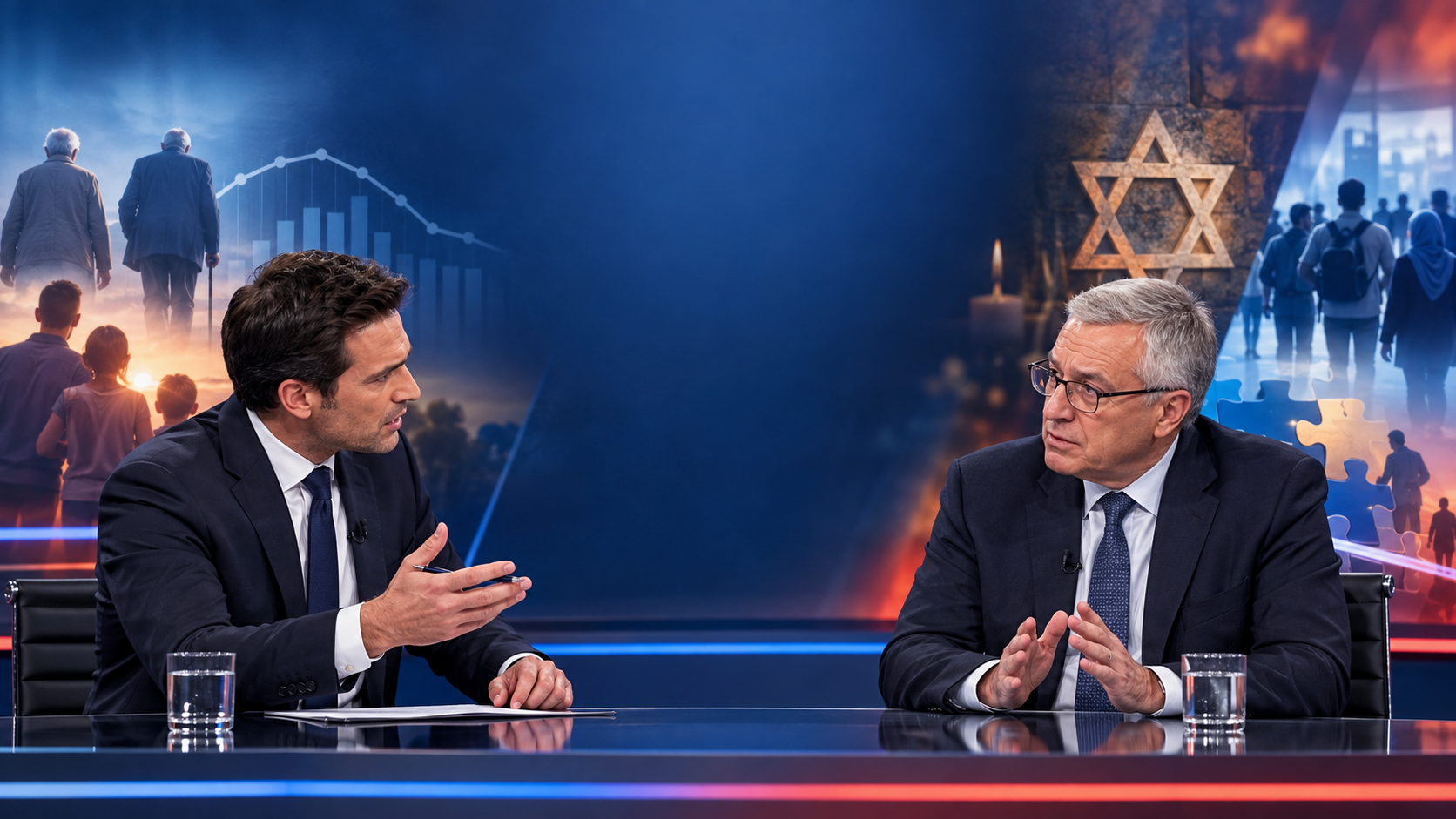
“We just need to explain it better”: Why this talk show statement exposes the government’s biggest problem – Creative image on the topic, with AI: Xpert.Digital
84 percent dissatisfaction: The unacceptable truth – Why politicians must finally be honest with the citizens
Explaining is not governing: Why citizens have long since seen through political platitudes
Pensions, migration, antisemitism: The expensive lies of German politics
A heated exchange between Markus Lanz and SPD politician Ralf Stegner on a ZDF talk show became an unintentional symbol of a much deeper political crisis in Germany. When those in power insist that unpopular measures simply need to be "better explained" to the public, it reveals not a communication problem, but political condescension. Voters have long since seen through it when hard-hit questions of distribution and uncomfortable truths are hidden behind euphemisms.
Whether it's the unvarnished billions in costs of the demographic pension gap looming before us, or the fine line between honestly naming imported antisemitism and blanket racist suspicion: true leadership demands far more than retrospective acceptance management. This essay incisively analyzes why cosmetic language cannot replace genuine reforms and why it is high time that politicians once again confront citizens with the unvarnished truth – with all its harsh consequences and unresolved conflicts of interest.
A talk show moment as a symptom: The pension calculation is incorruptible – and when it comes to antisemitism, repression is not an acceptable stance
The exchange between Markus Lanz and Ralf Stegner on the ZDF program of September 15, 2026, was more than just a heated exchange. It brought together two conflicts that, at first glance, seem to have little in common: the financing of statutory pensions and the question of what role migration plays in certain manifestations of antisemitism. In fact, both debates share a fundamental political problem. The state must allocate scarce resources, identify societal risks, and make decisions whose costs are unequally distributed. As soon as political actors conceal these distributional effects behind empty rhetoric, the impression grows that citizens are not being treated as capable adults, but rather as the target audience of a retrospective public acceptance campaign.
Lanz's blunt rejection of the notion that politics needs to be better explained therefore strikes a nerve. The statement sounds reasonable, but it can become an evasive maneuver. It suggests that a political decision is fundamentally correct and simply needs to be communicated more clearly. This ignores the possibility that the public does indeed understand a measure and rejects it precisely because of its apparent costs, contradictions, or distributional effects. Political communication is necessary, but it replaces neither a sound problem analysis nor a fair distribution of burdens. The more severely a reform impacts income, wealth, or life chances, the less sufficient it is to simply improve its linguistic presentation.
This pattern is also evident in the debate on antisemitism. A blanket description of contemporary antisemitism as being shaped by Arab culture would be empirically too narrow and politically risky. However, an equally blanket refusal to acknowledge Islamist, Arab nationalist, or country-of-origin-influenced Jew-hatred as a distinct problem would be equally wrong. The objectively sound position does not lie in the middle between two convenient narratives, but rather in a precise distinction between different perpetrator groups, ideologies, motives, and social milieus. Differentiation must not lead to trivialization, and plain speaking must not lead to collective guilt.
Explaining is not governing
The statement that politicians must better explain their plans is, first and foremost, a democratic truism. Governments must disclose their goals, instruments, costs, side effects, and alternatives. In a complex economy, many decisions cannot be reduced to a single cause-and-effect relationship. Pension policy affects demographics, the labor market, wages, taxes, capital formation, and the risk of poverty. Migration policy simultaneously impacts employment, the housing market, schools, municipal finances, internal security, and social cohesion. Without clear communication, democratic oversight remains weak.
The formula becomes problematic when it shifts from providing information to diagnosing the citizens. The unspoken message then becomes: the decision itself isn't flawed, but rather the voters' understanding. This is precisely where the condescension Lanz mentioned arises. People directly experience rising social security contributions, high housing costs, uncertain job prospects, or an overburdened administration. They don't need to be communicatively engaged to recognize their own burden. A government that primarily treats objections as a communication problem confuses a lack of support with a lack of insight.
This is economically relevant because reforms change expectations. Households decide how much to work, consume, or save based on anticipated taxes, pensions, prices, and government benefits. Businesses react to expected payroll costs, tax burdens, regulatory stability, and the availability of skilled workers. When political announcements appear incomplete, contradictory, or subject to short-term revision, uncertainty increases. Investments are postponed, additional retirement savings become more difficult to plan, and trust in government commitments declines. Communication is therefore not merely marketing, but a component of economic policy credibility.
Credibility, however, is not created through repetition, but through verifiability. Honest communication about pensions would, for example, have to openly state that a higher level of benefits requires either higher contributions, higher tax subsidies, a higher retirement age, lower benefits elsewhere, or additional government debt. Productivity growth and skilled immigration can also mitigate the burden, but they don't automatically eliminate the costs. Those who only explain the benefits of a reform and hide its financing in technical formulas are not informing, but manipulating.
The political conflict, therefore, does not revolve around whether explanations should be given. The crucial question is whether explanation occurs before the decision, as the basis for an open choice between alternatives, or after the decision, as a means of acceptance management. In the first case, it strengthens democracy. In the second case, it can simulate democratic debate, even though the fundamental questions of distribution have already been set aside.
Pensions are distributed in real time
The statutory pension insurance system is essentially financed on a pay-as-you-go basis. Current benefits are financed by ongoing contributions from employees and employers, as well as substantial federal funding. It is therefore not a personal savings account where one's contributions are fully accumulated for retirement. While pension entitlements are individually represented by earnings points, their eventual payout depends on future wage bills, the number of contributors, the contribution rate, pension law, and tax subsidies.
This system works particularly well when the number of contributors grows robustly, employment is high, and the ratio between the working-age population and pensioners remains stable. Germany, however, is moving in the opposite direction. The baby boomers are increasingly retiring, while smaller cohorts are entering the labor market. In 2024, around 20 percent of the population was at least 67 years old. According to current population projections, this proportion will rise to approximately 25 to 27 percent by 2038, depending on the assumptions. By then, the number of people of retirement age is expected to increase by at least 3.8 million.
At the same time, the potential labor supply is shrinking. In 2024, approximately 51.2 million people were in the 20-66 age group. Even high net immigration does not automatically prevent all declines in long-term model calculations. Crucially, it is not only the number of immigrants that matters, but also how quickly they find productive, social security-covered employment, their qualifications, their labor force participation rate, and whether their families are permanently integrated. An additional resident does not automatically translate into an additional net contributor to the welfare state.
The scale of pension financing demonstrates why cosmetic solutions are insufficient. In 2025, the German Pension Insurance scheme took in a total of approximately €422.6 billion and spent roughly €426.5 billion. Pension expenditures alone amounted to approximately €379.4 billion. Contribution income reached approximately €321.6 billion. In addition, there were federal subsidies for the general pension insurance scheme of over €93 billion, as well as other federal funds, including those for child-rearing periods, the miners' pension insurance scheme, and historically established special pension schemes.
This tax-based financing is not inherently inappropriate. The pension insurance system also fulfills societal functions for which there are no corresponding individual contributions. Financing such services through taxes can even be more sound from a regulatory policy perspective than placing the burden solely on employees subject to social security contributions. However, the federal subsidy is not free money. It competes with investments in infrastructure, education, defense, digitalization, research, and municipal services. Alternatively, it would require higher taxes or additional debt. Shifting contributions to the federal budget changes the cost bearer, not the overall economic costs.
The bill behind the promises
The political appeal of a pension guarantee is easy to understand. Pensioners are a large and growing voting bloc. On average, they have a high voter turnout and rightly expect reliability for entitlements built up over decades. At the same time, individual circumstances vary greatly. Some retirees own property and have additional occupational or capital pensions, while others are almost entirely dependent on the statutory pension. A blanket comparison of wealthy elderly and burdened young people would therefore be just as crude as claiming that every increase in benefits automatically serves social justice.
Economically, it depends on who receives the additional benefit and who finances it. If the pension level is politically stabilized while the ratio of contributors to beneficiaries worsens, the missing funds must be found elsewhere. A higher contribution rate reduces the disposable income of employees for a given gross wage and increases labor costs for companies. Higher tax subsidies, depending on how they are financed, burden income, consumption, assets, or future budgets. A higher retirement age extends the working life but disproportionately affects people in physically demanding jobs. A lower pension level increases the pressure for private and occupational pension schemes and can raise the risk of poverty for those with incomplete employment histories.
The current contribution rate of 18.6 percent will remain stable for the time being, according to recent projections, but is expected to rise in the coming decade. The pre-tax benefit level will be maintained at 48 percent until 2031 by the political safety net and could then fall to around 46.3 percent by 2039, according to current models. At the same time, nominal pensions are projected to rise significantly by 2039. This apparent contradiction is important: a falling pension level does not necessarily mean lower euro amounts. It describes the ratio of a standardized pension to the average wage. If wages and pensions rise, but wages rise more sharply, the relative level can fall even though pensioners receive more in nominal and possibly also in real terms.
It is precisely at this point that political communication often fails. Terms like pension cuts, pension guarantees, or stable pension levels are used without clearly defining the reference point, time horizon, and impact on inflation. This creates pseudo-conflicts. Some suggest that any dampening of pension increases constitutes a nominal cut. Others treat a lower relative value as if it were irrelevant to the living conditions of older people. Both approaches are imprecise.
A sound reform would need to combine several levers. An automatic, early-announced link between the statutory retirement age and life expectancy could reduce the pressure to adjust. This would need to be supplemented by flexible transitions, disability insurance, and special regulations for employees with health problems. Higher employment rates for women and older people would broaden the contribution base, provided that childcare, care infrastructure, continuing education, and workplace working conditions keep pace. Skilled immigration can help if recognition procedures, language support, housing, administration, and labor market integration function effectively. A stronger funded pension system can spread risks over time and across international capital markets, but it does not replace pay-as-you-go financing in the short term and entails market, transition, and distribution risks.
Intergenerational justice without slogans
Intergenerational justice is often given a moral dimension, but it is primarily a question of long-term budget constraints. The older generation has acquired entitlements and incorporated political rules into their life planning. The younger generation cannot retroactively change these rules without damaging trust. Conversely, no generation can demand that its entitlements be fully protected regardless of demographics and economic performance, while all adjustment costs are deferred to smaller subsequent generations.
The financial burden on younger generations extends beyond pension contributions. It also includes health and long-term care insurance contributions, taxes, housing costs, childcare expenses, private retirement savings, and the financing of public investments. Rising non-wage labor costs can increase employment, particularly in areas of low productivity, and reinforce incentives for automation, relocation, or reduced hiring. For skilled workers, the overall financial burden also impacts Germany's attractiveness in international competition. A pension system that increasingly consumes larger portions of the federal budget can simultaneously crowd out investments that would strengthen future growth and, consequently, the financial foundation of the pension system.
On the other hand, it would be economically short-sighted to view pensions solely as a cost factor. Pension payments stabilize consumption and regional demand. They reduce poverty among the elderly and relieve the burden on families who would otherwise have to provide greater private support. Reliable retirement security can promote the social acceptance of a market economy. Therefore, what is crucial is not the maximum possible reduction, but a structure that combines an appropriate security target with sustainable financing.
This requires precise distribution. Broad benefit improvements implemented across the board are expensive and often poorly targeted. Stronger protection for older people genuinely at risk of poverty can be more socially effective than a uniform supplement for all existing pensioners. At the same time, the principle of equivalence must remain evident: those who contribute longer and more can expect higher benefits. If the statutory pension system is transformed too much into a general, tax-financed transfer system, the transparency between contributions and benefits decreases.
The most convincing perspective is therefore neither a rigid adherence to the status quo nor radical privatization. What is needed is a predictable reform path that distributes the burden between pensioners, contributors, taxpayers, and the state. The politically uncomfortable aspect is precisely that there is no completely painless option. This needs to be explained—not as a lecture, but as a verifiable choice between alternatives.
Citizens understand more than empty phrases
Lanz's irritated reaction can also be interpreted against the backdrop of a deep crisis of confidence. In a representative survey conducted in September 2026, only 15 percent were satisfied with the federal government's performance, while 84 percent expressed dissatisfaction. Such figures don't prove that every single government decision is wrong. However, they do show that the government's communicative credit has largely been exhausted. In this situation, the call for better explanations quickly comes across as a refusal to scrutinize political outcomes and priorities oneself.
Trust cannot be regained through increased volume. It arises when goals are clear, data is accessible, responsibilities are identifiable, and mistakes are correctable. Therefore, when reforming pensions, a government should not only present what pensioners receive, but also how contributions, federal subsidies, and other expenditure streams are developing. Regarding migration, it should not only formulate humanitarian or economic goals, but also address integration capacities, security requirements, and the burden on local communities. Those who communicate only the positive aspects leave the negative aspects to their political opponents, who then often exaggerate them.
Even the language of the political center has become somewhat detached from everyday experience. Terms like transformation, resilience, participation, or sustainability may be technically sound, but they remain meaningless if they don't include concrete information about costs, deadlines, and responsibilities. Citizens don't need artificial simplification; they need comprehensible causality. What will change? Who will pay? Who will benefit? What side effects are expected? What happens if the assumptions don't hold true? Such questions are not populism, but the core of economic accountability.
Stegner's wording was therefore not necessarily factually incorrect, but politically inadequate. Better explanation may be necessary. However, it must not be the first and only response to rejection. The quality of policy must precede any communication strategy. Only when a measure is convincing in its objective, instrument, and distribution is it worthwhile to debate how to communicate it more clearly.
Antisemitism has multiple sources
The second conflict addressed in the program requires even greater conceptual rigor. Antisemitism in Germany is neither solely an imported problem nor solely a continuation of historical German right-wing extremism. It manifests itself in various forms: classically conspiracy-ideological, right-wing extremist, Islamist, Arab nationalist, left-wing anti-imperialist, Israel-related, or as a deflection of guilt in dealing with National Socialism. These forms can overlap and reinforce one another.
Police statistics for 2024 recorded 6,236 antisemitic crimes, around 21 percent more than the previous year. With 3,016 cases, the largest single category remained right-wing politically motivated crime. 1,940 cases were attributed to foreign ideology, a very sharp increase compared to the previous year. A further 685 cases were attributed to religious ideology. The data thus confirm two statements simultaneously: right-wing extremist antisemitism remains quantitatively central, and antisemitism motivated by foreign or religious-ideological factors has grown considerably.
However, these categories cannot be used to directly infer ethnicity or nationality. Police classifications capture the presumed motive for the crime, not systematically the perpetrator's migration background. A German citizen may adhere to a foreign or religious ideology; a person of Arab origin may hold far-right, left-wing, or no antisemitic beliefs at all. The phrase "Arab-influenced antisemitism" conflates origin, language, religion, and ideology. While it may identify a real aspect as a description of certain social circles, it is not a reliable diagnosis of contemporary antisemitism.
Civil society reporting data and police data also measure different things. Reporting centers document numerous incidents below the threshold of criminal liability and work with their own categories. In many cases, the background remains unknown or can only be understood based on the context. Therefore, differing proportions are not automatically contradictions, but often the result of different populations and classification methods. Anyone who selects a single figure to either completely confirm or completely refute an import hypothesis is using statistics as a political tool rather than as a means of gaining knowledge.
Migration is neither an acquittal nor proof of guilt
The question of whether migration policies of recent years are linked to certain antisemitic phenomena is legitimate. Immigration changes the composition of a society. People bring qualifications, entrepreneurial spirit, family networks, and cultural experiences, but also political socializations, religious influences, and perceptions of conflict from their countries of origin. It would be unrealistic to assume that only economically desirable characteristics migrate, while problematic attitudes remain behind at the border.
Research indicates that classic and Israel-related antisemitic attitudes are, on average, more common among Muslims in Germany than among non-Muslims. With regard to secondary antisemitism, such as the rejection of German remembrance and the relativization of historical responsibility, the differences are smaller, inconsistent, or sometimes reversed. Furthermore, within Muslim and migrant populations, there are significant differences based on education, religiosity, country of origin, political orientation, social environment, experiences of discrimination, and school attendance in Germany. Therefore, the category of "Muslim" never fully explains the behavior of an individual.
A rational migration policy must simultaneously reconcile two truths. Due to its aging population, Germany needs skilled immigration. Model calculations by the Institute for Employment Research concluded that, in the long term, net annual immigration of approximately 400,000 people may be necessary to maintain a near-stable labor supply. At the same time, poorly managed or slowly integrated immigration incurs real fiscal, administrative, and social costs. Whether migration strengthens the welfare state depends heavily on age, qualifications, employment rate, wage levels, family structure, and length of stay.
The economic necessity of immigration does not justify downplaying integration problems. On the contrary: the more dependent Germany becomes on immigration, the more important mandatory language instruction, rapid labor market integration, academic performance, law enforcement, and political education become. A country that wants to attract skilled workers must also credibly demonstrate that Jewish life is protected and that antisemitic intimidation is not a tolerated side effect of societal diversity.
Antisemitism must not be used as a pretext to collectively denigrate migrants or Muslims. That would be factually incorrect, socially destabilizing, and economically self-destructive. Germany competes internationally for qualified people. A climate of blanket suspicion weakens the retention of integrated employees and diminishes the attractiveness of Germany as a business location. Furthermore, anti-Muslim exclusion can reinforce those exclusionary environments where conspiracy theories and political radicalization thrive.
The price of destroyed trust
Antisemitism is not only a moral and security policy problem, but also has economic consequences. Threatened Jewish communities require increased security measures. Police, the judiciary, schools, and municipalities must allocate additional resources. Businesses face risks from extremist incidents, reputational damage, and workplace conflicts. Universities lose academic openness when Jewish students or researchers avoid events or leave Germany. Every form of politically motivated intimidation erodes the social trust necessary for cooperation and economic exchange.
Economists refer to this as social capital. This encompasses trust, reliable norms, and networks that reduce transaction costs. In a society with high levels of trust, people find it easier to enter into contracts, share knowledge, start businesses, and cooperate with strangers. When groups harbor suspicions about one another or the state fails to credibly guarantee basic protection, control and security costs increase. Investments in prevention, education, and consistent law enforcement are therefore not merely symbolic politics, but rather protect the institutional foundation of a high-performing economy.
The costs of political ambiguity are also considerable. If Islamist or Arab-nationalist antisemitism is not precisely defined for fear of stigmatization, Jewish citizens lose trust in institutions and the majority society. Conversely, if all antisemitic phenomena are reduced to migration, right-wing extremist networks and long-standing German resentments are downplayed. Furthermore, millions of people who behave lawfully and contribute economically and socially fall under general suspicion. Both distortions weaken cooperation and state legitimacy.
The most effective strategy is therefore root cause-specific. Right-wing extremist structures require surveillance, prosecution, disengagement programs, and democratic countermeasures. Islamist networks demand control of foreign funding, monitoring of extremist organizations, consistent enforcement of immigration and criminal law, and credible Muslim partners in the fight against antisemitism. Schools need historical knowledge about the Holocaust, but also an examination of modern Israel-related antisemitism and the political narratives of various countries of origin. On the internet, illegal content must be prosecuted more quickly, without equating legitimate criticism of the Israeli government with antisemitism.
Precision instead of in-group thinking
Lanz's intervention serves an important function because it makes visible a widespread political evasion. The reference to the resurgence of antisemitism remains incomplete if the groups that support it and its causes are not examined. An open society must not judge problematic norms and ideologies less harshly simply because their adherents belong to a minority. Equal dignity demands equal standards, not lower expectations.
His pointed thesis, however, goes too far when it defines contemporary antisemitism as fundamentally shaped by Arab ideology. Available crime data continues to show a larger right-wing than foreign-ideological component. Historically ingrained German forms of Jew-hatred do not disappear simply because other social groups have become more visible and active since October 7, 2023. Moreover, "Arabic" is a linguistic and cultural label, not a sufficient explanation for motives. Islamism, nationalism, anti-Zionism, conspiracy theories, and social radicalization must be analyzed separately.
Stegner's conceivable counter-position would be equally inadequate if it rejects the connection to segments of the immigrant society primarily out of concern for generalization. The fact that a statement can be misused does not make it wrong. The political task is to formulate a real connection so precisely that it is neither denied nor subjected to racist generalizations. This explicitly includes the statement that no one is responsible for the attitudes of a statistical group based on their origin.
The same principle applies to pensions. Pensioners are neither a privileged burden nor a homogeneous group in need of protection. Contributors are neither a mere source of funding nor automatically losers in any pension benefit. Good policy breaks down collectives into relevant life situations and examines the effects. Bad policy creates moral camps and then explains to each side burdened with the consequences why they need to understand the outcome better.
A reform agenda with an open visor
This leads to a clear course for pension policy. The federal government should publish a long-term corridor for contribution rates, benefit levels, federal funding, and the retirement age, and update it regularly based on transparent assumptions. Deviations should automatically trigger a parliamentary review. Additional benefits should be approved with explicit offsetting financing. Non-insurance-related benefits should be clearly identified and, in principle, financed through taxes to prevent the conflation of contributions and general government responsibilities.
The retirement age should not be politically frozen for decades after the end of the retirement age at 67. A moderate link to life expectancy would be economically plausible, provided that differences in health are taken into account. At the same time, prevention, rehabilitation, continuing education, and age-appropriate workplaces must be expanded. Those who are expected to work longer must have a genuine opportunity to do so. For people with significant physical demands, sustainable disability and transitional provisions are needed, rather than blanket hardship.
The employment base can also be strengthened through better childcare, reduced perverse incentives in the tax and transfer system, faster recognition of foreign qualifications, and more consistent activation of the existing workforce. Productivity growth remains the strongest long-term lever because higher value creation per employee enables higher wages, contributions, and tax revenues. Digitalization, capital stock, infrastructure, and education are therefore pension policy in a broader sense. If these investments are crowded out by rising social spending, the system undermines its own financial foundation.
The same realism is needed for migration and antisemitism policy. Germany should manage immigration more strongly according to labor market potential and integration capacity, without denying its humanitarian obligations. Language and integration programs must begin early, but at the same time include binding expectations. Antisemitic crimes must be prosecuted consistently, regardless of origin or residency status. In the case of foreign nationals, serious crimes can have consequences under immigration law, provided that the rule of law, proportionality, and international legal limits are upheld.
The quality of government implementation is crucial. New laws are of little help if immigration authorities are overburdened, recognition procedures are slow, schools are understaffed, and criminal proceedings are protracted. The political tendency to respond to enforcement problems with further legislative packages generates activity without effect. Here, too, better explanation is insufficient. Ultimately, citizens judge whether procedures work, rules are enforced, and observable problems diminish.
The imposition is called truth
The central lesson of the talk show controversy is not that politicians should explain less. They should explain differently: earlier, more completely, and with openly disclosed conflicts of interest. A democratic public sphere is not a seminar room where government officials present correct solutions and citizens ask clarifying questions. It is the arena where differing interests, risks, and value judgments compete. Agreement may be the outcome, but it is not the government's goal.
When it comes to pensions, the truth is that demographic change will create real losers unless productivity and employment miracles occur. Someone will have to work longer, pay higher contributions or taxes, accept lower relative benefits, or forgo other government spending. A fair reform distributes these adjustments transparently, protects those facing hardship, and maintains incentives to work. An unfair reform shifts costs into the future and calls that stability.
When it comes to antisemitism, truth means naming multiple dangers simultaneously. Right-wing antisemitism remains the largest single area statistically recorded. At the same time, foreign and religiously-ideologically motivated Jew-hatred has increased sharply and must be combated without euphemisms. Migration is a relevant influencing factor, but not a monocausal explanation. Origin must not become an exoneration for ideology, nor ideology proof of guilt for origin.
Lanz's impatience was a valid point: citizens don't need to be whisked away to some mysterious location. They are already experiencing the consequences of political decisions firsthand. Stegner is nevertheless correct insofar as complex reforms without explanation are hardly democratically viable. The crucial difference lies between explanation and instruction. Explanation lays out the calculation. Instruction asserts that the calculation is already correct and simply needs to be presented more clearly.
Experienced economic policy should choose the first path. It treats people not as a communication problem, but as bearers of legitimate interests and their own judgment. It neither conceals the costs of an aging population nor the economic significance of immigration, neither German right-wing extremism nor antisemitism in parts of Muslim or Arab communities. This very simultaneity is uncomfortable. But political maturity begins where uncomfortable truths are no longer replaced by platitudes.





