
High-end VR vs. smart glasses: Which technology will truly prevail in the industry?
Xpert Pre-Release

Available in 27 languages 📢
Prefer Xpert.Digital on GoogleⓘPublished on: June 10, 2026 / Updated on: June 10, 2026 – Author: Konrad Wolfenstein
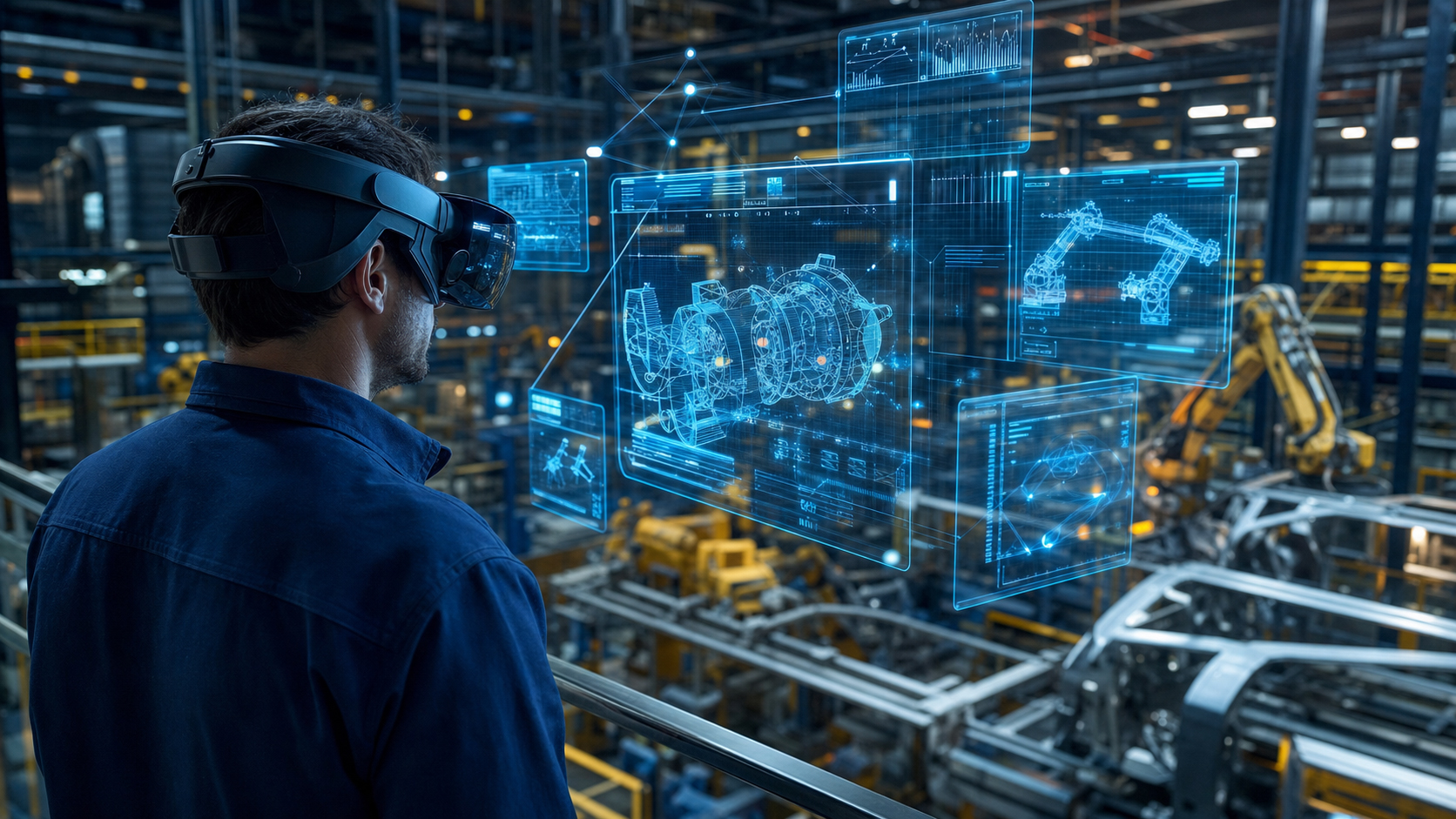
High-end VR vs. smart glasses: Which technology will truly prevail in the industry – Image: Xpert.Digital
Apple, Meta and Pimax: Who will win the battle for the most important human-machine interface?
The 600 billion market: How Extended Reality is changing our working world forever
Toying was yesterday: This is how industrial companies are saving millions with virtual reality today
Extended Reality (XR) – the umbrella term for Virtual and Augmented Reality – has long since moved beyond the niche of the gaming industry. Today, we stand at the beginning of a new era of industrial value creation, in which digital data and physical work environments seamlessly merge. Whether it's remote maintenance of equipment on the other side of the globe, millimeter-precise order picking in vast logistics centers, or risk-free training on complex machinery: smart glasses and VR headsets are increasingly becoming the new standard tool. But while the technology is advancing rapidly and the global market is approaching tens of billions of dollars, many companies are still struggling with practical implementation. Where does XR truly deliver measurable added value? Which hardware – from wireless smart glasses to wired high-end devices from manufacturers like Pimax – is suitable for which application? And why, despite its enormous potential, are too many projects still stuck in the pilot phase? This article sheds light on the maturation process of an often underestimated technology, separates the hype from reality, and shows how spatial computing defines the human-machine interface of the future.
Related to this:

Human-machine interfaces: How virtual and augmented reality are changing industry and services
Interfaces of the future – or: Why smart glasses are replacing the clipboard in the factory
Virtual reality and augmented reality are blurring the lines between the real and digital worlds. What was long considered a marketing gimmick or consumer novelty is increasingly establishing itself as a practical tool in industry, service, and IT operations. The interface between humans and machines is no longer an external device we look at, but rather it merges with our perception of the environment – with far-reaching consequences for productivity, education, and the organization of work itself.
From toy to production tool: The maturation process of an underestimated technology
Augmented Reality defines a new human-machine interface by overlaying reality with digital information in real time. Unlike Virtual Reality, the physical world remains the primary interaction level – virtual elements merely function as a context-related extension of the user's field of vision. Thus, both technologies together, under the umbrella term Extended Reality (XR), represent a conceptual paradigm shift: the interface is no longer a separate device to be operated, but rather becomes part of the work environment itself.
The global XR market has developed remarkable momentum in recent years. Market researchers estimate the value of the AR/VR segment at approximately $44 billion to $53 billion for 2024, depending on the definition used. Despite differing methodologies, forecasts for the next ten years agree on one point: growth will be structural and sustained. Market values between $100 billion and $300 billion are projected for 2035, with a compound annual growth rate (CAGR) of between 13 and 19 percent. The broader XR market, which also includes mixed reality applications and software ecosystems, has already been estimated at $253 billion for 2025 – with an expected increase to over $2 trillion by 2034.
Summarizing the strategic dimension of these figures, one thing becomes clear: XR is not developing into a niche technology, but rather into a fundamental infrastructure element of the digitized industry. McKinsey estimates that the global XR market will reach a volume of over US$600 billion by 2030. The European Commission has identified XR as a strategic cross-cutting field that will reach its full potential through synergies with 5G/6G, artificial intelligence, and edge computing. Around 90 percent of all companies working on XR in Europe are SMEs – an indicator that innovation is being driven in a decentralized and sector-specific manner.
Between hype and reality: What companies actually use
In Germany, a clear, albeit ambivalent, picture is emerging. According to a representative Bitkom survey of 605 companies with 20 or more employees conducted in 2024, one in five companies is already using VR or AR applications. A further 36 percent are planning or discussing the use of VR, while for AR, the figure is 29 percent. The fundamental importance of these technologies is widely recognized: 57 percent of companies believe that virtual reality is of great importance to their own competitiveness, compared to 48 percent for AR.
The distribution of actual application areas is interesting. For augmented reality, training and further education are the most common use case at 64 percent, followed by design and planning at 60 percent. Remote maintenance accounts for 22 percent, and step-by-step instructions for 19 percent. For virtual reality, design and planning clearly dominate at 74 percent, followed by training and further education at 61 percent and collaboration at 46 percent. This ranking reflects a fundamental insight: companies initially deploy XR where the return on investment is most directly measurable – in training and design.
Despite this growing penetration, a discrepancy remains between recognized potential and actual integration. Many companies are stuck in the pilot phase and fail to transform isolated XR experiments into scalable applications integrated into existing workflows. In this context, PwC and Bitkom emphasize that the greatest benefits arise when XR is operated not as a special project, but as an embedded tool in established process chains – so-called use-case-driven XR.
The spectrum of possibilities: Key areas of industrial XR deployment
Maintenance, repair and remote support as a core economic application area
One of the most economically compelling applications for AR lies in industrial maintenance and repair. According to an analysis by the research firm Senseye, industrial companies lose an estimated 3.3 million production hours per year due to unplanned machine downtime. Every hour of downtime costs significant sums – depending on the industry and plant size – and any reduction in this downtime through faster diagnosis and repair directly impacts the bottom line.
Augmented reality fundamentally changes this process by bringing the expert to the location of the problem – without requiring them to physically travel. A maintenance technician on-site puts on AR glasses, connects to a remote expert, and transmits their viewpoint in real time. The expert can then overlay markers, instructions, and wiring diagrams onto the technician's view, annotate faults, and demonstrate specific procedures. This visual support far surpasses simply describing a problem verbally – making diagnostics more precise, faster, and safer.
In practice, the petrochemical company Sibur has systematically expanded its use of AR in remote maintenance, demonstrably saving millions in costs. The mechanical engineering firm Schneeberger AG uses AR headsets as a direct channel to its 24-hour hotline, enabling customers to resolve machine downtimes independently and with expert guidance. Bosch employs AR glasses for training in complex calibration procedures for driver assistance systems, where the wider field of view of modern headsets—compared to previous devices—is crucial for achieving the necessary level of detail.
Education and qualifications: Learning faster, but not necessarily better understanding
Virtual reality enables the simulation of dangerous, costly, or difficult-to-access work environments without incurring real-world risks. Heavy machinery operation, emergency scenarios, high-voltage systems, or chemical laboratory processes can be practiced in a safe, repeatable environment. The results are measurable: In a controlled industrial trial, employees guided by AR glasses required almost 44 percent less time for a complex task than a control group – and for a simpler task, the time advantage was still 15 percent.
AR training programs in pharmaceutical production environments show efficiency gains of up to 25 percent when training takes place directly at the machine – even under GMP-regulated cleanroom conditions, which were long considered a hurdle for digital assistance systems. Amlogy, a company specializing in AR training, reports a reduction in errors of up to 90 percent in trained processes and a 34 percent reduction in repair times.
However, there is an important nuance, which a critical study from the Technical University of Munich impressively demonstrates: Employees trained using AR glasses can perform tasks faster – but they internalize them less deeply. When repeating a complex task without aids, these employees were 23 percent slower than colleagues trained using traditional methods and contributed less to process improvement. AR thus creates a kind of cognitive dependency in certain scenarios: The glasses take over the orientation function that the brain has to develop itself in traditional training. This is not a rejection of AR as a training tool – it is a call for thoughtful use that balances productivity goals with innovation potential.
Logistics and intralogistics: Data glasses as a picking assistant
In the warehousing and logistics sector, AR has proven its worth far beyond the pilot phase. Pick-by-vision – order picking using AR smart glasses – is now a productive standard in leading logistics centers. The glasses show the picker directly in their field of vision the exact storage location, the product they are looking for, the required quantity, and the optimal route – without the need to handle a paper form or scanner.
The efficiency gains are documented and substantial. At the Schnellecke plant in Wolfsburg, the use of AR glasses resulted in a 20 percent acceleration of processes while simultaneously achieving a near-complete reduction in picking errors. The logistics center, which has been using the Almer Arc 2 AR glasses since June 2024 in one of Switzerland's largest warehouses, has recorded both higher picking speeds and a significantly lower error rate. Vision Picking goes even further, combining AR with artificial intelligence and machine learning to adaptively optimize picking processes and guide employees in real time.
In addition to head-mounted systems, projection-based AR is also gaining importance: Digital information is projected directly onto the warehouse environment – onto shelves, transport containers, or worktops – without the employee having to wear a device at all. This ergonomic concept eliminates acceptance problems that head-mounted displays still have in some workforces.
Design, planning and digital twin: XR as an engineering tool
In product development and plant design, VR enables complete immersion in three-dimensional design models before even a prototype is built. Entire production lines can be virtually tested, collision checked, and optimized. This saves iteration costs, shortens time-to-market, and reduces planning errors that would otherwise only become apparent during physical construction.
The combination of VR with the concept of the digital twin is gaining particular strategic importance. A digital twin is a virtual representation of a physical system or process, fed in real time with sensor data from the real world. Research institutions like ARENA2036 in Stuttgart are experimenting with live connections between real robotic systems and their digital twins via platforms such as NVIDIA Omniverse. The result: Maintenance scenarios, collisions, and process optimizations can be simulated realistically without interfering with ongoing operations. The European Commission, through its Horizon Europe program, is funding projects that develop AR/VR-based digital twins for new research infrastructures and open up industrial applications in high-temperature, radiation, or pressure environments.
🎯🏢🥽 Enterprise XR Solution Hub for B2B projects – from digital twins to customized extended reality solutions

Enterprise XR Solution Hub for B2B projects – from digital twins to customized mixed reality solutions – Image: Xpert.Digital
Xpert.Digital acts as a holistic Enterprise XR Solution Hub, seamlessly integrating high-performance Pimax hardware into industrial B2B workflows. From digital twin analysis in engineering ("top floor") to immersive training on the production floor ("shop floor"), companies receive a customized, comprehensive solution including strategic consulting and support.
More information here:
Wired or wireless? An XR decision that is changing industrial processes
Hardware at the intersection: Wired versus wireless XR systems
The fundamental technical decision and its consequences
The choice between wired and wireless XR devices is not merely a matter of practical convenience, but a fundamental technical system decision that directly determines suitability for specific industrial applications. Wired PC VR headsets access the full computing and graphics power of a workstation via the cable – the video signal and power supply are transmitted, and the headset itself does not need to provide its own processing capacity. Standalone devices, on the other hand, contain the processor, battery, and all sensors – which allows for freedom of movement but structurally limits the available computing power.
Wired systems consistently deliver higher resolutions, more pixels per degree, lower latency without transmission losses, and the ability to render CAD-intensive or physically complex visualizations that a mobile chip cannot handle, all with the same hardware generation. Wireless systems are catching up with the increasing processing power of their integrated chips, but still lag behind what a wired PC can offer, especially for professional high-resolution applications. Furthermore, there's the issue of latency: wireless streaming of high-resolution image data requires compression, and any compression introduces latency—which is directly perceptible in a VR context and contributes to motion sickness.
For applications involving free body movement—order picking in a warehouse, remote maintenance of a machine, training in a production environment—wireless operation is not optional, but mandatory. Here, slim, lightweight AR smart glasses like the Almer Arc 2 or standalone mixed reality systems, certified to industrial safety standards, dominate. For stationary, high-performance applications in design, simulation, flight training, or scientific visualization, however, a wired PC VR solution is the technically superior choice.
Related to this:

Wired high-end VR: Why Pimax represents a category of its own
In the segment of wired PC VR systems, Pimax occupies a unique, technologically leading position. While competitors like the Valve Index or HTC Vive Pro 2 offer solid all-round performance, Pimax has positioned itself as a manufacturer that consciously explores the limits of what is technically possible – with a focus on maximum field of view, highest resolution, and professional simulation requirements.
The older Pimax 5K XR, with its two OLED panels and a combined resolution of 5120 × 1440 pixels, as well as a 200-degree field of view, delivers a display that comes significantly closer to the natural human field of vision than conventional headsets. It connects directly to the PC via DisplayPort and USB-C and relies entirely on external processing power – which is not a disadvantage, but rather a strength for stationary applications.
Pimax unveiled its flagship Crystal Super at CES 2025, marking a technological leap forward. With a resolution of 3840 x 3840 pixels per eye – a total of approximately 29 million pixels – it's the first VR headset to deliver retina resolution to both eyes, enabling virtually pixel-free vision. The aspherical glass lenses achieve 57 pixels per degree (PPD) with a horizontal field of view exceeding 120 degrees and a brightness of 280 nits – crucial for professional visualization tasks requiring the detection of fine details. Pimax has equipped the Crystal Super with a modular design: the optical units – including a QLED and a micro-OLED module – can be swapped out in seconds, allowing for diverse application scenarios with a single headset.
The Crystal Light is the more accessible model in the Crystal line, and with 2880 × 2880 pixels per eye, aspherical glass lenses, and 35 PPD, it remains one of the sharpest PC VR headsets on the market. It supports refresh rates of 72, 90, and 120 Hz, offers inside-out tracking with optional SteamVR Lighthouse compatibility, and its excellent price-performance ratio appeals to a broad user base – from flight simulation enthusiasts to professional CAD users and designers.
Announced for 2025, the Dream Air family expands Pimax's portfolio with a focus on weight reduction. The Dream Air model weighs under 170 grams, features Sony Micro OLED panels with 3840 x 3552 pixels per eye, and offers a 110-degree horizontal field of view. It is aimed at professional users seeking the highest image quality in a compact, travel-friendly system. The most affordable model, the Dream Air SE, weighs under 140 grams and offers 6DoF tracking via SLAM, Tobii eye tracking, foveated rendering, and spatial audio – all at a starting price of around €800 (net).
For industrial simulation – flight simulators, driving simulations, virtual prototype testing, robot programming in the planning phase – Pimax's wired PC VR delivers a level of visual quality that is simply unattainable with standalone systems. Wired operation here is not a step backward, but a deliberate systemic advantage: no battery issues, no compression losses, no heat generation from an integrated chip – and unlimited computing power from the connected workstation.
Wireless systems: Freedom of movement as the key to acceptance
For all applications where user mobility is central to the task, wireless systems are not only more convenient but functionally essential. Order pickers in a logistics center, maintenance technicians on a complex system, instructors and trainees in manufacturing – they all need both hands free and a full range of motion.
The market for wireless standalone headsets has consolidated in the consumer sector with Meta Quest 3 as the dominant platform – a device that is also rapidly gaining importance in business applications. In the industrial AR sector, slim, monocular or binocular smart glasses like the Almer Arc 2 are particularly relevant, as they maximize wearing comfort while maintaining the classic smart glasses form factor, which generates fewer acceptance issues in the workplace than full headsets.
Microsoft HoloLens 2 was long the benchmark platform for industrial mixed reality – offering true optical see-through, fully standalone operation, and a comprehensive ecosystem of enterprise applications. The end of production in 2024, with software support ending in 2027, leaves a significant gap. Microsoft hasn't announced a direct successor and is instead relying on a collaboration with Meta, where Quest headsets will function as a virtual Windows desktop – a strategic shift that demonstrates how the lines between consumer and enterprise XR are blurring.
The economic logic: ROI, scaling, and the limits of adoption
Where XR creates measurable added value
The economic benefits of XR solutions can be argued along clearly measurable lines. In the area of remote maintenance and support, AR reduces travel costs, downtime, and the need to send highly specialized personnel to remote locations. In the area of training, VR accelerates skills acquisition—companies using VR training report faster onboarding, more consistent training quality, and the ability to practice high-risk scenarios without real danger. In the area of design and planning, virtual prototype testing reduces costly physical iterations.
The payback period is closely linked to the depth of application: Pilot projects without systemic integration into ERP, MES, or maintenance management systems rarely deliver the hoped-for return. Real economic leverage arises when XR is consistently embedded in processes – when AR smart glasses communicate directly with the warehouse management system, when the remote support platform is integrated into the ticketing system, and when VR training simulations are linked to real machine data.
Obstacles and critical weaknesses
Despite its proven benefits, structural barriers slow wider adoption. Investment costs in content production, user interface development, and hardware procurement pose a significant hurdle, especially for small and medium-sized enterprises (SMEs). There is a shortage of XR-specific specialists – developers with experience in Unity, Unreal Engine, or three-dimensional interaction design are scarce and expensive.
Furthermore, there are legal uncertainties: Biometric data generated through eye-tracking or facial recognition falls under the General Data Protection Regulation (GDPR) and poses compliance issues for companies that have not yet been fully resolved. Platform dependencies—for example, between Apple Vision Pro, MetaQuest, and the now-defunct Microsoft ecosystem—complicate long-term investment decisions. And finally, a technical problem remains that even enthusiastic users are familiar with: Battery life, weight, and comfort during extended use are still in need of improvement for many devices.
Convergence and Outlook: Spatial Computing as the Next Stage
The term spatial computing describes a stage of development in which XR no longer functions as an optional tool, but as the primary human-machine interface – in which digital and physical objects exist and interact equally in space. Despite criticism of its price, Apple's Vision Pro has set a benchmark for this type of interaction, influencing the industry as a whole. Meta pursues a similar vision with its Project Orion roadmap, which aims for ultra-lightweight eyewear designs.
The technological convergences driving this transformation are already underway: 5G reduces latency for cloud-rendered XR content, decoupling performance requirements from the end device; edge computing brings computing power closer to the tools; AI algorithms enable real-time object recognition, semantic understanding of the work environment, and adaptive information display. The Future Institute identifies extended reality as part of a broader megatrend—the blurring of the lines between physical and digital reality.
For industrial practice, this means an accelerated convergence of AR/VR with the Industrial Internet of Things (IIoT). Machines deliver real-time data, digital twins process this data, and AR interfaces visualize the results directly in the technician's field of vision. Smart glasses become the multifunctional terminal of the Industry 4.0 worker: maintenance instructions, circuit diagrams, remote expertise, process data, quality control – all within view, contextually relevant, interactive, and available in real time.
A nuanced conclusion: A technology in a critical maturity phase
XR is no longer a technology of the future – it is a technology of the present, currently in the critical phase between pilot project and systemic penetration. The economic logic is clear, technological development is rapid, and market data demonstrates structurally robust growth across all forecast scenarios.
The distinction between wired and wireless systems is not a question of technological advancement, but rather of user requirements: Wired PC VR, especially Pimax, delivers a level of visual quality and processing power for high-performance stationary applications that wireless systems, by their very nature, cannot achieve. Wireless systems – from slim industrial smart glasses to standalone headsets – on the other hand, open up the vast majority of mobile work environments where freedom of movement and user acceptance are paramount.
The real challenge for the coming years lies not in the technological development itself, but in its consistent integration: into the processes, systems, and mindsets of those who work daily on machines, in warehouses, and on service calls. Technology that isn't used creates no value – and the best smart glasses are of little use if the company doesn't know what it actually needs them for.
Your global marketing and business development partner
☑️ Our business language is English or German
☑️ NEW: Correspondence in your native language!

Konrad Wolfenstein
I and my team are happy to be available to you as your personal advisor.
You can contact me by filling out the contact form here [email protected]:or simply call me at +49 7348 4088 965. My email address is
I'm looking forward to our joint project.
☑️ SME support in strategy, consulting, planning and implementation
☑️ Creation or realignment of the digital strategy and digitization
☑️ Expansion and optimization of international sales processes
☑️ Global & Digital B2B trading platforms
☑️ Pioneer Business Development / Marketing / PR / Trade Fairs
🎯🎯🎯 Data-driven B2B industry hub as a quasi-in-house solution

The quasi-in-house solution: How Xpert.Digital closes operational gaps in B2B marketing and sales – Smart Content-Driven Business - Image: Xpert.Digital
Xpert.Digital is a data-driven B2B industry hub led by Konrad Wolfenstein . The company acts as an external, quasi-in-house solution for industrial partners, closing operational gaps in marketing, content, and sales – without requiring additional resources on the client side.
More information here:









