
14 bankruptcies in one year? AI, robots and 1,300 light formulas: How China is secretly revolutionizing vertical farming
Xpert Pre-Release

Available in 27 languages 📢
Prefer Xpert.Digital on GoogleⓘPublished on: July 6, 2026 / Updated on: July 6, 2026 – Author: Konrad Wolfenstein
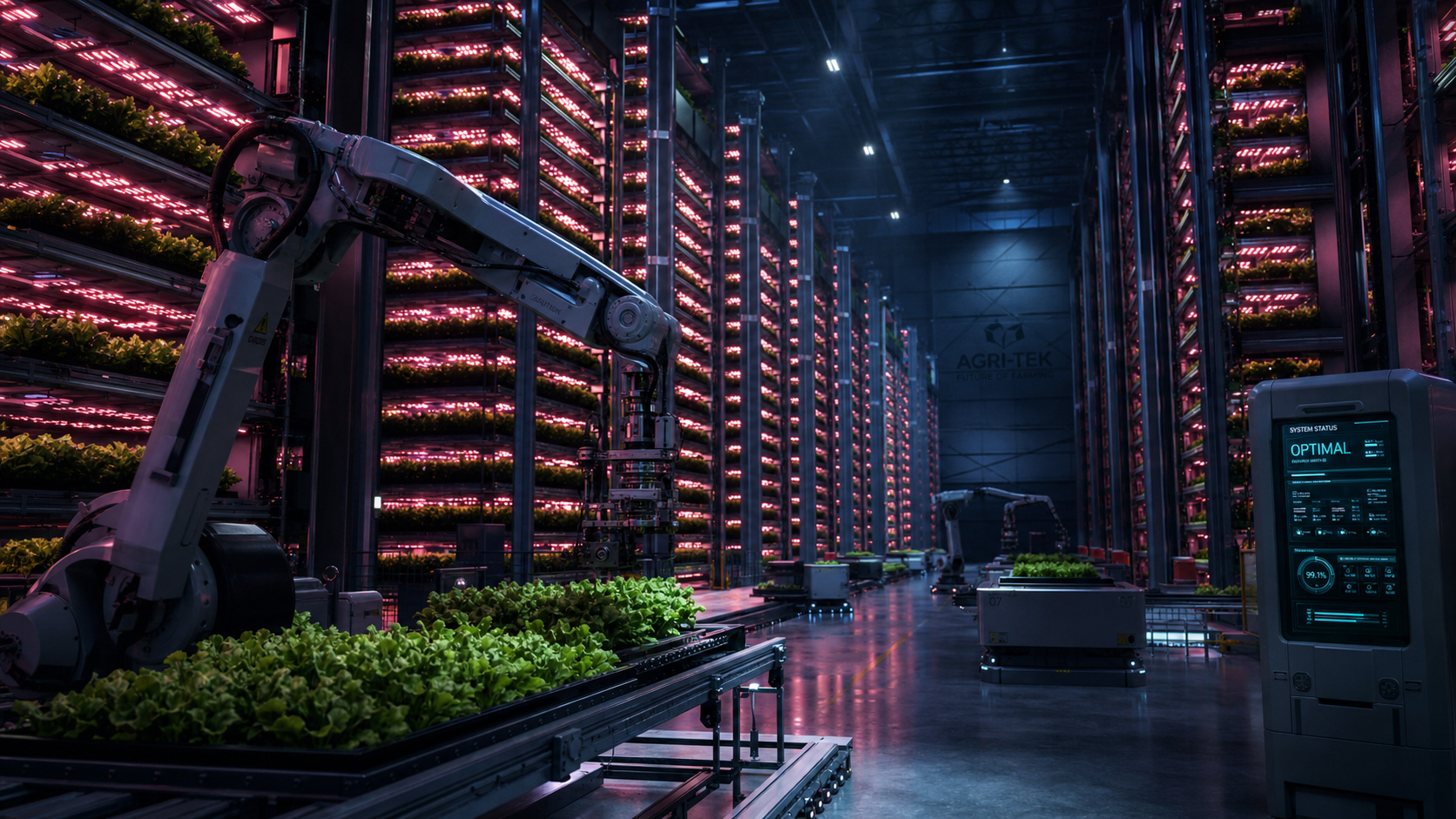
14 bankruptcies in one year? AI, robots and 1,300 light formulas: How China is secretly revolutionizing vertical farming – Image: Xpert.Digital
From a bottomless pit to a lucrative niche: The survival strategy of the vertical farming pioneers
The salad illusion: Why so many mega-farms failed – and what the industry has learned from it
Wheat for 200 euros? The enormous cost paradox of indoor farming
Vertical farming was long considered the undisputed future of global food supply – until an unprecedented wave of bankruptcies brutally brought the industry back down to earth. Billions in investor money went up in smoke because startups ignored the fundamental laws of agricultural economics, became bogged down in expensive prestige projects, and foundered on exorbitant energy costs. But this blanket condemnation of controlled indoor agriculture is premature. While Western pioneers stumbled, new, AI-driven approaches – particularly from Asia – are proving that the concept works when implemented correctly. Far removed from utopian promises of underground wheat fields, a quiet revolution is taking shape: those who focus on high-value crops, strict cost control, and smart automation are suddenly turning a profit. This analysis illuminates the anatomy of a spectacular failure and reveals why the true successes of this future-oriented industry are only just beginning.
Vertical Farming: Why the technology is far from over despite spectacular failures
The story of vertical farming reads like a Greek tragedy: promises worth billions, enthusiastic investors, dazzling technology trade shows – and then a crash that shook the entire industry. In 2025 alone, 14 bankruptcies were recorded in the controlled environment agriculture (CEA) sector, with vertical farming companies accounting for the largest share of closures. The question that has been asked ever since is not whether vertical farming failed, but why so many of the best-funded companies failed – and what those few survivors are doing right who are actually turning a profit today.
The Billion Dollar Graveyard: Anatomy of a Spectacular Failure
The numbers are sobering. Bowery Farming, once valued at $2.3 billion and having raised more than $700 million in venture capital, ceased operations in November 2024. Plenty Unlimited, the Silicon Valley company with investors like Jeff Bezos and Eric Schmidt, had raised approximately $1.19 billion in capital and filed for bankruptcy in March 2025. AeroFarms, an industry pioneer that had raised more than $300 million, went through Chapter 11 proceedings in 2023. AppHarvest, which also raised over $700 million and went public in 2021 with a valuation of $1 billion, followed suit in 2023. The combined historical capital of all companies that closed in 2025 was estimated to exceed $1.37 billion.
What lies behind these figures is not a technological failure in the strictest sense, but a fundamental business miscalculation. Companies treated agriculture like software: they invested heavily in robotics, AI monitoring, conveyor belts, and harvesting automation before they had proven that the business model even worked. Automation only creates value if it reduces labor costs, increases consistency, or enables scaling—not because it looks impressive. The fatal error was chronically underestimating energy costs. Monthly energy bills for small and medium-sized operations ranged from $10,000 to $20,000, with lighting, HVAC (heating, ventilation, and air conditioning), pumps, and control systems running around the clock. One study of hydroponic lettuce cultivation in Arizona found energy consumption 82 times higher than that of conventional lettuce production. As long as this energy comes from fossil sources, the vertical farm produces up to 16 times higher CO₂ emissions than open-field farming.
The second structural flaw was premature scaling. AppHarvest built multiple mega-greenhouses before a single location had proven profitable. This led to a catastrophic capital outflow. By the end of 2026, of the 23 companies that had signed a joint vertical farming manifesto in the fall of 2022, less than half were still operating. A New York Times report from March 2026 summed it up succinctly: Vertical farming companies that had flourished a decade earlier had largely withered.
The survivors: What the winners do differently
Amidst the wreckage, there are still companies that have not only survived but are actually operating profitably. AeroFarms, after its Chapter 11 bankruptcy proceedings with new leadership and targeted refinancing, achieved profits under its new CEO Molly Montgomery in the last two quarters of the reporting period and supplied retailers such as Whole Foods and Costco with microgreens. The company had focused on a single core product, optimized a single facility, and only then scaled. 80 Acres Farms, which claims to be the largest vertical farm in the US, nearly doubled its capacity at its Kentucky location in 2023 and acquired three more indoor farms from its bankrupt competitor Kalera in 2026. Founder Tisha Livingston described this approach as learning from what others had done wrong: prove first, then expand.
The survival principle, therefore, is: lean infrastructure instead of expensive prestige facilities, a focus on a few high-value crops with proven consumer willingness to pay, strict cost discipline regarding energy, and a gradual, fundamentally sound growth path. Vertical Harvest, operated by Nona Yehia in Wyoming, deliberately targets schools, hospitals, and local food retailers – market segments with predictable demand and lower price sensitivity.
The structural paradox: Convincing benefits, insoluble cost structure?
The ecological benefits of vertical farming are real and measurable. Nordic Harvest, then Europe's largest indoor farm in Denmark, required 95 percent less water than conventional agriculture thanks to its recycling systems. This cultivation method eliminates the need for pesticides, is independent of weather conditions, minimizes the release of pollutants into soil and groundwater, and, according to studies, enables yields of lettuce, herbs, and leafy greens up to ten times higher. Vertical farms can indeed be operated cost-effectively in densely populated urban areas with high land prices – such as Hong Kong or New York. Proponents argue that eliminating long transport routes and removing intermediaries can save up to 60 percent of costs.
But the paradox remains: as long as the electricity comes from fossil fuels, the environmental benefit is negated. And the operating costs for a high-tech facility in North America and Europe are at least $300 per square meter, primarily for lighting and climate control. Cultivating staple foods like wheat under these conditions is economically absurd: the experimentally determined price for wheat produced in a closed space was €200 per kilogram. A ten-story vertical farm on one hectare could theoretically produce between 700 and 1,940 tons of wheat—220 to 600 times the global average yield—but at prices that would never be competitive on the world market. Structurally, vertical farming is almost exclusively suitable for water-rich fruits, leafy plants, and herbs, which, while important for a balanced diet, provide very few calories.
Where progress has actually taken place
Despite the setbacks, the industry has made substantial technological progress in several areas, which will lay the foundation for long-term economic viability.
Light recipes and spectral optimization
Perhaps the most significant breakthrough of recent years is the development of precise light formulas. Researchers at the Institute of Urban Agriculture at the Chinese Academy of Agricultural Sciences in Chengdu succeeded in developing over 1,300 light formulas for 72 plant species, varying according to spectrum, intensity, and duration. Their 20-story, fully automated facility, occupying just 100 square meters, produces 50 tons of lettuce annually, with a growing cycle of only 30 to 35 days—half the length of open-field cultivation. The yield per unit area is up to 120 times higher than in conventional agriculture. The principle behind this breakthrough: not all light is created equal. Plants respond to specific wavelengths during defined growth phases, and this knowledge allows not only for more precise control but also for significant energy savings. Research at TH Cologne shows that interrupting the light supply with millisecond precision can save 20 to 30 percent of energy.
AI-powered lighting and growth control
The "Smart Plant" research project at TH Cologne is developing LED modules with integrated cameras and sensors that use AI algorithms to automatically monitor plant growth and development. Machine learning models are trained with growth data to classify plant growth stages and derive the optimal lighting from this data. This system also enables data-driven decisions in temperature and nutrient management. The project is funded by the Federal Ministry for Economic Affairs and Climate Action with approximately €215,000 – an indication that the public sector has recognized the potential of this technology.
Fully automated, unmanned production
The complete automation of the production process – from sowing and transplanting to harvesting and packaging – is already a reality in China. The plant in Chengdu operates without human labor on the production floor, utilizing robots for all core tasks and ensuring the highest food safety through sterilized, contaminant-free conditions. This development opens a crucial chapter that Western companies have never been able to achieve: true scalability without proportionally increasing labor costs.
Digital twins for virtual operational optimization
The integration of digital twins into vertical farming systems allows cultivation parameters to be simulated and optimized in a virtual environment before changes are implemented in the actual system. Sensor data from IoT networks is fed into the digital model in real time, which then makes predictions about plant growth, resource consumption, and potential problems. Fraunhofer IME is researching computer vision-based in-process evaluation systems for data-driven monitoring of plant development in this area.
Expansion of the range of cultivated plants
While early vertical farming operations almost exclusively cultivated lettuce and herbs, the range has since expanded. The facility in Chengdu cultivates over 300 plant varieties, including root and leafy vegetables, melons, fruits, and medicinal herbs. Strawberries in the facility achieve an annual yield of 1,500 grams per plant, compared to about 300 grams in open-field cultivation. This opens up new economic opportunities beyond the high-volume, low-margin lettuce market.
LTW Intralogistics Solutions

LTW Intralogistics – Engineers of Flow - Image: LTW Intralogistics GmbH
LTW offers its customers not individual components, but integrated complete solutions. Consulting, planning, mechanical and electrotechnical components, control and automation technology, as well as software and service – everything is networked and precisely coordinated.
In-house production of key components is particularly advantageous. This allows for optimal control of quality, supply chains, and interfaces.
LTW stands for reliability, transparency, and collaborative partnership. Loyalty and honesty are firmly anchored in the company's philosophy – a handshake still means something here.
Related to this:
How AI is reinventing vertical farming: The industry revolution no one saw coming
New potential through AI: Where the real disruption is still to come
Artificial intelligence is not changing vertical farming gradually, but in its fundamental structure. The crucial question is in which specific application areas AI unlocks potential that was previously either impossible or too expensive.
Predictive yield modeling and resource planning
AI algorithms can analyze historical growth data, identify seasonal patterns, and predict the effects of parameter changes. This enables an unprecedented level of planning certainty: food retailers can calculate with precise delivery dates and consistent quality. By utilizing growth patterns, climate requirements, and resource consumption data, AI algorithms dynamically adjust the indoor climate to create ideal conditions for plant cultivation. This leads to measurable resource efficiency in water, lighting, and fertilizers.
AI-supported disease and pest detection
Integrated camera systems, combined with trained image processing algorithms, enable the early detection of plant diseases and pest infestations. The advantage over conventional agriculture is considerable: In a controlled environment, where crop density is manageable and camera coverage is high, AI models can be equipped with precise training datasets. Early intervention minimizes crop losses and replaces the already limited use of pesticides with targeted measures.
Generative AI for growth protocol development
A largely unexplored area is the use of generative AI for the automated development and improvement of growth protocols. Until now, creating optimal light, nutrient, and temperature recipes required years of empirical research. Generative models can potentially suggest new combinations, systematically test and evaluate them—at a speed that human research teams cannot achieve. The institute in Chengdu has demonstrated, with 1,300 light formulas, what is possible when this database is continuously expanded through AI.
Automated breeding acceleration
Perhaps one of the most transformative potentials lies in seed development. The facility in Chengdu is already using its controlled conditions as a breeding accelerator: traditionally, developing a new grain variety takes 8 to 12 years; in the vertical farm, this cycle is shortened to 1 to 1.5 years. AI can serve as a selection tool in this process, combining genetic data with growth data and optimizing crossbreeding strategies. This application extends far beyond food production and touches upon the strategic issue of long-term food security.
Pharmaceutical plants and high-value crops
One of the most promising, yet least discussed, niches is the cultivation of medicinal plants and other high-value specialty crops. The demand for plant-based raw materials for the pharmaceutical industry is constantly increasing, and quality control is crucial in this segment. Vertical farming offers structural advantages here: controlled concentrations of active ingredients, reproducible quality, no pesticide or heavy metal residues, and complete traceability. AI-supported process control can maximize the concentration of specific secondary plant compounds through targeted stress induction or precise nutrient adjustment. Cannabis for medicinal purposes is already being cultivated under controlled indoor conditions in several countries – proof of the concept's economic viability in regulated, high-priced segments.
Space travel and extreme environments
The connection between vertical farming and space research predates the current commercial wave. The German Aerospace Center (DLR) operates "Eden ISS," a closed greenhouse in Antarctica that supplies the Neumayer III research station. NASA and other space agencies are intensively researching the possibility of supplying crews on long-duration missions to the ISS, the Moon, or Mars using closed cultivation systems. The technological insights gained from this area—maximum resource efficiency, absolute process reliability, and minimal space requirements—flow directly back into commercial applications. In this context, omnidirectional control through AI is not a gimmick, but a necessity for survival.
The Chinese model: A systemic competitive advantage
The most striking shift in recent years is geographical. While Western companies have burned through billions, China has chosen a systematically different path. The Institute of Urban Agriculture at the Chinese Academy of Agricultural Sciences developed the world's first unmanned, ultra-high-rise vertical farming facility in Chengdu, which went into operation at the end of 2023. As early as 2022, during the FIFA World Cup in Qatar, the facility supplied 70 to 90 percent of the athletes' vegetable needs – from shipping containers in the middle of the desert.
The crucial difference lies not only in cheaper energy, but in the systemic research logic: Instead of investing capital in prestige plants, the Chinese team focused on solving the fundamental energy problem through light recipe research. The result—a database of over 1,300 light formulas—enabled an energy breakthrough that Western operators never achieved. Production costs now range between 10 and 15 yuan (US$1.50 to US$2.20) per kilogram of lettuce—still higher than with open-field cultivation, but at a level that outlines a commercial future in cities with high land prices. China plans to export the technology internationally, with interested parties from Saudi Arabia, Romania, and Uzbekistan.
Market forecasts: Between euphoria and realism
Market forecasts for vertical farming vary considerably depending on the research institute, reflecting the fundamental uncertainty surrounding its development trajectory. Conservative estimates predict a global market volume of US$22 billion by 2035, with a compound annual growth rate (CAGR) of 11.4 percent since 2025. More optimistic scenarios see the industry reaching US$58.83 billion by 2035, or even significantly higher. The North American market alone is projected to grow to US$11.4 billion by 2035, with a CAGR of 14.4 percent. Germany is identified as the third-largest national market, with a growth rate of 13.1 percent and strong institutional demand from supermarkets and restaurants.
These forecasts should be treated with considerable caution. They were largely prepared before the failure of the well-capitalized pioneering companies. Actual market developments show that growth will be more selective, slower, and more concentrated in specific geographic markets than even the most optimistic scenarios predict. The market valuation in 2025 ranges between US$7.4 and US$9 billion, depending on the definition used, with the Asia-Pacific region, driven by China, being the dominant growth driver.
Systemic challenges that AI alone cannot solve
An honest analysis must acknowledge that while artificial intelligence enables significant improvements, it is not a panacea for the industry's structural problems. Energy demand remains the central obstacle. As long as electricity is expensive and generated from fossil fuels, even AI-optimized lighting systems cannot fundamentally alter the basic cost structure. The real solution lies in combining AI efficiency gains with the transition to renewable energies. Vertical farming can only be sustainable if high energy consumption is reduced and renewable energy is used. Photovoltaics as a primary energy source for indoor farms is technically feasible and is already being tested in pilot projects.
The problem of market positioning also cannot be solved by technology: as long as only a few consumers actively seek out vertically grown products, the market will remain dependent on institutional buyers. Broader demand requires communication, trust, and a price point that can at least roughly compete with conventional products. In markets with very high land prices, water scarcity, or disrupted supply chains—such as desert regions, arctic zones, or densely populated megacities—this competition is already a reality and achievable.
The potential is real, but niche
Vertical farming will not replace global agriculture. This is a realization shared by researchers, economists, and increasingly, investors. The cultivation of staple foods like wheat, rice, or potatoes will remain economically unfeasible for the foreseeable future. However, what is possible, and where real potential exists, is a hybrid future: indoor farms that complement conventional cultivation of high-value crops, herbs, medicinal plants, and specific vegetable varieties—where quality, traceability, and consistency are more important than mere volume.
The lesson learned from the failure of the pioneering generation is not a rejection of the concept, but rather a correction of inflated expectations. Within this recalibrated framework, AI provides the technological foundation for a second generation of vertical farming companies: better informed, with more precise calculations, focused on genuine market niches, and with an energy concept that delivers on its sustainability promises. Those who are now investing – after the failure of the first wave – with a sober assessment of the remaining opportunities, face a more promising starting point than the euphoria-driven first generation. The revolution hasn't happened. But the quiet, gradual transformation has only just begun.
Consulting - Planning - Implementation

Konrad Wolfenstein
I would be happy to serve as your personal advisor.
You can contact me at wolfenstein∂xpert.digital or
Just call me on +49 7348 4088 965 .
Your intralogistics experts

Consulting, planning and implementation of complete solutions for high-bay warehouses and automated storage systems - Image: Xpert.Digital
More information here:










