
The architecture of cube storage systems and 1D, 2D, 3D and 4D shuttle technology – hidden costs and system failures
Xpert Pre-Release

Available in 27 languages 📢
Prefer Xpert.Digital on GoogleⓘPublished on: February 23, 2026 / Updated on: February 23, 2026 – Author: Konrad Wolfenstein
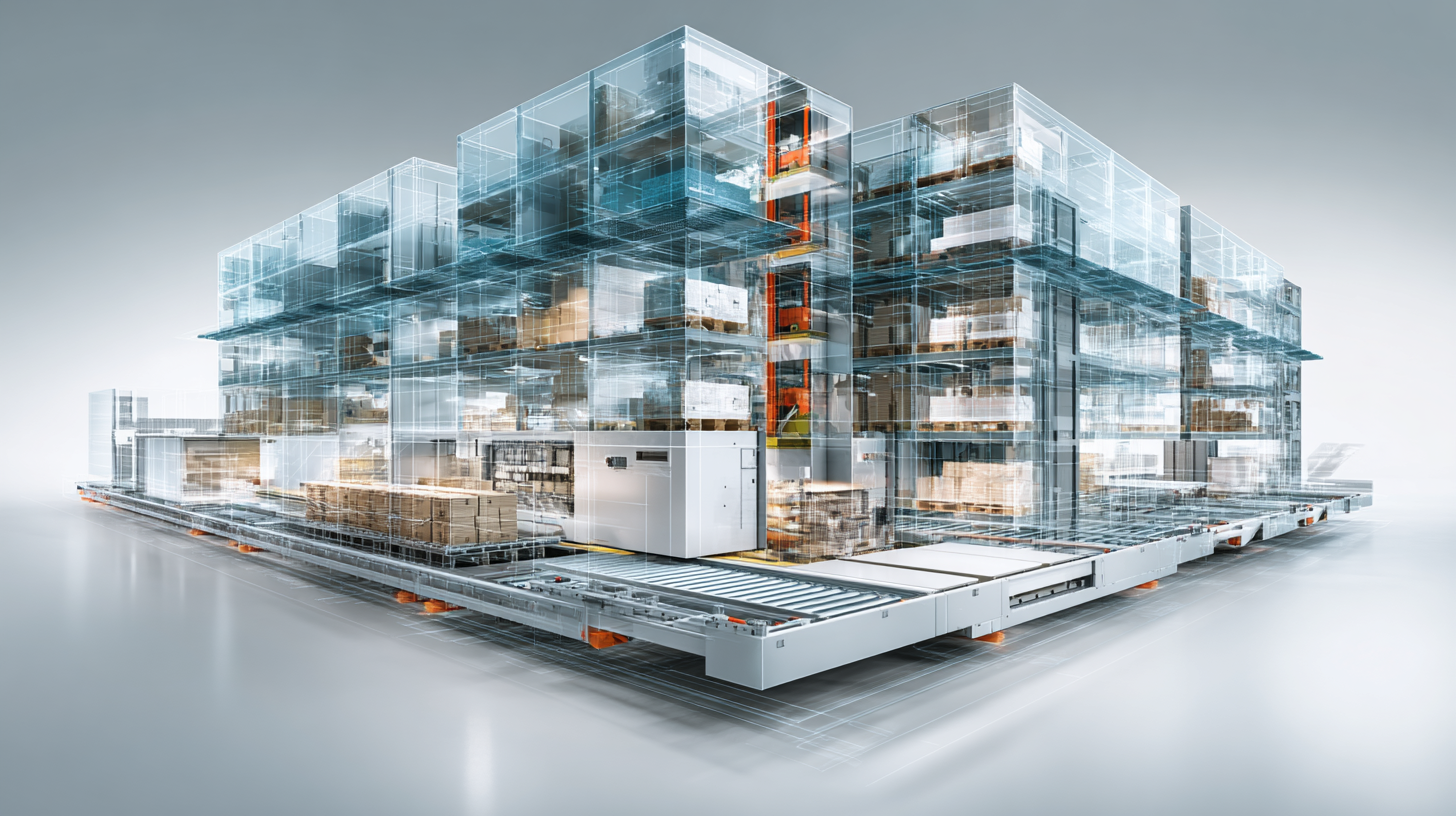
The architecture of cube storage systems and 1D, 2D, 3D and 4D shuttle technology – Hidden costs and system failures – Image: Xpert.Digital
From cubes to shuttles: The anatomy of modern warehouse automation in critical comparison
Under scrutiny: Hidden costs and system failures in warehouse automation: What you really need to pay attention to in warehouse automation
Exploding rents for logistics space, a chronic shortage of skilled workers, and the relentless pace of modern e-commerce are forcing companies to take action. Automated warehouse systems are no longer a technological luxury, but a necessity for survival. However, anyone looking to automate their warehouse today faces a highly complex market: Should they opt for the extreme space efficiency of a cube storage system? Or does the multidimensional flexibility of 1D to 4D shuttles offer the decisive competitive advantage? The answer to this question determines success or failure – because choosing the wrong system can burn through millions, while the right technology becomes a strategic powerhouse. This guide takes a detailed look at the leading automation technologies, exposes their weaknesses, compares their economic strengths, and shows which system is truly the best choice for which logistical challenge.
Why choosing the wrong storage system wastes millions and the right decision becomes a strategic competitive advantage
If the goal is to save maximum space and have average throughput requirements, a cube storage system is often chosen. If maximum speed and the ability to handle a large number of orders simultaneously are desired, the larger space requirement (due to the aisles) is usually accepted, and a shuttle system is selected.
Intralogistics is undergoing a period of tectonic shifts. Rising rents for logistics space, a chronic shortage of skilled workers, and the relentless dynamics of e-commerce are forcing companies to fundamentally rethink their warehousing processes. At the heart of this transformation are automated storage systems, which have evolved over the past two decades from specialized niche solutions to indispensable infrastructure elements of modern supply chains. This has resulted in a technological spectrum ranging from high-density cube storage systems and rail-guided shuttle solutions in one to four dimensions to fully autonomous warehouse robots.
The question of which system is the right one cannot be answered in general terms. A company's individual requirements regarding product range, throughput, available space, and investment budget significantly determine which technology offers the greatest economic benefit. This article subjects the various system categories to a detailed techno-economic analysis, highlights their respective strengths and weaknesses, and places them within the broader context of warehouse automation.
Cube Storage: When the cube conquers the room
The principle of maximum compression
Cube storage systems follow a radically simple basic principle: containers are stacked on top of and next to each other without gaps in an aluminum grid, thus utilizing almost all available space in a warehouse. Robots move along rails on this grid, using a cable and gripping mechanism to remove containers from the stack and deliver them to picking workstations. The principle follows the goods-to-person approach, where the goods are brought to the people, rather than the person going to the goods.
AutoStore, the Norwegian company that developed this technology in the early 2000s, is considered the founder and remains the market leader in the cube storage category. With over 1,600 systems installed worldwide and more than 1,600 patents, AutoStore has created a kind of generic standard, much like Tempo is synonymous with facial tissues in German-speaking countries. The system consists of just five core components: the bins, the aluminum grid, the robots, the workstations (ports), and the control software.
Economic strengths and systemic limitations
The outstanding strength of cube storage systems lies in their space density. AutoStore can increase storage capacity up to four times compared to a manual warehouse. Since no aisles are required between shelves, a significant portion of the unused space lost to aisles and access areas in conventional warehouses is eliminated. This makes cube storage particularly attractive in urban areas or existing buildings where logistics space is scarce and expensive. Rental prices for logistics space rose by almost ten percent in 2023 alone, underscoring the economic importance of high space efficiency.
AutoStore boasts a remarkable 99.7 percent system availability, with a mean time between failures (MTBF) exceeding 3,000 hours. This high figure is achieved because each system module operates independently and can be serviced without requiring a system shutdown. If a robot fails, the remaining units take over its tasks while the faulty robot is being repaired. The software also performs self-diagnostic troubleshooting and implements preventative measures. Should a problem not be resolved automatically, the control software temporarily isolates the affected area, allowing the rest of the system to continue operating.
Nevertheless, cube storage systems are subject to specific limitations that must be critically evaluated when making an investment decision. Goods are limited to container dimensions of 600 by 400 millimeters, with a maximum payload of 35 kilograms. The overall height of the system is limited to approximately 5.4 to 6.3 meters. It is exclusively a small parts storage system; pallet handling is impossible due to its design. The picking performance per robot is only about 25 storage or retrieval operations per hour at a speed of 3.1 m/s, which means that up to 120 robots are required for an average throughput of 2,000 storage or retrieval operations per hour. Such a system can therefore be very expensive.
Another inherent disadvantage of the system is its high dependence on the ABC distribution of order items. Since containers are stacked on top of each other, the robots must first relocate containers at the top to access items at the bottom. Fast-moving items are therefore kept at the top of the stack, slow-moving items at the bottom. If demand patterns shift abruptly, for example due to seasonal fluctuations or unexpected trends, the system's performance can drop significantly. Furthermore, the system's sensitivity to uneven flooring is a concern, as the containers sit directly on the ground, which can necessitate costly floor remediation in brownfield projects.
The challengers in the cube storage market
With the expiration of several AutoStore patents, competition for alternatives has emerged. Jungheinrich launched the PowerCube, a competing product where robots operate below the grid and bins are held in place by the shelves, thus eliminating dependence on floor leveling. GridStore, a German company, positions itself as a further development of the AutoStore concept, offering a greater maximum height of 10.8 meters, a higher permissible bin weight of 50 kilograms, and the ability to operate bins of varying heights. Other providers, such as Attabotics from Canada and Intellistore from the Netherlands, are addressing the inherent weaknesses of the AutoStore concept with different approaches, particularly its sensitivity to ABC (abnormally high and low floor surfaces) and its dependence on floor quality.
The 1D Shuttle: The semi-automatic entry into bearing compaction
Operating principle and range of applications
The 1D shuttle system represents the first step in the automation hierarchy of shuttle technologies. It moves along a single horizontal axis, namely within the depth of a storage channel, and autonomously transports pallets within this channel. The term “1D” refers to this one-dimensional freedom of movement: The shuttle travels forwards and backwards, but requires the support of forklifts or stacker cranes for all other operations.
In practice, the 1D shuttle is positioned by a forklift at the entrance of a storage channel. There, it autonomously transports the pallet to the desired depth position within the channel. Human intervention remains necessary for loading and unloading the shuttle, as well as for its transfer between different channels and levels. Therefore, the 1D shuttle is considered a semi-automated system, marking the transition between manual warehousing and full automation.
Economic evaluation
The key advantage of the 1D shuttle lies in its comparatively low investment costs combined with a significant increase in storage density. Because the channels can be loaded multiple depths, the aisles required in conventional rack storage systems are eliminated, considerably increasing usable storage space. Pallet shuttle systems can utilize up to 95 percent of the storage area of a channel storage system. For companies with high storage density and low product variety that operate on the FIFO or LIFO principle, the 1D shuttle represents an economically attractive solution.
The system's limitations become apparent when a high SKU diversity or dynamic single-pallet access is required. Since only one item can typically be stored in each channel and access is sequential, the 1D shuttle is primarily suitable for reserve storage, buffer storage, or deep-freeze warehouses with a small number of high-volume items. In continuous operation, the 1D shuttle exhibits a moderate susceptibility to failure, with the most frequent causes being defective batteries and problems with pallet securing. Because only a few shuttle vehicles are usually in operation, the failure of a single unit can temporarily bring operations in the affected area to a complete standstill.
The 2D shuttle: Flexibility on one level
From the canal to the open space
The 2D shuttle expands freedom of movement by adding a second dimension. Depending on the system variant, the vehicle not only moves within a single channel but can also navigate laterally between different channels or positions on the same level. In pallet storage, this means that a 2D shuttle can autonomously travel through an aisle and access different storage channels, reducing or completely eliminating reliance on forklifts. In small parts logistics, 2D shuttles are level-bound vehicles that operate within a single racking level and are transferred between levels via lifts.
Gebhardt, for example, offers 2D pallet shuttles that demonstrate exceptional flexibility through their ability to scale performance and capacity independently. Adding further shuttles increases system performance without requiring additional aisles, as would be the case with conventional storage and retrieval machines. This allows for on-demand adaptation to changing storage requirements and makes 2D shuttles particularly suitable for operations with seasonal fluctuations.
Strengths and weaknesses in daily operations
The main strength of the 2D shuttle lies in its scalability combined with a compact design. System performance scales not directly with the number of aisles, but with the number of vehicles, meaning that high throughput rates are achievable even in small warehouses. For pallet warehouses with few SKUs but high volume, 2D shuttles offer an economically viable automation solution. In the small parts segment, 2D shuttle systems achieve a high number of movements per hour while simultaneously providing continuous, real-time inventory control.
The Achilles' heel of the 2D shuttle, especially for small parts, is the lift that transports the containers between levels. This quickly becomes the performance-limiting bottleneck of the entire system and represents a potential single point of failure. Furthermore, the high number of active components in a shuttle warehouse generates a statistically higher probability of individual failures than in systems with fewer moving parts. Conversely, the redundancy provided by the large number of identical vehicles offers high system-level fault tolerance: If one shuttle fails, the remaining units take over its tasks. The cost per storage location tends to be higher for 2D shuttle systems than for automated storage and retrieval systems (AS/RS), but this can be offset by their higher performance and flexibility.
The 3D Shuttle: Autonomous robots conquer the third dimension
A paradigm shift in small parts logistics
The 3D shuttle represents a qualitative leap in warehouse automation. Instead of being restricted to fixed rails within a rack, 3D shuttle robots move in all three spatial dimensions: horizontally on the floor, laterally between rows of shelves, and vertically up and down the shelves. The best-known example of this type is the Skypod system from the French company Exotec, which was founded in 2015 and first presented the solution at LogiMAT 2019 in Germany.
What makes 3D shuttles special is the combination of multiple functions in a single vehicle. The Skypod robots simultaneously act as storage and retrieval machines, container handling systems, and goods-to-person workstations. They navigate freely at ground level, travel under racks, and climb vertically up the rack frames using patented toothed rail systems to access containers at heights of up to 14 meters. This ensures that every container in the system is directly accessible without detours, eliminating the need for complex, multi-level structures.
The Skypod robots boast impressive performance figures: they reach speeds of up to 4 m/s and can complete approximately 22 to 30 double cycles per hour per robot. A single workstation can process up to 400 containers per hour. The robots transport containers or trays with a base dimension of 650 by 450 millimeters and a maximum payload of 30 to 35 kilograms. The use of lithium-ion batteries enables continuous operation, and additional robots can be added within minutes without interrupting the system.
Economic evaluation and restrictions
The economic appeal of the 3D shuttle lies in the elimination of costly infrastructure elements. Stationary conveyor technology pre-zones, which incur significant investment and maintenance costs in conventional shuttle depots, are completely eliminated. Likewise, performance-limiting shuttle lifts, which often represent the bottleneck in 2D systems, become superfluous. The system is also characterized by comparatively low energy consumption.
However, these advantages are offset by significant cost factors. The autonomous robots cost between €35,000 and €40,000 each, making them the primary cost driver of the system. The required steel racking is more complex and expensive than with cube storage solutions like AutoStore, comparable to conventional shuttle systems. The maximum storage height is limited to 12 to 14 meters, and the floor quality must meet defined minimum requirements: The Skypod system tolerates a maximum slope of 6 millimeters over a length of 1.5 meters, a joint width of up to 4 millimeters, and an edge offset of up to 2 millimeters.
The 3D shuttle is conceptually designed for small parts and containers. It is not intended for pallet handling. Exotec's fixed container formats (basic dimensions 650 x 450 mm in height classes 220, 320, and 420 mm) represent a further restriction that must be considered during assortment planning. Furthermore, it is a single-vendor solution: anyone implementing Skypod becomes tied to Exotec and its integrators, of which there are currently only a few partners available on the German market.
Besides Exotec, other providers are establishing themselves in the 3D segment. The Aerobot system enables four-deep storage and offers additional planning flexibility thanks to the robots' ability to navigate curves and clamp onto shelves without special fixtures. However, these newer systems represent technologies with limited application experience, which remains a relevant factor when assessing investment security and system maturity.
Your intralogistics experts
Consulting, planning and implementation of complete solutions for high-bay warehouses and automated storage systems - Image: Xpert.Digital
More information here:
Fire hazard and system failure: The hidden risks in fully automated warehouses
The 4D Shuttle: Total mobility in the pallet warehouse
Four-dimensional freedom for heavy loads
The term “4D shuttle” describes shuttle systems that can move in four directions: forward, backward, left, and right. This horizontal four-way movement is complemented by vertical movement via elevators, effectively creating three-dimensional space coverage. The 4-way shuttle is one of the latest developments in automated pallet storage systems and differs fundamentally from its predecessors in its operational autonomy and mobility.
Unlike the 1D shuttle, which is limited to a single channel, and the 2D shuttle, which serves one level, the 4D shuttle can independently change aisles, access different channels, and be transferred between levels via elevators. The intelligent shuttles are controlled by fleet management software that plans movements, assigns tasks, and coordinates energy recharging. The system consists of the shuttles themselves, a compact racking system, lifting devices, and a multi-layered software architecture comprising a warehouse management system, fleet management system, warehouse execution system, and warehouse control system.
The technical specifications of current 4D shuttles are designed for heavy-duty pallet handling. The four-way pallet shuttle achieves nominal loads of 1,500 to 2,000 kilograms with a tare weight of 342 to 420 kilograms. The travel speed is 1.2 m/s under load and 1.6 m/s when idling, with a positioning accuracy of plus/minus one millimeter. The operating temperature range is from minus 25 to plus 45 degrees Celsius, enabling use in deep-freeze warehouses. Lithium iron phosphate batteries offer an operating time of 8 to 10 hours with a charging time of 1.5 to 2.5 hours.
Areas of application and market outlook
The strength of the 4D shuttle is particularly evident in facilities requiring high storage density combined with high pallet throughput and short response times. The simultaneous movement of multiple shuttle vehicles per level and aisle allows for extremely dynamic management of incoming and outgoing goods. Manufacturers like myFABER advertise up to 30 percent higher storage density compared to traditional ASRS systems and 60 percent higher density compared to very-narrow-aisle solutions.
Mecalux has implemented a commercial version of this technology with its automated 3D pallet shuttle system, offering four key advantages: high storage density through the elimination of unnecessary aisles, comprehensive robotization with reduced error risk, modular scalability without operational interruption, and suitability for deep-freeze operations. The Eurofork E4Shuttle utilizes onboard artificial intelligence and international patents for the absolute positioning of machines and pallets within the warehouse. Chinese manufacturers like Nanjing 4D Intelligent Storage Equipment are entering the international market with competitive pricing models.
4D shuttle technology is designed exclusively for pallets and therefore addresses a completely different market segment than cube storage or 3D shuttle systems for small parts. The higher investment costs compared to simpler shuttle variants are offset by complete automation, the elimination of forklifts, and significantly reduced dependence on personnel.
Pallets or small parts: A fundamental question of system boundaries
The suitability of the different systems for different load carriers can be clearly defined:
Cube storage systems and 3D shuttles are specialized for storing small parts and containers, with typical payloads of 30 to 50 kg. In contrast, 1D and 4D shuttles are purely pallet solutions designed for loads from 1,500 kg (1D shuttle) to 2,000 kg (4D shuttle). The 2D shuttle occupies a special position, as it exists in two versions: a container version for payloads up to 50 kg and a pallet version for loads up to 1,500 kg.
Cube storage systems and 3D shuttles are dedicated solutions for small parts and containers. Their design is optimized for load carriers with a base dimension of approximately 600 by 400 millimeters, and their maximum payloads of 30 to 50 kilograms categorically preclude pallet handling. The 1D shuttle and the 4D shuttle, on the other hand, are dedicated pallet solutions that handle loads of 1,500 to 2,000 kilograms and are structurally unsuitable for container storage.
The 2D shuttle occupies a special position, as it exists in two fundamentally different forms. As a pallet 2D shuttle, it serves the segment of high-density pallet storage with laterally movable vehicles. As a container 2D shuttle, it forms the backbone of classic automated small parts warehouses with level-bound vehicles and vertical lifts. This duality makes it the most versatile, but also the system that requires the most careful design.
| system | Small parts/containers | pallets | Typical payload |
|---|---|---|---|
| Cube Storage | Yes (core application) | No | Up to 35-50 kg |
| 1D Shuttle | No | Yes (core application) | Up to 1,500 kg |
| 2D shuttle | Yes (container variant) | Yes (pallet version) | 50 kg (container) / 1,500 kg (pallet) |
| 3D Shuttle | Yes (core application) | No | Up to 30-35 kg |
| 4D Shuttle | No | Yes (core application) | 1,500-2,000 kg |
Robustness under continuous load: Susceptibility to errors and failure rates in practical testing
System availability as an economic factor
In modern logistics, where even five minutes of downtime can incur significant costs, system availability is a business-critical parameter. The various warehouse technologies differ in this respect not only in their absolute availability values, but above all in how they handle disruptions.
AutoStore boasts the highest documented system availability of all technologies considered. Statistics from hundreds of installations demonstrate a global uptime of 99.7 to 99.8 percent, with an average downtime of over 3,000 hours. The key to this reliability lies in the principle of independent modules: Each robot, each port, and each section of the grid can be serviced or repaired in isolation without affecting the overall system. The specialized BinResQ robot can also automatically collect overflowing or damaged bins without requiring human intervention. In practice, AutoStore customers consistently report that the system virtually never experiences a complete system failure.
Exotec's Skypod system guarantees 98 percent availability over a ten-year period. According to available reports, the first systems, which went into operation about six to seven years ago, are living up to this promise. The slightly lower availability guarantee compared to AutoStore reflects the greater mechanical complexity of the three-dimensional robots. However, the ability to perform shuttle maintenance during operation partially compensates for potential downtime.
Redundancy versus complexity
The fundamental tension surrounding the failure susceptibility of shuttle systems can be summarized as redundancy versus complexity. Systems with many identical vehicles, such as cube storage solutions and 2D/3D shuttles, offer high system-level fault tolerance, as the failure of individual components can be compensated for. At the same time, the large number of active components increases the probability of individual failures.
In 2D shuttle systems for small parts handling, the lifter represents the most vulnerable point. It is the central element connecting all levels, and its failure can disproportionately reduce the overall system's performance. In systems with only one lifter per aisle, this can lead to a complete shutdown of the affected aisle.
A comparison of storage and retrieval machines reveals a different failure pattern: Since only one machine operates per aisle, its failure means a complete standstill for the entire aisle. While the absolute failure rates tend to be lower due to fewer moving parts, the impact of a single failure is more severe.
1D and 4D shuttle systems in pallet handling are particularly susceptible to malfunctions resulting from the nature of the load carriers. Defective or inadequately secured pallets can lead to costly disruptions in the racking system, and the significant physical stresses placed on pallets during transport necessitate consistent quality control of the loading equipment. While battery monitoring in modern shuttle vehicles has significantly reduced the failure rate due to energy shortages, it remains a potential risk during continuous operation.
Fire protection as an underestimated risk factor
An often overlooked aspect of failure analysis is fire protection. Cube storage systems, with their densely stacked plastic containers, present particular fire safety challenges. The British online supermarket chain Ocado, which operates its own cube storage concept, experienced two serious fires in Andover (2019) and Erith (2021). In systems where robots operate above the grid (such as AutoStore), sprinkler systems can generally reach the source of the fire effectively. In systems with robots below the grid (such as PowerCube), fire detection and suppression are considerably more difficult, as the source of the fire may be too far from the sprinklers. Jungheinrich therefore uses Oxyreduct systems in PowerCube, which reduce the oxygen content of the air to 13.5 percent, thus virtually eliminating the possibility of ignition.
System comparison of performance profiles
A comparison of different automated storage systems reveals significant differences. Cube storage systems are characterized by very high space density, scalability, and energy efficiency. Their throughput is moderate, while investment costs are in the mid-to-high range. The maximum height is limited to approximately 6 meters, flexibility regarding load carriers is low, and suitability for deep-freeze storage is limited. System availability is stated as 99.7%.
1D shuttles offer high space density and energy efficiency at low investment costs. However, they have low to medium throughput and limited scalability. The maximum height is building-dependent, and there is limited flexibility in terms of load carriers; however, they are fully suitable for deep-freeze applications.
2D shuttles combine high space density with high throughput and scalability. Investment costs and energy efficiency are in the mid-range. These systems can reach a height of up to 26 meters, offer moderate flexibility in terms of load carriers, and are suitable for deep-freeze applications. System availability is high, especially with redundancy.
3D shuttles offer high throughput and scalability. Their space density is medium to high, and their energy efficiency is high, but this comes at the cost of significant investment. Their maximum height is 14 meters, and system availability is 98%. They offer moderate flexibility in terms of load carriers but are only suitable for limited deep-freeze applications (0-40°C).
4D shuttles achieve very high space density and scalability. Throughput and investment costs are medium to high. Energy efficiency and flexibility of the load carriers are medium. The maximum height depends on the building, and high system availability depends on the manufacturer. They are suitable for deep-freeze applications down to -25°C.
| criterion | Cube Storage | 1D Shuttle | 2D shuttle | 3D Shuttle | 4D Shuttle |
|---|---|---|---|---|---|
| Spatial density | Very high | High | High | Medium-high | Very high |
| Throughput capacity | Medium | Low-medium | High | High | Medium-high |
| Scalability | Very high | Low | High | Very high | High |
| System availability | 99,7% | System-dependent | High (with redundancy) | 98% | High (manufacturer dependent) |
| Investment costs | Medium-high | Low | Medium | High | Medium-high |
| Energy efficiency | Very high | High | Medium | High | Medium |
| Maximum building height | ~6 m | Building-dependent | Up to 26 m | Up to 14 m | Building-dependent |
| Flexibility of load carriers | Low | Low | Medium | Medium | Medium |
| Suitable for deep freezing | Restricted | Yes | Yes | Restricted (0-40°C) | Yes (down to -25°C) |
The limits of comparison and looking ahead
Every technology evaluation in warehouse automation faces the fundamental problem that the optimal solution always depends on the specific use case. A system that excels in a high-volume e-commerce distribution center may be completely out of place in a spare parts warehouse with a wide product range and low throughput. Therefore, choosing the right system first requires a robust requirements analysis that considers space constraints, product structure, order profiles, scaling potential, and economic parameters equally.
Technological developments point to an increasing convergence of system concepts. 3D shuttle systems like Skypod and Aerobot are blurring the lines between stationary storage technology and automated guided vehicles (AGVs). Cube storage challengers such as Intellistore and Attabotics are addressing the inherent weaknesses of the AutoStore concept with innovative approaches. In the pallet segment, the 4D shuttle merges the functions of stacker cranes, channel vehicles, and autonomous transport platforms into a single, highly flexible system.
Crucial for the economic evaluation is not just the technology itself, but its integration into the overall logistics system. The connection to warehouse management systems, the quality of the master data, compatibility with existing processes, and the availability of qualified integrators determine project success at least as much as the technical performance parameters of the chosen system. Companies facing an investment decision are well advised to conduct a vendor-neutral technology comparison that considers not only the technical specifications, but also the maturity of the technology, the supplier's market experience, and the long-term availability of spare parts and support.
Warehouse automation will be shaped by three megatrends in the coming years: the increasing integration of artificial intelligence into fleet management and order optimization, the growing modularization and the associated reduction in entry barriers, and the electrification and energy optimization of all system components. Which system concept will ultimately dominate remains to be seen. What is certain, however, is that companies that rely on the wrong technology will fall permanently behind in the competition for efficiency and speed.

Xpert.Plus Warehouse Optimization - High-bay warehouses and pallet warehouses: Consulting and planning
Your global marketing and business development partner
☑️ Our business language is English or German
☑️ NEW: Correspondence in your native language!

Konrad Wolfenstein
I and my team are happy to be available to you as your personal advisor.
You can contact me by filling out the contact form here or simply call me at +49 7348 4088 965. My email address is: [email protected]
I'm looking forward to our joint project.
☑️ SME support in strategy, consulting, planning and implementation
☑️ Creation or realignment of the digital strategy and digitization
☑️ Expansion and optimization of international sales processes
☑️ Global & Digital B2B trading platforms
☑️ Pioneer Business Development / Marketing / PR / Trade Fairs
Our global industry and economic expertise in business development, sales and marketing

Our global industry and economic expertise in business development, sales and marketing - Image: Xpert.Digital
Industry focus areas: B2B, digitalization (from AI to XR), mechanical engineering, logistics, renewable energies and industry
More information here:
A thematic hub offering insights and expertise:
- Knowledge platform covering global and regional economies, innovation and industry-specific trends
- A collection of analyses, insights, and background information from our key areas of focus
- A place for expertise and information on current developments in business and technology
- A hub for companies seeking information on markets, digitalization, and industry innovations










