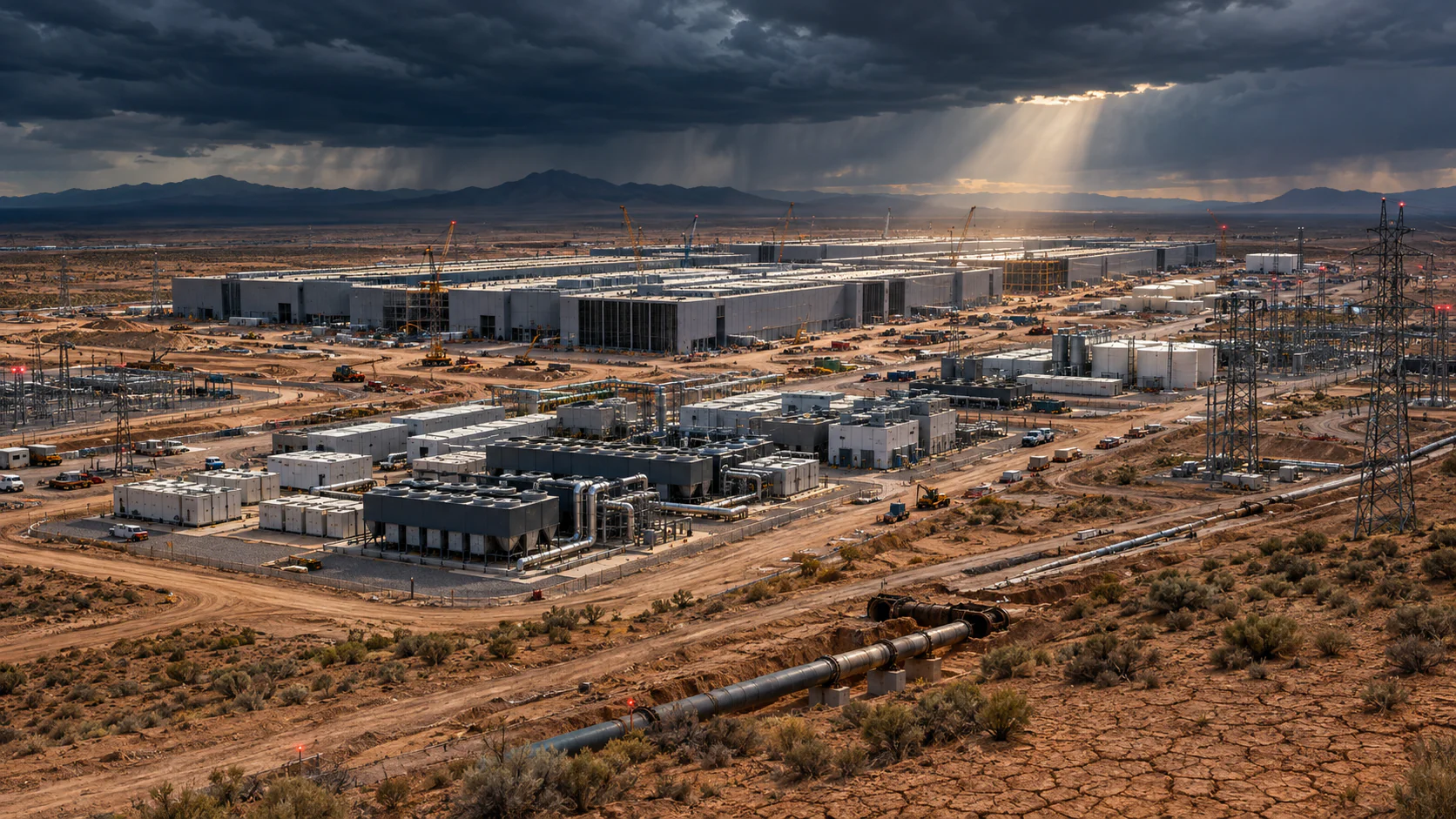
Managed AI enterprise solutions with a blueprint approach: The paradigm shift in industrial AI integration – Image: Xpert.Digital
The code for large-scale industrial projects of the future: Why AI is no longer being developed, but orchestrated
When large corporations have to learn to relinquish control – and save billions in the process
Artificial intelligence is no longer developed in large-scale projects, but rather orchestrated. Managed AI platforms like the ones described here break with the previous logic of lengthy implementations and create access to highly customized AI solutions, fundamentally changing the rules of the game for industrial alliances, consortia, and joint ventures. Unlike traditional AI projects, the blueprint approach enables production-ready solutions within weeks or even days – without data sharing, without upfront costs, and without technological compromises.
Related to this:
The new currency of industrial competitiveness: speed without loss of control
In an economy where one technology company collaborates with another, a chemical company develops products with an industrial plant manufacturer, and leading automotive manufacturers jointly create software stacks, success is no longer determined by size, but by the speed of integration. Managed AI platforms offer precisely what complex consortium structures most urgently need: fast, secure, and scalable AI implementations that seamlessly integrate into heterogeneous IT landscapes—while leaving the data sovereignty of each individual partner untouched.
The question is no longer whether AI will be used, but how quickly companies are willing to transform their innovation cycles. For large-scale industrial projects, this could mean the difference between global success and costly obsolescence.
Artificial intelligence is no longer a promise of the future, but has become a central component of industrial value creation. However, while its theoretical potential sounds impressive, a staggering 95 percent of all enterprise AI implementations fail in practice, according to research from the Massachusetts Institute of Technology. The reasons are manifold: insufficient data quality, inadequate integration with existing systems, a lack of expertise, and, above all, the lengthy development cycles of traditional AI projects. In an era where large technology companies collaborate in consortia with automation specialists or local integrators, this problem is further exacerbated. Heterogeneous IT landscapes, differing data protection requirements, and complex governance structures complicate the implementation of AI solutions to such an extent that conventional approaches reach their limits.
This is precisely where managed AI platforms come in. They offer a fundamentally different approach: Instead of developing AI systems from scratch, they provide fully managed, highly customizable AI solutions that are production-ready within days. One leading provider has perfected this approach with its Blueprint model – a process that replaces the traditional phases of requirements analysis, software architecture, and implementation with an automated generation process. The result is tailor-made AI applications that integrate seamlessly with existing ERP systems, manufacturing execution systems, or even unstructured data sources.
The relevance of this approach becomes particularly clear when considering the dynamics of large-scale industrial projects. Modern infrastructure projects—whether in power plant construction, rail infrastructure, or complex industrial automation solutions—are now almost exclusively realized through consortia, joint ventures, or alliances. For example, in March 2025, a major energy technology company secured a $1.6 billion contract for gas-fired power plants in Saudi Arabia in cooperation with an international power plant equipment supplier as the EPC contractor. Such structures are necessary because individual companies can rarely cover all the required competencies and resources. However, they also present significant coordination challenges—especially regarding digital transformation and AI integration.
In this context, managed AI platforms enable a completely new form of technological collaboration. They offer the flexibility that different partners need without requiring sensitive data to leave the company. They allow each consortium member to access the same state-of-the-art AI infrastructure while fully maintaining data sovereignty. And they reduce investment risk through success-based pricing models, where companies only pay when demonstrable business results are achieved.
This article systematically examines how managed AI platforms are transforming the way large-scale industrial projects utilize AI. From the historical roots of AI-as-a-Service, through its technical mechanisms and current use cases, to critical challenges and future developments, a comprehensive picture of this technology is presented. Particular attention is paid to the specific advantages for alliances, consortia, joint ventures, and subcontractor structures – precisely those organizational forms that dominate the modern industrial landscape.
From isolated computing machines to orchestrated intelligence: The history of managed AI
The history of managed AI platforms is inextricably linked to the development of cloud computing and the democratization of artificial intelligence. Its roots extend back to the early 2000s, when leading cloud providers began offering Platform-as-a-Service (PaaS) solutions. These early platforms enabled developers, for the first time, to deploy applications without having to operate their own infrastructure. The next evolutionary step came with Infrastructure-as-a-Service (IaaS), which allowed customers to independently provision virtual machines and storage.
But it wasn't until the breakthrough of machine learning in the 2010s that the true story of AI-as-a-Service began. The years 2015 to 2018 mark a turning point. During this period, deep learning techniques evolved from academic experiments into industrially applicable tools. The enormous improvements in speech and image recognition made AI suitable for mass use for the first time. At the same time, the amount of available data exploded, and investments in AI rose from $80 billion in 2018 to $280 billion within four years.
The major cloud providers recognized the potential early on. Leading technology companies began offering dedicated machine learning and deep learning services between 2016 and 2018. In 2018, one major technology company unveiled its proprietary language model, which, with 17 billion parameters, was the largest of its kind at the time. Another leading technology company officially announced a strategic shift to an AI-first approach in 2016 under its CEO. These developments laid the technological foundation for what would later become known as AIaaS.
The period from 2018 to 2020 was characterized by increasing adoption and the emergence of industry-specific solutions. Specialized AIaaS companies established themselves, focusing on industry-specific applications. AutoML tools significantly simplified the model development and training process, enabling even organizations without in-depth data science expertise to integrate AI into their applications. The global expansion of AIaaS offerings, with data centers in various regions, ensured low latency.
The real paradigm shift, however, occurred from 2020 onwards with the advent of Large Language Models and generative AI. In May 2020, a leading AI research company published a language model with 175 billion parameters – a tenfold increase compared to the model of the major technology company. This model demonstrated for the first time that AI could not only handle specialized tasks but also complex text generation, code creation, and creative work. The launch of a well-known generative AI application in November 2022 marked the breakthrough in public perception – within two months, the application reached 100 million users, making it the fastest-growing consumer application of all time.
However, this development brought new challenges for industrial applications. While the capabilities of AI models grew exponentially, implementations became increasingly complex. Companies faced a choice between proprietary cloud solutions from large providers, which came with vendor lock-in risks, or costly in-house developments requiring significant investment and specialized personnel. Success rates remained alarmingly low – studies show that 85 percent of traditional AI projects fail, while the success rate for internally developed solutions is a mere 33 percent.
Within this complex landscape, managed AI platforms emerged as a third option starting in 2023. These platforms combined the scalability and cost-efficiency of cloud services with the customizability of bespoke solutions – but without the typical drawbacks of either approach. A pioneer in this field developed its Blueprint approach, which bridges the gap between generic AI tools and costly custom development. The platform enables the delivery of tailored AI solutions in days rather than months by configuring modular AI building blocks through orchestrated specifications.
This development reflects a fundamental shift in how companies perceive and use AI. From isolated experiments in data science labs, AI has evolved into orchestrated operational intelligence deeply integrated into business processes. The focus has shifted from the question "Can we build AI?" to "How quickly can we use AI productively?"—a shift that is particularly crucial for industrial consortia, where time pressure and risk minimization are key factors.
Building blocks of intelligence: The technical architecture of modern managed AI platforms
The technological foundation of managed AI platforms differs fundamentally from traditional software development approaches. At its core is the blueprint approach – an innovative method for transforming business requirements into functional AI solutions. This approach eliminates the classic phases of requirements analysis, software architecture, and implementation, replacing them with an automated generation process based on predefined, modular building blocks.
The architecture of such a platform consists of four core technical components that seamlessly integrate. The first comprises advanced search and reasoning capabilities that transform unstructured enterprise data into searchable, structured information. This functionality enables industrial companies to access decades of accumulated domain knowledge that was previously hidden in emails, reports, and legacy systems. For consortia, this means that heterogeneous data sources from various partners can be systematically unlocked and utilized without the need for centralized data storage.
The second component focuses on automation and AI agents. These autonomous systems execute complex workflows and make proactive decisions based on real-time data. In industrial environments, for example, these agents can optimize maintenance intervals, perform quality control checks, or make supply chain decisions without requiring human intervention. This is particularly relevant for large-scale projects in consortium structures, as such agents can operate across company boundaries while control over critical decisions remains with the respective partners.
The abstraction and data processing component forms the third technical building block. The platform transforms unstructured content such as sensor data, machine logs, or production documentation into usable, structured formats. This capability is particularly relevant for German industrial companies, which often have heterogeneous IT landscapes with different data formats and legacy systems. In joint ventures between a chemical company and a plant engineering firm jointly developing dehydrogenation technologies, this building block enables the integration of diverse data sources from chemical catalyst development and process plant engineering.
The fourth component comprises modernization functions that transform legacy systems into AI-native software. This addresses one of the biggest challenges facing German industrial companies: integrating modern AI technologies into existing production environments without disruptive system changes. When three major automotive manufacturers collaborate on open software stacks for connected vehicles, these new systems must be able to communicate with decades-old production systems – this is precisely where the modernization component comes into play.
Edge computing plays a central role in the platform architecture, even though the platform is primarily designed as a cloud solution. Industrial applications often require real-time processing with sub-millisecond latency. Edge computing brings data processing closer to sensors and production facilities, enabling critical decisions to be made without delays caused by network transmissions. In large-scale projects like the hydrogen electrolysis plants being implemented by an energy provider with partners such as an electrolyzer manufacturer and an industrial service provider, this edge capability is essential for controlling sensitive production processes.
The security architecture follows a zero-trust principle. Customer data never leaves the secure corporate environment, as the platform can be deployed in both private clouds and on-premises. This architectural decision is particularly relevant for German industrial companies, which are subject to strict data protection regulations and must protect sensitive production data. When a defense and technology company provides logistical support for military deployments, the data involved is subject to the highest security requirements – the zero-trust architecture ensures that these requirements are met without compromise.
Another innovative technical feature lies in the platform's integration capabilities. It can connect to virtually any system: ERP systems, manufacturing execution systems, databases, and even unstructured data sources. This universal connectivity eliminates one of the biggest implementation hurdles of traditional AI projects. In consortia where partners use different IT systems, this flexibility is crucial. When a PEM electrolysis supplier collaborates with an industrial service provider, their systems must communicate seamlessly – the platform achieves this interoperability without costly custom development.
The modular architecture also enables iterative development and continuous optimization. Changes to business requirements can be reflected directly in the software blueprint through adjustments, without requiring complex reprogramming. This flexibility is crucial for German industrial companies operating in dynamic markets that must react quickly to changing requirements. In alliances such as the one between an adhesive specialist and a polymer manufacturer of sustainable adhesives for timber construction, where technical requirements and sustainability goals are constantly evolving, this agility allows for continuous adaptation without redevelopment.
An often overlooked but critical aspect is the platform's LLM agnosticism. While many AI applications are tightly bound to a specific Large Language Model, the architecture of managed AI platforms allows for flexible switching between different models. This protects companies from vendor lock-in and ensures they can always use the models optimal for their use case – a crucial advantage in a rapidly evolving market where today's dominant models can be obsolete tomorrow.
🤖🚀 Managed AI Platform: Faster, safer & smarter to AI solutions with UNFRAME.AI
Here you will learn how your company can implement customized AI solutions quickly, securely and without high entry barriers.
A managed AI platform is your all-inclusive, worry-free solution for artificial intelligence. Instead of dealing with complex technology, expensive infrastructure, and lengthy development processes, you receive a ready-made solution tailored to your needs from a specialized partner – often within just a few days.
The key advantages at a glance:
⚡ Rapid implementation: From idea to ready-to-use application in days, not months. We deliver practical solutions that create immediate added value.
🔒 Maximum data security: Your sensitive data stays with you. We guarantee secure and compliant processing without sharing data with third parties.
💸 No financial risk: You only pay for results. High upfront investments in hardware, software, or personnel are completely eliminated.
🎯 Focus on your core business: Concentrate on what you do best. We take care of the entire technical implementation, operation, and maintenance of your AI solution.
📈 Future-proof & scalable: Your AI grows with you. We ensure continuous optimization and scalability, and flexibly adapt the models to new requirements.
More information here:
Collaborative AI without data sharing: Data sovereignty in industry alliances
Industrial Orchestration: Managed AI in the current practice of consortia and alliances
Industrial orchestration: Managed AI in the current practice of consortia and alliances – Image: Xpert.Digital
The practical significance of managed AI platforms is particularly evident in the current landscape of large-scale industrial projects. These projects are now almost exclusively implemented through complex partnerships that take various organizational forms: consortia bring together several companies for specific projects as legally bound project communities, joint ventures create joint companies for specific markets or long-term collaborations, and subcontractor structures enable large providers to assume project management and outsource subtasks to specialized partners.
The automotive industry provides a striking example of this new form of collaboration. In June 2025, eleven leading European automotive companies signed a Memorandum of Understanding to jointly develop an open-source software ecosystem for connected vehicles. This initiative aims to develop non-differentiating vehicle software based on an open, certifiable software stack, thereby accelerating the transformation to the software-defined vehicle. The key feature: While each manufacturer continues to develop its own user interfaces and infotainment systems, they share the underlying infrastructure.
Managed AI platforms offer several key advantages for such scenarios. First, they enable rapid prototyping without lengthy coordination processes between partners. Each company can test AI solutions within days, which can be seamlessly integrated into the shared ecosystem. Second, data sovereignty remains with each individual partner – sensitive development data from one manufacturer does not have to be shared with that of a competitor, even if both are working on the same AI infrastructure. Third, the success-based pricing model significantly reduces the financial risk for the consortium partners.
A similar dynamic is evident in the energy sector. A major energy supplier is developing hydrogen-capable gas-fired power plants in Germany together with European partners. For a hydrogen-capable combined cycle power plant at one of its sites with a nominal capacity of approximately 800 MW, the supplier has assembled an Italian-Spanish consortium. The contractual agreement between the three partners includes, as a first step, the permitting process for the power plant. In parallel, the energy supplier is constructing a 300 MW electrolysis plant for green hydrogen at another site. An electrolyzer manufacturer is supplying a 100 MW electrolyzer, while an industrial service provider is handling the integration of the third electrolysis unit as well as the planning and installation of the auxiliary and ancillary facilities.
In such complex large-scale projects, where an energy supplier, an electrolyzer manufacturer, and an industrial service provider collaborate, immense coordination challenges arise. Managed AI platforms address these by creating a shared digital foundation on which all partners can work without relinquishing their technological independence. The platform can integrate real-time data from the various subsystems, generate optimization suggestions, and deploy autonomous agents that operate across company boundaries—always while maintaining data sovereignty.
The chemical industry also demonstrates how managed AI can create added value in established partnerships. A global chemical company and a diversified industrial group have signed a joint development agreement to expand their collaboration on a proprietary dehydrogenation process. This process produces propylene from propane and isobutylene from isobutane using a particularly stable catalyst. The industrial group is focusing on process development, while the chemical company is concentrating on catalyst development. The shared goal is to significantly improve the process's resource and energy efficiency through targeted enhancements to the catalyst and plant design.
In this scenario, managed AI platforms could significantly accelerate development cycles. AI-powered simulations could test various catalyst designs and plant configurations in silico before costly physical prototypes are built. Machine learning models could analyze process data from pilot plants and identify optimization potential that human engineers might overlook. And autonomous agents could take over the continuous monitoring and fine-tuning of operating plants to ensure maximum efficiency.
Of particular relevance for industrial alliances is the ability of managed AI platforms to integrate heterogeneous data sources while maintaining control over sensitive information. When an adhesive manufacturer and a polymer specialist collaborate on sustainable adhesives for timber construction, each partner contributes specific expertise: The polymer specialist provides polyurethane-based materials derived from bio-attributed raw materials, while the adhesive manufacturer utilizes these for high-performance adhesive solutions. However, the respective manufacturing processes and chemical formulations are highly sensitive trade secrets. Managed AI platforms enable the training and use of AI models on this data without ever requiring the raw data to be exchanged between the partners.
Another critical aspect in today's practice is the speed of implementation. While traditional AI projects typically take 12 to 18 months to become production-ready, managed AI platforms enable deployments in weeks or even days. This time saving is invaluable in consortia, where delays can quickly lead to cost overruns and penalties. In large-scale projects, such as the $1.6 billion power plant contract in Saudi Arabia undertaken by a major energy technology company, which includes a 25-year maintenance agreement, even small efficiency gains through AI-powered predictive maintenance can translate into savings in the millions.
The practical application is also evident in concrete customer successes. A global real estate services provider reports that collaborating with the platform provider has significantly improved its ability to gain meaningful insights and deliver customer results. Another customer was able to fully automate its sales proposal process and reduce processing time from 24 hours to just a few seconds. Such efficiency gains are also relevant for industrial consortia, where rapid proposal submission and precise cost calculation can be crucial for competitive advantage.
Tried-and-tested innovation: Two case studies from industrial consortium projects
To illustrate the practical relevance of managed AI platforms for large industrial projects, it is worthwhile to take a detailed look at specific use cases that illustrate the specific challenges and solutions in consortium structures.
The first use case comes from the field of green hydrogen production, where a PEM electrolysis technology provider and an international industrial plant service provider have entered into a strategic partnership to develop efficient large-scale projects in Europe. The collaboration focuses on large-scale electrolysis projects and combines the complementary capabilities of both companies: one as a leading provider of PEM electrolysis technology and the other as an international industrial plant service provider.
The challenge in such projects lies in the complexity of the interfaces between the core electrolysis process, typically covered by an OEM, and the plant-related elements, for which customers usually engage an EPC/EPCM provider or plant integrator. The partners recognized that clearly defined interfaces and well-developed, standardized plant concepts offer significant added value for all parties involved. Therefore, at the heart of their collaboration is the joint development of concepts for green hydrogen projects and the coordination of technical and commercial interfaces between both parties.
In this scenario, a managed AI platform could fulfill several critical functions. First, it could significantly accelerate the development of standardized plant concepts by extracting patterns from historical project data and suggesting optimal configurations. Second, it could automate the technical integration between the two partners' systems by acting as intelligent middleware that transforms and exchanges data in real time. Third, it could continuously monitor project parameters during the planning and execution phases and provide early warnings of potential problems before they lead to costly delays.
Of particular relevance is the platform's ability to aggregate knowledge across project boundaries without disclosing sensitive data. The two companies are working on a non-exclusive strategic partnership, meaning that both can collaborate with other partners concurrently. A managed AI platform could synthesize insights from various projects and derive generalized best practices without requiring the exchange of project-specific details between competing ventures. This enables continuous learning and improvement across the entire project portfolio while simultaneously safeguarding commercial sensitivities.
The tangible benefits are also evident in scalability. Both companies are convinced that green hydrogen will play a central role in the transformation of the energy market and that collaborative approaches between relevant stakeholders will be key to the progress of the hydrogen economy. As global demand for green hydrogen is expected to increase significantly in the coming years and decades, the partners see promising business potential in developing this market. With their complementary capabilities, they can make a significant contribution to this transformation. A managed AI platform would considerably facilitate this scaling by making proven project patterns replicable and drastically reducing the lead time for new projects.
The second use case comes from the automotive industry and concerns the aforementioned software initiative. Eleven leading European automotive companies – including vehicle manufacturers and major suppliers – are jointly driving forward an open-source initiative. The goal is to develop non-differentiating vehicle software based on an open, certifiable software stack in order to accelerate the transformation to the software-defined vehicle.
The challenge is clear: Each of these manufacturers possesses highly complex IT systems and production infrastructures developed over decades. At the same time, these companies compete intensely in the market and must maintain their differentiating features. The software alliance therefore deliberately focuses on components that drivers or passengers do not directly perceive – such as the authentication of vehicle components, communication between these components and with cloud services, customer interfaces, and higher-level operating systems. Manufacturer-specific user interfaces and infotainment systems will continue to be developed internally and will remain completely distinguishable from one another.
Through this collaboration, the companies hope to reduce software development costs while simultaneously shortening delivery times for new models to remain competitive in the global market. The modular platform is designed to support autonomous driving and will be made available to other industry players by 2026. Hundreds of millions in development costs are expected to be saved, with the first production vehicle featuring this technology planned for 2030.
In this complex scenario, a managed AI platform could serve as a common technological foundation, fulfilling several critical functions. First, it could act as a central orchestration layer, coordinating the integration of diverse software components from various partners without requiring them to expose their proprietary code. The platform would function as intelligent middleware, standardizing interfaces and ensuring compatibility, while each partner retains their own development tools and processes.
Secondly, the platform could enable advanced test automation. With software stacks developed by eleven different companies, ensuring compatibility and reliability is a huge challenge. AI agents could continuously perform automated tests, identify potential incompatibilities, and even generate suggested solutions before problems reach production systems. This would be particularly valuable for safety-critical components related to autonomous driving.
Third, the platform could enable knowledge aggregation across all partner companies. If one partner finds a specific solution to a technical problem, the AI could abstract this approach and make it available to other partners without disclosing that partner's specific implementation details. This would foster collective learning while preserving competitive advantages—a balance notoriously difficult to achieve in consortia.
Fourth, success-based pricing models for the managed AI platform could reduce the financial risk for consortium partners. Instead of making large upfront investments in AI infrastructure, companies would only pay for demonstrable results – such as reduced development time, improved code quality, or accelerated test cycles. This is particularly attractive in an industry currently facing massive financial challenges due to electrification and software transformation.
Both use cases illustrate a common pattern: Large-scale industrial projects in consortia require a balance between collaboration and competition, standardization and differentiation, speed and diligence. Managed AI platforms provide the technological infrastructure to reconcile these conflicting requirements. They enable rapid innovation without loss of control, shared resource utilization without disclosing trade secrets, and collective learning without diluting competitive advantages.
The other side of the coin: Risks and controversies in managed AI implementations
A critical issue concerns data quality and governance. Managed AI platforms promise to handle unstructured and heterogeneous data sources. However, the fundamental principle remains: bad data leads to poor AI results. A study shows that 42 percent of business leaders fear they lack sufficient proprietary data to effectively train or adapt AI models. In consortia, this problem is exacerbated by data fragmentation: relevant information is distributed across various partners, stored in different formats, and often inaccessible for shared AI models.
The challenge is further exacerbated by data silos. In corporate alliances, not only do technical silos exist within individual organizations, but also legal and commercial barriers between partners. Even if a managed AI platform is technically capable of integrating diverse data sources, confidentiality agreements and competitive concerns often prevent the necessary data exchange. This undermines a core advantage of AI: its ability to learn from large, diverse datasets.
A second problem area concerns the transparency and explainability of AI decisions. Many AI models function as black boxes, whose decision-making processes are difficult to understand. This is particularly critical in regulated industries such as energy or defense, where decisions must be justifiable and auditable. If an AI agent in a consortium project makes a critical decision—for example, adjusting production parameters in a chemical plant or rerouting energy flows in a power plant—all partners must understand and be able to trace why this decision was made.
The European AI Act, which will come into force gradually from August 2025, significantly tightens these requirements. High-risk AI systems are subject to strict documentation and transparency obligations. Managed AI platforms must ensure that their systems meet these requirements – a complex undertaking when the AI operates across company boundaries and makes decisions affecting multiple legally separate entities.
A third risk concerns security and the cyberattack surface. AI systems significantly expand the attack surface of companies. Adversarial inputs can manipulate AI models and lead to faulty or harmful decisions. In industrial consortia where critical infrastructure is controlled, such attacks could have catastrophic consequences. A compromised AI system in a hydrogen electrolysis project could bypass security mechanisms and create dangerous operating conditions.
The challenge is exacerbated by the autonomy of AI agents. When agents are authorized to independently execute actions—such as financial transactions, system modifications, or operational adjustments—manipulated or erroneous decisions can have far-reaching consequences before human oversight intervenes. Managed AI platforms must implement robust guardrails that limit autonomy and ensure that critical decisions require human approval.
A fourth problem concerns organizational inertia and acceptance. Even technically sophisticated AI solutions often fail due to a lack of user acceptance and organizational resistance. This challenge is multiplied in consortia, as not only individual companies but also coordinated partner networks need to be convinced. If one consortium partner rejects the AI solution or does not use it effectively, this can jeopardize the entire project.
Cultural differences between organizations exacerbate this problem. A German mechanical engineering company with an engineering-driven decision-making process has a fundamentally different culture than an agile tech startup or a bureaucratically structured energy supplier. Managed AI platforms must adapt to these different contexts – a challenge that is often underestimated.
A fifth risk concerns algorithmic bias and fairness. AI models can adopt and perpetuate biases and distortions from their training data. In industrial applications, this could lead to systematically suboptimal decisions. For example, if an AI system for workforce planning is trained in a consortium project and the historical data shows an underrepresentation of certain groups, the AI could perpetuate and amplify this bias.
Finally, there is the fundamental question of cost transparency and return on investment. While managed AI platforms advertise success-based pricing models, it often remains unclear how exactly success is measured and who controls this measurement. In consortia, where costs are typically shared according to complex formulas, the allocation of AI-generated benefits to individual partners can be contentious. If an AI optimization increases the efficiency of a shared process by 15 percent, how is this benefit divided between a technology provider, a plant integrator, and an operator?
These challenges do not mean that managed AI platforms are unsuitable for industrial consortia. However, they underscore the need for thorough due diligence, robust contractual safeguards, and realistic expectations. Successful implementations require not only technical excellence but also well-designed governance structures, clear responsibilities, and continuous monitoring.
Download the Enterprise AI Trends Report 2025 from Unframe
Click here to download:
Future developments in the managed AI ecosystem
Horizons of Intelligence
The development of managed AI platforms is still in its early stages. Several converging trends indicate that the ecosystem will fundamentally change in the coming years, with significant implications for industrial consortia and large-scale projects.
The most prominent trend is the rise of agentic AI—autonomous digital workers capable of performing complex tasks with minimal human intervention. A leading market research firm predicts that by 2026, over 30 percent of new applications will include built-in autonomous agents. These agents set goals, make decisions, retrieve knowledge, and complete tasks largely independently. For industrial consortia, this could mean agents routinely operating across company boundaries—for example, an agent optimizing a joint venture's supply chain by autonomously interacting with systems across multiple partners.
A global consulting firm has already deployed over 50 AI agents across various departments and expects to operate over 100 agents by the end of the year. One AI agent provider offers success-based pricing for its agents, explaining: "We only get paid when we deliver real results." This model could become the standard for managed AI platforms and further reduce the financial risk for industrial consortia.
A second important trend is the increasing emotional intelligence of AI systems. Conversational AI integrates emotional intelligence to better understand and respond to human emotions, thus improving the user experience. For industrial applications, this could mean that AI systems not only suggest technical optimizations but also consider the organizational and human factors that are crucial for successful implementation. An AI agent could detect when resistance to a proposed process change is growing within a consortium team and suggest alternative, less disruptive approaches.
The third significant trend is data sovereignty and privacy-centric AI. As organizations increasingly invest in generative AI, awareness of data privacy risks and the need to protect personal and customer information is growing. This will lead to a greater focus on privacy-oriented AI models where data processing takes place locally or directly on users' devices. One major technology and hardware company is setting itself apart by prioritizing data privacy, and it is likely that other AI hardware manufacturers and developers will follow suit in 2026.
This is particularly relevant for industrial consortia. The ability to train AI models on federated data—where the model comes to the data, not the other way around—could solve the fundamental challenge of data exchange between partners. An AI model could learn from the data of a chemical company, a plant engineering firm, and other partners without these companies ever having to disclose their raw data.
A fourth trend concerns synthetic data for analysis and simulation. Beyond generating text and images, generative AI is increasingly being used to generate the essential data needed to understand the real world, simulate various systems, and train additional algorithms. This enables banks to model fraud schemes without compromising real customer data and allows healthcare providers to simulate treatments and studies without jeopardizing patient privacy.
In industrial consortia, synthetic data generation could revolutionize the development and testing of new processes. Partners could jointly train AI models on synthetic data that reflects the characteristics of their real-world systems without revealing sensitive operational information. This would enable collaborative innovation while preserving commercial sensitivities.
The fifth trend is the ongoing consolidation and standardization of the AIaaS market. The global AI-as-a-Service market is projected to grow from US$16.08 billion in 2024 to US$105.04 billion by 2030, representing a compound annual growth rate (CAGR) of 36.1 percent. A market research firm forecasts growth from US$20.26 billion in 2025 to US$91.20 billion by 2030, also representing a CAGR of 35.1 percent.
This massive market expansion will likely lead to increased consolidation, with some platforms assuming dominant positions while others exit the market. For industrial consortia, this means the need for careful vendor selection that considers not only current capabilities but also long-term viability. At the same time, increasing maturity and standardization will facilitate integration and potentially reduce switching costs between platforms.
A sixth key trend is industry-specific specialization. Regulated industries such as financial services, insurance, healthcare, and manufacturing are leading the way in AI adoption. These sectors have strong governance and data privacy frameworks, making the leap to AI a small but impactful investment. Managed AI platforms will increasingly develop specialized solutions for specific industries, reflecting a deep understanding of their respective workflows, challenges, and regulatory environments.
For industrial consortia, this could mean the emergence of platforms specifically tailored to the needs of multi-partner projects – with integrated governance mechanisms, data protection frameworks and billing models that take into account the complexity of consortium structures.
A seventh trend concerns integration with emerging technologies such as 5G and the Internet of Things. Future opportunities lie in the development of more adaptable AI solutions, improved data protection, and integration with emerging technologies like the Internet of Things and 5G. For large-scale industrial projects, where thousands of sensors and actuators need to be coordinated in real time, this convergence could be transformative. AI agents could communicate directly with edge devices, make millisecond decisions, and continuously learn from the resulting data streams.
Finally, the eighth trend points to a fundamental shift in software business models. AI integration can unlock new revenue models—such as usage-based and success-based pricing—that offer greater flexibility and are more closely aligned with the value customers receive. One provider of cloud platforms for enterprise workflows has implemented both usage-based and success-based pricing, charging customers per automated incident resolution or per AI-driven workflow, while the pricing is also tied to reduced ticket handling times and lower labor costs.
For industrial consortia, such models could significantly simplify cost allocation. Instead of complex upfront agreements on investments and risk sharing, partners would simply pay for the benefits actually realized – measured in saved working hours, reduced energy costs, or improved production rates. This would not only reduce financial risk but also better align incentives: all partners would directly benefit from successful AI implementation.
These converging trends point to a future where managed AI platforms become indispensable orchestration layers for industrial collaboration. They will not only provide technical infrastructure but also act as intelligent mediators between partners, balancing cooperation and competition, aggregating knowledge without revealing secrets, and enabling continuous learning across project boundaries. Consortia that anticipate this evolution early and invest in building the necessary capabilities will enjoy a significant competitive advantage.
Systematic classification: What managed AI means for industrial collaborations
The analysis of managed AI platforms reveals a fundamental paradigm shift in how large-scale industrial projects are conceived and executed. The key findings can be systematized across several dimensions.
First, these platforms enable unprecedented speed in AI integration. While traditional implementations take 12 to 18 months and have an 85 percent failure rate, blueprint-based approaches allow for production-ready solutions within days or weeks. For industrial consortia, where delays directly translate into cost increases and penalties, this is transformative. The energy technology company's $1.6 billion, 25-year project in Saudi Arabia illustrates the scale at which even marginal efficiency gains can have significant financial implications.
Secondly, managed AI platforms solve the fundamental dilemma of data sovereignty in multi-partner projects. Zero-trust architectures and the option of on-premises or private cloud deployments allow companies to leverage AI without disclosing sensitive data. This is particularly relevant in situations like the collaboration between a chemical company and a plant engineering firm in catalyst development, where each partner must protect highly sensitive trade secrets while simultaneously requiring close technical integration.
Third, these platforms democratize access to advanced AI capabilities. Whereas previously only companies with large data science teams and substantial budgets could effectively leverage AI, managed approaches now enable mid-sized companies and specialized suppliers to access enterprise-grade AI. In consortia, where typically a large prime contractor collaborates with numerous smaller subcontractors, this levels technological imbalances and enables true digital integration across the entire supply chain.
Fourth, success-based pricing models transform the risk structure of AI investments. Instead of high upfront investments with uncertain results, companies only pay for demonstrable business success. This is particularly attractive in the current economic climate, where industrial companies are under margin pressure and investment decisions are increasingly ROI-driven. The automotive manufacturers' software alliance explicitly aims to reduce development costs – managed AI platforms with success-based models would support this goal.
Fifth, LLM-agnostic architectures offer future-proofing, which is crucial in a rapidly evolving market. Companies are not tied to specific models or vendors and can respond flexibly to technological breakthroughs. This protects against the fate of organizations that have relied on outdated technologies and then have to undertake costly migrations.
Sixth, these platforms address the organizational challenge of AI governance in consortia. Through integrated audit trails, transparency mechanisms, and compliance features, multi-partner projects can meet increasingly stringent regulatory requirements such as the EU AI Act without each partner having to build separate governance structures.
However, it would be naive to ignore the identified risks and challenges. Vendor lock-in risks, data privacy and security concerns, transparency and explainability issues, as well as organizational acceptance challenges remain real and require careful attention. Successful implementations require more than technological excellence – they require well-considered contractual agreements, robust governance structures, continuous monitoring, and a commitment to organizational change across all consortium partners.
The final assessment must be nuanced. Managed AI platforms are not a panacea that automatically solves all the challenges of industrial AI integration. However, they represent a significant improvement over traditional approaches and address many of the structural problems that have contributed to the high failure rate of AI projects. For industrial consortia and large-scale projects, they offer a pragmatic middle ground between the extremes of do-it-yourself development and complete dependence on generic cloud services.
The strategic importance of these platforms is likely to increase further in the coming years. The massive market growth from $16 billion to over $100 billion by 2030, the increasing sophistication of agentic AI, and the ongoing standardization indicate a maturing ecosystem. Companies that gain early experience with these platforms and develop the necessary capabilities will be well-positioned to lead the next wave of industrial innovation.
For German industrial companies – traditionally leaders in sectors such as mechanical engineering, chemicals, and automotive manufacturing – managed AI platforms could be key to maintaining global competitiveness in an increasingly digitalized world. The examples of major chemical and industrial corporations, automotive manufacturers, and energy suppliers, along with their partners, demonstrate that these companies are already actively working on the future of collaborative innovation. Managed AI platforms can and should be an integral part of this future – not as a replacement for human expertise and entrepreneurial judgment, but as a powerful multiplier that fundamentally increases the speed, precision, and scalability of collaborative innovation.
Consulting - Planning - Implementation
I would be happy to serve as your personal advisor.
You can contact me at wolfenstein∂xpert.digital or
Just call me on +49 7348 4088 965 .