
Trump's Dilemma: The "Donroe Doctrine" and Peace as Bait – Iran's Tactical Masterstroke
Xpert Pre-Release

Available in 27 languages 📢
Prefer Xpert.Digital on GoogleⓘPublished on: April 27, 2026 / Updated on: April 27, 2026 – Author: Konrad Wolfenstein
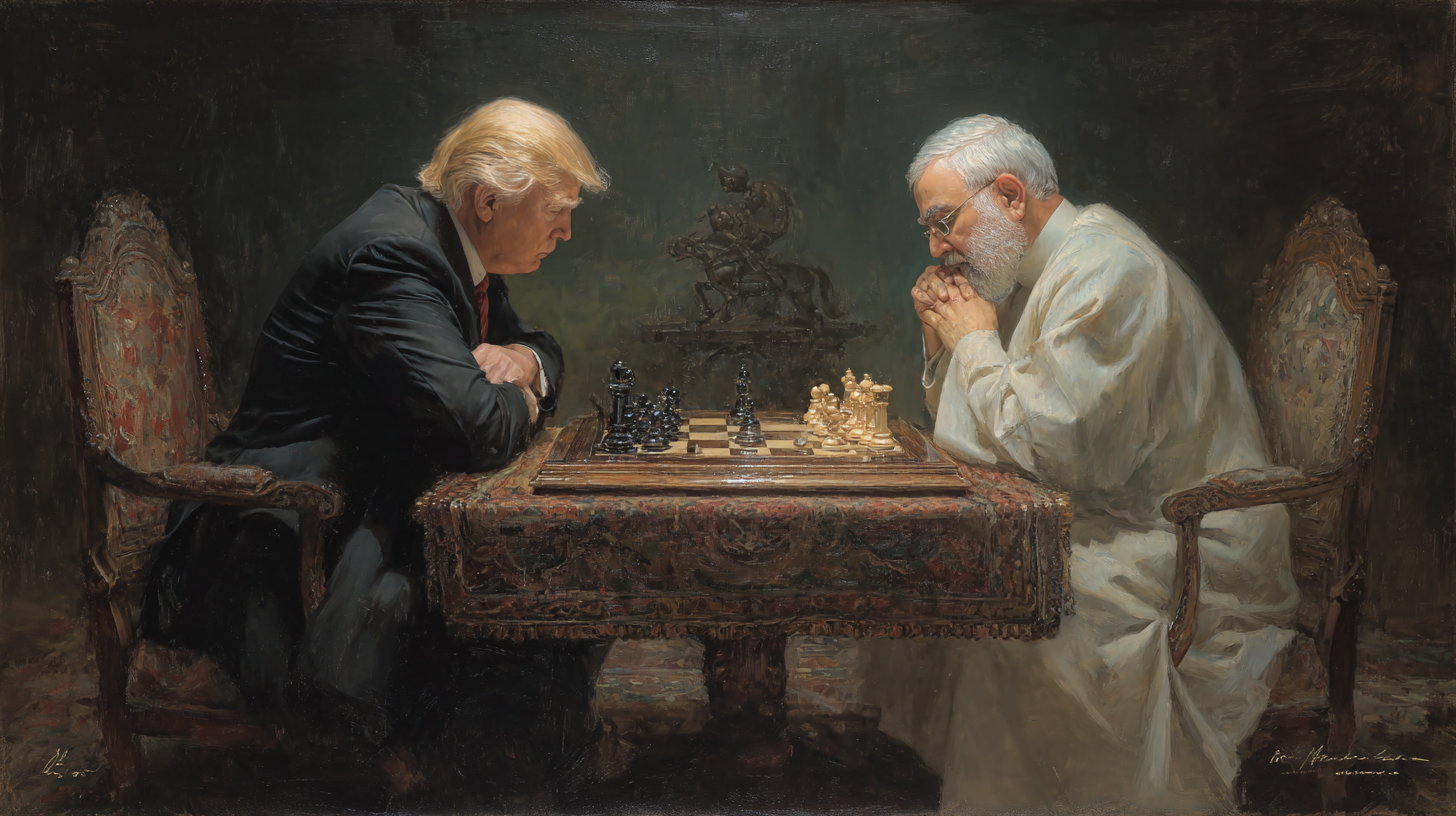
Trump's Dilemma: The "Donroe Doctrine" and Peace as Bait – Iran's Tactical Masterstroke – Image: Xpert.Digital
The Hormuz Dilemma: When a ceasefire becomes a strategic trap
“Lose-lose scenario”: Why the new deal with Iran is keeping the world on edge
In the spring of 2026, an unprecedented geopolitical crisis grips the global economy. Following a coordinated military strike by the US and Israel, Iran has blocked the Strait of Hormuz, cutting off the most vital artery of global oil trade. As global energy prices skyrocket, inflation soars, and gas pumps become a political issue, Tehran presents a purported peace offer: the naval blockade is to end, but the controversial nuclear program will remain untouched for the time being. For US President Donald Trump, this diplomatic maneuver proves to be a dangerous dilemma. He must choose between a domestic political victory at the gas pump and his foreign policy objectives in the global power struggle with China. This is an in-depth analysis of the most explosive nuclear poker game of our time and the question of who is truly pulling the strings behind the scenes in this global shadow war.
The starting point: A war that holds the world in suspense
Since February 28, 2026, the global community has been in a state of collective shock. The coordinated military attack by the US and Israel on Iran has not only ignited a regional conflict but has also dangerously destabilized the entire global energy supply. As an immediate response, Tehran effectively blocked the Strait of Hormuz—a narrow, 39-kilometer bottleneck between Iran and the Arabian Peninsula—thus cutting off one of the most vital arteries of world trade. Under normal circumstances, approximately 20.3 million barrels of crude oil and petroleum products flow through this narrow passage daily, representing about 25 percent of global maritime oil trade. Significant quantities of liquefied natural gas (LNG) also use this route.
The economic consequences were immediate and severe. The price of Brent crude oil surged from around $70 a barrel at the start of the war to over $110 a barrel at times, before cooling to below $90 after temporary ceasefire announcements. In the US, the inflation rate climbed to 3.3 percent in March 2026, its highest level in two years, driven primarily by rising fuel costs. The IMF warned that the effects of the conflict would "not simply disappear even when the war ends." Goldman Sachs predicted that oil prices could rise above $100 if shipping disruptions persisted.
This context is crucial for understanding the full strategic implications of the latest Iranian proposal. For what at first glance appears to be an offer of de-escalation, on closer inspection reveals itself to be a carefully calculated diplomatic maneuver that places Washington in a genuine dilemma.
A deal with explosive potential: The Iranian proposal in detail
According to the news portal Axios, citing well-informed US insiders, Iran has submitted a new proposal through Pakistani mediators: The naval blockade of the Strait of Hormuz should be lifted and shipping traffic normalized – without requiring initial negotiations on the Iranian nuclear program. Nuclear talks would reportedly be postponed to a later date. The new Iranian leadership itself is apparently internally divided over what concessions on the nuclear issue are even conceivable.
At first glance, this sounds reasonable, almost generous. In reality, however, this proposal strikes at the very heart of two of the Trump administration's most central and declared war aims: the elimination of Iran's stockpile of highly enriched uranium and the permanent suspension of further enrichment activities. The International Atomic Energy Agency (IAEA) estimates that Iran currently possesses around 440 to 450 kilograms of uranium enriched to 60 percent. This amount is theoretically sufficient for more than ten nuclear warheads, as IAEA Director General Rafael Grossi publicly stated in March 2026. An enrichment level of 60 percent is technically just below the weapons-grade enrichment level of 90 percent.
Trump had repeatedly and unequivocally made it clear that he would not tolerate any Iranian uranium enrichment – not even for civilian purposes. "I say: no enrichment," he emphasized several times. During the talks in Islamabad, US negotiators demanded a 20-year moratorium on all Iranian uranium enrichment, as well as the physical export of the country's entire stockpile of highly enriched uranium. Iran, on the other hand, offered only a three- to five-year moratorium and was willing, at most, to subject the uranium to a supervised dilution process within the country. This fundamental disagreement led to the collapse of the talks in Islamabad after more than 20 hours of intensive negotiations.
If Iran simply removes the nuclear issue from the first step of the deal, Tehran avoids precisely the core conflict on which Washington refused to budge an inch. The logic of the Iranian proposal is simple, but effective: first abandon the leverage of the Hormuz nuclear facility, then negotiate from a position of relative détente while still holding a nuclear negotiating position – without the acute threat of economic blackmail hanging over them.
Trump's Dilemma: Between Triumph and Strategic Self-Damage
US President Donald Trump faces a classic trap known in diplomacy as a "lose-lose scenario." If he accepts the Iranian proposal, he can claim a short-term political victory: global oil prices would fall, American gasoline prices—a highly sensitive domestic issue—would drop, and he could temporarily end the state of war. This would be tempting domestically, as Trump's approval ratings have demonstrably suffered due to the continued rise in energy prices.
At the same time, however, an agreement on this proposal would mean that Iran would carry its nuclear deterrent largely intact into any renegotiation. The pressure of the blockade—the only tangible means by which Tehran can compel Washington to restrain its nuclear demands—would disappear. Economists and strategists agree: Whoever relinquishes their most important leverage first in a negotiation process fundamentally weakens their own position. Trump himself applied this principle when he responded to the Hormuz blockade by blockading Iranian ports.
If Trump rejects this, however, he risks facing domestic accusations of blocking the normalization of global oil supplies—and thus the relief of purchasing power for American households—for ideological reasons. A report by the CFR (Council on Foreign Relations) in April 2026 floated the idea of an "Open for Open" formula: both sides could mutually lift their respective blockades without a precondition for nuclear action. Even this, however, would put Tehran in a more comfortable negotiating position, as military and economic pressure on Iran would ease.
The situation is further complicated by the fact that Trump's negotiating style—public ultimatums, threats to destroy power plants and bridges, repeated postponements—has eroded trust on both sides. Trump issued ultimatums to Iran three times, and each time they were postponed without consequence. This pattern of threats without action has taught Tehran just how far Washington is actually willing to go.
Pakistan as mediator: Geopolitics through the back door
Pakistan's role in this conflict is strategically significant and warrants closer examination. Islamabad has assumed the role of mediator because traditional mediating states like Qatar have been eliminated as neutral platforms due to their own attacks during the conflict. At the same time, Pakistan maintains close military and economic ties with the United States and holds regular high-level contacts with Tehran. Its geographical location bordering Iran, China, and India makes it a unique geopolitical hub in the region.
The transmission of the latest Iranian proposal through Pakistani channels is no coincidence. Pakistan is sending a signal: it sees itself not as a mouthpiece for either side, but as an independent actor with regional interests. Islamabad benefits from an end to the conflict as well as from continued American goodwill. At the same time, there is an unspoken interest in not destabilizing its Iranian neighbor through overly far-reaching concessions.
During negotiations in Islamabad in April 2026, the US delegation, led by Vice President JD Vance, left the Pakistani capital without an agreement after more than 20 hours of talks. Vance spoke of "very clear red lines" and left behind an offer he described as "final." The Iranian side accused the US of making "unacceptable demands" and blamed Washington for the breakdown of the talks. At the same time, Tehran recognized the strategic necessity of launching a new negotiating offensive – the latest proposal is the result of this reorientation.
Oil price, oil power and the silent Washington-Beijing axis
The crucial strategic dimension of this conflict, however, lies beyond the immediate Iranian-American duel. Trump's entire foreign policy is permeated by one overarching goal: the systematic containment of the People's Republic of China. The so-called "Donroe Doctrine"—modeled on the Monroe Doctrine of the 19th century—aims to consolidate Washington's influence in the Western Hemisphere and to restrict China's access to energy sources. Simultaneously, US energy dominance through record oil and gas production and an aggressive LNG export strategy is intended to secure geopolitical power.
In this logic, the war with Iran is not an end in itself. It is part of a broader strategy to cut China off from inexpensive energy sources. Up to 15 percent of China's oil imports came from Iran and Venezuela – often at sanctions prices far below market value. By destabilizing Iran, Washington wanted to force Beijing to buy expensive oil on the world market, which would further strain the Chinese economy, already burdened by tariffs and trade conflicts.
In fact, China imports around 70 percent of its oil, a significant structural dependency. Shipments from the Middle East, passing through the Strait of Hormuz alone, cover a substantial portion of Chinese consumption. According to data from the analysis firm Kpler, China exported around 80 percent of all Iranian oil last year, despite sanctions formally prohibiting this. China's share of Iranian oil in its total oil consumption is roughly 12 to 20 percent – not the primary source, but certainly not negligible.
Since the start of the war, the price of crude oil has risen from around $90 to between $130 and $170 per barrel at times – putting considerable economic pressure on all importers. China reacted pragmatically: Over two decades, the country had built up strategic oil reserves of an estimated 1.2 billion barrels and was thus able to cushion some of the price pressure. Moreover, according to OCBC analysts, Hormuz deliveries are directly responsible for only about 6.6 percent of China's total energy consumption.
Nevertheless, China is coming under pressure: The Frankfurter Rundschau reported in April 2026 that the blockade of the Strait of Hormuz is having a significant impact on Chinese industry. Between 7.1 and 9 million fewer barrels of oil are being transported daily than before – equivalent to almost 30 percent of global production. Chinese companies are facing higher energy costs, insurance premiums for tankers, and supply uncertainties.
🎯🎯🎯 Global Sourcing & Commodity Trading with integrated logistics

Raw materials, global procurement & trade - Image: Xpert.Digital
State-of-the-art cargo planes, optimized transport routes, and multimodal logistics chains are interchangeable—they can be bought, leased, or outsourced. What money can't buy are direct contacts with producers in Peruvian mines, reliable supply relationships in the CIS countries, and years of built-up trust in markets that are unfamiliar to outsiders. The decisive competitive advantage in global commodity trading lies not in transporting the good from A to B, but in knowing where the good comes from, who produces it, and how to gain access before others even know the market exists. Whoever owns the network sets the price. Everyone else pays it.
More information here:
China's patience as a weapon: Why Beijing benefits from the Hormuz conflict
China's silent strategy: Waiting as an art of warfare
Paradoxically, some Chinese strategists find themselves in a position where they are not necessarily interested in a swift resolution to the conflict. China economist Markus Taube put it succinctly: "The longer the US remains mired in this quagmire and the problem remains unresolved, the better it is for China." Significantly, Beijing rejected a UN resolution calling for the opening of the Strait of Hormuz.
The logic behind this is coldly calculated. First, the Iran war ties up American resources—military, diplomatic, and financial—that could otherwise be deployed against China. Second, the ongoing conflict weakens Trump's domestic standing, thus diminishing his negotiating power with Beijing on trade issues. Third, Russia benefits massively from the conflict by expanding its oil exports to China, thereby filling the gaps created by American sanctions. Following the decline in Iranian and Venezuelan supplies, Moscow has become China's primary oil source. This doesn't make China's first choice, but it does provide Beijing with a reliable alternative.
Fourth and final consideration: China has invested heavily in electromobility in recent years, aiming to reduce its long-term strategic dependence on oil. The Iran war is accelerating the political and economic arguments for this transformation. Short-term pain is being offset by long-term strategic positioning.
The Achilles' heel of the US strategy: When oil weapons are aimed at the shooter
Trump's strategy of using the Strait of Hormuz as an economic tool against China has a fundamental design flaw: it harms the US itself. Higher oil prices directly impact American consumers. National average gasoline prices rose to $3.41 per gallon in the weeks following the start of the war. US inflation climbed to a yearly high. The political pressure on Trump to lower energy prices again is considerable—especially with the midterm elections in November 2026 in mind.
The thesis that a closure of the Strait of Hormuz would hit China harder than others proves to be only partially accurate upon closer analysis. Thanks to its reserves, its diversification strategy, and the pressure valve of Russia, China is better positioned than many of its Asian neighbors, and also better than generally expected. At the same time, high oil prices are also affecting the US's European allies, who, while benefiting from American LNG exports, are also suffering from increased energy costs. As Handelsblatt commented in April 2026: The Hormuz Trap represents a new geopolitical era – and not only Iran, but also Trump himself is establishing blockades of shipping lanes as a tool of foreign policy.
A complete closure of the strait would, purely mathematically, not allow for a rapid replacement of the lost oil. Alternative pipelines from the Gulf region—the Saudi Arabian East-West Petroline and the UAE's ADCOP pipeline—could together compensate for a maximum of 3.5 to 5.5 million barrels per day. Strategic reserves could contribute another 6 to 7 million barrels daily in the short term. Even if all alternatives were activated simultaneously, a daily deficit of more than 10 million barrels would remain. This scenario illustrates why every side ultimately has an interest in a controlled opening of the strait—despite all geopolitical calculations.
Nuclear poker: The real weapon in the background
At the heart of the entire conflict lies Iran's nuclear capability – and this is what makes the dilemma so serious for Washington. Before the war began, Iran had enriched uranium to 60 percent, far exceeding the limit of 3.67 percent permitted under the 2015 JCPOA nuclear agreement. IAEA Director General Grossi had classified this enrichment level as "almost militarily relevant" and determined that the existing quantity – 440 to 450 kilograms – was theoretically sufficient for more than ten nuclear warheads. As recently as April 2026, the head of the Iranian Atomic Energy Organization bluntly stated that the demands from the US and Israel to limit the enrichment program were "wishes we will bury.".
During the negotiations in Islamabad, the two positions clashed sharply: The US insisted on a 20-year moratorium on uranium enrichment and the physical transfer of all highly enriched uranium abroad. Iran offered a moratorium of three to five years and spoke at most of supervised dilution on site. The difference is not merely academic: A 20-year moratorium would mean that Iran could not develop nuclear first-strike capabilities this generation. A five-year moratorium, in geopolitical terms, is little more than a respite.
At the end of April 2026, Russia attempted to offer mediation services: Moscow would be prepared to take over the storage of Iranian uranium – a technically feasible option, since Russia had already stored Iranian uranium under the old Vienna agreement. However, Washington showed "no interest" in this proposal. The reason is likely strategic: Storage in Russia does not permanently prevent the nuclear option, but merely shifts the problem geographically.
The internal Iranian divide: Who is actually negotiating in Tehran?
A frequently underestimated factor in the analysis of the conflict is the internal Iranian power dynamic. According to the Axios report, the new Iranian leadership is deeply divided on the question of which concessions on the nuclear issue are acceptable. On one side are pragmatic forces around Foreign Minister Abbas Araghchi, who has publicly signaled a willingness to negotiate and spoke of "good progress" in Geneva. On the other side are hardliners, represented by the head of the Atomic Energy Agency and sections of the Revolutionary Guard, who reject any restrictions on the nuclear program as a national capitulation.
This division explains the often contradictory Iranian behavior: A foreign minister announces the opening of the Strait of Hormuz – less than 24 hours later, the Iranian military headquarters retracts this announcement. Trump initially celebrated on TruthSocial that "the Strait of Hormuz is fully open and ready for business" and that Iran had pledged "never to close the strait again" – then came the retraction from Tehran. This stop-and-go pattern reflects not a cynical attempt at deception, but rather real disagreements within the Iranian power structure.
The division makes reliable agreements more difficult. Even if a diplomat in Islamabad or Geneva agrees, it is unclear whether the military—specifically the Revolutionary Guard, which effectively controls the Strait of Hormuz and the nuclear program—will implement this agreement. Past patterns in the Iran-US relationship show that political leaders can be quite pragmatic, while paramilitary structures pursue their own agendas.
Contemporary energy geopolitics: Paradigm shifts in slow motion
The Iran war and the Hormuz dilemma are not isolated events. They are part of a broader paradigm shift in global energy policy. The era of "secure" energy supplies via established trade routes is over. Shipping lanes have become the primary arena for geopolitical power—no longer just conflict zones, but active instruments of state foreign policy.
The Handelsblatt newspaper succinctly summarized this shift: Not only Iran, but also Trump himself, established the blockade of shipping lanes as a tool of foreign policy. Iran closed the strait to tankers carrying oil to countries it did not support. The US, in turn, imposed a blockade on Iranian ports. Both sides are using the flow of energy as a weapon – with worldwide collateral damage. According to Handelsblatt, six weeks of war with Iran have triggered an "energy supply shock the likes of which the global economy has only experienced since the 1970s.".
In this new reality, China's long-term strategic investments—in electric vehicles, rare earth elements, and alternative supply chains—are a structural advantage. Beijing has recognized that dependence on a single shipping lane represents a major security vulnerability. The answer is diversification: oil from Russia via pipeline, oil from Africa, the gradual electrification of transport, and domestic renewable energy. At the same time, China has maintained access to Iranian oil supplies through discreet diplomatic channels—Chinese ships apparently received guarantees that they would not be attacked and, in some cases, bought their way out of the Iranian blockade.
The situation is particularly uncomfortable for Europe. The continent is dependent on LNG imports, the prices of which have risen dramatically due to the Hormuz crisis. A complete normalization of the energy markets requires a political solution to the Iran conflict – but Europe has hardly any direct influence in these negotiations. The traditional European mediators, such as Germany and France, have been effectively sidelined.
The hidden agenda: Energy dominance as the core of the Trump doctrine
Trump has never made a secret of the fact that he sees energy dominance as a central instrument of American foreign policy. On the very first day of his second term, he declared a national energy emergency, and since then he has consistently pursued the goal of making American oil and gas the global benchmark for energy production. LNG exports grew by more than 20 percent during his presidency. Allies in Europe, Japan, and South Korea have already committed to purchasing American energy.
The connection to the Iran war is direct: If Iranian and Venezuelan oil disappear from the market—either through war damage, sanctions, or deliberate blockades—a vacuum is created. This vacuum can only be filled by supplies controlled by the US or its allies. Washington has direct or indirect influence over oil production from Canada to Guyana and Venezuela—a total of around 20 percent of global oil production.
However, as outlined at the outset, the plan has a systemic weakness: Russia is the laughing third party. Moscow has the capacity to supply virtually any resource in commercial quantities and can guarantee supply stability through its geographic location and nuclear umbrella. Every "victory" achieved by Washington over one of China's energy suppliers—Iran, Venezuela, or possibly others—effectively strengthens Russia's position, as Beijing switches to the most reliable alternative supplier. This paradox of the Trump doctrine was clearly articulated by Carnegie researchers as early as March 2026.
Between deal and ongoing crisis
The next few weeks are likely to be crucial. Trump has called a White House meeting on Iran for Monday, April 27, 2026, to discuss the stalled situation and possible next steps with his team. The latest Iranian proposal is on the table, and Pakistani mediators are ready. The question is whether Washington will take the bait.
Three scenarios are conceivable. In the first scenario, the Trump administration accepts the Iranian proposal in a modified form—a temporary opening of the Strait of Hormuz in exchange for an extension of the ceasefire, with the nuclear issue explicitly reserved for a second round of negotiations. This would relieve pressure on the global oil market in the short term, but weaken the American negotiating position in the long term. In the second scenario, Washington insists on a package deal: no opening of the Strait of Hormuz without simultaneous substantial concessions on nuclear weapons. This risks further escalation but does not prematurely relinquish its leverage. In the third scenario, Iran breaks off negotiations completely and returns to active blockade—a scenario that would cause oil prices to skyrocket again in the short term and further destabilize the entire global economy.
From an economic perspective, it is clear: The world has a vital interest in a swift normalization of shipping traffic on the Hormuz. Every month of continued partial blockage costs the global economy hundreds of billions of dollars in additional energy costs, logistical expenses, and productivity losses. The IEA had already decided in March 2026 on an unprecedented release of 400 million barrels from strategic reserves over 30 days – an emergency mechanism that does not negate the fundamental irreplaceability of the Hormuz route.
The Strait of Hormuz, as the British geostrategist Nicholas Spykman once put it, is not a geographical accident, but the heartbeat of the global energy system. Whoever controls this heartbeat controls a crucial lever of the world economy. Trump, Tehran, and Beijing are all equally aware of this banal truth – and it explains why this supposedly regional conflict is in reality a global game of chess for the reshaping of the economic and political power structures of the 21st century. Iran's offer to open the Strait of Hormuz and postpone the nuclear issue is therefore less a peace offering than a tactical masterstroke – a move that forces Trump to choose between the price of his principles and the price at the pump.
Your contact for raw materials ⛏️ Global sourcing 🚢🌐 & trading 📦

Konrad Wolfenstein
I would be happy to serve as your personal advisor.
Konrad Wolfenstein
Email: [email protected]
Our global industry and economic expertise in business development, sales and marketing

Our global industry and economic expertise in business development, sales and marketing - Image: Xpert.Digital
Industry focus areas: B2B, digitalization (from AI to XR), mechanical engineering, logistics, renewable energies and industry
More information here:
A thematic hub offering insights and expertise:
- Knowledge platform covering global and regional economies, innovation and industry-specific trends
- A collection of analyses, insights, and background information from our key areas of focus
- A place for expertise and information on current developments in business and technology
- A hub for companies seeking information on markets, digitalization, and industry innovations










