

The ticking time bomb in the cold storage: Why outdated technology will soon mean the end – Stricter F-gas regulations and pharmaceutical requirements
Xpert Pre-Release

Available in 27 languages 📢
Prefer Xpert.Digital on GoogleⓘPublished on: July 26, 2026 / Updated on: July 26, 2026 – Author: Konrad Wolfenstein
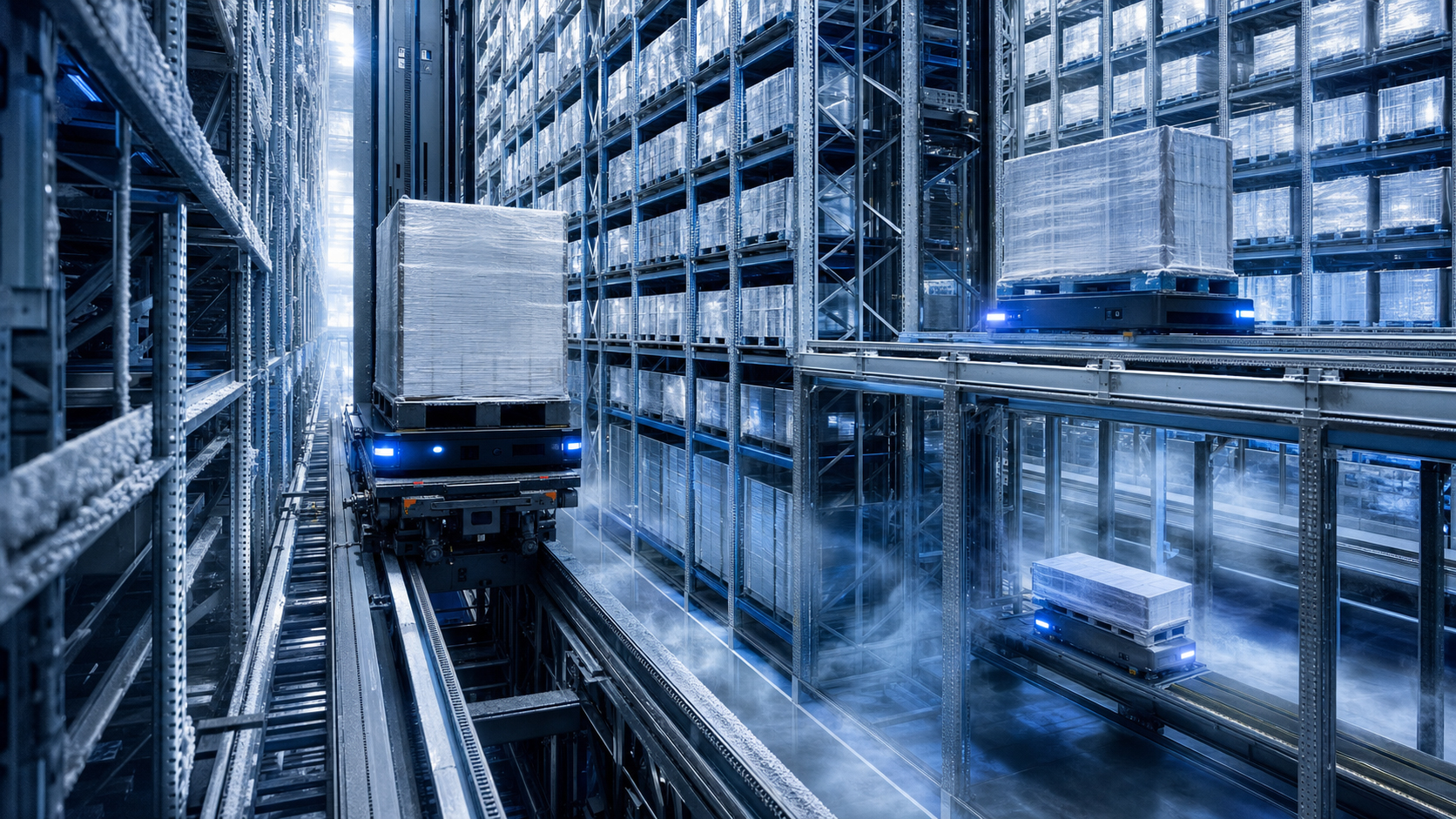
The ticking time bomb in the cold storage: Why outdated technology will soon mean the end – Stricter F-gas regulations and pharmaceutical requirements – Creative image: Xpert.Digital
Energy-guzzling refrigerated logistics: How AI and automation are saving the industry from collapse
A data error costs the license: Why pharmaceutical cold chains now need to radically rethink their strategies
Retrofit mandate and cost explosion: How cold chain logistics must reinvent itself in 2026
In 2026, cold storage logistics faces an unprecedented stress test that will fundamentally shake the business models of many operators. Exploding energy costs for continuous operation, the strict phase-down of the new EU regulation on fluorinated greenhouse gases, and relentless compliance requirements from the pharmaceutical industry are forcing the sector to radically rethink its approach. Cold storage facilities are no longer simple warehouses with air conditioning, but highly complex, data-driven systems where a single documentation error can lead to the loss of a license. Those still planning in silos are jeopardizing their competitiveness. It is becoming clear: only the intelligent integration of state-of-the-art automation technology, AI-supported load management, and natural refrigerants will ensure economic survival in an industry where refrigeration is increasingly becoming the most expensive commodity in the entire supply chain.
Cold storage logistics under power: Why energy, refrigerants and pharmaceutical compliance determine the survival of cold storage facilities
When cold becomes the most expensive commodity in the supply chain
By 2026, cold chain logistics will reach a point where three previously separate issues inevitably converge: the exploding energy costs of refrigeration operations, the regulatory-mandated switch to climate-friendly refrigerants, and the increasingly stringent requirements for the pharmaceutical cold chain. Anyone who considers these three dimensions in isolation will miss the true dynamics of the industry. Those who think of them together will recognize that cold storage facilities today are less like buildings with refrigeration units and more like highly complex technical and regulatory systems whose economic success depends on the intelligent integration of operating costs, system technology, and data integrity.
Cold storage facilities are the epitome of continuous energy consumers. Unlike many other commercial properties, their refrigeration systems run around the clock, seven days a week, regardless of holidays or fluctuations in demand. This physical intransigence makes energy a key cost factor and, at the same time, the greatest lever for efficiency gains. Simultaneously, the new EU regulation on fluorinated greenhouse gases is forcing operators and manufacturers to fundamentally overhaul their technical equipment within tight timeframes. And in pharmaceutical logistics, authorities worldwide are tightening the requirements for traceability and validation of the cold chain to such an extent that a single documentation error can mean the loss of a distribution license.
This article examines how these three forces interact, what economic consequences result for operators, manufacturers and system integrators, and what technological solutions the market already offers.
The underestimated cost driver: electricity
Anyone analyzing the economic viability of a cold storage facility inevitably encounters the question of energy consumption first. After personnel costs, energy costs represent the second largest expense and can account for up to thirty percent of a cold storage facility's total operating costs. Approximately two-thirds of this energy consumption is attributable to the refrigeration system itself, while the remainder is distributed among lighting, conveyor technology, mobile racking systems, office space, and the refrigeration of trucks.
Other analyses paint an even more drastic picture, estimating that sixty to seventy percent of a cold storage facility's total electricity consumption is attributable solely to compressors, condensers, and evaporators, which must operate continuously to maintain a constant temperature. Outdated refrigeration systems with poor efficiency, measured by their coefficient of performance (COP), consume up to twice the energy of modern systems. Additional sources of loss, such as open doors, poorly insulated roofs, or inefficient control technology, add up to considerable, often invisible, extra costs that go undetected in many businesses due to a lack of systematic energy analysis.
The sheer scale of electricity costs quickly puts the initial purchase price of refrigeration equipment into perspective. Over a five-year period, the electricity costs of a cold storage facility can exceed the original equipment price two to three times. This realization fundamentally shifts the investment logic: Anyone who focuses solely on the lowest purchase price when building or modernizing a cold storage facility is highly likely to make the wrong economic decision. Only a total cost of ownership analysis over the entire lifespan of the system provides sound investment advice.
Key factors for the energy transition in cold storage
The good news for operators lies in the multitude of concrete optimization levers that have already proven their worth in practice. According to recent case studies, compressors with variable frequency control, high-quality PIR insulating panels, and intelligent control systems enable savings of between twelve and eighteen percent with payback periods of only ten to fourteen months. Such payback periods are exceptionally short compared to other industrial efficiency measures, making corresponding investments almost essential from a business perspective.
Another increasingly relevant tool is intelligent load management, where artificial intelligence links the energy consumption of a cold storage facility to volatile electricity prices and grid availability. A documented practical example from the German market shows that an AI-supported algorithm, which controls cost-optimized procurement based on a day-ahead electricity contract, saves an average of 14.7 percent on electricity costs, and on individual operating days even up to 69.8 percent. Such systems shift energy-intensive cooling processes to times of low electricity prices and high grid availability without jeopardizing the temperature chain and can also be integrated with self-generated photovoltaic power.
The current market situation further favors such investments. The German Association of Cold Storage and Refrigerated Logistics Companies reports an average occupancy rate of 73.6 percent for cold storage facilities in 2025, a significant increase compared to 70.6 percent in the previous year. Higher occupancy rates mean higher fixed cost coverage, but at the same time create the investment leeway to invest in efficiency technologies, the benefits of which are recouped particularly quickly with high operational occupancy.
The F-Gas Regulation as a time bomb in the engine room
Parallel to the energy issue, the revised EU Regulation 2024/573 on fluorinated greenhouse gases is bringing about a regulatory upheaval that affects the technical infrastructure of virtually every existing cold storage facility. The regulation, which entered into force on March 11, 2024, replaces the previous version from 2014 and significantly tightens the requirements for operators and manufacturers of refrigeration and air conditioning systems in several key areas.
The core principle is the so-called phase-down, the gradual reduction of the total amount of hydrofluorocarbons (HFCs) permitted in the EU, calculated in CO2 equivalents. Starting from a baseline of 100 percent in 2015, only 21 percent of this amount may be placed on the market from 2030 onwards, representing a reduction of 79 percent. The use of HFCs is to be completely phased out by 2050. For stationary refrigeration systems with a high global warming potential (GWP), staggered ban dates apply, depending on the system's capacity. For example, a widely used refrigerant such as R410A may no longer be used as new material for maintenance purposes from 2032 onwards, but only in recycled or reclaimed form, provided that the company performing the maintenance was itself the original recycler.
For operators of refrigeration systems, this means specifically expanded obligations for leak testing, the mandatory use of leak detection systems, and strict repair deadlines: If a leak occurs, the system must be repaired immediately and inspected by a certified person within one month. In addition, there are comprehensive record-keeping obligations as well as obligations to recover fluorinated greenhouse gases through recycling, reprocessing, or proper disposal. In the future, companies will only be able to obtain production rights and quotas for placing HFCs on the market via a newly established, central F-gas portal, which significantly tightens market control for European authorities.
Of particular concern for cold chain logistics is the fact that member states had to notify the European Commission of their national sanctions rules by January 1, 2026, and significantly harsher penalties for violations are to be expected than under the previous chemicals sanctions regulation, which already provided for fines of up to two hundred thousand euros and, in serious cases, even prison sentences of up to five years.
Retrofit imperative and investment pressure in existing buildings
This creates a narrow planning window for operators of existing cold storage facilities, which is often underestimated. Systems currently operating with conventional HFC refrigerants must either be converted to natural refrigerants such as ammonia, carbon dioxide, or hydrocarbons, or completely replaced within the coming years. Since retrofit projects in existing facilities are technically complex and generally involve several months of downtime or at least significant capacity reductions, considerable coordination pressure arises between technical conversion and operational continuity.
Those who identify these transition windows early can combine retrofit measures with already planned capacity expansions, energy efficiency improvements, and the introduction of new automation technology. Conversely, those who only react shortly before the respective deadlines risk entering an oversupplied market for certified specialists and replacement equipment, which further increases conversion costs. Combining energy efficiency improvements with refrigerant conversion is particularly advantageous, as new systems operating with natural refrigerants often have a significantly better efficiency than older HFC systems, thus offering a double return on investment.
Pharmaceutical cold chain: When a single data point determines the operating license
While energy and refrigerant issues primarily affect the technical infrastructure of a cold storage facility, the pharmaceutical cold chain presents a completely different kind of complexity, focusing primarily on processes, documentation, and data integrity. In the pharmaceutical supply chain, quality responsibility does not end at the manufacturer's factory gates but extends throughout the entire distribution chain, all the way to the pharmacy or the patient. The European Good Distribution Practice (GDP) guidelines and the EU GMP guidelines form the regulatory backbone for this and are supplemented by national regulations such as Section 7 of the German Ordinance on the Manufacture of Medicinal Products and Active Pharmaceutical Ingredients (AM-PBQ), which requires demonstrably suitable procedures for storage and transport, either in writing or electronically.
The focus of official audits is increasingly shifting from simply verifying compliance with a specific temperature to ensuring that this compliance can be documented completely, immutably, and fully traceable. The so-called ALCOA Plus principle requires that temperature and humidity data be attributable, legible, recorded simultaneously, original, and precise at all times. Every interaction with the monitoring system—whether acknowledging an alarm, changing a limit value, or logging in—must be electronically signed, time-stamped, and immutably recorded in the audit trail. If the network connection or power supply fails, the data must be temporarily stored locally on the sensor until the connection to the central system is restored; only then will the data retain its evidentiary value for the next official inspection.

Expert partner in warehouse planning and construction
Why validated temperature monitoring is becoming a key success factor in cold chain logistics
Validation as an entry ticket, not as a formality
Simply installing a monitoring system is no longer sufficient for regulatory compliance. The burden of proof for a system's suitability lies with the operator and requires a structured validation and qualification strategy, which in practice is usually based on the GAMP 5 guidelines and involves the stages of design, installation, operational, and performance qualification. A particularly critical step is temperature mapping, in which the climatic conditions of a warehouse are systematically mapped under worst-case conditions, i.e., in both summer and winter profiles, to identify so-called hot spots and cold spots. Permanent sensors for continuous monitoring must be positioned precisely at these critical points, and the corresponding mapping documentation is among the documents that inspectors routinely request during audits to verify the scientific rationale for sensor placement.
If, despite all precautions, a temperature deviation occurs outside the specified range, for example, outside the standard cooling range of two to eight degrees Celsius, a compliant system must react immediately and in multiple stages. A clear distinction must be made between early warnings, which allow for timely intervention, and actual critical deviations, which result in the immediate blocking of the affected batch. Escalation chains ensure that alarms reliably reach responsible personnel, and every alarm must be acknowledged by authorized personnel and accompanied by a documented reason, forming the basis for subsequent corrective and preventive action processes. Violations of these requirements can lead to batch blocking, product recalls, and, in the worst case, the loss of the manufacturing or distribution license. Therefore, robust monitoring is no longer merely an IT detail, but a strategic risk management issue at the executive level.
Automation as the common denominator of the three force fields
Given this triple burden of energy costs, refrigerant regulation, and pharmaceutical compliance, it becomes clear why automation technology in cold chain logistics has evolved into a strategic rather than merely operational issue. Automated storage and retrieval systems, known in the industry as AS/RS, make it possible to store refrigerated and frozen volumes in the smallest possible space while simultaneously drastically reducing the need for personnel in extremely cold and therefore demanding working environments. Suppliers like Daifuku, which has been developing specialized AS/RS solutions for deep-freeze applications for decades, point out that their systems originated in the 1970s in response to the growing demand for frozen food and that modern stacker cranes now operate reliably at heights of around forty meters and at operating temperatures as low as minus thirty degrees Celsius.
The close relationship between height, density, and refrigeration efficiency is no coincidence, but follows a clear economic logic: the more compact and taller an automated cold storage facility can be, the smaller the building envelope to be cooled per pallet space, and the lower the specific energy costs per stored unit. Automated unit-load and mini-load systems also reduce the frequency and duration of open doors and airlocks, which are among the biggest invisible energy losses in conventional, labor-intensive cold storage facilities.
Modular robotics as an answer to volatile order structures
Alongside the classic AS/RS architecture, a second, complementary automation logic is increasingly establishing itself in the industry: modular, fleet-based sorting and transport robotics. The new sorting and transfer robot series from a leading Japanese intralogistics provider demonstrates how this technology specifically addresses the growing complexity of modern distribution centers. Instead of relying on rigid, permanently installed conveyor technology that continuously consumes energy and suffers mechanical wear regardless of actual throughput, these systems operate with autonomous vehicle fleets whose capacity can be dynamically adjusted to the actual order volume.
This flexibility is particularly relevant for refrigerated logistics, as chilled and frozen goods regularly experience extreme seasonal demand peaks, for example around holidays or promotional periods, while during quieter phases, part of the vehicle fleet can simply be switched off without fixed infrastructure consuming energy unnecessarily. At the same time, the distributed architecture of many independent units ensures significantly higher reliability than with classic, centrally controlled sorting systems: If a single vehicle breaks down, this only affects the load currently being transported, while the rest of the operation continues uninterrupted. Maintenance work can therefore be carried out during operation, without the complete overnight shutdowns that were often necessary in traditional sorting systems.
For cold storage facilities with limited floor space, modular sorting systems, thanks to tiltable trays and narrower aisle widths, sometimes require less than half the floor space of conventional sorting systems, representing a significant economic advantage in already expensive-to-cool spaces. These systems cover a wide range of applications, from palletized goods and containers to individual items, and can be flexibly integrated into existing refrigeration infrastructure without requiring a complete new building.
The lifecycle concept: Why service extends beyond the investment
A frequently underestimated aspect in the economic analysis of automated cold chain logistics is the life cycle of the technology used. Unlike in many other industries, operators of refrigerated and deep-freeze warehouses can practically not afford unplanned downtime, as even a few hours without a functioning refrigeration system can lead to irreversible losses of sensitive goods. Predictive maintenance strategies, continuous condition monitoring of drives, bearings, and control components, as well as long-term service agreements with the equipment manufacturer, therefore become an integral part of the investment decision, not a subsequent add-on.
This lifecycle approach is increasingly linked to the need to technically overhaul existing plants as part of the F-gas transition. Plant operators who enter into long-term service partnerships with specialized system integrators can combine retrofit measures, efficiency improvements, and automation technology upgrades into a coordinated roadmap, instead of reacting to each regulatory or technical challenge in isolation. For manufacturers and integrators, this demand opens up a growing service business that extends far beyond the mere sale of plants and increasingly includes data-driven remote monitoring, predictive maintenance, and modular retrofit options.
Interaction of the three force fields in the investment decision
Anyone planning, modernizing, or operating a refrigerated or deep-freeze warehouse today can no longer consider the three force fields described above in isolation. An investment in energy-efficient refrigeration technology that simultaneously relies on natural refrigerants in a future-proof manner from a regulatory perspective automatically creates better conditions for stable, verifiable temperature conditions, as required by the pharmaceutical cold chain. Conversely, increasing automation through AS/RS systems and modular sorting robotics necessitates a robust, redundant power supply and sophisticated load management to prevent uncontrolled peak loads from undermining the advantages of the technology.
For operators, this means that strategic investment decisions must always consider all three dimensions simultaneously: the energy balance across the entire life cycle, the regulatory compliance of the refrigerants used, and the ability to document temperature and process data completely and in an audit-proof manner. For manufacturers and system integrators who can offer solutions along all three axes—from highly efficient AS/RS architecture and modular robotics to life-cycle-accompanying service—this creates a significant competitive advantage over suppliers who only address individual aspects.
The coming years will show which market participants most consistently translate this complexity into integrated, economically compelling overall solutions. Given the tight regulatory timeframes of the F-Gas Regulation, structurally rising energy costs, and the relentless demands of pharmaceutical customers, the pressure on isolated, future-proof cooling infrastructure is likely to intensify further in the coming years, while integrated, technologically advanced solutions increasingly become the economic standard.
Your intralogistics experts

Consulting, planning and implementation of complete solutions for high-bay warehouses and automated storage systems - Image: Xpert.Digital
More information here:
Your global marketing and business development partner
☑️ Our business language is English or German
☑️ NEW: Correspondence in your native language!

Konrad Wolfenstein
I and my team are happy to be available to you as your personal advisor.
You can contact me by filling out the contact form here [email protected]:or simply call me at +49 7348 4088 965. My email address is
I'm looking forward to our joint project.
☑️ SME support in strategy, consulting, planning and implementation
☑️ Creation or realignment of the digital strategy and digitization
☑️ Expansion and optimization of international sales processes
☑️ Global & Digital B2B trading platforms
☑️ Pioneer Business Development / Marketing / PR / Trade Fairs
Our global industry and economic expertise in business development, sales and marketing

Our global industry and economic expertise in business development, sales and marketing - Image: Xpert.Digital
Industry focus areas: B2B, digitalization (from AI to XR), mechanical engineering, logistics, renewable energies and industry
More information here:
A thematic hub offering insights and expertise:
- Knowledge platform covering global and regional economies, innovation and industry-specific trends
- A collection of analyses, insights, and background information from our key areas of focus
- A place for expertise and information on current developments in business and technology
- A hub for companies seeking information on markets, digitalization, and industry innovations










