
Why the world is threatened with financial collapse: The ticking debt bomb
Xpert Pre-Release

Available in 27 languages 📢
Prefer Xpert.Digital on GoogleⓘPublished on: September 28, 2025 / Updated on: September 28, 2025 – Author: Konrad Wolfenstein

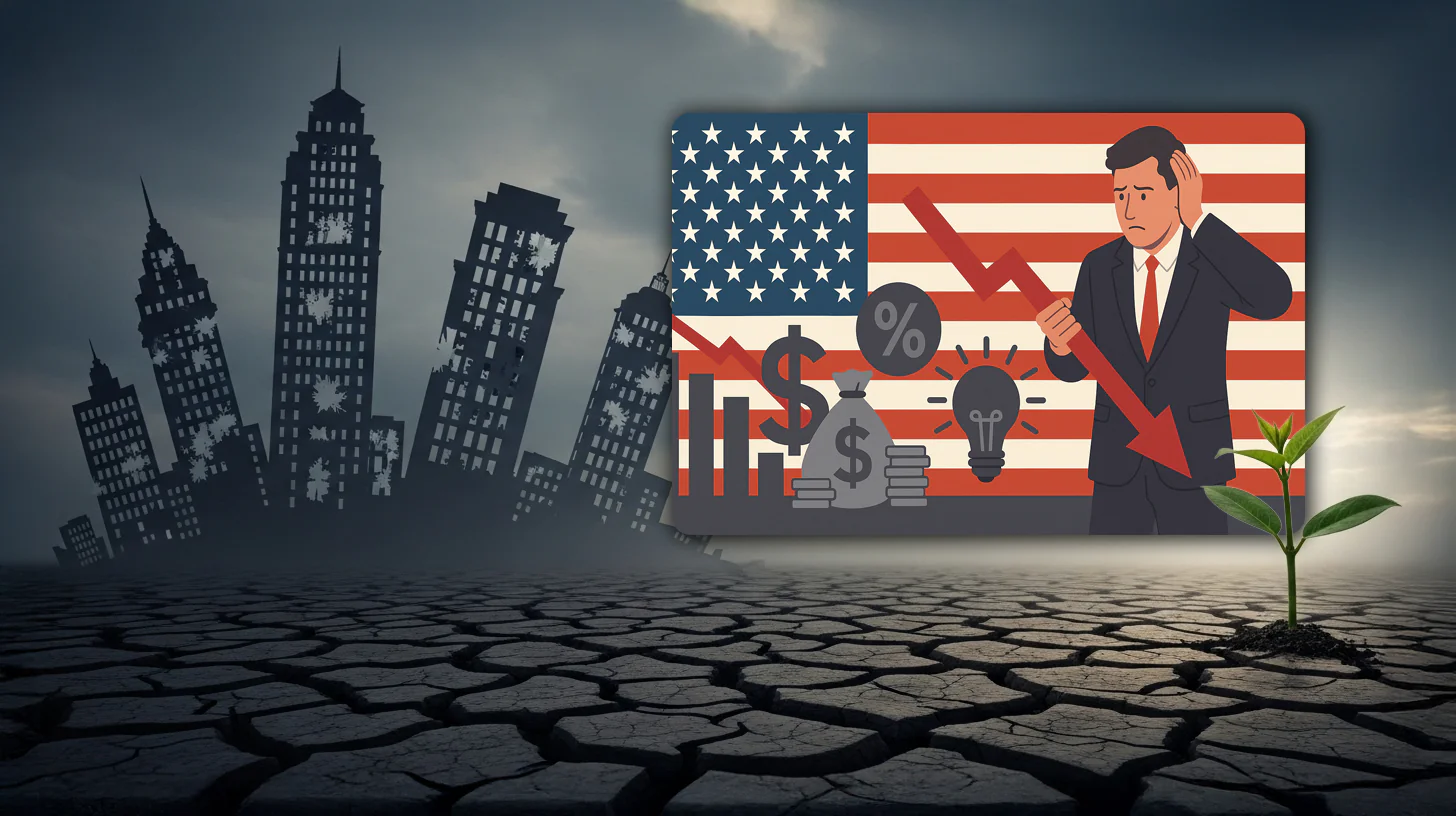
Why the world is threatened with financial collapse: The ticking debt bomb – Image: Xpert.Digital
The end of the stability anchor: How Germany and France are bringing the Eurozone to the brink of collapse
“You will panic”: Head of the world’s largest bank sounds the alarm – are we facing the next financial crisis?
A gigantic debt bomb is ticking at the heart of the global financial system, threatening to trigger a meltdown that could dwarf anything previously known. Around the world, nations have amassed mountains of debt reminiscent of the post-World War II era, but the underlying conditions are far more fragile. Led by the US, whose national debt has exploded to over $37 trillion, the entire system is teetering on the brink. Europe, too, faces a critical test: while crisis-stricken countries like France are sliding ever deeper into debt with record deficits, even Germany, once a pillar of stability, is beginning to crumble and abandon its fiscal discipline.
Leading financial experts like Jamie Dimon, CEO of the world's largest bank, JPMorgan Chase, are sounding the alarm. His dire warning of a "crack" in the bond market and his prediction that "you will panic" are more than just pessimistic assessments—they are an indication of the extreme nervousness in the markets. The "truss moment" in Britain vividly demonstrated how quickly investor confidence can evaporate and bring down a government within a matter of days. Political pressure on central banks, exploding interest payments, and structural deficits are creating a highly explosive cocktail. This article analyzes the ticking time bomb of global sovereign debt, examines the epicenters of the crisis from Washington to Paris, and explains why the question is no longer whether the big bang will come, but only when.
Suitable for:

What are the main problems of global government debt today?
Global government debt has reached alarming levels reminiscent of the post-World War II era. The debt levels of Western industrialized nations have risen to a point where only nine countries worldwide still hold the highest AAA credit rating from all three major rating agencies. This extreme debt affects not just individual countries, but the entire global financial system.
The United States leads this worrying trend. Its national debt has more than quadrupled in the past 20 years and now stands at over $37 trillion. This corresponds to a debt-to-GDP ratio of approximately 124 percent. By comparison, the 100 largest companies in the Nasdaq index have a combined market capitalization of just under $30 trillion.
In Europe, the picture is more nuanced. While the Eurozone as a whole has a debt-to-GDP ratio of 87.4 percent, it is divided into two very different blocs. The six most indebted countries – Italy, France, Spain, Greece, Belgium, and Portugal – together have a debt-to-GDP ratio similar to that of the USA. Italy leads the way with 135.3 percent, followed by France with 113.0 percent.
Although Germany has managed to reduce its debt-to-GDP ratio to 62.5 percent, a trend reversal is emerging. The relaxation of the debt brake decided in March 2025 opens up new borrowing possibilities of up to 220 billion euros. This development jeopardizes Germany's role as an anchor of stability in the eurozone.
What warnings are financial experts issuing?
Leading financial experts are increasingly sounding the alarm about an impending collapse of the bond markets. Jamie Dimon, CEO of the world's largest bank, JPMorgan Chase, has already warned of a "crack" in the bond market and predicted to his supervisors: "You will panic." This warning is particularly noteworthy as it comes from one of the world's most influential bankers, with over 19 years of experience as a CEO.
Dimon's concerns focus on the enormous government spending and the exploding debt following the Covid-19 pandemic. He emphasizes that these are “huge sums” whose long-term effects are not fully understood. The US's monthly interest payments now amount to $84 billion – more than Germany spends annually on its entire debt service.
Former IMF Deputy Managing Director Gita Gopinath has already called for a “strategic shift” and described the global fiscal situation as “worse than you think.” She warned of the risks of reducing debt too quickly, but at the same time advocated for structural reforms to ensure the long-term sustainability of public finances.
Particularly alarming is the development of bond yields. 30-year US Treasury bonds reached a 52-week high of over 5 percent in May 2025. At the same time, the US lost its last Aaa rating from Moody's, thus definitively losing its status as the world's safest borrower.
Suitable for:
How is the situation developing in the USA under Trump?
Donald Trump's return to the presidency is significantly exacerbating the already precarious US budget situation. His program of tax cuts and tariffs is placing an additional burden on the federal budget, while structural deficits continue to grow. The budget deficit reached 7.5 percent in 2024 despite full employment – a level no other industrialized nation can afford.
Even more worrying is Trump's direct attack on the independence of the Federal Reserve. He is attempting to fire Fed Governor Lisa Cook over alleged personal misconduct. This unprecedented move threatens the autonomy of the world's most powerful central bank and could trigger turmoil in the financial markets.
Trump also installed Stephen Miran as the new Fed governor, who opened a debate about a “third mandate” for the central bank. In addition to price stability and full employment, the Fed would now also be responsible for “moderate long-term interest rates.” This interpretation could force the central bank to artificially keep yields on long-term government bonds low to protect the government.
Such a politicization of monetary policy carries significant inflation risks. Where cheap credit becomes the permanent goal, the danger of currency devaluation increases dramatically. Former Fed chairs such as Ben Bernanke, Janet Yellen, and Alan Greenspan, along with 18 other high-ranking economic officials, warned of the consequences for financial market stability.
What is happening in France and what are the consequences?
France is in a particularly critical situation that threatens the entire European financial system. The country is deeply politically divided, and several governments have already failed to curb its ever-increasing debt. The budget deficit reached 5.8 percent of GDP in 2024 and could even exceed 6 percent in 2025.
Rating agencies are reacting with sharp downgrades. Fitch lowered France's credit rating from AA- to A+, and DBRS followed suit with a downgrade from AA (high) to AA. Moody's and Standard & Poor's will publish their ratings in the coming months, with further downgrades expected.
The loss of confidence is already evident in the capital markets. Interest rates on French government bonds have risen to the level of Italy – a country traditionally considered a notorious debtor. France is now paying similarly high risk premiums for ten-year bonds as Italy. This is a dramatic shift for the eurozone's second-largest economy.
Should France have to resort to European rescue mechanisms, hundreds of billions of euros would be at stake for Germany. The European Central Bank would then – as it did with Italy – effectively have to stabilize interest rates on French government bonds, even though its formal mandate only stipulates price stability.
Suitable for:

What lessons can be learned from the truss incident in Great Britain?
The “Truss moment” of 2022 has become a nightmare for many governments worldwide, demonstrating how quickly bond markets can bring down a government. Prime Minister Liz Truss lost her position after just 49 days in office, following the collapse of the bond markets with her unfunded tax-cut plans.
Events unfolded dramatically: the pound plummeted to an all-time low against the dollar, bond yields skyrocketed, and pension funds teetered on the brink of collapse. The Bank of England had to intervene three times separately to prevent a complete meltdown of the British government bond market. Only Truss's resignation and the withdrawal of her tax plans calmed the markets.
This example illustrates the power of financial markets over politics. Investors can bring down a government within days if they lose confidence in its debt sustainability. The 30-year British government bonds, traditionally considered particularly safe, proved to be highly volatile.
Similar patterns repeated themselves in 2024. When the Labour government presented plans for drastic spending increases, the markets reacted with panic selling. Yields on ten-year British bonds rose by more than 20 basis points in a single week – the sharpest increase of the year. Market observers were already speaking of a “Liz Truss Moment 2.0”.
Our global industry and economic expertise in business development, sales and marketing

Our global industry and business expertise in business development, sales and marketing - Image: Xpert.Digital
Industry focus: B2B, digitalization (from AI to XR), mechanical engineering, logistics, renewable energies and industry
More about it here:
A topic hub with insights and expertise:
- Knowledge platform on the global and regional economy, innovation and industry-specific trends
- Collection of analyses, impulses and background information from our focus areas
- A place for expertise and information on current developments in business and technology
- Topic hub for companies that want to learn about markets, digitalization and industry innovations
The end of the stability dogma: Germany's new debt policy and its consequences
How are central banks reacting to debt pressure?
The major central banks are increasingly under political pressure to keep the financing costs of highly indebted countries low. This development jeopardizes their credibility and independence, which are essential for stable monetary policy.
The Federal Reserve is at the heart of this issue. Trump's attempt to dismiss Fed Governor Lisa Cook represents an unprecedented attack on central bank independence. Nearly 600 economists, including Nobel laureates such as Joseph Stiglitz and Paul Romer, criticized this move as a threat to the institution's credibility.
The European Central Bank has already effectively begun stabilizing interest rates for crisis-stricken countries. Through targeted bond purchases, it is supporting Italy and will have no choice but to act differently in the case of France. Although its formal mandate only includes price stability, it has de facto become the savior of over-indebted euro states.
This development poses significant risks to currency stability. If central banks are primarily tasked with ensuring government financing, they lose their ability to effectively combat inflation. Confidence in currencies could erode, leading to further instability.
Suitable for:

What role does Germany play as an anchor of stability?
Germany was long considered an anchor of stability for the euro and a model for sound public finances. However, this role is increasingly faltering. While its debt-to-GDP ratio of 62.5 percent is still significantly below the EU average, policymakers have undergone a fundamental shift.
In March 2025, Germany significantly relaxed its debt brake. The changes allow for a special infrastructure fund of €500 billion, exempt defense spending exceeding 1 percent of GDP from the debt brake, and grant the states additional borrowing leeway. These reforms could increase the borrowing capacity by up to €220 billion by 2030.
The Bundesbank itself supports a further easing of the debt brake. It proposes raising the debt limit to as high as 1.4 percent of GDP for debt ratios below 60 percent. IMF Deputy Managing Director Gita Gopinath also recommends a moderate easing of one percentage point for Germany.
This development is problematic for European stability. If even Germany abandons its fiscal discipline, the eurozone will lose its most important anchor of stability. Furthermore, conflicts with EU debt rules are likely, as Germany could once again violate the Maastricht criteria.
What are the risks to the global financial system?
The cumulative effect of the global debt crisis could lead to a meltdown of the world financial system. The US, as the leading financial center and issuer of the world's reserve currency, the dollar, is particularly critical. Problems of the American debtor would immediately spread to global markets.
China and other challengers are already working to break the dollar's dominance. A crisis of confidence in US public finances could accelerate this process and destabilize the international monetary system. The US's current "exorbitant privilege" of being able to borrow in its own currency could disappear.
Bond markets are already showing signs of stress. After a long period of minimal or even negative interest rates, borrowing costs have risen noticeably. If investors abruptly lose confidence in supposedly safe government bonds, massive disruptions are imminent: plummeting bond prices will destabilize banks and insurance companies, while soaring interest rates will further exacerbate budget crises.
Jamie Dimon is particularly concerned about the impact on the real economy. Rising long-term interest rates are putting massive strain on borrowers, from small businesses to the real estate sector. His bank is already observing increasing weaknesses in corporate balance sheets, especially in the mid-market lending sector.
What are the possible solutions to the debt crisis?
Solutions to the global debt crisis are limited and politically difficult to implement. Higher economic growth would be the ideal solution, as it automatically lowers debt ratios. However, structural obstacles to growth in developed economies are making this increasingly unlikely.
Spending cuts are unavoidable, especially where the tax burden is already very high. France is attempting this with a €53 billion austerity package, but is encountering considerable political resistance. Germany, on the other hand, is planning the opposite approach and intends to finance its investments through increased borrowing.
Controlled inflation could reduce the real debt burden. Many politicians find the risk of somewhat higher inflation acceptable, especially since the gradual devaluation of money actually reduces government debt. However, this strategy carries the risk of destabilizing inflation expectations.
Central banks face an irresolvable dilemma. They must choose between price stability and financial stability. In a crisis, only money creation remains as a last resort – “whatever it takes,” as Mario Draghi put it in 2012. But this option undermines confidence in currencies in the long run.
Suitable for:

What does this mean for the future of the global economy?
The ticking debt bomb threatens the stability of the global economic order. The historical parallels to the period after the Second World War are undeniable, but today the growth dynamism and fiscal discipline of that era are lacking.
The current debt policy cannot continue in its current form. The built-up tension has become highly explosive. Once market confidence is lost, crises can escalate into systemic shocks within days, as the Truss moment demonstrated.
The likelihood of a global financial crisis is increasing daily. Jamie Dimon's warning that it's not a question of if, but when the next shock will come reflects the assessment of many financial experts. The debt bomb is ticking, and time for preventative measures is running out.
The coming years will show whether the global economy manages an orderly transition to more sustainable public finances or whether it is engulfed by an uncontrollable debt crisis. The window of opportunity for voluntary corrections is rapidly closing. What remains is the hope for the wisdom of political decision-makers and the resilience of global financial systems.
We are there for you - advice - planning - implementation - project management
☑️ Our business language is English or German
☑️ NEW: Correspondence in your national language!

Konrad Wolfenstein
I would be happy to serve you and my team as a personal advisor.
You can contact me by filling out the contact form or simply call me on +49 7348 4088 965 (Munich) . My email address is: wolfenstein ∂ xpert.digital
I'm looking forward to our joint project.
☑️ SME support in strategy, consulting, planning and implementation
☑️ Creation or realignment of the digital strategy and digitalization
☑️ Expansion and optimization of international sales processes
☑️ Global & Digital B2B trading platforms
☑️ Pioneer Business Development / Marketing / PR / Trade Fairs
🎯🎯🎯 Benefit from Xpert.Digital's extensive, five-fold expertise in a comprehensive service package | BD, R&D, XR, PR & Digital Visibility Optimization

Benefit from Xpert.Digital's extensive, fivefold expertise in a comprehensive service package | R&D, XR, PR & Digital Visibility Optimization - Image: Xpert.Digital
Xpert.Digital has in-depth knowledge of various industries. This allows us to develop tailor-made strategies that are tailored precisely to the requirements and challenges of your specific market segment. By continually analyzing market trends and following industry developments, we can act with foresight and offer innovative solutions. Through the combination of experience and knowledge, we generate added value and give our customers a decisive competitive advantage.
More about it here:








