
The LogiMAT 2026 theme on China and global logistics: Why nearshoring will fail without new warehouse technology
Xpert Pre-Release

Available in 27 languages 📢
Prefer Xpert.Digital on GoogleⓘPublished on: January 30, 2026 / Updated on: January 30, 2026 – Author: Konrad Wolfenstein
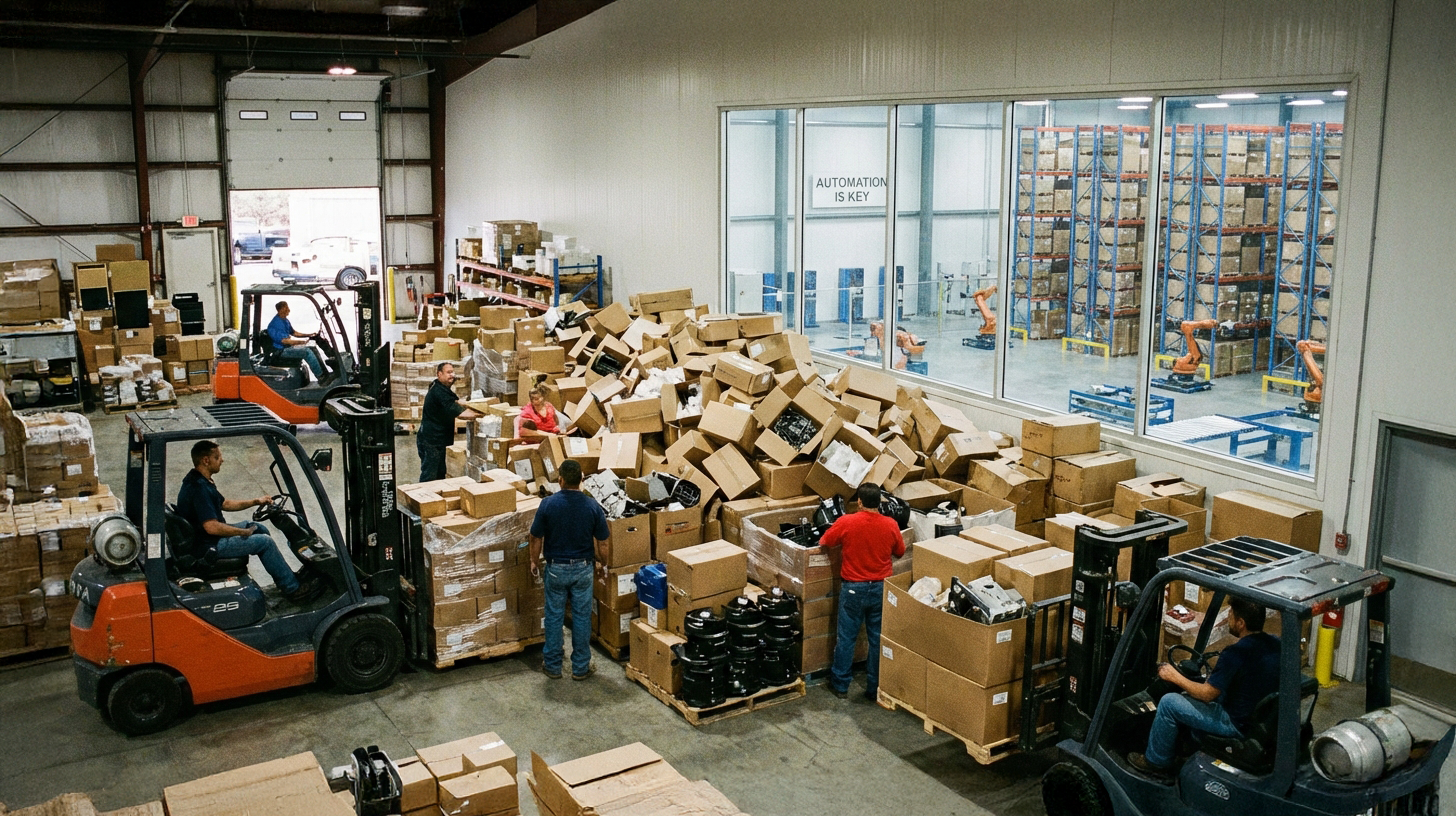
The LogiMAT 2026 theme on China and global logistics: Why nearshoring will fail without new warehouse technology – Creative image: Xpert.Digital
73% dissatisfied: The great exodus from China and why logistics is now facing a transformation
LogiMAT 2026: Why the return of production to Europe will be decided in the warehouse
The era of unconditional dependence on the Far East is drawing to a close. What for years was considered an immutable law of globalization—production in China as the indispensable "Eldorado" of cost efficiency—will be replaced by a harsh reality in 2026: Geopolitical tensions, dwindling trust, and exploding risks are forcing European companies to radically reverse course. The figures speak for themselves: When only 12 percent of companies are optimistic about the future of their business in China, the "China exodus" is no longer a vague prediction, but already well underway.
But the trend toward nearshoring—the relocation of production back to Europe, particularly to growth regions like Poland or Portugal—carries an underestimated risk. Companies that merely relocate without fundamentally modernizing their logistics infrastructure risk costly failure. Returning to Europe means not only shorter transport routes but also abandoning the old "just-in-time" principle. In a volatile world, warehousing transforms from a necessary evil into a strategic shield.
This is where the central debate at LogiMAT 2026 begins: Nearshoring only works if it is supported by a high degree of automation, AI-driven processes, and flexible robotics. In high-wage countries and given a dramatic shortage of skilled workers, manual warehouse work is no longer a viable model. Those who don't want to fall behind must understand the digital twin, autonomous mobile robots (AMRs), and intelligent warehouse management systems as the core of their new European strategy. The following article analyzes why the geographical realignment and the technological transformation of intralogistics are two sides of the same coin – and how companies can master this balancing act.
Suitable for:

Why are European companies currently relocating their production away from China?
The era of unconditional dependence on Chinese production sites is coming to an end. European companies are undergoing a fundamental strategic shift, which is manifested in concrete figures: 73 percent of European firms operating in China report a continuous deterioration of the business environment – the fourth consecutive record high. Confidence in rising profits in China has plummeted dramatically: While almost half of the companies were optimistic about the future four years ago, by 2026 this figure will have dropped to just 12 percent.
This shift in sentiment is already reflected in concrete measures. Seventeen percent of companies have already withdrawn projects from China, and another 16 percent are planning concrete steps. The net outflow of foreign direct investment amounted to US$4.3 billion in the first half of the year alone. The reasons are multifaceted: Geopolitical tensions, increasing political influence on business decisions, trade conflicts with the US and Europe, and the increased competitiveness of Chinese competitors in key technologies such as e-mobility, solar technology, and artificial intelligence have transformed what was once perceived as an Eldorado into a high-risk area.
The dependence of German companies on the Chinese market is proving to be a strategic risk: Almost half of all manufacturing companies source critical intermediate products directly or indirectly from China. China holds a de facto monopoly on rare earth elements, which are used in virtually all high-tech products, with a market share of over 90 percent in processing. These one-sided dependencies pose significant supply risks, which have materialized due to China's recent export restrictions on semiconductors and critical raw materials.
Where do companies invest instead – and why specifically in Europe?
For the first time in the history of globalization, companies are not primarily relocating to other Asian markets or Mexico, but back to Europe. The share of companies investing in nearshoring has risen from 42 percent in 2024 to 56 percent in 2025 – and the trend is continuing upward. Major corporations such as Microsoft, Volvo, Sanofi, GSK, Novo Nordisk, Nestlé, and Rheinmetall have announced significant investments in expanding their European production capacities for 2025 and 2026.
Europe is becoming the preferred destination for reinvestment, marking a clear break with previous patterns. The reason for this reshoring lies not primarily in better location conditions or lower costs, but in a fundamental need: predictability. Legal certainty within the EU, similar time zones, cultural affinities, and geographical proximity to the home market enable shorter transport routes, faster communication, and closer monitoring of production processes.
Within Europe, Central and Eastern European countries are emerging as preferred nearshoring destinations. Poland has developed into a veritable nearshoring hub: around 2,000 service centers have been established, employing half a million people. The country has recorded the second-highest GDP growth worldwide over the last three decades and, at over three percent, is projected to be significantly above the EU average by 2025. The Czech Republic, Slovakia, Hungary, and Romania are also gaining considerable importance as production locations.
Portugal is positioning itself as a leading nearshoring location in the EMEA region, with operating costs 30 to 40 percent lower than those of France or the United Kingdom. The European Commission forecasts GDP growth of 1.9 percent for Portugal in 2025 and 2.1 percent in 2026, while the EU average is 1.5 and 1.8 percent, respectively. Cost savings through nearshoring to Eastern Europe are estimated at 30 to 50 percent, while simultaneously carrying significantly lower risks than offshoring to Asia.
Suitable for:

What specific advantages does nearshoring offer compared to production in the Far East?
Geographical proximity through nearshoring reduces transport times from weeks or months to just a few days. A German automotive supplier that relocated the production of electronic components from China to Poland was able to reduce transport costs by 40 percent and shorten delivery times from six to two weeks. This speed of response provides significant competitive advantages in markets increasingly characterized by volatile demand and short product lifecycles.
Reducing supply chain complexity significantly mitigates risks. Disruptions in global supply chains cost large companies an average of US$184 million per year, with 94 percent of surveyed companies reporting negative revenue impacts due to supply chain interruptions. The Eurozone suffered potential cumulative losses of €920 billion by 2023 due to supply chain disruptions, equivalent to 7.7 percent of its gross domestic product. Nearshoring minimizes such exposures through shorter, more stable supply routes.
Operational control and quality assurance are fundamentally easier when geographical proximity is key. More frequent on-site visits, closer collaboration across similar time zones, and the ability to react quickly to problems increase product quality and reduce error rates. Cultural similarity and the absence of language barriers significantly facilitate communication—an advantage often underestimated in the digitized workplace, but crucial for complex technical coordination.
Last but not least, nearshoring enables a significant reduction in the ecological footprint. Shorter transport routes mean fewer CO₂ emissions, which is a compelling argument for companies aiming for a climate-neutral real estate portfolio by 2030. At 65 percent, the willingness to pay for CO₂-neutral buildings is significantly higher than for merely certified sustainable properties.
Why does nearshoring fail without modern warehouse technology?
Relocating production sites closer to European markets only solves part of the strategic challenge. The critical success factor lies in the simultaneous modernization of warehousing and intralogistics systems. Nearshoring operates on different principles than traditional offshoring: Instead of months-long lead times and large storage buffers, short response times and highly flexible processes are now required. These requirements simply cannot be met with outdated warehouse technology.
Companies that engage in nearshoring require flexible, scalable, and efficient warehousing systems that meet both local and global demands. The challenge lies in the fact that while supply chains are becoming shorter, they must also be more flexible. Modern warehousing systems must be able to respond quickly to changes in demand while maintaining high inventory accuracy.
The COVID-19 pandemic and subsequent geopolitical upheavals have forced a fundamental shift in inventory management strategy: from just-in-time to just-in-case principles. Companies must move from a pull strategy with minimal inventory to a push strategy with strategic safety stocks to mitigate supply chain shocks. Production shutdowns are more costly than inventory management – this realization is leading to a reactivation of warehousing.
This strategic realignment, however, requires entirely different warehousing technologies than those used in the just-in-time era. Larger storage volumes combined with high throughput can only be managed through automation. Space must be used efficiently, as warehouse space in Europe is significantly more expensive than in Asia. Automated high-bay warehouses enable up to 80 percent better space utilization than conventional systems, which is a crucial advantage in times of rising real estate costs and space scarcity.
Which storage technologies are particularly suitable for nearshoring strategies?
Modular and scalable warehouse systems, which can adapt to fluctuating requirements, are particularly suitable for nearshoring scenarios. Automated storage and retrieval systems (AS/RS) offer the advantage of high storage density and fast order processing. They utilize robots and automated conveyor systems to store and retrieve goods from racks. In nearshoring scenarios, where speed and efficiency are crucial, such systems are ideal for reducing labor costs and improving responsiveness to market fluctuations.
Multidirectional shuttle systems are gaining increasing importance as a flexible and scalable solution. These systems make optimal use of available space and intensify pallet movement, as the trolleys can move autonomously through the channels and change levels. Manufacturers like DAMBACH will be presenting modern shuttle systems with maximum interface flexibility at MODEX 2026 – from onboard shuttle control with intelligent collision avoidance to a high-performance warehouse control system and fully integrated warehouse management systems.
Autonomous mobile robots (AMRs) are revolutionizing intralogistics with their flexibility. Unlike traditional automated guided vehicles (AGVs), which must follow fixed routes, AMRs can dynamically adapt their routes and adjust to changing environments. They require no central control system or fixed guidance systems; instead, they can independently orient themselves within their surroundings, detect obstacles, and avoid them. The analogy makes it clear: An AMR is like a taxi that can navigate around obstacles and choose new routes, while AGVs function more like trains or trams that can only follow predefined paths.
For order picking, modern nearshoring warehouses rely on goods-to-person systems combined with pick-by-voice or pick-by-light technologies. With goods-to-person systems, goods are automatically transported to the picking workstations, eliminating walking distances and significantly increasing productivity. Pick-by-voice enables paperless order picking with a low error rate and maximum freedom of movement. Order pickers wear a headset through which they receive voice instructions from the warehouse management system and verbally confirm picks – leaving both hands free for the actual task.
How do modern storage systems differ technologically from traditional ones?
The fundamental difference lies in the degree of digitalization and networking. Modern warehouse systems are fully integrated into the company's digital infrastructure and communicate in real time with ERP systems, production control, and transport management. The integration of Warehouse Management Systems (WMS) with Enterprise Resource Planning (ERP) is essential: The ERP creates and manages the master databases, while the WMS controls the operational warehouse processes. This bidirectional synchronization ensures that both systems always reflect the current reality.
The digital twin marks a paradigm shift in warehouse planning and optimization. It virtually maps systems or processes and is fed with real-world system or process data. This allows processes and systems to be simulated, tested, and optimized both before implementation and during operation. KNAPP has been relying on digital twins for planning new intralogistics systems since 2021: New systems, as well as expansions with conveyor technology and workstations, are simulated, tested, and optimized in advance before the first physical component is installed. This reduces on-site commissioning times and error costs, and allows customer-specific requirements to be tested as early as the project preparation phase.
Internet of Things (IoT) technology and artificial intelligence (AI) enable predictive maintenance and self-optimizing processes. Sensors continuously monitor the condition of equipment and can predict when maintenance is required, drastically reducing unplanned downtime. AI-powered analysis and forecasting models optimize inventory management, picking sequences, and resource allocation in real time. The combination of digital twins and AI trains each other in a continuous feedback loop, constantly improving the performance of machine learning.
Cyber-physical systems (CPS) merge computational and physical aspects into a single unit. Advanced robotics in the AutoStore system, for example, dynamically adapts to sensory feedback. Integrated sensors and algorithms monitor product quality in real time during manufacturing, while intelligent control systems adjust lighting, ventilation, and other building functions to meet demand. These technologies are paving the way for Industry 4.0 and the future of production.
LTW Solutions

LTW Intralogistics – Engineers of Flow - Image: LTW Intralogistics GmbH
LTW offers its customers not individual components, but integrated complete solutions. Consulting, planning, mechanical and electrotechnical components, control and automation technology, as well as software and service – everything is networked and precisely coordinated.
In-house production of key components is particularly advantageous. This allows for optimal control of quality, supply chains, and interfaces.
LTW stands for reliability, transparency, and collaborative partnership. Loyalty and honesty are firmly anchored in the company's philosophy – a handshake still means something here.
Suitable for:
Return to Europe: Why this megatrend will fail without automation
What role does automation play in nearshoring?
Automation is not an optional add-on, but rather a key prerequisite for successful nearshoring in high-wage countries. The barrier to entry for automation investments has fallen significantly over the last ten to fifteen years. Linde Material Handling observes that automation has become a strategic necessity in Europe to ensure competitiveness. A small or medium-sized enterprise (SME) can, for example, start with two or three automated guided vehicles (AGVs) for pallet transport and expand the fleet or integrate other tasks as needed. This gradual automation minimizes the risk of misinvestments.
The shortage of skilled workers further intensifies the need for automation. Between 2025 and 2035, the situation will become critical as many experienced employees from the baby boomer generation retire. The lack of qualified personnel is already particularly noticeable in order picking, packaging, and material handling. Automated systems take over repetitive and physically demanding tasks, which not only increases productivity but also improves employee safety. Heavy lifting and repetitive movements can be assisted or taken over by machines, thereby reducing the risk of injuries and workplace accidents.
A key advantage of automation is its scalability. It allows companies to respond flexibly to fluctuations in demand and adjust their capacities as needed, without relying on additional labor. This is particularly important in times of economic uncertainty and volatile markets. The combination of nearshoring and automation creates resilient, adaptive supply chains that ensure both cost efficiency and security of supply.
However, it is important to recognize that automation should not be seen as a complete replacement for human labor, but rather as a valuable complement. Automated systems take over simple, repetitive tasks, while employees are deployed for more demanding and creative activities. Successful integration of humans and machines requires close collaboration and continuous training for employees to prepare them for the new requirements and technologies.
Suitable for:
How quickly do investments in modern warehouse technology pay for themselves?
The cost-effectiveness of modern warehouse technology is better than often assumed. Automated high-bay warehouses often achieve a payback period of only 12 to 18 months. The return on investment (ROI) indicates the timeframe within which the investment is recouped through the resulting savings and improved business processes. Generally, ROI periods of less than five years are targeted for sensible automation projects, with many even achieving payback within three years.
A calculation example illustrates the potential: In a warehouse with 250,000 picks per year, the cost per pick drops from €0.60 (manual) to €0.24 (automated). This results in annual cost savings of approximately €92,000 – the investment pays for itself in about a year and a half. Of course, the exact ROI calculation varies depending on the system design, wage levels, and individual processes, but a significant cost advantage usually becomes apparent after a certain scaling point. As a rule of thumb, automation often only becomes worthwhile with around 1,000 picks per day or more than 2,000 stock keeping units (SKUs).
Considering the Total Cost of Ownership (TCO) over a period of several years is crucial. While automated storage systems require higher initial investments than manual solutions, they offer significant ongoing savings: space savings of up to 80 percent translate to lower rental or construction costs. Increased productivity through shorter distances and faster processes reduces the cost per movement. Error prevention minimizes returns and inventory discrepancies. Relieving the burden on personnel creates strategic advantages, especially in the context of skilled labor shortages.
Additionally, automated warehouses can save energy, as buildings with machines instead of people require less heating or lighting. These savings reduce the overall operating costs of automation systems and shorten the time needed to amortize the investment. Furthermore, government subsidies exist for companies that use sustainable building materials or energy-efficient systems, which can further positively impact the ROI.
What risks are associated with foregoing modernization of warehouse technology?
Failing to modernize warehouse systems is increasingly becoming an existential risk. The gap between the demands of modern supply chains and outdated technological realities won't close on its own; instead, it's widening exponentially. Retrofitting is no longer simply a maintenance measure, but a tool for strategic risk minimization and operational excellence.
The technical risk manifests itself in several dimensions. Many legacy systems rely on control technology whose manufacturers have long since ceased production. The discontinuation of components means that spare parts are no longer available in the event of failures. Companies that proactively modernize before the final discontinuation date not only avoid risks but also benefit from a buyer's market for integration services. Those who wait until the "last-minute panic" find themselves confronted with fully booked capacities at the few remaining experts.
The biggest challenge lies in the IT and data infrastructure. In Industry 4.0, data availability is the currency of success. However, legacy systems often operate as "black boxes"—they perform their mechanical tasks but provide no granular data about their health or process parameters. This makes modern approaches like predictive maintenance impossible. Without real-time data, companies can neither make informed decisions nor identify bottlenecks early on—a critical competitive disadvantage.
Safety standards such as DIN EN 15635 for racking systems or DIN EN 528 for storage and retrieval machines are continuously being tightened. Existing systems often enjoy grandfathered status, but this protection expires after significant modifications or serious incidents. A proactive retrofit makes it possible to bring the system up to the current safety level (Performance Level PL d or e according to DIN EN ISO 13849) before the employers' liability insurance association threatens shutdown. The competitive disadvantage compared to competitors with state-of-the-art technology is compounded: longer lead times, higher error rates, and a lack of flexibility make companies vulnerable in the market.
How is the European market for logistics space and systems developing?
The European logistics real estate market is undergoing a phase of structural realignment. 96 percent of logistics users in Europe plan to maintain or increase their demand for space over the next twelve months compared to the previous year. Interestingly, a direct correlation with geopolitical events is evident: Following the introduction of new US trade policies on April 2, 2025, a higher proportion of the surveyed companies indicated they planned to require more space – apparently a reaction to disruptions in supply chains.
The demand for modern logistics space rests on several pillars. A key factor is the resurgence of e-commerce: International online retailers, particularly from Asia, are expanding their European presence and require large-scale hub and distribution centers. At the same time, the defense sector is emerging as a significant driver of demand. Increased defense spending in Europe is leading to a growing need for storage and production capacity for the defense industry. Analysts anticipate that additional space potential in the millions of square meters could become available by 2030.
Eastern Europe is increasingly coming into focus. Countries like Poland, the Czech Republic, Slovakia, and Romania have become highly attractive to international investors and expanding industrial companies. This is due not only to lower operating costs, but above all to streamlined administrative processes, modern funding programs, and a welcoming culture towards industrial development. Many Eastern European regions also boast a skilled workforce, which is increasingly influencing location decisions in favor of these countries.
A remarkable shift has occurred in location criteria: unlike in 2023, price is no longer the most important decision criterion. Today, the availability and cost of labor take precedence, followed by the general availability of available land. At the same time, sustainability features and a secure energy supply are gaining increasing importance. Willingness to pay for CO₂-neutral buildings is significantly higher at 65 percent than for merely certified sustainable properties, which corresponds with the goal of many users to achieve a climate-neutral real estate balance by 2030.
What are the key trends in bearing technology for 2026?
Trends for 2026 are driving the development of smarter, more connected, and automated logistics across the entire supply chain. At the heart of this trend is the demand for scalability and flexibility – the ability to evolve and grow alongside the company and to adapt quickly to fluctuations in demand. Automation is thus entering a new phase characterized by smarter, more connected, and more versatile systems.
Software-as-a-Service (SaaS) is based on cloud computing and offers companies the opportunity to use modern software solutions on a subscription basis without having to invest in their own servers. This model is becoming increasingly widespread and offers automatic updates, continuous support, and rapid scalability in response to business changes. For logistics, these advantages translate into greater operational flexibility, lower infrastructure costs, and centralized control of all warehouse processes.
Automated and intelligent order picking is establishing itself as another key trend. By combining robots, intelligent transport systems, and advanced algorithms, product retrieval can be accelerated, errors reduced, and operational continuity ensured. Among the technologies driving this transformation, automated systems that can quickly move containers within the aisles to guarantee a continuous supply of products to the picking areas are particularly noteworthy.
LogiMAT 2026 is expected to feature hundreds of world and European premieres across all exhibition areas. New functions for warehouse management systems will be showcased, including AI-powered analysis and forecasting models, as well as cloud-based applications and scalable usage models. Artificial intelligence and advanced sensor technology will play a central role, particularly in improving fleet management, performance, and the safety of mobile robots.
Future demands on warehouses and distribution centers will focus on maximum flexibility, comprehensive automation, and the intelligent use of data. Intralogistics is undergoing a transition from large, inflexible systems to modular, adaptable, data-driven solutions. These systems are supported by robots and are capable of self-optimization.
Suitable for:

What strategic steps must companies take now?
The relocation of production capacities from China to Europe is not a temporary phenomenon, but rather marks a fundamental structural shift in the globalized economy. Nearshoring offers companies the opportunity to shorten supply chains, minimize risks, and increase responsiveness. However, this strategic advantage can only be realized if a comprehensive modernization of warehousing and intralogistics systems takes place alongside the geographical repositioning.
Companies must first conduct a strategic location analysis, considering Eastern Europe as a primary nearshoring destination. Poland, the Czech Republic, Slovakia, and Romania offer the optimal combination of cost savings of 30 to 50 percent, a skilled workforce, legal certainty through EU membership, and geographical proximity to core Western European markets. A 40 percent reduction in transport costs and a shorter delivery time from six to two weeks demonstrate the operational potential.
In parallel, investments in automated, scalable warehouse systems are essential. Gradual automation, starting with two to three automated guided vehicles (AGVs), minimizes investment risks and enables organic growth. Modular shuttle systems, autonomous mobile robots, and goods-to-person order picking form the technological foundation of flexible nearshoring warehouses. Payback periods of 12 to 18 months for high-bay warehouses and ROI periods of less than three years make such investments economically attractive.
Integrating warehouse management systems with ERP systems creates the necessary data transparency for informed, real-time decisions. The use of digital twins enables simulation and optimization before physical implementation, reducing commissioning times and error costs. Companies that invest in the right technologies now and prepare their employees for new demands through further training will secure their competitiveness in an era of increasing geopolitical uncertainty and volatile supply chains.
The key finding is this: Nearshoring without modern warehouse technology is like a high-performance engine in a rusty gearbox – the potential remains untapped, the investment is wasted. Only the combination of strategic location selection, modern automation technology, and intelligent data utilization enables European companies not only to survive the decline of China but also to use it as an opportunity for sustainable competitive advantages.
Advice - planning - implementation

Konrad Wolfenstein
I would be happy to serve as your personal advisor.
contact me at wolfenstein ∂ xpert.digital
Just call me on +49 7348 4088 965 (Munich) .
Your container high-bay warehouse and container terminal experts

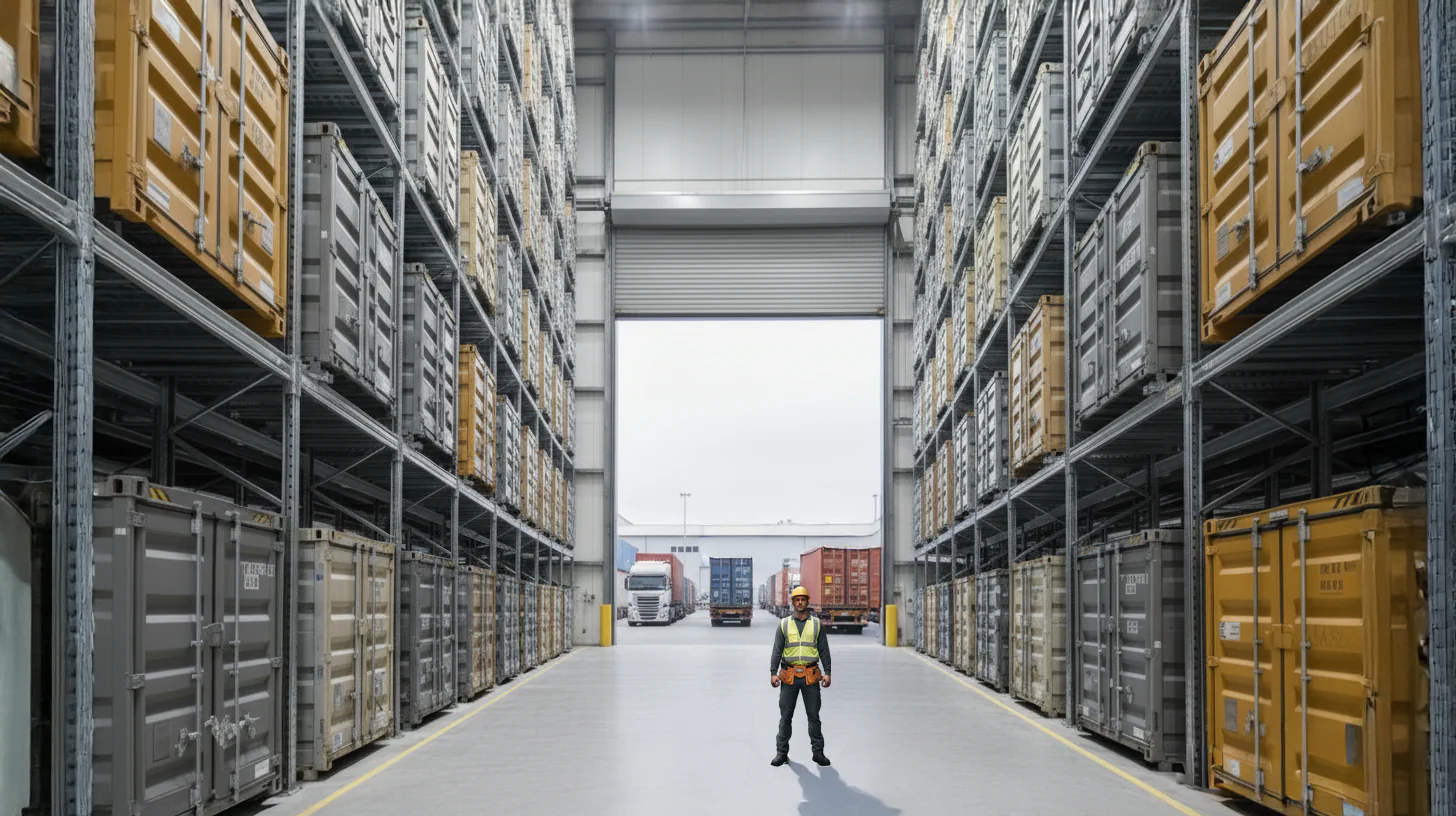
Container high-bay warehouses and container terminals: The logistical interplay – expert advice and solutions - Creative image: Xpert.Digital
This innovative technology promises to fundamentally change container logistics. Instead of stacking containers horizontally as before, they will be stored vertically in multi-story steel racking structures. This not only allows for a drastic increase in storage capacity within the same area, but also revolutionizes all processes at the container terminal.
More about it here:










