
The second phase of the energy transition has begun: Why battery storage is now becoming more important than solar power systems
Xpert Pre-Release

Available in 27 languages 📢
Prefer Xpert.Digital on GoogleⓘPublished on: August 12, 2026 / Updated on: August 12, 2026 – Author: Konrad Wolfenstein
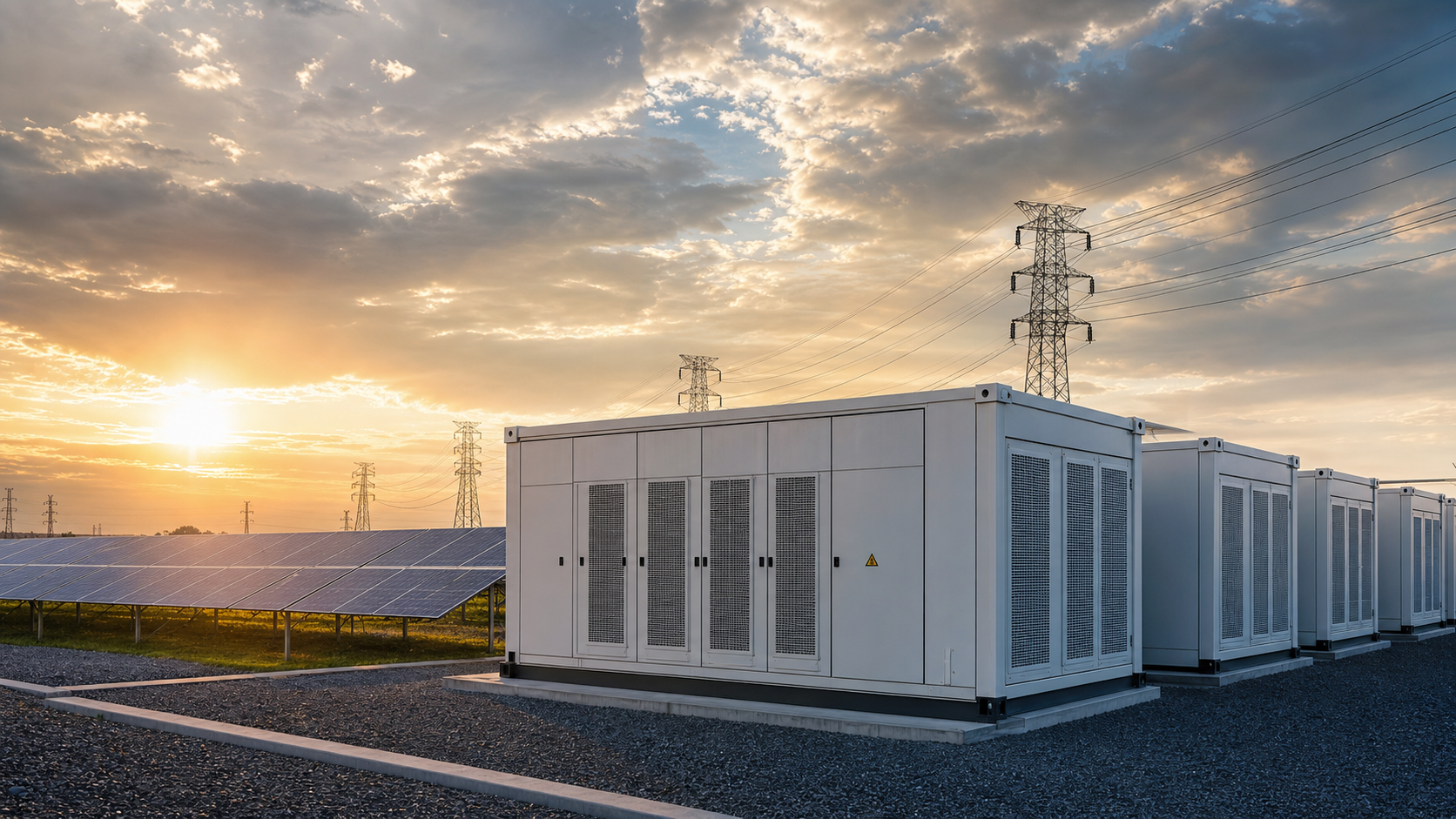
The second phase of the energy transition has begun: Why battery storage is now becoming more important than solar panels – Creative image on the topic, with AI: Xpert.Digital
The new bottleneck: Why the German storage boom is failing precisely because of the grid connection
Lucrative business: How large-scale storage systems are saving our power grids – and who is profiting from it now
Deadline 2029: Why smart investors are now massively investing in huge energy storage systems
Germany has achieved historic milestones in the expansion of solar and wind power in recent years – but its own success is increasingly pushing our electricity grids to their limits. Valuable green electricity has to be curtailed more and more frequently because the lines are congested, while the costs of balancing the grid run into the billions. The energy transition is thus inevitably entering its second phase: the focus is shifting from pure electricity generation to intelligent storage and distribution. At the forefront of this shift is a technology that has evolved from a niche product to the most important infrastructure component of our electricity system – battery storage. Why large-scale storage systems in particular are currently experiencing unprecedented growth, what enormous economic incentives are offered by an often overlooked legal clause until 2029, and how companies, landowners, and municipalities can massively benefit from this boom – you can read all about it in our in-depth analysis.
When sunshine becomes a problem and storage is the only solution
Germany has made enormous progress in expanding photovoltaics in recent years. Millions of systems have been installed on roofs, open spaces, and commercial buildings, producing so much electricity on sunny days that the grid can barely cope. What was long celebrated as a success story of the energy transition is increasingly becoming a structural problem. Grid operators are having to curtail solar and wind power plants more and more frequently because the lines cannot absorb the generated electricity or because there is insufficient demand at the relevant times. The discussion about the energy transition is therefore shifting from the pure question of generation to a question of the temporal and spatial distribution of energy. This is precisely where a technology comes into play that is expected to become the most important infrastructure component of the German electricity system in the coming years: battery storage.
From the generation problem to the distribution problem of the energy transition
The first phase of the energy transition was primarily a phase of expansion. The goal was to connect as many wind and solar power plants as possible to the grid in order to displace fossil fuels and achieve climate targets. This task was largely successful, even though significant regional differences exist. However, it is now becoming clear that generation capacity alone is not enough to create a stable and economically viable energy system. The reason lies in the volatility of renewable energies: the sun and wind do not supply electricity when it is needed, but rather when weather conditions permit. This creates a time gap between generation and consumption, which was previously smoothed out by conventional power plants. Michael Reichert succinctly summarizes this shift when he describes how the first phase of the energy transition focused on generating as much renewable electricity as possible, while the current phase is about making energy available when it is actually needed – and that this will hardly be possible in the future without storage. This assessment aligns with current network data trends, which show that the challenge is increasingly no longer the generation, but the distribution and temporal shifting of energy.
How large is the actual extent of unused energy?
To understand the urgency of this development, it is worth looking at the specific figures of so-called grid congestion management, which in Germany describes all the measures that grid operators take to respond to overloads. In 2025, the total volume of these measures amounted to approximately 30.3 terawatt-hours, remaining virtually unchanged compared to the previous year. However, the costs increased by about four percent to around 3.1 billion euros. It is particularly striking that the causes of the congestion are increasingly shifting from the large transmission grids to the regional distribution grids. While in 2024 about a quarter of the redispatch measures for renewable energies were caused by congestion in the distribution grid, by 2025 this figure had risen to around a third, and in some quarters it was even nearly half. This means that the problems no longer arise solely at the large, supra-regional level, but increasingly locally, where solar power plants on rooftops and open land feed directly into the local grids. At the same time, a remarkable detail emerges: Financial compensation for curtailed renewable energy plants fell by approximately 22 percent in 2025 to around €433 million, while the overall costs of grid congestion management simultaneously increased. By far the largest cost component was not related to wind or solar power plants, but rather to conventional redispatch measures and the maintenance of reserve power plants, which together amounted to well over €2 billion. Overall, around 96.5 percent of the generated renewable electricity was actually transported to consumers in 2025, meaning that curtailments affected approximately 3.5 percent of total renewable energy generation. While this puts the public perception of a massive waste problem into perspective, it also demonstrates that even this comparatively small share already incurs considerable economic costs and is likely to increase further with the expansion of renewable energies if no countermeasures are taken.
Why storage is now growing faster than any other technology in the power system
The German energy storage market has been experiencing exceptional growth since 2025, eclipsing many other sectors of the energy industry. In the first half of 2026 alone, newly installed battery storage capacity rose to approximately 2,483 megawatts, an increase of about one-third compared to the same period of the previous year. Newly installed storage capacity increased by nearly 76 percent during the same period, reaching approximately 5,642 megawatt-hours. Nationwide, around 2.6 million battery storage systems with a total capacity of approximately 18.5 gigawatts and a total capacity of approximately 31.5 gigawatt-hours are now connected to the grid. Should this trend continue, the installed capacity could reach approximately 35 gigawatt-hours by the end of 2026. Particularly noteworthy is a qualitative shift: The average storage duration of newly installed systems increased from 1.7 to 2.3 hours, meaning that battery storage systems are increasingly no longer just providing short-term system services such as frequency regulation, but are increasingly taking on genuine load shifting, i.e., storing energy for several hours and feeding it back into the grid at a later time. This transforms storage systems from a niche technical product into a central component of the system architecture, decoupling generation and consumption over time.
The grid connection as a new bottleneck for the storage industry
Despite rapid growth, it is becoming clear that the real limit to this growth is no longer technical, but rather administrative and infrastructural. Grid connection has become by far the biggest bottleneck for new storage projects. At the end of the third quarter of 2025, the four German transmission system operators had received a total of approximately 717 grid connection requests with a cumulative capacity of around 270 gigawatts, of which 211 gigawatts alone were for large-scale battery storage systems. This figure far exceeds the actual installed capacity and makes it clear that a significant portion of these requests represent a so-called phantom pipeline – i.e., multiple or speculative applications that tie up valuable processing capacity at the grid operators without these projects ever being implemented. To mitigate this problem, the transmission system operators introduced a new maturity assessment procedure on April 1, 2026. This procedure shifts the allocation of grid connections from the previous first-come, first-served approach to a system that prioritizes projects that are actually ready for construction and financed. In this context, the German Solar Association (BSW) is calling for an acceleration and standardization of grid connection procedures, the enabling of multi-use operation of storage systems – i.e., simultaneous use for various applications – and the consistent use of storage in redispatch measures to avoid curtailing renewable energies. At the beginning of 2026, the installed large-scale storage capacity in Germany already stood at around 3.7 gigawatt-hours, compared to 2.3 gigawatt-hours a year earlier. Analysts believe that between 15 and over 70 gigawatt-hours of additional capacity are possible in the coming years, depending on the prevailing conditions.
New: Patent from the USA – install solar parks up to 30% cheaper and 40% faster and easier – with explanatory videos!

New: Patent from the USA – Install solar parks up to 30% cheaper and 40% faster and easier – with explanatory videos! - Image: Xpert.Digital
The core of this technological advancement is the deliberate departure from conventional clamp mounting, which has been the standard for decades. The new, more time- and cost-effective mounting system addresses this with a fundamentally different, more intelligent concept. Instead of clamping the modules at specific points, they are inserted into a continuous, specially shaped support rail and held securely in place. This design ensures that all forces – whether static loads from snow or dynamic loads from wind – are distributed evenly across the entire length of the module frame.
More information here:
Storage boom in Germany: Why the window of opportunity for investment is now open
Economic incentives and the role of network charge exemption
A key driver of the current energy storage boom is a legal provision that has received relatively little attention in public debate so far, but has considerable economic significance. According to Section 118, Paragraph 6 of the German Energy Industry Act (EnWG), new electricity storage facilities are exempt from grid fees for twenty years, provided they are commissioned by August 4, 2029. This time-limited subsidy creates a clear economic incentive to implement storage projects as early as possible, further fueling the current boom and explaining the high demand for large, grid-supporting storage projects in particular. At the same time, this deadline intensifies the pressure on grid operators to process connection requests more quickly, as many investors are eager to bring their projects online before the deadline. For companies, municipalities, and landowners, this results in a narrow but attractive window of opportunity to benefit from the combination of subsidies, increasing storage demand, and growing revenues from ancillary services before the regulatory framework is expected to change after 2029.
What makes storage economically attractive for companies and municipalities
For commercial users, municipalities, and owners of suitable land, this development opens up several revenue opportunities that go far beyond traditional self-consumption optimization. Large-scale storage systems can now participate in multiple markets simultaneously, such as the balancing energy market, intraday trading, or through arbitrage transactions, where electricity is purchased cheaply during periods of high generation and sold at a higher price during periods of high demand. This multiple use, also known as multi-use operation, significantly increases the profitability of storage projects, but has not yet been consistently simplified by regulations. Particularly interesting for landowners is co-location, where storage systems are built directly adjacent to existing solar or wind power plants, thus benefiting from existing grid connections without having to undergo a completely new and often lengthy connection process. For municipalities, grid-supporting storage systems offer the opportunity to alleviate local grid bottlenecks, increase security of supply, and simultaneously generate revenue from providing ancillary services, which is becoming an increasingly relevant business area, especially for municipal utilities.
Why critics misattribute the cost burden
In public debate, the costs of grid congestion management are often attributed solely to renewable energies, which, upon closer examination of the figures, does not reflect reality. The approximately €3.1 billion spent on grid congestion management in Germany in 2025 are not payments to operators of wind or solar power plants, but rather consist primarily of redispatch measures involving conventional power plants, the maintenance of reserve power plants, and so-called countertrading. Financial compensation for actually curtailed renewable energy plants accounted for only around €433 million of this total, a significant decrease compared to the previous year. The largest single item, at over €1.2 billion, was for conventional redispatch measures, followed by approximately €1.4 billion for the maintenance of reserve power plants. This distribution demonstrates that the real problem lies not in an overabundance of renewable energy, but in a grid expansion that simply cannot keep pace with the rate of renewable energy growth. This is precisely where the argument for battery storage comes in, because it can alleviate local bottlenecks directly at the source and thus reduce the need for expensive, system-wide balancing measures, instead of primarily relying on the costly use of conventional reserve capacities as before.
Regional differences and the unequal distribution of storage expansion
The expansion of energy storage in Germany is by no means uniform, but rather shows sometimes considerable differences between the federal states, which is directly related to the regional distribution of solar and wind power plants. Regions with particularly high photovoltaic density, especially in southern and rural areas, tend to see the highest rates of storage expansion, as the need for local grid relief is greatest there. At the same time, it is evident that structurally weaker regions with less developed distribution networks are often most affected by bottlenecks, which makes the need for decentralized, grid-supporting storage solutions particularly high there. This regional disparity opens up opportunities for targeted investments, especially where grid operators are actively seeking solutions to avoid or at least delay costly grid expansion measures. For investors and landowners, it is therefore worthwhile to take a close look at the respective regional grid situation, as the prospects for quick and uncomplicated grid connections vary considerably depending on the location.
The central role of large-scale storage systems compared to home storage systems
A key aspect of current developments concerns the distinction between small residential storage systems and large, grid-supporting storage facilities. At the beginning of 2026, residential storage batteries, with approximately 20.3 gigawatt-hours of installed capacity, still represented the largest share of the total installed capacity. However, their contribution to grid stability remains limited, as they are generally not centrally controllable and primarily serve to optimize individual self-consumption in private households. The real growth segment, with strategic importance for the overall system, therefore consists of large-scale storage systems that are strategically located at grid nodes or in close proximity to generation plants and can actively contribute to relieving grid congestion. These systems are typically controllable and can respond flexibly to signals from grid operators, allowing them to be deployed precisely where bottlenecks occur. The increasing shift in market growth towards this segment demonstrates that the storage industry is evolving from a purely end-customer technology to a genuine infrastructure component of the energy system, which is increasingly being financed professionally and institutionally.
The coming years of the energy transition
The development of large-scale storage in the coming years will depend significantly on whether it is possible to further reduce administrative hurdles for grid connection and improve the regulatory framework for the multiple uses of storage systems. The project pipeline for large-scale storage in Germany already stood at around 9.5 gigawatts at the end of 2025, with a considerable portion of this expected to be connected to the grid by 2027, provided the grid connection procedures are accelerated as planned. At the same time, the enormous discrepancy between requested and actually realized capacity shows that not every registered plant is actually built, which adds a degree of uncertainty to the forecasts. Nevertheless, the totality of available data clearly indicates that battery storage will become one of the most important growth areas of the German energy sector in the coming years, comparable to the significance that photovoltaics and wind power have had in the past two decades. This presents considerable economic opportunities for companies, municipalities, and investors who address this development early on, while waiting too long carries the risk of missing important regulatory windows, such as the exemption from grid fees until 2029. The second phase of the energy transition has therefore long since begun, even if it is still significantly less present in the public perception than the expansion of solar and wind power plants.
Your partner for business development in the fields of photovoltaics and construction
From industrial rooftop PV to solar parks and larger solar parking lots
☑️ Our business language is English or German
☑️ NEW: Correspondence in your native language!

Konrad Wolfenstein
I and my team are happy to be available to you as your personal advisor.
You can contact me by filling out the contact form here [email protected]:or simply call me at +49 7348 4088 965. My email address is
I'm looking forward to our joint project.
☑️ EPC services (Engineering, Procurement and Construction)
☑️ Turnkey project development: Development of solar energy projects from start to finish
☑️ Site analysis, system design, installation, commissioning, maintenance and support
☑️ Project financier or intermediary of capital providers







