
The new global factory? Why the West is now investing billions in India
Xpert Pre-Release

Available in 27 languages 📢
Prefer Xpert.Digital on GoogleⓘPublished on: June 6, 2026 / Updated on: June 6, 2026 – Author: Konrad Wolfenstein
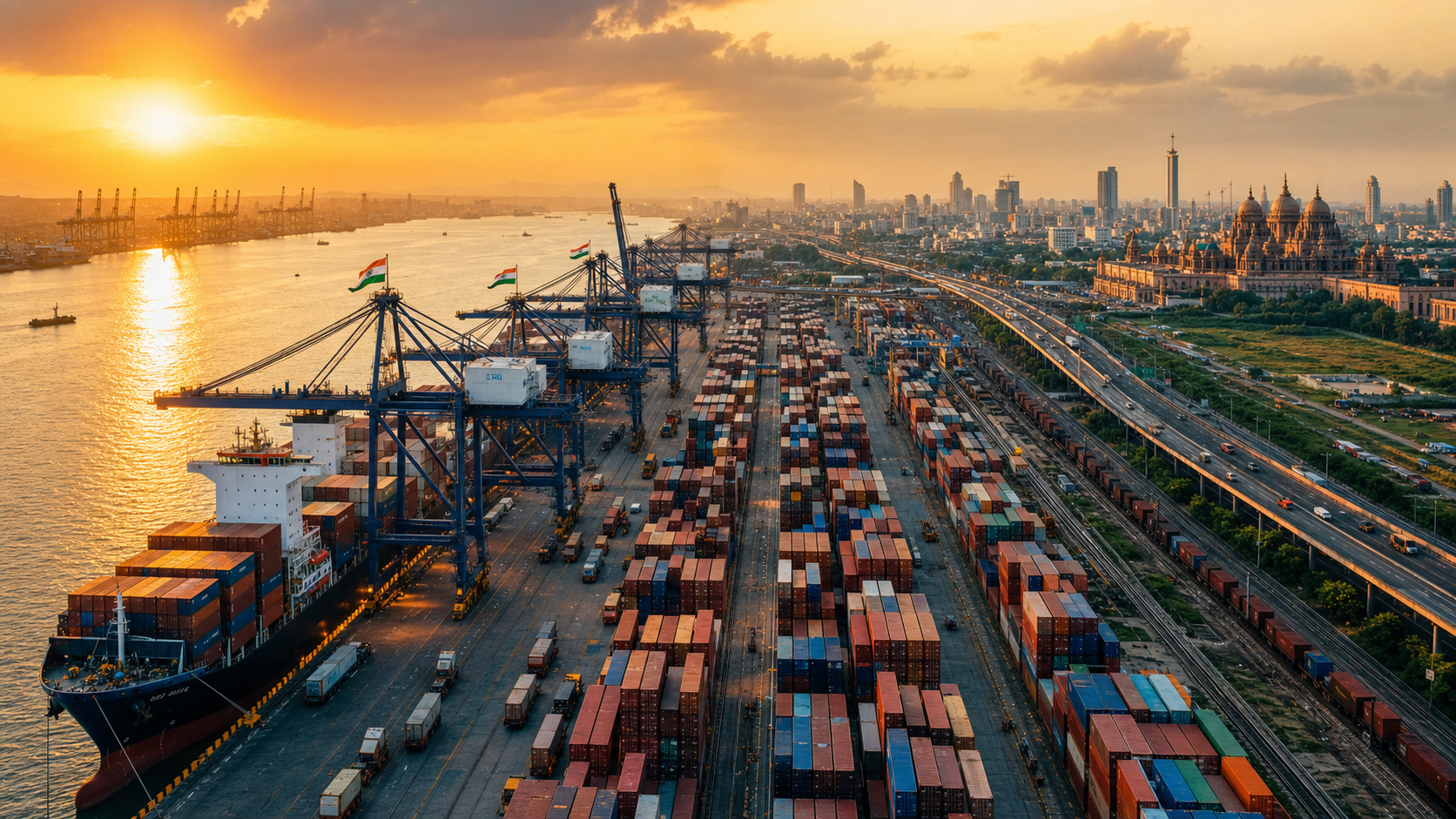
The new global factory? Why the West is now investing billions in India – Creative image: Xpert.Digital
"China Plus One": India's ingenious master plan for the economy
iPhones, Chips & Pharma: How India is becoming the ultimate winner of the crises
Goodbye China, hello India: The gigantic transformation of global supply chains
The global economy is at a historic turning point. For years, China was the undisputed factory of the world – but geopolitical tensions, the aftermath of the pandemic, and fragile supply chains are forcing the West to radically rethink its approach. The solution for international corporate headquarters is "China Plus One," and by far the biggest beneficiary of this new strategy is India. With gigantic infrastructure projects, billions in subsidies, and strategic alliances, the subcontinent is relentlessly pushing its way to the center of the global economy. Whether it's Apple's iPhones, highly complex semiconductors, vital medicines, or key renewable energy technologies: India is rapidly transforming itself into the new global factory. But the path from emerging market to economic superpower is not without its obstacles. The following analysis reveals how Prime Minister Modi's master plan is working in practice, in which sectors India is already surpassing China, and why companies worldwide are now betting billions on India.
India and global supply chains: From emerging market to global factory – why the West is now urgently focusing on India
A new order dawns: Why now?
Rewiring the world takes time, capital, and political will – but rarely has the pressure been greater than today. Since the end of the pandemic, the start of the war in Ukraine, and the escalating trade conflict between the US and China, companies, governments, and investors worldwide have recognized that a large portion of global production is alarmingly dependent on a single country. In this context, India has transformed from a potential candidate into an actively shaping player. What was long considered wishful thinking – India as the next global factory – will become a measurable economic reality by 2025 and 2026 at the latest.
The foundation of this development is no accident. It is the result of years of strategic transformation: a program offering tax breaks for manufacturing, massive infrastructure initiatives modernizing the country's dilapidated logistics system, and a foreign economic policy that rapidly forges new trade agreements and strategic partnerships. India is now the world's fifth-largest economy, with exports projected to grow from 19.8 percent of GDP in 2015 to 21.2 percent in 2024, according to the World Bank, and is considered by the US, the EU, and Japan to be the preferred manufacturing location after China.
The transformation is by no means complete. India continues to grapple with structural weaknesses: a comparatively low manufacturing share of its gross domestic product, bureaucratic hurdles, inadequate skills among large segments of the workforce, and an infrastructure that, despite enormous investments, remains far from the density and efficiency of China or South Korea. The tension between these realities and India's global ambitions shapes the entire economic debate surrounding the supply chains of the future.
Production policy as leverage: The PLI program and its results
The key instrument of Indian industrial policy is the Production Linked Incentive Scheme, or PLI. Introduced in 2020 and extended to 14 strategic sectors, the program offers companies tiered financial incentives for domestic production exceeding a defined baseline. The design is deliberately performance-based: incentives are paid only for actual production output and proven exports, not for mere investment pledges.
The results up to mid-2026 are remarkable. By March 2025, over 806 project applications across 14 sectors had been approved; realized investments amounted to 1.76 lakh crore, equivalent to approximately US$20.3 billion. The resulting output and sales exceeded 16.5 lakh crore, or nearly US$191 billion. Over 1.2 million direct and indirect jobs had been created under the program by that time.
The PLI program has had the most spectacular impact in the electronics sector. Production of mobile devices grew from 2.13 crore rupees in fiscal year 2020/21 to 5.25 crore rupees in fiscal year 2024/25 – an increase of 146 percent. Export figures for mobile phones are even more dramatic: they rose from 22,870 crore rupees to around 2 crore rupees in the same four years, an eightfold increase from the baseline. A paradigm shift has been achieved in the pharmaceuticals sector: India, which was still heavily reliant on net imports of active pharmaceutical ingredients (APIs) in 2021/22, exported APIs worth around 41,500 crore rupees in fiscal year 2024/25 – more than total imports of 39,215 crore rupees.
In the solar sector, the PLI program has triggered a capacity explosion: Module production capacity exceeded 125 gigawatts by the end of 2025, three times domestic demand. However, this rapid expansion also brings new risks – a looming overcapacity that, without new export markets, could lead to price collapses, similar to the Chinese solar crisis. Overall, the program is not a flawless success story, but rather an ambitious instrument that delivers real results, yet generates very different dynamics across sectors.
Infrastructure as a bottleneck and growth engine: PM Gati Shakti
No supply chain strategy is more resilient than its physical infrastructure. Historically, India has carried a heavy burden in this area: just a few years ago, logistics costs amounted to 13 to 14 percent of GDP – almost twice as much as in Germany (6 to 7 percent) or the USA (8 to 9 percent). This structural weakness significantly increased the price of Indian export products and made India unattractive to many international companies, despite lower labor costs.
The Indian government's response is the "PM Gati Shakti National Master Plan for Multimodal Connectivity," launched in October 2021. The program is based on a clear principle: instead of 16 ministries planning independently and projects blocking each other, an integrated digital GIS system is intended to coordinate all infrastructure projects and consolidate them on a single platform. Today, 44 central ministries and 36 states are connected via the system; 1,614 data layers have been integrated.
The results are measurable. By the 2023/24 fiscal year, logistics costs had fallen to 7.97 percent of GDP, as documented in a joint report by the DPIIT and the National Council of Applied Economic Research. This represents a significant jump compared to 8.84 percent the previous year. The total number of highways grew from 91,287 kilometers in 2014 to 146,195 kilometers by 2025; the number of operational airports rose to 162, the highest level ever recorded. India climbed from 54th place in the World Bank Logistics Performance Index in 2014 to 38th in 2023 – a success attributed to improved infrastructure, digital tracking systems, and more reliable operations.
Nevertheless, the government's goal of reducing logistics costs to six percent of GDP by 2030 and ranking among the top 25 in the LPI requires further investments in the billions. The DHL Group has recognized this and has earmarked around one billion euros for India by 2030, including the first DHL Health Logistics Hub in Bhiwandi, India's largest low-emission site for Blue Dart in Bijwasan, and the first automated sorting center for DHL Express India in New Delhi. Such international commitments signal confidence in the future competitiveness of the Indian logistics ecosystem.
China Plus One: India as a strategic alternative address for global industry
The term "China Plus One" describes a diversification strategy that internationally operating companies have been systematically pursuing, especially since the COVID-19 pandemic and the escalating trade conflicts: Instead of producing exclusively in China, a second production site is being established to mitigate geopolitical and logistical risks. India is not just one of several candidates, but has become the preferred alternative in key sectors.
The shift is not gradual, but structural. Between April and June 2025, India surpassed China for the first time as the largest supplier of smartphones to the US market: 44 percent of all American smartphone imports came from India in that quarter, while China's share plummeted from over 60 percent to just 25 percent. This development was not the result of a sudden event, but the fruit of years of development work, during which companies like Apple, Samsung, Foxconn, and Tata gradually built up capacities in Tamil Nadu, Karnataka, and Gujarat.
From an economic perspective, the "China Plus One" debate has a deeper dimension for India than just short-term export gains: it's about building a genuine supplier ecosystem. Because anyone who wants to be a global factory in the long term needs not only final assembly, but also component suppliers, tool manufacturers, specialty chemicals, logistics providers, and testing laboratories located nearby. This is precisely the challenge India is still working on: many intermediate products, especially in electronics, are still imported from China. Reducing this dependence without sacrificing cost advantages – that's the tightrope India has to walk in global competition.
Apple's Indian transformation: A key project in supply chain restructuring
No single company illustrates India's rise in the global electronics supply chain better than Apple. Following the trade dispute between Washington and Beijing in 2018, the US corporation began seriously reducing its production dependence on China. India was initially just a testing ground; today it is a central pillar.
In the fiscal year ending March 2025, iPhones worth approximately 1.88 lakh crore (around US$22 billion) were assembled in India – an increase of almost 60 percent compared to the previous year. Of this, goods worth 1.49 lakh crore (around US$17.4 billion) were exported. By the end of 2025, India had produced around 55 million iPhones, a 53 percent increase over the 36 million units produced in 2024. Analysts estimate that India's share of global iPhone production will rise to between 26 and 28 percent in 2026, while China's share will decline from 83 percent in 2024 to around 74 percent in 2025 and further.
Particularly symbolic is the fact that, for the first time since the iPhone 17 cycle, all models – including the high-priced Pro and Pro Max variants – are manufactured simultaneously in India and China. Previously, the high-precision assembly of the premium models was reserved for China; this restriction has now been lifted. Two Indian contract manufacturers are driving this change: Foxconn, which in 2025 was responsible for approximately 65 percent of Indian iPhone production and is building a new factory in the greater Bengaluru area with a $2.6 billion investment, and Tata Electronics, which is rapidly catching up and could account for half of India's total production by 2027.
Behind these figures lies more than just a single company. Apple's supply chain encompasses a network of component manufacturers, logistics specialists, and software providers. Where Apple goes, dozens of suppliers often follow. India has not yet fully participated in this, but the groundwork is being laid, not least through new tax regulations in the 2026/27 EU budget, which allow foreign companies like Apple to supply production facilities to Indian contract manufacturers without incurring tax liabilities.
Semiconductors: India's entry into the key segment of future technology
In few other sectors is the geopolitical dimension of global supply chains as evident as in semiconductors. Chips are the backbone of the modern economy – indispensable for smartphones, electric cars, military equipment, and AI systems. India has never had its own independent semiconductor production, imports billions of dollars' worth of chips, and was therefore structurally vulnerable.
This is now changing thanks to an ambitious government initiative. Between June 2023 and May 2025, six semiconductor projects were approved, representing a combined investment of approximately US$20 billion. The largest of these is the partnership between Tata Electronics and the Taiwanese contract manufacturer PSMC in Dholera, Gujarat: a chip factory with a planned capacity of 50,000 wafers per month and an investment of around US$11 billion. Micron Technology is building an ATMP (Assembly, Test, Mark and Pack) facility for memory chips in Sanand, also in Gujarat, with a volume of US$2.75 billion. Foxconn and HCLTech are jointly investing US$435 million in a chip factory near Jewar in Uttar Pradesh, which will specialize in display driver chips for smartphones, laptops, and automobiles and is scheduled to begin operations in 2027.
The India Semiconductor Mission was relaunched in 2026 as version 2.0 and aims to initiate the development of a complete semiconductor ecosystem – from design and manufacturing to packaging and testing. At the AI Impact Summit 2026 in New Delhi, India signed the Pact Silica agreement, a US-led coalition to secure global chip supply chains. Simultaneously, discussions are underway with ASML from the Netherlands, Tokyo Electron from Japan, and ASMP from Singapore regarding equipment deliveries and process partnerships. A comparison with TSMC offers a sobering perspective: what Taiwan builds in a single year in terms of investment capital and manufacturing capacity, India plans to invest across all its projects. However, the crucial difference is that the investments are no longer merely announced, but have now been approved and are under construction.
Pharmaceutical industry: India's silent but enormously important supply chain role
India is rightly called the "pharmacy of the world". As the third largest pharmaceutical producer by volume, the country supplies over 200 countries, holds a global export market share of around 20 percent for generic drugs, and exported pharmaceuticals worth 2.45 lakh crore rupees – the equivalent of around 30.5 billion US dollars – in the 2024/25 financial year.
The shift is particularly significant in the supply of active pharmaceutical ingredients (APIs). For a long time, India was heavily dependent on China for these basic chemicals; the pandemic painfully exposed the vulnerability of this one-sided dependence. The PLI Bulk Drugs Programme specifically addressed this issue: In fiscal year 2024/25, India's API exports, at approximately 41,500 crore rupees, exceeded imports of around 39,215 crore rupees for the first time. This is more than just an accounting improvement – it represents a structural change in the pharmaceutical supply chain that increases the resilience of India and its customer countries.
At the same time, an honest look at the figures shows that China remains by far the most important importer of APIs to India: in 2024/25, India imported APIs from China worth 29,064 crore rupees. The dependence has decreased, but not been overcome. The strategic question is how quickly domestic production of KSMs (Key Starting Materials) and drug intermediates can be scaled up to further reduce this residual dependence. Bulk drug parks, currently being developed in several states, are intended to help by creating cluster effects for pharmaceutical manufacturers and providing shared infrastructure.
The global relevance of this development is obvious: countries such as the USA, Germany, the Netherlands and Japan, which today each source 10 to 23 percent or more of their API imports from India, have a genuine interest in the further stabilization and expansion of India's pharmaceutical supply chain.
Your container high-bay warehouse and container terminal experts

Container high-bay warehouses and container terminals: The logistical interplay – expert advice and solutions - Creative image: Xpert.Digital
This innovative technology promises to fundamentally change container logistics. Instead of stacking containers horizontally as before, they will be stored vertically in multi-story steel racking structures. This not only allows for a drastic increase in storage capacity within the same area, but also revolutionizes all processes at the container terminal.
More information here:
Manufacturing gap and new opportunities: How India can become a technology and manufacturing nation
Defense: From importer to emerging exporter
One sector that is rarely given sufficient consideration in the discourse on India's supply chain roles is the defense industry. Just a decade ago, India was one of the world's largest arms importers. This has changed rapidly. In the 2025/26 financial year, India's defense exports reached an all-time high of 38,424 crore rupees – an increase of 62.66 percent over the previous year.
Indian companies – both state-owned Defence Public Sector Undertakings (DPSUs) and private corporations – now supply over 100 countries, including the US, France, and Armenia, with goods such as drones, small arms, ammunition, electronic systems, and components for fighter jets and submarines. In the record year, private companies contributed 45.16 percent of exports, while state-owned DPSUs accounted for 54.84 percent. DPSUs alone saw a 151 percent increase in exports compared to the previous year. These figures not only reflect an arms boom but also mark the beginning of India's new role as a reliable partner in security-critical supply chains – a geopolitical factor that further enhances India's overall attractiveness as a business location.
Critical raw materials: The new resource diplomacy
Those who want to control the supply chains of the future need access to critical minerals: lithium for electric vehicle batteries, cobalt for energy storage, rare earth elements for wind turbines and display technologies, and nickel for high-performance alloys. China currently dominates the processing of many of these materials with market shares of 60 to 90 percent – a dependency that Western countries increasingly perceive as a strategic vulnerability.
India has developed an active resource diplomacy to improve its supply situation. A bilateral framework agreement on critical minerals and rare earths was formalized with the United States in 2023, encompassing cooperation in mining, processing, recycling, and investment. In October 2024, Washington and New Delhi signed a new Memorandum of Understanding to diversify critical mineral supply chains. With Brazil, which holds the world's second-largest reserves of rare earths, a comprehensive MoU was signed in February 2026, aiming for a bilateral trade target of US$20 billion over five years and deepened investment cooperation in resource extraction.
At the end of 2025, Canada and India agreed to long-term supply chain partnerships in critical minerals and clean energy, as well as an expansion of investment relations in the aviation sector. A Global Supply Chain Observatory for critical minerals was established with the United Kingdom to create transparency regarding global commodity flows. The Gulf States are also coming into focus: a Memorandum of Understanding (MoU) for joint mineral exploration was signed with Saudi Arabia in February 2025. This concentrated commodity diplomacy pursues a clear objective: India aims not merely to be an extended manufacturing hub, but an independent node in critical supply networks – with sufficient strategic resources to remain capable of acting even in times of crisis.
Strategic partnerships: USA, EU and Japan as key partners
India pursues a multipolar partnership strategy that deliberately avoids exclusive ties to a single major power, instead building deep economic ties with several actors simultaneously.
The Indo-Pacific Economic Framework for Prosperity (IPEF), in cooperation with the United States, provides the institutional framework. The IPEF Supply Chain Resilience Agreement, which entered into force on February 24, 2024, comprises 14 member states representing approximately 40 percent of global GDP. India holds the vice-chairmanship of the Supply Chain Council, while the US holds the chairmanship. This framework is complemented by the India-US Interim Trade Framework, concluded in 2026, under which India reduces or eliminates tariffs on US manufactured goods, while the US lowers its reciprocal tariffs on Indian exports from 26 percent to 18 percent. India also committed to purchasing US$500 billion worth of American goods over five years.
A historic breakthrough was achieved with the European Union in early 2026: the India-EU Free Trade Agreement, officially concluded on January 27, 2026. After more than 20 years of negotiations and a restart in 2022, the agreement reduces tariffs on goods, services, and investments between India and the EU single market. Bilateral trade in goods amounted to approximately US$136 billion in 2024/25; India exported goods worth US$75.9 billion and imported goods worth US$60.7 billion from the EU. For Europe, the agreement is a strategic instrument for diversifying supply chains away from China; for India, it means improved market access for textiles, jewelry, pharmaceuticals, and machinery.
India has developed a particularly close partnership with Germany: Germany is India's largest EU trading partner; bilateral trade in goods and services exceeded US$50 billion in 2024/25. Platforms such as LogiMAT India, organized by Messe Stuttgart India, create networking opportunities between German and Indian logistics and mechanical engineering companies. The VDMA (German Engineering Federation) estimates that LogiMAT India could catalyze more than 15 percent of bilateral logistics and investment growth over three years – that would amount to around US$7.5 billion. German mechanical engineering exports to India recently reached around €4.5 billion, with a growth rate of approximately 10 percent.
Japan is another key partner: Tokyo is linked to India through bilateral economic partnership agreements and invests specifically in Indian infrastructure, high technology, and semiconductor equipment. Tokyo Electron from Japan is one of the partner suppliers for India's Semiconductor Mission 2.0.
Renewable energies: Solar supply chains as a new front line
The energy transition is not just a climate project, but also a supply chain issue. Solar PV panels, wind turbines, batteries, and electrolyzers for green hydrogen are forming new global value chains, which are currently still heavily dominated by China. India has decided to become a serious competitor in this arena.
India's solar module capacity exceeded 125 gigawatts by the end of 2025 – more than three times the domestic demand of around 40 gigawatts. Under the PLI program, 18.5 gigawatts of module capacity alone were commissioned by June 2025, along with 9.7 gigawatts of cell capacity and the first 2.2 gigawatts of ingot wafer production, laying the foundation for deeper vertical integration. Companies like Vikram Solar and Tata Power have already opened production facilities in the US to supply the American market directly. However, the development of these capacities is encountering a structural problem: the current US retaliatory tariffs of 50 percent on Indian solar exports caused exports to plummet by 52 percent in the first six months of 2025.
This highlights the ambivalence of India's solar ambitions: On the one hand, the country is building the only potentially competitive alternative to China's solar supply chain; on the other hand, its cost structures are not yet competitive. According to current calculations, a solar module manufactured entirely in India costs more than twice as much as a Chinese equivalent – a difference that is virtually impossible to overcome without government subsidies. The long-term goal – India as a global solar power – is real, but the path to achieving it requires continuous investment in technology, cost reduction, and new export markets in Africa, Latin America, and Europe.
Obstacles and reality checks: What's holding India back
The strategic narrative of India as a rising supply chain giant would be incomplete without an honest look at the structural obstacles. The first problem is the "manufacturing gap": The manufacturing sector's share of GDP is stagnating at around 14 percent – it has even declined slightly in recent years, from 17.4 percent in 2012 to 14 percent in 2024/25. By comparison, China's share is 26 percent and Vietnam's is 24 percent. India's stated goal of increasing this share to 25 percent is far from reality.
The second structural problem is the fragmentation of the middle class. Small and medium-sized enterprises (SMEs) form the backbone of the Indian economy, but are often poorly integrated into global value chains. Customs procedures, compliance burdens, and the lack of quality certifications (such as BIS) make it difficult for many of these businesses to enter export markets. Large companies like Tata, Mahindra, Reliance, and Wipro can operate on the international stage; for SMEs, this remains a challenge.
Thirdly, despite the diversification efforts described above, India's dependence on China for raw materials remains significant. Whether in the pharmaceutical industry, semiconductor materials, or the solar sector, India continues to rely heavily on Chinese suppliers for intermediate products and basic chemicals. This dependence cannot be overcome in just a few years and limits India's room for maneuver in the event of geopolitical escalation.
Fourth, India's logistics improvements are real, but not yet complete. Despite rising to 38th place in the LPI, significant gaps still exist between India and the global elite: in multimodal transshipment capacity, last-mile reliability, the state of inland infrastructure across the country, and digital integration along the entire supply chain.
India in the global power field: The strategic bet
The geopolitical realignment of global trade presents India with a rare historical opportunity, coupled with equally rare historical risks. The pressure to adapt to the Trump administration's US tariff policies was real for India: 26 percent retaliatory tariffs on Indian exports to the US posed a serious economic challenge. The Interim Trade Framework, finalized in 2026, reduced this burden to 18 percent – not a free pass, but a significant improvement.
But India has actively capitalized on this pressure. The accelerated FTA negotiations with the EU, the agreements concluded with the United Kingdom, the EFTA states, the UAE, and Sri Lanka, its IPEF membership, and the bilateral mineral partnerships with the US, Canada, Brazil, Australia, and the Gulf States: all of this is not the result of a reactive foreign policy, but rather of an active strategy to position India as a "Vishwa Mitra"—a friend of the world. This formulation is not merely rhetoric; it reflects India's genuine interest in being perceived as a reliable partner by all major economic blocs simultaneously—without being forced into strategic exclusivity with any single power.
What sets India apart is the combination of two rarely occurring factors: a democratically legitimized, reform-oriented government that systematically works to improve its competitiveness, and an unparalleled demographic resource. India now has more people under 25 than Europe has inhabitants – and this young population is increasingly emerging as a skilled workforce, consumers, and entrepreneurs. The middle class is projected to grow to 38 percent of the population by 2031. This domestic economic engine makes India one of the few markets that simultaneously serves as a production and distribution hub for global supply chains.
What to expect from India's supply chain transformation
The next decade will show whether India succeeds in transitioning from an assembly-line factory to a technology nation. The signs are more favorable than unfavorable. Apple's relocation is real and structural, not cyclical. The semiconductor program has reached critical mass. The EU free trade area opens up a huge, high-purchase market for labor-intensive Indian goods. Logistics costs are measurably decreasing. And the global pressure to diversify supply chains persists—it is not a passing fad, but a lasting response to geopolitical realities.
But India must learn the right lessons from China's rise without repeating its mistakes. China built its supply chain advantage over two decades through massive state capitalism, forced technology transfer, and a debt diplomacy that is now showing cracks. India can take a different path: through rules-based trade agreements, attractive investment conditions without coercion, democratic reliability, and the credibility of a state governed by the rule of law that protects property rights. This is not a sentimental argument—it is an economic one. For companies planning for the long term, reliability is at least as important as short-term cost advantages.
India is not a perfect candidate to become the next global supply chain power – that would be an unrealistic expectation. But it is the best-positioned, most determined, and demographically strongest candidate currently available. Betting on India is not without risk – but it is being taken by a growing number of players, from Apple to the European Commission, from DHL to Japanese semiconductor equipment manufacturers. And that is perhaps the most compelling argument of all.
Consulting - Planning - Implementation

Konrad Wolfenstein
I would be happy to serve as your personal advisor.
You can contact me at wolfenstein∂xpert.digital or
Just call me on +49 7348 4088 965 .
Your container high-bay warehouse and container terminal experts

Container terminal systems for road, rail and sea transport in the dual-use logistics concept of heavy-lift logistics - Creative image: Xpert.Digital
In a world marked by geopolitical upheavals, fragile supply chains, and a new awareness of the vulnerability of critical infrastructure, the concept of national security is undergoing a fundamental reassessment. A state's ability to guarantee its economic prosperity, the provision of essential goods and services to its population, and its military capability increasingly depends on the resilience of its logistical networks. In this context, the concept of "dual-use" is evolving from a niche category of export control to a broader strategic doctrine. This shift is not merely a technical adjustment but a necessary response to the "paradigm shift" that demands a profound integration of civilian and military capabilities.
Related to this:










