
The real crisis is yet to come! Now! The last tankers are underway: Why the true oil crisis is yet to hit us
Xpert Pre-Release

Available in 27 languages 📢
Prefer Xpert.Digital on GoogleⓘPublished on: April 15, 2026 / Updated on: April 15, 2026 – Author: Konrad Wolfenstein
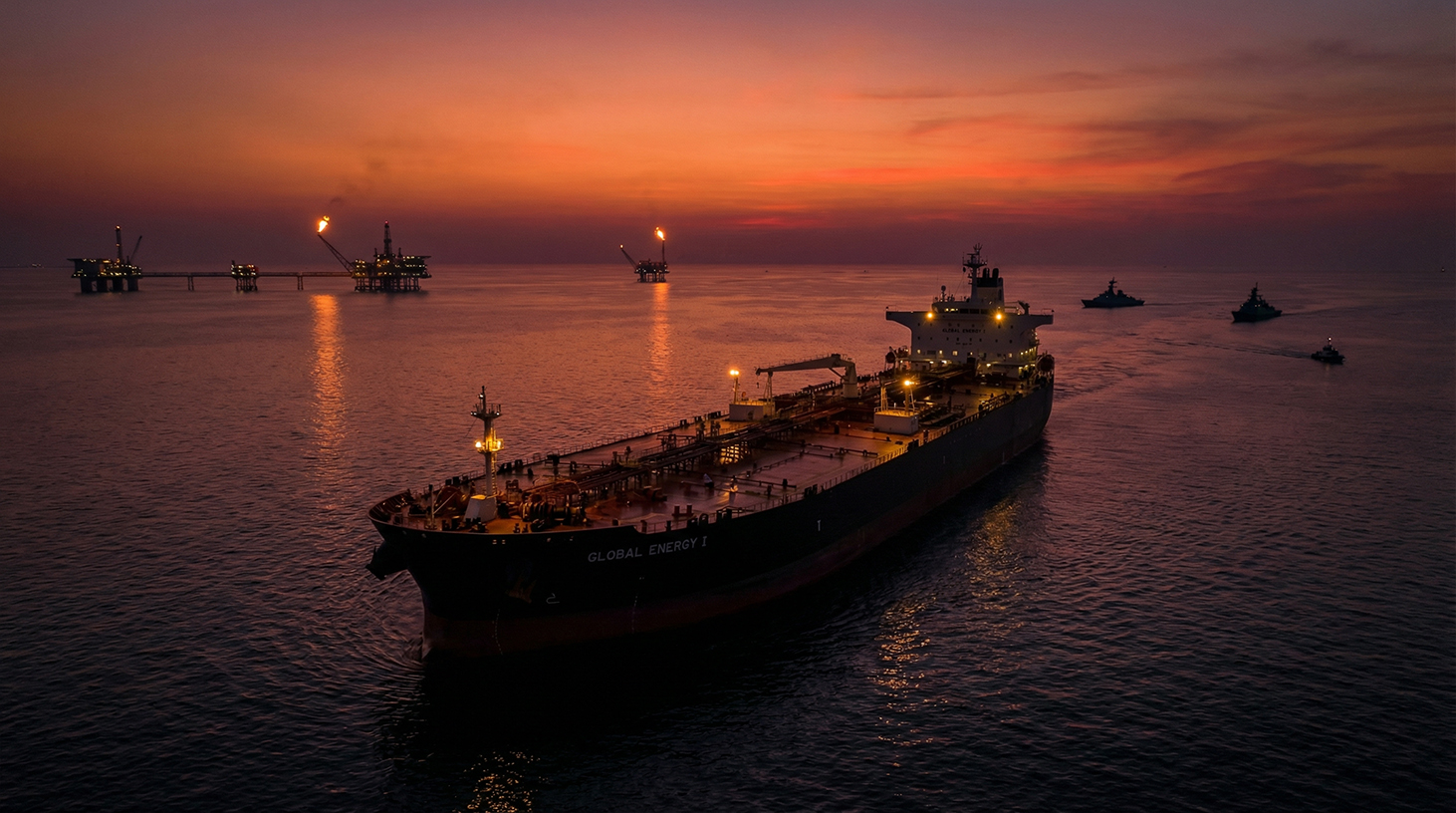
The real crisis is yet to come! Now! The last tankers are underway: Why the true oil crisis is yet to hit us – Creative image: Xpert.Digital
Asia is already rationing: Why the West is ignoring the warning signs of the Hormuz crisis
Empty gas pumps and flight cancellations? The biggest supply crisis in history has only just begun
A mere 33-kilometer-wide strip of sea has become the epicenter of a global economic drama. Since the de facto blockade of the Strait of Hormuz in February 2026, the world market has been missing millions of barrels of oil daily, as well as long-distance LNG deliveries and essential chemical feedstocks. While Asian countries are already declaring energy emergencies and rationing fuels, the West is still lulled into a false sense of security: the last supertankers loaded before the crisis are reaching Europe and the USA these days. But when this buffer is exhausted, Western industrialized nations face an unprecedented price shock. From exploding fuel costs and crippled supply chains to drastic price increases for fertilizers and food – the closure of the world's most vital maritime chokepoint ruthlessly exposes the vulnerability of our globalized economy. A deep dive into the biggest supply shock in history, which is yet to reach its peak.
Related to this:

When 33 kilometers bring the global economy to its knees: The biggest oil supply shock in history is not yet over
The Strait of Hormuz is only 33 kilometers wide at its narrowest point. A geographical bottleneck that, under normal circumstances, would be of no interest to anyone outside the logistics industry. Since February 28, 2026, however, this narrow passage has become the epicenter of an energy crisis whose scale surpasses all historical precedents. Before the outbreak of the conflict between the US and Israel on one side and Iran on the other, around 20 million barrels of oil and petroleum products passed through this strait daily – roughly one-fifth of the entire global maritime trade in crude oil and liquefied natural gas. Today, only a few supertankers pass through, often under fragile ceasefire agreements and under intense diplomatic pressure.
What initially appeared to be a regional escalation has, within a few weeks, developed into the most severe energy supply disruption in the history of the global oil market. The International Energy Agency (IEA) described it as the largest supply disruption the modern oil industry has ever experienced. The consequences for prices, supply chains, industry, and social stability are complex, far-reaching, and their full extent is still far from clear. What is happening on the spot markets and in warehouses is only the beginning of a crisis whose peak is yet to come.
The bottleneck of the global economy: Geopolitics trumps market logic
The Strait of Hormuz connects the Persian Gulf with the Gulf of Oman and the open sea. Not only Iran, but also Saudi Arabia, Iraq, Kuwait, the United Arab Emirates, and Qatar export their energy resources through it. In 2025, approximately 20 million barrels of oil and petroleum products flowed through this corridor daily, representing an annual trade value of nearly US$600 billion. Around 20 percent of global LNG trade is also conducted via this waterway, including massive quantities of Qatari liquefied natural gas.
Since the US-Israeli military attacks on Iran at the end of February 2026, Tehran has effectively closed the strait. Not through a formal blockade, but through a combination of threats of attack, the targeted shelling of tankers, the withdrawal of international insurance providers from the region, and an atmosphere of intimidation that forced commercial shipping companies to change course. World market leaders like Maersk and Hapag-Lloyd immediately rerouted their fleets around the Cape of Good Hope—a detour that adds 10 to 15 days to transit times and significantly increases operating costs.
US President Donald Trump responded to this situation by announcing a naval blockade to halt Iranian oil exports and threatening to seize ships that violated the ban. At the same time, Trump publicly claimed that the US had enough fuel to supply Europe – a statement analysts deemed factually incorrect, as US kerosene export capacity is only around 219,000 barrels per day, far below the global shortfall caused by the Hormuz strait closure.
Record disruption on a global scale: When the oil market reaches its limits
The quantitative dimensions of the current supply shortage are unprecedented. According to Kpler's calculations, the closure of the Strait of Hormuz has removed approximately 11 million barrels of crude oil production per day from the market. Export volumes from the Persian Gulf have fallen from 15 million to an effective 7 million barrels per day. Refinery cutbacks contribute an additional 3 million barrels per day. On balance, the global market is thus losing around 6 million barrels daily from actual production and processing – and the volume that can fill this gap through inventory reduction is limited.
Iraq, whose southern oil fields rely on the Persian Gulf, reported a 70 percent drop in production to just 1.3 million barrels per day. Kuwait Petroleum Corporation declared force majeure. Abu Dhabi National Oil Company reduced offshore capacity. Saudi Arabia, which can partially bypass its export routes via pipelines, remains less affected for the time being – but Riyadh also began storing oil in tanks because tankers simply could no longer discharge.
Under these circumstances, the IEA decided on the largest reserve release in its history: 400 million barrels from the strategic reserves of its 32 member states. For comparison, 182 million barrels were released after the Russian invasion of Ukraine in 2022. The US contributed 172 million barrels, and Japan promised a rapid release of 80 million barrels. IEA Executive Director Fatih Birol nevertheless made it unequivocally clear that even this reserve release does not compensate for the ongoing shortfall – as long as tankers cannot safely navigate the straits, the global oil market will remain structurally undersupplied.
Price architecture under stress: Backwardation as a crisis barometer
The crude oil market communicates its crisis awareness in its own way. The most striking signal of recent weeks is the pronounced backwardation structure of the futures markets: crude oil for immediate delivery is valued significantly higher than contracts for future delivery dates. This market structure shows that market participants expect an acute physical shortage today, while pricing in lower prices for the more distant future – after an anticipated normalization.
Brent crude oil broke through the $100 mark during the crisis, rising at times to over $110 per barrel. WTI followed with a delay, also trading well above $90. The North Atlantic Forties Blend from the North Sea reached a peak of almost $149 per barrel on the spot market – a level that reflects the acute supply panic more clearly than any futures price curve. Spot prices for immediately deliverable quantities rose far above futures prices, which market observers interpreted as a classic sign of physical scarcity.
Brent crude rose by around 81 percent year-on-year, WTI by around 67 percent. Wood Mackenzie warned that Brent would have to rise to $150 per barrel to rebalance the market. Goldman Sachs and other US investment banks began calculating scenarios at $200 per barrel – not as a base case, but as a serious stress test in the event of further escalation or continued lockdowns. Patrick Pouyanné, CEO of TotalEnergies, stated at the CERAWeek conference in Houston: If this crisis lasts longer than three to four months, it will become a systemic problem for the entire global economy.
The delayed impact: Why the West is only now waking up
There is a structural reason why the crisis is hitting Europe and the US more slowly than Asia: Tankers that passed through the Strait of Hormuz before February 28, 2026, are still at sea for weeks. These pre-war shipments initially acted as an invisible buffer, keeping refinery shelves stocked with existing crude oil. But this buffer is now running out.
According to JPMorgan data, the last pre-war shipments for Africa and Asia had already been processed by April 10. The last tankers destined for Malaysia and Australia were expected to reach their ports by April 20. For the US, the last such shipments departed in the first week of April. Analysts at Energy Aspects succinctly formulated the consequence: the West would be hit in a month, once all the cargo purchased for Asia had left the Atlantic. Refineries in Europe and the US would have to reduce their capacity as soon as the raw material was simply no longer available.
This time lag masks the severity of the impending situation. Asian refineries, whose raw material base is roughly 80 percent sourced from the Middle East, have responded with massive alternative purchases from the Atlantic basin – from the US through Canada and the North Sea to West Africa. This unprecedented surge in demand from Asia is diverting oil flows from the Atlantic region that would otherwise have benefited Europe and the US. The result: intensified bidding for available quantities, driving up spot prices and putting pressure on physical supplies in Western industrialized nations.
Europe in a pincer grip: Between refinery bottlenecks and product shortages
Europe is particularly exposed in the coming weeks. Not primarily because of direct imports from the Persian Gulf – these were comparatively limited on average across the EU – but because of its structural dependence on global oil prices and specific product segments. Jorge León, geopolitical analyst at the Norwegian consulting firm Rystad Energy, put it succinctly: Europe's economy is highly dependent on international oil and gas prices, even if the EU imports only small quantities directly from the Gulf. The competitiveness of European industry is directly threatened by the price explosion.
The situation is particularly critical for refined products: jet fuel and diesel. The Strait of Hormuz is not only a crude oil corridor but also a vital supply route for refined products. Around half of the kerosene transported daily through the Gulf is destined for Europe. IEA Director Fatih Birol explicitly warned that the jet fuel and diesel shortage is likely to become noticeable in Europe in April and May, with disruptions in April expected to be twice as high as in March. The rating agency Argus analyzed the risk landscape by EU member state: Portugal could exhaust its kerosene reserves in four months, Hungary in five, Denmark in six, and Germany and Italy in seven months.
At the same time, the crisis is hitting the European refining sector at a particularly unfavorable time of year. Maintenance work at European refineries traditionally takes place in March and April; in March alone, the planned capacity downtime was around 800,000 barrels per day. Many operators opted to postpone or reduce maintenance, as margins became exceptionally attractive due to the crisis – refinery margins for diesel rose to levels last seen in the early weeks of the Ukraine war in 2022. Nevertheless, capacity remains strained. Orlen Unipetrol, the Czech refining subsidiary of the Polish Orlen Group, stated that its own production is seriously threatened by the product flow disruptions. At least four tankers carrying a total of 168,000 tons of US diesel and gas oil have been diverted to South Africa in recent weeks instead of supplying Europe.
Lufthansa announced it will ground up to 40 aircraft and cancel unprofitable routes – a direct consequence of increased kerosene purchase prices, which will be reflected in passenger ticket prices.
Our global industry and economic expertise in business development, sales and marketing

Our global industry and economic expertise in business development, sales and marketing - Image: Xpert.Digital
Industry focus areas: B2B, digitalization (from AI to XR), mechanical engineering, logistics, renewable energies and industry
More information here:
A thematic hub offering insights and expertise:
- Knowledge platform covering global and regional economies, innovation and industry-specific trends
- A collection of analyses, insights, and background information from our key areas of focus
- A place for expertise and information on current developments in business and technology
- A hub for companies seeking information on markets, digitalization, and industry innovations
Emergency reserves and diversionary measures: Are strategic depots sufficient to withstand a system shock?
Asia in free fall: When energy security becomes a matter of survival
The continent most dependent on Middle Eastern imports has already absorbed the full force of the shock. Countries like the Philippines, Vietnam, and Thailand import almost all of their oil from the region. Even Malaysia and Indonesia, which have their own production capacity, source roughly a quarter of their needs from the Middle East. The Philippines was the first country in the world to declare a national energy emergency. President Ferdinand Marcos Jr. declared a one-year state of emergency on March 24, 2026, authorized the Ministry of Energy to take measures against price gouging, and announced fuel subsidies for commuters and public transportation. Gasoline and diesel prices had already nearly doubled on the islands; numerous gas stations were forced to close, and a four-day workweek was introduced. Indonesia, Southeast Asia's most populous nation, rationed fuel sales starting April 1, encouraged working from home, and suspended its one-day-a-week school meal program—as fuel subsidies spiraled out of control with oil prices then estimated at $70 per barrel. Sri Lanka shortened the working week to four days, Myanmar introduced an even/odd system for petrol station usage.
In China, the announcement of gasoline price increases led to long lines at gas stations in cities like Suzhou. Beijing capped prices to prevent social unrest—a measure that, however, does not sustainably reduce demand and shifts the costs onto state budgets. The German newspaper Die Zeit described the situation precisely: Poorer countries have become embroiled in a bidding war for oil and gas that they cannot structurally win. Those with more capital and diplomatic clout secure available quantities—at the expense of those least able.
Australia was the only developed country outside the G7 to draw on its strategic fuel reserves in mid-March – the first time since the 2022 war in Ukraine. The government made available approximately six days' worth of gasoline and five days' worth of diesel from its emergency stockpile, while total national reserves were only sufficient for 30 days – far below the IEA recommendation of at least 90 days. At the end of March, Prime Minister Anthony Albanese also halved the fuel tax for three months, reducing the price of gasoline and diesel by around 26 cents per liter and costing the national budget approximately 2.55 billion Australian dollars.
Related to this:

Beyond oil: Fertilizers, petrochemicals and the silent industrial crisis
Media attention is focused on oil prices and gas pumps. But the economic shockwaves of the Hormuz crisis extend far beyond the immediate energy sector. The German Chemical Industry Association (VCI) warned as early as March of serious supply bottlenecks for basic petrochemicals: ammonia, phosphate, helium, and sulfur – all raw materials essential for industrial processes, significant portions of which flow through the Strait of Hormuz.
Naphtha is a crucial raw material for the petrochemical industry. Asia's chemical industry normally sources around 55 percent of its naphtha needs, or about 4 million tons per month, from the Middle East. This supply has almost completely dried up, leading to massive production cuts in the Asian chemical industry. By mid-March 2026, 35 force majeure events had been reported in the crisis region alone; companies like Shell and Total Energies had to admit to supply disruptions of Qatari LNG.
The impact on global agriculture is even more far-reaching. Around a third of the world's fertilizer trade passes through the Strait of Hormuz. Specifically, 35 percent of global urea trade and 45 percent of global sulfur exports regularly flow through this strait. Qatar, Saudi Arabia, and Iran together dominate urea and sulfur production. Middle Eastern urea producers have suspended their supply, transport logistics have collapsed – and this is happening during the European spring planting season, when farmers need to meet their fertilizer requirements. The German Food and Drink Industry Association (VCI) has already registered price increases of around 30 percent for oil, 60 percent for gas, and 11 percent for electricity (in Germany due to the merit order effect). VCI representatives stated that a sound economic forecast for 2026 is simply impossible under these conditions.
The European Parliament addressed an inquiry concerning the security of nitrogen fertilizer supplies in the wake of the Strait of Hormuz crisis. The parliamentary inquiry noted that approximately a quarter of the world's traded nitrogen fertilizer passes through the Strait of Hormuz, and a prolonged closure threatens to drive up food prices or even create shortages. FAO expert David Laborde warned that farmers would cultivate less crop or use less fertilizer, which could lead to lower crop yields and rising food prices. Up to a third of globally traded fertilizer and 20 percent of the natural gas used in fertilizer production are transported through the Strait of Hormuz.
The invisible dimension: Supply chains under systemic stress
What fundamentally distinguishes the current crisis from previous energy price shocks is the systemic overlap of multiple sources of disruption. It is not a single shock that strikes a stable system – rather, multiple disruptions simultaneously impact an already fragile global supply architecture. The vulnerability lies not only in price, but also in physical availability.
Extended transport routes around the Cape of Good Hope tie up capital and increase costs. The detour adds 10 to 15 days to transit times for Far East services. For each 40-foot container, the route around the Cape results in additional costs of approximately US$272 compared to the Suez Canal route. For supertankers, the detour translates to additional costs of around US$1.7 million per voyage. These cost increases are reflected in freight rates and thus in almost all goods prices.
Energy-intensive industries in Europe are facing a double burden: rising raw material costs on the procurement side and decreasing security of supply as a planning risk. Companies can no longer reliably calculate when and at what price they will be able to meet their raw material needs. The time buffers in global supply chains – a safety mechanism against short-term disruptions – are shrinking to a minimum due to the longer transport routes. The automotive, chemical, and pharmaceutical industries, which are heavily reliant on petrochemical precursors and precise logistics timing, are particularly affected.
The effects of inflation are already measurable. In Germany, energy prices rose by 7.2 percent year-on-year in March 2026; the overall inflation rate was 2.7 percent. Economists like Claudia Kemfert from the DIW (German Institute for Economic Research) have pointed out that oil price risks are priced into markets extremely quickly – even based on the expected shortage before it has physically materialized. This means that the real price increase only follows with a delay, after the market price reaction has already occurred.
Strategic reserves and political responses: a bandage on a gunshot wound
The international community's response was swift and decisive – but structurally insufficient given the scale of the supply gap. The IEA's release of 400 million barrels of reserves, assuming a daily shortfall of at least 8 to 11 million barrels, provides a bridging capacity of less than two months. The IEA holds over 1.2 billion barrels of publicly held emergency reserves, in addition to approximately 600 million barrels of government-committed industrial stocks. These capacities are not enough to compensate for a prolonged shortfall.
Individual countries are taking parallel action at the national level. Slovenia was the first EU member state to introduce fuel rationing. Sri Lanka limits private drivers to 15 liters of gasoline per week via a QR code system. Cambodia closed a third of its gas stations. Myanmar operates the aforementioned even-odd-day rationing system. New Zealand is considering car-free days. India increased its crude oil purchases from Russia, and Bangladesh, Thailand, and Sri Lanka are also negotiating Russian deliveries—although coordinating these efforts with the expiration of US sanctions exemptions is complicated.
The political response in Europe is walking a tightrope between immediate aid and structural transformation. Experts agree that short-term measures such as price caps, VAT reductions, and subsidies for electric vehicles are insufficient on their own. The European Union is aware of its dependence on global oil prices, even though direct imports from the Gulf are limited – even oil and gas from Norway are traded at world market prices, which are now around 50 percent higher than before February 28, 2026. The structural conclusion – faster expansion of renewable energies, better electricity grids, a coordinated EU industrial strategy – is well-known. The speed of implementation, however, is not.
Scenarios and probabilities: Between relaxation and system collapse
Three scenarios will determine further developments. The first, and the most favorable for the global economy, is a rapid normalization: a lasting ceasefire between the US and Iran, secure shipping through the Strait of Hormuz, and a gradual recovery of the oil price toward 70 to 80 US dollars per barrel, as projected by futures curves for 2027 and beyond. Prices at the pumps dropped noticeably as soon as a ceasefire was announced. The interest of all major powers involved in a de-escalation of the situation supports this scenario.
The second scenario is a prolonged state of simmering tension: The Strait of Hormuz remains largely blocked for months, and tanker traffic only takes place under special permits negotiated through diplomacy – like the three supertankers under the fragile US-Iran ceasefire agreement in early April 2026. In this scenario, global oil markets would have to permanently adjust to a 10 to 15 percent reduction in supply. Rationing would spread to other industrialized countries, and the risk of recession would increase significantly for Europe and the US.
The third scenario—the complete collapse of supply chains and system stability—describes prices of $200 per barrel, global recessions, sovereign defaults in emerging economies with high energy import dependency, and a wave of poverty that international organizations estimate could push millions more people into poverty. This scenario is considered a stress test, not a baseline expectation—but the conditions under which it could occur have been brought closer by the current crisis than ever before.
Structural vulnerability: What this crisis is permanently changing
Every major crisis leaves structural scars – on regulation, strategy, investment decisions, and geopolitical alliances. The Hormuz crisis of 2026 will be no exception. It will ruthlessly expose the weaknesses of global energy supply: the concentration of critical transit routes on a few geographical bottlenecks, the insufficient diversification of energy sources in many economies, and the illusion that well-supplied markets are more resilient than they actually are.
After 2022, Europe made the mistake of replacing one commodity dependency – on Russian gas – with another: namely, a high degree of vulnerability to LNG prices determined by fragile sea lanes. LNG imports from Qatar, whose main export route runs through the Strait of Hormuz, constitute a significant part of Europe's post-Ukraine gas import strategy. The TTF benchmark for European gas rose from around €32 per megawatt-hour at the end of February to over €50 per megawatt-hour by mid-March 2026.
The geopolitical debate surrounding energy sovereignty is being accelerated by this crisis. Building up domestic renewable energy capacity is not only imperative from a climate policy perspective, but also a geopolitical necessity. At the same time, the consequences for companies are clear: In a world where 33 kilometers of a strait can destabilize the global energy supply for months, physical availability is no longer a given – it is a risk that must be actively managed. Storage strategies, supply chain resilience, and energy procurement diversification are no longer optimization issues. They are matters of survival for business strategy.
The current crisis is not over. As many of the analysts, traders, and market participants surveyed unanimously emphasize, it is only just beginning to fully impact the industrial economies of the West. What has already become commonplace in Asia is still to come for Europe and the USA. The last tankers are underway. After that, a new reality will begin.
Your global marketing and business development partner
☑️ Our business language is English or German
☑️ NEW: Correspondence in your native language!

Konrad Wolfenstein
I and my team are happy to be available to you as your personal advisor.
You can contact me by filling out the contact form here or simply call me at +49 7348 4088 965. My email address is : [email protected]
I'm looking forward to our joint project.
☑️ SME support in strategy, consulting, planning and implementation
☑️ Creation or realignment of the digital strategy and digitization
☑️ Expansion and optimization of international sales processes
☑️ Global & Digital B2B trading platforms
☑️ Pioneer Business Development / Marketing / PR / Trade Fairs
🎯🎯🎯 Data-driven B2B industry hub as a quasi-in-house solution

The quasi-in-house solution: How Xpert.Digital closes operational gaps in B2B marketing and sales – Smart Content-Driven Business - Image: Xpert.Digital
Xpert.Digital is a data-driven B2B industry hub led by Konrad Wolfenstein . The company acts as an external, quasi-in-house solution for industrial partners, closing operational gaps in marketing, content, and sales – without requiring additional resources on the client side.
More information here:










