
Job crisis at Bosch, ZF & Co.: Is the arms business the last great way out for medium-sized businesses?
Xpert Pre-Release

Available in 27 languages 📢
Prefer Xpert.Digital on GoogleⓘPublished on: March 2, 2026 / Updated on: March 2, 2026 – Author: Konrad Wolfenstein
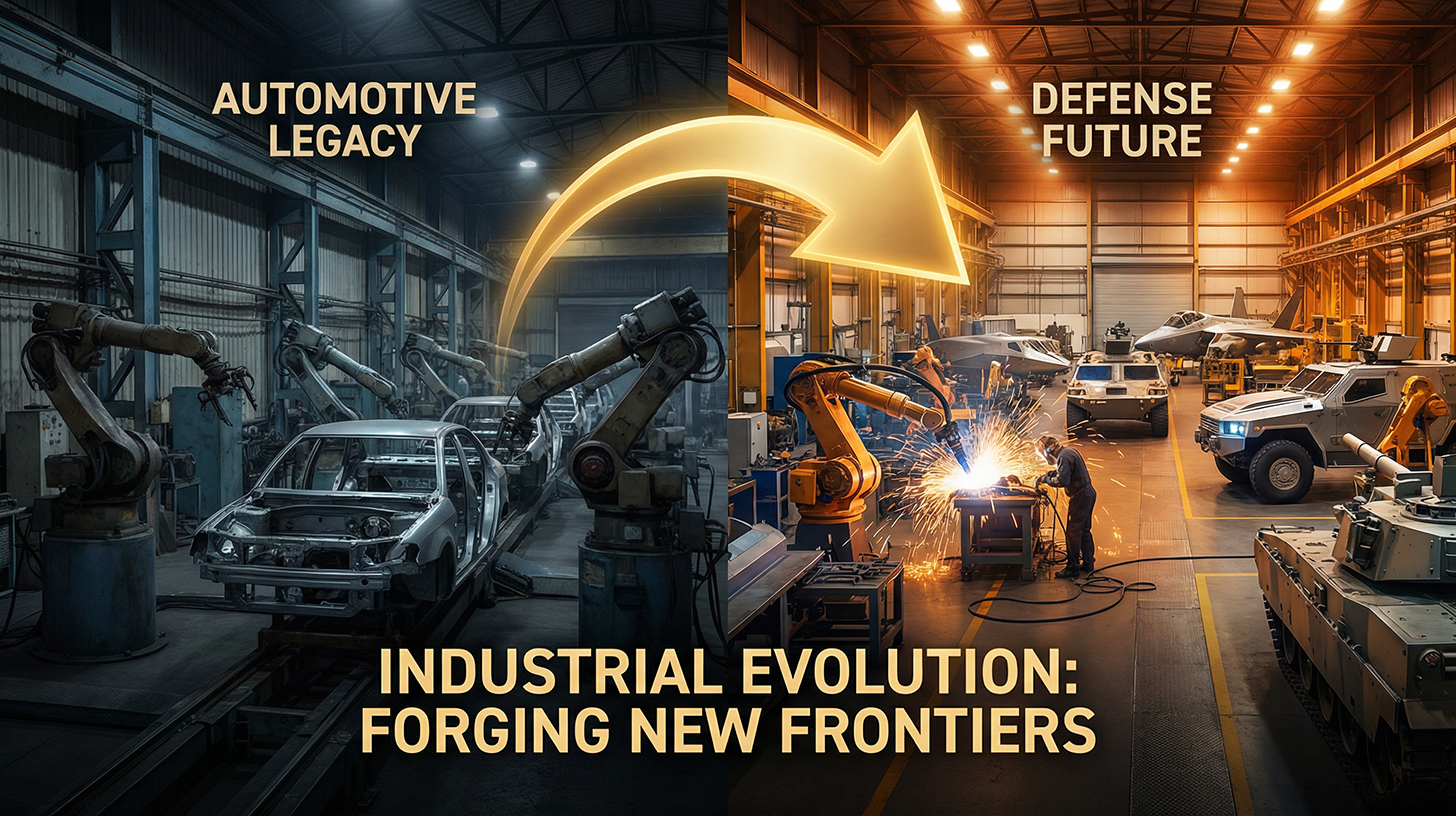
Job crisis at Bosch, ZF & Co.: Is the arms business the last great way out for medium-sized companies? – Image: Xpert.Digital
From engine block to ammunition box – How Germany's industrial backbone is undergoing its biggest structural transformation in decades
Historical structural change: The secret plan of German suppliers in the Bundeswehr's billion-dollar poker game
Germany's most important industrial sector is undergoing a veritable earthquake – yet, precisely in its deepest crisis, a historic way out is emerging. While traditional automotive suppliers groan under the massive pressure of electromobility, cheap competition from the Far East, and dwindling margins, the defense industry is booming on an unprecedented scale. Large defense companies like Rheinmetall are drowning in billions of euros in orders and desperately seeking production capacity. This is where the circle closes: More and more German medium-sized businesses and industry giants like Schaeffler are currently undergoing what is probably the most significant structural transformation in recent economic history. Those who yesterday milled injection pumps or transmission parts are now manufacturing high-precision components for tanks, drones, and frigates. It is a Herculean effort that could not only secure the survival of many companies but also entices them with margins the automotive world can only dream of. But the path from civilian supplier to defense partner is no walk in the park. Enormous bureaucratic hurdles, rigorous security checks, and a completely new procurement market separate the wheat from the chaff. How the bridge between engine block and ammunition box is being built, and why this trend will forever change the German industrial landscape.
Related to this:

When the automotive industry falters, the German Armed Forces call: The billion-dollar poker game for Germany's suppliers
Germany's industrial SMEs are at a historic turning point. While the automotive industry, for decades the undisputed backbone of the German economy, is groaning under the simultaneous pressure of electrification, Chinese competition, and shrinking margins, a window of unprecedented proportions is opening on the other end of the economic spectrum: The defense industry is experiencing a boom in demand unparalleled in the history of the Federal Republic. And between these two worlds, a bridge is emerging that has the potential to fundamentally reshape the German industrial landscape.
The supplier crisis: Structural break in slow motion
The dimensions of the crisis in the automotive supply industry are dramatic. In the past two years, European suppliers have cut more than 100,000 jobs. Bosch, the world's largest automotive supplier, is reporting only half the profits of its peak years and plans to eliminate over 20,000 jobs in its automotive division by 2030. ZF Friedrichshafen is burdened with over ten billion euros in debt, and Continental is undergoing a profound restructuring process.
The reasons are numerous and cumulative. The transition to electromobility is rendering many components obsolete that previously formed the core business of many suppliers: injection systems, exhaust systems, transmission parts. The addressable market for these products is shrinking year by year. At the same time, pressure is mounting from China, where suppliers can offer comparable quality at 20 to 30 percent lower costs. And the new automakers, especially BYD with a vertical integration of 70 to 75 percent, simply need fewer external suppliers than traditional manufacturers.
The EBIT margin of European suppliers averages 3.6 percent, while Chinese competitors achieve 5.7 percent. Forty percent of the world's largest suppliers are now classified as non-investment grade, which severely restricts their access to affordable financing. The vicious cycle of declining margins, shrinking cash flow, and increasing investment needs for transformation has become an existential threat.
A survey conducted by the management consultancy FTI-Andersch among 47 automotive suppliers revealed that four-fifths are seeking alternative business areas. A quarter of them are already building business in the defense sector, followed by the energy industry, aerospace, and medical technology. Two-thirds of the surveyed companies are directly affected by the decline of the traditional automotive business.
The arms boom: Numbers that change everything
On the other side, a demand dynamic is unfolding that is breathtaking in its speed and volume. Europe's defense spending has risen from €218 billion in 2021 to €343 billion in 2024, an increase of 57 percent in just three years. Germany plans to double its defense spending to approximately €162 billion by 2029. The EU intends to provide hundreds of billions of euros more by 2030.
Major defense contractors are reporting record highs. Rheinmetall, the industry leader, reported an order backlog of €64 billion for the third quarter of 2025, up from €24 billion before Russia's war of aggression against Ukraine. The company is targeting order intake of around €80 billion for 2026, driven primarily by major German military programs. The order backlog could rise to approximately €135 billion by the end of 2026. The Boxer armored personnel carrier program alone accounts for €37.7 billion, while the F126 and F127 frigates together represent around €12 to €13 billion.
HENSOLDT, the defense electronics specialist with locations in Ulm and Oberkochen, has also recorded a series of significant orders. In February 2026, a €100 million order for radar technology was announced at the Ulm site, followed by a major order in Oberkochen with a total volume of over €400 million for the development of digital vision systems for tanks.
The order volume for the European defense industry is estimated to reach a total of 300 billion euros by 2030. Conservatively speaking, 30 to 40 percent of this will go to suppliers.
The competence overlap: Why automotive suppliers are predestined for the defense industry
The key insight driving the current transformation is the substantial overlap of expertise between the automotive and defense industries. Companies that can manufacture precision parts for cars can also do so for defense technology. The machinery is identical, the quality requirements comparable. This involves mechanical components, assembly, coatings, electronics, and sensors – all areas in which German medium-sized companies have been global market leaders for decades.
Furthermore, there is a strategically important coincidence: the major defense contractors are operating at near-capacity. The order books of Rheinmetall, KNDS, and HENSOLDT are full for years to come. They have to outsource and are actively seeking suppliers with available capacity. And the automotive industry currently has precisely that capacity.
Rheinmetall alone has around 23,000 suppliers, most of them medium-sized businesses, according to its own figures. These corporations subcontract up to 80 percent of their orders to suppliers. The defense industry directly employs around 100,000 people; including the supplier sector, the figure is approximately 450,000.
Our EU and German expertise in business development, sales and marketing

Our EU and German expertise in business development, sales and marketing - Image: Xpert.Digital
Industry focus areas: B2B, digitalization (from AI to XR), mechanical engineering, logistics, renewable energies and industry
More information here:
A thematic hub offering insights and expertise:
- Knowledge platform covering global and regional economies, innovation and industry-specific trends
- A collection of analyses, insights, and background information from our key areas of focus
- A place for expertise and information on current developments in business and technology
- A hub for companies seeking information on markets, digitalization, and industry innovations
The rocky road to becoming an arms partner: These are the hurdles companies must overcome
The Margin Revolution: Defense as a Profitability Leap
What makes the switch particularly attractive for suppliers are the fundamentally different margin structures. Rheinmetall achieves an EBIT margin of 19 percent in its defense sector, while its automotive business manages only four percent. This fivefold difference in margins is explained by the fundamentally different contract structure: Many defense contracts are structured as cost-plus models, where the client reimburses the costs and pays a guaranteed margin on top. This is the exact opposite of the constant price pressure in the automotive sector.
For a medium-sized supplier that has survived for years with margins of three to four percent, entering the arms supply chain represents a potential leap in profitability that can have a transformative effect. The higher margins allow for investments in technology and personnel that would be unthinkable in the low-margin automotive industry.
Related to this:

The surge in demand for the arms industry: Association members have doubled
The dynamics of structural change are most clearly illustrated by the development of the German Security and Defense Industry Association (BDSV). Since November 2024, its membership has almost doubled, from 243 to 440, according to the association. Two-thirds of the members are small and medium-sized enterprises (SMEs). The BDSV's SME representative reports that the association is being inundated with inquiries. Many of these companies are suppliers to the automotive and mechanical engineering industries, struggling to maintain capacity and seeing the defense sector as an opportunity for growth.
Chambers of Industry and Commerce also report an enormous need for consulting services. In Saxony, these chambers have joined forces to systematically pave the way for companies to enter the defense industry. In Central Germany, the Central German Institute for the Security Industry was specifically founded, which sees itself as a link between the military, politics, and business.
Pioneers of change: Schaeffler as a blueprint
Schaeffler, one of Germany's largest automotive suppliers, has already completed its strategic shift and set ambitious goals. The company is already supplying high-performance electric motors to the drone manufacturer Helsing and aims to achieve defense sales of one billion euros within five years.
At the same time, Schaeffler announced its intention to generate ten percent of its revenue from new business areas, with robotics and defense representing the key growth markets. However, the board emphasized that supply chains for the defense sector need to be fundamentally rethought. Components should not originate from China, nor, if possible, from the USA. For example, a domestic source must be found for the magnets used in drone motors.
Engine manufacturer Deutz supplies engines for military vehicles and is expanding into drone propulsion. Rheinmetall itself is actively offering Continental employees the opportunity to transfer to the company in order to meet its enormous staffing needs.
The hurdles: security checks and procurement bureaucracy
The path from automotive supplier to defense partner is by no means straightforward. The defense industry has specific requirements that go far beyond technical manufacturing expertise. The German Armed Forces' Military Counterintelligence Service (MAD) vets everyone who works directly with the military. Such a security check currently takes 18 months.
The German Armed Forces' procurement cycles range from two to five years, which represents a significant adjustment for companies accustomed to the quarterly cycles of the automotive industry. Special certifications are required, and even the approval process for development work can take nine weeks.
According to a study by the consulting firm Kearney, Europe would need an additional 163,000 skilled workers if it increased its defense spending to two percent of GDP. At the 3.5 percent target set by NATO, the need rises to 760,000. Currently, only 13,000 people work in weapons and ammunition production in Germany. Current calculations indicate a concrete additional need for 55,000 to 75,000 people in the direct arms industry in Germany by 2030.
The most realistic entry point: Tier 2 supply
For most medium-sized companies, the most realistic entry point is the role of a Tier 2 supplier among the large defense contractors. Instead of supplying the German Armed Forces directly, which entails the highest regulatory hurdles, they can act as subcontractors for Rheinmetall, KNDS, or HENSOLDT. In this role, the security requirements are less stringent, and the large corporations act as order filters and quality guarantors.
New business areas in printed circuit board production demonstrate the potential: medium-sized companies can reprint, assemble, and test old circuit boards, thus producing spare parts for existing boards. This could significantly increase the operational availability of, for example, submarines or tanks.
The industrial order signal: a turnaround on the horizon
Macroeconomic data support the thesis of an industrial turnaround, driven primarily by defense demand. In November 2025, new orders in German industry rose by 5.6 percent compared to the previous month, significantly exceeding analysts' expectations, who had anticipated a decline after a strong October. Experts predict that 2026 will be considerably better for German industry than the past year, with rising government spending on defense identified as the key driver.
The European emphasis on locally produced equipment marks a deliberate departure from previous procurement policies. The €100 billion special fund established in 2022 still had a strong "Buy American" component. The altered transatlantic relations under the Trump administration have led to the new defense funds being channeled, wherever possible, entirely to European defense companies.
The long-term perspective: Not a sprint, but a marathon
The structural shift from automotive to arms supply is not a short-term economic phenomenon, but a long-term shift in industrial focus. The geopolitical situation driving the arms buildup is structural in nature. Russia's war against Ukraine, the tensions in the Indo-Pacific, and the erosion of the transatlantic security consensus will keep defense spending high for the foreseeable future.
At the same time, this transformation is not a panacea. Not every automotive supplier will be able to make the leap into the defense industry. Experts offer little hope for large-scale business, particularly for smaller suppliers, as qualification requirements are high and entry barriers are considerable. The prediction that 20 to 30 percent of smaller suppliers will disappear from the market by 2030 through insolvency or acquisition is likely to hold true, despite the opportunities in the defense sector.
What is changing is the strategic option. For suppliers with the right combination of technical expertise, financial stability, and entrepreneurial courage, the defense industry offers a diversification opportunity that has not existed in this form since the rise of the automotive industry in the 1950s.
Your global marketing and business development partner
☑️ Our business language is English or German
☑️ NEW: Correspondence in your native language!

Konrad Wolfenstein
I and my team are happy to be available to you as your personal advisor.
You can contact me by filling out the contact form here or simply call me at +49 7348 4088 965. My email address is: [email protected]
I'm looking forward to our joint project.










