
WEBER Screw Automated Systems GmbH | Regaining strength through our own efforts: What mechanical engineering and medium-sized businesses can learn from the WEBER Group
Xpert Pre-Release

Language selection 📢
Published on: February 17, 2026 / Updated on: February 17, 2026 – Author: Konrad Wolfenstein
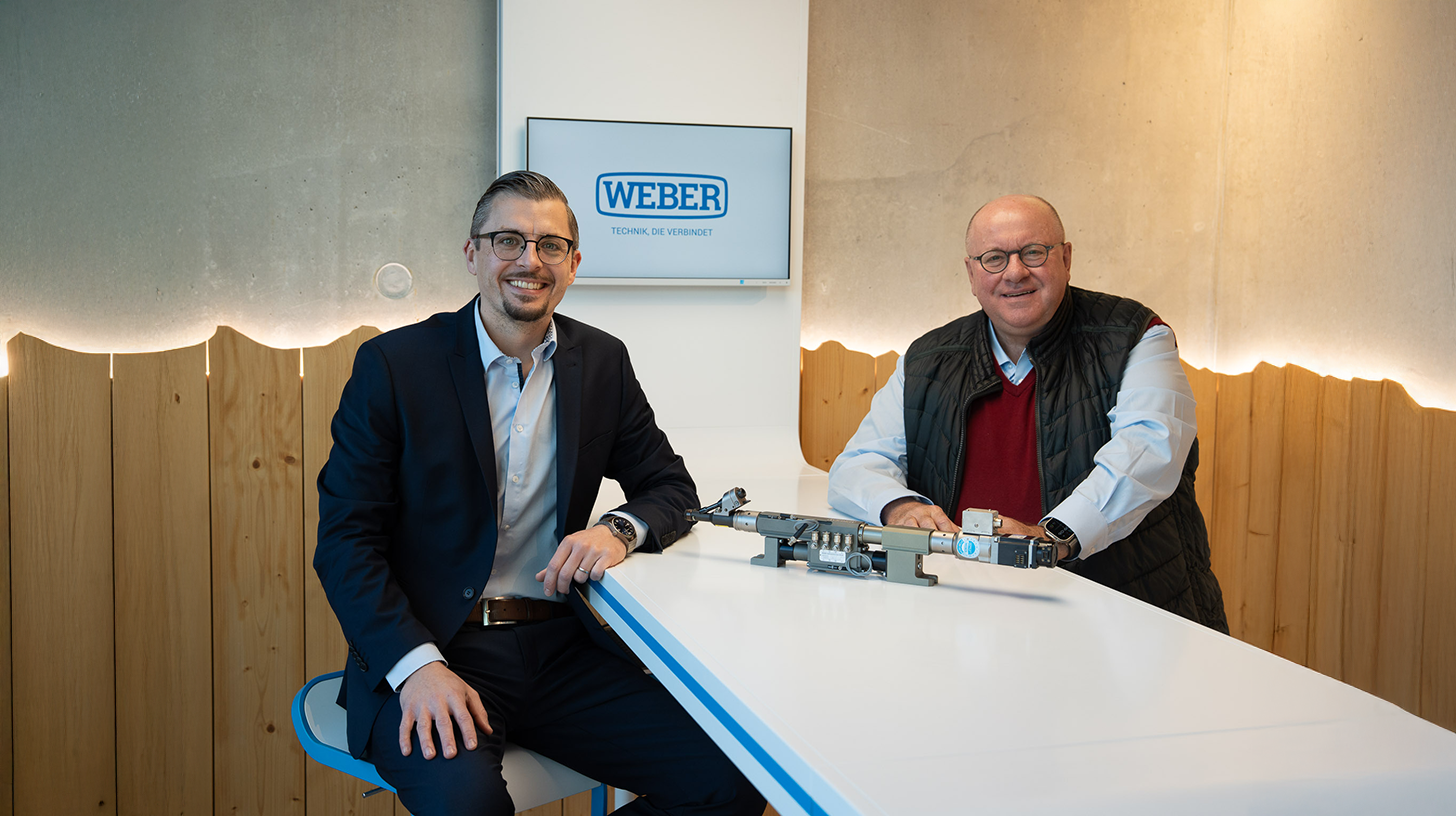
WEBER Screw Automated Screwing Systems GmbH – Left: CFO Michael Paul / Right: CEO: Felix Kleinert – Image: WEBER
German family business put to the test: Why the WEBER Group bucks the trend and achieves a positive result
WEBER Group defies the crisis: How the world market leader from Wolfratshausen achieves the turnaround
The WEBER Group, the global market leader in the automation of screwing and fastening processes, headquartered in Wolfratshausen, has weathered one of the most challenging chapters in its more than sixty-year history – and is sending a clear signal of confidence at the start of 2026. While the German mechanical engineering sector recorded its twelfth consecutive quarter of losses, major insolvencies rose by 30 percent, and the European automotive industry – traditionally the largest consumer of automation technology – cut over 50,000 jobs within a single year, the family-owned company secured a positive operating result. This success, however, was no accident: it is the result of a profound restructuring process, painful personnel reductions, and a strategic realignment that CEO Felix Kleinert has been consistently driving forward since taking over the management in August 2025.
The challenges WEBER faced read like a magnifying glass of the German industrial crisis: a decline in orders of around 30 percent – corresponding to a loss of approximately 22 million euros in revenue – a reduction in the workforce from 360 to 300 employees at the Wolfratshausen site, and intensified global competition, particularly from Chinese manufacturers who offer their products at prices up to 50 percent lower and are pushing into international markets with massive government support. At the same time, China has overtaken Germany in robot density and now accounts for more than half of all industrial robot installations worldwide. For WEBER, this meant a double burden of shrinking demand in its domestic market and growing competition on the global market.
What sets the WEBER Group apart from many companies in a comparable situation is the determination with which the new dual leadership – CEO Felix Kleinert and CFO Michael Paul, appointed on January 1, 2026 – has shaped the transformation. Instead of waiting for an economic recovery, structural cost reductions were implemented, the internationalization strategy was sharpened, and new growth markets were targeted. The EU-Mercosur free trade agreement, signed in January 2026, opens up particularly promising prospects: The previously high external tariffs of 14 to 18 percent on machinery in the Mercosur countries are to be phased out – an opportunity that WEBER intends to seize decisively. At the same time, top credit ratings demonstrate the company's financial robustness, ensuring its ability to invest even during times of crisis.
This article traces the WEBER Group's path through the crisis, analyzes the structural causes of the current mechanical engineering recession, highlights the growing Asian competition, and shows what strategic lessons can be derived for the entire industry from the transformation process of a traditional German medium-sized company.
Why is the WEBER Group speaking of a return to success?
According to CEO Felix Kleinert, the WEBER Group can look to the start of the new year with optimism regarding its business development. Global crises, a generally weak economic situation in almost all industrial sectors, and a pronounced reluctance to invest on the part of customers had presented the group with considerable challenges in the past fiscal year. However, through consistent structural adjustments, a sharpened strategy, and a stronger international focus, the WEBER Group was able to secure a positive operating result. Felix Kleinert summarizes: The company is back on the right track. This positive development is remarkable, as the initial economic situation was anything but easy and affected the entire automation industry in Europe.
What were the main causes of WEBER's economic difficulties?
Several factors have converged, significantly impacting the family-owned company WEBER. First and foremost is the general economic downturn in virtually all industrial sectors, which has been suppressing demand for capital goods for some time. The profound crisis in the European automotive industry has been particularly severe. The automotive sector has always been one of the most important customers for automation technology, and the massive job cuts and declining investment budgets experienced there have led to a significant drop in orders for WEBER. The German automotive industry lost over 50,000 jobs within a single year, directly affecting the entire supply chain and mechanical engineering. At the same time, the automation sector in Asia has gained considerable strength. Chinese manufacturers, in particular, are pushing into international markets with competitive prices and increasingly sophisticated technology, posing growing competition for established European companies. For WEBER, as the global market leader in the development and manufacture of machines and systems for automating assembly processes, this translates into a double burden of shrinking demand and intensified competition.
What is the overall state of German mechanical engineering?
The challenges facing WEBER are not an isolated case, but rather reflect the situation of the entire industry. German mechanical engineering has been experiencing declining production since the beginning of 2023, and the fourth quarter of 2025 is expected to mark the twelfth consecutive quarter of decline. Large-scale insolvencies in the German mechanical engineering sector rose by 30 percent between January and September 2025 compared to the previous year. German mechanical engineering production had already fallen by 5.7 percent in 2024, and a further decline was forecast for 2025. Order intake for German mechanical engineering companies fell by a total of eight percent in 2024, with the domestic market being particularly hard hit by a 13 percent drop. Experts are speaking of the sharpest and most widespread decline in demand in 15 years. Against this backdrop, WEBER's achievement of a positive operating result takes on even greater significance.
What role does Asian competition play for European automation specialists?
Growing competition from Asia, particularly from China, is a structural phenomenon affecting the entire European automation industry. In just a few years, China has become the world's leading robotics nation and has now surpassed Germany in robot density. With a density of 470 industrial robots per 10,000 employees, China now ranks third globally, ahead of Germany. In 2023 alone, over 276,000 industrial robots were installed in China, representing 51 percent of all global installations. Chinese manufacturers sometimes offer their products at prices up to 50 percent lower than their European competitors and are increasingly establishing sales and manufacturing facilities in Europe. The Chinese government supports this expansion with massive subsidies and has identified robotics as one of its ten key strategic industries. For a company like WEBER, this means that, in addition to quality and innovation, price competitiveness and international presence have become crucial success factors.
What does Felix Kleinert understand by a massive upheaval?
Felix Kleinert explicitly emphasizes that the current difficulties are not a short-term economic downturn, but rather a profound structural transformation. The global economy, mechanical engineering, and the automation industry are facing fundamental changes driven by geopolitical shifts, technological upheavals, and new competitive structures. The transformation of the automotive industry toward electromobility, the rise of China as a dominant production location, altered supply chains, and an overall uncertain global economic situation necessitate a fundamental strategic realignment. WEBER has taken this realization as its starting point to adapt both its human resources and its entire corporate strategy to these new realities. Kleinert stresses that this path will be pursued consistently and is not a one-off program, but an ongoing transformation process.
Our EU and German expertise in business development, sales and marketing

Our EU and German expertise in business development, sales and marketing - Image: Xpert.Digital
Industry focus areas: B2B, digitalization (from AI to XR), mechanical engineering, logistics, renewable energies and industry
More information here:
A thematic hub offering insights and expertise:
- Knowledge platform covering global and regional economies, innovation and industry-specific trends
- A collection of analyses, insights, and background information from our key areas of focus
- A place for expertise and information on current developments in business and technology
- A hub for companies seeking information on markets, digitalization, and industry innovations
Blueprint for SMEs: What companies can learn from this successful restructuring
What specific restructuring measures has WEBER taken?
At the Wolfratshausen site, the number of employees had to be reduced from approximately 360 to around 300. Remarkably, this significant staff reduction was achieved in a largely socially responsible manner: no social plan was invoked, and there was only one redundancy. The remaining reductions were apparently implemented through natural attrition, severance agreements, and other mutually agreed-upon solutions. In August 2025, long-time Managing Director Karl Bujnowski had already left the company, whereupon Felix Kleinert initially took over operational management as interim Managing Director. Kleinert determined that a structural cost problem had not been adequately addressed for far too long. On January 1, 2026, Michael Paul, the previous Commercial Director, was appointed Chief Financial Officer and has since formed a dual leadership team with Kleinert. These personnel and structural changes now strengthen the company's financial flexibility in the short and medium term for necessary investments in technology and market development.
Why is WEBER increasingly focusing on international markets?
Internationalization is a key component of the refined corporate strategy. WEBER recognizes that the European market is unlikely to experience significant growth in the foreseeable future. The weak European economy, reluctance to invest, and structural changes in key industries such as the automotive sector are limiting growth potential in its home region. The situation is quite different in growth markets such as China, India, and Latin America. In these regions, the demand for automated screwing, fastening, and disassembly processes is increasing considerably. A major driver of demand from Latin America is the recently signed free trade agreements, particularly the agreement between the European Union and Mercosur. Signed on January 17, 2026, this agreement creates one of the world's largest free trade zones, encompassing over 700 million people. Of particular relevance to companies like WEBER is the fact that Mercosur countries currently levy high external tariffs on machinery, ranging from 14 to 18 percent, which are to be phased out under the agreement. This opens up substantial new sales opportunities.
What significance do free trade agreements have for the mechanical engineering sector?
The new free trade agreements are of strategic importance for the German and European mechanical engineering industry. Around 12,500 German companies already export to the Mercosur countries, with almost 75 percent of them being small and medium-sized enterprises (SMEs). The reduction of tariff barriers could save European companies an estimated four billion euros annually. For WEBER, a global market leader in a specialized segment of automation technology, these market openings represent a concrete opportunity to compensate for declining sales in Europe through growth in new regions. Felix Kleinert has announced plans to consistently seize these opportunities and further internationalize the business. WEBER already has a global network of manufacturing and sales companies in Western and Eastern Europe, the USA, and China, which will now be strategically expanded.
What is the financial stability of the WEBER Group?
Despite the challenging market situation, WEBER remains committed to its financial stability and reliability. Assessments by renowned rating agencies continue to confirm the highest credit ratings. This signals the unwavering confidence of customers, banks, and partners worldwide in the company's financial soundness. WEBER's liquidity and cash flow remain stable and, according to the company, are significantly above the industry average. At a time when large-scale insolvencies in the mechanical engineering sector are increasing sharply and many companies are struggling with liquidity problems, this financial robustness is a crucial competitive advantage. It enables WEBER to invest in innovation and market development, even in difficult times, rather than simply cutting costs. The solid financial foundation of a family-owned company with a long-term perspective proves to be a strategic advantage over publicly traded competitors, who are under greater short-term pressure from quarterly results.
What role does innovation play in WEBER's future?
Innovation is a key pillar of the company's future strategy. WEBER boasts over six decades of experience in automating assembly processes and has pioneered new technologies, particularly in the production of screw systems with automatic feeding. Today, its portfolio encompasses a wide range of technologies, including handheld screwdrivers, stationary screwdrivers, robot-assisted screw systems, setting systems for blind rivet nuts and sandwich structures, flow drilling technology, and thermal bonding processes. The increasing global demand for automated assembly and joining processes offers WEBER excellent long-term growth prospects, provided the company remains at the forefront of technology. CFO Michael Paul emphasizes that this innovative strength, combined with the internationalization of its products, is a major source of optimism.
What does the completed restructuring process mean for the future?
Michael Paul, the new CFO of the WEBER Group, sees the completion of the restructuring process and the clear strategic focus as an important milestone, laying the foundation for continued confident and successful operations in the global market. The company's economic performance, the high motivation of its teams at all locations, its innovative strength, and its internationalization have given the management, advisory board, and owning family a positive outlook for the tasks ahead. Emerging stronger from the transformation process, WEBER is consistently focusing on customers and markets to operate faster, more efficiently, and more attractively in the future, as well as to further expand its customer relationships. The combination of a streamlined cost structure, a solid financial base, a clear strategic direction, and a strong innovation pipeline puts WEBER in a position to effectively leverage the opportunities of the global market.
What lessons can be learned from the WEBER case for German SMEs?
The transformation process of the WEBER Group exemplifies the challenges and options facing many medium-sized mechanical engineering companies in Germany. Dependence on specific sectors like the automotive industry, increasing international competition, and the need for continuous adaptation demand a high degree of agility and strategic foresight from companies. WEBER demonstrates that even in an extremely challenging market environment, it is possible to return to a positive trajectory through decisive action, socially responsible restructuring, and a clear international focus. Crucially, this requires a willingness to openly identify and swiftly address structural problems, rather than waiting for an economic recovery that may not materialize as expected. The combination of financial discipline, investment in core competencies, and consistent internationalization can serve as a blueprint for other companies in similar situations.
How does the WEBER Group assess its overall future prospects?
Despite the challenging environment, the management of the WEBER Group is looking to the future with confidence. The first few weeks of the new year confirm that the measures implemented are taking effect and that order intake is stabilizing thanks to the consistent international focus. The combination of a restructured company, a new dual leadership team with complementary skills, a strong financial foundation, and a growing global market for automation solutions makes those in charge optimistic. WEBER has proven that it can regain its strength through its own efforts without compromising its values as a family business or its commitments to its employees. The transformation process is not yet complete, but the foundation for sustainable success in a changing global market environment has been laid.
Your global marketing and business development partner
☑️ Our business language is English or German
☑️ NEW: Correspondence in your native language!

Konrad Wolfenstein
I and my team are happy to be available to you as your personal advisor.
You can contact me by filling out the contact form here or simply call me at +49 7348 4088 965. My email address is: [email protected]
I'm looking forward to our joint project.
☑️ SME support in strategy, consulting, planning and implementation
☑️ Creation or realignment of the digital strategy and digitization
☑️ Expansion and optimization of international sales processes
☑️ Global & Digital B2B trading platforms
☑️ Pioneer Business Development / Marketing / PR / Trade Fairs
📈🔵 Order acquisition and organizational development: From classic sales to a strategic business function💡

Order acquisition and organizational development - Image: Xpert.Digital
Xpert.Digital supports companies in this complex transformation, whether it's building a modern order acquisition function from the ground up or optimizing existing processes. With comprehensive expertise in marketing, sales, data analysis, digital transformation, and organizational development, we guide your company toward strategic repositioning. Our approach is holistic: We not only optimize processes but also develop the people and organizational culture necessary to achieve sustainable, measurable success.
More information here:










