
UBTech Robotics and the million-dollar researcher: China's quest for the crown of humanoid robotics – 18 million for a genius
Xpert Pre-Release

Available in 27 languages 📢
Prefer Xpert.Digital on GoogleⓘPublished on: April 9, 2026 / Updated on: April 9, 2026 – Author: Konrad Wolfenstein
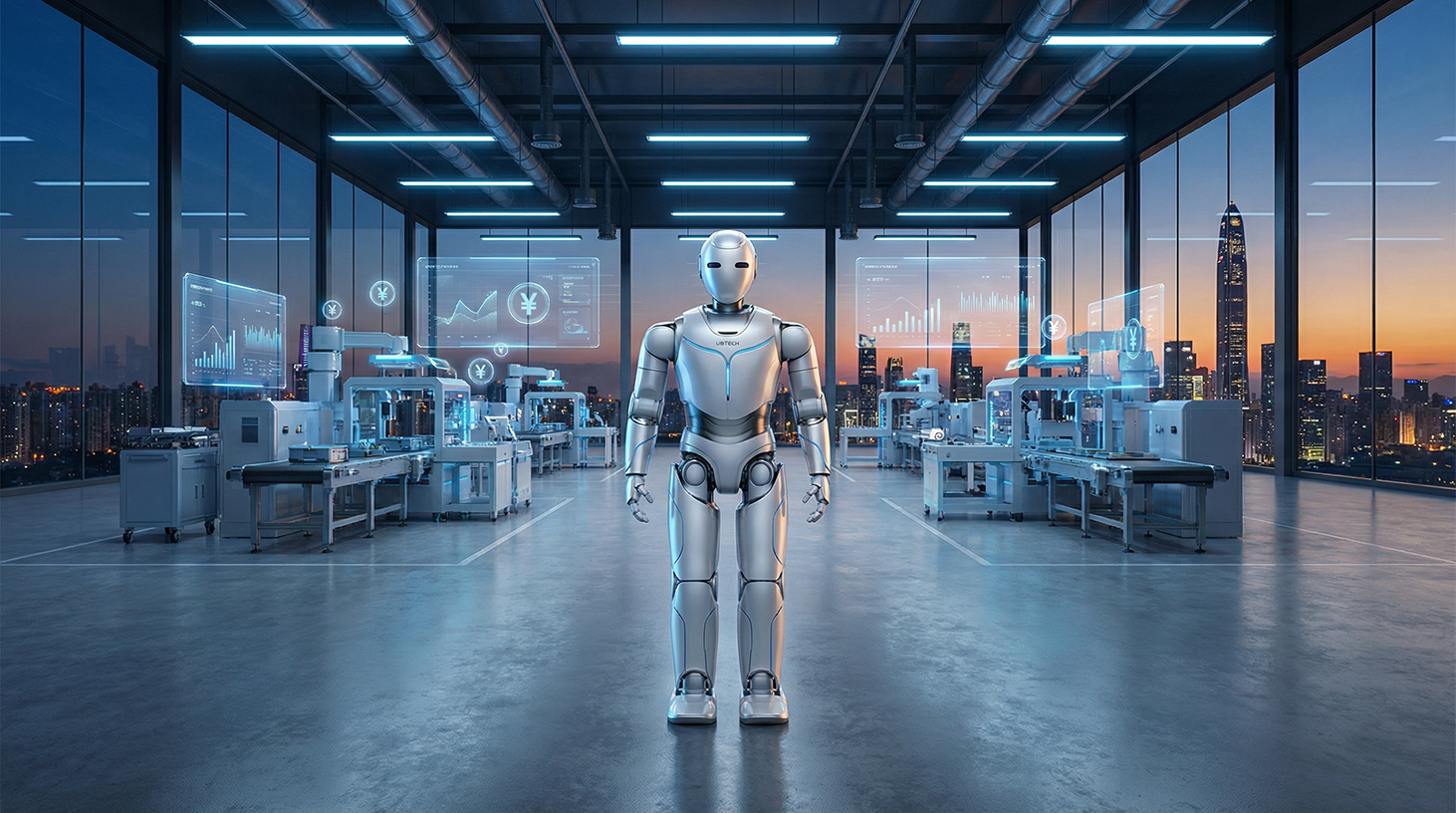
The Million-Dollar Researcher: China's Quest for the Crown of Humanoid Robotics – 18 Million for a Genius – Image: Xpert.Digital
From the lab directly to the factory: Why China's robotics strategy is leaving the West behind
Record salaries in the tech world: Are humanoid robots on the verge of a major breakthrough?
An annual salary of up to €18 million for a single scientist – what at first glance seems like an absurd typo in a job advertisement is in reality a deliberate declaration of war in the global tech race. The Chinese robotics company UBTech is opening its coffers and reaching for the world's best artificial intelligence minds with unprecedented sums. While Europe is still debating regulations and losing talent abroad, its Chinese competitors have long since moved their humanoid robots from laboratories directly into the factory floors of Western industrial giants like Airbus. This unprecedented battle for talent marks a historic turning point: it's no longer just about technological games, but about absolute dominance over the factories of the future – and thus about a tectonic shift in the geopolitical balance of power in the 21st century.
Related to this:

A salary offer as a declaration of war
When Shenzhen-based robotics company UBTech Robotics posted a job advertisement for a Chief Scientist of Embodied Intelligence in early April 2026, it was more than just an ordinary recruitment process. The offered annual salary of up to 124 million yuan – roughly 15.6 to 18 million euros, depending on the exchange rate – marks a new level of escalation in the global competition for the most talented minds in artificial intelligence. For Chinese standards, this is not merely unusually high; it is a taboo-breaking move that challenges the industry's existing salary structure and simultaneously sends a clear strategic message: China is determined not only to claim leadership in humanoid robotics but to cement it permanently.
The package, which includes a base salary of 15 million yuan annually as well as performance-based bonuses and stock options, thus approaches the level of the absolute top salaries at technology giants like Meta or OpenAI – companies that accuse each other of poaching star researchers with up to $100 million. The successful candidate will be responsible for formulating the technical roadmap for humanoid robots and embodied intelligence, leading research on large AI models, and driving the transfer of cutting-edge technologies from the laboratory to real-world applications. In addition, UBTech plans to expand its engineering team by several dozen specialists, including experts in reinforcement learning algorithms and hardware development.
What at first glance appears to be a spectacular recruitment drive is, upon closer inspection, the symptom of a profound structural transformation: Humanoid robotics is moving from the research lab to the factory floor, and the battle for crucial technological competence – the ability to combine large AI models with physical perception and motor skills – has become the most important competitive arena of the next decade.
From exhibit to industrial product: UBTech's market position
UBTech is no newcomer. Founded in 2012, it is China's first publicly listed robotics company, having gone public on the Hong Kong Stock Exchange at the end of 2023. The company's financial situation reflects the typical pattern of a rapidly growing, but not yet profitable, technology company: Total revenue rose to approximately 2.001 billion yuan in fiscal year 2025, compared to 1.305 billion yuan the previous year – an increase of over 53 percent. At the same time, the company reported a net loss of 703 million yuan, a significant reduction from the previous year's loss of 1.124 billion yuan, but revealing the structural challenge: Growth costs money, and scaling up humanoid robot production is more capital-intensive than almost any other industrial endeavor.
Particularly noteworthy is the shift in the revenue mix. The share of humanoid robots and related services in total revenue increased twentyfold compared to the previous year, reaching 41 percent of total revenue by 2025. This demonstrates how rapidly the company has shifted its focus from educational robots and other product segments to its core market of industrial humanoid robots. In 2025, UBTech secured orders totaling approximately 1.4 billion yuan and delivered 500 Walker S2 units – which, according to the company, represented the world's first mass delivery of humanoid robots.
The Walker S2 is the technological centerpiece of the company. This 1.76-meter-tall industrial model features a world-first autonomous battery-swapping system capable of changing the battery in three minutes – a critical advantage over competitors, as the limited operating time of mobile humanoid robots has thus far been one of the biggest barriers to scaling. UBTech plans to increase production to between 5,000 and 10,000 units by 2026, representing a tenfold increase in capacity compared to the previous year.
Airbus as a door opener: The strategic importance of Western reference customers
In January 2026, it was announced that the European aerospace company Airbus had acquired Walker S2 robots for use in its aircraft manufacturing plants. The collaboration with Airbus follows a similar partnership that UBTech had previously established with the US semiconductor manufacturer Texas Instruments. Airbus emphasized that the collaboration is currently limited to early conceptual testing and that no immediate broad industrial implementation is planned – a limitation that was communicated rather discreetly in UBTech's public statements.
Nevertheless, the strategic importance of this partnership can hardly be overstated. Leading Western corporations like Airbus stand for the highest quality and safety standards in manufacturing. Their willingness to use Chinese humanoid robots, even just in test phases, signals to the global market that UBTech's technology is fundamentally ready for mass production and trustworthy. For UBTech, Airbus serves as a kind of international seal of approval, intended to convince other Western industrial customers to evaluate the technology. The logic behind this is clear: anyone who can present Airbus as a reference opens doors throughout the entire global manufacturing industry – from the automotive sector to logistics and consumer electronics.
Also noteworthy is the breadth of the targeted application areas. UBTech positions the Walker S2 not as a niche product for a specific industry, but as a universal humanoid worker for aerospace, automotive manufacturing, 3C electronics, smart logistics, and semiconductor production. This ambition for universality is characteristic of the current phase of the industry: the fields of application are still largely open, and whoever establishes credible references in multiple sectors first is likely to solidify early market leadership.
Related to this:

The global talent war: Structural power shift or bubble symptom?
UBTech's salary offer is not an isolated case, but part of a clearly discernible trend. In 2025 and 2026, Chinese technology companies systematically began to aggressively pursue top AI talent in the global market. ByteDance increased its bonus pool by 35 percent and boosted its salary increase budget by 150 percent. Tencent actively poached researchers from competitors by offering them doubled salaries and hired former OpenAI researcher Yao Shunyu as Chief AI Scientist. On Chinese job portals, AI job postings in the humanoid sector increased by over 400 percent at the beginning of 2025.
This development corresponds to a fundamental geopolitical dynamic: China has recognized that technological leadership in artificial intelligence and robotics cannot be achieved solely through government funding or favorable access to resources, but crucially through human capital. At the same time, the global talent competition reveals a structural asymmetry. According to current data, Europe trains around 30 percent more AI specialists per capita than the US and almost three times as many as China – yet it loses a significant net share of this talent through emigration, primarily to the US, the UK, and the Gulf States. Germany, in particular, sends a large number of AI specialists abroad. Should China's salary offers become attractive to European researchers as well, this could further accelerate the emigration dynamic and place Europe in an even more challenging position in the global innovation race.
On the other hand, the question arises whether the exploding salary spiral is sustainable. Record salaries for individuals certainly signal strategic resolve, but also the beginning of a cutthroat competition in which financially powerful companies squeeze out smaller competitors. The Chinese robotics startup ecosystem is already showing initial signs of consolidation: Analysts estimate that of the more than 100 robotics companies that received funding in 2025, around 10 to 20 will survive – an elimination rate of 80 to 90 percent.
🎯🎯🎯 Data-driven B2B industry hub as a quasi-in-house solution

The quasi-in-house solution: How Xpert.Digital closes operational gaps in B2B marketing and sales – Smart Content-Driven Business - Image: Xpert.Digital
Xpert.Digital is a data-driven B2B industry hub led by Konrad Wolfenstein . The company acts as an external, quasi-in-house solution for industrial partners, closing operational gaps in marketing, content, and sales – without requiring additional resources on the client side.
More information here:
How state funding and supply network are making China a robotics superpower
Investor euphoria and its dark side: Between stock market success and a spiral of losses
Despite ongoing losses, investors are showing remarkably high confidence in China's humanoid robotics industry. In the first two months of 2026 alone, more than 10 billion yuan in funding flowed into the Chinese robotics sector, and over 20 companies received new capital injections. IPOs of Chinese robotics companies saw high oversubscription rates, and UBTech's own market capitalization reflects growth expectations, even though the company continues to post losses.
Analysts forecast UBTech's revenue to reach approximately 3.66 billion yuan in 2026, with a further increase to 6.48 billion yuan in 2027. A return to profitability is not expected until 2027 at the earliest, when consensus estimates predict earnings per share will turn positive for the first time. This means the company will require substantial capital inflows for at least another two years to fund its expansion plans. UBTech plans a capital increase of approximately HK$3.11 billion (around US$400 million) on the Hong Kong Stock Exchange in 2026, with three-quarters of the funds earmarked for supply chain integration, strategic acquisitions, or joint ventures.
Investors' valuation logic is based less on current profits than on a long-term market positioning thesis: whoever scales up mass production of humanoid robots first will occupy a position similar to that of early automakers. The global market for humanoid robots in China is projected to grow from $68.3 million in 2024 to $357.2 million by 2035—an annual growth rate of 16.23 percent. This figure sounds modest, but it underestimates the transformative impact of transitioning from today's niche application to potential mass production. IDC data shows that global shipments of humanoid robots will reach approximately 18,000 units by 2025—a 508 percent increase year-over-year.
Related to this:

China's systemic advantage: state, ecosystem, and speed of scaling
A key factor enabling China's rise in humanoid robotics is the interplay of political will, industrial policy guidance, and a dense supplier ecosystem. The Ministry of Industry and Information Technology has set the goal of establishing a comprehensive innovation system for humanoid robots by 2027. Robotics was already classified as a key strategic technology within the framework of "Made in China 2025"—at that time focusing on conventional factory automation, but now increasingly on autonomous, body-integrated AI. Chinese Premier Li Qiang explicitly mentioned humanoid robots in the 2026 Two-Session Report—a signal that, in Chinese political parlance, amounts to an official prioritization.
The results of these coordinated efforts are evident in the market data. In 2025, Chinese manufacturers dominated nearly 90 percent of the world's humanoid robot shipments. The leading suppliers by shipment volume—Agibot (Zhipu Robotics) and Unitree Robotics, each with over 5,000 units, followed by UBTech—are all based in China. Agibot announced the production of its 10,000th humanoid robot at the end of March 2026—just three months after its 5,000th. This rate of scaling is unprecedented globally and demonstrates that China's advantage lies not only in cheaper production but also in its ability to ramp up complex supply chains extremely quickly.
At the same time, the industry benefits from a dense network of suppliers for critical components – actuators, sensors, gears – that has developed in Shenzhen and the Pearl River Delta. While Western competitors like Figure AI or Agility Robotics still need to build expensive manufacturing infrastructure to meet their ambitious production targets, the Chinese industry can draw on existing capacities.
Technological maturity and a sober assessment
Despite the rapid pace of development, an honest assessment of the technological maturity level is essential. Humanoid robots are still in an early stage of their industrial application. Specialized industrial robots currently surpass humanoid systems significantly in repeatability and cycle times. The mechanical complexity of human hand movements, the ability to operate in unstructured environments, and the robustness required for three-shift operation present ongoing challenges for development teams worldwide.
The cost of humanoid robots currently ranges from $150,000 to $500,000 per unit—too high for widespread market penetration. A radical cost reduction to the $20,000 to $50,000 range would be necessary to achieve mass-market viability. UBTech's Walker S2, with its battery-swapping technology, specifically addresses the operating time bottleneck, but questions remain regarding reliability, maintenance requirements, and actual performance in real-world production environments. Airbus's emphasis that the collaboration is limited to conceptual testing illustrates where the industry actually stands—far from the widespread implementation some market players suggest.
The Fraunhofer IPA, in its study on humanoid robots, arrives at a nuanced assessment: The technology is a potential game-changer, but not a dead end. The path to factory implementation involves a gradual introduction in narrowly defined application scenarios – pick-and-place tasks, flexible logistics, simple assembly steps – and requires robust evidence of reliability before a broader rollout is economically viable.
Geopolitical implications: Robotics as strategic infrastructure
The debate surrounding humanoid robots extends far beyond corporate balance sheets and market share. Whoever controls the factory of the future—that is, the autonomous, body-worn systems that supplement or replace human labor in production—influences the location decisions of multinational corporations, the competitiveness of national manufacturing sectors, and ultimately the geopolitical balance of power in the 21st century. In this context, UBTech's recruitment drive is not merely a corporate move, but a piece of the puzzle in a comprehensive national industrial strategy.
This poses concrete risks for Europe, and particularly for Germany. German industry relies on robotics and automation to counteract the structural shortage of skilled workers and to secure competitiveness in capital-intensive sectors such as automotive and mechanical engineering. At the same time, Europe lacks a similarly coordinated approach to counter Chinese and American players. While China is pumping billions into humanoid robotics and the US is countering with projects like Figure AI and Tesla's Optimus, Europe is still primarily discussing regulatory frameworks – valuable time that competitors are using to shape the market.
Then there's the question of talent. If Chinese companies start attracting top European researchers with extraordinary salary offers, the already pronounced exodus of European AI specialists could take a new turn. Europe then risks losing talent not only to the US, but increasingly also to Asian technology hubs – a scenario that would have far-reaching consequences for the continent's strategic innovation capacity.
Consolidation and the question of market structure
Despite current investor optimism, an inevitable consolidation phase is looming. China now boasts more than 150 humanoid robotics companies—a number inconsistent with the industry's economic maturity. Xinding Capital predicts that of the robotics companies funded in 2025, only 10 to 20 will ultimately survive as independent players. The dynamics are similar to previous Chinese technology booms—solar energy, electric vehicles, battery technology—where a period of market saturation and massive government subsidies led to the emergence of a few global champions, while the majority of providers disappeared from the market or were acquired.
For UBTech, this means that the current momentum—the revenue surge, the Airbus partnership, the aggressive recruiting—must be leveraged to secure a position among the long-term survivors. In this context, the multi-million-dollar salary for the chief scientist is an investment in technological differentiation, not in a single area of expertise. A truly superior AI model for body-worn intelligence could give UBTech's products a defensible competitive advantage—precisely what determines survival or displacement in an increasingly saturated market.
Whether the plan succeeds depends on factors that are not yet fully foreseeable: the actual progress in integrating AI into humanoid systems, the development of manufacturing costs, regulatory acceptance in Western markets, and the pace at which Western competitors catch up. However, one thing is already certain: with its offer of 124 million yuan for a single researcher, China has demonstrated that it is not aiming for second place in this race.
Your global marketing and business development partner
☑️ Our business language is English or German
☑️ NEW: Correspondence in your native language!

Konrad Wolfenstein
I and my team are happy to be available to you as your personal advisor.
You can contact me by filling out the contact form here or simply call me at +49 7348 4088 965. My email address is : [email protected]
I'm looking forward to our joint project.









