
Germany's housing construction between paper boom and construction standstill: Hope is granted – the scarcity is built
Xpert Pre-Release

Available in 27 languages 📢
Prefer Xpert.Digital on GoogleⓘPublished on: October 5, 2026 / Updated on: October 5, 2026 – Author: Konrad Wolfenstein
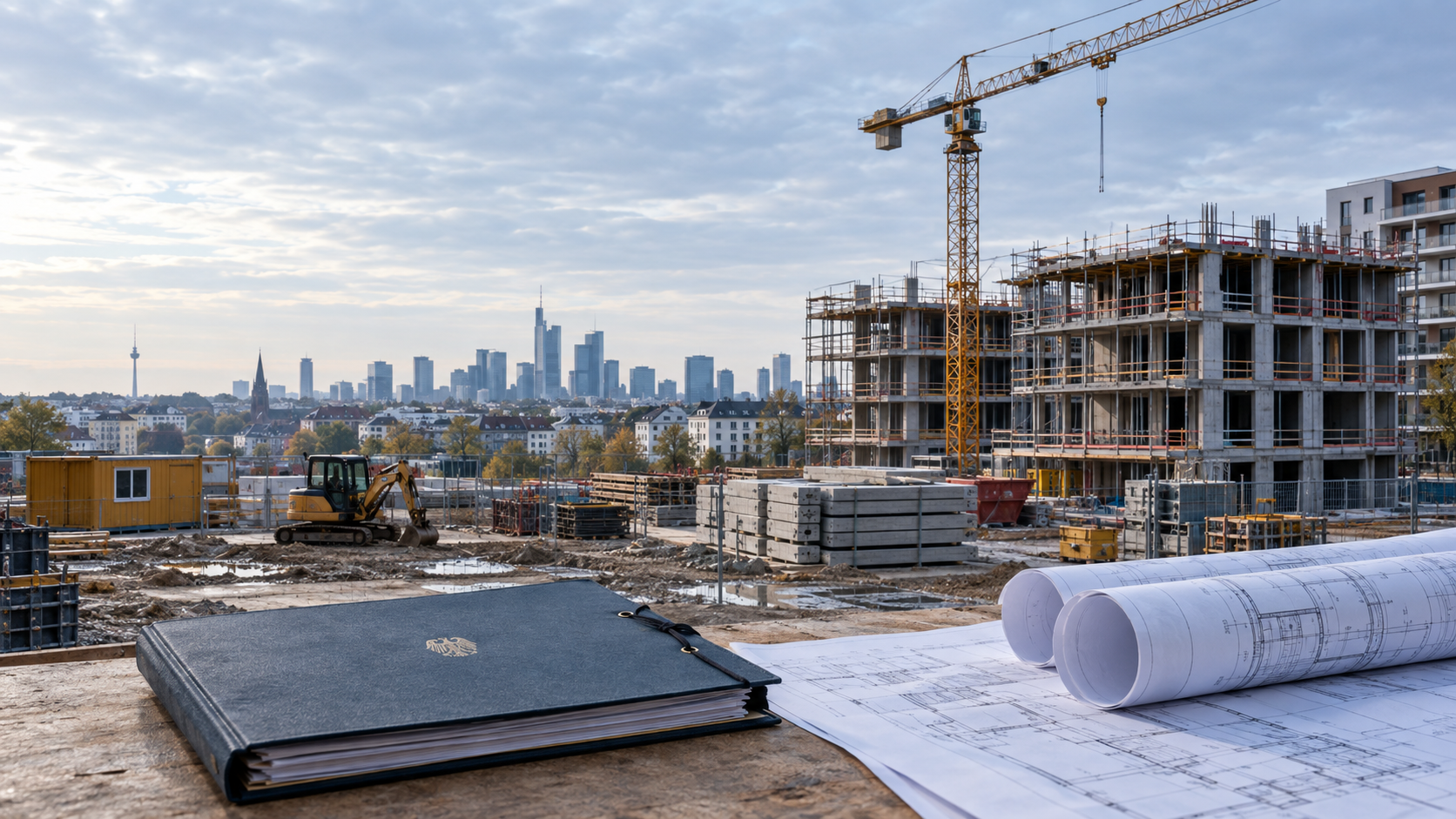
Germany's housing construction between paper boom and construction standstill: Hope is approved – scarcity is built – creative image on the topic, with AI: Xpert.Digital
From approval to reality: The challenges of German housing construction
Growing permits, declining completions: The housing crisis explained
The long road from building permit to move-in ready apartment in Germany
German residential construction in 2026 faces a paradoxical situation: while the number of building permits issued is increasing, the number of completed apartments is declining dramatically. This discrepancy raises fundamental questions and highlights the structural challenges facing the industry. Although the permit figures show that more projects are receiving building permits, actual implementation is lagging. On average, over 27 months elapse between approval and completion, meaning that the positive trend in permits has hardly any noticeable short-term impact on the housing market. This situation is not only problematic for construction companies and investors but also has far-reaching consequences for tenants and the overall housing supply in Germany. To understand the causes of this development, it is necessary to analyze the complex interrelationships between permits, financing, construction costs, and general market trends. Only in this way can the industry achieve the urgently needed transformation toward the reliable and efficient implementation of residential construction projects.
Germany's housing construction: A balancing act between permits and completions
German residential construction is sending two seemingly contradictory signals in 2026. On the one hand, building permits are picking up again, business confidence is improving, and government programs are intended to revive stalled projects. On the other hand, the number of actually completed apartments is expected to fall to its lowest level in 15 years. Those who focus solely on permits will therefore see a recovery that hasn't yet translated into tangible results for tenants, investors, municipalities, and construction companies. Conversely, those who only consider the weak completion figures underestimate the fact that there is indeed some movement at the beginning of the project pipeline.
The economically correct assessment lies somewhere between euphoria and doomsday rhetoric. The number of building permits is an early indicator, but not proof of production. It shows that more projects are once again becoming fundamentally possible under building regulations. However, whether these projects result in financed contracts, active construction sites, and ready-to-occupy apartments is only determined in a long chain of events: land development, financing, detailed planning, tendering, capacity management, and construction. The structural weaknesses of the German housing construction system lie precisely in this chain.
The central question, therefore, is not whether the number of permits is increasing, but rather what the implementation rate is and how quickly approved projects are realized. As long as there is an average of 27 months between approval and completion, even a significant wave of permits can only relieve the market with considerable delay. Permits are necessary, but not sufficient. The housing market doesn't need a statistical upswing on paper, but rather a reliable, industrial transformation of building rights into usable living space.
The recovery begins at a low level
From January to July 2026, permits were issued for approximately 148,800 apartments in new and existing buildings in Germany. Compared to the same period of the previous year, this represents an increase of 12.9 percent, or about 17,000 apartments. In new residential buildings, permits were issued for approximately 121,200 apartments, 13.5 percent more than in the previous year. Multi-story residential construction is particularly significant: permits were issued for approximately 79,700 apartments in apartment buildings, an increase of over 15 percent. This growth is precisely in the segment that can achieve the greatest impact in tight urban areas.
This development is positive, but it shouldn't be considered in isolation from the initial level. Housing construction had previously collapsed so dramatically that even double-digit growth rates initially only partially compensated for the losses. An increase of almost 13 percent sounds like a dynamic upswing, but after several years of crisis, it can only mark the beginning of a bottoming out. Furthermore, the number of building permits is not rising at the same rate everywhere and is meeting very different regional needs. In growing major cities and their surrounding areas, additional multi-story apartment buildings are particularly urgent, while in some peripheral regions, the quality, location, and adaptation of existing housing stock are more crucial than a high number of new buildings.
A simple extrapolation of the 148,800 permits issued over seven months to a total of twelve months would yield approximately 255,000 units. This would be significantly more than the previous year, but still well below the long-term projected annual demand for new housing of around 320,000 units. Such a linear extrapolation is not a reliable annual forecast due to seasonal fluctuations, late registrations, and varying monthly figures. However, it illustrates the scale of the issue: even a continuation of the positive trend would not automatically close the structural supply gap.
Furthermore, there is a statistical caveat. Building permits are sometimes reported late and therefore do not appear in the month in which the responsible authority actually issued the permit. Catch-up effects can improve the current picture without a corresponding acceleration in actual project activity. This does not diminish the significance of the increase, but it does put its economic implications into perspective. The figures demonstrate an improvement in the pipeline, but not yet a return to a sufficiently high production level.
There is a gap between need and completion
Only about 185,000 completed apartments are expected for 2026. This would be the lowest figure since 2011 and a further decline compared to the approximately 206,600 completions in 2025. Production had already fallen by 18 percent, or around 45,400 apartments, in 2025 compared to the previous year. While permits are now increasing, the completion statistics are still trending in the opposite direction. This is not a contradiction, but rather a consequence of long project durations and the preceding slump in permits.
Based on an annual demand of approximately 320,000 apartments, the 185,000 completed units leave a calculated shortfall of around 135,000 units. Production thus only reaches about 58 percent of the identified demand. This calculation is not a precise description of every local market, as housing demand varies considerably from region to region and depends on household growth, immigration, income, vacancy rates, and existing infrastructure. However, it illustrates the overall economic dimension: Germany is producing significantly less new housing than would be necessary for anticipated household and regional growth.
The consequences aren't immediately apparent in every existing lease, but are increasingly evident in new leases, relocations, and the search for suitable housing. The situation is particularly strained in economically strong cities, university towns, and well-connected surrounding communities. There, robust demand meets a supply that is growing only slowly. In the seven largest cities, the average asking rent for new apartments in the first half of 2026 was already over €21 per square meter. Such rents reflect not only high return expectations but also land prices, construction costs, financing, technical standards, project durations, and risks.
Housing shortages are therefore more than just a socio-political problem. They hinder labor mobility, increase wage demands in metropolitan areas, burden employers in recruiting staff, and weaken a location's attractiveness. When employees refuse to relocate because they cannot find affordable housing in the new location, housing shortages become an obstacle to productivity and growth. A persistently low number of completed housing units thus acts like an invisible location tax on businesses and households.
The construction backlog is not a finished stockpile
At the end of 2025, around 760,700 apartments had been approved but not yet completed. This so-called construction backlog is enormous: it is more than four times the annual production expected for 2026. At first glance, this might give rise to the hope that Germany simply needs to work through its existing stockpile. However, the construction backlog is not a warehouse full of nearly finished apartments, but rather a mix of active, delayed, recalculated, and, in fact, no longer viable projects.
Of the 760,700 planned apartments, only around 307,200 were actually under construction. Construction had not yet begun on more than half of the projects. Only about a quarter had reached the structural stage. Around 29,400 permits expired in 2025 without the apartments being built. This pattern shows that the real crisis does not lie solely in slow bureaucracy. A significant number of projects fail or stall after approval when financing, cost accounting, and market viability clash.
The backlog of construction projects should therefore be interpreted neither as evidence of an impending wave of completions nor as a fundamentally useless collection of files. It represents economic potential, the realization of which depends on the quality of individual projects. Some projects simply require viable financing or final implementation decisions. Others are structurally uneconomical due to excessively high land acquisition costs, outdated plans, unsuitable apartment sizes, increased technical requirements, or unattainable sales prices.
A sensible policy would therefore require segmenting the backlog of construction projects. Projects that are ready for construction and fundamentally profitable need rapid financing and implementation instruments. Projects with excessive costs require simplified planning, adjustments to standards, or a new product concept. Conversely, projects without realistic demand or with intractable location conflicts should not be preserved at all costs. The mere sum of the construction backlog says little about the number of housing units that can be activated in the short term.
27 months make any recovery sluggish
The average time between approval and completion has increased by about half a year to 27 months since the beginning of the decade. This delay fundamentally alters the effectiveness of policy measures. Even if significantly more projects are approved today, many apartments will not reach the market until 2028 or later. Therefore, improving the approval statistics in 2026 cannot resolve the acute shortage in the short term.
Long project durations also increase economic risks. The longer a project lasts, the greater the likelihood of changes in interest rates, material prices, wages, technical specifications, or marketing conditions. Every additional delay ties up equity capital, incurs planning costs, and extends the period without rental income or sales revenue. In project management, time is not a neutral factor but a key cost driver. Therefore, a faster process has a similar effect to cost reduction, provided it actually shortens the entire process and not just a single administrative stage.
Focusing solely on the permitting process is too narrow a view. Following approval, detailed planning, securing financing, awarding contracts, setting up the construction site, and coordinating numerous trades often ensue. Delays arise at interfaces: between planning and execution, between general contractors and subcontractors, between the client, bank, and funding agency, or between municipal development and private construction. The 27 months are the result of a system in which many stakeholders work sequentially, passing risks to the next stage.
True acceleration therefore requires parallel rather than purely sequential processes. Financing checks, detailed planning, prefabrication decisions, and capacity reservations should be integrated earlier. Digital building models can reveal conflicts between architecture, structural engineering, and building services before construction begins. Standardized components shorten the detailed planning phase. Binding milestones and clearly assigned responsibilities reduce waiting times. The decisive factor lies not in a single turbocharger, but in continuous acceleration from the site to handover.
The mood is ahead of the orders
The business climate in the residential construction sector improved significantly in August 2026, from -29.0 to -22.7 points. In particular, companies' expectations brightened. This development is an important signal because expectations influence investments, hiring, and capacity decisions. However, it does not yet signify an operational turnaround. A negative index value still indicates that skeptical assessments prevail.
The hoped-for recovery was initially barely noticeable in order books. Around 41 percent of companies continued to report a lack of orders. Approximately 13 percent were affected by cancellations. This leaves a significant gap between expectations and actual demand. Businesses see light at the end of the tunnel, but are not yet operating at full capacity. For many companies, it remains risky to increase staffing, purchase machinery, or expand production capacity for modular components as long as the order situation is not reliably sustainable.
The positive sentiment is most likely an advance on rising permits, increased funding, and a potential stabilization of financing. Such advances can be self-reinforcing if project developers resume acquisitions, banks finance more projects, and construction companies bring forward investments. However, they can also be dashed if construction costs and interest rates continue to rise or funding conditions change again. For an industry with long lead times, reliability is therefore more important than short-term euphoria.
A sustainable turnaround would only be evident if several indicators reversed course simultaneously: more permits, fewer cancellations, rising order intake, more construction starts, shorter construction times, and ultimately, higher completion rates. Currently, primarily the first part of this chain is moving. This is better than stagnation, but not yet a robust upswing.
Financing will determine when the first sod is turned
The biggest obstacle between approval and the start of construction is often financing. Housing projects are calculated over many years, but are sensitive to changes in borrowing costs. In August 2026, the interest rate for new housing loans with an initial fixed term of more than five to ten years was around 3.8 percent. This is not historically unusual, but it is significantly higher than the extremely low interest rate environment on which many plots of land were purchased and projects developed.
The effect of interest rates operates through several channels. Private buyers can borrow less while maintaining the same monthly payment. Project developers face higher financing costs until the property is sold or rented. Institutional investors are increasingly comparing expected real estate returns with interest-bearing alternatives. Simultaneously, higher discount rates reduce the present value of future rental income. A project that appeared viable with a loan interest rate of just under two percent can become unprofitable with significantly higher financing costs, even if the permits remain unchanged.
Early fixed interest rates can reduce risks, but they are not a panacea. Securing financing before all planning and permitting steps are completed incurs commitment and hedging costs. Banks also require sufficient equity capital, robust pre-marketing, and realistic cost buffers. Smaller developers and private builders, in particular, cannot always meet these requirements. Therefore, a financing structure that reliably bridges the gap between permitting, grant approval, construction start, and disbursement of funds is crucial.
Government programs are most effective when they offer not only favorable interest rates but also planning certainty. Abrupt funding cuts or frequent changes to standards increase the risk premium, even if new programs follow later. For a multi-year project, a somewhat less generous but consistently predictable instrument is often more valuable than short-term, highly attractive funding with an uncertain end.
Funding policies can stimulate projects, but they cannot replace the market
The Efficiency House 55 Plus subsidy program aimed to activate projects that had already been approved but not yet started. The program initially provided €800 million and offered subsidized loans with an effective annual interest rate of approximately one percent under certain conditions. By the end of September 2026, around 50,000 apartments had been supported; most recently, only about €69 million remained. This demonstrates significant demand but also illustrates the limited reach of a one-off funding program.
The 50,000 subsidized apartments represent only about 6.6 percent of the backlog of 760,700 units. Not every project in this backlog is eligible for funding or economically viable, which is why this comparison does not represent a success rate. However, it clearly demonstrates that a single program cannot close the structural implementation gap. Furthermore, there is a risk of windfall gains if projects are subsidized that would have been realized even without support.
Therefore, subsidies should be targeted as closely as possible to closing the economic gap created by socially desired standards or affordable rents. They must not permanently compensate for general cost increases, as this can perpetuate price pressures and weaken efficiency improvements. If every price increase is met with higher subsidies, the incentive to simplify standards, industrialize processes, or make land available more cheaply decreases.
A particularly problematic issue is the expiration of funding without a follow-up plan. Projects that were calculated based on specific funding conditions can once again be shelved if the funding pool is exhausted before the financing is finalized. A better solution would be a multi-year, predictable funding framework with clear degression rules. This would allow market participants to adjust their calculations without having to speculate on the next political funding call.
Our EU and German expertise in business development, sales and marketing

Our EU and German expertise in business development, sales and marketing - Image: Xpert.Digital
Industry focus areas: B2B, digitalization (from AI to XR), mechanical engineering, logistics, renewable energies and industry
More information here:
A thematic hub offering insights and expertise:
- Knowledge platform covering global and regional economies, innovation and industry-specific trends
- A collection of analyses, insights, and background information from our key areas of focus
- A place for expertise and information on current developments in business and technology
- A hub for companies seeking information on markets, digitalization, and industry innovations
The construction turbo: A step in the right direction for housing construction
The construction turbo only accelerates part of the route
The construction acceleration measure, in effect since the end of October 2025, allows municipalities, under certain conditions, to permit residential construction even without first establishing or amending a development plan. The municipality can grant its approval within three months. Furthermore, it facilitates the addition of stories, extensions, and conversions of existing buildings. This instrument thus addresses a genuine weakness: the lengthy process of creating planning permission can delay projects for years.
The name promises more than the instrument alone can deliver. The construction accelerator does not eliminate the requirements of state building codes, nor does it eliminate regulations concerning fire safety, structural stability, minimum distances, or nature conservation. Financing, development, capacity, and construction execution are not automatically accelerated by this measure either. Municipalities must actively utilize the instrument and retain responsibility for urban planning quality, infrastructure, and public acceptance.
The accelerated construction process makes economic sense primarily where the fundamental suitability of a location is clear and the regular planning procedure offers no proportional additional benefit. It can be particularly effective for infill development, adding stories to existing buildings, and repurposing existing infrastructure, as it utilizes that infrastructure. However, for large new neighborhoods, questions remain regarding traffic, schools, daycare centers, energy supply, green spaces, and social integration. Rapidly approving housing without parallel infrastructure planning can shift future bottlenecks rather than solving them.
The success of the accelerated construction process should therefore not be measured by the number of expedited permits, but by the additional apartments actually completed and their location quality. A procedure is only efficient if it saves time without shifting conflicts and costs to later project phases.
Construction costs eat up the interest rate advantage
Prices for the construction of conventionally built residential buildings were around five percent higher in May 2026 than in the previous year. Compared to February, they rose by 2.4 percent within three months. Roofing work, as well as carpentry and timber construction, saw particularly sharp increases in cost. Interior finishing, heating technology, and earthworks also increased significantly. This accelerated the upward trend in costs, even though the volume of residential construction remained weak.
This development is economically significant. Normally, declining demand should dampen price pressure. However, in the construction industry, several factors prevent rapid adjustment: wage increases driven by collective bargaining agreements and demographics, specialized bottlenecks, energy-intensive materials, fragmented supply chains, technical requirements, and slow productivity gains. Furthermore, many companies cannot reduce their capacities indefinitely without risking the loss of skilled workers and expertise.
High construction costs increase the required rents or sales prices. In many major West German cities, rents of around €20 per square meter are now necessary for privately financed new construction projects to be profitable under standard market assumptions. This threshold is above what broad segments of households can afford. This creates a conflict of objectives: the market needs more new construction, but without subsidies, cost-covering new construction often fails to serve the segment with the greatest social need.
Simply capping rents won't solve the supply problem if it results in a permanently negative return on investment for new projects. Conversely, it's socially inadequate to point to high rents for new construction as an unavoidable market consequence. The viable solution lies in lower construction costs, more affordable building land, targeted subsidies for individuals or properties, and greater mobilization of existing housing stock. Affordability cannot be achieved solely through regulating returns; it requires a change in the cost structure.
Standards need an economic benchmark
Construction in Germany is not only expensive because materials and labor cost more, but also because projects must meet a large number of sometimes overlapping requirements. Energy efficiency, sound insulation, accessibility, parking spaces, fire protection, building services engineering, and municipal design regulations each pursue understandable goals. However, taken together, they can significantly increase the costs of space, technology, planning, and documentation.
The crucial question is not whether standards should be lowered in principle, but whether each requirement generates a benefit that justifies its cost. An economically viable building design should legally allow for foregoing comfort standards without compromising safety and fundamental quality. This requires clear liability rules. As long as planners and companies fear that a simpler design will later be considered a defect, they will plan defensively and opt for additional technology rather than cost-saving simplicity.
Contradictory or inconsistently interpreted regulations further increase transaction costs. Developers must commission expert reports, examine different options, and plan for contingency funds. Small and medium-sized projects suffer particularly because fixed planning and verification costs are spread across fewer apartments. Standardization across state and municipal borders could therefore create significant economies of scale.
Standards reform should not involve blanket deregulation, but rather systematically examine costs and impacts. Technical safety, climate adaptation, and long-term usability remain essential. Excessive comfort requirements, duplicate testing, and local variations should be reduced. The life cycle must be the benchmark: a cheap building with high subsequent energy and maintenance costs is just as inefficient as a technically overloaded new building whose rent is unaffordable.
Nature conservation and housing construction must not be adversaries
Nature and species conservation can significantly delay construction projects on previously undeveloped land. Breeding seasons, protected species, compensatory areas, and relocations all influence when construction can begin. Such requirements are not merely bureaucratic red tape, but rather protect real ecological assets. Problems arise when investigations begin late, responsibilities are unclear, or individual timeframes are so closely spaced that a project loses almost another year.
The Neulichterfelde district in Berlin vividly illustrates the risks of large-scale projects. The plan for the site included approximately 2,500 apartments, as well as social infrastructure and green spaces. The planning process dragged on for many years; species protection measures, including the relocation of protected animals, caused additional costs and delays. The Groth Group ultimately sold the project to new partners and withdrew. While the project wasn't entirely abandoned, the original developer evidently deemed the cost-benefit ratio—the time commitment, the duration, and the risk—no longer viable.
The economic principle is not to suspend species protection. It is to address ecological conflicts early and in a binding manner. Mapping should begin in the very first project phase. Authorities, experts, and developers need coordinated timelines, guaranteed replacement habitats, and sound decisions. If new requirements are added years later without a clear endpoint, not only does the project risk increase, but land prices and financing costs also continue to rise even though no housing has yet been built.
Infill development, vertical expansion, repurposing, and building on sealed surfaces can reduce many conflicts. However, they are often complex from a planning perspective and frequently encounter resistance from neighborhoods. A balanced strategy therefore combines consistent protection of ecologically valuable areas with faster procedures at suitable locations. Nature conservation and housing creation are compatible if both goals are planned early on rather than sequentially.
The industry itself bears responsibility
It would be too convenient to attribute the housing crisis solely to politics, interest rates, or government agencies. The German construction industry has experienced slow productivity growth for decades. Between 2019 and 2023, labor productivity even declined significantly in parts of the sector. Compared to its more digitally advanced European neighbors, Germany is less consistent in its use of standardized data processes, integrated business software, and digital project management.
Many construction projects remain unique. Those involved work with different data sets, plan changes are transmitted multiple times, and errors are only discovered on the construction site. While awarding contracts to numerous trades can foster competition, it also leads to interfaces, change orders, and shifts in responsibility. As long as additional costs can be partially offset through change order management, the economic incentive for radical process simplification is limited.
Low investment in training is also a hindrance. Numerous companies recognize the potential of cloud platforms, simulation, digital twins, laser scanning, real-time control, and artificial intelligence, but lack sufficient expertise. Technology alone doesn't change processes. Applying a digital tool to a still fragmented process, at worst, only digitizes the inefficiency.
The industry needs more integrated business models, repeatable product platforms, and long-term partnerships between housing companies, planners, manufacturers, and construction firms. A reliable project pipeline could justify investments in factories, robotics, and training. Conversely, the industry must demonstrate that higher volumes do not automatically lead to higher prices and longer lead times. Policy reforms and corporate modernization are not alternatives, but rather mutually dependent.
Prefabrication turns construction sites into production facilities
Serial and modular construction can significantly shorten construction time. Industrial prefabrication allows walls, facades, bathrooms, or entire room modules to be produced under controlled conditions in the factory. They are then assembled on the construction site, eliminating the need to reorganize each work step under varying weather and site conditions. For suitable projects, this can shorten the construction phase by many months; the actual construction time can sometimes be reduced to approximately six months.
The greatest advantage lies not in identical buildings, but in repeatable components and processes. Different facades, floor plans, and urban planning situations can be based on standardized structural and technical systems. The automotive industry demonstrates that product variety and platform standardization are compatible. This logic has so far only been used to a limited extent in residential construction.
Prefabrication, however, requires reliable production volumes. A factory for modules or components can only operate economically if its capacity is continuously utilized. Fluctuating subsidy programs, special municipal requirements, and changing state building codes complicate this scaling. Transport, crane logistics, and site layout also impose limitations. Serial construction is therefore not a universal solution, but a key component for larger projects and recurring building types.
Public and cooperative housing companies could act as anchor customers by concluding long-term framework agreements. The crucial point is not just to bundle individual construction contracts, but to create multi-year demand for compatible systems. Only then will it be worthwhile for suppliers to invest in automated production, digital configuration, and optimized supply chains.
Digitalization must connect the entire process
Building Information Modeling (BIM), digital twins, and shared data platforms can reduce planning errors, clashes, and information loss. However, their benefits only materialize if all stakeholders work with a consistent model. A digital building model that is not used for cost estimation, manufacturing, logistics, and operation after approval remains an expensive add-on.
The greatest benefits lie in linking the process stages. Quantities, costs, deadlines, and component orders can be derived from the model. Changes to the plans can immediately reveal their impact on structural engineering, technology, energy consumption, and budget. Banks and investors could monitor project progress more accurately and identify risks earlier using standardized data. Authorities could utilize machine-readable checks for formal requirements without fully automating the technical decision-making process.
Artificial intelligence can support variant planning, document review, cost estimation, and schedule risk management. Construction robots are suitable for repetitive, heavy, or precise tasks such as surveying, drilling, reinforcement, or masonry. However, their economical use requires standardized construction sites, reliable data, and appropriately planned components. A robot cannot fix chaotic project management.
Digitalization should therefore not be treated as an isolated IT budget. It is an organizational reform. Companies must redefine processes, clarify responsibilities, and train employees. The government can promote interoperable standards, digital building permit applications, and uniform data formats. However, the actual implementation remains a management task for companies.
Political uncertainty makes every project more expensive
The debate surrounding the potential socialization of large private housing stocks in Berlin has repercussions beyond the directly affected companies. Investors are assessing not only the current legal situation but also the likelihood of future interventions. The greater the perceived uncertainty regarding ownership, regulation, and profit potential, the higher the return requirements and risk premiums become. Some investments are being postponed or redirected to other regions.
The German government has announced its intention to prohibit state-level socialization of private rental housing stocks through federal legislation. Such a step could send a political signal of investment security. However, the legal issue is complex because socialization is provided for in the Basic Law (Germany's constitution), and legislative competence remains disputed. Therefore, an announcement alone does not create complete legal certainty. Until a robust legal framework exists, the debate itself may continue to generate uncertainty.
At the same time, it would be an exaggeration to attribute the nationwide housing crisis primarily to the Berlin debate on socialization. Financing costs, construction prices, land availability, building standards, and project durations have a much broader, more direct impact. Political debates about ownership are an additional risk factor, but not the main cause of the low completion rates.
A credible housing policy must combine property security with social responsibility. Private investors need reliable rules, while tenants need protection from abusive practices. Constant shifts in direction between subsidies, stricter regulations, and subsequent corrections harm both sides. Reliability is itself an economic policy instrument because it reduces the risk premium on long-term capital.
Permits must be translated into binding projects
A sound housing strategy must manage the entire implementation chain. After approval, the developer, municipality, financier, and construction companies should agree on a realistic timeline with clear milestones. Early financing commitments, reserved resources, and standardized planning stages can prevent projects from languishing for years after approval. For larger neighborhoods, public infrastructure must be developed concurrently.
Policymakers should change their key performance indicators. The number of permits issued is easy to communicate, but it only represents an intermediate step. More important would be the percentage of projects started within twelve months, the average time to completion, the number of expired permits, and the cost per square meter created. Transparent regional data could reveal where projects are actually stalled.
Funding programs should be multi-year, simple, and linked to standardization. Those who use serial systems, digital planning, and cost-saving building types could receive faster reviews or more targeted support. At the same time, municipalities should increasingly make affordable land available through leasehold agreements or concept-based allocations, provided that permanently affordable housing is built in return. This way, the funding is not entirely consumed by land prices.
For the construction industry, the priority lies in productivity and reliability. Companies must invest more heavily in prefabrication, data expertise, robotics, and collaborative contracting models. Clients, in turn, should not solely evaluate the lowest bid price, but rather on-time delivery, life-cycle costs, and industrial scalability. A sustainably functional housing sector is not created by maximizing price pressure in every single project, but rather through adaptive, repeatable processes.
The turnaround only begins with the handover of the keys
The year 2026 may mark the beginning of a stabilization, but not yet a comprehensive recovery. Rising permits, improved expectations, and a slight increase in actual construction volume are serious positive signals. At the same time, 185,000 expected completions, a 27-month lead time, more than 40 percent of companies experiencing a lack of orders, and a construction backlog of over 760,000 homes remain strong arguments against premature optimism.
The term "pseudo-optimism" is therefore justified when celebrating permit figures in isolation. However, it would be too sweeping to dismiss every improvement as meaningless. Without new permits, there will be no subsequent completions. The increase is a necessary preliminary step. Its economic significance depends on whether financing, costs, procedures, and production capacities also improve.
Germany doesn't have a problem solely with permits or construction costs. It's suffering from an implementation crisis where numerous individual risks interact. High interest rates make expensive projects unaffordable. Lengthy procedures increase costs. Inconsistent standards prevent scaling. Low productivity keeps prices high. Political uncertainty drives up capital costs. Conversely, a lack of orders stifles investment in precisely those industrial capacities that could make construction more affordable.
The outlook remains malleable. The large backlog of construction projects includes achievable projects, demand for housing is high, and technical solutions for faster processes exist. The crucial point is to transform short-term programs into a reliable production strategy. The housing market will not be relieved by a single construction boost, a subsidy tranche, or a surge in confidence. It will be relieved when a sufficient number of apartments are completed year after year in the places where people need them, at costs that households and investors can bear.
The political and economic benchmark must therefore be the handover of the keys. A permit documents an intention. A contract activates value creation. A construction start ties up capacity. Only a completed apartment expands the supply. As long as this distinction remains at the heart of the debate, cautious hope can become a real turnaround. If it is ignored, the economic upswing will remain a mere promise on paper.
🎯🎯🎯 Data-driven B2B industry hub as a quasi-in-house solution

The quasi-in-house solution: How Xpert.Digital closes operational gaps in B2B marketing and sales – Smart Content-Driven Business - Image: Xpert.Digital
Xpert.Digital is a data-driven B2B industry hub led by Konrad Wolfenstein . The company acts as an external, quasi-in-house solution for industrial partners, closing operational gaps in marketing, content, and sales – without requiring additional resources on the client side.
More information here:
Your global marketing and business development partner
☑️ Our business language is English or German
☑️ NEW: Correspondence in your native language!

Konrad Wolfenstein
I and my team are happy to be available to you as your personal advisor.
You can contact me by filling out the contact form here [email protected]:or simply call me at +49 7348 4088 965. My email address is
I'm looking forward to our joint project.










