
Chinese authorities sound the alarm: BYD and Geely caught in random checks: Manufacturers build cars other than approved
Xpert Pre-Release

Available in 27 languages 📢
Prefer Xpert.Digital on GoogleⓘPublished on: September 4, 2026 / Updated on: September 4, 2026 – Author: Konrad Wolfenstein
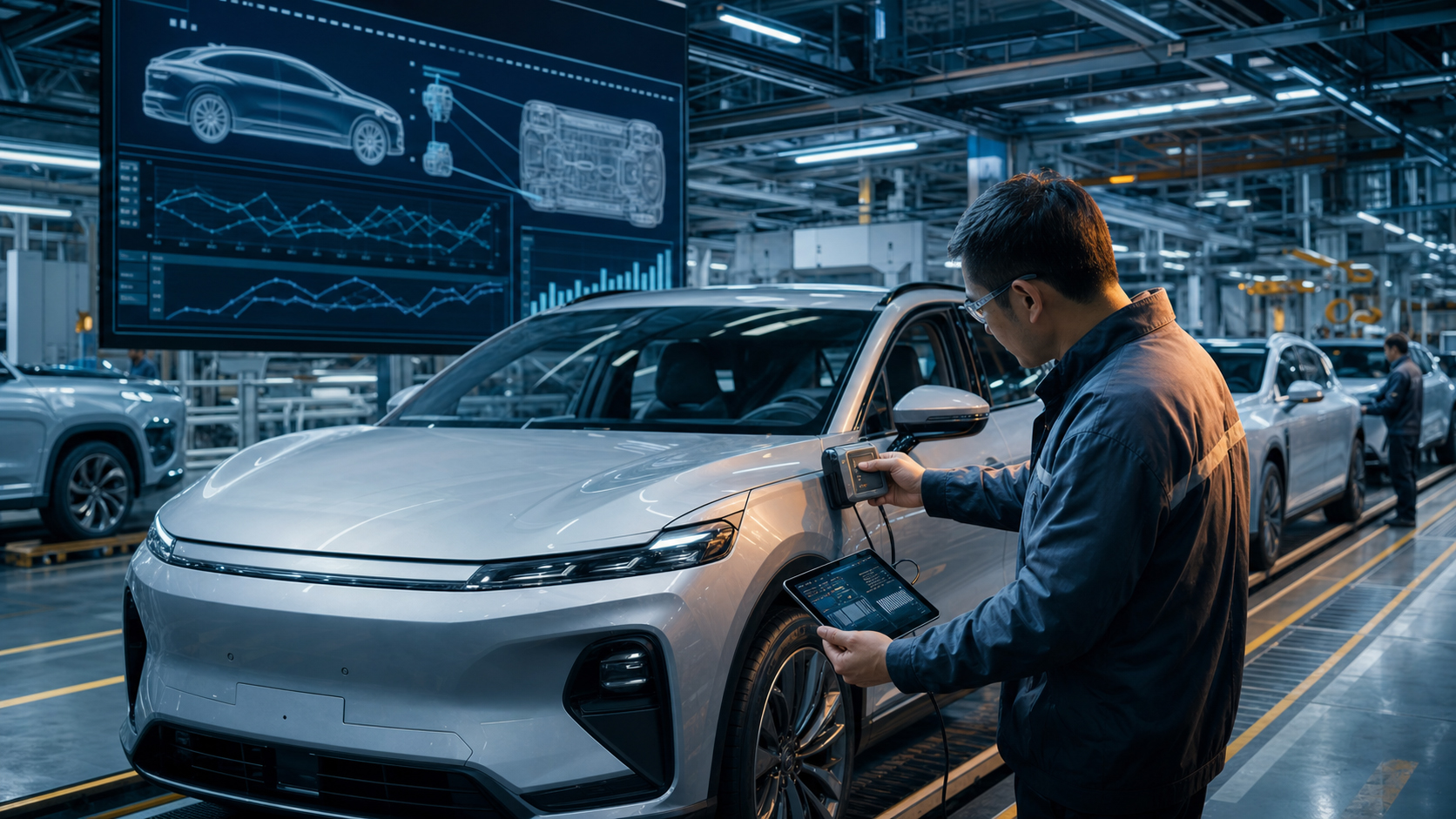
Chinese authorities sound the alarm: BYD and Geely caught in random checks: When manufacturers build different cars than approved – Creative image on the topic, with AI: Xpert.Digital
Fear of software tricks: Why Chinese authorities are suddenly scrutinizing domestic car manufacturers
Incorrect data from the factory: The risky gap between official approval and actual production
China's automotive industry is in a state of emergency. While manufacturers like BYD and Geely are shaking up the global market with their extreme development pace – the so-called "China Speed" – the government in Beijing is now pulling the emergency brake. A large-scale wave of inspections by the authorities is currently uncovering significant quality and conformity deficiencies in numerous models. Regulators attribute these shortcomings to a ruinous price war and drastically shortened development cycles, sometimes less than two years. With stricter testing requirements, unannounced factory inspections, and a strict ban on subsequent software manipulation, the state aims to prevent a looming loss of reputation. These measures come at a critical time: With domestic profit margins plummeting, the industry is more dependent than ever on exports to Europe – but it is precisely there that the discovered defects could have devastating consequences for consumer confidence.
Significantly more manufacturers than just BYD and Geely are affected. The Chinese Ministry of Industry and Information Technology's (MIIT) inspection campaign has been running in several waves since July 2026 and has so far affected at least seven manufacturers:
- BYD – Qin L DM-i officially criticized for excessive fuel consumption in charge-sustaining mode
- Geely – Xingyuan/EX2 officially reported for wheelbase deviation exceeding the one percent tolerance
- GAC Aion – inspected on July 24, 2026, after approximately 210,000 Aion-S vehicles had failed due to defective CALB battery cells
- Xpeng – controlled in Zhaoqing on the same day as GAC Aion
- Nio – tested on July 30/31, 2026 in Anhui Province
- Chery – inspected in Anhui at the same time as Nio
- JAC (Anhui Jianghuai) – also part of the Anhui inspection round at the end of July
The first two rounds of inspections, targeting GAC Aion/Xpeng and Chery/Nio/JAC, primarily examined production consistency, the safety capabilities of connected vehicles, and development capacities, without MIIT publicly naming specific violations. It was only the annual conformity assessment report, published on August 27, that named BYD and Geely, specifying seven vehicle models with violations. The remaining five affected models were commercial vehicles without named manufacturers. MIIT explicitly describes the campaign as a systematic, industry-wide "census" and announced that further manufacturers will be inspected in the coming months.
When speed becomes a weakness: China's automotive industry between record growth and regulatory pressure to control
A test report with explosive potential
Chinese regulatory authorities have officially notified automakers BYD and Geely that vehicles tested did not conform to the technical documentation submitted for type approval. The Ministry of Industry and Information Technology (MIIT) published the results of its annual conformity assessment for new energy vehicles on August 28, 2026, identifying seven models with deviations in four different categories. In one model, manufactured by Geely's Zhejiang Haoqing plant, the measured wheelbase exceeded the permissible tolerance of one percent compared to the value listed in the official vehicle catalog. The affected model, code JL7001BEV71, corresponds to the Geely Xingyuan sold in China, which is marketed internationally as the Geely EX2 and has recently begun accepting pre-orders in Europe. In the case of a BYD vehicle with the code BYD7153WT6HEV, corresponding to the Qin L DM-i plug-in hybrid model, the measured fuel consumption in charge-sustaining mode—that is, operation using only the combustion engine after the battery has discharged—exceeded the declared value. The other five models flagged were commercial vehicles, some of which had missing owner's manuals, malfunctioning emergency window release mechanisms, or side-impact protection systems that did not meet national standards. The MIIT did not provide details on the exact extent of the discrepancies and emphasized that the findings pertained solely to the sample vehicles tested and did not warrant a nationwide recall.
Not just two names on the list
A closer look at the regulatory calendar of the past few weeks reveals that BYD and Geely are not isolated cases, but rather part of a much broader wave of inspections. As early as July 2026, inspectors from the Ministry's Equipment Industry Division visited the GAC Aion and Xpeng plants in Guangdong Province to examine the safety capabilities of connected vehicles, development and production capacities, and production consistency. Just a few days later, unannounced inspections followed at Nio, Chery, and JAC in Anhui Province, where inspectors randomly selected vehicles and battery packs directly from production and sent them to external testing facilities. This means the current wave of inspections extends to at least six other major manufacturers besides BYD and Geely, indicating that the authorities view the problem as an industry-wide pattern rather than the misconduct of individual companies. The increased scrutiny was triggered, among other things, by a recall of historic proportions: On August 21, 2026, Tesla and eight Chinese electric car manufacturers had to recall a total of 4.3 million vehicles in China due to safety concerns regarding emergency door release mechanisms – the largest recall in the history of the Chinese automotive market. As early as July, the Ministry had urged the industry, in a meeting with leading manufacturers, to move away from "irrational competition" and ensure the safety of vehicles, components, and driver assistance systems, announcing that violations would be sanctioned in the future.
A year in a state of emergency for quality assurance
On August 27, 2026, four government agencies jointly launched a nationwide, twelve-month campaign: the Ministry of Industry and Information Technology, the Ministry of Public Security, the Ministry of Ecology and Environment, and the State Market Supervision Agency. As part of this initiative, approximately 100 domestic manufacturers are required to conduct comprehensive internal audits of product quality, reliability, and durability and submit their findings to local authorities by the end of 2026. The audits are not limited to final assembly but explicitly extend to key suppliers. This is particularly relevant given the close integration and scale of Chinese supply chains, where even minor design or manufacturing flaws can quickly escalate into systemic problems. If defects are discovered, companies must proactively submit recall plans to the market supervision agency and implement voluntary recalls, rather than waiting for regulatory pressure. The practical implementation involves unannounced sampling directly from factories and dealerships: Inspectors seal the hardware and software configuration of the vehicles taken to prevent subsequent manipulation and then forward them for crash tests, structural inspections, and battery pack safety assessments. This is supplemented by cybersecurity, data protection, and the security of software updates and emergency response systems, particularly for vehicles with advanced driver assistance features. A particularly noteworthy new clause prohibits manufacturers from remotely altering a vehicle's technical parameters via software updates after the test samples have been sealed. This is intended to close previous loopholes that allowed for retroactive modification of vehicle characteristics. Violations can be sanctioned by public naming, suspension from the government's product catalog, or a ban on registering new models, although the authorities have not yet disclosed which specific measure was applied in the cases of BYD and Geely.
🎯🎯🎯 Data-driven B2B industry hub as a quasi-in-house solution

The quasi-in-house solution: How Xpert.Digital closes operational gaps in B2B marketing and sales – Smart Content-Driven Business - Image: Xpert.Digital
Xpert.Digital is a data-driven B2B industry hub led by Konrad Wolfenstein . The company acts as an external, quasi-in-house solution for industrial partners, closing operational gaps in marketing, content, and sales – without requiring additional resources on the client side.
More information here:
End of the innovation frenzy: China's automotive industry struggles with quality and authorities
Race against one's own development time
The underlying structural reason for the tightened controls lies in the unusually high pace of innovation in the Chinese automotive industry. While established international manufacturers with traditional development processes typically need three to five years to bring a new model to market, the average in China is already around two years. According to the Chinese vehicle design company IAT Automobile Technology and the industry association CAAM, as reported by Bloomberg, the use of artificial intelligence could reduce this timeframe to just 18 months in the future. This acceleration is not due to a single technological leap, but rather to the automation of dozens of individual development steps: Digital design models are tested for structural and functional suitability using artificial intelligence before a physical prototype is even created – a process that previously required engineers to manually inspect tens of thousands of individual components. This development, now referred to in industry jargon as "China Speed," is, according to industry observers, effectively setting a new global benchmark that even established international brands must align themselves with to avoid falling behind in the competition for market share.
Doubts about the thoroughness behind the pace
This accelerated pace of innovation is now encountering increasing skepticism from authorities. According to a Bloomberg report, Chinese regulators are seriously examining whether such short development cycles are even compatible with thorough technical testing. This concern is concretely expressed in a proposal from the National Technical Committee for Vehicle Standardization, published for public comment in July 2026, which calls for doubling the mandatory reliability tests for electric and hybrid vehicles from the current 15,000 kilometers to 30,000 kilometers. This would completely eliminate the existing 50 percent discount for electric vehicles compared to combustion engine vehicles, which has been granted since the standards were introduced, and would, for the first time, consistently implement the so-called fuel-electricity parity, referred to in the original Chinese as "oil-electric equivalence." For plug-in hybrids, an additional separate test track of 10,000 kilometers in pure electric mode is required, while fuel cell vehicles must cover the full 30,000 kilometers in hybrid mode. For conventional combustion engine vehicles, the increased requirements will apply from January 1, 2027, based on a revised version of the approval requirements published in January 2026. Cui Dongshu, Deputy Secretary-General of the China Passenger Car Association, publicly interpreted the planned standardization as a sign of the maturity of the new energy vehicle market segment, not a step backward. Experts like Li Fenggang also point out that vehicle development generally comprises two phases: design validation to verify fundamental technical feasibility and production validation to ensure consistent manufacturing quality. Skipping either phase can directly impact the consistency and quality of production vehicles.
The economic pressure behind the cuts
The close timing of stricter controls and the industry's economic situation is no coincidence, but rather indicative of a deeper structural problem. The average profit margin of the Chinese auto industry fell from 4.3 percent in 2024 to 4.1 percent in 2025, and then to 3.6 percent in the first seven months of 2026, with the figure even dipping to 2.4 percent at one point in July 2026. According to Chen Shihua, deputy secretary-general of the industry association CAAM, the industry now earns an average net profit of only around US$230 per vehicle sold, with an average selling price of approximately US$15,500, which equates to a net margin of just 1.5 percent. The cause of this development is extremely aggressive price competition that has persisted for several years and, according to estimates by the China Association of Automobile Dealers, has resulted in a cumulative loss in the value of industry production of approximately US$68 billion over a three-year period. At the same time, the Chinese auto industry has an estimated installed production capacity of 55.5 million vehicles annually, while actual domestic demand is only around 25 to 26 million vehicles, corresponding to a capacity utilization of less than 70 percent. In response to this development, the State Administration of Markets and Consumer Protection issued an explicit ban in February 2026 on selling below the cost of production. The concept of cost was deliberately defined broadly and includes not only pure manufacturing costs but also administrative, financing, and distribution costs in order to prevent manufacturers from using previous legal loopholes. It is precisely in this tense market environment that the question of quality assurance takes on additional political urgency, as regulatory authorities fear that the ongoing cost pressure could tempt manufacturers to shorten or skip validation processes altogether in order to maintain competitive prices and short development times despite declining margins.
Market concentration as the flip side of the crisis
The pressure on margins is having a significant impact on the industry's structure. Even market leader BYD saw its net profit fall by 19 percent to 32.6 billion yuan in 2025, despite a 3.5 percent increase in revenue to 804 billion yuan, while state-owned manufacturer GAC posted its first-ever annual loss of 8.8 billion yuan in the same year. Domestic sales plummeted by more than 20 percent year-on-year in the first quarter of 2026, while Chinese consumer spending on vehicles declined by 12.6 percent in the first half of 2026 – the weakest performance of any consumer goods category. Analysts therefore anticipate a substantial market consolidation, with the number of competitive manufacturers potentially shrinking to just five to seven leading companies by 2030, while numerous smaller, persistently unprofitable brands are likely to disappear from the market.
Export as both a safety valve and a risk factor
Given weak domestic margins, exports have become a key alternative for Chinese manufacturers. BYD surpassed the one million mark for exported vehicles for the first time in 2025, achieving a gross margin of 19.5 percent in its overseas business, compared to just 16.7 percent in the domestic market. Competitor Chery increased its exports by 33.2 percent to 1.3 million vehicles during the same period, while total Chinese vehicle exports surged by 56.7 percent to 2.23 million units in the first quarter of 2026, exceeding 30 percent of total sales for the first time. However, this export strategy carries a specific reputational risk: any brand publicly named for non-compliance in its domestic market carries this stigma directly into foreign markets, where considerable skepticism already exists regarding rapidly and inexpensively developed Chinese vehicles. The Geely EX2, whose wheelbase deviation was criticized in the MIIT report, is currently in preparation for delivery to the European market, where pre-orders have already begun before the planned dealer launch in September 2026, which further increases the urgency of the complaint.
A control regime with a signaling effect
Overall, a picture is emerging in which the Chinese automotive regulator is increasingly abandoning its traditionally restrained role and becoming an active force for regulation in a structurally overheated market. The combination of stricter factory inspections, mandatory self-audit reports, a potential doubling of test tracks, and an explicit ban on subsequent parameter changes via software updates suggests that the authorities suspect systematic, rather than merely isolated, weaknesses in the development and manufacturing process. For the affected manufacturers, this means a double balancing act: On the one hand, they must maintain their development speed to avoid falling behind in the intense price and innovation competition, and on the other hand, they must demonstrate that this speed does not compromise product conformity and vehicle safety. How resilient this balance actually is will only become clear once the quality reports from the approximately 100 registered manufacturers, due by the end of 2026, have been evaluated and the proposed extension of the test tracks actually comes into effect.
📈🚀 From visibility to trust 👀🤝 Your scalable path with Xpert.Digital

From visibility to trust: Your scalable path with Xpert.Digital - Image: Xpert.Digital
In industrial B2B, sustainable business relationships rarely emerge overnight. They develop step by step – through visibility, professional relevance, recurring touchpoints, and growing trust. Xpert.Digital's 4-stage model addresses precisely this: It offers a structured path that begins with a manageable entry point and can evolve into deeper collaboration in business development if needed.
Instead of relying on loud marketing promises, this model puts the relationship at the forefront. Companies start with clearly defined, easily calculable measures and then decide, based on their own experience, how far they want to expand the collaboration. A key factor for this undisturbed trust-building process: The platform completely avoids annoying advertising ads, so the editorial focus remains solely on the companies' expertise.
More information here:
Your global marketing and business development partner
☑️ Our business language is English or German
☑️ NEW: Correspondence in your native language!

Konrad Wolfenstein
I and my team are happy to be available to you as your personal advisor.
You can contact me by filling out the contact form here [email protected]:or simply call me at +49 7348 4088 965. My email address is
I'm looking forward to our joint project.





