
The consequences of the VARTA insolvency: VARTA in crisis: – What future awaits Ellwangen?
Xpert Pre-Release

Available in 27 languages 📢
Prefer Xpert.Digital on GoogleⓘPublished on: October 5, 2026 / Updated on: October 5, 2026 – Author: Konrad Wolfenstein
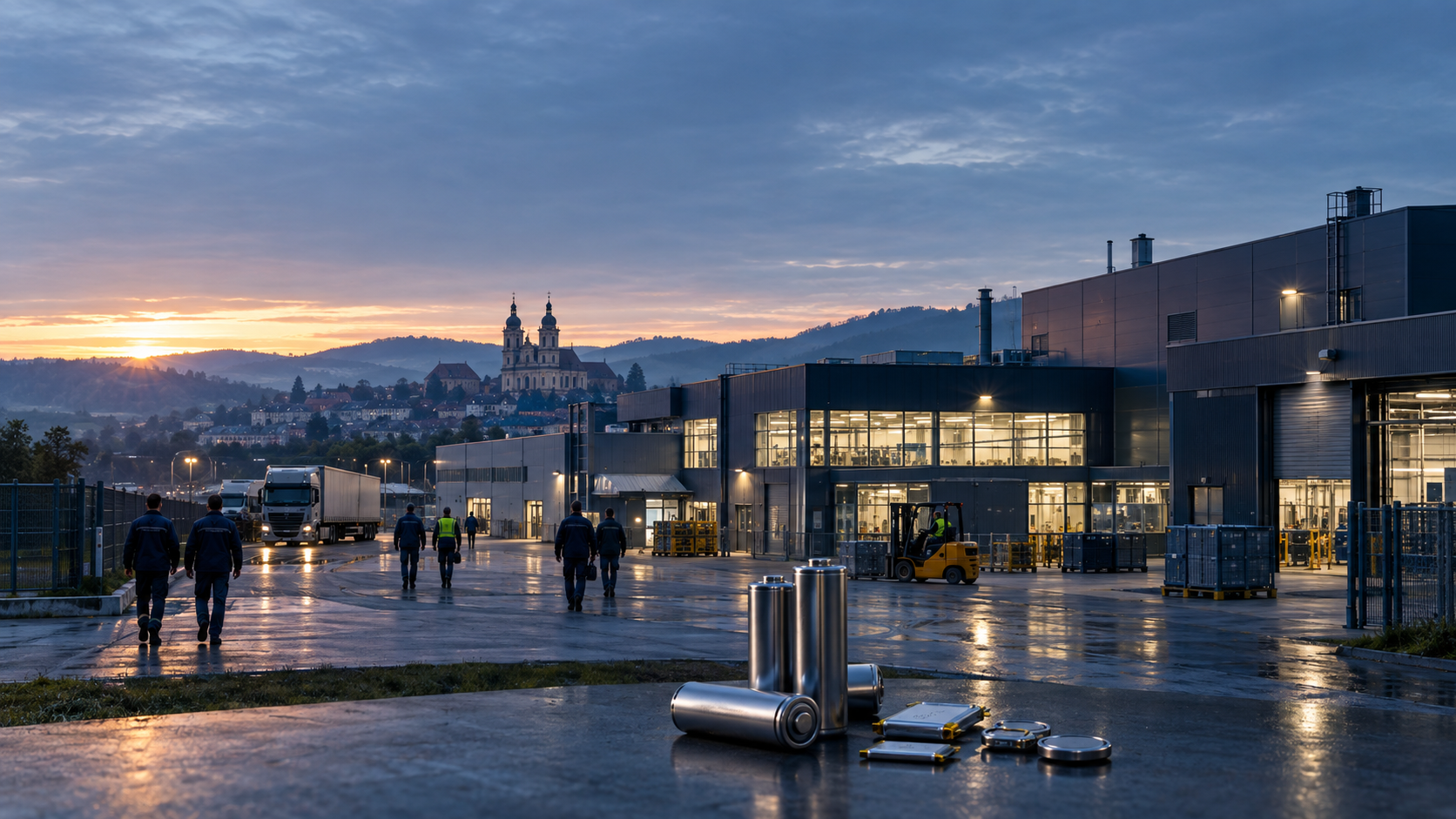
The consequences of the VARTA insolvency: VARTA in crisis: – What future awaits Ellwangen? – Creative image on the topic, with AI: Xpert.Digital
Battery production in danger: What does the VARTA insolvency mean for Ellwangen?
VARTA faces insolvency: One location fights for its future
The insolvency proceedings of VARTA AG, which began on October 1, 2026, represent a critical turning point for the city of Ellwangen. Although the insolvency will not initially lead to an immediate shutdown of operations, the future of approximately 2,300 jobs in the region and the economic stability of the site are at stake. VARTA, a leading company in battery production, was already facing significant challenges prior to the insolvency, including operational problems and a strained financial environment. Control of the affected companies now lies in the hands of insolvency administrator Tobias Wahl, whose task is to secure operations and find potential buyers. While the immediate threat to Ellwangen is not an abrupt end, but rather a gradual erosion of the industrial base, the coming months will be crucial. The questions are: Will Ellwangen be able to maintain its role as an independent battery manufacturing location? What economic and social consequences can be expected if the VARTA insolvency is not successfully resolved? It is a race against time that could affect not only employment but also the technological future of the region.
VARTA in insolvency: What Ellwangen is really facing now
The battery is dead – and Ellwangen is paying the price
The opening of insolvency proceedings on October 1, 2026, is neither the immediate end nor a mere formality for VARTA. It marks the transition from a preliminary stabilization phase to a crucial phase of liquidation and restructuring. From now on, control of the four affected companies lies with insolvency administrator Tobias Wahl. His central task is to secure ongoing operations as far as possible, find buyers or investors, and choose a solution that appears economically viable to the creditors. The companies affected are VARTA AG, VARTA Microbattery GmbH, VARTA Storage GmbH, and VARTA Micro Production GmbH. Together, approximately 2,300 jobs in Ellwangen and Nördlingen are within the scope of the proceedings.
For Ellwangen, this does not initially mean an abrupt shutdown. Business operations were stabilized during the preliminary proceedings, customers and suppliers continue to work with the affected companies, and the sales process is already underway. However, there is no guarantee that VARTA will retain its current structure. A buyer could acquire the group as an industrial conglomerate, purchase individual companies, extract only selected technologies and customer relationships, or reorganize locations and functions. Therefore, the most likely outcome is not a simple return to the pre-crisis state, but rather a smaller, financially less burdened, and potentially more diverse corporate landscape.
The immediate threat to Ellwangen lies less in a single, spectacular closure decision than in a gradual erosion. Jobs could be lost, central functions relocated, research capacities reduced, and profitable activities separated from loss-making areas. This is precisely where the strategic danger lies: even if a significant portion of employment is retained, Ellwangen could lose industrial leadership, technological depth, and economic influence. The coming months will therefore determine not only the number of jobs, but also whether Ellwangen remains an independent battery production site or increasingly relegates itself to the role of a residual site with limited decision-making authority.
From promise of restructuring to loss of control
VARTA was already undergoing a deep restructuring before its current insolvency. In 2024, the group generated €793.2 million in revenue, compared to €820.3 million in the previous year. EBITDA was minus €3.5 million, and adjusted EBITDA was €30.6 million. The group's net loss was €64.5 million. In addition to operational problems, restructuring costs, weak sub-markets, and the consequences of a cyberattack weighed heavily on the company. The financial situation was particularly problematic: at the end of 2024, negative equity of €185.8 million was offset by short-term debt of €838.5 million; operating cash flow was also negative at minus €52.2 million.
The proceedings initiated in 2024 under the Corporate Stabilization and Restructuring Act were intended to prevent insolvency. The restructuring plan included a massive debt reduction, a reduction of the share capital to zero, and the injection of new capital. Porsche and the side controlled by the previous major shareholder, Michael Tojner, became the new owners. In the spring of 2025, VARTA announced the completion of the balance sheet restructuring, a reduction of debt to approximately €230 million, a €60 million capital injection, and a further €60 million in new financing. The restructuring was designed to secure operational implementation until the end of 2027.
The fact that VARTA had to seek protection through insolvency proceedings again in July 2026 demonstrates the limited effectiveness of balance sheet restructuring when the operating business model remains under pressure. Lower debt does not eliminate customer concentration, create price competitiveness, or guarantee a successful production ramp-up. According to the company, weaker demand, unfavorable currency effects, deteriorating market conditions, and the loss of an anchor customer converged. This combination once again created a structural financing gap, particularly with regard to the company's development from 2027 onward.
Economically, this is a crucial difference: VARTA didn't simply fail due to excessive legacy debt. The company also suffered from an imbalance between its cost base, market prices, capacity utilization, capital requirements, and reliable sales volumes. The current insolvency is therefore not just a financing process, but a renewed assessment of each individual business unit's viability. This exacerbates the situation for Ellwangen, because investors don't evaluate tradition or regional significance, but rather future cash flows, technological positions, customer loyalty, and the necessary investment.
Four companies, four different risks
Public perception often treats VARTA as a single, unified company. However, the insolvency proceedings reveal that the group comprises very diverse business activities. VARTA AG acts as the parent company and consolidates central functions. VARTA Microbattery GmbH develops and produces, among other things, microbatteries for industrial and medical applications. VARTA Storage focuses on energy storage systems, while VARTA Micro Production GmbH is associated with the rechargeable CoinPower manufacturing facility in Nördlingen. These distinctions are important because each unit has a different market profile, different assets, different customer relationships, and therefore different opportunities in the sales process.
An investor's economic logic may therefore differ from the solution desired by regional policy. For Ellwangen, an integrated takeover would be advantageous, where research, development, administration, production, and sales remain together at the site. For a buyer, however, it may be more attractive to acquire only a profitable product line, patents, machinery, or customer contracts. A financial investor might aim for a streamlined restructuring with a rapid contribution to earnings; a strategic industrial buyer might primarily seek technologies, market access, or production expertise. Both options can secure jobs, but to very different degrees and with different long-term consequences.
VARTA Microbattery GmbH is of particular importance. According to the IG Metall union, around 800 jobs at this company in Ellwangen alone are at risk. At the same time, it is considered to have a stable order book and a fundamentally sound operational basis. This improves the chances of a sale, but does not rule out a division, relocation, or downsizing. An investor will assess whether the existing level of vertical integration and workforce are sufficient to meet expected demand, or whether a focus on particularly high-margin applications would be more sensible.
The consumer batteries division, which is excluded from the proceedings, is a special case. The well-known household battery business is legally, operationally, and financially independent and is not one of the four insolvent companies. This distinction prevents all activities from automatically being treated under the same insolvency conditions. For Ellwangen, however, this is a double-edged sword: On the one hand, an economically significant business unit remains more stable. On the other hand, the previous organizational structure is weakened because a profitable division cannot simply be used to stabilize the other activities.
Nördlingen is a warning signal, not Ellwangen's death sentence
The planned production shutdown in Nördlingen is often mistakenly interpreted as proof that VARTA's Ellwangen operations are also inevitably doomed. This conclusion is incorrect. The closure affects a specific production unit whose economic foundation collapsed after the loss of its most important customer. This major customer had accounted for almost the entire capacity utilization of the specialized button cell production. Without this volume, the factory could not be operated even remotely profitably. Production is scheduled to cease at the end of October 2026; approximately 350 employees will lose their jobs.
For Ellwangen, Nördlingen is nevertheless a serious warning sign. First, the case demonstrates how dangerous extreme dependence on a single major customer can be. A technically advanced factory can become economically worthless if capacity utilization collapses and no replacement orders are available at short notice. Second, the decision proves that even tough structural cuts are being implemented as part of the ongoing restructuring process. Third, the end of production can not only lead to the loss of jobs at the affected plant, but also to a decline in the importance of support functions, development tasks, and administrative services at headquarters.
The closure thus has an indirect impact on Ellwangen. With less production volume within the group, the need for group-wide services, quality assurance, purchasing, planning, and management decreases. Furthermore, VARTA loses economies of scale that were previously distributed across multiple locations. Fixed costs then have to be spread across a smaller operating base. This can increase the pressure on the remaining companies, even if they still have orders in their core business.
At the same time, it would be analytically unsound to automatically extrapolate the Nördlingen plant's demise to Ellwangen. Microbatteries for hearing aids, industrial applications, and other specialized markets follow a different competitive logic than highly concentrated manufacturing for a single dominant electronics customer. The crucial factor is whether the Ellwangen products are technologically differentiated, achieve sufficient margins, and can draw on a broader customer base. The future of the site therefore depends less on the symbolic fate of Nördlingen than on the concrete quality of the investor offer for the Ellwangen operations.
Ellwangen carries an exceptionally high concentration risk
Ellwangen has approximately 24,943 inhabitants and 14,218 employees subject to social security contributions. About 31.3 percent of these employees work in the manufacturing sector. In addition, there are 8,549 commuters into the city and 5,159 who commute out. These figures demonstrate a remarkable job density for a city of this size and its strong function as a regional employment center. They also illustrate why the VARTA crisis extends far beyond those directly affected: the area is heavily industrialized and attracts workers from the surrounding region on a daily basis.
With around 800 jobs at VARTA Microbattery in Ellwangen currently at risk, this equates to roughly 5.6 percent of all jobs subject to social security contributions in the city. This figure doesn't represent a complete loss, as not all of these positions will necessarily be eliminated. However, it does illustrate the magnitude of the risk. Even a partial reduction in jobs would have a significant impact on the local labor market, especially since employment effects are not evenly distributed across Germany but tend to be concentrated in the city and its surrounding commuter area.
The concentration risk arises not only from the number of jobs. VARTA is one of Ellwangen's key industrial employers, combining production with research, development, administration, and skilled technical professions. Such jobs typically generate a different regional impact than interchangeable low-wage positions. They stabilize incomes, retain skilled workers, and create demand for specialized service providers. If these jobs are lost, not only will the number of employees decrease, but potentially also the technological quality of the local labor market.
The city, however, has a broader economic base than a typical single-company city. Among the larger employers are EnBW ODR, Friedrich Kicherer, INNEO Solutions, Ivoclar, Multipac, and Stengel. Services account for the largest share of employment at 44.6 percent, while trade and transportation make up 17.8 percent. This diversification prevents a decline in VARTA's workforce from automatically bringing the entire city economy to a standstill. However, it is not sufficient to quietly compensate for a significant loss of industrial jobs in the short term.
🎯🎯🎯 Data-driven B2B industry hub as a quasi-in-house solution

The quasi-in-house solution: How Xpert.Digital closes operational gaps in B2B marketing and sales – Smart Content-Driven Business - Image: Xpert.Digital
Xpert.Digital is a data-driven B2B industry hub led by Konrad Wolfenstein . The company acts as an external, quasi-in-house solution for industrial partners, closing operational gaps in marketing, content, and sales – without requiring additional resources on the client side.
More information here:
Future strategies for Ellwangen after the VARTA crisis
The labor market cannot simply absorb the shock
The local unemployment rate was 2.6 percent in September 2026. At first glance, this suggests a robust labor market that could absorb laid-off skilled workers. Indeed, there is still a demand for skilled workers in technical professions. Therefore, some VARTA employees should have good chances of finding new positions with industrial companies, energy suppliers, mechanical engineering firms, automation specialists, or technical service providers in the region. Qualified skilled workers, engineers, IT specialists, and experienced production managers, in particular, are generally mobile and adaptable.
This positive finding, however, needs to be put into perspective. The regional unemployment rate in East Württemberg was over four percent in the spring and summer of 2026, the number of job vacancies was weaker than the previous year, and many companies were planning cautiously. In a survey conducted by the Chamber of Industry and Commerce (IHK), 31.4 percent of the companies surveyed expected staff reductions, while only around 15 percent anticipated an increase in employment. Larger companies, in particular, showed significantly more pessimistic staffing plans than in the previous year. A cyclical labor market cannot therefore automatically integrate several hundred additional applicants in a short period of time.
Furthermore, professional qualifications are not arbitrarily transferable. A specialist in microbattery manufacturing will not necessarily find an identical position in Ellwangen. Some employees would have to commute, pursue further training, accept lower wages, or switch to other industries. Older employees and those with highly company-specific experience face a greater adjustment risk. For families who own property and have strong regional ties, a job change over a significant distance is particularly burdensome, both economically and socially.
There is also a timing issue. Even if the region needs sufficient skilled workers in the long term, supply and demand can diverge in the short term. If many employees are laid off simultaneously, their bargaining power diminishes. Wages and working conditions can come under pressure, while companies hire selectively. A successful investor who provides clarity early on and takes on as many employees as possible would therefore be more beneficial for the regional labor market than a protracted process with gradual staff reductions.
Losses in purchasing power affect trade, housing and services
The direct wages of VARTA employees represent only the first channel of influence. Employees spend a portion of their income in Ellwangen and the surrounding communities. This benefits retail, restaurants, tradespeople, car dealerships, healthcare providers, leisure facilities, and personal services. If well-paid industrial jobs disappear or are replaced by lower-paying positions, regional purchasing power declines. This effect often occurs gradually because households initially draw on their savings and postpone major purchases.
Spending that isn't strictly necessary is particularly sensitive. Renovations, vehicles, restaurant visits, travel, higher-value consumer goods, and leisure activities are often the first to be cut back when employment is uncertain. Even employees whose jobs are saved may become more cautious if they anticipate further restructuring. This creates a trust effect: not only actual income losses, but also the fear of them dampens local demand.
The housing market is likely to react in different ways. Limited job losses will not cause a collapse in a city with a net inflow of commuters and an overall stable economic structure. However, a significant loss of skilled jobs could weaken demand and price development in the upscale rental and owner-occupied segments. Employees leaving the region increase supply; at the same time, a lack of skilled workers reduces demand. For landlords of basic apartments, the effect may be less pronounced as long as alternative jobs are available within a reasonable distance.
Suppliers and service providers are also affected. This includes not only material suppliers, but also maintenance companies, logistics firms, building services, temporary employment agencies, consulting firms, IT companies, testing services, and local tradespeople. The extent of this impact depends on the regional procurement rate, which is not publicly available and cannot be reliably quantified. However, one thing is certain: a broken-up or downsized VARTA Group will reassess orders, renegotiate terms, and eliminate redundancies. Smaller suppliers with a high dependence on VARTA will therefore bear a significant concentration risk.
The city budget is coming under pressure at an inopportune time
Ellwangen is already facing financial strain as it enters the VARTA crisis. The 2026 budget projects ordinary revenues of approximately €91.4 million and ordinary expenditures of approximately €96.1 million. This results in a planned ordinary deficit of nearly €4.68 million. The business tax rate has been set at 400 percent. The city therefore has limited leeway to absorb additional burdens or to finance extensive industrial aid on its own.
Over the course of the year, trade tax revenues developed more weakly than planned. The projected €24.2 million was subsequently reduced to an expected €22.8 million. Debt was projected to reach approximately €65.9 million by the end of 2026; the regional government had set a debt ceiling of €70 million during the budget approval process. The city was already working on structural consolidation and had to critically review investments, expenditures, and revenues.
The specific impact of the VARTA insolvency on trade tax cannot be reliably quantified without confidential tax data. Losses and restructuring can reduce a company's tax payments; at the same time, municipal trade tax depends on the company's taxable profit, loss carryforwards, group structures, and allocation shares. It would therefore be wrong to directly attribute every decline in municipal revenue to VARTA. However, it would be equally wrong to underestimate the fiscal significance of a large industrial employer.
The city faces a twofold risk. On the revenue side, business tax, income tax shares, and indirectly consumption-related revenues could be lower. On the expenditure side, political pressure is increasing to expand economic development, training, land development, and social support. At the same time, Ellwangen must not damage its attractiveness by halting investments. While permanently postponing roads, schools, digitalization, or urban development may save money in the short term, it could also worsen the conditions for attracting new businesses.
The loss of know-how would be more severe than the loss of machinery
Battery expertise isn't just about buildings and production facilities. It lies in process knowledge, materials expertise, quality management, customer requirements, patents, development processes, and the experience of employees. This knowledge is partly documented, but partly tied to individuals. When teams break up, key personnel leave, or research and production are geographically separated, a site can lose technological substance, even if the machinery and brand name initially remain.
For Ellwangen, the crucial factor is therefore which functions an investor actually assumes. A purely manufacturing-based solution can secure many jobs in the short term, but offers less strategic stability than a site with research, product development, pilot production, industrialization, and entrepreneurial decision-making authority. Development departments attract qualified specialists and increase the likelihood that new product generations will also be manufactured at the site. If only an existing product line is processed, the risk of eventual discontinuation increases.
Despite some insolvencies, the battery industry remains a growth market. The production value of batteries in Germany rose by eleven percent in 2025 to €8.1 billion; for lithium-ion batteries, growth was 28 percent to €4.6 billion. At the same time, Germany imported batteries worth around €22 billion, of which approximately €11 billion came from China. Demand is therefore present, but a large portion of the added value is generated outside of Germany.
This is precisely where the strategic opportunity lies for VARTA and Ellwangen. The site doesn't have to compete against large Asian manufacturers in every volume segment. Technologically sophisticated niche markets, high quality standards, customized solutions, short development cycles, medical applications, and products where reliability, certification, and intellectual property protection are more important than the lowest unit price are far more promising. Whether this positioning will be sufficient, however, depends on whether a new owner finances investments and actually translates the existing expertise into marketable products.
Europe's battery boom does not automatically protect VARTA
The German battery market is growing, but this growth is not evenly distributed. Large-scale storage systems and commercial installations developed particularly dynamically in 2026, while the installation of residential storage systems stagnated in the first quarter at approximately 0.74 gigawatt-hours, roughly the same level as the previous year. Asian suppliers already accounted for 51.2 percent of newly installed residential storage capacity in Germany in 2024; BYD, Huawei, Sungrow, and Growatt alone together accounted for almost 48 percent. Five German suppliers surveyed achieved only 14.3 percent, down from more than 25 percent the previous year.
For VARTA Storage, this means that a growing overall market offers no guarantee of profitable market share. Crucial factors include purchasing costs, scalability, software, inverter integration, sales, service, and financing. Chinese suppliers often have access to larger production volumes and broader supply chains. German manufacturers must compensate for their price disadvantage through quality, safety, local support, system integration, or specialized customer solutions. If they fail to do so, the market will grow past them.
The situation is also tense in the European battery cell market. In 2025, 77 percent of battery cells for electric cars were manufactured in Asia, while Europe accounted for 13 percent. Furthermore, 98 percent of European production capacity was controlled by Asian companies. This demonstrates that a factory in Europe does not automatically create European technological sovereignty. For Ellwangen, this means that simply emphasizing the strategic importance of batteries is not enough to attract investors. A tangible economic advantage is required.
VARTA's insolvency is therefore part of a larger European problem. Europe has research, industrial customers, and growing demand, but struggles to industrialize new battery technologies quickly, cost-effectively, and in high volumes. The collapse of the European hopeful Northvolt in 2025 underscores this gap between technological ambition and competitive mass production. A rescue of VARTA can only succeed if it acknowledges this structural reality and does not again rely on overly optimistic sales, pricing, or ramp-up assumptions.
Three realistic future scenarios for the location
The most favorable scenario would be a largely integrated takeover of the Ellwangen operations by a strategic investor. In this case, key functions, essential production lines, and a large portion of the workforce would be retained. Such a buyer could combine VARTA's technology, customer relationships, and brand with its own financial resources, sales, and procurement capabilities. For Ellwangen, this would provide the best foundation for securing battery expertise, skilled employment, and future investments. However, this would require the buyer not only to acquire assets but also to pursue a credible, multi-year investment and product plan.
A middle ground involves a breakup of the group. Individual companies or product lines would be sold to different buyers, while central functions would be downsized. A significant number of jobs could be retained, but VARTA would lose its existing corporate structure. For Ellwangen, this would be manageable in the short term, but riskier in the long term. Separate owners could relocate research, administration, and sales to other locations. Synergies within the existing group would be lost, and the Ellwangen site would have to reassert its role in several new corporate groups.
The negative scenario would be the sale of primarily individual assets while the company's operations are insufficiently continued. This would involve the liquidation of machinery, patents, trademarks, or customer relationships, while a significant portion of the workforce would be lost. In Ellwangen, this could result in a combination of job losses, declining purchasing power, a smaller business tax base, and the emigration of skilled workers. The city would not experience economic collapse, but it would lose momentum over the years. Such an outcome would be particularly problematic if other industrial companies were simultaneously reducing staff and the regional job market remained weak.
A solution somewhere between the favorable and the moderate scenario currently appears most likely. The existing interest in core technological competencies, the stabilization of business operations, and the ongoing orders of individual units argue against a complete liquidation. Conversely, the failed pre-restructuring, the separation of the consumer business, and the differing risk profiles of the companies argue against an unchanged overall solution. Ellwangen should therefore not focus solely on preserving the existing VARTA Group, but rather on maintaining as many future-proof functions as possible at the site.
What city, state and region must now do
The public sector cannot and should not permanently finance an uncompetitive business model. However, it can create conditions under which industrial assets are not lost due to avoidable locational disadvantages. This includes fast permitting processes, reliable energy and grid infrastructure, support for skills development, active mediation between investors and regional partners, and securing suitable sites. Crucially, measures must be tied to concrete investments, employment commitments, and technological development goals.
Ellwangen also needs a strategy for the event of job losses. To this end, employee skill profiles should be compiled early on and compared with the needs of regional companies. Further training must begin before prolonged unemployment sets in. Cooperation with the employment agency, universities, chambers of commerce, trade unions, and regional businesses can accelerate transitions. Programs in automation, power electronics, energy systems, quality assurance, digital production, and industrial data processing would be particularly beneficial, as these qualifications are applicable across multiple sectors.
From an economic policy perspective, the answer cannot simply lie in the search for a single new major employer. Such a strategy would merely create a new concentration risk. Instead, Ellwangen should combine its existing strengths in energy, industry, software, metal processing, medical technology, and logistics. The large industrial park along the A7 motorway and the high number of commuters provide a good starting point for this. The goal must be a broader industrial base with several medium-sized growth companies.
At the same time, the city should strictly prioritize its financial commitments. In a situation with a planned budget deficit and high debt, symbolic prestige projects or untargeted subsidies would be risky. Investments that benefit multiple companies are more sensible: digital infrastructure, transport connections, energy supply, vocational training, and readily available commercial space. This will increase Ellwangen's attractiveness regardless of which investor ultimately wins the VARTA deal.
What matters is not the name VARTA, but the industrial substance
For employees and the local community, VARTA holds emotional and historical significance. However, from an economic policy perspective, the brand name should not be the sole determining factor. A company can formally continue to exist and still lose significant portions of its regional value creation. Conversely, a fragmented ownership structure can secure a considerable share of production, development, and jobs. Therefore, the crucial question is not whether a corporation with a familiar name ultimately remains, but rather which actual functions stay in Ellwangen.
A successful sale must be measured against five questions: How many sustainable jobs will be retained? Which research and development functions will be secured? What investments are firmly planned for the coming years? How broad and resilient is the customer base? And does the buyer possess sufficient capital and industrial experience to withstand necessary start-up losses and market fluctuations? Without convincing answers, the only risk is a postponement of the crisis.
The insolvency is undoubtedly a severe blow for Ellwangen, but not yet an economic catastrophe. The city boasts over 14,000 jobs subject to social security contributions, a diversified business landscape, and a strong commuter network. This structure provides resilience. At the same time, it would be negligent to downplay the magnitude of the VARTA risk. Even the partial loss of 800 at-risk microbattery jobs would have noticeable consequences for the labor market, purchasing power, expertise, and the city's future prospects.
The reasonable outlook is therefore this: Ellwangen will probably not lose VARTA entirely, but the site is likely to be smaller, differently organized, and more focused on profitable core activities after the sale process. The crucial political and economic battle is not about restoring the past. It is about establishing a sustainable industrial base that can survive without permanent crisis financing. If it is possible to retain technology, development, and a large portion of the jobs in Ellwangen, a tough but viable restructuring can emerge from the insolvency. If this fails, the city as a whole will not face a sudden collapse, but rather a long-term loss of industrial significance, financial agility, and technological leadership.
📈🚀 From visibility to trust 👀🤝 Your scalable path with Xpert.Digital

From visibility to trust: Your scalable path with Xpert.Digital - Image: Xpert.Digital
In industrial B2B, sustainable business relationships rarely emerge overnight. They develop step by step – through visibility, professional relevance, recurring touchpoints, and growing trust. Xpert.Digital's 4-stage model addresses precisely this: It offers a structured path that begins with a manageable entry point and can evolve into deeper collaboration in business development if needed.
Instead of relying on loud marketing promises, this model puts the relationship at the forefront. Companies start with clearly defined, easily calculable measures and then decide, based on their own experience, how far they want to expand the collaboration. A key factor for this undisturbed trust-building process: The platform completely avoids annoying advertising ads, so the editorial focus remains solely on the companies' expertise.
More information here:
Your global marketing and business development partner
☑️ Our business language is English or German
☑️ NEW: Correspondence in your native language!

Konrad Wolfenstein
I and my team are happy to be available to you as your personal advisor.
You can contact me by filling out the contact form here [email protected]:or simply call me at +49 7348 4088 965. My email address is
I'm looking forward to our joint project.










