
The collapse of a regional power: Israel and the US escalate in Iran – and the hardliners take over
Xpert Pre-Release

Available in 27 languages 📢
Prefer Xpert.Digital on GoogleⓘPublished on: March 27, 2026 / Updated on: March 27, 2026 – Author: Konrad Wolfenstein
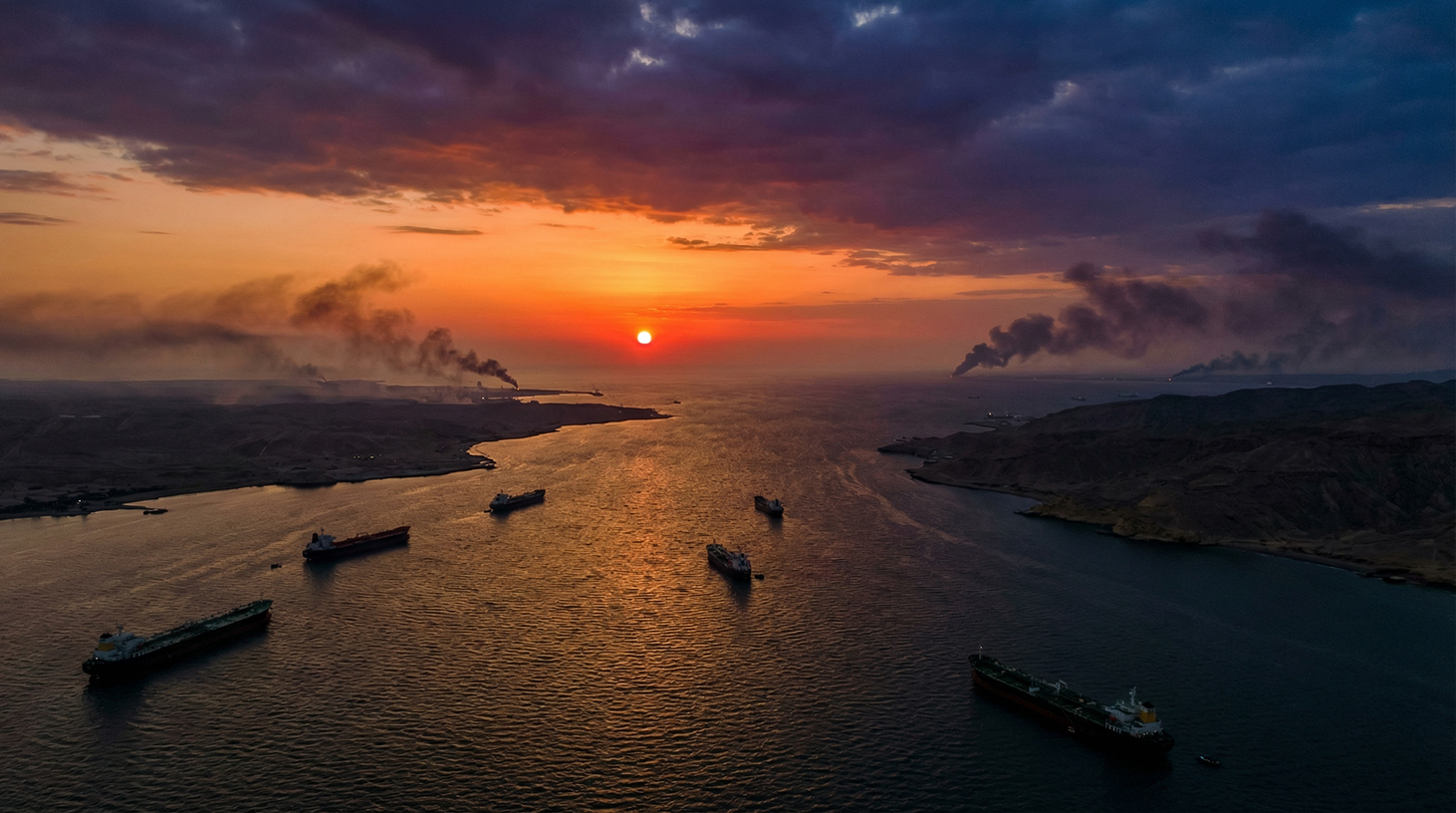
The collapse of a regional power: Israel and the US escalate in Iran – and the hardliners take over – Image: Xpert.Digital
Global economy on the brink: Iran's oil blockade plunges markets into a historic crisis
US decapitation strike: Is the entire power network of the mullahs now collapsing?
After Khamenei's death: Why the forced regime change in Iran is in danger of failing
On February 28, 2026, the long-simmering conflict over Iran's nuclear program escalated into an unprecedented war: A massive, coordinated military strike by the US and Israel wiped out the top leadership of the Islamic Republic—including its long-time Supreme Leader, Ayatollah Ali Khamenei. However, the hopes of Western strategists for a swift collapse of the regime proved to be a fateful illusion. Under the leadership of Khamenei's son, Mujtaba, the decentralized Revolutionary Guards regrouped and plunged the entire region into a devastating conflagration. With Iran's de facto blockade of the strategically vital Strait of Hormuz, the already fragile global economy was suddenly plunged into the worst oil and energy crisis in decades. This article analyzes the explosive history of this conflict, the unprecedented economic and social erosion within Iran, and illuminates the unforeseeable global repercussions of a radically restructured power architecture in the Persian Gulf.
Related to this:
- When missiles ignite global gas prices: The Iran war and its consequences for Europe's energy supply

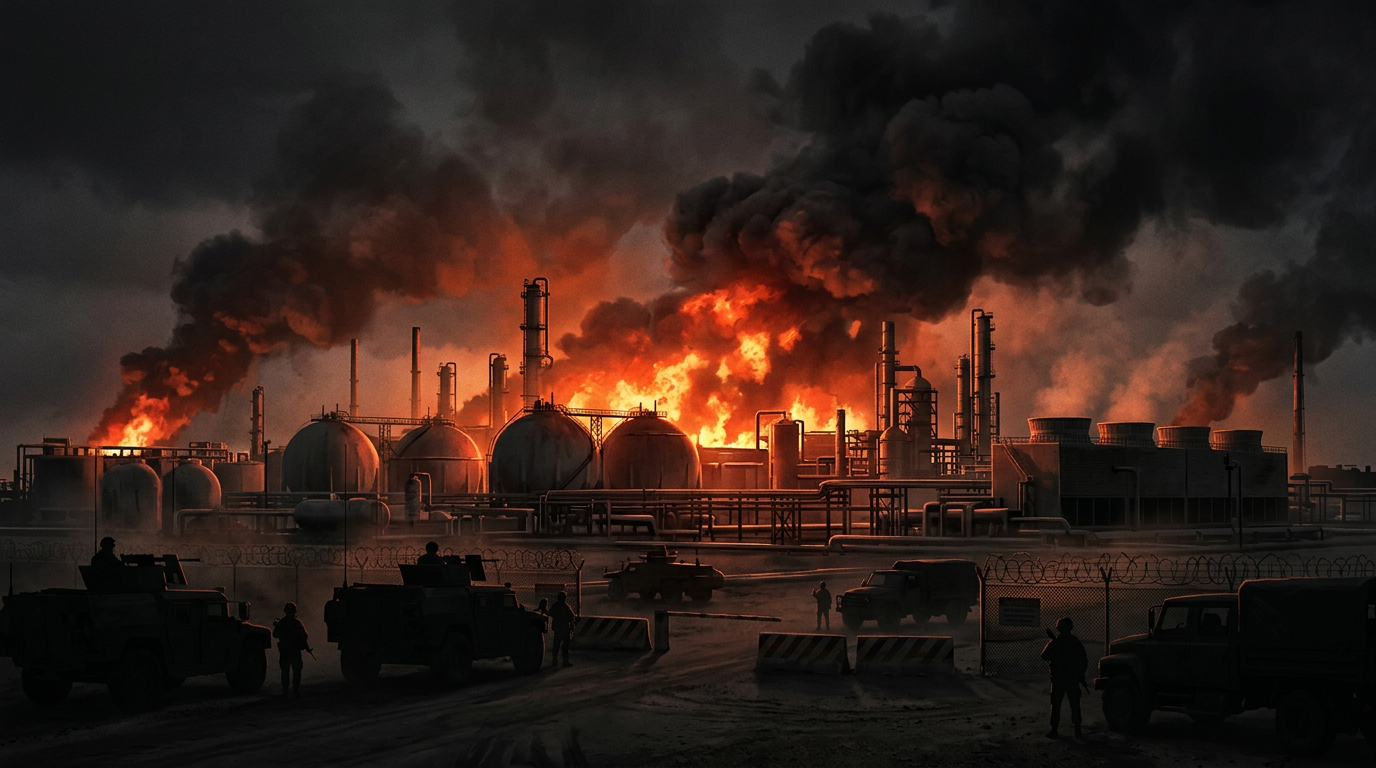
When atoms and oil fires reshape the world order – Iran's free fall between war, power vacuum and global energy shock
The geopolitics of the Middle East has changed abruptly, in a way that is virtually unprecedented in its brutality and scope in recent history. The US and Israel launched a coordinated, massive air strike against Iran, codenamed "Operation Epic Fury" and "Operation Lion's Roar," which decimated the entire political leadership of the Islamic Republic within a matter of hours. Among those killed were Supreme Leader Ayatollah Ali Khamenei, 86 years old, who had ruled the country with an iron fist since 1989, as well as the Defense Minister, IRGC Commander Mohammad Pakpour, Defense Council Chairman Ali Shamkhani, and Chief of Staff Abdolrahim Mousavi. What began as a preemptive strike against Iran's nuclear program and an attempt at a forced regime change developed within days into a regional conflagration that shook the world economy, plunged global energy markets into a historic crisis, and raised the question of the future of the Islamic Republic with existential urgency.
The nuclear dossier as the trigger: Years of escalation culminate in war
To understand the attack of February 28, 2026, one must trace the years-long, steadily accelerating dynamic of escalation between Iran and its adversaries. The 2015 nuclear agreement, initially hailed as a diplomatic milestone, had become a geopolitical bone of contention by 2018 at the latest, following the unilateral withdrawal of the United States under Donald Trump. Since then, Iran had systematically expanded its uranium enrichment program, achieving enrichment levels far exceeding those required for civilian purposes. Immediately before the attack in February 2026, according to the International Atomic Energy Agency (IAEA), Iran possessed approximately 441 kilograms of uranium enriched to 60 percent – the highest enrichment level ever achieved by a state without nuclear weapons status.
This technical finding is crucial for understanding the conflict. The physical difference between enrichment to 60 percent and the 90 percent required for nuclear weapons is comparatively small – experts estimate that the transition from 60 to 90 percent already requires about 99 percent of the total technical effort. The so-called "breakout time" – the time Iran would have needed to produce enough weapons-grade uranium for a nuclear bomb – was at least a year under the 2015 nuclear agreement; by 2026, it had shrunk to a few days or at most a little over a week. According to a US intelligence report from November 2024, Iran already possessed enough fissile material, which, with further enrichment, would have been sufficient for more than a dozen nuclear weapons.
Nevertheless, even shortly before the attack, US intelligence agencies had stated that they saw no indication that the leadership in Tehran had actually made the political decision to build nuclear weapons. This very tension between technical capability and political will characterized the final diplomatic phase: In February 2026, a US delegation, mediated by Oman, negotiated with Iranian representatives in Geneva about a new nuclear agreement. But just two days after the end of these fruitless talks, the attack began. War replaced diplomacy at a moment when negotiations were still ongoing, albeit clearly unsuccessful.
A precedent had already been set in June 2025: Israel attacked Iranian nuclear facilities on June 13, followed by US attacks on Natanz, Fordow, and Isfahan on June 22, 2025. A fragile ceasefire came into effect on June 24, 2025 – but it did not resolve the underlying conflicts; it merely created a brief respite during which both sides hardened their positions. Trump declared the Iranian nuclear facilities completely destroyed; experts doubted this. The fact that a renewed, even more massive attack would follow less than nine months later demonstrates that the so-called Twelve-Day War of 2025 had not solved the problem, but merely postponed it.
Decapitation and power vacuum: The end of the Khamenei era
The targeted killing of a sitting head of state by external powers is a virtually unique event in modern history. Ayatollah Ali Khamenei, the 86-year-old religious and political leader of Iran, was killed in an Israeli airstrike on Tehran on February 28, 2026; his wife reportedly also died in the attack. For Middle East expert Bente Scheller of the Heinrich Böll Foundation, Khamenei's death was not entirely unexpected given his age, but the circumstances of the targeted killing of a sitting head of state represented a highly sensitive moment, both domestically and under international law. The simultaneous killing of the defense minister, the head of the IRGC, and the chief of the general staff constituted an unprecedented decapitation of the state's top command level.
The Iranian constitution provided a clear procedure for this eventuality: A three-member panel consisting of President Massoud Peseshkian, Judiciary Chief Gholam-Hossein Mohseni-Ejehi, and a representative of the Guardian Council would assume the duties of the office on an interim basis. However, the actual question of power had to be answered by the 88-member Assembly of Experts, which, according to the constitution, was responsible for electing the Supreme Leader. After about a week of intensive internal deliberations, on March 8, 2026, Mojtaba Khamenei, the 56-year-old second son of the deceased Supreme Leader, was elected the new Supreme Leader of Iran. This decision came as no surprise to those familiar with the Iranian power structure: Mojtaba Khamenei had been considered one of the most influential figures behind the scenes for years.
The election of the son immediately after the father's death was immediately denounced by critics as dynastic, and thus a violation of the principles of the Islamic Republic, which had been established precisely in opposition to the Shah's dynastic rule. Supporters, on the other hand, saw the decision as a signal of continuity and the ability to act under extreme pressure. What is politically certain is that Mojtaba Khamenei maintains close ties to the Islamic Revolutionary Guard Corps (IRGC) and is considered a hardliner. He is said to have strong support, particularly among the younger, radical generation of the IRGC. Kasra Aarabi of the organization United Against Nuclear Iran describes him as a central figure within the complex power structures, who, despite his low public profile, wielded considerable influence. US President Trump reacted with sharp disapproval, calling Mojtaba a "lightweight"; the Israeli Defense Minister declared that any new Iranian leader is a "target for elimination.".
The deeper strategic question that had preoccupied CIA analysts even before the attack was: Was this merely a change in personnel – or a transformation of the system? CIA assessments from the weeks leading up to the attack explicitly warned that if Khamenei were killed, a more moderate reformer would not assume power, but rather a hardliner from within the Revolutionary Guard Corps. The election of Mojtaba initially appears to confirm this fear, although the actual balance of power between the new Supreme Leader, the President, and the IRGC leadership has not yet been definitively established.
The Revolutionary Guards: A decentralized power apparatus in a state of war
A central misconception in Western war planning appears to have been the assumption that the targeted elimination of the political and military leadership would also paralyze the operational power apparatus of the Islamic Republic. Reality has proven more complex. The Islamic Revolutionary Guard Corps (IRGC) is not a monolithic organization hierarchically dependent on its supreme leader, but rather possesses a decentralized structure with its own intelligence service, economic empire, and command system, which does not automatically collapse upon the death of its leaders. Eighteen days after the start of the war, the IRGC continued fighting despite heavy losses; its decentralized organizational structure ensured its ability to operate even without its original commanders.
The IRGC controls not only military capabilities but also large swathes of the Iranian economy: arms manufacturers, telecommunications, infrastructure, energy projects, and smuggling networks are directly or indirectly intertwined with the Revolutionary Guard's power apparatus. This economic-military complex grants the Revolutionary Guard an autonomy that extends far beyond mere armed forces, making it a state within a state. Middle East expert Hanna Voß of the Friedrich Ebert Foundation put it this way: Trump, with his appeal to the Iranian people, revealed a fundamental misunderstanding of the logic of the Iranian regime and its security apparatus. In this light, the assumption that the death of Khamenei and several commanding generals would trigger a rapid collapse of the Islamic Republic appears strategically naive—or at least extremely optimistic.
In February 2026, the German Bundestag debated a motion to ban the Islamic Revolutionary Guard Corps (IRGC) in Germany, coinciding with preparations for the attack. This domestic political dimension reflects a broader European focus on the IRGC's global activities, which extend to Europe through embassies, cultural centers, and Islamist networks. The formal ban, which several EU member states were considering, became a symbol of a tougher Western stance toward the Iranian security apparatus.
The axis of resistance: Tehran's crumbling proxy network
Since the 1980s, Iran's regional power projection has been based on a network of Shiite militias and political movements collectively known as the "Axis of Resistance": Hezbollah in Lebanon, the Houthi movement in Yemen, Shiite militias in Iraq, and Hamas and Palestinian Islamic Jihad in Gaza. This system operated according to a simple logic: Tehran provided money, weapons, and military training; the proxies supplied military capability and political influence in areas geographically distant from Iran. Hezbollah was considered the crown jewel among Tehran's proxy positions.
This axis, however, has suffered significant cracks. Hamas was massively weakened by the Gaza war, and its key leaders, such as Ismail Haniyeh and Yahya Sinwar, were killed. The Houthi movement in Yemen was under intense military pressure, and its airport in Sana'a and vital infrastructure had been destroyed. Syria, under its new interim president, Ahmed al-Sharaa, was actively trying to contain Iranian influence and was positioning itself as an independent actor. And Hezbollah, although still militarily significant, was weakened after the escalating Lebanon conflict of the previous year—its leadership was decimated, and it was forced to withdraw from southern Lebanon.
In the immediate context of the war beginning in February 2026, Hezbollah attacked Israel in response to Khamenei's death, whereupon Israel in turn attacked Hezbollah. The Iraqi Hezbollah brigades had called for war preparations in January 2026 to support the Iranian regime in the event of escalation. And the IRGC itself had sent officers to Lebanon shortly before the war began to strengthen Hezbollah's operational command and prepare for a potential conflict. Nevertheless, under the pressure of simultaneous attacks on multiple fronts, the actual coordination capabilities of the axis fell significantly short of Tehran's initial threats.
Economic collapse as a systemic prehistory
To grasp the full extent of the current crisis, one must understand that the war did not strike an economically healthy society, but rather a state that had already been in a state of sustained economic decline for years. The figures from the International Monetary Fund (IMF) paint a bleak picture: The inflation rate in Iran was already 32.5 percent in 2024; the IMF estimated inflation at 42.4 percent for 2025, and according to IMF forecasts, it would not fall below 40 percent in 2026. By comparison, the European Central Bank aims for an inflation rate of two percent in the Eurozone.
The development of the Iranian currency is even more dramatic. Before the unilateral US withdrawal from the nuclear agreement in 2018, the exchange rate of the Iranian rial was around 50,000 rials per US dollar. By the end of 2025, it had fallen to approximately 1,420,000 rials per dollar – a devaluation of 28 times within eight years. An average citizen thus earned only the monthly equivalent of around 100 US dollars – barely enough to cover basic necessities. Even a simple grocery shop in an import-dependent country like Iran consumed a month's salary. According to official figures, food inflation reached 72 percent in December 2025; independent World Bank estimates even put the figure at 64.2 percent.
The World Bank's most recent economic forecast from October 2025 predicted a decline in Iran's gross domestic product of 1.7 percent for 2025 and 2.8 percent for 2026 – even before the outbreak of the full-scale war. The downturn was attributed to declining oil exports and tightened sanctions. The sanctions tightened further in the fall of 2025: Germany, France, and the United Kingdom activated the so-called snapback mechanism at the end of August 2025, which, after a 30-day grace period, allowed for the reinstatement of all UN sanctions from the period before the 2015 nuclear agreement. These sanctions came into effect on September 28, 2025 – despite a failed attempt by Russia and China to secure a six-month postponement in the Security Council, which was defeated by nine votes.
Economist Mohammad Reza Farzanegan from the University of Marburg, together with an expert from Brandeis University, analyzed the long-term structural consequences of sanctions policy in a study: According to their findings, the Iranian middle class would be eleven percentage points larger on average if the sanctions imposed since 2012 had not been implemented. The weakening of the middle class led to increasing economic dependence on state-affiliated institutions – paradoxically, such a development strengthens precisely the structures that sanctions are intended to weaken.
Our global industry and economic expertise in business development, sales and marketing

Our global industry and economic expertise in business development, sales and marketing - Image: Xpert.Digital
Industry focus areas: B2B, digitalization (from AI to XR), mechanical engineering, logistics, renewable energies and industry
More information here:
A thematic hub offering insights and expertise:
- Knowledge platform covering global and regional economies, innovation and industry-specific trends
- A collection of analyses, insights, and background information from our key areas of focus
- A place for expertise and information on current developments in business and technology
- A hub for companies seeking information on markets, digitalization, and industry innovations
Regime change as a risk: How the war is reshaping the balance of power in the Persian Gulf
The Rial crash and social erosion: A society at boiling point
The economic turmoil immediately manifested itself in social unrest, which had already begun before the war and seriously threatened the internal stability of the Islamic Republic. At the end of December 2025, merchants in Tehran's bazaar closed their shops in protest, and the strike quickly evolved into a political protest movement. Within a few days, the protests had spread to other major cities such as Isfahan, Mashhad, and Tehran, and the demands escalated from calls for economic reforms to explicitly political slogans like "Death to the dictator." President Peseshkian acknowledged the legitimacy of the demands but called only for dialogue rather than structural reforms.
The regime responded with its usual combination of violence, arrests, and media suppression. Human rights organizations estimated that over 600 people had been killed by January 2026; Iran expert Ali Fathollah-Nejad feared the death toll could now be in the thousands. The number of arrests was estimated at over 10,000, and the regime simultaneously imposed a comprehensive internet blackout. Amnesty International called for international action and demanded an end to the violence against demonstrators.
What distinguishes this wave of protests from earlier, equally bloody uprisings such as those in 2017, 2019, or 2022 is its social breadth: it extends from segments of the rural poor and border regions to the downwardly mobile urban middle class in Tehran and the major provincial cities. Political scientists describe the protests as an expression of an exhausted negative solidarity, held together not by a common political program, but by a shared rejection of the Islamic Republic and the experience of decades of failed reform attempts. However, the contours of a viable alternative remain unclear: the Iranian opposition is deeply divided internally, and while names like Reza Pahlavi, the son of the Shah overthrown in 1979, are circulating in opposition circles, he lacks an organized mass base.
Related to this:

Strait of Hormuz: The most dangerous bottleneck in the global economy
The strategic ramifications of the Iran-Iraq War for the world order are most clearly revealed in the fate of the Strait of Hormuz – the roughly 54-kilometer-wide waterway between Oman and Iran through which approximately 17 million barrels of crude oil are transported daily, representing about 20 percent of total global oil demand. Shortly after the outbreak of war, Iran closed the waterway and ordered its Revolutionary Guard to attack oil tankers; several ships were damaged, and at least one crew member was killed. Major shipping companies such as MSC and Maersk immediately suspended operations in the region. Even three weeks after the start of the war, the Strait of Hormuz remained effectively closed.
The economic consequences were immediate and massive. The price of Brent crude oil from the North Sea rose by more than 20 percent in the days following the outbreak of war, reaching a peak of $87.66 per barrel – the highest level since July 2024. Qatar's Energy Minister Saad al-Kaabi warned in the Financial Times that if all oil-producing states in the Persian Gulf were to halt production, which he considered possible within a few weeks, the price could climb to as much as $150 per barrel. Qatar itself had already stopped its liquefied natural gas (LNG) production, as Iran was targeting the Gulf states in retaliation.
Goldman Sachs placed the scale of the disruption in historical perspective: it was the largest oil supply shortfall in the history of global energy markets – larger than the 1973 Arab oil embargo and larger than Iraq's 1990 invasion of Kuwait. Member countries of the International Energy Agency (IEA) responded by releasing up to 400 million barrels from strategic reserves; Germany alone released 2.6 million tons of crude oil, equivalent to approximately 19.5 million barrels. Whether this measure will be sufficient to prevent a sustained price increase remains questionable, given the ongoing uncertainty about the duration of the conflict.
Timo Wollmershäuser, an expert at the ifo Institute, succinctly described the fundamental uncertainty: Forecasts are simply impossible at present, as no one knows how energy prices, and consequently the war, will develop. One thing, however, is clear: Even an immediate ceasefire would require weeks or months to repair damaged facilities and restore full production and supply chains.
Global Oil Crisis: Between 1973 and the Abyss
The economic-historical comparison with the 1973 oil crisis is insightful, but it falls short in one crucial aspect. Back then, the West was significantly more dependent on Middle Eastern oil, and while the shockwaves triggered deep stagflation, they hit a Western economy with considerable reserves and capacity to adapt. In 2026, the structural situation is more nuanced: Since the 2022 energy crisis caused by the war in Ukraine, Germany and Europe have undertaken significant diversification efforts and are less directly dependent on Gulf oil than they were a decade ago. Nevertheless, the global oil market operates on a single-price system: If 20 percent of the world's supply disappears, prices rise everywhere.
In March 2026, the German Institute for Economic Research (DIW) predicted that the German economy would close the year with growth of 1.0 percent – instead of the previously expected 1.1 percent. This seemingly minor revision masks the real uncertainty: How long will the Strait of Hormuz remain closed? How much will energy and food prices rise? And crucially: Will the conflict escalate, drawing in other actors and creating a dynamic of escalation that no model can reliably account for? Kemper investment strategists at BNP Paribas Wealth Management estimated that a sustained increase in oil prices of ten percent could reduce economic growth by 0.2 percentage points.
The supply chain dimension of the conflict extends far beyond crude oil. Qatar, which had become a major supplier of liquefied natural gas (LNG) to Europe and Asia, halted its LNG production. This disruption is particularly affecting Asian economies such as Japan, South Korea, and parts of China, which are heavily dependent on LNG from the Middle East. Fertilizers, whose production costs are directly linked to the price of natural gas, have also become more expensive, which is likely to further drive up global food prices in the medium term. Airlines flying routes over the Persian Gulf have had to take detours, which has significantly increased ticket prices and operating costs.
Iran's nuclear legacy: capability without decision
From the perspective of the stated war aim—the destruction of the Iranian nuclear program—the crucial question arises as to what the attacks actually achieved. Trump's claim after the 2025 Twelve-Day War that the nuclear program had been "completely destroyed" was deemed an exaggeration by independent experts. Confidential UN Security Council reports from February 2026—shortly before the renewed attack—mentioned that Iran still possessed approximately 440 kilograms of uranium enriched to 60 percent. After the attacks of February 28, 2026, the IAEA was no longer able to verify how much of this stockpile remained.
The irony of this situation is obvious: Before the war, Iran possessed the technical capability for nuclear weapons, but according to Western intelligence agencies, it had not yet made the political decision to develop them. The war could shift precisely this political calculation: An Iran that feels existentially threatened, in which hardliners like Mojtaba Khamenei have come to power, and which is increasingly isolated by the international community, has far greater incentives to build a nuclear deterrent than an Iran that still relied on diplomacy. Experts in Washington and Europe are intensively discussing this paradox: The attempt to destroy the nuclear program through war could actually force the political decision in favor of nuclear deterrence.
Trump's strategic calculation: Regime change as wishful thinking
In the weeks leading up to the attacks, Donald Trump repeatedly threatened Iran with military strikes should negotiations for a new nuclear agreement fail. In his State of the Union address on February 24, 2026—just four days before the attack—he claimed that Iran was pursuing the development of nuclear weapons that would pose an immediate threat to the US and Europe. According to independent media reports, intelligence findings provided no evidence of such an imminent threat. Trump's true objective was apparently more far-reaching than simply neutralizing the nuclear program: the US aimed for regime change in Tehran.
Internally, however, the CIA had warned that this regime change would not necessarily lead to a moderate, Western-oriented system, but could potentially result in an even more militarized rule by the Revolutionary Guard. The developments of the first few weeks after the attack seem to at least partially confirm this warning: The appointment of the IRGC-affiliated Mojtaba Khamenei as the new Supreme Leader and the continuation of the fight by the decentralized Revolutionary Guard demonstrate that a decapitation strike alone does not force political transformation. In a theocratic system that has built up enormous institutional redundancy over decades, the death of the Supreme Leader is not a source of failure that inevitably brings the entire mechanism to a standstill.
Added to this is the geopolitical complexity of the US war: Iran's counterattacks struck US military bases in Qatar, Bahrain, the United Arab Emirates, Iraq, Jordan, Kuwait, and other countries. Civilian infrastructure in Oman was attacked by drones—a country that had acted as a neutral mediator and hosts no US bases. Britain and France were drawn into the conflict when a British military base in Cyprus was attacked by an Iranian drone. The war thus quickly expanded beyond its initial scope, drawing NATO allies into a situation that involved them without their consent.
Regional power shifts: The new order in the Persian Gulf
The military events since February 2026 have fundamentally shaken the balance of power in the Persian Gulf. Qatar, previously the main gas supplier and mediator in regional crises, was forced to halt its LNG production, suffering significant economic damage as a direct consequence of the war. Saudi Arabia, which for years had maintained a strategic distance from Iran, suddenly found itself under pressure from Iranian retaliatory attacks, without having directly entered the war. The Gulf states find themselves in a fundamental dilemma: they want neither a nuclear-armed Islamic Republic as a neighbor nor a destabilized, disintegrating Iran, from which uncontrollable refugee flows, militia violence, and regional anarchy could emerge.
The scenario of a complete collapse of Iran—a country with 90 million inhabitants—would be a humanitarian and political catastrophe of unimaginable proportions for the region. Accordingly, geopolitical nervousness is high, even in countries that are generally well-disposed toward Israel and the United States. China, as the largest buyer of Iranian oil, has a direct economic interest in de-escalation; at the same time, Russia, which also exports oil, benefits from high oil prices—something Putin can consider a strategic dividend of the war, as analysts have already noted. These asymmetrical interests of the major powers complicate any coordinated international approach to resolving the conflict.
Economic outlook: collapse, stagnation, or surprising resilience?
The economic outlook for Iran is bleak in every plausible scenario, but its severity varies considerably depending on the duration of the war and political developments. In the baseline scenario of a prolonged blockade of the Strait of Hormuz lasting several months, Iran faces the complete collapse of its foreign exchange reserves and formal foreign trade. Oil exports—the state's only significant source of revenue—would have largely ceased; the shadow fleet, with which Iran circumvented UN sanctions through disguised tanker routes, is under immense military and logistical pressure.
Inflation, which was already over 40 percent before the war, is likely to rise to hyperinflationary levels due to the loss of imported goods, further devaluation of the rial, and government-imposed money printing mechanisms. The IMF had already projected inflation exceeding 40 percent for 2026 – without factoring in the additional impact of the war. The combination of hyperinflation, currency illiquidity, and the military destruction of infrastructure could push the economy into a state that even the IMF's systemic exhaustion model struggles to predict.
Despite everything, it would be analytically premature to assume a complete and immediate collapse of the Iranian state as the most likely scenario. The Islamic Republic has repeatedly proven remarkably resilient in its almost 47-year history—not despite, but partly because of, its capacity for repression. The Revolutionary Guard controls parallel economic structures that can maintain a remnant of economic activity. China, which is economically dependent on Iranian oil and politically relies on a counterweight to US dominance in the region, will likely attempt to prevent a complete economic collapse through selective support—even if this has become more difficult given the dynamics of the war.
The human dimension: A society under double pressure
Beyond all geopolitical and economic analyses lies a society of 90 million people who, even before the war, were suffering under an oppressive combination of inflation, surveillance, and political repression. The mass protests of the winter of 2025/2026 had shown that the population's capacity for suffering had reached its limit. The war now adds a second layer of existential strain: airstrikes on Tehran and other cities, power outages due to damaged infrastructure, shortages of basic foodstuffs and medicines, and a psychological war weariness that is spreading across the population.
Human rights lawyer Gissou Nia of the Atlantic Council had already analyzed at the end of 2025 that a deeper political discontent lay behind the economically triggered protests: Many Iranians no longer interpreted the economic collapse as a correctable crisis, but rather as a systemic failure of the regime. In the context of war, this perception is potentially amplified: When a regime not only fails economically but also appears militarily incapable of protecting its territory, it loses its last remaining basis of legitimacy, namely order and security. At the same time, an external attack reflexively strengthens national cohesion—a phenomenon that dictatorships have historically exploited time and again to distract from internal political crises.
Interim conclusion: Outlines of an incomplete transformation
What has been unfolding in Iran since February 28, 2026, is not a finished story, but a dramatic, ongoing process. An 86-year-old ayatollah is dead; his 56-year-old son sits on his throne – while Israeli and American warplanes continue to carry out attacks. The Strait of Hormuz, through which a fifth of the world's oil flows, is effectively closed, thus severing the most vital energy artery of the global economy. A nation of 90 million people is torn between the fear of war and the unwillingness to die for a system they have distrusted for decades.
Iran's future depends on variables that are difficult to predict: the military endurance of the Revolutionary Guard, the political steadfastness of the new leader Mujtaba Khamenei, the willingness of Washington and Israel to negotiate or to escalate the conflict further, the stance of China and Russia, and the domestic political developments within the US itself. One thing, however, is certain: the Iran of 2027 will be different from the Iran of 2024. The direction it takes will not only determine the fate of 90 million Iranians, but will also shape the geopolitical architecture of the Middle East and the stability of global energy markets for a generation.
Your global marketing and business development partner
☑️ Our business language is English or German
☑️ NEW: Correspondence in your native language!

Konrad Wolfenstein
I and my team are happy to be available to you as your personal advisor.
You can contact me by filling out the contact form here or simply call me at +49 7348 4088 965. My email address is: [email protected]
I'm looking forward to our joint project.
☑️ SME support in strategy, consulting, planning and implementation
☑️ Creation or realignment of the digital strategy and digitization
☑️ Expansion and optimization of international sales processes
☑️ Global & Digital B2B trading platforms
☑️ Pioneer Business Development / Marketing / PR / Trade Fairs
🎯🎯🎯 Data-driven B2B industry hub as a quasi-in-house solution

The quasi-in-house solution: How Xpert.Digital closes operational gaps in B2B marketing and sales – Smart Content-Driven Business - Image: Xpert.Digital
Xpert.Digital is a data-driven B2B industry hub led by Konrad Wolfenstein . The company acts as an external, quasi-in-house solution for industrial partners, closing operational gaps in marketing, content, and sales – without requiring additional resources on the client side.
More information here:










