
Broken promises? 84% dissatisfied after one year of Chancellor Merz – red alert for the economy!
Xpert Pre-Release

Available in 27 languages 📢
Prefer Xpert.Digital on GoogleⓘPublished on: May 20, 2026 / Updated on: May 20, 2026 – Author: Konrad Wolfenstein
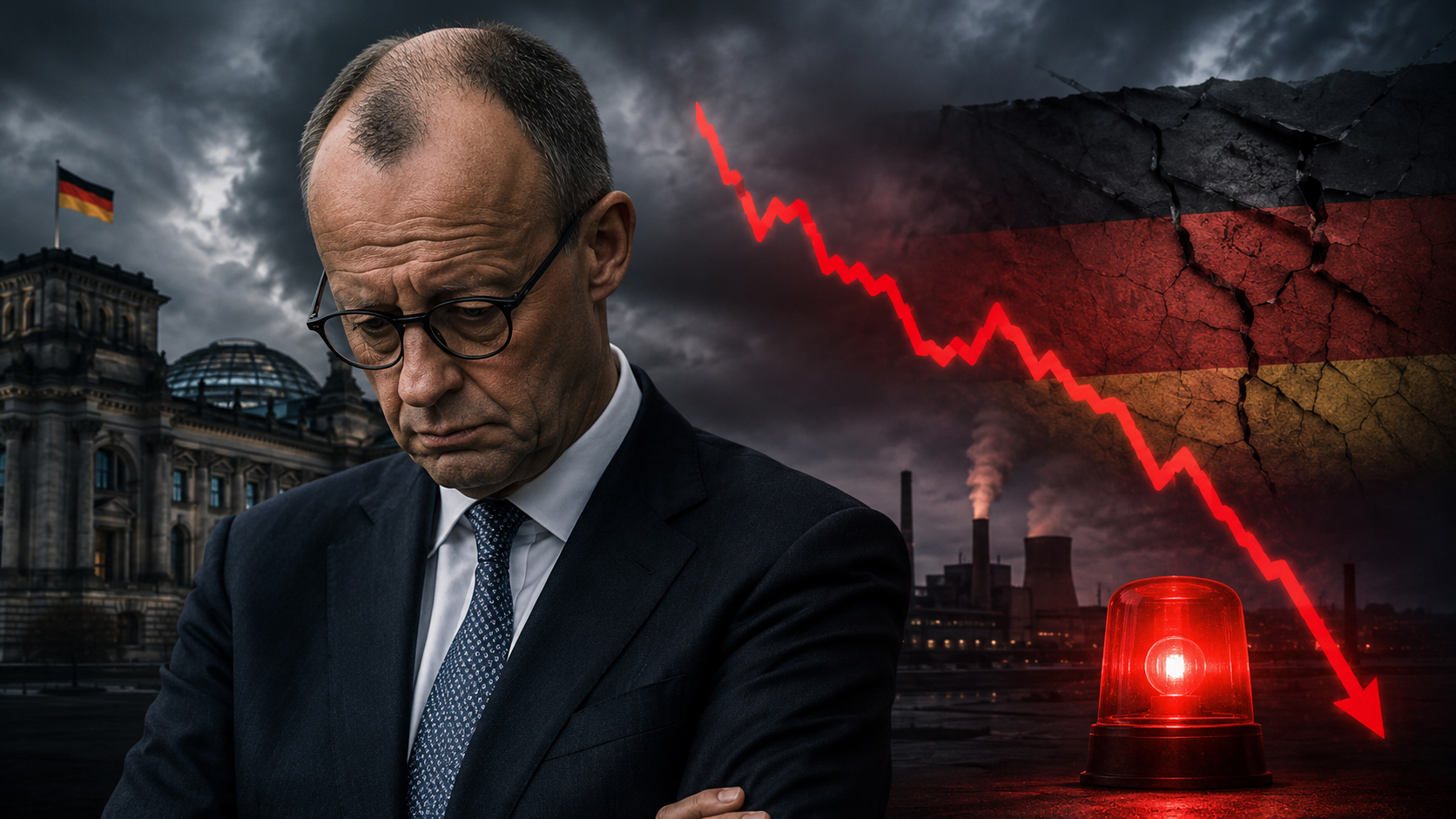
Broken promise? 84% dissatisfied after one year of Chancellor Merz – red alert for the economy! – Creative image: Xpert.Digital
Plunging poll numbers: Is Germany jeopardizing its economic future?
The 500 billion puzzle: What the German government really spends our money on
Citizen's income & pensions: How the government under Merz is breaking its own promises
A year has passed since Friedrich Merz entered the Chancellery promising radical economic renewal. But the initial euphoria has given way to profound disillusionment. With a record level of dissatisfaction at 84 percent, the German population views a grand coalition that, while starting with a historic 500-billion-euro special fund, has barely used it for urgently needed investments in the future. Instead, creeping deindustrialization, rampant bureaucracy, and unresolved migration and social issues dominate the picture. The following analysis presents a stark, data-driven assessment of the first twelve months under Chancellor Merz. It reveals why Germany's crisis is largely homegrown – and why therein lies the greatest opportunity for a solution, provided the political courage is there.
When promises meet reality – and why Germany needs more than rhetoric
One year after Friedrich Merz took office as Chancellor, the assessment is sobering. Expectations were high, and so is the disappointment. According to Infratest dimap, around 84 percent of Germans are now dissatisfied with the performance of the federal government, and a survey conducted by the INSA institute in early January 2026 revealed that 71 percent were already dissatisfied – and the trend is rising. These figures are not only politically explosive. They reflect a structural crisis of confidence that runs deeper than any single failed reform.
The following analysis examines the first year of the black-red coalition government under Friedrich Merz from an economic and empirical perspective, free from partisan bias. It explores whether the country has emerged from this year strengthened or weakened in its economic substance – and what this means for the coming years.
From euphoria to disillusionment: How the initial trust was squandered
When Friedrich Merz moved into the Chancellery in May 2025, he brandished the promise of economic renewal like a shield. Germany had just emerged from the turbulent years of the traffic light coalition, which had collapsed due to internal conflicts. Expectations for the new government, a coalition of the CDU/CSU and SPD, were correspondingly high. The Chancellor himself had harshly criticized his predecessors, describing the past ten years as a "lost decade"—a rhetorically powerful but substantively risky promise that was now being measured against reality.
Exactly one year later, the mood is disastrous. Dissatisfaction with the federal government has reached record levels. This is all the more remarkable because the Merz government took office with a structurally advantageous starting point: it had the full legitimacy of a federal election behind it, the AfD was politically isolated by a so-called "firewall," and the special fund of 500 billion euros offered fiscal leeway that no federal government had had in decades. So far, it has only partially utilized this leeway.
Growth on paper, crisis in practice: Germany's economic situation
To understand why the mood in the German economy is so bleak, one must look at the hard numbers. Germany has been experiencing structural growth weakness for at least six years. Economic output shrank by 0.2 percent in real terms in 2024, and for 2025, almost all leading economic institutes expected only marginal growth of 0.1 to 0.3 percent. Dr. Matthias Mainz, the Chamber of Industry and Commerce's economic expert, succinctly summarized the situation: "For six years, we have been seeing a downturn in our economic surveys. High costs are weighing on the country and weakening its competitiveness."
This stagnation is not a mere economic downturn that can be remedied with an interest rate cut. It is a structural problem arising from the interplay of several factors: above-average energy prices, a sprawling bureaucracy, a comparatively high tax burden, and an infrastructure that, in many areas, no longer meets the demands of the 21st century. According to the DIHK Energy Transition Barometer 2025, 41 percent of all companies see their competitiveness threatened by energy costs – in the industrial sector, this figure rises to 63 percent. The energy question is therefore no longer a side issue in environmental policy, but a matter of economic survival for Germany as an industrial location.
The German government has reacted to this development – albeit with some delay. The electricity tax for manufacturing companies was permanently reduced to the EU minimum rate, the gas storage levy was abolished, and an industrial electricity price for energy-intensive companies was introduced in May 2026 following EU approval. These measures relieve companies and consumers of approximately ten billion euros annually. These are not symbolic steps. The question is whether they are sufficient to compensate for the structural disadvantage of Germany as a business location.
Deindustrialization as a silent sell-off: What the job cut figures really mean
The most sober measure of industrial decline is the labor market. In 2025, German industry cut more than 124,000 jobs – almost twice as many as the previous year, when 56,000 industrial jobs were lost. The automotive industry was hardest hit, eliminating 50,000 jobs alone – 6.5 percent of all employees in this sector. Since the pre-pandemic year of 2019, the automotive industry has thus lost a total of 13 percent of its jobs.
The Federal Statistical Office reported that an average of 392 industrial jobs disappeared every day. This figure is striking – and it is somewhat obscured by a statistical trick: at the same time, 164,000 new jobs were created in the service sector, primarily in the public sector, healthcare, and education. This brought the total number of employed people to around 46 million – nominally almost unchanged from the previous year. But behind this stable surface, a fundamental structural change is taking place: well-paid industrial jobs with high added value are being replaced by lower-paid jobs in the public-service sector. This is not a fair exchange for the country's material prosperity and tax base.
The medium- and long-term outlook is worrying. EY industry experts expect the loss of another 70,000 industrial jobs by the end of 2025 alone. And this structural change not only results in job losses, but also in the loss of know-how, value chains, and location expertise. According to a survey conducted by the Allensbach Institute on behalf of the Federation of German Industries (BDI), a third of large industrial companies have already relocated research and development departments abroad. The main reasons cited are high costs (58 percent), less bureaucracy abroad (47 percent), and greater openness to innovation at foreign locations (34 percent). BDI President Peter Leibinger commented on the findings, stating that this exodus threatens the very core of Germany's economic standing.
The 500 billion puzzle: Why the republic's largest investment program has barely invested
The €500 billion special fund for infrastructure and climate neutrality was the political catalyst of the new federal government. In March 2025, the Bundestag amended the Basic Law to create this debt-financed special fund. The package is structured around three pillars: €100 billion for the states and municipalities, €100 billion for the Climate and Transformation Fund, and €300 billion for direct federal investments. On paper, it is one of the largest investment programs in the history of the Federal Republic.
The reality is quite different. An analysis of 2025 budget data by the ifo Institute revealed that 95 percent of the newly incurred debt from the special fund was not used for additional infrastructure investments. The German Economic Institute (IW) found that 86 percent of the funds were misappropriated for the same period. Instead of bridges, rail networks, or fiber optic infrastructure, consumer spending was financed – including, according to opposition critics, social policy election promises such as an expansion of the mothers' pension.
This finding is economically sensitive. The debt brake, for decades the cornerstone of German fiscal discipline, was effectively suspended in this area by the constitutional amendment. This was politically justifiable if the money actually flowed into future-oriented investments that increased productivity, eliminated bottlenecks, and secured long-term competitiveness. However, if it flowed into consumption expenditures, a double burden would arise: future generations would pay off debts without benefiting from productive reinvestments. The German Institute for Economic Research (DIW Berlin) had identified this risk early on and called for a debt structure that was fair to all generations.
Speakers from the opposition in the Bundestag put it bluntly during the budget debate in May 2026: The coalition had better fiscal prospects than any other federal government – and was pouring the money into election promises instead of future-oriented projects. Shortly after the anniversary, Ralf Stoffels, President of the North Rhine-Westphalia Chamber of Industry and Commerce (IHK NRW), warned that the pace and consistency were still insufficient "given the dramatic economic situation.".
Welfare reform with minimal returns: When billions in promises shrink to 86 million
During his election campaign, Friedrich Merz declared the reform of the basic income a key priority. Thorsten Frei, now Head of the Federal Chancellery, spoke as recently as November 2024 of potential savings of 30 billion euros, while CDU parliamentary group leader Jens Spahn spoke of 10 billion. As Chancellor, Merz revised the target downwards to 5 billion euros by September 2025. What the draft legislation from the Ministry of Labor under Bärbel Bas actually showed was shockingly meager: 86 million euros in savings for 2026 and 69 million for 2027. Even within his own ministry, it was stated that the measures outlined in the draft legislation alone would result in "no significant savings.".
This finding is not merely a failure of detailed work. It illustrates the structural dilemma of every grand coalition: the SPD protects the vested interests of the welfare state, the CDU/CSU wants to cut spending – the result is a compromise that fulfills neither objective. This is disastrous for the government's public image. Merz had suggested to voters that he could overcome this conflict through strong leadership. What he delivered instead was coalition arithmetic.
The same applies to the major social reforms that were deemed urgent but were nevertheless postponed. Pension reform, long-term care reform, healthcare reform – all are considered financially unsustainable in their current form, and all generate implicit debt of an as yet unknown amount. At the end of April 2026, at least one healthcare reform was passed, with further reforms expected to follow later in the year. The fundamental problems of an aging society, the increasing burden of contributions, and the question of intergenerational fairness in the German social system have thus not been solved, but at best only postponed.
Our EU and German expertise in business development, sales and marketing

Our EU and German expertise in business development, sales and marketing - Image: Xpert.Digital
Industry focus areas: B2B, digitalization (from AI to XR), mechanical engineering, logistics, renewable energies and industry
More information here:
A thematic hub offering insights and expertise:
- Knowledge platform covering global and regional economies, innovation and industry-specific trends
- A collection of analyses, insights, and background information from our key areas of focus
- A place for expertise and information on current developments in business and technology
- A hub for companies seeking information on markets, digitalization, and industry innovations
Grand coalition, minor reforms: Why Germany is missing its opportunities – energy prices as a competitive disadvantage
Migration policy between aspiration and reality: When numbers expose rhetoric
Friedrich Merz had made the migration issue the centerpiece of his election campaign and repeatedly emphasized during his first months in office that "large parts of the problem" had now been solved. The data paints a more complex picture. On the one hand, initial asylum applications in 2025 did indeed fall by 51 percent compared to 2024 and by 66 percent compared to the record year of 2023. This is a measurable decline that can be attributed, at least in part, to stricter border policies and European agreements.
On the other hand, the deportation figures show a contrasting trend. In the first quarter of 2026, 4,807 people were deported – 21 percent fewer than in the same period of the previous year, when the number was 6,515. According to the German Bundestag, around 226,500 foreigners subject to enforceable deportation orders were still residing in Germany in mid-2025, of whom 185,000 had been granted temporary leave to remain. The gap between the legal entitlement to deportation and its actual enforcement thus remains wide. This is not solely a question of political will, but also reflects capacity problems within authorities, diplomatic obstacles in countries of origin, and the requirements of the rule of law, all of which make deportation processes time-consuming.
The political consequence is nonetheless remarkable: Anyone who publicly declares that the migration problem is largely solved, and then is presented with declining deportation figures, loses credibility – precisely in those middle-class circles that elected them because they had hoped for a decisive solution to this issue. The center of the political spectrum rewards pragmatic results, not rhetorical solutions.
What the government has delivered: An objective assessment
Any economic analysis must also acknowledge what has actually been achieved. It would be analytically dishonest to focus solely on the shortcomings. The first year in government under Merz was not a complete failure.
The German cabinet met 41 times in the first twelve months and adopted 557 measures, including 172 draft laws. Clear targets were set for defense policy: German defense spending is to increase to 3.5 percent of gross domestic product (GDP) by 2029, and a further 1.5 percent of GDP is to be allocated to defense-related sectors by 2035. This is a historically unprecedented increase, which will move Germany away from decades of underfunding the Bundeswehr (German Armed Forces). The accelerated depreciation allowance for corporate investments was also raised to 30 percent, and a gradual reduction of the corporate tax rate from 15 to 10 percent by 2028 is enshrined in the coalition agreement.
On the topic of energy, the government implemented three key measures within a year: the permanent reduction of the electricity tax for manufacturing companies to the EU minimum rate, relief from transmission network charges amounting to €6.5 billion annually, and the abolition of the gas storage levy. In addition, there is the industrial electricity price, which came into effect in May 2026 after EU approval and is intended to benefit energy-intensive companies. Furthermore, at least 3.5 percent of GDP is to be invested in research and development by 2030; a so-called high-tech agenda consolidates funding for key technologies. These are not insignificant measures. Despite its criticism, the North Rhine-Westphalia Chamber of Industry and Commerce (IHK NRW) stated that the direction was right on some points.
Related to this:

Structural constraints of a grand coalition: Why governing is so difficult
The current coalition's weakness is largely systemic. A grand coalition of the CDU/CSU and SPD unites two parties whose fundamental economic and social policy convictions differ considerably. The CDU and CSU stand for supply-side economics, fiscal consolidation, and performance-based fairness. The SPD stands for redistribution, social welfare protection, and workers' rights. The coalition agreement is the compromise that emerges when both sides defend their red lines. The result is reforms with limited impact because neither side can truly implement its position.
Added to this is a structural problem inherent in the German coalition architecture: The SPD grassroots and parts of the cabinet are skeptical of some key reform projects, while the CDU/CSU, for its part, must be mindful of securing the approval of its conservative base. This creates gridlock. This very pattern is evident with the basic income, pension reform, and the special fund: Everywhere, the promises are downplayed by internal coalition compromises. This is not a weakness of any individual, but rather the inherent logic of a government that prioritizes compromise over reform.
Energy costs as a competitive poison: The homegrown problem with a political solution
A particularly painful problem for Germany as a business location is the energy price structure. German industrial companies pay some of the highest electricity prices in Europe, which fundamentally undermines the competitiveness of particularly energy-intensive sectors such as steel, chemicals, aluminum, and paper. Almost 40 percent of the companies surveyed by IG Metall Küste considered their competitiveness to be severely or very severely impaired even before the recent rise in energy prices caused by the Iran conflict.
What makes this situation unique is that energy prices in Germany are largely politically driven. Taxes, levies, and surcharges make up a disproportionately high share of the end-customer price in Germany. This means that energy prices can, in principle, be lowered politically – if there is a willingness to compensate for the corresponding revenue losses elsewhere or to implement government intervention mechanisms. The current relief measures implemented by the federal government are a step in the right direction, but according to many industry associations, they are not yet sufficient to fully offset the international cost disadvantage. This finding underscores an important insight: Deindustrialization is not a law of nature. It is the result of political decisions – and therefore also politically reversible.
The growth paradox: Employment grows, prosperity stagnates
One of the most interesting paradoxes of the German economy lies in the divergence between employment and value creation. Employment remains stable at a high nominal level, while per capita economic output has barely grown. The reason: Job creation is concentrated in sectors with low productivity, while highly productive industries are shrinking. Someone who leaves a well-paid job as a metalworker in a medium-sized machine manufacturer and finds a new position in nursing or administration is statistically still employed – but at a significantly lower wage and with less value creation for the economy.
This substitution of industrial jobs with service sector jobs is not unique to Germany, but it is a warning sign whose economic consequences are underestimated. Through its interconnectedness with suppliers, service providers, and logistics partners, an industrial job typically generates several additional jobs in upstream and downstream stages of the value chain. Its loss is therefore multiplicative. Germany risks gradually abandoning its industrial foundation – not through a dramatic crisis, but through the slow erosion of decades of undermining competitiveness.
Intergenerational equity as a blind spot: What the special fund means for the future
The fiscal dimension of the special fund deserves separate consideration because it extends far beyond the current political debate. 500 billion euros of debt-financed expenditure is a historically unprecedented event. Repaying this debt will take place over several decades and will have to be borne by generations who were not involved in the parliamentary decision.
This would be justifiable—indeed, even necessary—if these debts were channeled into investments that sustainably boost productivity: into bridges, railways, fiber optics, educational infrastructure, and defense. For then, future generations would inherit not only debt but also a more productive capital stock. However, the ifo findings suggest that 95 percent of the funds borrowed so far have not been used for additional investments. If the money instead flows into consumption-based social benefits—transfers that benefit current generations without creating productive capital—a significant generational imbalance arises. Young workers will then be paying off debts in the future from which they have barely benefited.
Economists from the DIW and other institutes have described this mechanism and called for a redesign. The real problem lies not in government debt per se, but in its use: debt for future investments is fair to future generations, debt for present consumption is not. The political challenge is to enshrine this boundary institutionally – and not leave it to parliamentary opportunism.
What needs to be done now: An economic agenda for the second serve
The federal government still has time. Two prerequisites have been met that were lacking in recent years: firstly, a parliamentary majority without dependence on a three-party coalition, and secondly, fiscal leeway of a historic magnitude. What is missing is consistent prioritization.
An economically sound agenda would, firstly, ensure that the special fund actually flows into infrastructure – through transparent allocation mechanisms, parliamentary oversight, and strict earmarking. Secondly, it would treat energy policy as a top priority for industrial policy and broaden the basis for industrial electricity prices to prevent companies from relocating production. Thirdly, it would not only announce plans to reduce bureaucracy but actually do so through measurable deregulation targets, shorter approval times, and digital administrative infrastructure. And fourthly, it would be honest about the welfare state: the financing problems of pensions, long-term care, and healthcare cannot be solved without structural cuts – these cuts should be communicated openly now rather than being postponed with every budget.
The Chamber of Industry and Commerce of North Rhine-Westphalia (IHK NRW) soberly articulated the time pressure: "The window of opportunity for effective reforms is narrow." Less than three years remain until the next federal election. Businesses aren't asking for symbolic political gestures. They're asking for planning certainty, reliable energy prices, and a government that doesn't derail their investment decisions with bureaucratic uncertainty.
Homemade means solvable – but only with political courage
The core argument of the economic policy diagnosis is this: Germany's problems are largely homegrown. Energy prices are a political decision. Bureaucracy is a political decision. Taxes and levies are a political decision. This is both the bad news and the good news. What was caused politically can be remedied politically – if the will to do so exists and coalition arithmetic allows it.
The first year of the Merz government was a year of missed opportunities. Not because the problems were insurmountable, but because the courage to make decisive choices was repeatedly thwarted by the domestic political resistance of a grand coalition. For the second year, the diagnosis is clear, the tools are available, and time is running out. What is needed is not new rhetoric, but a clear prioritization and the willingness to push through even uncomfortable reforms in the face of resistance within the coalition itself. Otherwise, Germany risks turning a self-inflicted crisis into a permanent reality.





