
Double strong: How the military necessity of the EU & NATO can drive civil traffic in Germany
Xpert pre-release

Available in 27 languages 📢
Prefer Xpert.Digital on GoogleⓘPublished on: May 3, 2025 / Updated on: May 3, 2025 – Author: Konrad Wolfenstein
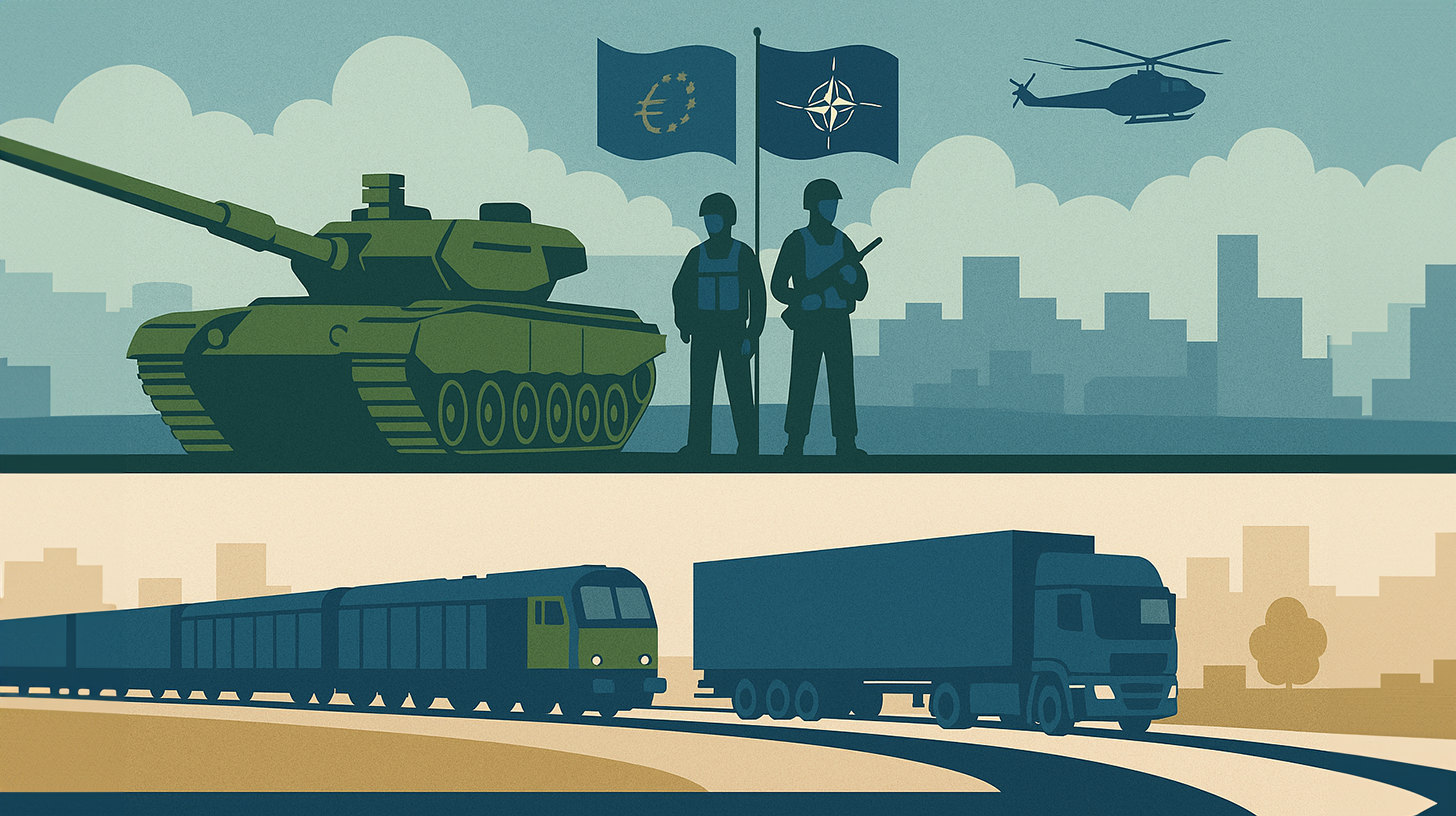
Double the power: How the military necessity of the EU & NATO can drive the civilian transport revolution in Germany – Image: Xpert.Digital
Germany as a key player: Dual use and efficient infrastructure for military and civilian transport (Reading time: 29 min / No advertising / No paywall)
How the focus on military mobility accelerates defense resilience and the civilian transport transition in Germany and Europe
This article analyzes the profound synergies between strengthening military mobility and modernizing civilian transport infrastructure in Germany and Europe. The central thesis is that a targeted alignment of infrastructure planning and investment with military requirements not only significantly improves the defense and deterrence capabilities of NATO and the EU, but also acts as a catalyst for the civilian "transportation revolution." This "double impact" arises from the principle of dual use, whereby investments in more robust, efficient, and resilient transport networks serve both military and civilian purposes.
Due to its geostrategic location in the heart of Europe, Germany plays a key role as a logistical hub ("Hub Germany") for allied forces. The ability to rapidly and efficiently move troops and equipment across Germany (Host Nation Support) is essential for the credibility of collective defense. However, current deficiencies in German infrastructure—from dilapidated bridges and bottlenecks in the rail network to bureaucratic hurdles—represent a strategic vulnerability.
Suitable for:

Prioritizing military mobility requirements within EU initiatives such as the Action Plan on Military Mobility and NATO guidelines drives necessary modernization. Higher standards for payload capacity, digital connectivity, cybersecurity, and logistical capabilities, primarily motivated by military needs, directly benefit civilian freight and passenger transport. They increase the capacity, efficiency, and resilience of the entire transport system, thus promoting the goals of the transport transition. Financing mechanisms such as the Connecting Europe Facility (CEF) create incentives to align national investments accordingly.
However, realizing this dual benefit requires overcoming significant challenges: insufficient funding, lengthy approval processes, security risks from hybrid threats, and the need for improved civil-military coordination across institutional boundaries.
The dual imperative – security and modernization
The current geopolitical landscape, shaped by Russia's war of aggression against Ukraine and growing global instability, is bringing the need for robust defense capabilities and resilient logistics chains back into focus for European security policy. At the same time, Europe faces the challenge of a profound transformation of its transport systems towards greater sustainability, efficiency, and digitalization – often summarized under the term "transport revolution." This article argues that these two seemingly separate imperatives – security and modernization – can be synergistically linked through a strategic dual-use approach in transport. In particular, focusing on military mobility requirements can serve as a catalyst for the accelerated modernization of civilian transport logistics, from which both sectors will benefit equally.
Definition of dual use in transport infrastructure and logistics
The term "dual-use" originates from export control and refers to goods, software, and technologies that can be used for both civilian and military purposes. Historically, after World War II, it specifically referred to nuclear materials with the potential for weapons and energy production. Today, the term is applied much more broadly and encompasses a wide range of products and technologies in fields such as electronics, computers, telecommunications, sensors, navigation, aerospace, and chemicals. EU and US export control regulations aim to prevent the proliferation of weapons of mass destruction (WMD) and conventional armaments and to comply with international security obligations.
In the context of transport infrastructure and logistics, the concept extends beyond individual goods. Rather, it describes a strategic approach to the planning, investment, and operation of transport networks and capacities. Dual-use infrastructure encompasses roads, railways, waterways, ports, airports, and the associated digital communication and control systems, which are designed or upgraded to meet the requirements of both civilian passenger and freight transport and the specific needs of military operations. This includes aspects such as sufficient load-bearing capacity of bridges and roads for heavy military vehicles, appropriate clearance profiles for tunnels and underpasses, capacities for handling military equipment in ports and airports, secure communication channels, and increased resilience against physical or digital attacks.
This strategic perspective—understanding dual-use not merely as a property of goods but as a planning principle—is crucial. It's not about building infrastructure that happens to also have military applications, but about considering the requirements of both sectors from the outset and structuring investments to maximize mutual benefit. This approach underlies the EU's efforts within its Action Plans on Military Mobility and NATO's infrastructure requirements for its member states. The distinction between purely civilian and military technologies or infrastructure is becoming increasingly blurred.
Military mobility as a driver for improved defense and civilian modernization
The central thesis of this article is that prioritizing military mobility requirements in the planning, financing, and modernization of transport infrastructure generates a double dividend. It acts as a powerful catalyst, simultaneously strengthening national and collective defense resilience and accelerating the modernization of civilian transport logistics—the "transportation revolution." This synergistic effect, as indicated in the introductory text of the user inquiry ("Double the Strength"), is the core feature of the dual-use approach in transport.
The underlying mechanism is multifaceted: Military infrastructure requirements are often more demanding than purely civilian standards. This applies, for example, to the load-bearing capacity of bridges and roads for heavy tanks and transport vehicles, the need for robust and redundant communication systems, increased cybersecurity requirements for logistics and control systems, and the availability of specialized transshipment capacities at logistics hubs. Investments made to meet these military requirements—often along strategically important corridors—lead to a general improvement in infrastructure quality. Civilian users also benefit directly from this, particularly heavy freight transport, but also passenger transport through increased network capacity and efficiency. Military necessity can thus initiate or accelerate investments that would also be desirable from a civilian perspective, but might be more difficult to finance or prioritize.
Germany's role as a hub ("Hub Germany")
Due to its geographical location in the heart of Europe, Germany holds paramount strategic importance for the logistics and defense capabilities of NATO and the EU. It serves as an indispensable hub for the deployment and resupply of allied forces, particularly towards the alliance's eastern flank. This role as a transit and host nation has become even more critical since Russia's invasion of Ukraine in 2022. NATO plans to be able to deploy massive reinforcements to the eastern flank if necessary, with a large portion of these forces needing to transit through Germany and receive support there.
As part of Host Nation Support (HNS), Germany is obligated to support allied forces during transit or stays. This encompasses a wide range of services, from providing rest areas, fuel, and food, to escorting transports with military police, and ensuring security and medical care, often in cooperation with civilian authorities and companies. The ability to effectively provide this HNS depends significantly on a high-performing and resilient transport infrastructure.
However, Germany faces considerable challenges in this area. Decades of neglecting military requirements in infrastructure planning and a general backlog of investment have led to a situation where parts of the German transport network may not be able to withstand the potential strain in a crisis or defense scenario. Dilapidated bridges, bottlenecks in the rail network, and bureaucratic hurdles jeopardize Germany's function as a reliable hub. Modernizing the infrastructure while taking military requirements into account is therefore not just a matter of efficiency, but a strategic necessity for national and European security.
Suitable for:

Germany: The strategic hub for European logistics and defense
Germany's central geographic location and its highly developed, albeit partially in need of modernization, infrastructure predestine it as a strategic hub for military logistics and troop movements in Europe. This role entails considerable responsibilities, particularly within the framework of Host Nation Support (HNS), but also represents a strategic Achilles' heel in light of current challenges.
Geostrategic importance for NATO/EU deployments
Germany forms the heart of European land transport routes. Important transit corridors for road, rail, and inland waterway traffic traverse the country, connecting Western Europe with the eastern and southeastern member states of NATO and the EU. These corridors are essential for the rapid deployment of forces and equipment, whether from the seaports in the Netherlands and Belgium (e.g., Rotterdam, Antwerp) or directly from the USA, Canada, or the UK, towards potential areas of operation on the eastern flank. The establishment of a cross-border "model corridor" for military traffic between the Netherlands, Germany, and Poland underscores this strategic function and the need for coordinated planning.
Furthermore, Germany serves as the primary receiving state for reinforcements, particularly from North America, which arrive in Europe via German seaports and airports. The capacity and efficiency of these ports and airports, as well as the subsequent transport routes (especially rail), are crucial for the so-called Reception, Staging, and Onward Movement (RSOM) – the reception, staging, and onward movement of troops.
Germany also hosts important command and logistics structures. NATO's Joint Support and Enabling Command (JSEC) in Ulm coordinates all of the alliance's troop movements within Europe and is thus a central hub for military mobility. Germany is also playing a leading role in the PESCO project "Network of LogHubs," which aims to establish a European network of logistics hubs for the storage and preparation of material transports. These hubs, such as the expanded Bundeswehr depot in Pfungstadt, are intended to improve logistical support across national borders.
Host Nation Support (HNS): Capabilities and Responsibilities
Host Nation Support (HNS) refers to the civilian and military support that a host country (host nation) provides to the armed forces of allied or friendly nations (sending nations) during their stay or transit through its territory. For Germany, HNS is a national responsibility, carried out in close coordination between the federal government, the states, municipalities, the German Armed Forces, and civilian actors, including the private sector.
The coordination of the High-Level Support Scheme (HNS) in Germany is the responsibility of the Territorial Command of the Bundeswehr (TerrFüKdoBw) in Berlin, which is responsible for all Bundeswehr operations within Germany. Since October 2024, the newly established Bundeswehr Support Scheme, which combines logistical, medical, CBRN defense, and military police capabilities, has also been significantly involved in HNS tasks. HNS is granted only upon application, as foreign armed forces may not enter German territory without authorization, and the services provided are generally subject to a fee, which is billed to the requesting nation.
Historically, Germany has extensive experience with host nation support (HNS), particularly during the Cold War under the Wartime Host Nation Support (WHNS) agreement with the United States. At that time, tens of thousands of German reservists and significant civilian resources were kept on standby to support American reinforcements. Even though the structures and scope have changed, the fundamental commitment remains and is gaining renewed importance in light of the current security situation. The range of HNS services is broad, encompassing diplomatic authorization procedures, transport escort, provision of accommodation, food, fuel, and ammunition, as well as repair services, medical care (including in civilian hospitals), and protection against sabotage or disruption.
The principle of the HNS is based on reciprocity. German armed forces also receive support from alliance partners when they cross their territory for exercises or operations, for example during deployments from Poland to Lithuania.
Current logistical challenges and vulnerabilities
Despite its central role, Germany faces significant challenges in ensuring military mobility. A major problem is the state of its transport infrastructure. Many bridges, particularly on highways, are dilapidated and do not meet the military load classes (MLC) required for transporting modern main battle tanks (over 70 tons). Rail transport lacks specialized railcars for tank transport (heavy-duty wagons), sufficiently long passing loops, and overall capacity, leading to bottlenecks. The rail network, once optimized for military use, has been downsized and streamlined in recent decades, which can limit its robustness and flexibility. The road network is also not consistently designed for large, heavy military convoys. The German Council on Foreign Relations (DGAP) concludes that military usability has been increasingly overlooked in infrastructure planning over the past 30 years.
Another obstacle is bureaucratic procedures. Cross-border permits for military transport, especially for hazardous materials or oversized loads, are often lengthy and complex. Differing national regulations and cumbersome customs formalities hinder fast and smooth transit. Although EU initiatives such as PESCO Military Mobility and the EU Action Plan aim at simplification and harmonization, progress is often slow.
Capacity bottlenecks affect not only infrastructure but also the means of transport themselves. The German Armed Forces lack sufficient heavy-duty transporters and other logistics vehicles such as swap body trucks. This leads to a strong dependence on civilian freight forwarding companies, whose involvement in crisis or defense situations must be contractually and organizationally guaranteed. This can create conflicts of interest between military requirements and civilian economic interests.
Security aspects are becoming increasingly important. The physical security of transport routes is threatened by sabotage, as incidents on the German rail network have demonstrated. At the same time, the increasing digitalization of logistics and traffic management systems presents an attack surface for cyberattacks. A successful attack on telecommunications networks or traffic management systems could bring military transports to a standstill or expose sensitive information. The use of foreign technology, such as in 5G networks along transport corridors, also poses potential security risks.
These shortcomings and vulnerabilities in German infrastructure and logistics are more than just operational problems. They are developing into a strategic weakness that directly impairs NATO's ability to respond quickly and provide credible deterrence. If Germany cannot fulfill its role as a central hub due to infrastructure deficiencies, bureaucratic obstacles, or security gaps, this undermines the entire defense architecture on the eastern flank. The ability to rapidly deploy reinforcements is a core component of NATO strategy. A perceived inability to carry out these deployments in a timely manner weakens the deterrent effect against potential aggressors and thus increases the risk of miscalculations and conflicts. Modernizing German infrastructure while taking military requirements into account is therefore of fundamental importance for stability in Europe.
🎯🎯🎯 Benefit from Xpert.Digital's extensive, five-fold expertise in a comprehensive service package | BD, R&D, XR, PR & Digital Visibility Optimization

Benefit from Xpert.Digital's extensive, fivefold expertise in a comprehensive service package | R&D, XR, PR & Digital Visibility Optimization - Image: Xpert.Digital
Xpert.Digital has in-depth knowledge of various industries. This allows us to develop tailor-made strategies that are tailored precisely to the requirements and challenges of your specific market segment. By continually analyzing market trends and following industry developments, we can act with foresight and offer innovative solutions. Through the combination of experience and knowledge, we generate added value and give our customers a decisive competitive advantage.
More about it here:
Europe on the move: Military requirements that benefit everyone
Military mobility as a catalyst for infrastructure modernization
The need to improve military mobility in Europe has led to concrete initiatives and frameworks at both NATO and European Union levels. These not only serve to strengthen defense capabilities but also directly impact the modernization of civilian infrastructure by defining specific requirements and providing financing mechanisms.
NATO and EU frameworks for military mobility
The European Union has recognized the improvement of military mobility as a strategic priority and has launched several initiatives since 2017. The first EU Action Plan on Military Mobility (2018) identified operational measures to remove physical, procedural, and regulatory barriers. Building on this, Action Plan 2.0 (2022-2026) was adopted, expanding its scope and proposing additional measures to respond to the changed security situation following the Russian invasion of Ukraine. This plan aims for a well-connected military mobility network with shorter response times and efficient, secure, sustainable, and resilient transport infrastructure and capacities. New priorities include resilience and preparedness (including strategic transport capabilities), the digitalization of administrative processes, protection against cyber and hybrid threats, and strengthening partnerships, particularly with NATO, but also with countries such as Ukraine and Moldova.
Projects within the framework of Permanent Structured Cooperation (PESCO) are an important instrument for implementation. The “Military Mobility” project, coordinated by the Netherlands, focuses on simplifying and standardizing cross-border military transport procedures. The “Network of LogHubs” project, coordinated by Germany, aims to establish a European network of logistics hubs. It is noteworthy that since 2020, third countries such as the USA, Canada, and Norway have also been able to participate in PESCO projects, particularly “Military Mobility,” which underscores the transatlantic dimension.
NATO views military mobility as a crucial force enabler for its deterrence and defense mission. It defines military infrastructure requirements and works closely with the EU to ensure coherence and synergies. A Structured Dialogue on Military Mobility between the two organizations has served as a forum for exchanging information on shared priorities such as military requirements, transport infrastructure, dangerous goods transport, customs issues, and cross-border permits since 2018. NATO contributes its expertise, particularly in defining critical infrastructure requirements, which can then be incorporated into EU planning. The NATO Joint Security and Economic Cooperation (JSEC) command in Ulm plays a central role in coordinating troop movements in Europe.
Matches:

Translating military requirements into infrastructure upgrades
A key aspect of military mobility initiatives is the systematic integration of military requirements into the planning and development of civilian transport infrastructure. The EU and NATO define specific military requirements that may exceed standard civilian requirements. These requirements are increasingly being integrated into the planning for the Trans-European Transport Network (TEN-T). The European Commission has identified parts of the TEN-T network suitable for military transport and is compiling priority lists for necessary upgrades. The recent revision of the TEN-T Regulation strengthens certain infrastructure requirements, particularly for rail, and incorporates military needs into network maps. A current focus is on identifying and upgrading key corridors for short-term and large-scale military movements.
The upgrades include both physical improvements and digital modernizations. Physically, this involves reinforcing bridges and roads to higher military load classes (MLC), adapting tunnel profiles, expanding railway lines for heavier and longer trains (possibly adjusting track gauge to limits), improving handling capacities in ports, airports and logistics hubs, and ensuring a resilient fuel supply along transport routes.
Digital requirements include the implementation of secure and interoperable communication systems for controlling and monitoring transport, the digitization of customs, permitting, and logistics processes to accelerate operations, and strengthening the cyber resilience of the entire transport and logistics infrastructure against attacks. Initiatives such as the NATO Innovation Challenge specifically seek innovative digital solutions for transport planning and interoperability.
The role of dual-use financing mechanisms
To promote the necessary investments in dual-use infrastructure, the EU has created specific financing instruments. The most important of these is the Connecting Europe Facility (CEF). Under the 2021-2027 Multiannual Financial Framework (MFF), a budget of approximately €1.69 billion was specifically allocated for co-financing dual-use transport infrastructure projects that meet military requirements. Although this sum is significantly below the Commission's initial proposal (€6.5 billion) and demand far exceeds supply (applications oversubscribed the budget by a factor of 4.7 in some cases), it nevertheless provides a crucial incentive. Given the urgency, the funds were brought forward and have already been largely exhausted. Additional funding has been announced, but the question of sufficient financing remains.
The existence of these earmarked EU funds for dual-use projects sends a significant signal. It creates a strong incentive for member states like Germany to align their national infrastructure planning more closely with military mobility requirements. National ministries (transport, defense, finance) are encouraged to prioritize projects that meet both civilian and military criteria in order to maximize their chances of EU co-financing. This helps to give military concerns greater weight on the national agenda and promotes the integration of defense needs into broader infrastructure modernization plans.
In addition to the CEF, the need to tap into further sources of financing is being discussed. This could include synergies with other EU programs such as the Global Gateway Initiative, which promotes investment in global infrastructure projects. Loans from the European Investment Bank (EIB), which has now opened its portfolio to security and defense investments, could also play a role. Nevertheless, national budgets remain the main source of financing, underscoring the need for clear prioritization.
Military vs. Civilian Infrastructure Standards & Dual-Use Implications
The following table illustrates, by way of example, how military requirements differ from typical civilian standards and what dual-use upgrades can result from this.
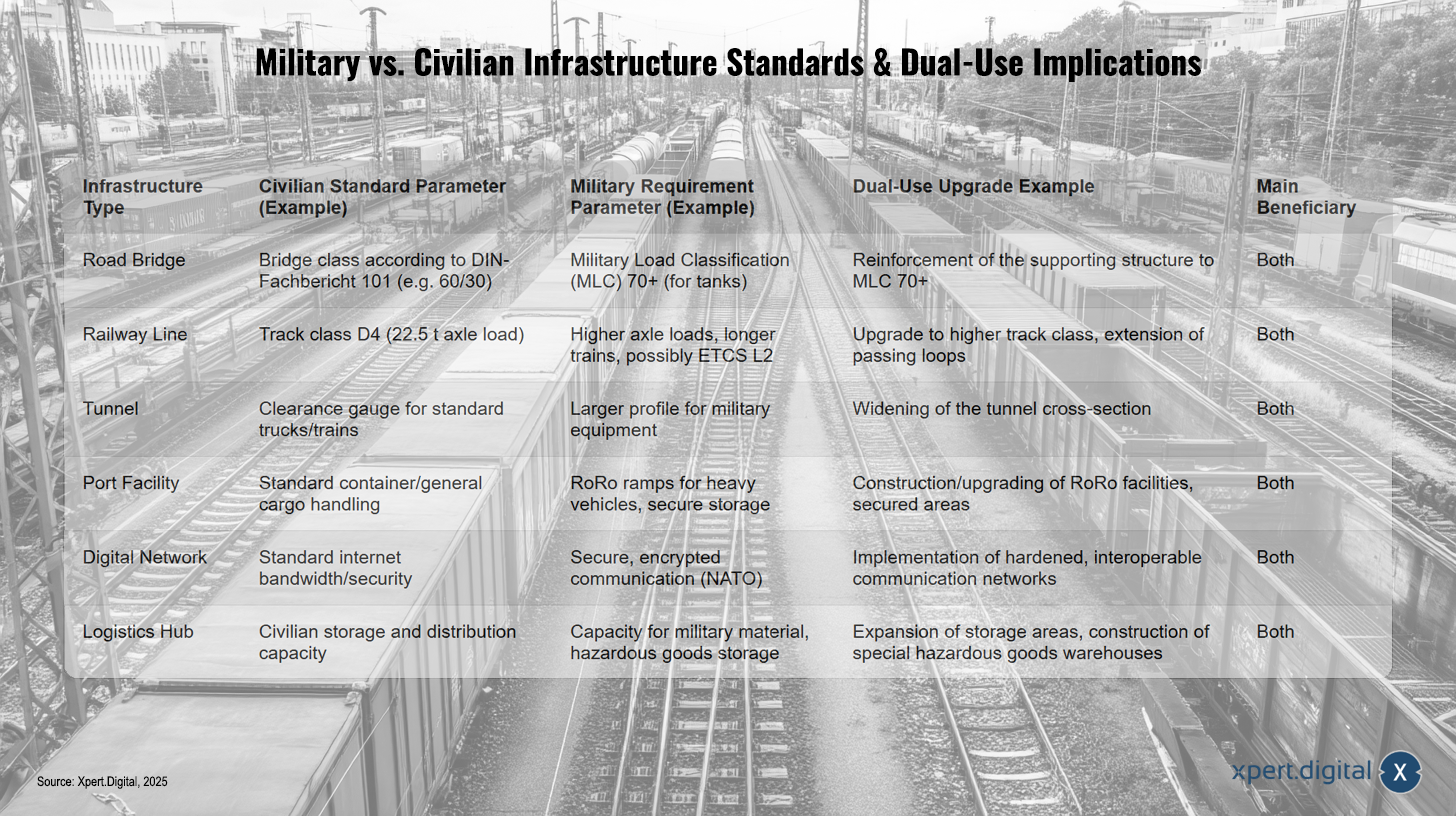
Military vs. Civilian Infrastructure Standards & Dual-Use Implications – Image: Xpert.Digital
Military infrastructure standards often impose higher technical requirements than civilian standards, leading to qualitative improvements in dual-use projects that benefit both sectors. For example, road bridges are reinforced to support military loads such as tanks, simultaneously increasing their load-bearing capacity for civilian use. Railway lines are upgraded to accommodate higher axle loads and longer trains, while tunnels are given larger cross-sections to accommodate heavy military equipment. Port facilities are upgraded with RoRo ramps and secure storage areas, and digital networks are strengthened through encrypted, interoperable communication. Logistics hubs also benefit from expanded storage capacities, including dedicated hazardous materials storage facilities. These upgrades not only enhance military resilience and operational efficiency but also modernize civilian transportation infrastructure. This creates a win-win situation where military and civilian requirements are optimally combined, establishing a strategic foundation for defense, deterrence, and the transition to sustainable transportation.
This table illustrates that military requirements often set higher technical standards. Implementing these standards in dual-use projects leads to a general improvement in infrastructure quality, benefiting both the military and civilian sectors.
Synergies and mutual benefits: defense resilience and civilian "transportation transformation"
The strategic focus on dual-use infrastructure creates a win-win situation by strengthening military capabilities while simultaneously modernizing civilian transportation infrastructure. This "double strength" effect manifests itself in diverse, mutually reinforcing benefits for both defense and society.
Strengthening defense resilience
A modernized infrastructure tailored to military needs is fundamental for defense and deterrence capabilities.
Speed and reaction time:
Upgraded transport corridors, efficient logistics hubs, and simplified cross-border procedures enable significantly faster deployment of NATO and EU forces. Shorter response times are crucial for credible deterrence and effective crisis response at the external borders. Eliminating bureaucratic hurdles, such as long waiting times for permits, also contributes significantly to this acceleration.
Sustainability (sustainability):
Improved logistics hubs and secure transport routes ensure a reliable supply of provisions (ammunition, fuel, spare parts, rations) to deployed troops. Robust logistics are essential for the sustained duration of military operations. Securing the fuel supply chain is particularly critical.
Interoperability:
The standardization of infrastructure parameters (e.g., load classes, railway power systems, communication protocols) and harmonized procedures facilitate cooperation and smooth interaction between different national armed forces that use Germany as a transit country. This increases the effectiveness of multinational operations.
Deterrence:
A visibly improved ability to rapidly deploy and supply forces in relevant numbers strengthens the credibility of collective defense and thus the deterrent effect of NATO as a whole. Potential adversaries recognize that the alliance is capable of action.
Suitable for:

Acceleration of the "transportation revolution" (civil transport modernization)
Investments in dual-use infrastructure not only benefit defense, but also significantly promote the goals of the civilian transport transition.
Increased capacity and relocation potential:
Infrastructure designed for heavy military transport (e.g., high-capacity bridges, high-performance railway lines) also offers significant advantages for civilian freight transport, especially heavy goods vehicles. Improved rail infrastructure can increase the attractiveness of rail freight and thus contribute to the desired shift of transport from road to rail.
Improved efficiency and connectivity:
The expansion of bottlenecks, the modernization of transport corridors, and the digitalization of logistics processes increase the efficiency of the entire transport system. All civilian users benefit from this through shorter transport times and potentially lower costs. Improved connections between different modes of transport (e.g., ports to the rail network) are also promoted.
Technological progress:
Military requirements can drive innovation in areas that are also relevant to civilian applications. Examples include secure digital logistics platforms, resilient communication networks, advanced materials in bridge construction, and new methods for monitoring and controlling traffic flows. These technologies can then diffuse into the civilian sector ("spillover").
Increased resilience:
Infrastructure hardened for military reasons against physical attacks (sabotage) or cyberattacks is automatically more resilient to other disruptions such as natural disasters, technical failures, or criminal acts. This increases the reliability of civilian supply chains and overall mobility.
The “double the impact” effect: Strategic and socio-economic goals in harmony
The dual-use approach makes it possible to reconcile strategic defense needs with national economic, social and environmental goals.
Target orientation:
Investments in dual-use infrastructure contribute simultaneously to security and to the goals of the transport transition, such as more efficient freight transport, reduction of congestion and emissions through modal shift, and adaptation to climate change through more resilient infrastructure.
Resource optimization:
Military necessity can serve as leverage to justify and finance investments in infrastructure projects that also deliver significant civilian benefits. Instead of defense and transportation budgets competing for scarce resources, the dual-use approach allows public funds to be used more efficiently to pursue multiple policy objectives simultaneously.
This approach transforms the perspective on infrastructure investments. Instead of potential competition for resources between the defense and civilian sectors, a synergistic partnership emerges. Military requirements, which often exceed civilian standards, act as a "specification booster." The resulting higher-quality infrastructure inherently offers better performance for civilian purposes.
At the same time, the strategic imperative of defense acts as a "financing catalyst," mobilizing political support and unlocking additional sources of funding (such as CEF) to implement projects that also advance civilian goals, such as the transition to sustainable transportation. Military needs thus not only coexist with civilian needs but actively drive the development of more efficient and resilient infrastructure for the benefit of both sectors.
Allocation of military-driven upgrades to defense and civilian uses
The following table shows concrete examples of the “double the strength” effect by linking militarily motivated upgrades with their specific benefits for defense and the civilian transport transition
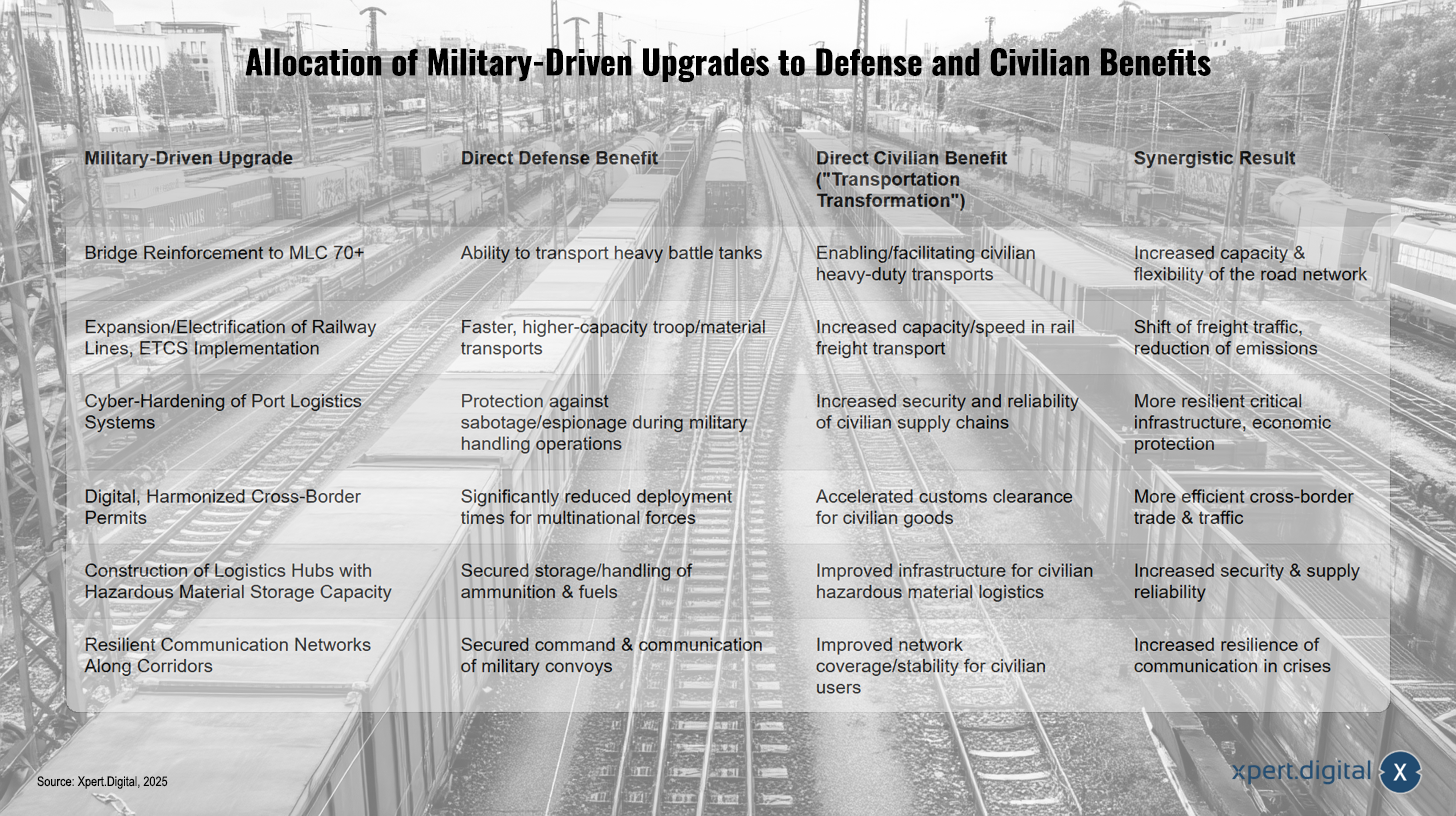
Allocation of military-driven upgrades to defense and civilian uses – Image Xpert.Digital
These examples illustrate the "double benefit" effect, where militarily motivated upgrades simultaneously benefit both defense and the transition to civilian transportation. For instance, bridge reinforcement to MLC 70+ enables the transport of heavy battle tanks while also facilitating civilian heavy transport, thereby increasing the capacity and flexibility of the road network. The expansion and electrification of railway lines, along with the implementation of the ETCS system, not only promote faster and more efficient military transport but also increase capacity and speed in civilian rail freight, shifting freight traffic from road to rail and reducing emissions. Cyber-hardening of port logistics systems protects against sabotage and espionage during military operations while simultaneously enhancing the security and reliability of civilian supply chains, thus strengthening the resilience of critical infrastructure. Digital and harmonized cross-border permitting procedures shorten the deployment times of multinational forces and accelerate civilian customs clearance processes, making cross-border trade and transport more efficient. The establishment of logistics hubs with hazardous materials storage capacity ensures the secure storage of munitions and operating supplies while simultaneously improving the infrastructure for civilian hazardous materials logistics, thereby achieving higher safety standards and enhanced supply security. Resilient communication networks along transport corridors secure the command and control of military convoys and, at the same time, provide more stable network coverage for civilian users, thus increasing the overall resilience of communications in times of crisis. These examples illustrate how investments driven by military requirements not only strengthen defense capabilities but also promote the modernization and efficiency of the civilian transport sector.
These examples illustrate how specific investments, often driven by military needs, create direct and measurable added value for both defense capabilities and the modernization and performance of the civilian transport sector.
Our recommendation: 🌍 Limitless reach 🔗 Networked 🌐 Multilingual 💪 Strong sales: 💡 Authentic with strategy 🚀 Innovation meets 🧠 Intuition

From local to global: SMEs conquer the global market with clever strategies - Image: Xpert.Digital
At a time when a company's digital presence determines its success, the challenge is how to make this presence authentic, individual and far-reaching. Xpert.Digital offers an innovative solution that positions itself as an intersection between an industry hub, a blog and a brand ambassador. It combines the advantages of communication and sales channels in a single platform and enables publication in 18 different languages. The cooperation with partner portals and the possibility of publishing articles on Google News and a press distribution list with around 8,000 journalists and readers maximize the reach and visibility of the content. This represents an essential factor in external sales & marketing (SMarketing).
More about it here:
Germany as a NATO hub: Dual use of infrastructure and setting the right strategic priorities
Challenges and considerations for effective dual-use implementation
Despite the considerable potential of the dual-use approach, there are a number of challenges and pitfalls that must be addressed to successfully realize the desired synergies. These range from financial and bureaucratic to security and organizational aspects.
Funding gaps and investment prioritization
A key obstacle is insufficient funding. The funds allocated for dual-use projects under the EU Connecting Europe Facility (CEF) (approximately €1.7 billion + €0.8 billion) are generally considered too low in relation to the actual need. The high oversubscription rate of calls for proposals underscores this. National budgets are also under pressure, and it is questionable whether funds such as Germany's €100 billion special fund for the Bundeswehr, which is primarily intended for equipment, can be used to a sufficient extent for the urgently needed modernization of infrastructure.
Limited resources necessitate strict prioritization. Difficult decisions must be made regarding which transport corridors and specific projects (bridges, railway sections, ports, etc.) should be given priority. Short-term military requirements, arising from the current threat situation and NATO planning (e.g., the New Force Model), must be reconciled with long-term civilian development goals and network planning (e.g., TEN-T). This requires complex coordination processes.
Bureaucratic simplification and cross-border harmonization
Despite repeated commitments and initiatives at the EU level, lengthy and complex bureaucratic procedures remain a significant obstacle to military mobility. In particular, cross-border authorization for transport, especially for hazardous materials and oversized/overweight loads, as well as customs formalities, can take days or weeks and hinder rapid deployments. National regulations and procedures often still diverge considerably between member states. While the EU aims for a maximum authorization time of three working days, it acknowledges that this requires significant national efforts.
Comprehensive digitization of administrative processes (application, approval, customs clearance) is considered key to acceleration and simplification. However, this requires not only investment in appropriate IT systems, but also their interoperability across national borders and the willingness of authorities to accept and use digital procedures.
Security, resilience and threat defense
Transport infrastructure is an attractive target for a wide range of threats. Physical acts of sabotage, such as those already occurring on the German rail network, can paralyze traffic on a large scale. With increasing digitalization, vulnerability to cyberattacks on control systems, communication networks, and logistics platforms is growing. Such attacks can not only disrupt military deployments but also compromise sensitive data or disrupt civilian supply chains. Particular attention must be paid to the security of technologies from potentially problematic third countries, such as Chinese components in 5G networks along key transport routes. New EU regulations on data sharing (Data Act) must also be examined from a security perspective to prevent sensitive infrastructure data from falling into the wrong hands.
Protecting critical transport infrastructure (KRITIS) therefore requires comprehensive measures. These include physical security, robust cybersecurity architectures, redundant systems, and emergency plans. Corresponding legal regulations (such as the planned KRITIS overarching law in Germany) must adequately address the specific requirements of the transport sector and, where necessary, mandate certifications for critical components.
Suitable for:
Balancing military specifications with civilian and environmental needs
While military requirements often set higher standards, the planning of dual-use infrastructure must ensure that these do not lead to oversized or disproportionately expensive solutions that are impractical for the primary civilian purpose. The aim is to find a sensible compromise that ensures essential military capabilities without unduly compromising civilian usability or cost-effectiveness.
Furthermore, environmental aspects and climate protection goals must be taken into account. The construction and operation of transport infrastructure has significant environmental impacts. Therefore, environmental impact assessments must be carried out when planning dual-use projects, and sustainable construction methods and energy-efficient operating concepts must be pursued. Promoting the climate resilience of infrastructure is also an important objective of the EU action plans.
Optimization of civil-military coordination
The successful implementation of a dual-use strategy requires close and effective cooperation between a wide range of actors at different levels. These include ministries of defense, transport, and the interior, subordinate authorities at the federal and state levels, the European Union, NATO, and last but not least, the private sector (transport companies, construction industry).
This coordination is complex and often encounters institutional silos and differing cultures, priorities, and planning horizons. Defense planners think in terms of military scenarios and capability requirements, while transport planners focus on civilian needs analyses and economic efficiency. Private companies primarily pursue economic goals that do not always align with the requirements for flexibility and preparedness in crisis situations. To bridge these gaps, institutionalized coordination mechanisms are necessary. The EU recommends the establishment of national interministerial and cross-departmental coordination groups. A clear contractual framework for cooperation with the private sector, encompassing aspects such as remuneration, liability in crisis situations, and incentives for investment in dual-use capabilities, is also essential.
The success of the entire dual-use strategy depends crucially on overcoming these institutional barriers and establishing a genuine, lasting culture of collaboration. This requires more than just political declarations of intent; it demands clear responsibilities, transparent processes, regular information exchange, and the political will to think and act across departmental boundaries. Without such an integrated approach, the potential synergies risk being wasted.
Suitable for:

Germany's key role: Logistics in the tension between NATO and the transport revolution
The analysis has shown that focusing on military mobility requirements in the development of transport infrastructure holds considerable potential for strengthening the defense resilience of Germany and Europe while simultaneously accelerating the transition to civilian transport. The dual-use approach offers the opportunity to synergistically combine strategic security interests with socio-economic modernization goals.
Summary of results: Validation of the dual-use hypothesis
The study confirms the report's central thesis: Prioritizing military requirements in infrastructure planning acts as a catalyst for a double dividend.
For defense:
Modernized, resilient and interoperable transport routes enable faster troop movements, more robust logistical support, and thus increase the responsiveness, endurance and credibility of collective defense and deterrence.
For the civilian transport revolution:
The upgrades driven by military requirements (higher payloads, better connectivity, digitization, resilience) increase the capacity, efficiency and resilience of the entire transport system, which directly benefits civilian passenger and freight transport and can support the shift to more environmentally friendly modes of transport.
Germany's role as a central logistical hub for NATO and the EU is of paramount importance. Investing in its dual-use infrastructure is therefore not only a national concern, but a strategic necessity for European security.
At the same time, it became clear that the full realization of this potential is hampered by significant challenges. These include, above all, funding gaps, bureaucratic obstacles in cross-border procedures, growing security threats in physical and cyberspace, and shortcomings in civil-military coordination.
Suitable for:

Recommendations for the infrastructure of the future: Interface between civilian and military use
To fully exploit the potential of the dual-use approach and address the identified challenges, concerted efforts are needed at various levels:
For policymakers (national & EU):
- Ensure financing: The earmarked funds for dual-use infrastructure within the framework of the CEF should be substantially increased. National budgets must also provide sufficient funds, and synergies with other support instruments (e.g., EIB, national economic stimulus programs) should be examined.
- Institutionalize coordination: Binding national coordination bodies with clear mandates for the cross-departmental planning and implementation of dual-use infrastructure projects and the management of host nation support should be established, as recommended by the EU.
- Accelerating procedures: The digitization and harmonization of cross-border authorization and customs procedures must be pursued with the highest priority in order to achieve the targeted short deadlines (e.g. 3 days for authorizations).
- Strengthening resilience: Robust cybersecurity standards and physical security measures must be mandatorily integrated into the planning and construction of all critical transport infrastructure. National legislation on critical infrastructure must be adapted and enforced accordingly.
- Deepen EU-NATO cooperation: Coordination between the EU and NATO on defining military requirements, infrastructure planning and conducting exercises should be further intensified.
For defense (German Armed Forces):
- Clearly define requirements: The German Armed Forces must precisely formulate their long-term infrastructure requirements, derived from the NATO New Force Model, the national defence plans (OPLAN DEU) and the HNS commitments, and proactively integrate them into civilian planning processes.
- Expand partnerships: Cooperation with civilian planning authorities and the transport industry must be intensified. This includes building trust, establishing clear contractual agreements for the integration of civilian capacities when needed, and, where appropriate, providing incentives for industry to maintain dual-use capabilities. At the same time, core military capabilities (e.g., heavy-lift transport) must be maintained and modernized.
- Practice, practice, practice: Regular, realistic exercises for the deployment of large units (also scheduled at short notice, “ad-hoc exercises”) are essential to test the functionality of the infrastructure, the procedures and the civil-military interfaces and to uncover weaknesses.
For industry (transport & construction):
- Act proactively: Companies should actively seek information about military requirements and dual-use funding opportunities and signal their willingness to cooperate. The label "We drive for the German Armed Forces" could serve as a mark of quality.
- Investing in capabilities: Targeted investments in equipment (e.g. vehicles, handling technology), personnel qualification and digital systems that meet both civilian and potential military requirements can strengthen competitiveness and open up new business areas.
- Promoting innovation: Industry is challenged to develop and offer innovative and resilient solutions for the construction and operation of dual-use infrastructure.
The need for an integrated, nationwide approach
Realizing the vision of "dual strength" is not a task for a single ministry or actor. It requires an integrated, whole-government/whole-society approach. Only by overcoming traditional institutional silos and establishing a genuine, lasting culture of cooperation among all relevant actors—ministries, authorities at all levels, the German Armed Forces, international partners (EU/NATO), and the private sector—can the complex challenges be mastered and the considerable synergies of the dual-use approach be leveraged. This requires a shared understanding of the strategic necessity, coordinated priorities, and the sustained political will for implementation. Strengthening military mobility is therefore not merely a defense policy task, but a whole-government modernization project with far-reaching benefits for security and prosperity in Germany and Europe.
Advice - planning - implementation

Markus Becker
I would be happy to serve as your personal advisor.
Head of Business Development
Chairman SME Connect Defense Working Group
Advice - planning - implementation
Konrad Wolfenstein
I would be happy to serve as your personal advisor.
contact me under Wolfenstein ∂ Xpert.digital
call me under +49 89 674 804 (Munich)
Your dual -use logistics expert

Dual -use logistics expert - Image: Xpert.digital
The global economy is currently experiencing a fundamental change, a broken epoch that shakes the cornerstones of global logistics. The era of hyper-globalization, which was characterized by the unshakable striving for maximum efficiency and the “just-in-time” principle, gives way to a new reality. This is characterized by profound structural breaks, geopolitical shifts and progressive economic political fragmentation. The planning of international markets and supply chains, which was once assumed as a matter of course, dissolves and is replaced by a phase of growing uncertainty.
Suitable for:
We are there for you - advice - planning - implementation - project management
☑️ SME support in strategy, consulting, planning and implementation
☑️ Creation or realignment of the digital strategy and digitalization
☑️ Expansion and optimization of international sales processes
☑️ Global & Digital B2B trading platforms
☑️ Pioneer Business Development
Konrad Wolfenstein
I would be happy to serve as your personal advisor.
You can contact me by filling out the contact form below or simply call me on +49 7348 4088 965 (Munich) .
I'm looking forward to our joint project.
Write to me

Xpert.Digital - Konrad Wolfenstein
Xpert.Digital is a hub for industry with a focus on digitalization, mechanical engineering, logistics/intralogistics and photovoltaics.
With our 360° business development solution, we support well-known companies from new business to after sales.
Market intelligence, smarketing, marketing automation, content development, PR, mail campaigns, personalized social media and lead nurturing are part of our digital tools.
You can find out more at: www.xpert.digital - www.xpert.solar - www.xpert.plus
Keep in touch










