
An AI campus in the desert: Oracle pulls the brakes on payments – Project Jupiter becomes a billion-dollar risk
Xpert Pre-Release

Available in 27 languages 📢
Prefer Xpert.Digital on GoogleⓘPublished on: September 29, 2026 / Updated on: September 29, 2026 – Author: Konrad Wolfenstein
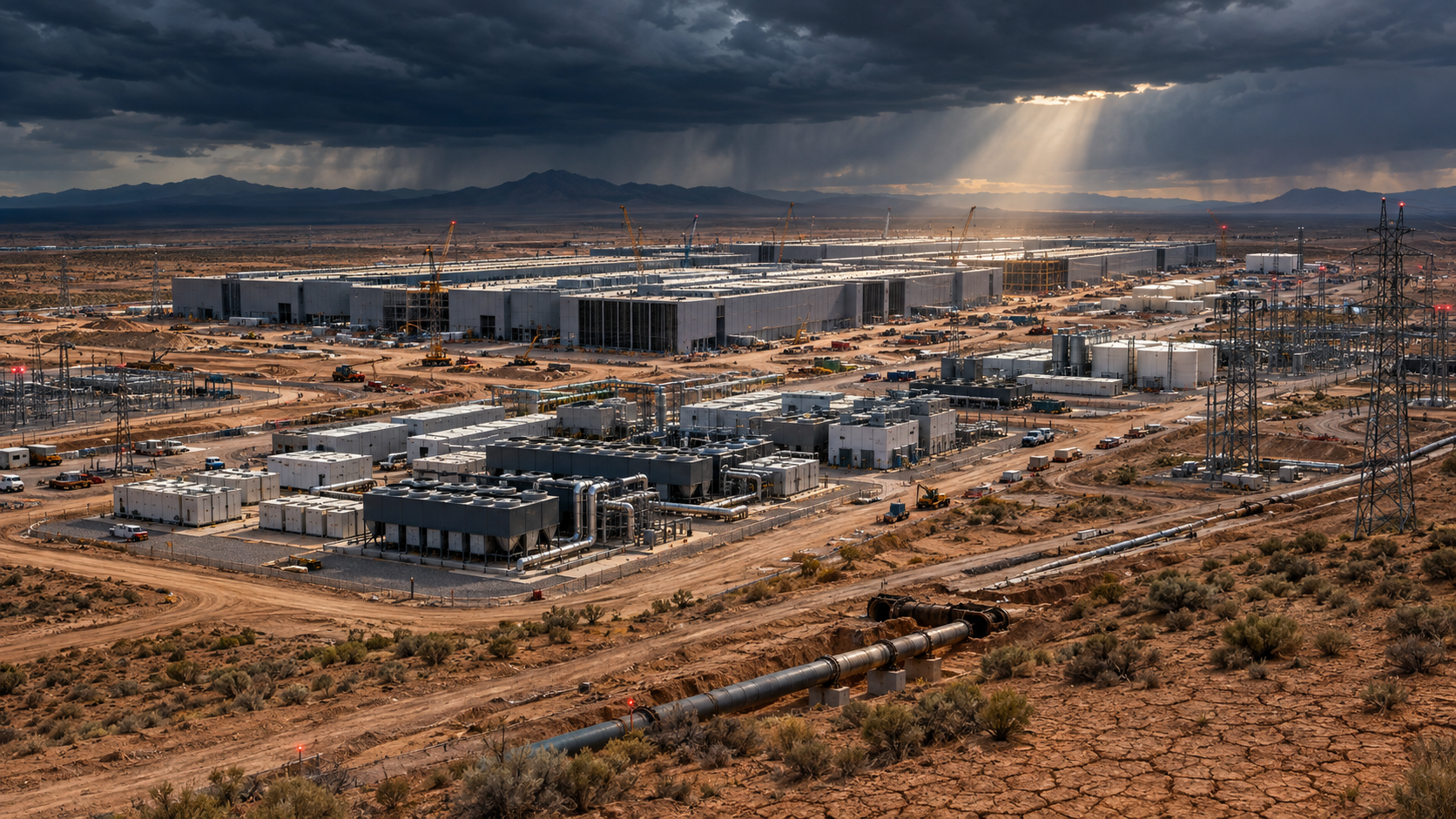
An AI campus in the desert: Oracle pulls the plug on payments – Project Jupiter becomes a billion-dollar risk – Creative image on the topic, with AI: Xpert.Digital
When the power goes out: The challenges of Oracle's Project Jupiter
Energy, water and capital: The economic hurdles of Project Jupiter
The downside of the AI boom: Lessons learned from Project Jupiter
Project Jupiter is an ambitious undertaking by Oracle that goes far beyond the construction of a conventional data center. With an investment of around $300 billion, this megaproject aims not only to shape the landscape of artificial intelligence but also to serve as a comprehensive stress test for the entire economy of the AI boom. Located in the New Mexico desert, the project confronts the industry with a multitude of challenges—from enormous upfront investments and long-term power purchase agreements to energy demands that rival those of entire regions. While the prospect of high returns is enticing, the reality on the ground raises questions: What happens if the power supply falters or permits are delayed? In this context, it becomes clear that the physical provision of computing power represents the central risk for the AI industry. A look at Project Jupiter reveals the complex interplay between technology, infrastructure, and financial commitments—a lesson for the entire industry.
Related to this:

Project Jupiter: Oracle's AI gamble collides with energy, water, and capital
When the power is out, even a 300 billion dollar promise becomes a risky gamble
Project Jupiter is far more than an exceptionally large data center in the New Mexico desert. The project is a stress test for the entire economy of the AI boom. It combines enormous upfront investments, long-term power purchase agreements, highly concentrated customer demand, complex project financing, and an energy requirement that rivals the scale of entire regions. As long as construction progress, energy supply, and demand remain precisely aligned, this model can be extraordinarily profitable. However, even a single delay can shift billions of dollars between the operator, developer, lender, and customer.
Oracle's invocation of force majeure is therefore not merely a legal formality. It demonstrates that the physical provision of computing power has become the central risk of the AI industry. Chips, servers, and customer contracts are insufficient if electricity, gas lines, water rights, permits, and public acceptance are lacking. The bottleneck no longer lies solely in semiconductor factories or cloud software. It increasingly lies in networks, power plants, construction capacity, land, and local resources.
The crucial point is both less dramatic and less economically consequential than the claim of a complete payment freeze might suggest. As far as is currently known, Oracle is not attempting to withdraw from the project. Rather, the company is contractually protecting itself against the possibility that the campus will not be operational on time. This does not automatically terminate Project Jupiter. However, the measure shifts risks, increases uncertainty regarding payment dates, and forces investors to reassess their previously assumed predictability.
A data center the size of a power plant
The planned campus in Doña Ana County covers approximately 1,400 acres, or about 567 hectares. It envisions a complex consisting of several data center buildings, technical infrastructure, and its own energy generation and storage facilities. The targeted electrical output of roughly 2.45 gigawatts underscores the scale: Project Jupiter would not be a typical large-scale industrial consumer, but rather an energy system with an integrated data center.
For comparison, New Mexico's total net summer electricity generation capacity was recently around 12.5 gigawatts. The capacity planned for Jupiter would thus theoretically correspond to almost one-fifth of this statewide generation capacity. This doesn't mean that the campus would consume 2.45 gigawatts at any given time or draw one-fifth of the state's current electricity from the grid. However, the scale illustrates why a conventional supply via the existing power grid seems hardly realistic and why a dedicated energy infrastructure has become the core of the project.
The economic logic of such AI campus projects differs fundamentally from that of traditional data centers. Traditional cloud locations were often expanded modularly as utilization increased. Large AI clusters, on the other hand, require thousands of expensive accelerators, networks, cooling systems, and power supplies to be available simultaneously. A partially completed campus, therefore, does not necessarily generate proportional revenue. If the guaranteed power supply for a cluster is unavailable, already installed technology can remain unproductive. Nevertheless, the financial costs continue to accrue.
This high degree of simultaneity creates a commissioning risk. Construction, grid connection, fuel supply, cooling, server installation, and customer use must all coincide within a narrow timeframe. The larger the site, the lower the probability that all components can be synchronized seamlessly. Economies of scale during operation thus outweigh disproportionate risks during development.
The contract clause as a financial airbag
Oracle has issued a force majeure notice to Stack Infrastructure, the site developer owned by Blue Owl Capital. Such clauses are designed to protect contracting parties when extraordinary, uncontrollable events prevent the fulfillment of agreed-upon obligations. In this specific case, the focus is on ensuring a timely energy supply. According to established contractual mechanisms, this responsibility lies primarily with Oracle.
The underlying lease agreement is described as a so-called "hell-or-high-water" contract. In such arrangements, the payment obligation generally remains in effect even under difficult circumstances. This is precisely why invoking force majeure is economically significant: it can allow Oracle to postpone the start of the higher regular rent payments if the campus does not become operational as planned due to the energy problems. A postponement of up to three years is being considered.
This is distinct from a complete or final payment freeze. Oracle would likely continue to incur certain costs during the development phase and would generally be bound for the agreed term once the regular lease period begins. Blue Owl also emphasizes that the long-term financial obligations remain unchanged. The dispute, therefore, revolves less around the absolute contract sum than around the point at which substantial payments commence.
However, time itself is a significant financial factor in a debt-financed infrastructure project. If revenues start later while construction interest, material bills, and financing costs continue to accrue, the present value of the cash flows decreases. A three-year delay can lead to a massive loss in value for projects with billions of dollars, even if all agreed-upon rents are ultimately paid in nominal terms. For lenders, therefore, it's not just a matter of whether Oracle eventually pays, but whether the payments arrive in time to service the project liabilities.
From Oracle's perspective, the force majeure notification acts like a financial airbag. In the event of delays, it limits the risk of having to pay full lease payments for a facility that is not yet delivering usable computing power. From the perspective of project financiers, however, it shifts some of the schedule risk to the capital structure. This explains why a legally precautionary measure can have a significantly greater impact on the markets than on the construction site itself.
The real bottleneck is energy
The original energy architecture apparently envisioned gas turbines and diesel generators on a scale far exceeding that of a conventional emergency power supply. These systems would have been needed for base load power, at least for extended periods. However, this met with considerable resistance due to concerns about local pollution, air pollution, and greenhouse gas emissions. Following political and regulatory setbacks, this concept was abandoned.
The planned natural gas supply also proved more difficult than expected. Easements and permits had to be secured for a pipeline approximately 17 miles (27 kilometers) long. Parts of the proposed route crossed state-owned trust land. Corresponding applications were rejected or had to be redesigned. This meant that, for a time, the very fuel supply for the facilities intended to make the campus independent of the public power grid was unavailable.
Bloom Energy's switch to fuel cells will change the local emissions profile, but it won't completely eliminate the underlying problem. Solid oxide fuel cells electrochemically convert the fuel's chemical energy into electricity and can operate more efficiently and with significantly fewer nitrogen oxides than conventional gas turbines. The planned installation will consist of more than 2,000 units and achieve a capacity of approximately 2.45 gigawatts. Under current plans, this system will also require large quantities of natural gas.
This shifts the bottleneck from generation technology to fuel logistics. Without an approved and timely completed pipeline, even more advanced fuel cells will remain without a supply. At the same time, a plant of this size is likely to create new technical and operational risks. A concentration of thousands of fuel cell modules, largely untested, will require maintenance, control, and high availability. While the modular design can mitigate the failure of individual units, it does not replace a secure gas supply.
The claim that the campus will generate its own energy should not be confused with energy self-sufficiency. While electricity production does take place on-site, the primary energy source must be delivered via external infrastructure. Project Jupiter would therefore be less dependent on the electricity grid and more dependent on the gas grid. Economically, one grid risk is simply being exchanged for another.
Water becomes a political price factor
New Mexico is one of the driest regions in the United States. There, water is not only an environmental issue, but also a scarce resource with competing demands from agriculture, the population, and industry. When a large-scale project acquires water rights or utilizes groundwater, it alters the local distribution conflict. Even technically permissible withdrawals can have a politically destabilizing effect if residents anticipate a deterioration in water supply or long-term pollution of the aquifers.
Project Jupiter acquired existing water rights that had previously been used for agricultural purposes, among other things. During the construction phase, additional water was drawn from a new or replacement well. Reports of over 100 million gallons being used in just a few months intensified criticism. Environmental groups argued that rezoning agricultural water rights for a mega-industrial site should not occur without transparent review and public consultation.
Oracle and its project partners, on the other hand, point to closed-loop systems and limited water consumption relative to the overall size during later operation. They cited approximately eleven million gallons of non-potable water in a closed or reusable system for the fuel cells and data center. Such figures suggest that continuous operation could be significantly less water-intensive than conventional evaporative cooling concepts. However, they do not automatically resolve the issues of construction water use, water origin, potential losses, and long-term water rights allocation.
Economically, it is crucial to understand that water scarcity has a hidden cost that is often underestimated in standard project calculations. This cost is not only reflected in water bills. It manifests itself in longer permitting processes, legal disputes, political regulations, additional infrastructure, and reputational damage. The larger a project and the scarcer the local resource, the greater the potential difference between the actual societal cost and the contractually agreed-upon water price.
Project Jupiter therefore illustrates that location decisions for AI infrastructure should not be based solely on land costs, tax breaks, and energy prices. A seemingly inexpensive desert location can become costly due to water scarcity, lack of easements, and public opposition. The savings on land and taxes can be outweighed by delay costs within just a few quarters.
$18 billion in the early warning system
Approximately $18 billion in loans were provided for the construction by a consortium of roughly 20 banks. This financing is earmarked for the project and is not comparable to a typical unsecured Oracle corporate bond. Nevertheless, its economic value depends significantly on Oracle as the long-term anchor tenant and on the campus being operational on time.
Loan shares were recently offered or valued on the secondary market at approximately 89 to 91 cents per dollar. A rate of 90 cents means that the market is paying only 90 cents for a nominal dollar claim. If the entire loan portfolio of $18 billion were valued at this discount, this would theoretically result in a market value reduction of approximately $1.8 billion. However, this calculation does not equate to a realized loss for all banks. A loss is only realized upon sale; for positions still held, it initially represents a lower market indication or valuation.
The discount nevertheless signals serious unease. Banks and other investors demand a higher yield when they anticipate delays, refinancing risks, or legal uncertainty. Since existing loans have a steady cash flow, this higher yield puts downward pressure on their market price. The move to 89 to 91 cents is therefore not proof of an impending default, but a clear warning sign that the original risk premium is considered insufficient.
The unique aspect lies in the concentration of risk. A single campus, a dominant tenant, a central end customer, and an energy architecture that is not yet fully secured form a tightly coupled chain. If one link fails, the consequences can extend throughout the entire financing. Broadly diversified real estate financing could absorb the loss of a tenant or location. For a specialized AI campus with customized facilities, finding alternative uses is considerably more difficult.
The so-called re-leasing capability is therefore a key risk. A typical logistics center can be leased to various users as needed. In contrast, a multi-gigawatt AI campus is tailored to a few global companies. Should the intended customer require less capacity, pay later, or change their strategy, the facility could not be transferred to any alternative customer quickly and without additional investment. The material value of the buildings is high, but their economic value depends disproportionately on a small number of contracts.
Our US expertise in business development, sales and marketing

Our US expertise in business development, sales and marketing - Image: Xpert.Digital
Industry focus areas: B2B, digitalization (from AI to XR), mechanical engineering, logistics, renewable energies and industry
More information here:
A thematic hub offering insights and expertise:
- Knowledge platform covering global and regional economies, innovation and industry-specific trends
- A collection of analyses, insights, and background information from our key areas of focus
- A place for expertise and information on current developments in business and technology
- A hub for companies seeking information on markets, digitalization, and industry innovations
How Project Jupiter could change the cloud market
Oracle is financing tomorrow's revenue today
Project Jupiter is part of Oracle's comprehensive commitment to provide OpenAI with more than $300 billion worth of AI infrastructure over the next five years. Additionally, as part of the Stargate initiative, Oracle has committed to adding up to 4.5 gigawatts of new capacity at multiple US locations. The New Mexico campus is therefore not an isolated construction project, but rather part of a national scaling strategy.
The strategic opportunity is obvious. Oracle has long been smaller than Amazon Web Services, Microsoft Azure, and Google Cloud in the global cloud market. The AI boom offers the company the chance to gain market share through extremely large, long-term commitments of computing power. Companies that provide scarce computing power early can retain customers for years and simultaneously strengthen their cloud ecosystem. The traditional database business offers additional points of contact for connecting AI workloads with existing enterprise customers.
The price of this catch-up attempt is a profound change to the business model. The traditional software business is characterized by low marginal costs, high gross margins, and strong free cash flow. Building AI infrastructure, on the other hand, is capital-intensive, energy-dependent, and project-driven. Oracle is thus adopting characteristics of a utility and infrastructure company without being able to fully decouple its valuation and liabilities from the risks of this model.
In fiscal year 2026, Oracle generated operating cash flow of approximately $32 billion. Capital expenditures amounted to roughly $55.7 billion, resulting in a negative free cash flow of approximately $23.7 billion according to the standard definition. For fiscal year 2027, the company anticipates capital expenditures of $90 to $95 billion. Even if customers prepay, provide their own hardware, or suppliers finance their operations, the absolute capital commitment remains exceptionally high.
Oracle rightly points out that gross capital expenditures and its own net cash outflow are not identical. Customer prepayments and customer-provided GPUs reduce the financing requirement. A net cash capex of no more than approximately $70 billion has been projected for 2027. This relief improves liquidity but does not eliminate the operational obligation to deliver the committed capacity on time and reliably.
Advance payments are not free equity. They improve short-term cash flow but are offset by a future performance obligation. If the campus is completed late, the financial and potentially contractual tensions could increase. The company is thus exchanging a portion of its financing risk for a performance risk.
Related to this:
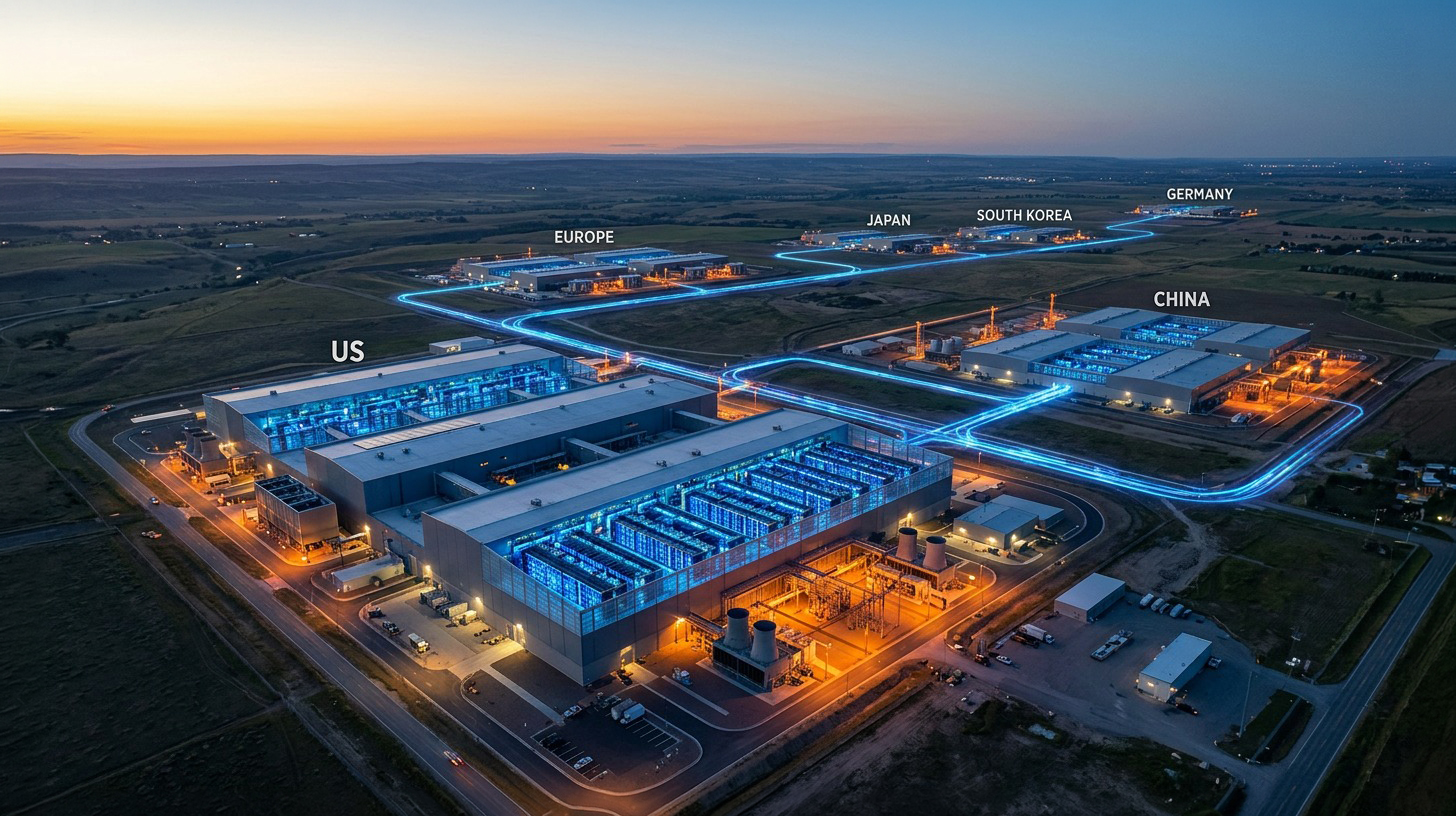
The order backlog is both a strength and a concentration risk
Oracle recently reported remaining performance commitments of approximately $664 billion. This backlog is a striking testament to the demand for cloud and AI capacity. Roughly half is expected to be converted into revenue within 36 months. At the same time, a significant portion of these long-term commitments stems from a few very large AI contracts, with OpenAI being a particularly prominent example.
A large order backlog is often interpreted as virtually guaranteed future revenue. This view is too simplistic. Performance commitments are not readily available cash, nor are they guaranteed profits. Before revenue is realized, Oracle must build data centers, install chips, provide power, and deliver the agreed-upon performance. Only then does the actual return on invested capital become apparent.
The key metric is therefore not just the volume of contracts, but their risk-adjusted net present value. This requires considering construction costs, financing, electricity and gas prices, capacity utilization, the technical lifespan of the chips, the depreciation of computing power prices, and the creditworthiness of customers. A contract spanning many years can be nominally enormous and yet deliver a disappointing return if the infrastructure becomes obsolete or more expensive than anticipated.
In addition, there is a classic counterparty risk. OpenAI is growing rapidly and is of high strategic importance, but it itself requires enormous funding. Oracle's investment program therefore depends in part on the ability of a single, capital-intensive customer to make very large payments over several years. The larger this customer's share becomes, the less the order backlog can be treated like a broadly diversified portfolio.
On the other hand, it would be wrong to write off the contracts solely because of the consolidation. The demand for AI computing power is real, the utilization of existing Oracle capacity is very high, and some of the hardware is pre-financed or directly provided by customers. This significantly reduces individual risks. The key uncertainty is not a complete lack of demand, but rather whether price, capital costs, and technical lifespan will together generate an adequate return.
Creditworthiness is approaching its limit
S&P Global Ratings downgraded Oracle from BBB to BBB- in July 2026. BBB- is the lowest rating in the investment-grade category and is only one notch above the speculative-grade category. The reasons given were increasing business risks, weaker free cash flow, and increased debt levels over several years. The rating agency expects negative free operating cash flow of approximately $42 billion for 2027.
A downgrade below investment grade would be more than a symbolic blemish. Some institutional investors are only permitted to hold limited amounts of high-yield bonds. A loss of investment-grade status could therefore trigger sales, increase interest expenses, and make refinancing further infrastructure more expensive. With an annual investment program of up to $95 billion, even moderate premiums could result in substantial absolute costs.
The critical mechanism is self-reinforcing. Higher investments initially worsen free cash flow and increase financing needs. Rising debt or weaker credit ratings then make new capital more expensive. Higher capital costs, in turn, reduce the present value of long-term cloud contracts. This increases the pressure to complete projects faster and achieve higher margins, even though this very time pressure can exacerbate approval and execution risks.
Oracle nevertheless possesses significant countervailing power. The company has an established, high-margin software business, growing cloud revenues, substantial upfront payments, and access to both debt and equity markets. In the first quarter of fiscal year 2027, Oracle placed shares worth approximately $20 billion. Such equity financing strengthens the balance sheet but dilutes existing shareholders and demonstrates that the expansion of AI cannot be financed solely from ongoing business operations.
The credit rating issue is therefore not a simple vote for success or failure. Oracle can experience strong operational growth while simultaneously becoming more financially risky. Revenue growth, negative free cash flows, and increasing debt can coexist for several years. The crucial factor is whether the newly constructed capacities translate into sustained high operating cash flow in a timely manner, before financing costs erode strategic profits.
The region does not automatically win
Proponents of Project Jupiter envision thousands of construction jobs, several hundred permanent positions, and a significant regional economic boost. During the construction phase, local businesses, tradespeople, logistics companies, hotels, and service providers stand to benefit considerably. For a structurally weak border region, such an investment stimulus is politically attractive.
However, the overall economic impact depends on the duration and quality of these effects. Construction jobs are numerous but temporary. The ongoing operation of modern data centers is highly automated and creates relatively few jobs compared to the capital invested. If specialized workers are recruited from abroad and large portions of the equipment are imported, the local multiplier effect is lower than the gross investment would suggest.
Tax incentives and public infrastructure must also be considered. An industrial revenue bond framework of up to $165 billion describes the maximum possible project size or financing structure and should not be equated with capital already invested. Such figures can easily create the impression of an immediate regional inflow of wealth, even though a significant portion is attributable to imported servers, chips, energy systems, and financing.
The question for the region, therefore, is one of net value: sustainable wages and tax revenues minus potential tax breaks, infrastructure costs, environmental impacts, and the opportunity costs of scarce resources. Water, land, and political administrative capacity allocated to a megaproject are no longer fully available for agriculture, housing, or other businesses.
A viable social contract would therefore need to include measurable returns. These include transparent water balances, clear emission limits, local training, robust emergency plans, infrastructure contributions, and verifiable employment targets. Without such mechanisms, there is a risk that profits and computing power will be used nationally or globally, while environmental and infrastructural burdens remain local.
Fuel cells will not solve the climate problem
Switching from turbines and continuously operating diesel generators to fuel cells can significantly reduce local air pollutants. Nitrogen oxide emissions, in particular, are expected to decrease considerably compared to the original concept. This is relevant for immediate air quality and is not merely a change of label from a technological standpoint.
From a climate policy perspective, however, the project remains fossil-fuel-based as long as the fuel cells are powered by natural gas. Carbon dioxide is produced during the conversion process; additionally, methane emissions can occur along the gas extraction and transport chain. Permit documents cite potential greenhouse gas emissions of more than ten million tons of carbon dioxide equivalent per year. Even if actual emissions remain below this figure, the scale illustrates the conflict between digital growth and climate goals.
The economic analysis must include potential future CO2 costs. Regulatory burdens that are low today can change over the lifespan of a data center. Stricter limits, CO2 prices, methane regulations, or customer and investor requirements could increase operating costs. Therefore, a facility with a long lifespan should be viable not only under current energy prices but also under a decarbonization scenario.
Renewable energy and battery storage could take over parts of the supply in the long term, but the combination of 24-hour load, several gigawatts of capacity, and high availability requirements is challenging. Simply purchasing renewable energy on balance is insufficient if the site physically requires power at all times. The most credible strategy would be a diversified system of renewable generation, storage, secure grid connections, and dispatchable reserves. In contrast, relying almost entirely on locally generated natural gas electricity concentrates price, supply, and regulatory risks.
The schedule is the key variable
Oracle officially maintains that Project Jupiter is on schedule. Thousands of people are working at the construction site, and building work can continue, in some cases, regardless of the pending permits for the energy facilities. Court-ordered halts to water and air permits have also been lifted, allowing the reviews to proceed.
Nevertheless, the claim of an unchanged timeline requires explanation. A building can be externally far advanced without being operational. In the case of an AI campus, energy supply, technical acceptance testing, networks, cooling, and server integration determine the commercial launch. Progress on foundations and halls does not automatically reduce the risk of the critical path.
Previous communications contained varying target dates, while more recent reports primarily cite 2028 as the key date. This shift may result from project phases, differing definitions of initial operation and full development, or revised plans. Therefore, it is crucial for investors to understand whether the date refers to the first usable megawatts, individual buildings, or the entire campus.
A modular ramp-up would be economically advantageous. If the first building sections with a secure energy supply can be put into operation earlier, they can generate revenue while the rest of the building is under construction. This reduces the all-or-nothing risk. However, this requires that the gas supply, fuel cells, cooling, and computing technology can also be approved and activated in a modular fashion.
Three realistic development paths
In the best-case scenario, pipeline and air permits are granted without significant delay, fuel cells are installed gradually, and initial capacity is brought online on schedule. Oracle's existing demand quickly absorbs the additional capacity. Customer prepayments and self-provided hardware limit the additional financing required. In this case, the force majeure notification would indeed be primarily precautionary, and the discount on the project loans could reverse.
In the medium scenario, legal challenges, route changes, and technical integration delay full commissioning by several quarters. Oracle uses its contractual rights to postpone higher lease payments but continues to cover development costs and debt service components. The campus launches modularly while parts of the financing are extended or adjusted. The project remains economically viable, but the return for equity and debt providers falls significantly short of initial expectations.
In the worst-case scenario, timely fuel deliveries fail, or the environmental permit is imposed with such stringent requirements that a fundamental redesign becomes necessary. In that case, the payment deferral could last for several years. Construction costs, interest, and technological obsolescence would increase, while already ordered hardware would depreciate in value. Lenders would have to accept further write-offs or provide new capital. Oracle could shift capacity to other locations, but costs already incurred in New Mexico could only be partially recovered.
A complete project cancellation is not currently the most likely scenario. This is supported by the advanced stage of construction, the significant capital already committed, the long-term contract, and the strategic importance of the capacity. A struggle over time, cost allocation, and a phased start of operations is more probable. This interim situation is particularly unfavorable for investors because it offers neither a clear guarantee of a loss nor an uninterrupted cash flow.
What Project Jupiter reveals about the AI boom
The project demonstrates that the next phase of artificial intelligence will be determined less by algorithms than by industrial implementation. While advances in modeling remain important, their commercial scaling depends on the construction industry, energy policy, raw materials, networks, and financing. The AI industry is thus structurally converging with sectors such as energy, telecommunications, and heavy industry.
This necessitates a reassessment of competitive advantages. It's no longer just about having the best model or the most powerful chip. Success will also depend on finding locations with secure energy supply, obtaining permits early, building local acceptance, and being able to provide capital over long periods at manageable costs. Project development is becoming a core competency for cloud providers.
The second lesson concerns the supposed limitlessness of digital markets. Computing power appears virtual, but is generated in physical facilities. Every additional training unit requires semiconductors, electricity, cooling, space, and network infrastructure. The larger the models become, the more visible these material limitations become. As a result, the costs of AI are increasingly determined by local bottlenecks and political decisions.
The third lesson is financial in nature. Long-term contracts can justify large investments, but they don't eliminate risk. They shift it to the customer's creditworthiness, technical fulfillment, and scheduling. An order backlog of hundreds of billions of dollars is only valuable if the necessary facilities can be built and operated at a cost that, after financing expenses, yields a reasonable return.
Between strategic courage and balance sheet overextension
Oracle's approach cannot be convincingly described as mere megalomania or a risk-free future coup. The company is responding to exceptional demand and attempting to fundamentally improve its position in the cloud market. Those who invest too cautiously during a period of limited capacity risk missing out on a historic market transition. Long-term contracts and customer prepayments give Oracle a stronger foundation than a purely speculative developer without guaranteed customers.
At the same time, the financial safety margin is small. Negative free cash flows, rapidly increasing investments, high debt, and a rating just above speculative grade limit the margin for error. Project Jupiter doesn't have to fail to cause economic damage. Even a significant delay can reduce returns, increase financing costs, and tie up management resources.
The force majeure announcement is therefore primarily a signal regarding the distribution of power within the project. Oracle is trying to avoid bearing the risk of delayed infrastructure delivery alone. Blue Owl and the lenders, in turn, point to ongoing obligations. Behind the legal language lies a classic economic conflict: Who pays for the time in which billions have been invested but are not yet producing marketable computing power?
The objective perspective is therefore this: Project Jupiter remains strategically plausible, but is financially and infrastructurally fragile under current conditions. Demand for AI performance can sustain the project, but demand alone does not generate gas pipelines, water rights, or approved power plant capacity. Success depends on whether Oracle can master the physical reality faster than capital costs and delays erode the expected value of the contracts.
The decisive test points
In the coming months, verifiable progress, rather than general commitments to the project, will be crucial. This includes legally compliant pipeline routing, progress in the air permitting process, transparent data on water withdrawals, the installation and testing of the fuel cells, and a clearly defined date for the first commercially usable capacity.
On the financial side, the market price of the project loans, Oracle's free cash flow, debt development, and further rating decisions are particularly informative. Equally important is the actual conversion of the order backlog into revenue. If revenue increases quickly enough while net cash requirements decrease, this would demonstrate that the capital-intensive transition phase remains manageable.
It is also worth observing how much OpenAI and other customers continue to pre-finance investments or provide their own hardware. This structure can significantly reduce Oracle's capital requirements. However, it increases the importance of contractual details and on-time delivery. The more customers upfront the investment, the less leeway there is for prolonged delays without commercial consequences.
Project Jupiter is therefore an early indicator of the viability of the entire AI infrastructure cycle. If a campus of this size can be profitably launched despite local bottlenecks, political resistance, and high financing costs, this will confirm the industrial scalability of current AI strategies. Conversely, if the project remains in a costly interim phase for years, it would be a warning sign that the financial promises of AI have grown faster than the physical infrastructure it is meant to fulfill.
🎯🎯🎯 Data-driven B2B industry hub as a quasi-in-house solution

The quasi-in-house solution: How Xpert.Digital closes operational gaps in B2B marketing and sales – Smart Content-Driven Business - Image: Xpert.Digital
Xpert.Digital is a data-driven B2B industry hub led by Konrad Wolfenstein . The company acts as an external, quasi-in-house solution for industrial partners, closing operational gaps in marketing, content, and sales – without requiring additional resources on the client side.
More information here:
Your global marketing and business development partner
☑️ Our business language is English or German
☑️ NEW: Correspondence in your native language!

Konrad Wolfenstein
I and my team are happy to be available to you as your personal advisor.
You can contact me by filling out the contact form here [email protected]:or simply call me at +49 7348 4088 965. My email address is
I'm looking forward to our joint project.









