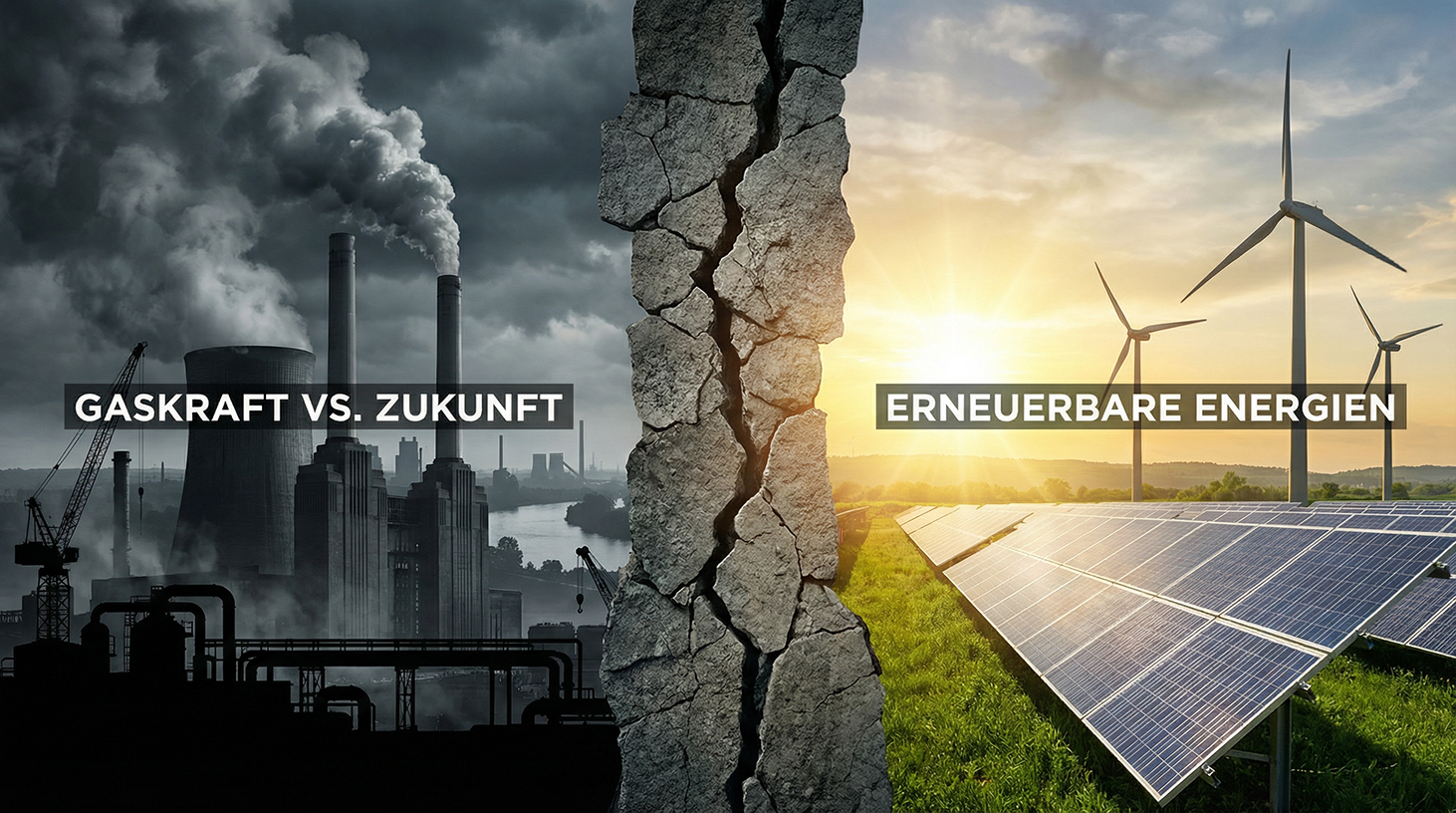
Katherina Reiche's energy policy: A minister who confuses the problem with the solution – Image: Xpert.Digital
Not too much green electricity, but too little grid: The big mistake of the new Minister of Economic Affairs
### Gas-fired power plants instead of storage: Is Reiche's fossil fuel regression costing us the energy transition? ### The myth of expensive renewables: The true costs of our electricity supply ### Stop the self-deception: How Minister Reiche is confusing the problem with the solution ###
False figures, fatal consequences? What's really behind the minister's energy master plan?
The 85 billion trap: Why Katherina Reiche's energy policy is leading in the wrong direction
In her widely discussed guest article for the Frankfurter Allgemeine Zeitung (FAZ), the new Federal Minister for Economic Affairs and Energy, Katherina Reiche, appears to deliver a scathing critique of the energy transition to date. Her central argument: the one-sided expansion of renewable energies is driving system costs to unaffordable levels and threatens to ruin Germany's economic competitiveness. However, a closer look at the figures reveals a dangerous imbalance in this argument. Instead of addressing the true causes of curtailments and negative electricity prices—such as lagging grid expansion, a stagnant storage market, and billions in fossil fuel subsidies—Reiche uses her institutional background in the gas industry to justify a fossil fuel rollback. This article subjects the minister's narrative to a comprehensive fact check. It demonstrates in detail why Germany doesn't have a generation problem, but rather a massive integration problem—and why the planned construction of new gas-fired power plants could plunge the country into expensive and geopolitically high-risk dependencies for decades to come.
Who is Katherina Reiche – and why is her perspective crucial?
Katherina Reiche, born in Luckenwalde in 1973, has served as Federal Minister for Economic Affairs and Energy in Friedrich Merz's cabinet since May 6, 2025. Her career combines political and industrial experience in a way that is formative for her understanding of her role: 18 years as a member of the Bundestag for the CDU, at times serving as deputy parliamentary group leader, then as Parliamentary State Secretary in the Federal Ministry for the Environment and the Federal Ministry of Transport. After 2015, she moved into the private sector, taking over as Managing Director of the Association of Municipal Enterprises (VKU) and, from 2020, as CEO of Westenergie AG, an E.ON subsidiary that operates electricity, gas, and water networks in North Rhine-Westphalia, Rhineland-Palatinate, and Lower Saxony.
This industrial background is not a minor detail, but rather the key to understanding her fundamental energy policy stance. Anyone who has spent five years at the helm of an integrated network operator and gas supplier inevitably brings an institutional perspective: security of supply as the guiding principle, conventional reserve capacities as an anchor of stability, and system costs as the central evaluation criterion. This stance is directly reflected in Reiche's political course – and thus also in her much-cited guest article for the Frankfurter Allgemeine Zeitung.
Critics, including the Greens and renewable energy industry associations, accuse her of sabotaging the energy transition and shaping it in favor of large fossil fuel corporations. The accusation of lobbying is circulating. Whether it's true is a matter of interpretation. What can be objectively examined, however, is whether her diagnosis of German energy policy holds up to empirical reality.
Related to this:


The FAZ narrative: System costs as a trump card
At the heart of Reiche's guest article in the FAZ is an argument that seems convincing at first glance: the energy transition has been too one-sidedly focused on the expansion of renewable energies; the system costs – the EEG surcharge, capacity reserves, grid reserves, redispatch costs – have been ignored and now amount to around 36 billion euros per year, or about 430 euros per citizen. She states: an energy transition that ignores system costs will ruin the country it claims to save.
This formulation is rhetorically effective, but analytically incomplete. The cost problem is identified with the necessary clarity, but the causal attribution is misleading: it is not the expansion of renewable energies that causes the system costs, but rather the imbalance between generation expansion and system integration. The decisive factor – inadequate grid infrastructure, a lack of flexibility mechanisms, and stagnant storage expansion – appears in Reiche's analysis only as a marginal note, if at all. Instead, the narrative serves a political narrative that portrays the expansion of renewable energies itself as the real problem.
The FAZ analysis by Cleanthinking editor-in-chief Martin Jendrischik gets to the heart of this imbalance: Reich only ever cites concrete figures regarding the costs of renewable energies, but never the costs of fossil fuel imports, which amount to around 80 billion euros per year, or the fossil fuel subsidies, which the German Federal Environment Agency estimates at at least 65 billion euros annually. This selective accounting is the real problem with the guest article: The calculation is only presented on one side.
The integration problem, which is sold as a generation problem
The crucial analytical flaw in Reiche's narrative lies in a categorical conflation: an integration problem is framed as a generation problem. In 2024, Germany installed approximately 16.7 to 17 gigawatts of new photovoltaic capacity – more than ever before in a single year. The total capacity of all installed solar power plants exceeded 100 gigawatts for the first time at the turn of the year 2024/25. In 2025, a further 16.4 gigawatts of solar capacity and 4.6 gigawatts of onshore wind power were added.
This expansion pace is encountering a grid and flexibility system that is structurally lagging behind. In 2024, German electricity exchanges recorded a total of 457 to 459 hours with negative wholesale prices – compared to 301 hours in 2023. These figures do not prove that too much renewable energy is being fed into the system. Rather, they demonstrate that there is insufficient infrastructure to react to price signals. Each of these negative hourly oversupply situations is a symptom of a lack of system integration, not proof of an excess of wind and solar power.
The picture becomes even clearer with the smart meter rollout. Although the Federal Network Agency reports that the legally required quota of 20 percent of mandatory installations was just barely reached by the end of 2025, only 3.8 percent of German households and businesses are equipped with smart metering systems, measured across all metering locations. In comparison, 63 percent of EU electricity customers already had a smart meter by the end of 2024. Germany is therefore digitizing its electricity grid at a speed that lags far behind what would be necessary for efficient system flexibility.
While dynamic electricity tariffs have been mandatory for all energy suppliers since the beginning of 2025, actual market penetration remains limited. At the end of 2024, only about seven percent of households were using flexible tariff models. The potential for genuine load shifting via price signals thus remains largely untapped. Controllable load devices eligible under Section 14a – heat pumps, electric vehicles, large appliances – exist in regulation, but are hardly used in practice. The result: surpluses that would be absorbed by consumers in a flexible system are met by rigid demand structures.
Curtailment costs: A grid problem, not a generation problem
The debate surrounding the costs of curtailment and grid congestion management is particularly revealing. Reiche has suggested in various contexts that curtailing renewable energy costs up to three billion euros per year – a figure that Jendrischik considers simply wrong. The actual data bears him out: The Federal Network Agency reports total grid congestion management costs of around 2.78 billion euros for 2024, a decrease compared to 3.34 billion euros in 2023. Of this, 554 million euros were direct compensation payments to operators of curtailed wind and solar power plants. The lion's share of system costs does not arise from renewable energy, but from redispatching with conventional power plants, which must be deployed in a counter-current manner to protect transmission line sections from overload.
Curtailment of photovoltaic (PV) power generation increased by 97 percent in 2024 compared to the previous year, reaching 1,389 gigawatt-hours. This sounds alarming, but statistically it is a direct consequence of the record expansion and unusually high solar irradiance in the summer of 2024. 96.5 percent of total renewable electricity generation could still be fed into the grid. Overall, curtailments accounted for 3.5 percent of total renewable electricity generation. This is a real efficiency problem, but one that can and must be solved through grid expansion, storage expansion, and increased flexibility, not by slowing down expansion.
In the third quarter of 2025, grid congestion management costs rose slightly again to €667 million (Q3 2024: €608 million). Curtailment of onshore wind turbines was 46 percent higher than in the same quarter of the previous year. These figures clearly illustrate the real challenge: not to build fewer renewable energy sources, but to adapt the system more quickly.
Fossil fuel dependency: The costs the rich don't mention
The structural bias in Reiche's cost analysis becomes particularly evident when one adds the figures for fossil fuel dependency. In 2024, Germany imported fossil fuels worth approximately €76 billion – €5 billion less than the average for the years since 2008, but still an enormous annual outflow of purchasing power abroad. Broken down by energy source, €51 billion alone was attributable to crude oil, €19 billion to natural gas, and €5 billion to hard coal. The import share for natural gas is 95 percent, for crude oil 98 percent, and for hard coal 100 percent.
The German Federal Environment Agency estimates environmentally harmful subsidies in Germany – primarily tax breaks and tax breaks for fossil fuels – at at least €65.4 billion per year, and that figure was for 2018; more recent estimates suggest even higher amounts. According to the Forum for Ecological and Social Market Economy, fossil fuel subsidies totaling around €85 billion were granted in 2023, including crisis-related special measures. The contrast is striking: anyone who puts the system costs of the energy transition at €36 billion per year while simultaneously omitting €65 to €85 billion in fossil fuel subsidies per year is engaging in selective accounting, not economic analysis.
Added to this are the macroeconomic costs of fossil fuel import dependency, which only become fully apparent in times of crisis. In 2022, after the start of Russia's war of aggression against Ukraine, German spending on fossil fuel imports rose to between 137 and 146 billion euros – an amount that destabilized the economy in a way that far exceeded the costs of an accelerated energy transition. The current energy crisis, which Reiche himself describes as one of the most serious in history, is a consequence of precisely that fossil fuel dependency that her political course perpetuates.
Gas-fired power plants instead of system integration: A fossil fuel lock-in for decades to come
The most serious objection to Reiche's energy policy strategy does not concern individual measures, but rather its fundamental direction: Building at least 20 gigawatts of new gas-fired power plant capacity by 2030, initially without a mandatory hydrogen conversion requirement, creates infrastructure with a lifespan of 30 to 40 years. These power plants will be online when Germany aims to be climate-neutral, as stipulated in its own climate protection target. Anyone building fossil gas infrastructure today without prescribing binding and short-term decarbonization pathways is creating a lock-in effect for energy supply that systematically delays the transformation.
This objection is not only coming from environmental groups. The EU Commission has put up considerable resistance to Reiche's original plans for 20 gigawatts and initially only intended to approve up to 8,000 megawatts of gas-fired power – with the stipulation that these plants be hydrogen-ready from the outset and decarbonized by 2045 at the latest. Even with this reduced version, energy experts, including Claudia Kemfert from the DIW (German Institute for Economic Research), warn that the risk of renewed fossil fuel lock-in remains unless massive investments are simultaneously made in storage and flexibility.
The energy expert is right. The structural problem isn't that Germany needs reserve capacity for periods of low wind and solar output – it does indeed need that. The problem lies in the fact that gas-fired power plants are being built as a solution for a system that could and should look fundamentally different: with battery storage, power-to-X technologies, demand-response systems, and a European integrated grid that intelligently distributes peak production.
Our EU and German expertise in business development, sales and marketing


Our EU and German expertise in business development, sales and marketing - Image: Xpert.Digital
Industry focus areas: B2B, digitalization (from AI to XR), mechanical engineering, logistics, renewable energies and industry
More information here:
A thematic hub offering insights and expertise:
- Knowledge platform covering global and regional economies, innovation and industry-specific trends
- A collection of analyses, insights, and background information from our key areas of focus
- A place for expertise and information on current developments in business and technology
- A hub for companies seeking information on markets, digitalization, and industry innovations
Why grid expansion and storage are now more important than new gas-fired power plants
Battery storage: The underestimated heart of system integration
The logic behind the demand for more storage instead of more gas-fired power plants is clear from an industrial economic perspective. Battery storage secures supply, stabilizes grids, and creates controllable capacity without dependence on fossil fuels. In Germany, around 2.4 million stationary battery storage systems with a total capacity of over 25 gigawatt-hours will be in operation by the end of 2025. This capacity has increased fivefold within five years. In 2025 alone, almost 600,000 new storage systems with a capacity of 6.5 gigawatt-hours were commissioned.
That sounds impressive – and demonstrates the sector's growth momentum. At the same time, a look at the absolute figures makes the extent of the pent-up demand clear: 25 gigawatt-hours of total capacity is sufficient to store the average daily electricity consumption of over three million two-person households. Germany consumes approximately 1,420 gigawatt-hours of electricity daily. The German Solar Association (BSW) has calculated that the annual expansion of battery storage capacity would have to more than double to efficiently transition the electricity supply to renewable energies. Studies predict a required increase in storage capacity to 104 gigawatt-hours by 2030 and 178 gigawatt-hours by 2040.
Large-scale storage systems are showing particularly promising growth: A study from January 2024 predicts that the capacity of large-scale battery storage systems in Germany could increase to 57 gigawatt-hours with a total output of 15 gigawatts by 2030, provided the regulatory framework supports it. This is precisely where a key lever lies: not hindering generation, but rather accelerating storage through smart regulation and targeted investment incentives.
From an industrial perspective, the argument for energy storage is not an ideological position, but a matter of economic sense. A company that simultaneously suffers from volatile gas prices and watches as the cheapest solar power is curtailed loses twice over: in price stability and in competitiveness. Storage systems that can also utilize surplus energy for process heat are an active tool for reducing risks in energy procurement – and thus directly relevant to the long-term viability of industrial sites in Europe.
Related to this:


Grid expansion: The real bottleneck of the energy transition
The bottleneck in the German energy system lies not in generation, but in the transmission infrastructure. While onshore wind power capacity increased by 4.6 gigawatts in 2025 – almost twice as much as in 2024 – and Germany made progress in grid expansion with around 2,000 kilometers of approved lines, achieving the legally mandated target of 115 gigawatts of installed wind power capacity by 2030 would require an average annual increase of 9.4 gigawatts – more than double the current level. The Renewable Energy Sources Act already stipulates an installed wind power capacity of 84 gigawatts for 2026; the actual installed capacity at the end of 2025 was around 68 gigawatts.
This backlog in grid expansion largely explains why curtailments occur and why negative electricity prices are increasing: The generated energy cannot reach consumers. Reiche herself, in more recent statements following her FAZ article, has indicated that wind energy should receive an additional boost of up to twelve gigawatts by 2030, emphasizing that the expansion must be system-friendly. This rhetoric is welcome, but it contradicts the simultaneous practice of cutting feed-in tariffs for photovoltaics and prioritizing the expansion of gas-fired power plants.
The real message to investors and grid planners should be: grid expansion and renewable energy generation must be synchronized, not treated sequentially. As long as the grid lags behind, costs will accrue – not as a result of too many renewables, but as a result of insufficient system coordination. A strategically coherent approach would parallel grid planning and expansion targets right from the planning stage, instead of adapting the expansion of renewable energies to the inertia of the infrastructure.
Related to this:
Electricity prices and competitiveness: A more complex picture
Reiche has defined lowering electricity prices as a central economic policy goal – and in doing so, struck a chord with German industry. The industrial electricity price in Germany was around 18.75 cents per kilowatt-hour in 2025 (including electricity tax). In international comparison, prices for large industrial customers in the USA, France, and China are significantly lower, at 6 to 9 cents per kilowatt-hour. France's favorable nuclear energy prices and government-capped tariffs for industrial customers mean structurally lower energy costs for energy-intensive industries.
This competitive pressure is real and must be taken seriously by policymakers. The German government plans to introduce a state-subsidized industrial electricity price for 91 sectors of the economy starting in 2026 – a short-term relief measure that, however, does not solve the structural problem. In the long term, as several independent analysts and associations have unanimously concluded, only a massive expansion of domestic renewable energies can permanently lower electricity prices in Germany, because it reduces import dependence on natural gas and thus the most volatile and expensive factor influencing electricity prices. An accelerated expansion of wind and solar power is therefore not only climate policy, but also the most efficient form of industrial policy to secure Germany's industrial base.
Furthermore, dynamic electricity tariffs can already be an effective tool today: The Federal Network Agency has modeled that dynamic tariffs have consistently been lower than fixed-price tariffs since April 2025 – even without changes in consumer behavior or load shifting. The difference arises during hours of high renewable energy feed-in, when spot market prices fall. For industrial companies with flexible production processes, this already offers considerable savings potential – provided the necessary technical infrastructure, in the form of smart meters and controllable consumption devices, is in place.
The feedback effect: Fossil fuel expansion prevents system integration
The strategic depth of the Reiche debate lies in the feedback effect of fossil fuel energy policy on system integration. If government investments and political priorities are focused on gas-fired power plants, financial and regulatory capacity for storage expansion, smart grid infrastructure, and increased flexibility will be lacking. This crowding-out effect is not trivial: Every euro that flows into reserve power plants using fossil fuel technology is a euro missing from the investments that would make the system permanently cheaper, more resilient, and more independent.
The economic calculation is straightforward: Solar energy combined with battery storage currently offers the lowest levelized cost of electricity (LCOE) among all generation technologies. The International Energy Agency (IEA) has repeatedly confirmed that new solar and wind projects are cheaper than new fossil fuel or nuclear power plants in most countries. The structural argument for expanding renewable energies is therefore no longer primarily ecological, but economic: It is the most cost-effective generation option – provided the system has the necessary flexibility to absorb fluctuations.
Cleanthinking editor Jendrischik aptly formulates the core objection: Reich is torpedoing the citizen-led energy transition and everything that should be described as systemic flexibility. Market participants assure us that secure power can also be provided via virtual power plants – but they are not given a market opportunity under current government policy. The potential for combining wind and solar power plants – which rarely reach their maximum output simultaneously – and the associated savings in grid construction at all levels remain systematically untapped.
Related to this:
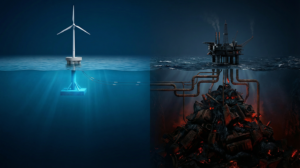
Geopolitical dimension: New dependencies instead of genuine diversification
Another aspect of Reiche's energy policy deserves critical examination: his strategy for gas supply security. Amid a crisis created by fossil fuel import dependency, Reiche is pursuing long-term gas supply contracts with the USA, Canada, Angola, and Mexico. The goal is diversification – the effect, however, is a shift in dependency: instead of Russia, now other fossil fuel exporters with their own geopolitical interests and risks.
The difference between true energy sovereignty and strategic diversification lies precisely at this point: True sovereignty arises from domestic renewable energy generation that does not need to be imported and whose pricing is not influenced by exporting countries. Diversifying fossil fuel imports reduces risk—but it is not a structural solution. The geopolitical reassurance value of renewable energies, which became evident in the war of aggression against Ukraine in a way that is measurable from an economic perspective, is systematically not considered in Reiche's cost calculation.
The argument for renewable energies is not just ecological and not just economic – it is geostrategic. Energy produced domestically is not subject to the risk of sanctions, export bans, or arbitrary price controls by a third-party state. In a world where energy supply is increasingly used as an instrument of geopolitical influence, energy autonomy is a form of security policy. This aspect is completely missing from Reiche's FAZ article.
What a sustainable energy policy should achieve
Criticism of Reiche's approach does not imply a demand for blindly accelerating the expansion of renewable energies without regard for system costs. Rather, a strategically coherent energy policy would have to address three dimensions simultaneously:
First, renewable energies must continue to be expanded rapidly. Not because climate protection targets require it – although that is a legitimate argument – but because renewable energy is currently the cheapest generation option and frees Germany from €76 billion in fossil fuel imports per year. Germany increased the share of renewable energies in its gross electricity consumption to 55.1 percent by 2025. This is a foundation that should not be jeopardized by political shifts.
Secondly, grid expansion and system integration must be treated with the same urgency as the expansion of renewable energy itself. This means significantly faster planning and construction of transmission lines, consistent responsibility for grid operators in active congestion management, and storage as system-serving infrastructure, not as a private-sector ancillary product. The €3.1 billion in grid congestion management costs per year are not an unavoidable law of nature – they are the result of politically imposed investment backlogs.
Third, flexibility mechanisms must be consistently scaled. Smart meters are not a technical detail – they are the heart of an intelligent, price-signal-responsive energy system. A market penetration of 3.8 percent in 2025, while the EU average is 63 percent, is unacceptable for a country that wants to lead the energy transition. Dynamic tariffs must move from niche offerings to market standards, the potential of Section 14a must be consistently utilized, and industrial flexibility must be actively integrated into the electricity market.
The actual self-deception
Katherina Reiche published her guest article in the FAZ entitled "Enough with the self-deception in energy policy." The title is apt—but not in the way she intends. The real self-deception lies in treating an integration problem as a generation problem, accounting for a system cost problem without considering its fossil fuel counterpart, and confusing the strategic solution—storage, flexibility, grid expansion—with the root cause of the crisis—fossil fuel dependency, import costs, lock-in effects.
Germany's energy policy is at a true crossroads. Deciding which path to take at this crossroads requires honest figures on both sides of the cost balance, a clear analysis of the causal relationships, and the courage to prioritize systemic solutions over short-term symptom treatments. An economics minister with expertise in the grid and gas sectors possesses the ability to understand system costs. What is lacking is the political will to draw the right conclusions from this expertise: not to slow down generation, but to accelerate system capacity; not to create new fossil fuel dependencies, but to overcome existing ones; not to manage symptoms, but to transform structures.
From an economic point of view, this is not ideology – it is rational action under uncertainty, with a focus on long-term costs and risks instead of short-term system optimization at the expense of future generations.