

Published on: June 12, 2025 / update from: June 12, 2025 - Author: Konrad Wolfenstein
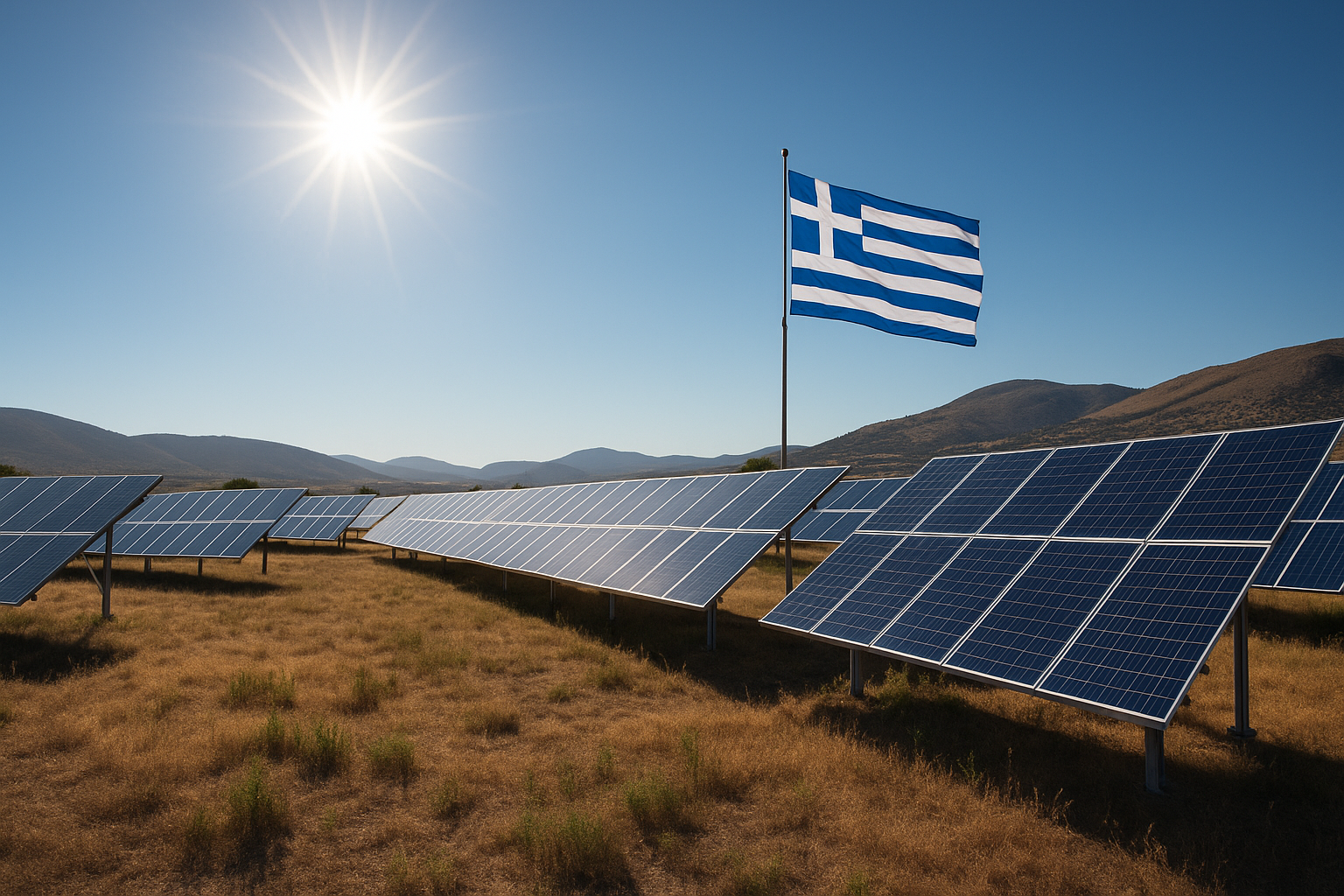
Greece's solar crisis with PV systems: When the sunshine becomes a problem-picture: xpert.digital
Greece's solar power dilemma: if too much sunshine becomes a problem
The paradox of the solar boom
Greece is currently experiencing a remarkable paradox: the country has expanded its solar power capacities to almost 10 gigawatts in just a few years, with 2.5 gigawatts in the past year alone. But this unprecedented success in the energy transition now leads to unexpected problems. While other countries are fighting for every sunshine, Greece has to switch off its solar systems when the sun shines the most.
The Greek transmission system operator was repeatedly forced to switch off thousands of medium -sized systems in May 2024 - an emergency measure against overloading the power grid. These drastic measures illustrate the fundamental problem: the rapid expansion of photovoltaics was made without appropriate investments in storage capacity and network infrastructure.
Concrete effects of overproduction
Easter 2024 as a warning signal
The Greek Orthodox Easter in May 2024. When hundreds of thousands of Athens left the capital in order to spend the festival on the islands and in its origin villages, this led to an “alarm in the electricity plants”. The excess electricity could not be fully consumed, exported or saved, which led to massive shutdowns.
Dramatic figures for waste of energy
The dimensions of the problem make it clear through concrete numbers: Already in 2024, 860 gigawatt hours had to be settled - this corresponds to 3.3% of the total renewable electricity generation in the same period and is more than a doubling compared to 2023. For 2025, this value is expected to increase to 1.2 to 1.5 TWh.
In April 2024, the range of electricity exceeded the demand for 17 days, which made negative electricity prices to normal. The Greek transmission system operator even had to stop electricity imports from Italy, Albania, Northern Macedonia and Turkey from May 3 to 7 in order to ensure the safe operation of the Greek power grid.
Structural causes of the crisis
Uncoordinated expansion
The core problem lies in the imbalance between production and infrastructure. More and more photovoltaic projects have been approved for years, but at the same time the expansion of power storage and network capacities stalled. In the meantime, the country produces more solar power than can accommodate or forward at peak times.
Network capacity problems
Almost a quarter of the high/medium-voltage transformers of the Greek power grid operator has significant capacity problems. Of 453 transformers, 29 have reached their thermal limit, 82 have exhausted their short -circuit capacity, and 5 transformers are overloaded in both categories.
Missing storage capacities
The total capacity of the renewable energies in operation is already 15 GW, while the capacity of the existing electricity transmission system is estimated at only 28 to 30 GW. The necessary memory projects have not yet been completed, although Greece wants to install storage systems with a total output of around 8 gigawatts by 2030.
Government measures and solutions
Revolutionary tariff change
As a radical answer to the overproduction, the Greek Environment and Energy Ministry plans an unprecedented measure: the cheaper night current tariff should be offered during the day between 11 a.m. and 4 p.m. This reversal of the traditional tariff structure is intended to reconcile the range of electricity and demand.
Promotion of intelligent household appliances
The ministry also is considering a subsidy program for intelligent household appliances. As a result, consumers should be able to switch on smart washing and dishwasher from work from work via the app during the day and thus can use the cheaper tariff.
Battery storage offensive
With the publication of its new regulation on March 13, 2025, Greece created a clear framework for the integration of battery storage systems. A total of 4.7 GW is released in storage capacity - a clear signal for the strategic importance of energy storage. With a conservative estimate of € 200/kWh, this corresponds to a market volume of around 1.9 billion euros.
European energy transition reaches limits: the Greek solar problem
European phenomenon
The Greek problem is not an isolated case. Even in the Netherlands, citizens are already testing opportunities to avoid network overload through targeted switching off of solar panels. As part of a pilot project, customers temporarily switched off their solar panels on sunny days against payment, causing the load on the power grid to fall by up to 57 percent.
Long -term goals despite current problems
Despite the current difficulties, Greece sticks to its ambitious goals. From today, the country wants to grow 46 percent to 80 percent renewable energies by 2030. Up to the targeted time, 28.7 gigawatts of renewable energies are to be installed - almost a tripling of the current performance.
Economic importance
The sector of renewable energies has become the most spectacular development that the Greek economy has recorded in recent years. The estimated investments of the past five years amount to 9.5 billion euros, which underlines the economic importance of this transformation.
Lessons from the Greek solar crisis
The Greek solar crisis illustrates a fundamental problem of the global energy transition: The quick expansion of renewable energies must be associated with the parallel structure of storage capacity and network infrastructure from the start. Greece's experiences show that even too much green electricity can lead to serious problems if the system integration is neglected.
At the same time, the country demonstrates with its innovative solutions - from the reversal of the tariff structure to massive investment in battery storage - that the challenges can be solved. The Greek solar crisis could thus become a model case for other countries that want to avoid similar problems in their energy transition.
Novel photovoltaic solution for reducing costs and saving time

Novel photovoltaic solution for reducing costs and saving time: Xpert.digital
More about it here:
Your partner for business development in the field of photovoltaics and construction
From industrial roof PV to solar parks to larger solar parking spaces
☑️ Our business language is English or German
☑️ NEW: Correspondence in your national language!

Konrad Wolfenstein
I would be happy to serve you and my team as a personal advisor.
You can contact me by filling out the contact form or simply call me on +49 7348 4088 965 (Munich) . My email address is: wolfenstein ∂ xpert.digital
I'm looking forward to our joint project.


