
US Midterms: Is Texas pulling the plug? Political headwinds for AI data centers are growing
Xpert Pre-Release

Available in 27 languages 📢
Prefer Xpert.Digital on GoogleⓘPublished on: November 4, 2026 / Updated on: November 4, 2026 – Author: Konrad Wolfenstein
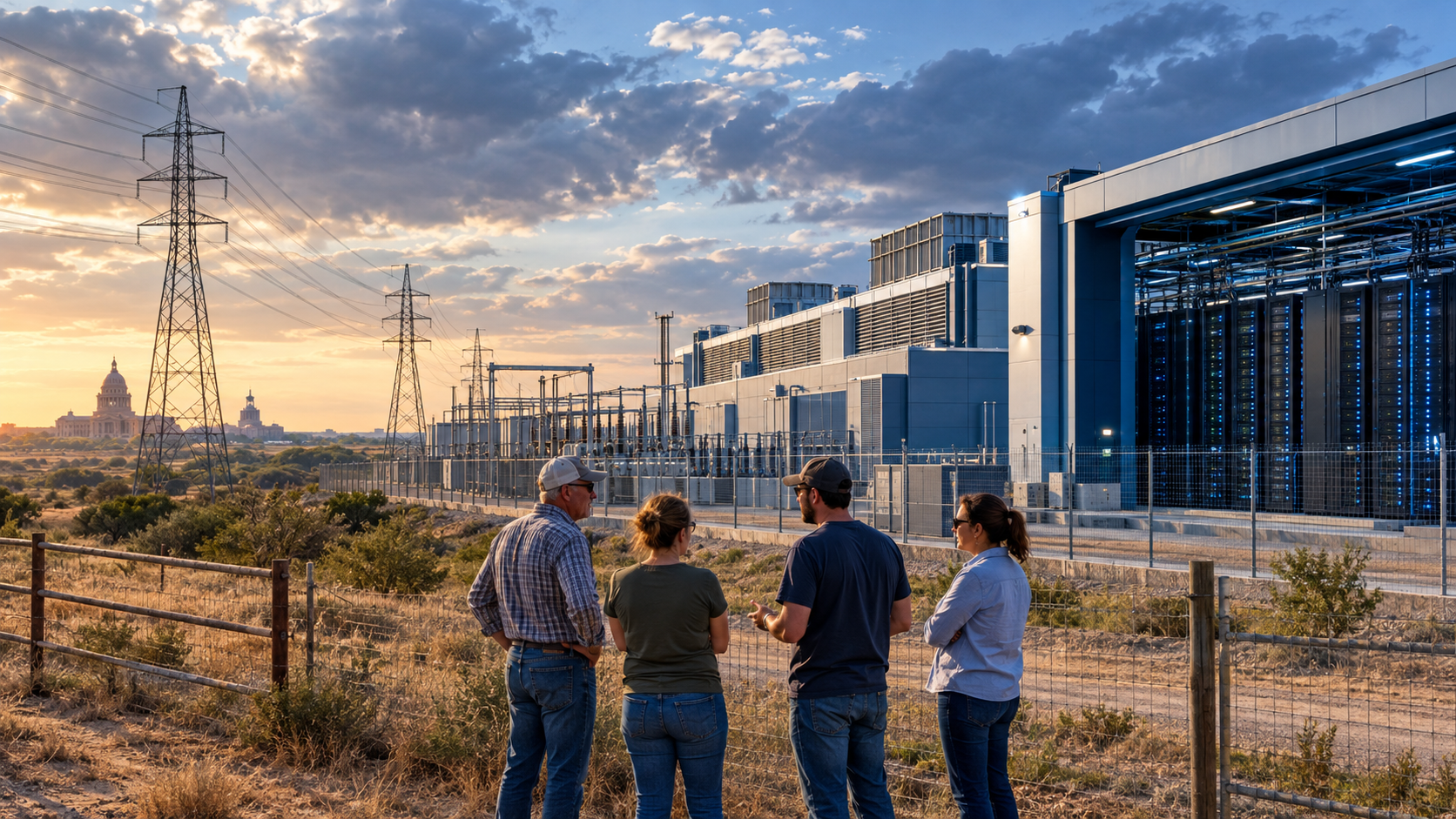
US Midterms: Is Texas pulling the plug? Political headwinds for AI data centers are growing – creative image on the topic, featuring AI: Xpert.Digital
Musk is losing political support: Billions for AI expansion – but public approval is dwindling
AI data centers need more than capital: The fight for electricity and water begins
AI boom under pressure: Why data centers became an election issue – What this means for the expansion of AI
The expansion of artificial intelligence was long considered primarily a question of capital, chips, and computing power. But with every new data center, the need for electricity, water, and suitable land also grows—and with it, political resistance. The US midterm elections demonstrated that public concerns are increasingly influencing the conditions under which the technology sector can grow. The political shift in Texas, in particular, makes this clear: even in a traditionally business-friendly environment, large infrastructure projects cannot be pushed through solely with investment sums and promises of the future.
For Elon Musk, the election result is both a personal and strategic defeat. Despite significant political expenditures, Republican candidates in Texas failed to win key races. While this doesn't mean the American AI boom is over, companies will need to better explain who will bear the costs of its expansion, what benefits communities will derive, and how conflicts over scarce resources can be avoided. The next phase of the AI boom will therefore be decided not only in laboratories and boardrooms, but also on the ground – at the level of power grids, water sources, and the question of whether the local population will support new data centers.
Note: The original text is written entirely in German spelling with "ß". I have not independently verified factual information, names, numbers, or political claims.
The AI industry is losing its political carte blanche
Billions are buying computing power – but not approval
The Republican defeat in the US midterm elections is changing the political landscape for an industry that has previously viewed its expansion primarily as a matter of capital, chips, and speed. With Democratic majorities in the House of Representatives and the Senate, as well as the change of power in the Texas governorship, pressure is mounting to link the construction of data centers more closely to the interests of the population. Gina Hinojosa's victory in Texas, in particular, demonstrates that criticism of AI infrastructure can have political impact even in regions where economic expansion and entrepreneurial freedom have traditionally been highly valued.
For Elon Musk, the result is a personal and strategic defeat. His disclosed political contributions totaled approximately $474 million during the election cycle. A significant portion was intended to support Republican candidates in Texas. Nevertheless, Republicans lost both the governorship and the contested Senate seat there. Money provides political access, organizational clout, and public attention. However, it does not guarantee that voters will accept the associated economic priorities.
The economic significance of this election extends beyond individual companies. The debate concerns the conditions under which a new key digital industry may access power grids, water resources, land, and public infrastructure. The crucial question is no longer solely how quickly additional computing power can be created. Increasingly, it is about who finances the necessary infrastructure, who benefits from it, and who bears the burden.
The election result therefore does not automatically mean the end of the American AI boom. However, it does make a business model more politically vulnerable that sometimes equates private investment with overall economic progress while only incompletely considering local costs and risks. The more likely development is not a widespread construction freeze, but rather a more intense conflict over the distribution of the material foundations of artificial intelligence.
Texas shows where the previous growth promise reaches its limits
The political shift in Texas carries particular symbolic weight. Gina Hinojosa defeated the Republican incumbent Greg Abbott and will be the state's first Democratic governor in more than three decades. At the same time, Democrat James Talarico won the Senate race against Ken Paxton. With this, voters have changed the political leadership of a state that plays a pivotal role in Musk's business interests and the American technology industry.
Hinojosa had explicitly made the expansion of AI data centers a campaign issue. Her campaign focused on concerns about dwindling water resources, the loss of agricultural land, and whether the local population was sufficiently involved in site selection decisions. She criticized a development in which exceptionally wealthy companies were pushing through large projects, while residents feared potential consequences for electricity prices, the landscape, and their quality of life. She questioned permits when projects failed to demonstrate a convincing benefit to the population or were pursued without adequate public participation.
This is a key difference from a fundamentally anti-technology stance. Someone who rejects a particular location, a specific cooling technology, or the passing on of network costs does not necessarily reject artificial intelligence. The political debate often concerns the concrete design of a project and not the technology itself.
Nor can it be concluded from the election results that data center policy alone determined victory or defeat. Midterm elections bring together diverse motives: the president's standing, everyday economic concerns, social conflicts, and the quality of individual candidates. Without a reliable analysis of these voting motives, it would be methodologically flawed to attribute the change of power entirely to resistance against AI infrastructure.
Nevertheless, the mere fact that this issue is politically relevant is already changing companies' calculations. A conflict doesn't have to decide an election on its own to have an impact on investments. It is enough if it breaks up previously reliable political alliances, creates additional permitting risks, or makes site commitments conditional.
The new Congress can exercise control, but not rule unilaterally
The Democratic majorities in both houses create new opportunities to scrutinize the government and shift economic policy priorities. However, they do not grant unlimited political freedom. Donald Trump remains president and retains his veto power. A rejected bill can only be enacted against his will if a two-thirds majority of voting members is achieved in each house, provided a quorum is present. A simple Democratic majority is insufficient.
This creates a contradictory situation for the AI industry. On the one hand, the risk of political investigations, public hearings, and sharper debates about subsidies, energy supply, or corporate power is increasing. On the other hand, a fundamental federal overhaul remains dependent on presidential approval or bipartisan majorities.
Trump's demonstrated willingness to veto in political exchanges fits this institutional constellation. Even a declared willingness to cooperate would not eliminate the conflicting interests. For investors, therefore, the decisive factor is not so much the individual conciliatory or confrontational gesture, but rather the question of which specific rules can actually be changed.
Attention should not be focused solely on Washington. Data centers require physical locations. Their realization depends on factors such as land use, environmental regulations, water availability, power connections, and local infrastructure decisions. A president can promise political support, but this cannot replace a missing grid connection or resolve a regional resource conflict.
The most likely outcome is therefore greater political fragmentation. Some locations could remain particularly investor-friendly. Others are likely to impose higher requirements regarding transparency, security of supply, and cost coverage. For companies, the resulting risk is less a uniform American regulatory burden than a differentiated network of regional conditions.
Musk is experiencing the limits of political influence
The sheer scale of Musk's campaign involvement makes the defeat particularly glaring. Of the approximately $474 million, roughly $216 million went to his political action committee, America PAC, $168 million to the Senate Leadership Fund, and $30 million to the Congressional Leadership Fund. The figures provided represent disclosed contributions; less transparent funding sources and subsequent payments may have increased the actual total.
This distinction is important. The common claim that Musk spent almost half a billion dollars on the Republicans describes a scale of the problem. It doesn't mean that all the money went directly to candidates or party organizations. A large portion was channeled through political support networks.
From an economic perspective, such expenditures can be understood as an attempt to influence the political environment. Companies and wealthy owners may have an interest in lower regulatory burdens, favorable tax conditions, or accelerated infrastructure development. However, this does not automatically imply a demonstrably concrete exchange between donations and political decisions.
The election result, however, reveals a limitation of this strategy. Political financing can boost a campaign, but it cannot replace lasting public acceptance. If citizens get the impression that economic benefits are concentrated while burdens are widely distributed, a conspicuously close connection between major donors and political decision-makers can actually mobilize additional resistance.
Musk's ironic reaction to the defeat, in which he alluded to allegedly election-influencing space lasers, points to the highly personalized and polarized communication surrounding his role. It is not evidence for the previously circulated conspiracy theories about Starlink manipulating election results. For economic analysis, something else is crucial: Musk's public persona and the interests of his companies are increasingly perceived as a single entity in the political arena.
This presents a business risk. Personal polarization can complicate negotiations on objectively verifiable projects. Where a data center appears as a symbol of concentrated political power, operators must explain more than just technical performance data and investment sums.
Behind the digital revolution lies a growing demand for electricity
The material dimension of the AI boom is most clearly evident in energy consumption. The global electricity demand of data centers was estimated at 415 terawatt-hours in 2024. This corresponded to approximately 1.5 percent of global electricity consumption. In the baseline scenario of the International Energy Agency, this demand is projected to rise to around 945 terawatt-hours by 2030, representing almost three percent of global consumption.
These figures refer to data centers overall, not exclusively those dedicated to artificial intelligence. Traditional cloud services, data storage, and other digital applications also require computing power. However, AI is a significant growth driver. In particular, the power consumption of accelerated servers, which include systems for AI applications, is expected to increase considerably faster than that of conventional servers in the baseline scenario.
This development is particularly relevant for the United States. According to the scenario mentioned, data centers will account for almost half of the additional electricity demand there by 2030. This transforms what has so far been a relatively specific infrastructure issue into a central factor in energy planning.
A supplementary American study estimated the electricity consumption of US data centers for 2023 at approximately 176 terawatt-hours, or 4.4 percent of national electricity consumption. For 2028, it projected a range of roughly 325 to 580 terawatt-hours. This would correspond to approximately 6.7 to 12 percent of the projected American electricity consumption. This range is not a precise forecast but reflects different assumptions about hardware, operating modes, and future market developments.
The wide range of possibilities is particularly insightful from an economic perspective. Energy suppliers and grid operators must prepare for long-term investments, even though actual demand development remains highly uncertain. If insufficient capacity is created, bottlenecks are likely. If too much is built, underutilized facilities and additional costs may arise.
Furthermore, there is the issue of geographical concentration. A global consumption share of just a few percent sounds manageable. However, it says little about whether a particular region can supply several large data centers in the short term. For an overloaded network node, the global average is irrelevant.
The electricity bill becomes a political distribution conflict
The central economic conflict lies not solely in the additional energy consumption. The crucial factor is how the costs of providing it are distributed. A new large consumer may necessitate additional generation facilities, substations, transmission lines, and reserve capacity. These investments must be financed before it is certain how intensively and for how long they will be used.
Put simply: If a data center necessitates a major expansion of the local network, it should be examined what portion of this investment serves exclusively the project and what portion also benefits the rest of the network. If project-related costs are distributed among all network users without sufficient differentiation, households and small businesses could end up subsidizing part of a financially powerful corporation's location decision.
Conversely, it would be equally simplistic to treat every instance of joint financing as an unjustified subsidy. A new grid connection can enable additional infrastructure that later benefits other businesses or residential areas. The crucial task, therefore, lies in a transparent and cost-causation-based allocation of expenses.
This includes the risk of failure. A planned data center might be smaller, go into operation later, or be canceled altogether. If power lines and substations have already been built, their financing costs don't disappear. Long-term minimum purchase agreements, security deposits, and reasonable connection fees can help to keep such risks more firmly with the project managers.
This connection becomes particularly politically explosive when citizens simultaneously experience rising electricity bills and hear about multi-billion-euro technology investments. Even if the actual price effect of a single project is limited or still unclear, a justifiable need for explanation arises. Companies must then be able to demonstrate that their expansion is not based on a hidden cost shifting.
Even on-site power generation is not automatically a complete solution. While it can relieve pressure on the public grid, it may create new demands regarding fuel supply, emissions, and reserve concepts. A system is only economically viable when its actual systemic effects are taken into account.
Our US expertise in business development, sales and marketing

Our US expertise in business development, sales and marketing - Image: Xpert.Digital
Industry focus areas: B2B, digitalization (from AI to XR), mechanical engineering, logistics, renewable energies and industry
More information here:
A thematic hub offering insights and expertise:
- Knowledge platform covering global and regional economies, innovation and industry-specific trends
- A collection of analyses, insights, and background information from our key areas of focus
- A place for expertise and information on current developments in business and technology
- A hub for companies seeking information on markets, digitalization, and industry innovations
Social acceptance as a key factor for the success of the AI industry
Water is not a side issue of digitalization
The conflicts over water clearly demonstrate why a purely national perspective remains insufficient. According to a study, American data centers consumed approximately 66 billion liters of water directly in 2023. An additional 800 billion liters of indirect water consumption related to electricity generation was estimated. Direct and indirect consumption must be considered separately because they originate in different locations and through different processes.
These figures also describe the data center sector as a whole and not exclusively AI applications. Furthermore, they do not allow for a general statement about every single project. Water consumption depends on the cooling technology, the location, the utilization rate, and the climatic conditions.
For a community affected by drought, however, the national average is not the deciding factor. What matters is whether additional water withdrawals are compatible with existing uses, whether they occur during particularly lean months, and what alternative options exist. A project may appear justifiable on average over the year, yet still trigger significant conflicts during a drought.
This presents a technical conflict of objectives. Evaporative cooling can limit the electricity required for cooling, but it requires water. Water-saving alternatives may require more energy or higher investments under certain conditions. Therefore, the most economically and ecologically sound solution depends on the specific location.
A sound assessment should also differentiate between water extraction and water consumption. Water that is extracted and subsequently returned has different consequences than water that is initially removed from the local system through evaporation. Similarly, the use of treated wastewater must be evaluated differently than access to scarce drinking water or groundwater reserves.
Especially in rural areas, this question is intertwined with existential anxieties. Farms cannot simply relocate their sites and natural resources at will. If they fear a permanent decline in their water availability, a data center appears not as an abstract investment in the future, but as a direct competitor for a vital resource.
Why investment sums do not guarantee regional prosperity
Large data center projects are often marketed based on their investment volumes. Such figures are impressive, but they don't answer the crucial regional economic question: How much additional value creation actually remains in the location?
An investment can include expensive servers, network technology, building technology, and construction services. While manufacturing large portions of the equipment outside the region creates a high-performance asset, it does not generate a corresponding amount of local production. Therefore, a projected investment sum should not be equated with regional income.
A similar principle applies to employment. The construction phase and the ongoing operation are economically distinct. Temporary construction projects can generate considerable demand. However, the long-term impact depends on the remaining jobs, their qualification requirements, wages, and connections to local service providers.
A sound location analysis would have to weigh these effects against potential tax breaks, additional infrastructure costs, and the use of scarce land. Opportunity costs must also be considered: a plot of land, an electricity connection, or a water allocation cannot be used indefinitely for other projects simultaneously.
This does not mean that industrial or agricultural alternatives are inherently more valuable. A data center can generate significant tax revenue, create high-quality technical jobs, and offer new digital services. However, the assessment must be concrete, rather than simply deriving a positive overall benefit from the label "future technology.".
It is particularly important to distinguish between the location of a data center and a regional innovation ecosystem. Computing capacity in close proximity does not automatically translate into local companies gaining access to more affordable AI applications, qualified specialists, or new research collaborations. Such connections must actually be established through contracts, organizational structures, or complementary investments.
Social acceptance becomes an economic factor of production
The debate can be explained by the concept of externalities. These are consequences of economic decisions that are not fully reflected in the prices and contracts of the parties involved. These can include additional grid strain, noise, loss of land, or the depletion of scarce water resources.
If an operator does not fully bear these costs, a project may appear profitable from their own perspective, even though the overall societal benefit is significantly lower. In this case, regulation should not necessarily prevent growth, but rather bring private calculations closer to the actual economic costs.
The opposite danger also exists. If potential burdens are overstated or approvals are delayed without clear criteria, socially beneficial investments can fail. An objective analysis must therefore consider both inadequate cost allocation and disproportionate obstructions.
This results in a strategic shift for companies. Acceptance is no longer merely a communicative side issue. It influences construction times, financing costs, approval probabilities, and operational stability. It thus becomes an economic production factor.
Early transparency can therefore have material value. A comprehensible water and energy concept, verifiable information on jobs, and binding rules for cost sharing can limit conflicts. Purely image-driven campaigns achieve little if the underlying resource allocation remains unclear.
Public participation must mean more than simply presenting already finalized plans. If communities are only informed after land has been secured and political commitments have been made, mistrust increases. An earlier process may initially seem more complex, but it reduces later delays and legal disputes.
Higher demands are changing the winners of the AI boom
Stricter location regulations would not affect the AI industry equally everywhere. What is economically relevant is whether companies have reliable financing, a secure power supply, and realistic expansion plans. Projects whose profitability is based on optimistic assumptions and particularly favorable special conditions would tend to be more at risk.
This creates a competition policy dilemma. Large corporations can often cope with additional regulations more easily than smaller providers. They are more likely to have specialized permitting teams, long-term energy procurement options, and the financial resources for their own infrastructure. Poorly designed regulations could therefore unintentionally increase market concentration.
Conversely, smaller companies don't automatically benefit from the weakest possible regulations. If large players secure scarce network connections, water rights, or suitable land early on, subsequent competitors can also be disadvantaged. Transparent and reliable access conditions are crucial.
For investors, the quality of the location is likely to become more important than the mere announcement of large capacities. A project with a guaranteed connection, viable contracts, and local support can be more valuable than a significantly larger project whose energy supply and permitting situation are unclear.
The distinction between advertised capacity and actual usable capacity is also becoming increasingly important. A reserved connection is not yet a finished data center. A constructed building is not yet a fully utilized AI infrastructure. And available computing power is not yet proof of sustained profitable demand.
The political headwinds could therefore accelerate a long overdue differentiation: between economically viable projects, strategic capacity reserves and speculative expansion plans.
Efficiency can reduce need and increase demand at the same time
An obvious answer to resource scarcity is technical efficiency. More powerful chips, better software, more targeted model deployment, and improved cooling can reduce the resource requirements per computing task. For companies, this makes the question of how much performance they can extract from a limited amount of electricity and infrastructure increasingly important.
For many applications, it's not necessary to use the largest available AI model. An economical architecture can combine different systems and limit computationally intensive methods to tasks where their added benefit is truly significant. From an economic perspective, maximum technical performance is not what matters, but rather the cost-benefit ratio.
However, higher efficiency does not guarantee lower overall consumption. If a computing task becomes cheaper, it can be used more frequently. Companies develop additional applications, and previously uneconomical processes become attractive. This feedback effect explains why decreasing energy demand per application is compatible with increasing energy demand for the sector as a whole.
The forecast of rising electricity consumption therefore does not automatically contradict technological progress. The crucial factor is whether efficiency gains grow faster or slower than the demand for AI services. The wide range of American consumption scenarios illustrates how uncertain this development remains.
For economic policy, this means that efficiency improvements alone do not replace a complete infrastructure strategy. Reliable demand forecasts, appropriate location decisions, and rules that allocate scarce resources effectively are also needed.
At the same time, the benefits of AI should be considered. If an application improves industrial processes or reduces material losses, its economic return can justify the resource investment. However, this impact must be evaluated based on specific applications. A general reference to future productivity gains does not replace an examination of the individual project.
Data centers in space will not solve the current conflict
Musk's initial idea of data centers in space can be understood as an exaggeration of a real problem: relocating data centers to space would at least partially alter terrestrial land-use and location conflicts. However, no viable business model can be derived from this as a short-term solution to current infrastructure needs.
An economic assessment would have to consider numerous additional costs. These include the transport of the hardware, energy supply, data connections, radiation protection, backup capacity, and the limited possibilities for maintenance or repair. Avoiding a conflict over land would be only a small part of this overall calculation.
The heat problem doesn't disappear either. Computing power generates waste heat that must be dissipated. In space, different technical conditions apply than in an earthly environment. A seemingly cold location doesn't automatically mean that heat can be dissipated cost-effectively.
Adapting to short technological innovation cycles would be particularly challenging. If hardware rapidly loses its economic value, an operator must recoup investment costs within a limited timeframe. On Earth, components can be replaced relatively directly. In orbit, replacement would be part of a significantly more complex logistics chain.
The idea should therefore not be rejected outright based on objective analysis. However, it should also not be treated as a fallback solution to current distribution issues. For foreseeable expansion, the crucial question remains how terrestrial data centers will be supplied with electricity, water, and socially acceptable site conditions.
Other economic locations face an opportunity, albeit with conditions
Political uncertainty in the US could make exploring alternative locations more attractive. However, this does not automatically mean a relocation to Europe or other regions. Companies must jointly assess electricity prices, security of supply, permitting times, data requirements, customer proximity, and the availability of skilled workers.
A location doesn't win simply by being more critical of American projects. It must offer a compelling alternative itself. This includes genuinely available network capacity, predictable processes, and a transparent approach to managing local impacts.
From an economic policy perspective, it would make little sense for Europe to start a competition for the most generous subsidies. This could lead to public funds primarily being used to shift particularly resource-intensive projects between locations. What is crucial, rather, is which facilities contribute to a country's own industrial and digital value creation.
Different data center models should be considered separately. A very large center for training AI models has different requirements than a smaller facility for time-critical industrial applications or highly secure data processing. Not every market needs the same infrastructure.
A project becomes interesting when it establishes connections with existing businesses. When computing power is combined with industrial software, qualified services, or research, the regional benefits can be greater than with a largely isolated facility. The potential use of waste heat must also be examined based on actual consumers, distances, and technical requirements.
The lesson from the American conflict, therefore, is not to repeat the same expansion elsewhere as quietly as possible. Successful location policy must consider digital performance and regional resource planning together from the outset.
Three development paths between adaptation and investment backlog
Three analytical scenarios can be distinguished for further developments. These are not predictions, but rather describe different reactions to the political change of power.
In the first scenario, an orderly adjustment takes place. Data centers will continue to be built, but will have to bear a larger share of their infrastructure costs themselves, resolve water issues more transparently, and involve affected communities earlier. Some projects would become more expensive or slower as a result. At the same time, economically and socially viable projects could gain greater planning certainty.
In the second scenario, a politically motivated gridlock arises. Companies, municipalities, and authorities cannot find reliable criteria. Permits become contested, legal disputes increase, and investors postpone decisions. This would not only stifle problematic growth but also hinder sensible capacity building.
In the third scenario, companies increasingly relocate projects to regions with more favorable conditions. This could happen within the US or internationally. However, such a relocation only permanently reduces the conflict if the new locations have suitable resources. If only weaker protection standards are sought, similar problems can resurface later.
From an economic perspective, the first scenario appears the most convincing. It combines further technological development with a more realistic cost calculation. However, its implementation requires political decisiveness: clear requirements, predictable procedures, and the willingness to both reject unsuitable projects and actually enable suitable ones.
The quality of regulation thus becomes more important than its mere stringency. A reliable framework can promote investment, even if it imposes higher requirements. Conversely, seemingly generous conditions can be of little value if they later trigger massive resistance or intractable supply problems.
The crucial assessment extends beyond the next data center construction
The US midterm elections did not issue a blanket ban on the AI industry. However, they did demonstrate that technological promises and exceptionally high government spending do not provide a reliable foundation for sustained, unchecked growth. The Democratic victory in Texas makes it particularly clear how economic distribution issues can shift political majorities, even in a traditionally investor-friendly environment.
The industry is thus facing a new test. It must not only demonstrate its ability to develop increasingly efficient systems, but also convincingly explain why a specific location, a particular level of resource consumption, and the associated public decisions are economically sound.
This requires a differentiated consideration of the advantages. Productivity gains, new services, and additional tax revenue are potential positive effects. These must be weighed against electricity demand, infrastructure costs, water consumption, and alternative uses of scarce resources. None of these aspects should be categorically ignored.
The central perspective is therefore this: the economic policy goal should not be the largest possible number of new data centers, but rather the greatest possible additional value creation, taking all significant costs into account. A smaller, well-utilized, and sensibly integrated infrastructure can be more valuable to the overall economy than faster expansion with high subsequent costs.
For Musk and other influential technology entrepreneurs, this shifts the strategic task. Political proximity can be helpful, but it does not replace viable contracts, an adequate energy supply, and fair participation of the affected regions.
The next phase of the AI boom will therefore not be solely driven by capital and technological capabilities. Crucially, companies will need to consider whether they can reconcile their expansion with the interests of those whose power grids, water resources, and habitats are required for it. It is precisely at this juncture that the question will be decided whether artificial intelligence is perceived as a broadly supported productivity advancement or as a privileged megaproject of a few key players.
🎯🎯🎯 Data-driven B2B industry hub as a quasi-in-house solution

The quasi-in-house solution: How Xpert.Digital closes operational gaps in B2B marketing and sales – Smart Content-Driven Business - Image: Xpert.Digital
Xpert.Digital is a data-driven B2B industry hub led by Konrad Wolfenstein . The company acts as an external, quasi-in-house solution for industrial partners, closing operational gaps in marketing, content, and sales – without requiring additional resources on the client side.
More information here:
Your global marketing and business development partner
☑️ Our business language is English or German
☑️ NEW: Correspondence in your native language!

Konrad Wolfenstein
I and my team are happy to be available to you as your personal advisor.
You can contact me by filling out the contact form here [email protected]:or simply call me at +49 7348 4088 965. My email address is
I'm looking forward to our joint project.