
OpenAI enters the advertising market – a billion-dollar gamble or a strategic own goal?
Xpert Pre-Release

Available in 27 languages 📢
Prefer Xpert.Digital on GoogleⓘPublished on: May 4, 2026 / Updated on: May 4, 2026 – Author: Konrad Wolfenstein
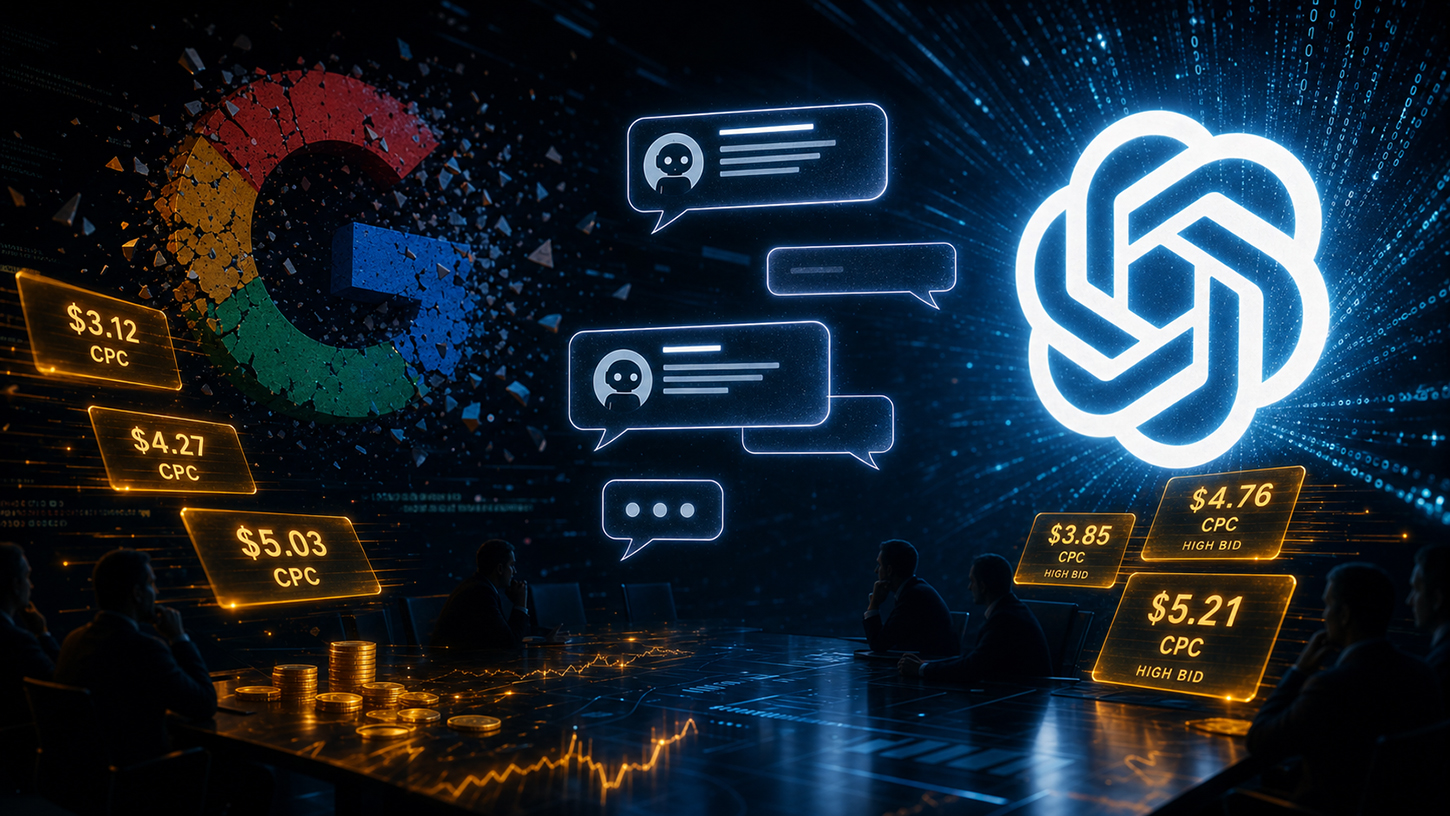
OpenAI enters the advertising market – a billion-dollar gamble or a strategic own goal? – Image: Xpert.Digital
Billions in losses force action: Why ChatGPT is now displaying ads
Price drop after just a few weeks: Is OpenAI's big advertising attack on Google flopping?
No proprietary technology, but huge promises: This is what's behind the new ChatGPT ads
OpenAI is under immense financial pressure. To mitigate gigantic losses in the tens of billions, the AI company took a historic and risky step in early 2026: the introduction of advertisements directly into ChatGPT. But what was intended as a frontal assault on the market leader Google and a lucrative source of revenue for a potential IPO quickly turned into a harsh reality check. A rapid decline in advertising space prices, dependence on external technology partners, and the fundamental risk of squandering the painstakingly built user trust through commercial influence raise critical questions. Can a conversational AI even integrate traditional advertising without losing its neutral authority? A detailed analysis reveals that the path from a pure chatbot to a profitable advertising machine is a high-risk undertaking, and OpenAI may be pursuing the wrong strategy.
When an unfinished product is sold to investors with promises of 100 billion dollars, before the first advertisement is even properly placed
In February 2026, OpenAI made one of the most significant strategic shifts in its short history: it began testing in-app advertising within ChatGPT for users of the free plan and the more affordable Go plan ($8 per month). Entering the advertising market was not a side experiment, but a strategically necessary response to a looming funding gap. Internal documents seen by Reuters and The Information show that OpenAI expects a loss of around $14 billion for 2026 – following an estimated $8 billion loss in 2025. According to these projections, the cumulative loss expected by 2029 will reach $44 billion, before the company is projected to break even sometime in the early 2030s.
This financial pressure explains why OpenAI presents extraordinarily aggressive advertising revenue forecasts to investors: $2.5 billion in advertising revenue for 2026, $11 billion in 2027, $25 billion in 2028, $53 billion in 2029, and finally $100 billion by 2030. These figures are based on the assumption that ChatGPT's user base will grow to 2.75 billion weekly users by 2030. For comparison, in February 2026, OpenAI reported a weekly user base of over 800 million. This implies a tripling of the user base in less than four years—a growth assumption that is almost unprecedented in the history of the digital industry.
Price decline in slow motion: What the CPM story really reveals
The first few weeks of ChatGPT's advertising operations are already providing important signals – and they are by no means unequivocally positive. At its launch in February 2026, OpenAI calculated a CPM (cost per mille, i.e., cost per thousand impressions) of $60. This entry price clearly positioned ChatGPT advertising in the premium segment, comparable to high-quality digital inventory on YouTube or premium news sites. The minimum entry barrier for advertisers was originally a $200,000 to $250,000 advertising budget commitment.
However, within just a few weeks, this premium pricing model came under considerable pressure. CPM rates plummeted from $60 to between $25 and $35. Simultaneously, OpenAI responded with a classic performance marketing tool: the introduction of cost-per-click (CPC) bids between $3 and $5. Minimum entry budgets were also reduced from $250,000 to $50,000. These adjustments may seem tactically sound, as they open the platform to a wider range of advertisers. However, the price collapse within ten weeks of launch sends a clear signal: the premium status of the advertising space that OpenAI had hoped for has not yet taken hold in the market.
In the advertising industry, the principle is that premium inventory prices only remain stable if advertising effectiveness, measurability, and reach justify them. All three factors are still up for debate with ChatGPT advertising. The attribution system—that is, the ability to measure which conversions actually stem from a ChatGPT ad—is still under development. Without a robust measurement system, advertisers cannot scale, and without scalability, the platform remains a niche experiment for adventurous early adopters.
The Criteo model: Renting infrastructure instead of building it
OpenAI's reliance on external adtech partners to build its advertising infrastructure is strategically understandable – and also symptomatic. In March 2026, Criteo, a publicly traded adtech provider with over $4 billion in annual managed media spend and approximately 17,000 global advertisers, announced its integration into ChatGPT's advertising pilot program. Criteo contributes its commerce media ecosystem, which is based on over $1 trillion in annual commerce revenue and connects brands, retailers, and publishers.
The partnership reveals a structural reality: OpenAI lacks its own independent advertising technology infrastructure. In its short history, the company has primarily invested in model development and inference capabilities, not in the years of fine-tuning required for a fully functional adtech stack—from auction mechanics and targeting to measurement and fraud detection. Initial advertising partners in the pilot program include well-known brands like Target, Ford, and Adobe, as well as agency networks such as Dentsu, Omnicom, and WPP. This is an impressive debut, but it also signals that OpenAI relies on the established structures of the advertising industry complex rather than disrupting them.
Google's moat: Two decades of head start that cannot be ignored
To understand the strategic challenge facing OpenAI, one must soberly assess Google's structural superiority in the advertising market. Since the early 2000s, Google has built an advertising ecosystem based on three decades of search habits, proprietary infrastructure, and an unparalleled measurement system. Google's strength lies not only in its scale, but in the combination of several factors that together form a difficult-to-replicate economic moat.
On the infrastructure side, Google operates its own TPU chips and data centers, which keeps the cost per inference significantly lower than what OpenAI has to pay on rented Microsoft Azure infrastructure. Google Search processes billions of queries daily at a cost of 0.2 to 0.5 cents per interaction – while simultaneously generating high advertising monetization per query. This cost-benefit ratio is the core of Google's business model: ultra-low unit costs paired with a monetization engine that extracts significantly more value per interaction than the interaction costs.
On the user side, Google has cultivated search habits and purchase intent patterns over two decades that are deeply embedded in everyday behavior. While Google's search market share fell to around 70 percent in 2025—its lowest level in over a decade—70 percent market share in a total digital advertising market worth several hundred billion US dollars annually remains an extraordinary position of power. OpenAI is not competing against a weakened opponent, but against a company that, despite increasing AI competition, still controls by far the world's largest advertising inventory system.
The Intent Myth: What Really Separates Conversation and Purchase Readiness
ChatGPT's core argument for its advertising model is this: when a user asks in a chat which product they should buy, they are signaling a high-quality purchase intention – and it is precisely at this moment, the company promises, that advertising is particularly effective. On paper, this argument is logical. In practice, it is considerably more nuanced.
Google's strength in performance marketing lies in the so-called bottom-of-funnel intent: users actively searching for a product or service are ready to buy. These search queries—terms like "buy 65-inch TV" or "compare liability insurance"—have a direct commercial focus, which advertisers have learned to target and measure with high precision over decades. ChatGPT conversations, on the other hand, often take place higher up in the purchase decision funnel: users explore, compare, and seek advice. This exploratory intent is valuable, but its monetization is structurally different from transactional search intent.
Another critical difference lies in the conversation architecture itself. With Google, a user sees multiple search results and advertisements simultaneously and can actively choose and compare them. With ChatGPT, on the other hand, the AI typically delivers a coherent, synthesized response—a single voice that suggests authority. An advertisement appearing in this context is therefore automatically at odds with the perceived neutrality of the AI. This difference is not trivial: it determines whether users perceive advertising as a legitimate accompanying element or as epistemic contamination.
🎯🎯🎯 Data-driven B2B industry hub as a quasi-in-house solution

The quasi-in-house solution: How Xpert.Digital closes operational gaps in B2B marketing and sales – Smart Content-Driven Business - Image: Xpert.Digital
Xpert.Digital is a data-driven B2B industry hub led by Konrad Wolfenstein . The company acts as an external, quasi-in-house solution for industrial partners, closing operational gaps in marketing, content, and sales – without requiring additional resources on the client side.
More information here:
From premium aspirations to a performance show: OpenAI's strategic shift
The trust problem: The most dangerous currency in the AI advertising business
OpenAI has internally formulated five principles for its advertising business: Mission Alignment, Answer Independence (ads do not influence responses), Conversation Privacy (no sharing of conversation data with advertisers), Choice and Control (users can disable personalization), and Long-Term Value. The principle of Answer Independence is the cornerstone: without it, the entire advertising model collapses into a paid ranking system that would destroy user trust and, consequently, the quality of ad inventory itself.
However, even in the early testing phase, it became clear how fragile this balance is. The Verge reported that OpenAI withdrew its chat-internal recommendation features after users couldn't distinguish them from normal AI responses – and the feedback was overwhelmingly negative. This withdrawal signals that the line between advertising and response quickly blurs from a user's perspective, even when the technical separation is cleanly implemented. Perceived trust in an AI statement depends not only on its factual accuracy but also on whether the user believes that commercial interests might influence the output. This psychological foundation for AI use is hard to earn and easy to damage.
Competitors like Anthropic (Claude) and Perplexity have explicitly positioned themselves against advertising in their AI responses and have begun to establish themselves as ad-free alternatives. This positioning is not merely altruistic – it is a smart brand strategy at a time when trust in AI systems is being intensely debated politically, regulatoryly, and socially. The question of whether an AI remains trustworthy when CPC bids are running in the background is not merely academic: it determines whether a user with an urgent or personal request continues to use ChatGPT or switches to an ad-free competitor.
The differentiation dilemma: When the challenger becomes the imitator
If OpenAI scales ChatGPT primarily as an advertising platform, relying on classic CPM and CPC mechanisms, it risks becoming similar to Google rather than differentiating itself. The economic rationale behind an advertising model isn't inherently wrong—it's even necessary, as Ben Thompson of Stratechery argues: An advertising model would bring ChatGPT more users, generate more feedback, and enable a deeper understanding of individual preferences, which in turn would improve AI responses. Therefore, if implemented correctly, an advertising model could deepen OpenAI's economic moat rather than erode it.
However, the current implementation appears reactive rather than strategic. Price collapses within ten weeks, reductions in minimum entry budgets, reliance on external adtech infrastructure instead of building a proprietary measurement system – these are not signs of a confidently planned market erosion, but rather of a company under cash flow pressure that needs short-term revenue signals to bolster investors and a potential IPO story (the earliest possible date being the fourth quarter of 2026).
Capital market arithmetic and its structural contradictions
OpenAI's advertising revenue forecasts for the capital markets are remarkably precise—which, combined with their audacity, should raise suspicion. Projecting growth from $2.5 billion to $100 billion within four years represents a tenfold increase in revenue over a period that also requires acquiring 2.75 billion weekly users. For comparison, it took Google more than 15 years to scale its advertising business to this level, and it did so on an infrastructure that was already fully built when its advertising operations began scaling.
The financial reality is sobering. According to its own internal projections, OpenAI will burn through approximately $14 billion in cash by 2026, even if advertising revenue takes off as planned. Cumulative cash burn forecasts were recently revised upwards by $111 billion and now amount to around $665 billion by 2030. Training costs alone are projected to reach approximately $440 billion by 2030. In this context, $2.5 billion in advertising revenue in 2026 – even if achieved – appears to be a structurally insufficient contribution to covering costs.
The early success of the pilot program—annualized $100 million in revenue six weeks after launch and more than 600 advertising partners—is nevertheless a valid signal that advertisers are ready to try ChatGPT inventory. The strategic question is whether this trial will lead to a permanent budget allocation and ultimately become a stable pillar in advertisers' media mix—or whether it will remain just an experiment.
Differentiation through AI-native advertising concepts: The untapped opportunity
The real strategic opportunity for OpenAI lies not in replicating Google's advertising mechanics, but in complementing or replacing them with an AI-native format. Conversational AI potentially opens up a new form of advertising: not the static banner, not keyword targeting, but the contextual, dialogue-based recommendation system. If a user explores in a multi-stage conversation which laptop to buy, an AI that knows their preferences and context could deliver a personalized product recommendation that is actually relevant to the user – and simultaneously label it as sponsored.
This would be a format that Google doesn't offer because Google doesn't conduct persistent, contextual conversations. The technical prerequisites for this already exist in OpenAI through ChatGPT's memory feature. However, the monetization mechanism for this format is still largely lacking. Criteo contributes an initial approach via its commerce intelligence infrastructure, but the proprietary measurement system needed to accurately attribute conversational intent is not yet fully developed. This is the product gap that OpenAI needs to close in order to build a credible advertising moat in the long term.
A bet with an open outcome
OpenAI's entry into the advertising market is neither folly nor a stroke of genius – it's an economic necessity fraught with strategic risks. The speed with which the company shifted from a premium pricing model to classic performance marketing structures reveals that its initial premium claim was unsustainable in the market. Its reliance on external adtech partners like Criteo demonstrates that the development of its own independent advertising technology is still in its early stages. And the question of trust – whether users will still believe an AI response when they know that CPC bidding is taking place in the background – remains unanswered and will only become clear in practice.
What's certain is that Sam Altman is playing a capital market-friendly card. The advertising revenue forecasts provide a credible narrative for a potential IPO in 2026. What's equally certain is that Google is not a dying giant, but a structurally superior competitor with a 20-year lead in infrastructure, data, and behavior. OpenAI won't close this gap with an ad layer below AI responses. However, it could potentially negate this advantage with a genuine, AI-native ad format—if the product strategy aligns with the capital market rhetoric in time.
Your global marketing and business development partner
☑️ Our business language is English or German
☑️ NEW: Correspondence in your native language!

Konrad Wolfenstein
I and my team are happy to be available to you as your personal advisor.
You can contact me by filling out the contact form here simply call me at +49 7348 4088 965. My email address is [email protected]:or
I'm looking forward to our joint project.
☑️ SME support in strategy, consulting, planning and implementation
☑️ Creation or realignment of the digital strategy and digitization
☑️ Expansion and optimization of international sales processes
☑️ Global & Digital B2B trading platforms
☑️ Pioneer Business Development / Marketing / PR / Trade Fairs
B2B support and SaaS for SEO and GEO (AI search) combined: The all-in-one solution for B2B companies

B2B support and SaaS for SEO and GEO (AI search) combined: The all-in-one solution for B2B companies - Image: Xpert.Digital
AI search changes everything: How this SaaS solution will revolutionize your B2B ranking forever.
The digital landscape for B2B companies is undergoing rapid change. Driven by artificial intelligence, the rules of online visibility are being rewritten. For companies, it has always been a challenge not only to be visible in the digital mass, but also to be relevant to the right decision-makers. Traditional SEO strategies and managing local presence (geo-marketing) are complex, time-consuming, and often a battle against constantly changing algorithms and intense competition.
But what if there were a solution that not only simplified this process but also made it smarter, more predictive, and far more effective? This is where the combination of specialized B2B support with a powerful SaaS (Software as a Service) platform comes into play, specifically designed for the demands of SEO and GEO in the age of AI search.
This new generation of tools no longer relies solely on manual keyword analysis and backlink strategies. Instead, it leverages artificial intelligence to more accurately understand search intent, automatically optimize local ranking factors, and conduct real-time competitive analysis. The result is a proactive, data-driven strategy that gives B2B companies a decisive advantage: they are not only found, but perceived as the leading authority in their niche and location.
Here's the symbiosis of B2B support and AI-powered SaaS technology that transforms SEO and GEO marketing, and how your company can benefit from it to grow sustainably in the digital space.
More information here:










