

Published on: April 29, 2025 / update from: April 29, 2025 - Author: Konrad Wolfenstein
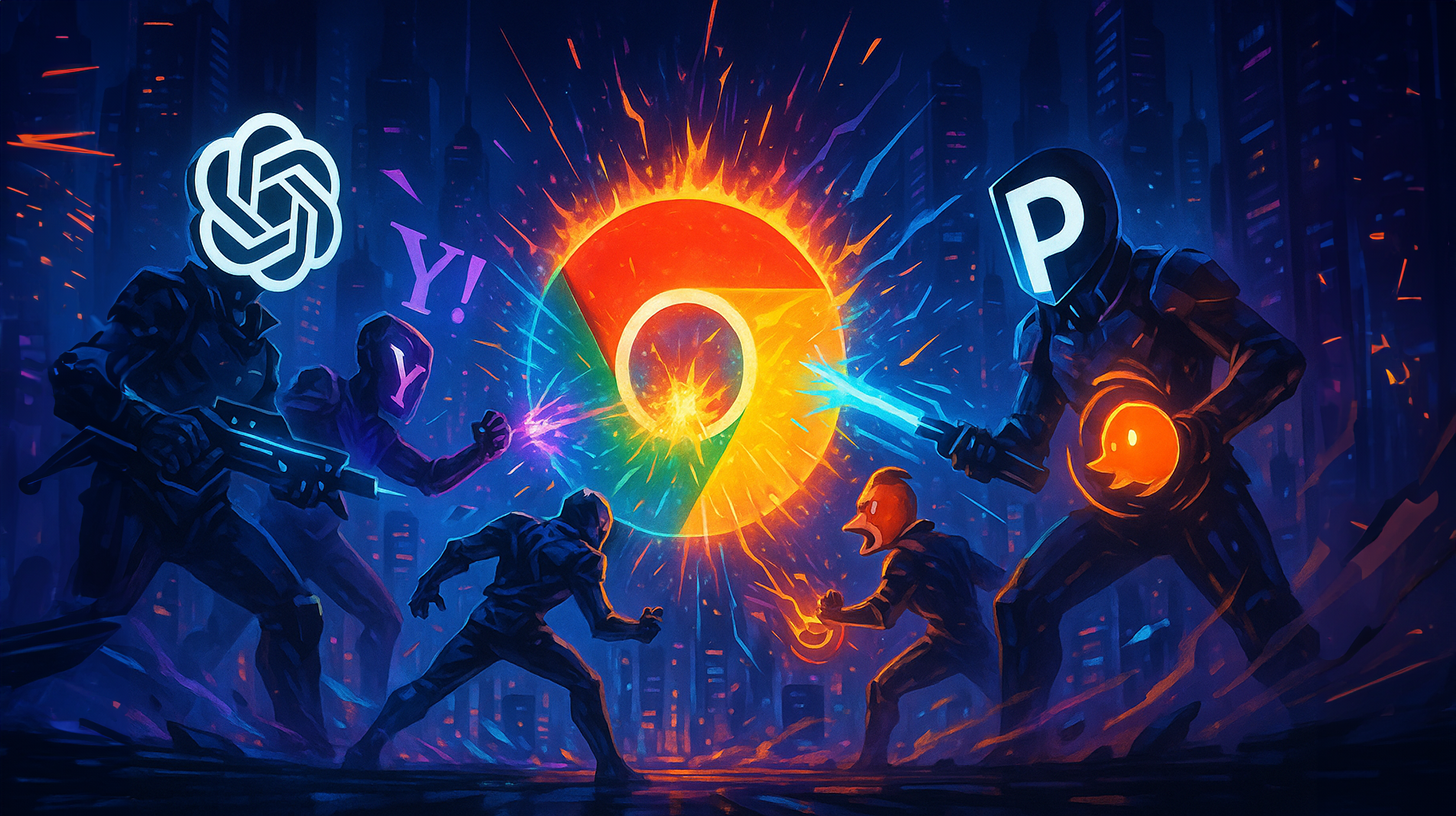
The fight for Google Chrome | Openaai, Yahoo, Perplexity and Duckduckgo: The effects of a possible sale - Image: Xpert.digital
Why the sale of Chrome could redesign the Internet
Monopoly suspicion against Google: Who could take over Google's browser?
In an unprecedented course of development, we could witness the sale of one of the most dominant internet products in the past decade. After a US court of Google has certified an illegal monopoly in the search engine market, the possible sale of the Chrome browser is in the room. Various technology companies are already positioning themselves as potential buyers. This report analyzes those interested in the problems associated with such a purchase and the possible effects of a takeover for the respective prospective buyers.
Suitable for:

The interested parties for Google's browser
The possibly forced sale of Chrome has already launched several prominent technology companies. They all see enormous strategic options in the control of a browser with a market share of around 66%.
Openai as an ambitious prospect
Openaai, known for his chatbot Chatgt, has expressed his clear interest in Chrome. Nick Turley, Chatgpt's product manager, told a Washington court that Openai would be seriously interested in a takeover if Google should be forced to sell. This intention to take over appears particularly interesting against the background that Openaai had already tried to licens Google's search technology for chatt, which Google rejected in August 2024 on the grounds that "too many competitors would be involved".
For Openaai, the purchase of Chrome would mean direct access to an enormous user base and offer the opportunity to integrate AI technologies such as chatt deep into the browser experience. This could represent a revolution of the usage experience on the Internet and significantly strengthen Openai's position in the competition for the future of search for information.
Yahoo with strategic ambitions
Yahoo, once a leading search engine and today a portal operator and publisher, has also signaled a clear interest in the purchase of Chrome. Brian Provost, the Yahoo Manager responsible for business with the internet search, described Chrome as “strategically the most important player on the web” and estimated its value at around $ 50 billion.
For Yahoo, a possible takeover of Chrome is a unique opportunity to dramatically increase its current market share when searching for the web. With currently around three percent market share, Yahoo could get to a double -digit value due to the control of Chrome, since around 60 percent of all search queries are based on users of this browser. According to reports, Yahoo is already developing its own browser, but would prefer the purchase of Chrome and would be willing to offer funds in the 11-digit range. With Apollo Asset Management, Yahoo also has a financially strong partner at his side who could provide the necessary funds.
Suitable for:

Perplexity AI as a technology -oriented alternative
The relatively young Ki startup Perplexity has also expressed interest in taking over Chrome through its Chief Business Officer Dmitry Shevelenko. On the direct question in court as to whether perplexity would be interested in a takeover, he replied with a clear “yes”. Shevelenko was convinced that his company would be able to operate a browser in the order of Chrome.
Perplexity, founded only about three years ago, develops a AI-based search engine and has ambitious plans to bring them to Samsung and Motorola smartphones. Interestingly, the company recently also expressed interest in buying Tikkok, which is faced with a possible ban in the USA.
Duckduckgo as a data protection -oriented applicant
The Duckduckgo search engine focused on data protection has also signaled interest through her CEO Gabriel Weinberg. When asked whether Duckduckgo would be interested in taking Chrome regardless of the costs, Weinberg replied “absolutely”. However, he estimated the market value of Chrome on “over $ 50 billion”, which should probably exceed Duckduckgo's financial possibilities.
Background and legal dimensions
The possible sale of Chrome is in the context of a larger antitrust law against Google. In August 2024, a US court decided that Google illegally exploits its monopoly in the area of internet search.
The cartel procedure against Google
The US Ministry of Justice has accused Google to secure its dominant position through unfair practices. A central point of the lawsuit is the requirement that Google has to sell its Chrome browser in order to promote the competition and break up monopoly structures. Chrome dominates the browser market with a market share of around 60 percent in the USA and about two thirds worldwide.
The “Remedy phase” of the procedure is currently underway, in which it is to be clarified which measures Google must take to remedy the determined competition violations. A final decision is expected for August 2025. However, Google plans to appeal against every unfavorable judgment, which could significantly extend the process.
Alternative measures
In addition to the sale of Chrome, other measures are also discussed. In this way, Google could be forced to communicate more transparently with advertisers and give them more control over where their ads appear. In addition, the company could be obliged to provide options that enable website operators to protect their content from Google's AI models (specifically Gemini).
It is also in the room that Google has to separate its Mobile Operating System Android from Google search and the app store Google Play-but without having to sell the rights to Android itself.
Suitable for:

How Google's Chrome sale is a technical and financial mammoth task
The potential sale of Chrome is associated with considerable challenges that are both technical and economic in nature.
Technical complexity and operating costs
Google itself warns that no other company would be able to operate the browser in its current form. The further development of the browser is only a small part of the work; The company is much more complex and expensive. Chrome has numerous interfaces to Google services that have become indispensable.
Chrome is deeply integrated into the Google ecosystem and was originally developed to promote the Google search engine. This close integration makes a clean separation extremely difficult. Chrome also has a chromium base, from which numerous other browsers also benefit.
Financial value and financing issues
A central question is what Chrome is actually worth without his Google cover. Without the Google compounds, all sales would be omitted that the operation would have to be financed independently, and the strong Google marketing would be lost.
Gabriel Weinberg from Duckduckgo estimates the value of Chrome to “over $ 50 billion”, which should exceed the financial possibilities of many interested parties. The takeover is not only about the necessary financial means, but also about the technical knowledge and infrastructure to continue such a complex ecosystem.
Safety concerns
The security of the users is another critical aspect. A current study by 'cybernews' examined 100 popular chrome extensions and uncovered alarming security risks. Of these extensions, 86 dangerous permissions require far -reaching access to sensitive data and functions. A new operator should be able to manage these security risks and protect the privacy of billions of users.
Google argues that it can hardly be in the interests of a court or the US government to give a browser with personal data from three billion users in the hands of an 'amateur ".
Possible effects for the potential buyers
Depending on the buyer, a takeover of Chrome would have different strategic effects.
Strategic advantages for search engines
For Yahoo, the purchase of Chrome could lead to a significant increase in the market share when searching for the web. Since around 60 percent of all search queries are via the Chrome browser, Yahoo could increase its share of three percent to a double-digit value. After years of decline, Yahoo would make this a relevant player in the search engine market.
For Duckduckgo, control over Chrome would also be an enormous opportunity to help its data protection -oriented search engine to be spread greater. However, the financial requirements here are likely to be a significant hurdle.
Integration options for AI companies
For Openai, the purchase of Chrome would offer the opportunity to integrate its AI technologies directly into the browsing experience. The combination of browser and advanced AI could fundamentally change the way in which people search for information and process it on the Internet.
The same applies to perplexity that could integrate his AI-based search technology directly into the browser. In court, Shevelenko complained about the “jungle” of Android settings, by which users have to navigate in order to cease perplexity as a standard AI assistant. Direct control over Chrome would remove this hurdle.
Effects on the competition
A takeover of Chrome by another company could fundamentally change the browser market and access to the Internet. Depending on those who take over Chrome, we could experience a stronger integration of AI, emphasis on data protection or a realignment to other commercial interests.
The possible shift in power in the search engine market is particularly interesting. Google has been dominating this market for years with a share of over 90%. A separation of Chrome could weaken this dominance and give other providers the chance to gain larger market shares.
Suitable for:

Google under pressure: What the chrome sale for users means
The process of a possible sale of Chrome is still at an early stage and many questions are open.
Temporal perspective
The final decision in the antitrust process against Google is expected for August 2025. If the court actually orders the sale of Chrome, Google is likely to make an appointment, which would further delay the process.
So it is unlikely that we will experience an actual sale of Chrome before 2026 or even 2027. In the meantime, both Google and the potential buyers are likely to develop and adapt their strategies.
Google's resistance
Google considers the demand for a sale of Chrome as part of a “radical agenda” and argues that a spin -off of the browser would severely restrict the functionality. The company warns that such a measure could hinder innovations, harm users and even cause risks to national security.
Google will exploit all legal means to prevent or at least delay a sale. At the same time, the company should develop emergency plans if a sale becomes inevitable.
What happens when Google Chrome changes owner?
The possible sale of Google Chrome represents an unprecedented interference in the structure of one of the most dominant technology companies in the world. With Yahoo, Openai, Perplexity and Duckduckgo, four companies have already expressed their interest in a takeover, all with different strategic goals and financial options.
The technical and economic challenges of such a sale are considerable. Chrome is deeply integrated into the Google ecosystem, and it remains questionable whether another company could operate the browser in its current form. The estimated value of $ 50 billion or more is also a significant financial hurdle.
The effects of a takeover would be different depending on the buyer, but in any case profound. We could experience a stronger integration of AI technologies, a realignment of data protection or a shift in the balance of power in the search engine market.
Ultimately, the decision about whether Chrome has to be sold will not only shape the future of Google, but also the way, how billions of people worldwide access the Internet and use it.
Suitable for:
Your global marketing and business development partner
☑️ Our business language is English or German
☑️ NEW: Correspondence in your national language!

Konrad Wolfenstein
I would be happy to serve you and my team as a personal advisor.
You can contact me by filling out the contact form or simply call me on +49 7348 4088 965 (Munich) . My email address is: wolfenstein ∂ xpert.digital
I'm looking forward to our joint project.


