
Smart metering systems | Technically top-notch, but a flop in terms of rollout: Germany's smart meters between aspiration and reality
Xpert Pre-Release

Available in 27 languages 📢
Prefer Xpert.Digital on GoogleⓘPublished on: June 27, 2025 / Updated on: April 3, 2026 – Author: Konrad Wolfenstein
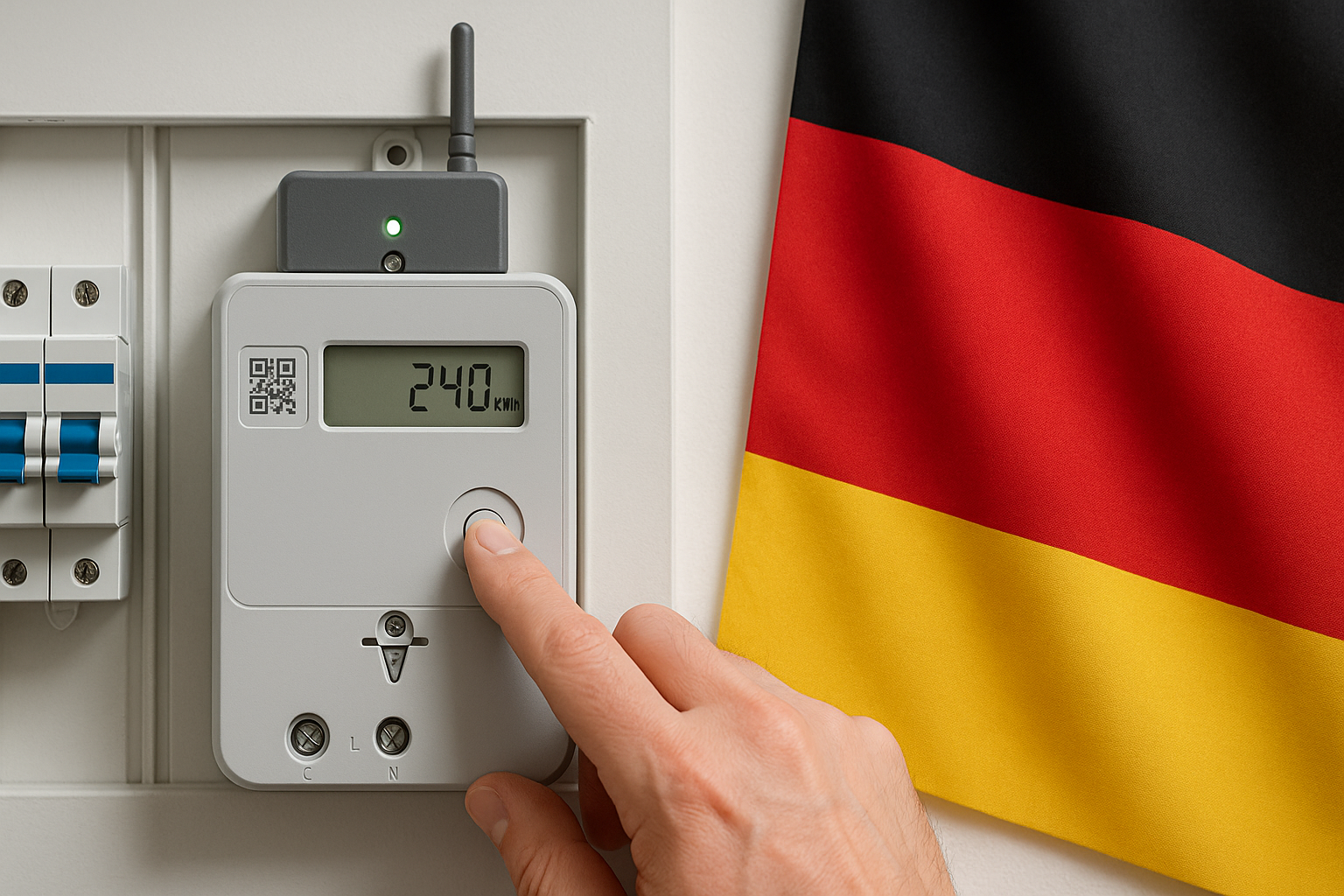
Smart metering systems in Germany: Technically sound, but lagging behind in the European rollout – Image: Xpert.Digital
Smart meters in Germany: Technically sophisticated, but lagging behind Europe in rollout
Smart metering systems: Germany's ambitious standard and its costly implementation deficit
Germany is at the beginning of a long-overdue transformation of its energy supply. At the heart of this digital revolution is the nationwide rollout of intelligent metering systems, commonly known as smart meters. They herald an era in which electricity is no longer simply consumed passively, but intelligently controlled and optimized. However, while this era has long since begun in Sweden, Spain, and Italy, Germany is still waiting for its real breakthrough: by the end of 2025, only 5.5 percent of all approximately 54 million metering points were equipped with a smart meter—one of the worst results in all of Europe.
An intelligent metering system is far more than just a digital electricity meter. It's the core of a highly secure, bidirectional communication infrastructure that connects consumers, producers, and grid operators. The highest security standards, certified by the German Federal Office for Information Security (BSI), play a central role in ensuring data integrity and privacy. This technology paves the way for dynamic electricity tariffs, optimizes energy management in homes and businesses, and enables future-oriented applications such as bidirectional charging of electric vehicles. The solid technical foundation is beyond question—but quality on paper is useless until the devices are actually installed.
With a clear rollout roadmap, which will become mandatory for many households and installations from 2025 onwards, and regulatory pressure that is being seriously enforced for the first time, Germany is now preparing for a profound transformation in the energy market. Whether the lost lead over Europe can ever be fully regained remains to be seen—the costs of past failures, however, are real and measurable.
Related to this:

A delayed start with structural causes
While other European countries have been relying on smart meters for years, Germany is one of the laggards in the European rollout. In Sweden and Spain, almost every household is equipped with a smart meter, and even early pioneers like Italy began their rollout as early as 2001 and have long since achieved rates of over 90 percent. The EU-wide average was already at 63 percent at the end of 2024—Germany is on par with Bulgaria and Slovakia. This lag was not a deliberate strategic plan, but rather the result of a cascade of regulatory missteps, legal setbacks, and structural perverse incentives.
Perhaps the most consequential setback was caused by the very agency that was supposed to accelerate the rollout: the BSI—the Federal Office for Information Security—based in Bonn and, as a subordinate federal authority, reporting to the Federal Ministry of the Interior (BMI). In February 2020, under its then-president Arne Schönbohm, the BSI issued the so-called Market Declaration, which officially confirmed the availability of a sufficient number of certified devices on the market and thus triggered the installation obligation. The problem: The devices did not yet fully meet the legally required interoperability standards, and instead of proper certification according to Section 24 of the Metering Point Operation Act (MsbG), the BSI had created its own internal interim solution. Political oversight of the BSI at that time lay with Federal Interior Minister Horst Seehofer (CSU), while substantive coordination was the responsibility of Federal Economics Minister Peter Altmaier (CDU)—the Market Declaration was explicitly published in consultation with the Federal Ministry for Economic Affairs and Energy (BMWi).
In March 2021, a legal bombshell dropped: The Higher Administrative Court of Münster halted the entire installation obligation by way of an interim injunction. The proceedings were initiated by an Aachen-based company that distributed alternative metering systems and felt it was effectively being driven out of the market by the BSI (Federal Office for Information Security) order. Simultaneously, around 50 metering point operators, mostly municipal utilities, filed lawsuits because they refused to charge their customers for devices that did not yet meet the minimum legal standard. The court ruled in favor of both sides and declared the general order likely unlawful. In May 2022, the BSI retrospectively withdrew its own order and replaced it with a new one—this time based on actual certifications. The attempt to expedite the process through a legal shortcut had achieved precisely the opposite: almost two more years of stagnation and a loss of trust in the industry, the repercussions of which are still being felt today.
The technical basis: More than just an electricity meter
An intelligent metering system consists of significantly more than a conventional digital electricity meter. At its core is the smart meter gateway, a highly secure communication unit that connects the meter to various systems. This combination of modern metering equipment and gateway enables bidirectional communication between consumers, producers, and grid operators.
The BSI (Federal Office for Information Security) plays a central, yet dual role in this process. It certifies smart meter gateways according to the highest cybersecurity standards and has continuously refined the technical requirements. Currently, five independent manufacturers possess all the necessary certifications for rollout. At the same time, the extremely demanding BSI certification processes—which at times even required secure transport boxes for gateways between production and installation—have significantly delayed market launch and driven installation costs to uneconomical levels for small operators.
Of particular importance are the so-called control boxes or CLS modules (Controllable Local Systems), which enable precise control of energy generation plants and consumption devices. These components have been certified by several manufacturers and allow both stepwise control via relays and stepless control via the EEBus standard.
Communication via various channels
Data transmission occurs via multiple communication channels. The backbone is a dedicated fiber optic network that connects all network connection points. Two main options are available for the smart meters in households: mobile networks and the 450 MHz frequency band, which is specifically reserved for the energy sector.
The 450 MHz network offers particular advantages due to its long range and good building penetration. This makes it possible to reliably reach smart meters even in basements or hard-to-reach locations. The Federal Network Agency has allocated these frequencies to 450connect GmbH until 2040, which has been driving the development of the nationwide network since 2021.
The rollout roadmap: Ambitious goals under regulatory pressure
The legal framework for the smart meter rollout was redefined with the Act on Restarting the Digitization of the Energy Transition. From January 2025, consumers with an annual consumption of at least 6,000 kilowatt-hours are required to install a smart metering system. The same applies to operators of generation plants with an installed capacity of seven kilowatts or more, as well as to controllable consumption devices such as heat pumps and wallboxes.
The rollout program follows a strict schedule: By the end of 2025, 20 percent of mandatory installations were to be equipped—a target narrowly achieved at 23.3 percent in the relevant category. In absolute terms, however, this means that of approximately 4.65 million mandatory installations, just under one million are actually equipped—representing an overall rate of 5.5 percent across all metering points. The targets are 50 percent by 2028, at least 95 percent by 2030, and the majority of all mandatory installations by 2032. To ensure that these targets are met this time, the Federal Network Agency initiated supervisory proceedings in March 2026 against 77 metering point operators who have not yet installed a single smart meter.
In addition, since 2025 all consumers have had the right to voluntarily request a smart metering system, regardless of their consumption. The metering point operator must comply with this request within four months.
Cost transparency and fair distribution — with structural weaknesses
Since 2024, the costs for smart metering systems have been shared between consumers and grid operators. For most households, this amounts to annual costs of €20 (gross), while for controllable appliances such as wallboxes or heat pumps, the cost is €50 per year. Any costs exceeding this amount are borne by the grid operator, who benefits from improved grid status information through the smart metering systems and can optimize its grid operations.
However, the Federal Ministry for Economic Affairs and Climate Action is planning cost increases for voluntary installations. The one-time installation costs are set to rise from €30 to €100, and the annual operating costs by an additional €30. This increase has drawn criticism from consumer protection groups, as it could make participation in the energy transition less attractive. At the same time, price regulation is a double-edged sword: the legally capped prices make the rollout economically unfeasible for many small operators with fewer than 30,000 metering points—which structurally contributes to precisely the compliance deficiencies that the Federal Network Agency is now addressing with supervisory proceedings.
Innovative photovoltaic solution for cost reduction (up to 30%) and time savings (up to 40%)

Innovative photovoltaic solution for cost reduction and time savings - Image: Xpert.Digital
More information here:
From prosumers (producer and consumer) to smart grids: What Germany still has ahead of it
Flexibility through intelligent control
A key advantage of the new technology lies in its flexibility. Instead of direct interventions in individual systems, the system relies on defining corridors at the grid connection point. Within these upper and lower limits, end consumers can use or feed in their electricity according to their own needs. Control interventions only occur if these limits are exceeded.
This approach avoids the need to directly switch private solar systems or wallboxes on and off. Instead, bundling larger networks ensures local balancing before intervention occurs at the medium and high voltage levels. Once 80 percent of consumption points are reached, the remaining fluctuations can be balanced. The tax threshold for generation plants has been raised from the original two to seven kilowatts to reduce the burden on smaller residential systems.
Bidirectional charging and vehicle-to-grid
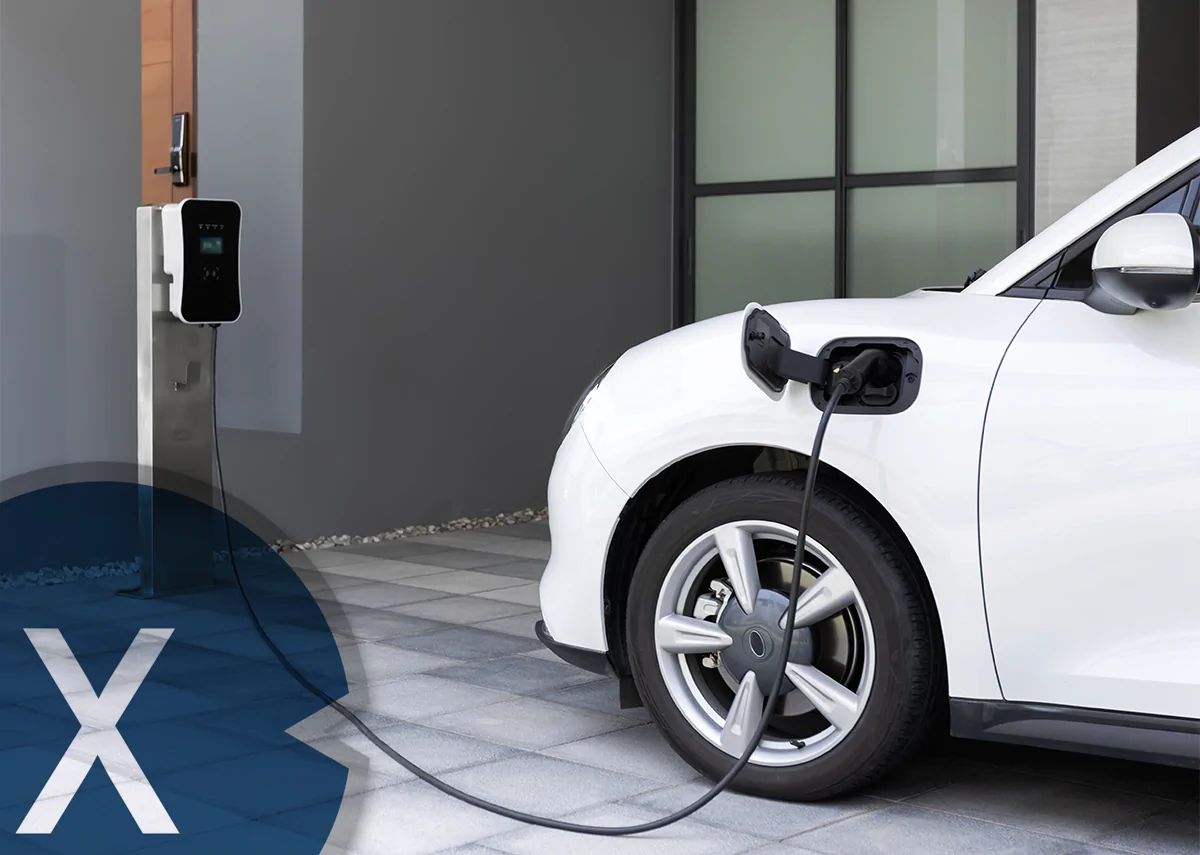
A particularly forward-looking development is the bidirectional charging of electric vehicles, also known as Vehicle-to-Grid (V2G). This enables electric cars not only to charge but also to feed electricity back into the grid when needed. This transforms the vehicle batteries into mobile energy storage units that can stabilize the power grid.
Bidirectional charging can absorb excess energy from renewable sources and release it again when needed. This contributes to grid stability and can reduce the costs of electric mobility. Although the technology is already available, currently only Asian vehicles with CHAdeMO connectors are equipped for it. However, without widespread smart meters, the full potential of V2G cannot be realized—the delayed rollout thus directly hinders this future segment as well.
Related to this:
Dynamic electricity tariffs: Potential exists, but usage is minimal
With the introduction of smart metering systems, dynamic electricity tariffs are becoming a reality. Since 2025, all energy suppliers have been required to offer such variable tariffs. These adjust hourly to the prices on the electricity exchange, allowing consumers to benefit from periods of lower prices. A study published in 2025 found that households with flexible consumption could reduce their electricity costs by up to 82 percent—a smartly charged electric car uses up to 42 percent of the electricity that would otherwise have been curtailed due to negative electricity prices on the exchange.
In practice, however, the potential remains largely untapped. Dynamic tariffs only work in combination with smart metering systems. Without smart meters, hourly billing is impossible—and price, as a market-based control mechanism, simply cannot function. In Sweden and Norway, two-thirds of consumers already use a dynamic electricity tariff. In Germany, according to a YouGov survey, 60 percent of the population doesn't even know what a smart meter is. The year 2025 made the costs of this inaction visible: Grid congestion management cost almost €3.1 billion because 3.5 percent of renewable electricity generation had to be curtailed due to grid limitations.
Security and data protection are key priorities
Germany places particular emphasis on the security of smart metering systems. The BSI (Federal Office for Information Security) has developed comprehensive technical guidelines and certifies all components according to strict cybersecurity standards. The smart meter gateways have standardized, integrated security modules that ensure trustworthy communication.
An important aspect is that there is no connection to the home IT system. Communication takes place via separate, secure channels to protect user privacy. This high security standard is justified – a compromised smart meter network could theoretically be misused to manipulate critical infrastructure. However, as the 2021 ruling by the Higher Administrative Court of Münster impressively demonstrated, the operational implementation of these requirements comes at a price: excessively slow certification processes and subsequently tightened requirements have repeatedly hampered the rollout and damaged the industry's trust in regulation.
Smart Grid and medium voltage level
The control of the smart grid primarily takes place at the medium and high voltage levels. Modern sensor technology makes it possible to intelligently monitor and control these grid levels as well. Innovative solutions such as integrated current and voltage sensors for medium voltage can be easily retrofitted into existing local grid substations.
These sensors are a key component of future smart grids, which are characterized by intelligent systems for recording, analyzing, controlling, storing, and safely transporting electricity. However, they only reach their full potential in combination with a comprehensive smart meter network that provides real-time visibility into consumption levels—and this is precisely what is still largely lacking in Germany.
Related to this:

Blackout resistance and crisis resilience
A particular focus is placed on the system's resilience to blackouts. The Metering Point Operation Act stipulates that metering point operators can be obligated to use an uninterrupted, blackout-proof telecommunications connection. This is crucial for system stability, as the smart metering system is increasingly responsible for controlling decentralized systems.
The concept distinguishes between blackout resistance and blackout robustness. While blackout resistant systems continue to function even during a power outage, blackout robust systems are controllable again a few minutes after the mains voltage is restored. For most customer installations, a blackout robust design is considered sufficient, as it is significantly more cost-effective.
International assessment: Technically competitive, but lagging behind in expansion
A European comparison reveals a mixed picture. In theory, the German smart meter system offers one of the most sophisticated control architectures—with comprehensive CLS modules, the highest data protection standards, and a well-thought-out concept for grid-friendly flexibility. In some areas, other countries, such as the Netherlands in restructuring their metering systems, are adopting individual German elements.
In practice, however, Germany leads a European negative list when it comes to the rollout of digital broadband. Italy, Sweden, and Spain have long since achieved penetration rates of over 90 percent, while the EU average was 63 percent at the end of 2024. The crucial difference lies not in the quality of the technical standard, but in the regulatory and market-structural implementation capabilities. Early systems like the Italian one may have fewer control mechanisms than the German approach—but they are implemented nationwide and are already generating the economic benefits that Germany still has yet to achieve.
Energy management for households and businesses
Smart metering systems enable a completely new approach to energy management for private households and businesses. By recording electricity consumption in detail, users can optimize their consumption patterns and save costs. The systems not only display current consumption but also provide a breakdown over different time periods.
It becomes particularly interesting when combined with decentralized generation systems such as photovoltaic systems. Households become so-called prosumers, both consuming and producing electricity. The smart metering system automatically coordinates generation and consumption and optimizes the feed-in to the grid. The fact that this potential still cannot be realized for the vast majority of German households because the rollout is stalled is one of the most expensive untapped opportunities in German energy policy.
The role of fiber optic infrastructure
Fiber optic infrastructure plays a crucial role in smart metering. High-performance fiber optic networks provide the necessary bandwidth and transmission speed for real-time communication of intelligent metering systems. With the highest capacities, lowest latencies, and virtually complete immunity to electromagnetic interference, fiber optics is the ideal transmission technology.
Some energy providers are already using their own fiber optic networks for smart meter connections. This enables state-of-the-art, bidirectional data transmission without additional investment in communication infrastructure. Where fiber optics are unavailable, the 450 MHz network is used as a robust fallback option—an intelligent redundancy concept that is technically sound but only proves its worth if the devices are actually installed.
Future prospects: Enormous potential, urgent need for action
The smart grid is considered one of the key technologies for Germany's energy transition. EY studies estimate the systemic savings potential with full rollout at between two and 10.6 billion euros annually, solely through more efficient use of renewable electricity generation and the avoidance of distribution grid expansion. The grid of the future, which will require around 750 billion euros in investment by 2045, could be significantly relieved through intelligent demand-side management.
New business models emerge from the system's flexibility. Aggregators, which could pool the flexibility of hundreds of thousands of small consumers and offer it on the balancing energy market, depend on a critical mass of smart meters—which is currently lacking. The entire ecosystem of the digital energy industry will remain underdeveloped as long as the rollout stalls.
The German government has set the goal of increasing the share of renewable energies in electricity consumption to at least 80 percent by 2030 and achieving complete climate neutrality by 2045. The smart grid is an essential component in this endeavor—but not a guaranteed success. The regulatory proceedings initiated by the Federal Network Agency against 77 defaulting metering point operators in March 2026 mark the beginning of a new phase of serious enforcement. Whether this will be sufficient to overcome the structural deficiencies of a highly fragmented market will be the real test in the coming years.
Solid foundation, open construction site
Germany has developed a technically sophisticated architecture for smart metering systems—highest security standards, comprehensive control options, and clear legal frameworks. However, a pioneer is not made through plans, but through installed devices. Measured against this standard, Germany is a European laggard, having to rectify a decade of regulatory errors and structural perverse incentives.
Smart metering systems are more than just modern electricity meters—they are the digital nervous system of a decarbonized energy system. From dynamic electricity tariffs and bidirectional charging to the integration of decentralized generation plants: the smart grid can make Germany fit for a sustainable energy future. The technology is available. What's missing is consistent implementation—and time is running out.
We are here for you - Consulting - Planning - Implementation - Project Management
☑️ Construction and consulting for photovoltaic open-field systems
☑️ Solar park planning ☑️ Agri-photovoltaic implementations
☑️ Solar ground-mounted systems with dual-use solutions
Xpert.Solar is your ideal partner for the planning, consulting, and construction of ground-mounted photovoltaic systems and agri-photovoltaic projects, thanks to our many years of experience and expertise in the solar energy sector. Xpert.Solar has an experienced team of professionals who offer farmers and investors tailored solutions. From site analysis and financial and legal advice to technical implementation and monitoring, Xpert.Solar provides its clients with professional and reliable support to ensure successful and sustainable project implementation.

Konrad Wolfenstein
I would be happy to serve as your personal advisor.
You can contact me by filling out the contact form below or simply call me on +49 7348 4088 965 .
I'm looking forward to our joint project.
Write to me

Xpert.Digital - Konrad Wolfenstein
Xpert.Digital is a hub for industry focusing on digitalization, mechanical engineering, logistics/intralogistics and photovoltaics.
With our 360° Business Development solution, we support renowned companies from new business to after-sales.
Market intelligence, smarketing, marketing automation, content development, PR, mail campaigns, personalized social media and lead nurturing are part of our digital tools.
You can find more information at: www.xpert.digital - www.xpert.solar - www.xpert.plus
Keep in touch







