
Historic EU ruling against Apple: Must the App Store now be radically opened up? Big Tech under pressure
Xpert Pre-Release

Available in 27 languages 📢
Prefer Xpert.Digital on GoogleⓘPublished on: July 10, 2026 / Updated on: July 10, 2026 – Author: Konrad Wolfenstein

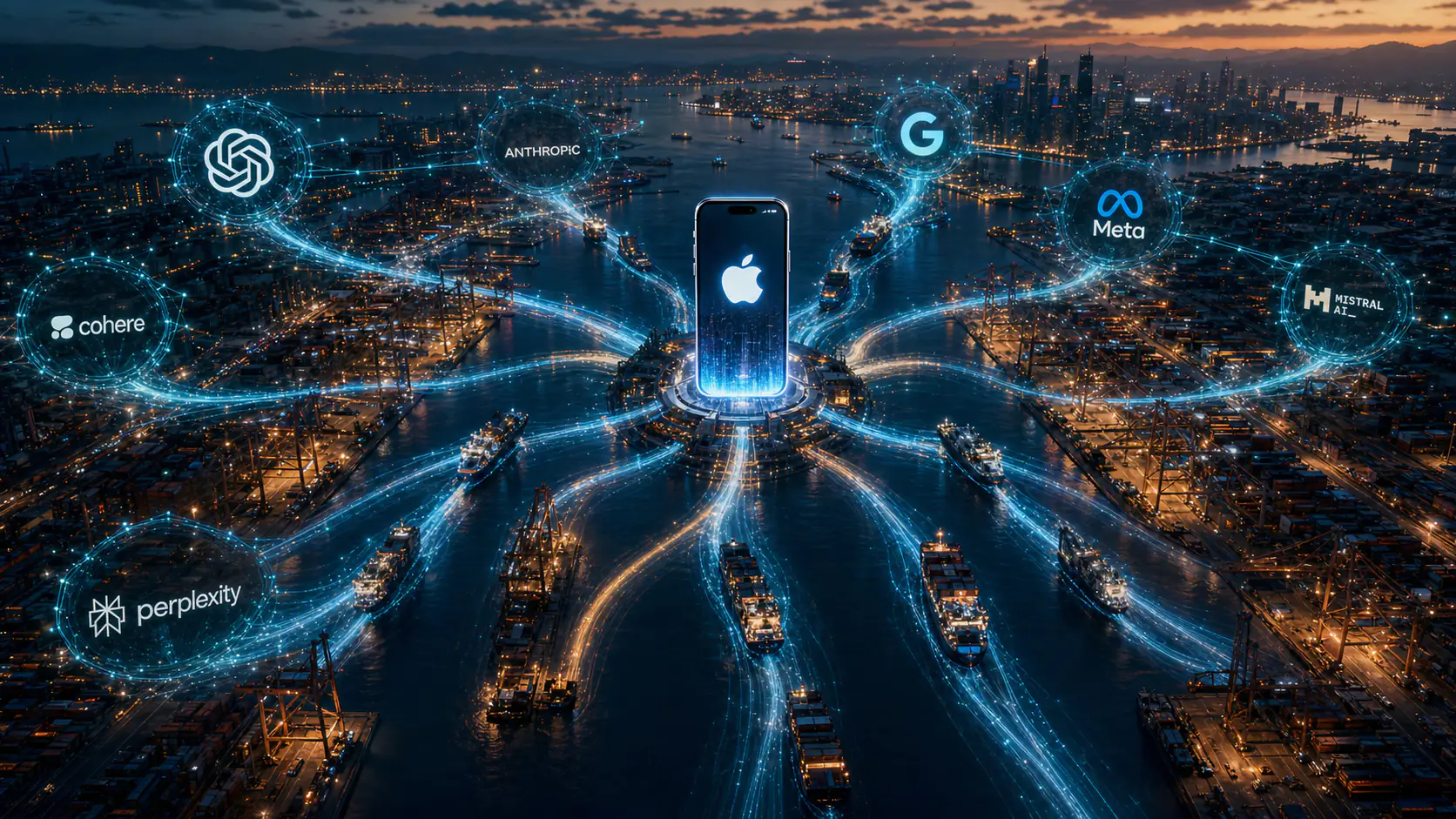
Historic EU ruling against Apple: Must the App Store now be radically opened up? Big Tech under pressure – Image: Xpert.Digital
Apple's trick with the "compliance theater": What the new DMA ruling means for users
Victory for Europe, shock for Apple: The end of App Store dominance is drawing nearer
Power struggle over the iPhone: Why Apple's new App Store fees are just the beginning
On July 8, 2026, the tech world experienced a legal earthquake: The Court of Justice of the European Union definitively rejected Apple's attempt to circumvent the strict regulations of the Digital Markets Act (DMA). By confirming Apple's "gatekeeper" status, Europe is forcing the world's most valuable company to open its hitherto almost hermetically sealed ecosystem around the iPhone and the App Store. But the ruling doesn't mark the end of the conflict; rather, it marks the beginning of a new phase in digital capitalism. While the EU Commission is showing its teeth with multi-million-euro fines and tough enforcement, Apple is responding with highly complex fee models that critics describe as mere "compliance theater." The following analysis examines how this cat-and-mouse game affects app developers, users, and the global market—and why the current ruling could change the rules of the game for Big Tech worldwide.
Related to this:
No special rights for Silicon Valley: How the Digital Markets Act is making Big Tech tremble – and why this is just the beginning
On July 8, 2026, the Court of First Instance of the European Union in Luxembourg delivered a ruling whose implications extend far beyond the specific case. The court dismissed Apple's challenges to its designation as a "gatekeeper" under the Digital Markets Act (DMA), thereby confirming that the company must open its app stores and the iOS operating system, as its core platform service, to third-party developers under strict competitive conditions. For Apple, it is a legal defeat. For European regulatory policy, it is a triumph. And for the global technology market, it is a precedent that redefines the rules of the game in digital capitalism.
The architecture of the Digital Markets Act: Regulation instead of competition law
The Market Abuse Directive (DMA) is revolutionary in its conceptual design. It departs from traditional competition law, which is based on proven damages and individual infringements, and replaces it with a pre-regulatory model: Companies exceeding certain size and network thresholds are classified ex ante as "gatekeepers" and must comply with a series of conduct and disclosure obligations without requiring proof of actual damages. In September 2023, Alphabet, Amazon, Apple, Booking, Meta, Microsoft, and ByteDance were designated as gatekeepers and given six months to implement the DMA requirements. For Apple, this meant specifically: The App Store had to be opened to alternative payment providers and marketplaces; developers had to be free to disclose more favorable terms outside the App Store; and iOS had to enable interoperability with third-party services and devices, which had previously been reserved for Apple's own products.
Apple's legal strategy: Divide and conquer through litigation
Apple had attempted to challenge the gatekeeper designation with a multi-stage legal strategy. Its core argument was that the various app stores for iPhone, iPad, Mac, Apple Watch, and Apple TV should not be considered a single platform service because they serve different hardware and target different developer populations. Had the court accepted this argument, Apple's aggregated market power would have been divided into several smaller, individual markets, potentially causing it to fall below the DMA thresholds. However, the court rejected this argument with a clear rationale: regardless of the devices, all app stores fulfill the same core function—connecting app developers with end users to distribute software applications. The platform function, not the hardware, is the decisive factor. Furthermore, the court dismissed Apple's claim regarding the iMessage messaging service—albeit on procedural grounds: iMessage was classified by the DMA as a core platform service but was never formally designated as a gatekeeper, meaning no legally contestable act exists for Apple.
The 500 million euro fine: First teeth of the new regulatory regime
The court ruling from July 2026 follows a series of enforcement actions by the European Commission that began in 2025. In April 2025, the Commission fined Apple €500 million – the first ever fine under the Digital Market Authority (DMA) – for violating anti-steering rules: Apple had effectively prevented developers from informing users about cheaper offers outside the App Store. At the same time, Meta was fined €200 million. These fines are symbolic compared to the maximum possible amounts: The DMA allows fines of up to 10 percent of global annual revenue, which in Apple's case would correspond to a maximum of around $39 billion. The €500 million fine is therefore more of a warning shot than a significant economic sanction – but the increasing enforcement aggressiveness of the Commission and the pressure created by the now-confirmed court ruling suggest that future violations could be punished more severely.
Compliance as a theatrical performance: Apple's new App Store fee structure
Apple's response to the DMA requirements is a textbook example of strategic regulatory management. Instead of truly opening up its own terms and conditions, Apple introduced a complex, multi-tiered fee structure that is technically compliant with the DMA but largely maintains Apple's controlling position in its economic impact. The controversial "Core Technology Fee" (€0.50 per app installation) was replaced on January 1, 2026, by a "Core Technology Commission" (CTC) of 5 percent on purchases of digital goods, an "Initial Acquisition Fee" of 2 percent for new users, and a tiered "Store Service Fee" of 5 or 13 percent depending on the chosen service package. Critics describe the system as "compliance theater"—a formal fulfillment of regulatory requirements while maintaining the economic balance in Apple's favor. The total burden on developers can, in extreme cases, rise to as much as 20 percent, which is in line with the previous commission rates.
The economic dimension: What Europe is costing Apple – and what it could cost
Despite regulatory pressure, the direct financial impact of the DMA on Apple has so far been limited. Analysts at Evercore ISI have determined that European App Store revenue accounts for less than 1 percent of Apple's total revenue and represents approximately 8 percent of global App Store revenue. A study commissioned by Apple itself estimates total in-app purchases by European developers for 2024 at $20 billion. Based on these figures, independent experts estimate that developers could realize commission savings of €100 million per month or more with full DMA compliance—money that currently goes to Apple and now potentially remains in the pockets of developers or consumers. This demonstrates that the indirect economic impact of the DMA on the app ecosystem is considerably greater than the direct fines.
Our US expertise in business development, sales and marketing

Our US expertise in business development, sales and marketing - Image: Xpert.Digital
Industry focus areas: B2B, digitalization (from AI to XR), mechanical engineering, logistics, renewable energies and industry
More information here:
A thematic hub offering insights and expertise:
- Knowledge platform covering global and regional economies, innovation and industry-specific trends
- A collection of analyses, insights, and background information from our key areas of focus
- A place for expertise and information on current developments in business and technology
- A hub for companies seeking information on markets, digitalization, and industry innovations
Apple's delaying tactics come to an end: App Store revolution or chaos? Consequences for developers and users
The interoperability question: The next legal round
The ruling of July 8, 2026, closes one chapter but opens another. Apple has a separate lawsuit pending before the same court regarding the issue of interoperability. The Device Management Authority (DMA) demands that Apple open parts of iOS for integration with third-party apps, devices, and services—thus establishing interoperability that has so far been reserved for Apple's own products. Apple argues that these requirements jeopardize the security and privacy architecture of iOS, as they would force the company to release sensitive technology to competitors. A report by the Free Software Foundation Europe (FSFE) from April 2026 documents that, up to that point, Apple had responded to 56 interoperability requests under the DMA without concrete solutions. This dispute is likely to keep European courts busy for years to come and has the potential to fundamentally change the business models of the entire Apple ecosystem—from the Apple Watch to the HomePod.
Related to this:

The changing global regulatory architecture: Domino effects of the DMA
Europe is not alone. The DMA is part of a broader global movement to reregulate large platform companies, a movement being discussed in South Korea, the UK, Australia, Japan, and increasingly in the US. In the UK, the Competition and Markets Authority (CMA) has established its own "Digital Markets, Competition and Consumers Act" regime, which is structurally based on the DMA. In the US, the Supreme Court ruled in 2024 in the "Epic v. Apple" decision that Apple cannot prevent developers from indicating external payment methods. While the political climate in Washington under the Trump administration is generally less conducive to regulation of domestic tech giants, the congressional debate on an American equivalent of the Digital Markets Act has not died down. For Apple, this means that regulatory pressure is not a uniquely European problem, but a global structural phenomenon.
Big Tech and the Democratization of the Platform Economy
Behind the legal and regulatory dispute lies a fundamental socio-political question: Should private platform companies, which control the digital infrastructure of billions of people, be subject to the same rules as regulated infrastructure providers in the analog world—such as telecommunications companies, energy suppliers, or banks? Proponents of the Digital Infrastructure Management (DMA) answer in the affirmative. Apple and other Big Tech companies reject it, citing innovation, data protection, and user security as the basis for legitimizing their closed ecosystems. The court in Luxembourg has ruled clearly: The size and market power of a platform legitimize stronger external regulation, regardless of how the company defines its own services. This principle is not new—it is the application of an old regulatory principle to the digital age.
The ecosystem risk: When openness threatens Apple's unique selling point
Apple's business model relies heavily on the principle of a controlled ecosystem. The tight integration of hardware, software, and services creates a user experience that strongly binds consumers to Apple. This loyalty—"lock-in" in the economic sense—generates switching costs, allowing Apple to charge higher prices for hardware and services than would be possible in a fully competitive market. The Device Manufacturing Agreement (DMA) directly impacts this mechanism: If developers and services no longer need to be distributed exclusively through Apple's App Store, if alternative payment providers can process in-app purchases, and if third-party devices can be seamlessly integrated into the iOS ecosystem, the structural foundation upon which Apple's profitability largely depends will erode. The extent of this erosion will depend on how rigorously the Commission enforces the interoperability requirements.
The strategy of small steps: Apple's delaying tactics and their limits
Apple has thus far pursued a classic strategy of maximum delay: every compliance requirement is met at the last minute with minimal flexibility, every regulatory step is challenged in court, and new fee models are introduced that are formally compliant but largely perpetuate the existing situation economically. This strategy is justified from a shareholder perspective, but is increasingly reaching its limits. The Commission's willingness to impose and enforce penalties has grown. The July 2026 ruling deprives Apple of a key legal defense. And international pressure from other jurisdictions is making it increasingly difficult to maintain a Europe-exclusive compliance architecture that differs fundamentally from global business practices.
Consequences for developers and the app ecosystem
From the perspective of app developers, the battle over the DMA is a fight for the fundamental economic conditions of an industry representing a global market worth over $600 billion. Large developers like Spotify, Netflix, Epic Games, and Amazon have benefited from the increasing openness of the App Store: They can now direct users to their own websites, offer alternative payment methods, and design linked purchase processes without the previously mandatory "scare sheets." For smaller developers, the picture is more mixed: The new fee structure, with its complexity of parallel tariffs, alternative terms, and multi-layered commissions, creates bureaucracy that is burdensome for teams with limited compliance resources. The endgame of the DMA—a truly open, competitive app ecosystem—has not yet been reached. But the direction is clear.
Europe as referee of the digital world order
The EU General Court's ruling from July 2026 is another data point in a long-term geopolitical constellation known as the "Brussels Effect": the European Union's ability to set global standards through its regulatory model because companies with global operations cannot leave profitable markets simply to avoid regulation. The DMA has the potential to trigger precisely this effect. If Apple is forced to open its App Store terms to Europe, and these changes effectively apply to other markets as well due to technical and operational interdependencies, Brussels will de facto regulate the global platform economy. Apple has the option of appealing the ruling to the European Court of Justice—but only on legal issues, not on factual matters. Time is working against Apple: with each additional ruling, each additional penalty, and each additional round of regulation, the foundation of its closed ecosystem is further eroded.
Your global marketing and business development partner
☑️ Our business language is English or German
☑️ NEW: Correspondence in your native language!

Konrad Wolfenstein
I and my team are happy to be available to you as your personal advisor.
You can contact me by filling out the contact form here [email protected]:or simply call me at +49 7348 4088 965. My email address is
I'm looking forward to our joint project.
☑️ SME support in strategy, consulting, planning and implementation
☑️ Creation or realignment of the digital strategy and digitization
☑️ Expansion and optimization of international sales processes
☑️ Global & Digital B2B trading platforms
☑️ Pioneer Business Development / Marketing / PR / Trade Fairs
🎯🎯🎯 Data-driven B2B industry hub as a quasi-in-house solution

The quasi-in-house solution: How Xpert.Digital closes operational gaps in B2B marketing and sales – Smart Content-Driven Business - Image: Xpert.Digital
Xpert.Digital is a data-driven B2B industry hub led by Konrad Wolfenstein . The company acts as an external, quasi-in-house solution for industrial partners, closing operational gaps in marketing, content, and sales – without requiring additional resources on the client side.
More information here:










