
Lübeck-based H. & J. Brüggen KG: Why this German muesli manufacturer is now relying on mega-logistics
Xpert Pre-Release

Available in 27 languages 📢
Prefer Xpert.Digital on GoogleⓘPublished on: September 7, 2026 / Updated on: September 7, 2026 – Author: Konrad Wolfenstein
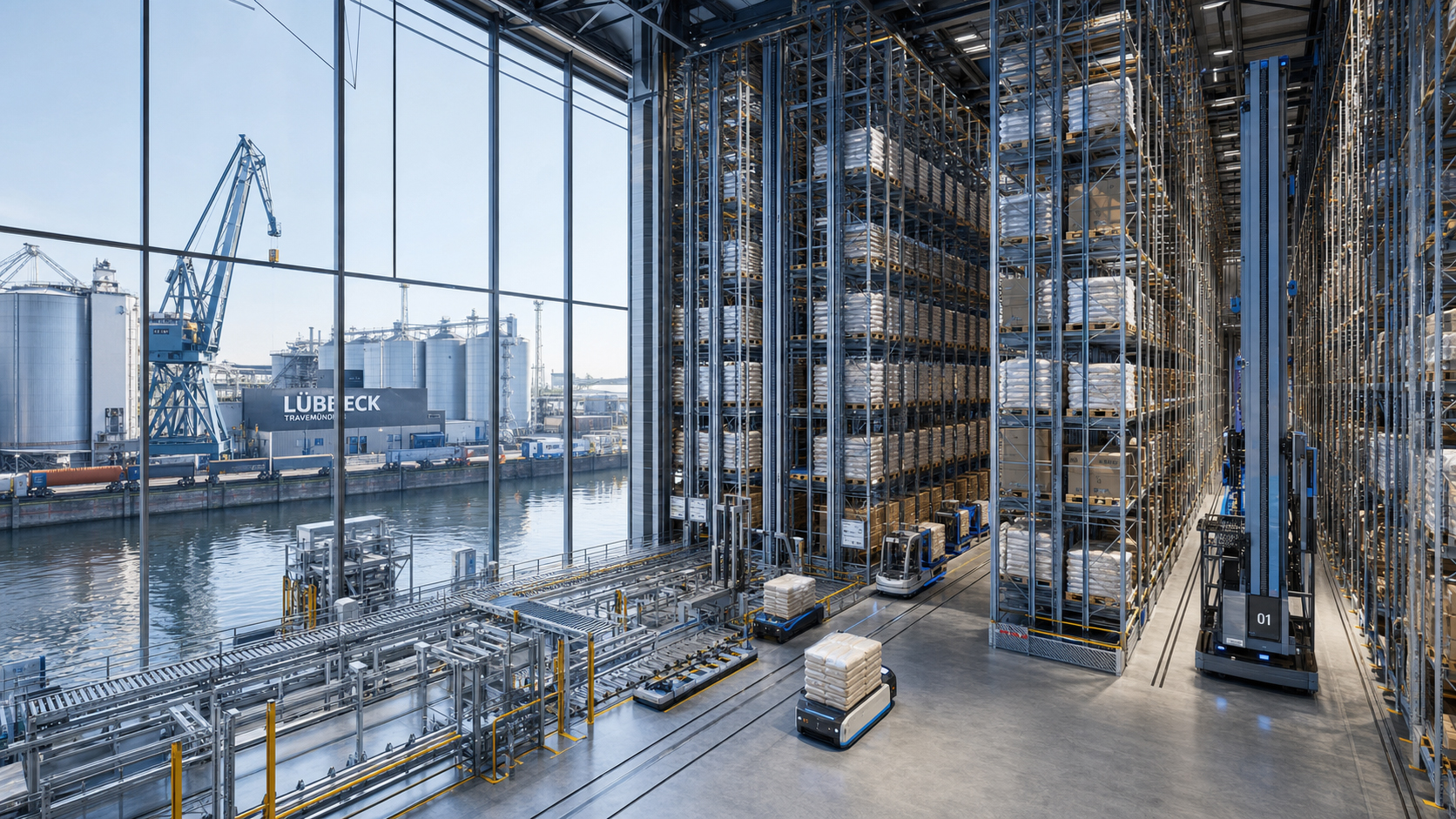
Lübeck-based H. & J. Brüggen KG: Why this German muesli manufacturer is now relying on mega-logistics – creative image on the topic, with AI: Xpert.Digital
From muesli maker to logistics giant: The million-dollar bet of a North German family business
Largest investment in the company's history: How Brüggen is reinventing the supermarket price war
More than just oatmeal: Why a traditional company is suddenly acting like a tech giant
Every morning, their muesli lands on millions of German breakfast tables – but the true secret to their success lies far beyond just oats and nuts. Lübeck-based H. & J. Brüggen KG, one of Europe's largest cereal flake producers, is currently undertaking the biggest financial undertaking in its over 150-year history. By constructing a gigantic, fully automated high-bay warehouse, the family-owned company is responding to the relentless price war in supermarkets, the acute shortage of logistics personnel, and the lack of available industrial space. A look behind the scenes of this remarkable multi-million-euro bet on the future reveals how a traditional food producer transformed into a highly technological logistics corporation and why vertical warehouses are the answer to the most pressing challenges facing the entire industry.
Here is your complete, fully proofread text. Spelling, punctuation, and grammar have been checked. Particular attention was paid to correct German spelling (including "ß") as well as stylistic details (e.g., capitalization after a colon when a whole sentence follows, or correct typography for "CO₂").
When grain becomes capital: Brüggen's billion-dollar bet on the future of food logistics
Why a muesli manufacturer is suddenly thinking like a logistics company
The announcement sounds unremarkable at first: A family-owned company from Lübeck is building a new warehouse. But behind this matter-of-fact statement lies one of the most remarkable industrial decisions in the North German food industry in recent years. H. & J. Brüggen KG, based in Lübeck since 1868 and today one of Europe's largest producers of muesli and cereal flakes, is reportedly planning to build a high-bay warehouse, considered the largest investment in the company's more than 150-year history. To truly understand the magnitude of this decision, it must be viewed not as an isolated construction project, but as the logical continuation of a strategic direction the company has pursued for more than a decade: the systematic shift of its competitive advantages from pure product sales to the management of complex supply chains.
Brüggen is no longer just a food manufacturer, but rather an integrated logistics company with its own grain processing facility. According to recent estimates, the company generates revenue of approximately €330 to €560 million and employs around 1,900 to 2,000 people across the group. These figures vary depending on the reporting year and the scope of consolidation, as Brüggen now has several subsidiaries and joint ventures. This scale clearly demonstrates that it is not a medium-sized company in the traditional sense, but rather a European market leader in the muesli and crunchy muesli segment. Its operational excellence depends significantly on its ability to process enormous quantities of raw materials such as oats, nuts, and dried fruit just-in-time and deliver them just as reliably as finished products to retailers.
The invisible infrastructure behind every breakfast bowl
A review of Brüggen's investment history over the past two decades reveals a clear pattern of continuous capacity expansion. Between 2017 and 2018, the company constructed a shipping and logistics center at its Glashüttenweg site, featuring a fully automated high-bay warehouse with approximately 20,000 pallet spaces, increasing its total storage capacity to 50,000 Euro pallets. A few years later, between 2018 and 2020, a new muesli production building was constructed directly on the waterfront, incorporating raw material delivery and ship unloading facilities, underscoring the close integration of seaport logistics and production. Starting in 2022, another central warehouse was built at Konstinkai, representing an investment of over €20 million. Simultaneously, a building with a fully automated high-bay warehouse for raw material supply, including a picking system and production lines for conventional, organic, and blended muesli, was commissioned.
This sequence of events demonstrates that the now-announced project is not a spontaneous, isolated measure, but rather the provisional culmination of a capital allocation strategy pursued over several years. As early as 2022, the managing partners Johannes, Hanno, and Jochen Brüggen stated in an interview that approximately €100 million would be invested in the Lübeck and Polish locations within three to four years. The current announcement of the largest construction project in the company's history thus fits organically into a wave of investment, the individual components of which reinforce each other: increased storage capacity enables larger production batches, larger production batches reduce unit costs, and lower unit costs give the company decisive negotiating power vis-à-vis the major retail chains in the already fiercely competitive German food retail sector.
A market caught in a pincer movement between growth and price pressure
The economic logic behind the investment only becomes fully clear when considering the state of the European breakfast cereal market. This market is currently valued at around US$13 billion and is projected to grow to approximately US$15 billion by 2031, representing a moderate annual growth rate of just under 3 percent. Within this generally mature market, however, there are significantly more dynamic niches: Ready-to-cook cereals and functional porridge varieties are growing at a rate of over 5 percent, almost twice as fast as the overall market, driven by a continuing health trend and the demand for protein- and fiber-rich breakfast options. Oats remain the dominant raw material base with a market share of just over 34 percent, while Eastern European markets, particularly Poland, are among the most dynamic growth regions, with a projected growth rate of almost 5 percent.
For Brüggen, this market environment presents a dual challenge. On the one hand, growth in premium segments such as organic granola, gluten-free products, and functional breakfast bars opens up new revenue streams, as demonstrated by the recent acquisition of Roscher Mühle in Rosche, Lower Saxony. This acquisition, together with its partner company Bauck, strengthens Brüggen's position in the organic, gluten-free, and specialty product sector. On the other hand, the German food retail sector has been experiencing a cutthroat price war for years, in which manufacturers can only survive by simultaneously acting as reliable suppliers to major retail chains and continuously optimizing their cost structure. It is precisely within this tension between premiumization and cost discipline that the automation of warehouse logistics gains its strategic importance, as it allows both objectives to be pursued simultaneously without them being mutually exclusive.
Your intralogistics experts
Consulting, planning and implementation of complete solutions for high-bay warehouses and automated storage systems - Image: Xpert.Digital
More information here:
High-bay warehouses as a location strategy: Why vertical densification is becoming the norm
Why vertical shelves solve the horizontal space shortage
The construction of high-bay warehouses is the obvious answer across all industries to a structural problem affecting many German industrial sites: the increasing scarcity and rising cost of commercial space, particularly in established port cities like Lübeck, where historically developed factory sites can hardly be expanded horizontally anymore. Instead of developing additional land on the city's outskirts, which would involve lengthy permitting processes, higher transport costs between separate locations, and the loss of operational proximity to existing production, vertical densification allows for significantly more efficient use of the available land. A high-bay warehouse with heights of 20 to 30 meters can accommodate several times the storage capacity of a conventional flat warehouse on the same footprint, as comparable projects in the industry demonstrate, where automated shuttle systems move more than 200,000 packages of goods daily at a height of 30 meters.
This spatial densification, however, is only half the story. The real economic leverage lies in the automation of internal material flows, which almost always accompanies the construction of such facilities. Storage and retrieval machines, shuttle systems, and automated picking stations replace traditional, labor-intensive warehouse work with software-controlled, 24/7 processes that both reduce error rates and drastically shorten lead times. For a food producer like Brüggen, whose business model relies on on-time delivery to discount stores and supermarket chains with tight delivery windows, this reliability is not a nice-to-have, but a vital operational requirement.
The shortage of personnel as the hidden driving force behind the wave of automation
One factor often underestimated in the public debate about warehouse automation is the demographically driven shortage of skilled workers in the logistics sector. Current industry analyses show that automation has risen from ninth to fourth place in the latest trend study by the German Logistics Association (BVL) among the most important future topics. The real driver behind this development is less a technological hype than the noticeable shortage of available personnel for unattractive, physically demanding warehouse tasks. Where skilled workers are lacking, the most unpleasant tasks disappear from the human workload first, and it is precisely this gap that autonomous conveyor systems, stacker cranes, and increasingly, AI-supported control software are now filling.
By 2026, the industry will be in a phase of pragmatic consolidation. After years of experimental technology implementations, many companies are now relying on hybrid systems that combine mobile robots and stationary automation solutions such as traditional stacker cranes, with each system deployed where it can best demonstrate its specific strengths. Large, centralized warehouses will remain a key driver of automation investments, although their role will increasingly change as several smaller sites consolidate into larger distribution centers. The Lübeck project fits precisely into this pattern: it does not involve the creation of an entirely new site segment, but rather the consistent densification and modernization of an existing, historically developed production site.
Lübeck as both beneficiary and stress test
For Lübeck as a business location, the investment decision has implications extending beyond the individual company. As a traditional industrial and port center, the Hanseatic city competes with other North German centers for new businesses, jobs, and tax revenue. Large investments by established companies like Brüggen signal strong confidence in the long-term viability of the location. It is also noteworthy that Lübeck has recently seen several comparable large-scale logistics projects: The medical technology company Dräger, for example, has built a new logistics facility on Revalstraße as part of its "Future Factory" project, encompassing approximately 30,000 square meters and representing an investment of more than 70 million euros. This concentration of major industrial investments suggests that Lübeck has positioned itself as an attractive location for capital-intensive, automated production and logistics infrastructure, which should have positive long-term spillover effects on local suppliers, the construction industry, and skilled workers.
At the same time, a degree of skepticism is warranted when it comes to the immediate employment effects of such projects. The key economic feature of high-bay warehouses lies precisely in their drastic reduction of personnel requirements per ton of goods handled. Where dozens of warehouse workers once moved pallets by hand, software-controlled storage and retrieval systems now perform this task largely autonomously. Therefore, the number of directly created jobs is likely to be limited, even though the investment as a whole contributes to securing the site and thus maintaining the existing, significantly larger workforce in production. The real economic impact, therefore, lies less in new jobs per se, but rather in safeguarding the competitiveness of the entire plant and, indirectly, the several thousand jobs already existing there.
Capital intensity as a double-edged sword
From a business perspective, constructing a high-bay warehouse of this size is a highly capital-intensive decision with a long amortization period. Comparable projects in the food and consumer goods industries typically range from €20 million to over €100 million, depending on capacity, level of automation, and construction time. Brüggen itself has already invested tens of millions of euros in earlier, smaller expansion phases between 2017 and 2020. If the current project is indeed the largest single investment in the company's history, the construction costs are likely to significantly exceed these earlier projects and probably reach the high tens to low hundreds of millions of euros, although concrete, officially confirmed figures are not yet publicly available.
This capital intensity entails a fundamental strategic risk that is rarely addressed in public discourse: Automated high-bay warehouses are highly specialized, difficult-to-repurpose facilities whose profitability depends fundamentally on utilization over a period of twenty to thirty years. Unlike flexible rental spaces or conventional warehouses, such facilities are difficult to adapt or resell if demand declines or the product range shifts. For a family-owned company like Brüggen, which traditionally relies on organic, conservatively financed growth, the decision to undertake a project of this magnitude is therefore also an expression of strong confidence in its own long-term market position as the European market leader in the muesli segment.
Between the aspiration for sustainability and economic necessity
Another often overlooked aspect of such large-scale investments is their environmental dimension. While automated high-bay warehouses require considerable amounts of material and energy for construction, they frequently enable significant efficiency gains during operation. These gains include optimized, energy-saving climate control thanks to vertical compaction, shorter internal transport routes, and better utilization of truck capacity through more precise order picking. Given the growing importance of sustainability certifications in the retail sector, where retail chains are increasingly demanding CO₂ footprints along the supply chain, this aspect likely also influenced the investment decision, even if it has not yet been a central focus in public discourse.
At the same time, the parallel investment in the Roscher mill demonstrates that Brüggen is consciously pursuing its growth strategy on two complementary levels: on the upstream raw materials side through its participation in specialized milling operations for organic and specialty products, and on the downstream logistics side through the systematic expansion of storage and distribution capacities at its main site in Lübeck. This dual strategy allows the company to both secure the raw material supply for growing premium segments and further increase operational efficiency in the mass production of conventional muesli products, without these two objectives competing with each other.
An investment that reveals more about the industry than about any single company
Looking at the Lübeck high-bay warehouse within the broader context of the German food industry, it becomes clear that it exemplifies an industry-wide structural transformation. A growing number of established consumer goods manufacturers are responding to the combination of persistent price pressure in the retail sector, rising personnel costs, a shortage of space at established industrial sites, and increasing demands for delivery speed with massive investments in automated logistics infrastructure. Comparable examples can be found across industries, such as retailers like Kaufland or Thalia, which rely on high-bay warehouses, robotics, and AI-supported inventory optimization to shorten delivery times and increase the flexibility of their supply chains.
For Brüggen, the project ultimately represents a consistent continuation of a corporate strategy that has proven successful for decades, based on the continuous, organic reinvestment of its own profits in the modernization of its core Lübeck site. The announcement of the largest single investment in the company's history is therefore less a sudden strategic break than the logical, albeit particularly ambitious, next stage of a development that the company has been consistently pursuing since the early 2010s. Whether this gamble pays off in the long run will depend largely on whether Brüggen succeeds in exceeding the projected moderate market growth in the breakfast cereal segment by shifting disproportionately into higher-growth premium and specialty products and utilizing the newly created capacities accordingly.
Your global marketing and business development partner
☑️ Our business language is English or German
☑️ NEW: Correspondence in your native language!

Konrad Wolfenstein
I and my team are happy to be available to you as your personal advisor.
You can contact me by filling out the contact form here [email protected]:or simply call me at +49 7348 4088 965. My email address is
I'm looking forward to our joint project.










