

Neither India nor China: Why Bulgaria is now becoming Europe's most important manufacturing hub
Xpert Pre-Release

Available in 27 languages 📢
Prefer Xpert.Digital on GoogleⓘPublished on: June 7, 2026 / Updated on: June 7, 2026 – Author: Konrad Wolfenstein
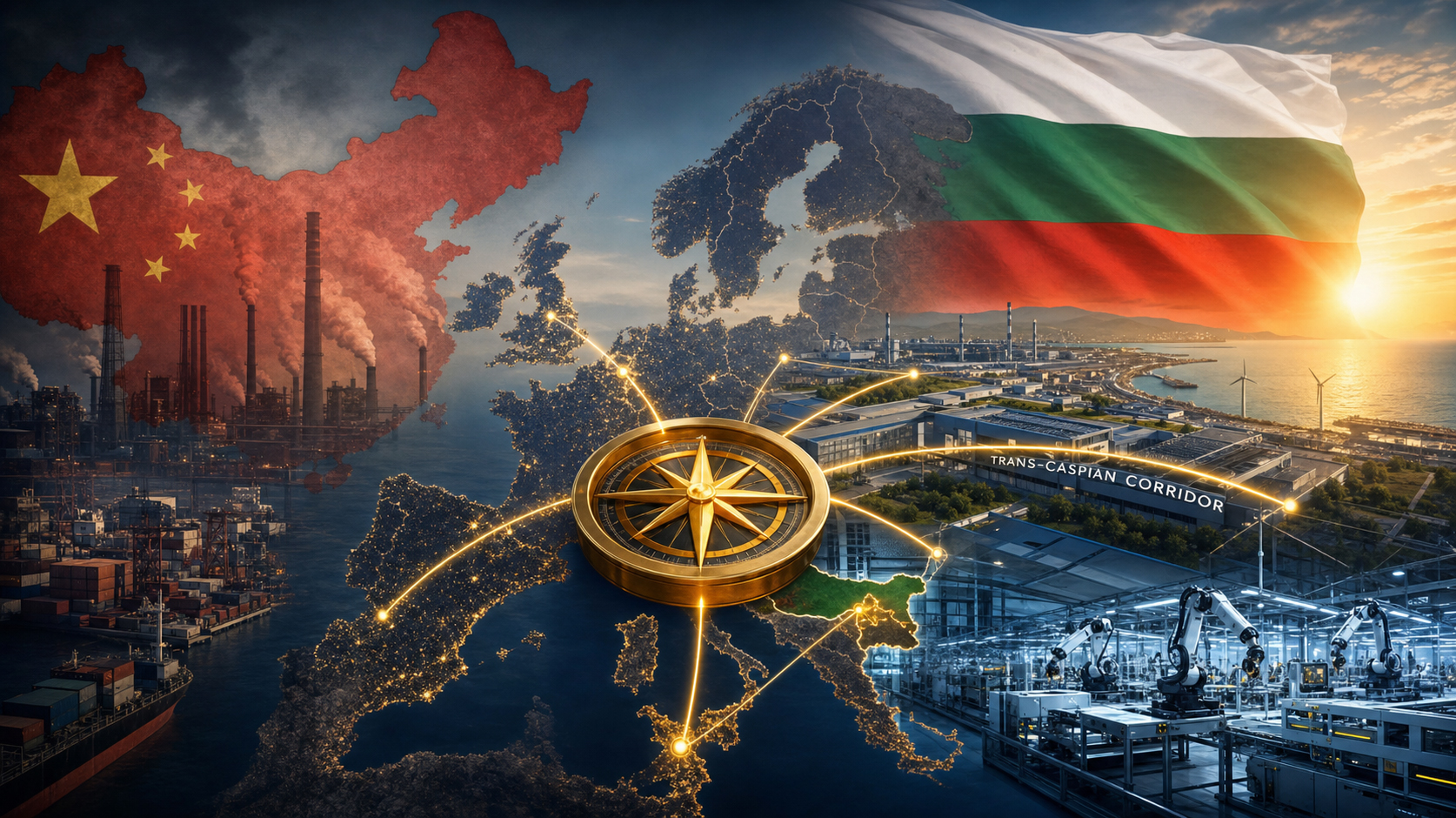
Neither India nor China: Why Bulgaria is now becoming Europe's most important manufacturing hub – Image: Xpert.Digital
Europe's secret winner: Why German industry is moving en masse to Bulgaria
80% of all car sensors come from here: The unexpected industrial miracle on the Black Sea
Lowest taxes, cheap electricity: The quiet rise of industrial champion Bulgaria
The global economy is reorganizing. While Europe, faced with fragile supply chains and growing geopolitical tensions, is desperately seeking ways to reduce its dependence on China, strategists are reflexively turning their attention to India. However, the Asian giant often proves to be a cumbersome alternative for European industrial companies due to logistical, bureaucratic, and infrastructural hurdles. Instead, a country that has hardly been perceived as an industrial powerhouse is increasingly coming into focus: Bulgaria. With unbeatable labor and energy costs, the lowest tax rate in the EU, a strategically crucial connection to the Eurasian Central Corridor, and full integration into the Schengen Area and the Eurozone, the Balkan state has quietly and steadily developed into Europe's new industrial champion. This comprehensive analysis reveals why Bulgaria is no longer merely a low-wage manufacturing hub, but rather a supplier of systemically important components for core Western industries.
Related to this:

The underestimated winner of the global supply chain shift: Why a Balkan state is replacing China as an extended workbench – and making India look old in the process
When Europe's economic strategists discuss replacing China as the West's extended manufacturing hub, their gaze reflexively falls on India. The sheer size of the subcontinent, its demographic dividend, and the Modi government's "Make in India" program have fueled this narrative for years. But this focus systematically overlooks a candidate that receives little attention in public debate but has long been making its mark in economic reality: Bulgaria. The southeastern European country on the Black Sea has positioned itself as a quiet but all the more effective winner in the new geopolitical world economic order – and for reasons that run structurally deeper than mere labor cost advantages.
China's emancipation and the search for a new workbench
The decade following the COVID-19 pandemic triggered a strategic shift in awareness in Europe whose magnitude can hardly be overestimated. The experience that supply chains for pharmaceuticals, semiconductors, and industrial components relied almost exclusively on Chinese production facilities and could collapse in the event of disruptions has placed the concept of resilience at the heart of economic policy considerations. At the same time, China itself has been actively working on emancipating itself from the role of a mere contract manufacturer. So-called "decoupling" tendencies—that is, China's economic decoupling from Western markets and standards—were already described by the EU Chamber of Commerce in Beijing in a 2021 policy report as a serious systemic risk: China is increasingly decoupling itself from the US and the EU, and the future of globalization with the country is at stake. European companies risk being completely or partially forced out of the Chinese market as a result of this decoupling.
This trend has not leveled off since then, but has accelerated. In May 2026, the European Commission presented plans to structurally limit economic dependence on China for critical components: companies in key sectors will be required to source critical components from multiple suppliers, with a limit of 30 to 40 percent for sourcing from a single supplier being discussed. Europe is therefore actively seeking alternatives – and these are needed not just anywhere, but within a manageable, legally sound, and culturally compatible system.
The India narrative and its blind spots
The political and media attention focused on India as an alternative to China is understandable. India offers a young, growing population, an English-speaking business community, and enormous market potential. Apple has already announced plans to relocate up to 25 percent of its iPhone production to India. The mainstream business press is already hailing the subcontinent as the "new factory floor of the world.".
However, a sober analysis reveals that India is not a viable replacement for China as a sourcing and manufacturing location for European, and especially German, industrial companies in the foreseeable future. The infrastructure problems are structural and severe. Metropolises like Bangalore, Chennai, and Mumbai suffer from overburdened transportation systems, unreliable energy supplies, and bureaucratic hurdles that slow down investment. Employee turnover in the technology sector has historically reached levels of 30 to 35 percent. Transport times from India to Central Europe are considerably longer than from Eastern Europe. Customs duties, import regulations, and a poorly harmonized legal framework complicate operational integration into European value chains. Furthermore, India lies outside the EU single market and the Eurozone – two characteristics that have enormous regulatory and monetary implications for German suppliers and manufacturers.
The comparison with Bulgaria makes it clear why the India narrative is so limited for the practical application of European industrial companies. It's not just about costs – it's about system compatibility.
Bulgaria's comparative advantages: A structural inventory
The most favorable wage-quality ratio in the EU
Bulgaria's labor cost structure remains unrivaled within the European Union. In 2024, average labor costs per hour in Bulgaria were €10.60 – the lowest of all 27 EU member states. By comparison, labor costs in Luxembourg were €55.20 and in Germany €45.00 per hour. This means that a manufacturing company relocating from Germany to Bulgaria pays less than a quarter of the German rate for the same hourly wage. In absolute terms, hourly wages in Bulgarian industry are around €8 to €10, compared to €35 to €45 for comparable manufacturing roles in Germany.
This cost advantage is not a static phenomenon. While nominal wages in Bulgaria are growing at double-digit rates – in the third quarter of 2024, the increase was 12.7 percent compared to the previous year – the country remains at the top of the EU's low-wage landscape in absolute terms. The minimum wage has been around €551 per month since the beginning of 2025, and the nationwide average gross wage is around €1,249 per month. The average public sector salary is estimated at around €1,112 for 2025. These figures illustrate that Bulgaria is not a high-wage country that has lost its cost advantage – but rather a country that is actively defending its lead in a period of rising nominal wages through productivity gains and industrial maturation.
Crucially, this is not simply a case of low-wage competition. Industrial cities like Plovdiv, Stara Zagora, and Vratsa boast a pool of thousands of technically skilled workers: maintenance engineers, machine operators, and quality technicians familiar with structured industrial work environments. The dual vocational training system, considered a model in Germany, has at least begun to take root in Bulgaria, and German companies operating there report that the local workforce adapts quickly to the new system.
The tax framework as a strategic competitive advantage
With a uniform corporate tax rate of 10 percent, Bulgaria boasts the lowest corporate tax rate in the entire European Union. This is not an offshore construct or a regulatory gray area, but a transparent, EU-compliant tax system. By comparison, Germany's rate is 29.8 percent, France's 25 percent, and Austria's 24 percent. For manufacturing companies with moderate margins, this difference is not a cosmetic detail, but a crucial factor in EBITDA calculations. Companies that produce within the EU and want to maximize profits without having to operate in tax havens outside the EU will find a legal, audited, and consistently predictable tax base in Bulgaria. Furthermore, tax breaks and investment incentives are available for certain investment projects, further enhancing the fiscal advantage.
The energy price difference as a production cost factor
Another factor often neglected in public debate is energy costs. In the manufacturing sector, where electricity and heat are directly factored into production costs, this difference often determines the economic viability of relocation decisions. In 2024, industrial electricity prices in Bulgaria, at around 11.4 cents per kilowatt-hour, were more than half the German level of 26.2 cents. For energy-intensive production – from metal processing and plastics extrusion to electronics manufacturing – this difference is significant. Adding to the wage and tax advantages, it results in a cost structure profile that remains favorable for many years, even with rising Bulgarian wages.
Bulgaria's industrial maturity: Not a developing country, but a supplier
Automotive and electrical industries as core sectors
Anyone who equates Bulgaria with a developing country that merely undertakes simple assembly work fundamentally underestimates the country's true industrial maturity. In 2024, the Bulgarian electrical industry exported goods worth €4 billion. German industry alone placed orders with Bulgarian companies in this sector worth around €1.1 billion. A single data point illustrates the depth of this integration particularly vividly: approximately 80 percent of the sensors – for airbags, emissions measurement, brakes, and other safety systems – installed in European-made cars originate in Bulgaria. This is not a marginal phenomenon, but a systemically important contribution to the European automotive industry. Companies like Melexis from Belgium and Festo from Germany have production facilities in Sofia. Liebherr, Behr Hella Thermocontrol, and EbV Elektronik are among the established German investors in the country.
The electrical industry alone accounts for around 11 percent of Bulgaria's total exports. Its product range extends from electronic integrated circuits and wiring harnesses for the automotive industry to transformers, switchboards, and cooling units. Production centers have been established in Plovdiv, Sofia, Ruse, and Vidin. The automotive sector, the IT industry, and electrical engineering are among the country's most dynamic growth sectors. 76 percent of German automotive suppliers are now considering postponing, relocating, or canceling their investments in Germany – and Bulgaria is increasingly at the top of their shortlist.
Investment climate and market access in the internal market
As an EU member since 2007, Bulgaria fully benefits from the advantages of the European single market. For investing companies, this means: no tariffs, no import quotas, uniform product standards, and free movement of capital and labor. A component manufactured in Bulgaria reaches a German factory without bureaucratic hurdles, and supplier evaluation follows the same EU standards as for Polish or Czech suppliers. Companies switching from China to Bulgaria not only change their production location but also their regulatory system – from the Chinese to the European legal system. Contracts are more easily enforceable, intellectual property is better protected, and the risk of politically motivated export restrictions is structurally lower.
Added to this is the recent integration into the Schengen Area: Since January 2025, Bulgaria has fully joined the Schengen Area, further facilitating cross-border trade within Europe. The logistical consequences are significant: Delivery times are reduced, buffer stocks can be lowered, and just-in-time models, often impossible with East Asian sourcing, become realistic with a Southeast European supplier.
Our EU and German expertise in business development, sales and marketing

Our EU and German expertise in business development, sales and marketing - Image: Xpert.Digital
Industry focus areas: B2B, digitalization (from AI to XR), mechanical engineering, logistics, renewable energies and industry
More information here:
A thematic hub offering insights and expertise:
- Knowledge platform covering global and regional economies, innovation and industry-specific trends
- A collection of analyses, insights, and background information from our key areas of focus
- A place for expertise and information on current developments in business and technology
- A hub for companies seeking information on markets, digitalization, and industry innovations
Euro, ports, corridors: How Bulgaria is becoming a logistics hub for Central Asia
Euro accession as a strategic catalyst
One of the most important economic policy events for Bulgaria's positioning as a nearshoring destination was its accession to the Eurozone on January 1, 2026. Bulgaria has since been the 21st member of the Eurozone. The binding exchange rate was set at 1 EUR = 1.95583 BGN – a rate that had already been practiced de facto as a fixed exchange rate system since 1997, initially pegged to the Deutsche Mark and since 2002 to the Euro.
In its convergence report of June 2025, the ECB confirmed that Bulgaria meets all convergence criteria: The inflation rate of 2.7 percent was just below the reference value of 2.8 percent, and public debt amounted to only 24.1 percent of GDP – well below the Maastricht limit of 60 percent. The sustainability of Bulgaria's public finances is therefore significantly better than in many established euro area countries.
For industrial investors from Germany or Austria, joining the Eurozone means that exchange rate risks are completely eliminated. Accounting, pricing, and profit repatriation are possible without currency hedging costs. Sonja Miekley, CEO of the German-Bulgarian Chamber of Commerce, has succinctly summarized this effect: Joining the Eurozone strengthens investment security, reduces transaction costs, and increases the competitiveness of Bulgarian companies. This is not political rhetoric, but a tangible business advantage.
Macroeconomic developments underscore the stability of Bulgaria as a business location. Bulgaria's GDP grew by 3.1 percent in 2025 – one of the highest growth rates within the EU. Growth rates between 2.7 and 2.8 percent are projected for 2026. Unemployment is below 4 percent, and inflation is gradually normalizing after the turbulence of previous years. Public debt remains at one of the lowest levels in the EU. Macroeconomically, Bulgaria is not a vulnerable country, but rather a conservatively governed anchor of stability in Southeast Europe.
Related to this:

The Trans-Caspian Route: Bulgaria as Europe's gateway to Central Asia
Bulgaria's geopolitical context extends far beyond its role as a mere nearshoring destination for Western European production relocations. With Russia's war of aggression against Ukraine in 2022, the Northern Eurasian Land Bridge – the most important rail route from China via Russia to Europe – was effectively removed from the European logistics calendar due to sanctions and risk assessments by freight insurers. The consequence was a rapid upgrade of the Trans-Caspian International Transport Route (TITR), also known as the Central Corridor.
This corridor connects China and Central Asia via Kazakhstan, the Caspian Sea, Azerbaijan, Georgia, and Turkey to the Black Sea – and thus to the first European port, located in Bulgaria. Transit times from China to Europe on this route are 15 to 18 days – considerably shorter than the 32 to 55 days by sea via the Suez Canal or the Cape of Good Hope. Cargo volume on the Central Corridor tripled from 1.5 million tons in 2022 to 4.5 million tons in 2024. Kazakhstan expects a volume of 10 million tons by 2028.
Burgas and Varna as strategic Black Sea hubs
The Bulgarian Black Sea ports of Burgas and Varna are the first EU gateway for goods arriving from the Georgian ports of Poti and Batumi. The Burgas-West port completed its modernization and expansion project in April 2025. An investment of €85 million – roughly half of which came from the EU's Connecting Europe funding mechanism – resulted in the construction of a deep-water berth capable of accommodating 290-meter-long vessels with a draft of 15.5 meters and a cargo capacity of 4,500 TEU. This expansion is expected to increase cargo throughput by 30 percent and establish Burgas as a new hub for container transport in the Black Sea in the long term.
Kazakhstan and Bulgaria have already coordinated strategies to establish the ports of Burgas and Varna as primary entry points into the European single market for trans-Caspian freight flows. During Bulgarian President Rumen Radev's visit to Kazakhstan in June 2025, both sides signed a memorandum of understanding on the joint development of the Central Corridor and the establishment of a joint working group on transport and logistics issues. The strategic importance of this link extends beyond freight logistics: Bulgaria is positioning itself as an entry point for energy and raw material supplies from Central Asia into the EU – a locational advantage that is further enhanced by the EU's decision to phase out all gas imports from Russia by 2028.
Related to this:

Corridor VIII: The Adriatic-Black Sea Axis
Bulgaria's geopolitical and logistical value will be enhanced in the long term by the Pan-European Transport Corridor VIII. This 1,220-kilometer corridor connects the port of Durrës in Albania on the Adriatic Sea, via North Macedonia and Bulgaria, with the Black Sea ports of Varna and Burgas. Within Bulgaria, 631 kilometers of the road route and 747 kilometers of rail infrastructure are in place. Only 2 kilometers of rail connection remain missing on the Bulgarian side, while 23 challenging kilometers still need to be completed on the North Macedonian side. Despite these remaining gaps, the completion of this trans-Balkan corridor is becoming increasingly likely.
Once Corridor VIII is completed, Bulgaria will no longer merely be the endpoint of the Central Corridor on the Black Sea, but its logical extension towards the western Mediterranean. Goods from Central Asia could then flow uninterrupted from Burgas to the Adriatic and from there onward to the industrial zone of northern Italy and Western Europe. The advantages in terms of distance compared to sea routes and the northern land corridor through Russia would then be even more pronounced.
Related to this:

Bulgaria as a buffer storage and component producer for all of Europe
An often overlooked strategic aspect of Bulgaria lies in its dual role: on the one hand, as a production location for pre-series production and component manufacturing for European industries, and on the other hand, as a logistical buffer for goods arriving from Asia via the Middle Corridor. This combination makes Bulgaria more than just a simple nearshoring candidate.
As a buffer zone, Bulgaria offers European companies the opportunity to shorten just-in-time supply chains without having to relocate their entire production. Components from Central Asia or China can be stored in Bulgaria and forwarded to Western and Central Europe as needed – with significantly shorter transport times than directly from Asian production sites. In the context of nearshoring, this geographical buffer function allows German OEMs and Tier 1 suppliers to diversify their supply chains without completely abandoning cost discipline.
Investment conditions for establishing logistics centers and production facilities are favorable: EU funding from the Recovery and Resilience Plan (RRP) provides up to €5.689 billion in non-repayable grants for the period 2021 to 2026. The Bulgarian government has announced major investments of around €4.9 billion in defense and infrastructure. The EU's Connecting Europe Facility program explicitly finances port expansions and corridor projects in the country.
Related to this:
Real challenges: The picture without embellishment
An honest economic analysis must also identify the structural weaknesses and risks that could hinder Bulgaria's rise. The shortage of skilled workers is the most serious structural problem. Despite the relatively low overall unemployment rate of under 4 percent, the lack of specialized engineers, technicians, and skilled workers is acute in some sectors. The wage cost increases of recent years—in the third quarter of 2024, industrial labor costs rose by 13.3 percent compared to the same period of the previous year—reflect this shortage. If labor costs grow 3.5 times faster than productivity, as has been observed in some Central and Eastern European countries, the comparative cost advantage is at risk of eroding in the long term.
Institutional problems remain a further risk factor. Despite a positive overall assessment, the ECB's convergence report explicitly pointed out that significant problems persist in the areas of corruption, money laundering, and governance. Bulgaria has suffered a decline in international investor confidence in recent years due to political instability and frequent changes of government. At 22 percent, the disbursement rate of RRP funds was still below the EU average of 37 percent – a sign of bureaucratic bottlenecks in the implementation of support programs.
The infrastructure deficits are also real. The railway network suffers from chronic underinvestment and insufficient capacity. Cross-border connections, particularly Corridor VIII to North Macedonia, are not yet completed. Without a coherent national strategic framework for integration into the Central Corridor, Bulgaria lacks the ability to present a clear geo-economic vision to international investors.
The systemic advantage: Bulgaria is part of Europe
At the end of all cost comparisons and logistics corridor analyses lies Bulgaria's decisive systemic advantage, one that surpasses India and China in a single dimension: Bulgaria is part of Europe. It is an EU member, a NATO member, a Schengen member since 2025, and a Eurozone member since January 2026. This means more than mere membership in institutions. It means the rule of law according to European standards, protection of property rights, harmonized product standards, uniform labor law standards, and—for companies that want to make their supply chains more resilient—the end of dependence on geopolitically volatile trading partners.
In a world where geopolitics has once again become the determining factor in economic decisions, this system membership is a value that cannot be fully expressed in euros. When supply chains are disrupted—by pandemics, wars, trade conflicts, or targeted state interventions—the chains break first where institutional ties are weakest. Bulgaria, through its EU membership, is bound by a system of legal obligations that can withstand most risk scenarios that might affect China or India.
German-Bulgarian trade relations have impressively demonstrated in recent years that this systemic compatibility works: Trade volume reached a record high of €9.8 billion in 2021. German companies are increasingly viewing Bulgaria not just as a sales market, but as a strategic investment location. In Bulgaria, the timeframe from site selection to production readiness is often less than twelve months – a speed that few other Central or Eastern European countries can match.
The quiet rise of a hidden champion
Bulgaria is not a panacea for all industries and all companies. For highly automated sectors with low labor costs, the locational advantage may be marginal. For companies that rely on scalability through skilled workers, low energy and tax burdens, and maximum legal and currency security, it is fundamental.
The strategic logic is simple: Companies seeking to relocate their supply chains from China or other geopolitically exposed regions have a choice between a distant alternative with new dependency risks – India being a prime example – and a nearby system partner that already functions as an integral part of the European industrial supply chain. Bulgaria already produces sensors for 80 percent of European cars, receives trans-Caspian freight flows in its modernized Black Sea ports, connects the Adriatic Sea to the Caspian region via Corridor VIII, and is embedded within the Eurozone. This combination of industrial depth, geostrategic positioning, system membership, and cost advantage is unique in Europe.
Bulgaria is not the loudest option. It is the smartest.
🎯🎯🎯 Data-driven B2B industry hub as a quasi-in-house solution

The quasi-in-house solution: How Xpert.Digital closes operational gaps in B2B marketing and sales – Smart Content-Driven Business - Image: Xpert.Digital
Xpert.Digital is a data-driven B2B industry hub led by Konrad Wolfenstein . The company acts as an external, quasi-in-house solution for industrial partners, closing operational gaps in marketing, content, and sales – without requiring additional resources on the client side.
More information here:
Consulting - Planning - Implementation

Konrad Wolfenstein
I would be happy to serve as your personal advisor.
You can contact me at wolfenstein∂xpert.digital or
Just call me on +49 7348 4088 965 .










