Alfing Kessler machine factory in Aalen-Wasseralfingen: How a machine manufacturer intends to use industrial structural change to its advantage
Xpert Pre-Release

Available in 27 languages 📢
Prefer Xpert.Digital on GoogleⓘPublished on: November 17, 2026 / Updated on: November 17, 2026 – Author: Konrad Wolfenstein
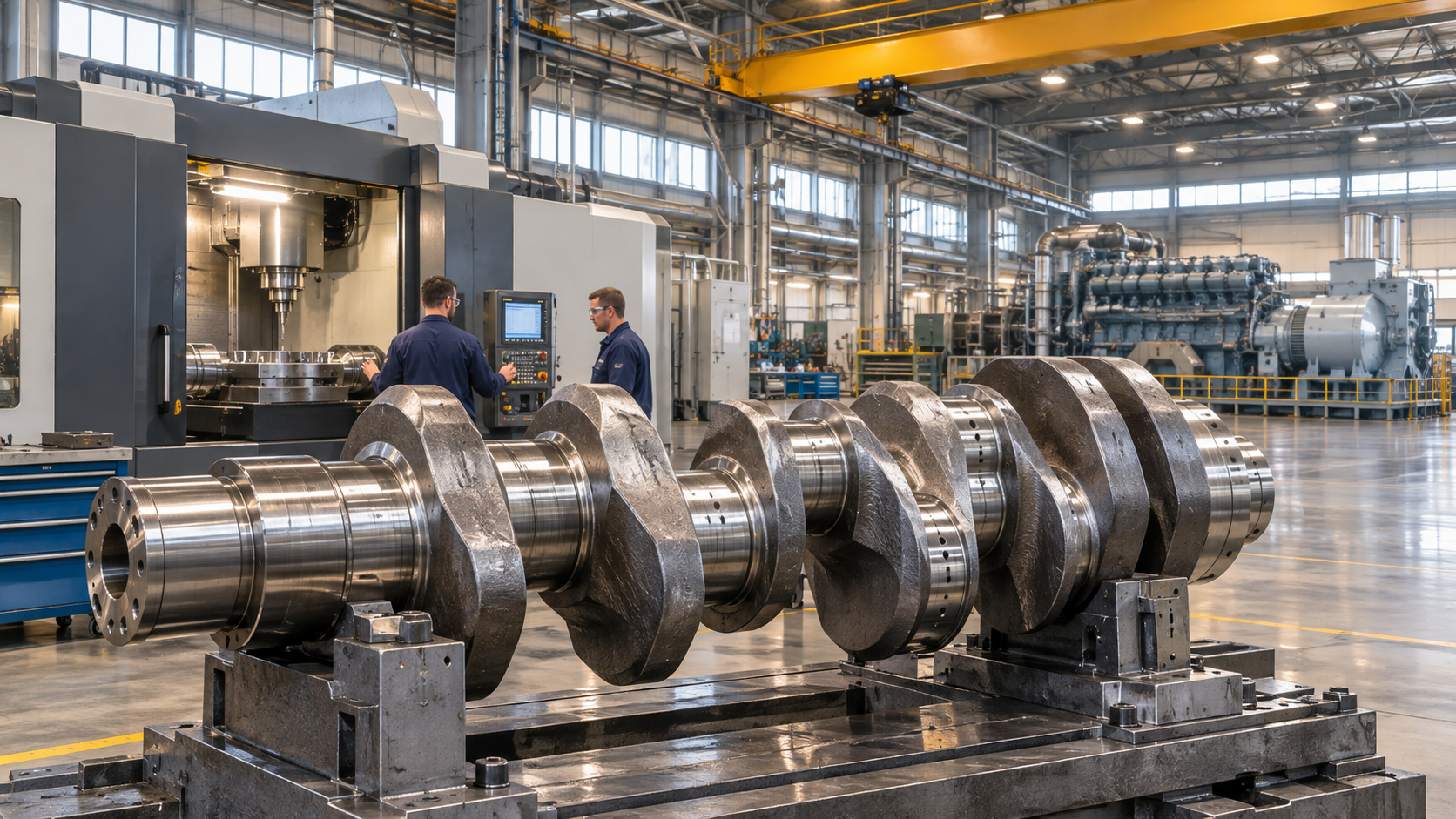
Alfing Kessler machine factory in Aalen-Wasseralfingen: How a machine manufacturer intends to leverage industrial structural change to its advantage – creative image on the topic, created with AI: Xpert.Digital
Data centers as growth drivers: From the automotive business to energy supply – This is how Alfing plans to grow strongly
New halls, more employees, new markets: Alfing's plan for the future
500 new jobs and millions in investment: What Alfing is planning in Aalen-Wasseralfingen
While many industrial companies are struggling with weak demand and job cuts, the machine factory Alfing Kessler in Aalen-Wasseralfingen is focusing on expansion. Several hundred million euros are to be invested in new and modernized production capacities. At the same time, the manufacturer plans to increase its workforce from around 1,500 to approximately 2,000 employees – creating around 500 additional jobs within two to two and a half years.
Behind the expansion lies more than just the desire to grow. Alfing aims to reduce its dependence on the traditional automotive business and serve additional demand in sectors such as energy supply, shipping, and industry. A potential growth driver is components for motors used to power data centers. Revenue is projected to increase from just over €300 million in 2024 to around €600 million by 2029.
The plan is ambitious – and its implementation challenging. New production halls and machines must be fully utilized, additional employees trained, and long-term orders processed economically. A closer look at the company's plans reveals how Alfing intends to leverage its existing manufacturing expertise for new markets, what opportunities this presents for the location, and where the risks of this growth strategy lie.
Industry isn't disappearing – but it's growing in places where many no longer look
An investment project against the general retreat
The machine factory Alfing Kessler in Aalen-Wasseralfingen is planning an expansion that goes far beyond a typical plant expansion. Several hundred million euros are to be invested in new buildings, machinery, and additional production capacity. At the same time, the company intends to increase its workforce from approximately 1,500 to around 2,000 employees. This is expected to create roughly 500 new jobs within two to two and a half years. The first major hiring phase alone is planned to bring in 200 to 300 new employees.
This scale makes the project a fundamental strategic decision for the company. Alfing is not only expanding its production area but also combining this capacity increase with a repositioning in the market. The company aims to benefit more from applications requiring large, robust, and precisely manufactured components. These include, in particular, power plant motors, marine and industrial engines, as well as other demanding industrial applications.
The company's economic goal is correspondingly ambitious: Revenue of around €600 million is targeted for 2029. In 2024, revenue was just over €300 million. The company is thus aiming to nearly double its business volume within just a few years.
However, the size of the investment is not the only decisive factor. The underlying economic logic is particularly interesting. Alfing is banking on the fact that industrial demand doesn't simply disappear, but rather shifts between sectors, applications, and technical requirements. The challenge lies in recognizing this shift in time and aligning one's own production accordingly.
The expansion is therefore neither a blanket proof of a comprehensive industrial recovery nor a mere exception without significant implications. Rather, it demonstrates the conditions under which an established manufacturer can see substantial growth opportunities in a challenging economic environment.
The actual strategy begins with changing customer needs
Alfing is primarily positioned as a manufacturer of crankshafts for automotive, marine, and industrial engines. They also produce switch frogs and components for pumps and compressors. These products share a common industrial foundation: the manufacture and machining of mechanically sophisticated components whose quality is essential for the functionality of larger technical systems.
Since 2021, the company has been working to reduce its dependence on the traditional automotive business. This point in time is important for context. The current expansion therefore does not appear to be a short-term reaction to individual new orders, but rather a continuation of a realignment initiated several years ago.
The strategic question is not whether the automotive business should be abandoned altogether. Such a conclusion would not be supported by the available data. Rather, it concerns the overall business composition. A company can continue to leverage its existing expertise while simultaneously increasing the share of other applications.
This is precisely where the economic strength of such diversification lies. Alfing doesn't have to completely reinvent itself for new markets. The company can build on existing expertise in forging, machining, and heat treatment. New applications thus arise, at least in part, from a different use of existing industrial knowledge.
However, a broader product range does not automatically diversify risk. Several sales markets can suffer from investment restraint simultaneously. Similarly, different customers can be affected by the same energy prices, financing costs, or economic trends. Therefore, what matters is not just the number of industries, but how differently their demand actually arises.
Expansion into energy supply, shipping, pumps, compressors, and rail infrastructure can alter these dependencies. However, whether this will result in more stable, long-term returns depends on individual customer relationships, contract terms, and competitive positions.
Why the data center boom is also reaching traditional metal processing
A key growth driver is the demand for components for motors used in data centers. The connection is less obvious than with servers, network technology, or cooling, but economically significant.
Data centers require not only digital infrastructure but also a reliable power supply. Depending on the location, connection requirements, and supply concept, additional generation capacity and reserve units may be necessary. Gas engines are one possible technical solution for providing supplementary energy. Alfing supplies components for these engines to the engine manufacturers.
This clearly defines the company's role. According to the available information, Alfing neither builds the data centers themselves nor their complete energy supply. The company is part of an upstream industrial supply chain. Its economic involvement arises from the fact that additional infrastructure investments increase the demand for certain motors and thus for high-quality components.
This connection illustrates why the juxtaposition of the digital economy and traditional industry is often too simplistic. Digital applications require physical facilities. Their construction, in turn, can generate demand for metalworking, large components, and specialized mechanical expertise.
However, an important distinction is necessary when assessing growth: Additional power generation and pure emergency power supply are different applications. A motor that regularly provides energy is subject to different operational requirements than a generator that is primarily available for exceptional situations. This can result in different requirements for design, maintenance, and service life.
The available information does not allow us to determine what share these individual applications will have in Alfing's future business. Likewise, the specific revenue associated with data centers is unknown. However, the fundamental statement that the expansion of digital infrastructure opens up additional sales opportunities for certain mechanical components is reliable.
A growth market only becomes a business through the ability to deliver
An attractive market alone does not guarantee industrial success. The crucial factor is whether a company can supply the required products in sufficient quantities, with reliable quality, and at economically viable costs.
This is precisely where the planned expansion comes in. Alfing is building a new forging hall and equipping three former AKS and AMT halls with machinery. In addition, three more halls are planned. Two of these will be used for the machining of large crankshafts and other components, and another for heat treatment after forging.
This division is economically revealing. The investment is not concentrated on a single production step. It encompasses several successive stages of manufacturing. This is apparently intended to prevent additional capacity from being created in one area while another area becomes a limiting factor.
For example, a larger forging volume only leads to more deliverable products if downstream machining and heat treatment are also sufficiently efficient. Conversely, additional machining equipment cannot be fully utilized if suitable semi-finished products are lacking.
The expansion must therefore be considered as a cohesive production system. Hall space, machine output, material flow, personnel, and quality control must be coordinated. Economically, what matters is not the maximum output of individual machines, but the quantity of products actually completed on time and accepted by the customer.
The use of existing halls alongside new buildings suggests a combined expansion approach. Existing spaces are being integrated productively, while new buildings are specifically designed to take on additional functions. However, without more detailed information about the condition and features of the existing buildings, it is impossible to quantify the specific time or cost advantages that will result.
Doubling sales requires more than just additional machines
The revenue target of around €600 million from 2029 onwards is substantial compared to the starting point. Compared to just over €300 million in 2024, it represents almost a doubling. Over a five-year period, such development requires an average annual growth rate of nearly 15 percent.
This figure is not a forecast for every single fiscal year. Industrial expansions rarely proceed smoothly. New machinery needs to be installed, processes coordinated, and employees trained. Therefore, significant revenue contributions may only materialize after a start-up phase.
It is also noteworthy that the three additional planned halls are expected to individually enable further revenue growth of 100 to 150 million euros. This amount corresponds to approximately one-third to one-half of the revenue level projected for 2024.
However, this wording describes a potential, not a guaranteed revenue. Production capacity is initially the technical prerequisite for additional business. Actual revenue is only generated when suitable orders are received, production is functioning, products are delivered, and the contractual conditions for revenue recognition are met.
Furthermore, the additional revenue potential of the new buildings should not automatically be added to the €600 million target. Without a detailed breakdown, it is impossible to determine which expansion projects are already included in this target. Such an addition would potentially count the potential business volume twice.
The central economic question is therefore: What is the composition of the planned growth? Possible factors include higher production volumes, larger or more complex components, a changed product mix, and altered sales prices. Which of these factors will dominate remains unclear. However, this distinction is essential for assessing the economic quality of the growth.
Higher revenue per employee is a target signal, but not yet proof of productivity
The number of employees is expected to increase from around 1,500 to approximately 2,000. This represents an increase of roughly one-third. Revenue, on the other hand, is projected to nearly double compared to 2024. At first glance, this combination suggests that significantly more revenue per employee is expected to be generated in the future.
As a rough guideline, with a turnover of around €300 million and 1,500 employees, this equates to approximately €200,000 per person. With a turnover of €600 million and 2,000 employees, it would be around €300,000. The calculated difference would therefore be roughly half the initial figure.
This comparison must be interpreted with caution. The revenue figure is from 2024, while the initial workforce figure reflects the current situation. Therefore, this is not a productivity calculation that perfectly matches the period.
Furthermore, revenue per employee is not synonymous with actual labor productivity. Changes can also arise from higher material costs, price adjustments, increased outsourcing, or a different product mix. A reliable productivity assessment would require, among other things, information on in-house value creation, working hours, and inputs.
Nevertheless, the scale of the expansion clearly indicates the desired business development. The additional business is apparently not to be handled solely by a proportionally larger workforce. New machinery, better-coordinated processes, and a revised product range are likely to play a crucial role in its economic viability.
This also increases the importance of collaboration between humans and technology. Modern systems only create an economic advantage if they are properly set up, reliably operated, preventively maintained, and integrated with stable processes.
Our EU and German expertise in business development, sales and marketing

Our EU and German expertise in business development, sales and marketing - Image: Xpert.Digital
Industry focus areas: B2B, digitalization (from AI to XR), mechanical engineering, logistics, renewable energies and industry
More information here:
A thematic hub offering insights and expertise:
- Knowledge platform covering global and regional economies, innovation and industry-specific trends
- A collection of analyses, insights, and background information from our key areas of focus
- A place for expertise and information on current developments in business and technology
- A hub for companies seeking information on markets, digitalization, and industry innovations
Long-term contracts and their economic impact
Why several hundred million euros also entail considerable risks
The announced investment sum is large in relation to the previous annual revenue. Since no exact total amount is specified, neither a reliable investment ratio nor a concrete return on investment can be calculated. However, the order of magnitude is sufficient to recognize the strategic nature of the project.
New buildings and machinery create long-term tied-up assets. At the same time, depreciation, maintenance, and potentially financing costs must be covered. This increases the demands on reliable capacity utilization.
For an industrial company, such an investment can be very attractive if there is sufficient demand over a longer period and the products deliver adequate profits. Conversely, low capacity utilization or delayed production start-ups can significantly impair profitability.
The financing cannot be assessed based on the available information. It is unknown what proportion will be raised from equity, current cash surpluses, or debt capital. Likewise, information on interest rates, repayment schedules, or potential collateral is lacking.
Therefore, it would be inadmissible to draw direct conclusions about a company's financial strength or debt level from the investment announcement. All that can be established is that the company is prepared to invest significant resources in long-term production capacities.
The time lag between disbursement and return is also important. Building the hall, procuring machinery, and providing training all incur expenses before the additional capacity contributes its full revenue. Therefore, economic viability depends not only on eventual success but also on how well the transition phase is managed financially and organizationally.
Long-term contracts improve planning, but do not eliminate all risk
Some orders already extend as far as 2035. For capital-intensive expansion, such a time horizon is an important factor. It can facilitate the planning of machinery, personnel, and production capacities.
The term "partially" is crucial here. Individual or specific long-term contracts do not imply that all capacities will be fully utilized by 2035. Nor can a concrete total volume be derived from them.
For an economic evaluation, additional information would be required: What quantities are bindingly agreed upon? What delivery dates apply? How are prices and potential cost changes regulated? What options for adjustment or cancellation exist?
Long-term supply relationships can benefit both sides. Customers gain greater security in the supply of sophisticated components. Suppliers can better plan their capacities and prepare investments more effectively. However, the actual distribution of risk depends heavily on the contract terms.
The relationship between long-term selling prices and variable costs is particularly important. If materials, energy, or personnel become more expensive, a manufacturer must assess whether and to what extent these changes can be offset economically. Therefore, a high order backlog does not automatically equate to high profitability.
Despite these limitations, a long-term order horizon remains a crucial element of the investment logic. It distinguishes expansion geared towards specific customer needs from purely speculative capacity growth. However, the actual extent of this difference in Alfing's case cannot be quantified without more detailed order data.
The labor market can benefit from job cuts elsewhere
The planned 500 additional jobs make recruitment a key component of the expansion. The company is primarily seeking CNC machinists and industrial mechanics. In addition, they are looking for career changers with manual skills.
Alfing also intends to take on employees from companies that are downsizing. This presents an important regional opportunity. When industrial demand shifts between companies and application areas, existing skills can be transferred into new jobs.
However, this transition is not automatically seamless. The number of available workers alone says little about how well they match the specific requirements. Crucial factors include experience, qualifications, geographical accessibility, and the willingness to adapt to different work processes.
An employee with experience in metalworking may bring valuable fundamental knowledge. Nevertheless, different materials, larger components, different machines, or new testing requirements may necessitate additional training.
The scale of the workforce expansion also deserves attention. Hiring 200 to 300 new employees in an early phase means that a significant portion of later growth needs to be prepared organizationally. Therefore, recruitment and production planning must work closely together.
The economic benefit doesn't stem solely from the number of new jobs. It's particularly valuable when existing industrial skills are retained and repurposed for new, productive applications. Whether and to what extent this succeeds depends on the actual match between job openings and available workforce. The planned recruitment of personnel from other companies offers a possibility, but not a guarantee.
Onboarding becomes the bottleneck in the entire growth chain
According to the available information, the central challenge is to quickly train and qualify the many new employees. This task is not only relevant from a human resources perspective, but also directly impacts the company's business operations.
New employees do not initially increase usable production output to the same extent. They need to learn about machines, processes, safety requirements, and quality standards. At the same time, experienced employees invest time in instruction and supervision.
This can create a challenging transition phase: the number of employees is already growing, while the full additional revenue is still pending. If this phase is underestimated, additional costs, quality problems, or delays can occur.
When expanding a large workforce, offering individual training courses is therefore insufficient. A systematic qualification program is required that takes into account different levels of prior knowledge and makes learning progress transparent. A different entry point may be more suitable for an experienced industrial mechanic than for a skilled tradesperson changing careers.
Equally important is the availability of suitable trainers and experienced contacts. Practical experience can only be accelerated to a limited extent. If too many new employees need to be supervised simultaneously, those employees whose knowledge is needed for a stable production start-up can become overloaded.
Alfing is therefore increasing its apprenticeship numbers and has expanded its training center. This creates a long-term foundation in addition to short-term recruitment. While apprenticeships do not completely solve the immediate need for skilled workers, they can help to sustainably broaden the company's own skills base.
From an economic perspective, the training center is therefore part of the production investment. Machines and buildings create technical capacity. Qualification ensures that this capacity can actually be used reliably.
The wider product range also changes the competition
The crankshaft product range now covers a very broad spectrum of applications, from small engines to large power generation plants. This range is more than just a descriptive description; it demonstrates the company's commitment to serving various size classes and application requirements.
Such breadth can create advantages. Different market segments open up additional customer relationships and allow technical expertise to be transferred to multiple applications. At the same time, the company can expand its development capabilities when customers require new or larger components.
However, breadth also increases complexity. Different components may require different machine layouts, processing times, tools, and testing procedures. A growing product range must therefore be organized in such a way that the diversity does not lead to disproportionately high costs.
Especially with larger components, coordinating the entire production process becomes crucial. Transport within the plant, intermediate storage, and the sequence of processing steps can all influence actual performance. Therefore, the additional halls must not only offer sufficient space but also be effectively integrated into the overall material flow.
Without information on market shares, prices, or direct competitors, it is impossible to definitively assess the competitive prospects. Therefore, it would be unjustified to attribute a certain market leadership to Alfing solely based on the investment amount.
However, a strategic intention is evident: the company wants to place its industrial expertise on a broader economic foundation. Competition will therefore be decided not only by production volume, but also by the ability to reliably serve diverse and demanding applications.
The smaller arms deal should not dominate the overall assessment
The arms business is also growing, but according to available data, it only accounts for a small portion of revenue. This distinction is important because individual, politically sensitive sales markets can quickly overshadow a company's overall perception.
A growing business segment is not automatically the most important revenue driver. Without concrete figures, neither its absolute contribution nor its share of the planned growth can be determined.
For an objective analysis, a distinction must therefore be made between attention and economic weight. Based on the available information, Alfing's expansion cannot be described primarily as arms growth. Rather, the focus is on additional industrial capacity and a broader demand base, including the energy supply for data centers.
At the same time, it would be equally short-sighted to completely ignore this business area. It is part of the company's described development and can contribute to diversification. However, its significance should only be assessed to the extent supported by the available information.
The same principle applies to the other products. Switch frogs and components for pumps and compressors demonstrate the breadth of the business, but without revenue shares, they do not allow for a ranking of their economic importance.
For Aalen, it's not just the number of new jobs that counts
The planned expansion will focus on the company's headquarters in Aalen-Wasseralfingen. This will allow additional jobs and new production facilities to be concentrated at one existing location.
This can have organizational advantages. Existing experience, training, and technical processes are generally easier to integrate when new capacities are created in close proximity. However, the extent of this advantage depends on the specific plant organization.
For the regional economy, the directly planned jobs are of primary importance. Additional economic impacts may arise from construction work, technical services, maintenance, and other supply relationships. The extent of these impacts cannot be calculated based on the available data.
In particular, it would be irresponsible to multiply the 500 additional positions by a flat factor and derive a specific number of indirect jobs from that. To do so, it would be necessary to know which services are procured regionally and which additional expenditures actually arise locally.
Equally important is the distinction between the two. The construction of new halls generates different economic effects than their subsequent, ongoing operation. One-off investment expenditures and long-term employment should not be conflated.
Furthermore, the importance of a location lies in maintaining and expanding industrial capabilities. Developing training, manufacturing, and technical expertise at a single location creates a foundation upon which future projects can build. The economic value of these capabilities cannot be measured solely by short-term sales or employment figures.
The decisive factors are capacity utilization, results, and solvency
Whether the growth initiative is successful will not be solely determined by new buildings or the number of employees hired. These figures primarily describe the use of resources. Economic success depends on the resulting outcomes.
A key factor is capacity utilization. Additional equipment must be allocated suitable orders. A high calculated machine utilization is insufficient if bottlenecks elsewhere limit delivery.
A second key factor is operational quality. Adherence to deadlines, scrap, rework, and smooth processes influence how much of the available capacity is actually used economically. Significant discrepancies between planning and reality can arise here, especially during ramp-up.
Thirdly, profitability is crucial. A company can significantly increase its revenue and still come under financial pressure if the additional revenue is insufficient to cover materials, personnel, energy, depreciation, and other costs.
Fourth, growth must be financed. Increased production can mean additional inventory and higher receivables from customers. Therefore, even profitable growth can temporarily tie up liquid funds. The extent of this in Alfing's case is unknown.
Ultimately, the resilience of the future business model is what counts. A broader customer base is particularly valuable if it not only generates more revenue but also creates a sustainable distribution of risks.
The revenue target of 600 million euros is therefore a clearly visible benchmark. The real test lies in transforming this significantly larger business into a sustainably resilient industrial operation.
A plausible growth trajectory with challenging implementation
Alfing's expansion follows a sound economic logic. The company is leveraging its existing manufacturing expertise to reduce its dependence on the traditional automotive business and to tap into additional applications. Demand from the energy sector, particularly in connection with data centers, offers a key perspective in this regard.
Several interconnected elements support the plausibility of the project: the diversification course already pursued since 2021, the concrete expansion of several production stages, the order horizon extending in part to 2035, and the parallel expansion of employment and training.
However, these factors do not replace a complete profitability analysis. Among other things, precise information on the investment amount, financing, earnings development, customer concentration, and contractually secured volumes is missing. Therefore, a conclusive assessment of the expected return would not be reliable.
The rationale is nevertheless clear: the expansion appears strategically sound because it does not involve a complete break with existing capabilities. Instead, existing industrial expertise is being aligned with additional needs. This reduces certain risks associated with a radical business model change, but does not eliminate the difficulties of rapidly building capacity.
The biggest challenges, therefore, lie less in the fundamental idea than in its implementation. Machines must become productive on time, new employees must be reliably trained, and long-term orders must be processed economically. At the same time, the company must prevent increasing diversity from unduly burdening its processes.
This case illustrates a nuanced form of industrial renewal. Growth doesn't necessarily arise where a company abandons its traditional identity. It can also result from the need for proven technical expertise in new contexts. In Alfing's case, the question now is whether this market opportunity will translate into sustainably higher industrial performance.
🎯🎯🎯 Data-driven B2B industry hub as a quasi-in-house solution

The quasi-in-house solution: How Xpert.Digital closes operational gaps in B2B marketing and sales – Smart Content-Driven Business - Image: Xpert.Digital
Xpert.Digital is a data-driven B2B industry hub led by Konrad Wolfenstein . The company acts as an external, quasi-in-house solution for industrial partners, closing operational gaps in marketing, content, and sales – without requiring additional resources on the client side.
More information here:
Your global marketing and business development partner
☑️ Our business language is English or German
☑️ NEW: Correspondence in your native language!

Konrad Wolfenstein
I and my team are happy to be available to you as your personal advisor.
You can contact me by filling out the contact form here [email protected]:or simply call me at +49 7348 4088 965. My email address is
I'm looking forward to our joint project.